How VC diligence works at different stages + Fion's Sudarshan Sridharan on wildfire tech | E1522
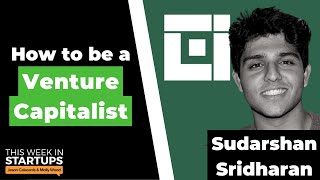
Jason Calacanis and Molly Wood break down how VCs do diligence differently at early versus late stages, then interview Sudarshan Sridharan about Phion, an app that gives wildland firefighters real-time maps of weather, terrain, and crew locations. Wildfire costs hit $150 billion annually in the US.
Chapters
Hey everybody, welcome! It's our Sunday show. We're kicking it off with a really important VC Sunday School discussion, and this is about diligence and research and how to be a great investor when, let's face it, you may not have the domain expertise in every single vertical you approach, and what it's like to build a career in venture capital not over 10 months but over 10 years. Molly's doing a great job, uh, in climate and sustainability, and we all get to follow along with her journey and learn as she learns. And this has been a great series Of course, every Sunday we have This Week in Climate as well. And this time, Molly is interviewing the founder of a situational awareness company. It's an app that helps firefighters who are fighting these insane wildfires we're seeing, especially here in California, Northern California, where it seems like every summer we have to deal with these more and more intense fires. It's a really cool startup. Stick with us. It's gonna be a great show.
This Week in Startups is brought to you by User Testing. With User Testing, you'll understand it from your customer's perspective by seeing how they interact with your products, apps, or messaging. Get real-time feedback real fast. Put yourself in your customer's shoes. Visit usertesting.com/twist for a free trial. User Testing, real human insight. OpenPhone. As a startup founder, a lot of mistakes are easy to roll back, but using your personal cell phone number as your company number isn't one of them. OpenPhone makes it easy to get business phone numbers for you and your team right on top of your existing devices. Visit openphone.com/twist to get 20% off your first 6 months. And Brave is an internet privacy company on a mission to protect your personal info online. Download Brave today at brave.com/twist to browse faster, search privately, and so much more, all in a single click.
All right, Molly, here we are. It's July going into August. You've been at it for over 6 months, coming on the second half of your first year as an investor. Now you're in the second half of the first year. What issues are you facing looking forward?
Oh my God, I'm literally in the second half of the first year of my new career. That's so— that's like a pretty I don't think I give myself enough credit sometimes for changing my entire career.
Yes, it's changed a lot about you.
Turns out it has changed a lot about me. I will say I had a conversation recently with a public— old public radio friend who's now doing some consulting, who was asking about like impact stuff and this and that and how do you— and I was like, yeah, you know, honestly, if none of that happens at scale, it just doesn't matter. And the only way— I mean, I literally was like, wow. I like that.
You free market monster.
I am a monster.
I don't even recognize myself anymore.
Just capitalist beast mode.
Well, now we had this discussion. Somebody's like, oh my God, this, this startup is doing this incredible thing. They're going to save the whales and they're going to do this. I was like, okay, find me one company that's made nonprofit whatever in a commercial space that's had a positive outcome in terms of an exit. And like, there isn't a unicorn in the nonprofit space for a reason.
Like, I had to give the B Corp no not that long ago.
You know, it's— the problem with the B Corp is you have great intention, but you've signaled to the market that you're not serious about throwing off earnings. If you're not throwing off earnings, there's no IPO that can happen. Even companies that are, you know, quasi-throwing off earnings or trying to throw off earnings, they're getting demolished. So you, you start looking at what is the exit potential here It's an IPO, it's an acquisition. Uh, in either of those situations, that's 99% of exits. There are some secondary sales of course, but they're usually precursors to those two, an exit or an IPO. If you don't have earnings, you don't have an IPO. If you don't have earnings, why would somebody buy your company if they don't have a path to earnings? It's the market is a voting mechanism. We're voting, and then eventually it's a weighing machine and it weighs your earnings. So that reality is the thing that people don't appreciate about how hard this job is. And I think once you get You're like, "Oh my God, how am I going to get a return on this investment? The valuation's too high right now. I want the entrepreneur to be happy about their valuation, but there's no earnings. The path to this being a money printing machine is highly questionable. How do we get there? How do we actually get a return?" And the truth is, in 99 out of 100 companies you meet, there is no way to get a return. That's why this job is hard. You have to find that breakout investment. It's not easy to find.
Well, that's actually the perfect segue to— into the question that I've been encountering a lot, especially I think because I'm, you know, investigating, doing climate investing, which is in some cases like it's a different category for Launch, but it's also like a relatively new category. And so these kind of, you know, businesses will come up with every kind of potential that's scientific, that's business model, that's creating new markets. But that is not unique to climate. Right? That's always existed. When Uber came along and was saying, "This is— turns out this is a whole huge logistics platform waiting to happen," that was new. And so it's led me down this question of diligence and research and how much research into understand— you know, I mean, there's sort of the basics, like, is this science real? Yes or no? But sometimes there's like, does this market exist? Could it exist? How new is it? What are the comps? Do any of them exist? And I wonder, like, what level of research is appropriate and also appropriate at different stages of investing? At what point are you like, we're hella early, we might just have to trust the founder on this?
Yeah, it's a great question. Okay, let's separate diligence into a couple of buckets. There's a due diligence process where you're making sure the company doesn't have any lawsuits against it, that they've done their IP assignment, that they, uh, have a cap table, that they are doing accounting, that the money they have in the bank is actually there. That can be done by any reasonably intelligent college graduate, non-college graduate who is focused and diligent. Usually there's a diligence folder, you open it up, you look at these things and the representations, you're done. Those are all checkboxes. Those don't require what you're talking about, which is understanding underlying technologies or understanding market size. So let's take those two as the next two buckets. The first bucket, like I said, you could have a researcher, you could have an associate on your company, anybody in operations who worked in accounting or business operations can manage that. The second piece is understanding underlying technology. That is the job, but in different verticals there's different levels of intensity. If we were in biotech, we would need to have PhDs in all likelihood, right? If you're in consumer software, like where I sort of, uh, you know got, you know, where I secured my bags. I'm a consumer guy. I understand consumer. I've made consumer brands before, you know. Engadget gave me like up close and personal looking at technology. Silicon Valley Reporter, all these things really put me on a path to— I can evaluate Calm, Uber, Robinhood. I know what products in a consumer setting will, uh, remove friction and delight users. Also came from me working in the restaurant business and watching like what restaurants succeeded, which didn't. I know it sounds silly, but really the consumer experience is really what diligence there is about. So you use the product, and if after you've used 100 products, you actually can tell the difference between a world-class design— Robinhood.com and, um, Uber come to mind— and what is everything else, average design. So let's put that on the side. Now we go to where you're working. Uh, all right, if it's a SaaS software product, In climate, well, do you really need to know much more than, you know, looking at a SaaS product? Is this a reasonably designed product? And talking to the customers. Now you get into solar, or hey, we want to build kelp and bring it out to the middle of the ocean and drop it in to do carbon sequestration, uh, you know, okay, these things require a little more science knowledge, of course. And then if this is some breakthrough in solar technology, that's going to require more. I would look at each of those as an opportunity to slow down to speed up. In other words, the advantage when you're a deep tech investor or you're in a specific vertical is how knowledgeable you are. So when you talk to founders, each subsequent founder you meet in carbon sequestration, am I pronouncing that word right?
Mm-hmm. Mm-hmm.
You're going to be 20% smarter, right? Right. So that means every 3 or 4 people you talk to in the carbon space, you're going to have doubled your knowledge. They are literally teaching you. When you don't understand something, just like a journalist, hey, I'm not sure I understand that. Can you try one more time? Or reading a book on it or watching some videos, et cetera. And then there is of course talking to experts, but outsourcing that is losing the opportunity for you to be a competitive investor with other folks. So my competitive advantage in consumer and SaaS is I understand these things so well, man, I can evaluate a really good product person faster than an average VC. And for climate, you'll need to do that as well. And I would say the differences between somebody who works doing content at Huffington Post, no offense, if they're like rewriting the story from the Wall Street Journal or the information story. You know how like some people just rewrite them, but they didn't talk to 5 people to write the story. So the investigative journalist is like, okay, that's the most intense. They worked on a story for 3 months. Then there's like people who worked on stories for 2 weeks and 3 weeks, and they talked to a bunch of sources. And then there's commenting. So you and I will comment on a story here on This Week in Startups. Okay, easy peasy lemon squeezy. We know what we're talking about. But we didn't do any primary research. But then when you did How We Survive, you actually went and visited places and did, you know, whatever, I don't know, 5 hours of interviews to get 20-minute episodes.
4-5 days of interviews.
Yeah, yeah. So that, that's the equivalent is what I would— that would be the— and I was thinking about how to explain this analogy because we were talking about it offline. Yeah, I think that's how I would look at the analogy. And then How Much Smarter Are You? Incredible. It's one of the reasons you got the job here and convinced me to go into this vertical. I was like, okay, well, she did do that course, you know, that series She does have deeper knowledge. So just keep pulling that string and become super deep is my best advice. User experience is critically important for you to make a great product. You need to experience what your customers experience, and you can do that best with user testing. Whether you're launching a new product, maybe a prototype, or you're doing just a simple marketing campaign, you're going to get video feedback straight from the people who you wanna reach most, your customers and your potential customers. The UserTesting Human Insights platform lets you understand it all from your customer's perspective, and it allows you to target the exact audience, ask any question, or request to perform a task. Really interesting, right? And most valuably, you get a window into their world. And unlike focus groups, which can take weeks or months to deliver results, UserTesting, you get your real reactions and you hear real opinions in real time. It's super fast. You're going to get responses in real time and at the speed your business demands. You can adjust your message, you can refine your UI, and you can understand exactly how people are responding to and interacting with your product, service, or brand. The results? Well, you feel what your customer feels so you can build the best experience imaginable. So I want you to get a free trial. It's a free trial. You got nothing to lose. Visit usertesting.com/twist UserTesting.com/twist. Real human insights.
100%. And, and to make this a little bit broader for people who are listening who aren't just in climate, I wonder, like, is there a point— I was thinking about Theranos when we had this research conversation. I started thinking about, like, what people do at various stages of VC. Like, I know some climate investors who read all the white papers. I know others who are like, I'm— look, I'm taking a risk either way. Even if the science is real, the business could fail. So, you know, or if you were early, early, early Theranos, like, at some point you were sort of trusting Elizabeth Holmes that the technology that had never existed before might be real. And then I, like, was watching Super Pumped, and, you know, it was like Bill Gurley having all these meetings and, like, trying to deeply understand this whole concept of the logistics. And it was like, what Does it change?
You know, well, the reason Bill Gurley— well, I would think about having a prepared mind as a concept. Yeah, Bill Gurley always had this very prepared mind. He was— he understood network effects from eBay, PayPal, other places, and then he thought for cabs and transportation there would be a network effect, and he actually sought out looking for an Uber. So once your mind starts to understand the framework enough, you're like, oh, there should be an opportunity here, let me find a company. In fact, Andrell, Palmer Luckey's company, My belief is that came out of— at Founders Fund, they said somebody should be building weapons, uh, and weapon systems and defense systems, and they couldn't find a company. So they said, let's build one. And I think one of the folks at Founders Fund became the co-founder of Anduril because they couldn't find one and they decided to try to make one happen. And so that's what the prepared mind and really understanding these things is. You're like, you know what should exist in the world? You should be able to, now that you have a phone with GPS on it, press a button and get a car. And then it's okay, I'm gonna evaluate all 5 of them and then figure out who I'm going to trust. With Elizabeth Holmes, such a great example, I would have come to it and said, okay, I'm a consumer. I will go take the blood test and I will get 5 other blood tests and I'll compare them and I'll bring them to a doctor. I'll take the logos off of them. I'll normalize the data and ask the doctor what they think is the best result. Like, that's how I would have done my diligence in that. I literally would have gone. And in fact, there was a French guy who worked at Apple who was part of the reason that whole thing came apart. I forgot his name. Jean-Louis Gassier. I might be butchering it. He went and he did a blog post about this where he went and got his blood done at a clinic at Stanford and at Theranos, compared them, and then started emailing Elizabeth Holmes and other people at the company saying, "Why are these things so far off?" So the whole situation with Theranos would have been avoided if every investor just went with their family and had one or two people in their company take a blood test and compared it to a regular blood test.
Once it existed though, right? Like that's a later stage thing.
Once it existed, yes.
—that you can do. And then—
Pre-product market. Pre-product, yes. You'd be taking a flyer.
There's some faith, yeah.
But then, I mean, taking the flyer was also kind of dumb because in biotech, it's not like you can teach yourself to be a PhD in biology, you know, while your summers are off and you're a high school student. You can teach yourself to do HTML. You can teach yourself to make a video game or make an app. You can teach yourself React. You're not teaching yourself something, you know, like that. Uh, yeah.
So, you know, I think in some ways this is arguing for a thesis. Having a thesis is what I have not had as a— specifically as a climate investor. But I have had these buckets that I tell people I'm good at, and ironically, one of them really is consumer. I'm like the last person who thinks consumers have a huge role to play in addressing climate, right? And creating behaviors that trickle down into markets that become really valuable.
Consumer and SaaS seem to me to be two vectors in the climate sustainability space that are going to be, um, very attractive to a large number of founders, and they're going to build a lot of stuff there. And so it's a great way to learn. So then if you're looking at deep tech, yeah, you might want to sit back on deep tech, learn about it, wait for the product to come out, and then that would be a good entry point. Unless you build enough understanding of carbon sequestration that you could say, you know what, I've seen 4 companies that are planting trees or kelp, and I understand the laws around, um, incentives and carbon credits. Therefore, I could see this working because we invested in 2 carbon credit companies that failed, right? And this one should be able to make it work because I see the scar tissue. And I talked to 2 founders who've failed. And this is where being patient with yourself, like, this is a 10-year career journey. It is not a 10-month journey. So you're very quickly going to get to 10 months, but you should be looking at it as a 10-year arc. First 6 months, first year, just do meetings and learn how venture capital works. And then years 2, 3, and 4, yeah, it's plenty of time to specialize, have thesis, you know, and then, you know, maybe some legislation comes out and you're like, oh my God, this legislation changes everything. For me, it was, okay, mobile phones change everything. Mm-hmm. Okay. Network effects change everything. Marketplaces change everything. Great design changes everything. Consumer subscription changes everything. I had this like little toolkit that started building and the theme started building in my mind and I said, okay, get me 5 more companies that have consumer subscriptions besides Comp. Steezy, Fitbod, Tonebase, Musician. We found a bunch of other ones, uh, Fluent Forever. And I was like, okay, let's make 5 more investments in consumer subscription and see what happens. Okay, SaaS worked great. Give me 5 more SaaS companies. Boom. So you get the idea. You, you, you'll, you'll figure out a couple of these thesis. You figure out a couple of these.
I, yes, VCs, I think VCs, VCs.
You find a couple of VCs and, and you, you double-click on them and see how far they go. Some of them will be dead ends. Some of them will be, you know, literally you'll be going over the rainbow and there'll be like 100 pots of gold there and you're like, How many pots can I carry back to the ship? You know, like, there's just— I mean, SaaS was like that. It was like, how many SaaS companies can I invest in? How many consumer subscription companies can I invest in? All of these seem to be working. Oh, we did consumer packaged goods. Okay, almost none of these are working. Great. You just have to, you know, have a, have a theory, pursue it, and then monitor it. And if it doesn't work, great. It's like finding a dead end and you're like, okay, this leads to Antarctica. There's nothing here for us. Oh, this leads to the New World. Oh, this leads to South America, Africa, India. These are great destinations. We can do trade here. Let's pursue those. Let's make this route work. So you find them. You find those grooves. And diligence is part of that. Research is part of it. And it's all part of personal growth, right? And what a great job. I mean, you do a story and then the outcome is placing a bet that could change the world. Whereas in our jobs as journalists, we do a story and then people are smarter and they love us. Right.
You just throw it out there and you hope for the best.
Awesome. High fives, everybody. We all got a little smarter. It's a valid pursuit, but it's totally different than placing a bet. Action! Action.
All right, I'll let you go. Action! Actually, it's funny because this is the perfect segue to This Week in Climate Startups and the interview that I did with Sudarshan Sridharan, who joined to talk about his wildfire intelligence company, Phion Technologies. And what's interesting about this is that he describes how he was like, I really want to build a startup with impact. With positive intent for the world that makes a ton of money. Um, and he literally evaluated the big industrial opportunities that exist in the United States, broke it down, like which ones are the highest growth, which one is the most addressable, and came up with like climate and then wildfire specifically. And they're building this software platform to predict and detect fires and also just give firefighters on the ground the tools to actually track and fight them and track each other, which incredibly currently do not really exist. They have to use like Java and like text each other and stuff.
Situational awareness for firefighters is everything. Like, you got to know where the fire is, you got to know where your, your brothers and sisters are, and you need to get out of there, uh, alive, you know. And this is like mission critical. And yeah, nobody's built it. So great job, and I can't wait to hear more about Fionn. All right, everybody, on the phone today is OpenPhones founder Doreena Kulia. Welcome to the program, Doreena. Thanks, Jason. Great to be here. Now, what mistakes do most founders make with phone numbers in their startups? Great question.
First one is they use their personal phone number for their business, and it's an easy mistake to make because you don't necessarily think about it much. You know, you incorporate your company, you put your phone number, there's all these forms forms you fill out, it very quickly goes from being your personal number to being the number for the company. And when that happens, there are all these data aggregators and all kinds of services that take your number and put it everywhere. Yeah, suddenly now there is this uptick in spam text messages. It's the worst. Yeah, and people just wonder, like, how are others getting my number? Well, let me tell you, you put it in different places and it kind of, uh, snowballed from there. So that's the first mistake. Yeah. The second, which is initially as a founder, you're the salesperson, you're the only sales, sales rep, and then you hire a first sales rep. And sometimes founders let that person use their personal phone number. Oh no. That number, the data, everything that happens is just fully belongs to the sales rep.
And if that person leaves, you lose the entire history with your customers. Yeah. And then what if that sales executive goes to a competitor? Exactly. Yep. Okay, everybody, TWiST listeners can get 20% off any plan for their first 6 months at Open Phone. Just go to openphone.com/twist. If you got an existing number, they'll port it right over for free. Head to openphone.com/twist today for 20% off.
Suds, thanks for coming on This Week in Climate Startups. Tell me what you're working on.
Yeah, thanks for having me, Molly. So at Phyon, we build software for the entire lifecycle of a wildfire. We're starting with a government focus, but we'll eventually expand into servicing all stakeholders affected by wildfires. So think of insurance companies, farmers, private property owners and residents in wildfire zones, and, uh, utility companies and anybody else. Uh, our goal is to service all of them. Right now, we're focused on building software for wildland firefighters once a fire has started. So from the time a fire is declared active to the time it's controlled.
When I think of dealing with fire, I definitely think of like water or digging trenches. Like, what is the problem of wildfire fighting that software can solve?
Basically, when we first started the company, it was based on the idea that, oh, you can use satellite imagery, you can use machine learning models, you can identify areas at risk for wildfires, or you can, you know, once you detect them, you can tell them where it's gonna go and they can take all these actions. What we realized was that there was a more baseline problem there, which is just the ability to access all of what's known as situational awareness to be able to communicate with one another efficiently and have like a real-time understanding of where the firefighters are, where the rest of their team is, where the resources are, the safety zones, what the wind and weather data is like. There's so many different resources that, you know, we realized we in the tech world take for granted, but boots on the ground, you know, talking to them, we learned that they had these exact same needs over and over again, and they were lacking situational awareness. And so for us, when, you know, living in California, if firefighters are using weather.com and Strava and hunting and hiking apps like AllTrails or Avenza Maps, that's a problem, right? Somebody needs to sit down, centralize all of that, digitize all their knowledge and communications tools, and automate all their data collection, data processing, data analytics. And so what we really saw was an opportunity to one, have a really deep impact on wildland firefighting. And two, like, build this operating system so that any time that they're on the fire ground, they're either using Phyon's technology or they're picking up a hose to fight a fire.
Does that answer your question? Yeah, that's outstanding. How hard is it to pull together and digitize all that data? So it's—
we have a meteorologist on staff. We've got several— NOAA does— the National Oceanic atmosphere association, the agency, they do a great job of aggregating a lot of this data in the first place. It's more right now a matter of actually disseminating it and making sure it gets into the right people's hands. And more than that, making sure it's up to date every few hours, every hour. They're able to not just get what they got at base camp 12 or 24 hours ago, but have this up-to-date information on the ground. And so we have a lot of the really good sensors between satellite imagery and remote sensing and other work that a lot of people who've laid the groundwork for us to exist have done. It's our job right now to really aggregate that.
How did, I'm like going to go back to the origin story. How did you get passionate about this? I mean, we both live in the Bay Area, so the certainly last several years have made all of us think about this a lot more, but I wonder what made you choose this as your startup plan?
Yeah, so initially I was not living in the Bay Area. I was a sophomore or rising junior at Clemson University in South Carolina. For those of you who haven't heard.
So not that, it was not that.
It was, yeah. That previous, so this was August of 2020, September 2020 when I decided to start the company. Previously that year, COVID obviously hit and Clemson's a really small town. So I built a lot of software to, or not even software, Squarespace sites, no-code to help businesses sell gift cards online. That grew to over 1,300 businesses in 5 weeks, and it was completely not-for-profit. Over 30 people from the Clemson community really got together to help make that a real success. The SEC shut us down because we didn't have any of the payment compliance rules or any of the know-your-customer things in place. These laws exist because of money laundering or any number of other things. I'm just thinking of the whole—
it's hard not to think of all of crypto when you say that, but please continue. Yeah, yeah.
And, um, you know, we, we put $2 million back into restaurants in the Southeast. Like, we'd helped a lot of communities. And so the natural next step was, all right, let's take this network and let's build QR code menus. Let's build food delivery services. Let's, you know, take, take over like this entire like logistics network and like really dominate, um, and bring this digital transformation forward. And what we realized there Or what I realized was just that it's not very fulfilling. Like there's plenty of people already trying to do that. And as Jason's friend Chamath likes to say, push a button, get a weed brownie delivered, $10 billion valuation is just not, not something that was really exciting, right? And so I was really looking for what I get to see all this tech out there, like where do I really want to be focused? And it was one like I don't actually know how to build a company, right? Like I didn't at the time now. I'd like to think I've learned a lot. And so it had to be, what is something we can get people passionate about, right? Where do these executives, these investors, these seasoned people that have the opportunity, especially in 2020 before, you know, when we were just getting started with all the money printing, they can go anywhere. Why do they want to come work with me, right? And so it had to be something mission-driven. Second, I finally got to see what fast, like hypergrowth looked like when we went from 7 businesses in Clemson to 1,300 across the Southeast in 5 days or 5 weeks. And so it was like, how do I, how do I get that again? Right. And you need a large market. You need like something where it's trillion-plus dollars, something where tech hasn't really penetrated. That was the key takeaway. It was, yeah, let's force this digital transformation. So when you look at that, you're sort of left with like 9 major industries, right? It's like real estate, transportation, education, shipping, healthcare. Climate, space, AI, and your insurance. And out of all of those, like, only space and climate are even remotely exciting, at least for me. And then space doesn't really have a lot of— it's a lot of hardware. And climate is, you know, also a lot of hardware. But within natural disasters, I was like, wildfires are bad. I think you can agree with that. Everybody else can. They cause a lot of damage. And I want to live in the Bay. And so I think I can get people passionate about this. I think it's existential enough that if I solve this problem, I will feel good about myself. And while also, you know, there's that potential for if we create enough value, that revenue is downstream of that. And so it just was a very logical step-by-step thing of like, let's build tech for fires. And obviously AI, like machine learning, I just think that is the future, that everything will be automated. And so it was like, let's build something at the intersection of AI and wildfires. And so the first iteration of the company was an intelligence platform where we took satellite-based imagery and built software for the lifecycle of a fire. So it was, here's where a fire's gonna start, here's what to do about it. Here's where a fire is and here's where a fire's gonna spread over the next 24, 48, 72 hours. And that just didn't have that market potential, at least then. And so we had to really pivot to where can we make the most impact, which is how we, after a lot of customer discovery, arrived at building FION maps.
And then tell me a little more about specifically what the maps do and why that ended up being the kind of like the better option.
Yeah, so—
So this is like after a fire has started.
Well, you tell me. Yeah, so I like to, when I meet people, they're like, what do you do? I just tell them I build a map in an app, right? Like that is basically what we do. Right now, firefighters, they have to— if they want to know where they are on a map, they have to first download their operational map, or they have to download the entire region that they're going to be fighting the fire in onto one of their hiking apps, and then they get to track themselves offline, right? And then they want to know where their team is, they have to use radios, right? They're using $5,000 radios that Nokia manufactures for $28. And they call each other, they say, "Hey, what are your coordinates?" And they're looking it up on one of their apps or they're looking it up in one of their different, these manual hardware devices where it should be as easy as, "Here, let me just send you over AirDrop or over Bluetooth or over offline mesh network." Or 70% of wildfires happen in places with cell service. Let me just send you my location, right? And so that's—
And there's no like, There's no standard. So what you're saying is there's literally no standard app. Like, that just seems impossible to imagine that they don't have some fancy firefighter app that everybody uses. Yeah, I guess now they do.
It's FION. Yeah, it is. It is. The hope is, you know, by the end of this fire season, we'll have about 30% of the entire wildland firefighting market using us. Um, but yes, right now what I'm telling you is, and what we've heard, is that there just isn't Why isn't a standardized app that is solving all these problems? And I'll tell you the reason why before we go back to what exactly is the app is in 2016 or 2010 is when California first really started getting into a drought, right? And then over the next progressive 5, 6, 7 years, fires went from something where the saying was make it rain money until it stops to then it was like, oh, this is one aberrant year. Then, oh, it's, you know, this is just, a little, you know, like these fires that are happening all over the place are not really anything to be worried about. And then by like 2019, 2018, 2019, it was like, okay, something needs to happen. And then by 2020, when I started, it was like, okay, we're ready, right? Like public sector, just by virtue of how big and, you know, large it is, it moves a little bit slower, but wildfires are only getting worse and they're growing a lot faster and firefighters just don't have enough tech. And so that's, um, really where they, and through no fault of their own, just got caught flat-footed, right? Strava and weather.com and Avenza Maps worked for their initial use case, but now you need much more complex tech. And that's really where we hope Phyon is able to rise to the challenge. Gotcha.
User privacy is one of the biggest topics in tech right now, and if you care about your privacy, you need to use Brave. Brave is an amazing browser that shields you from ads, trackers, and other creepy stuff that follows you across the web. Well, how do you protect against that? They have 3 core products at Brave: the core browser, an incredible search engine, and its browser-native crypto wallet. The Brave browser has over 60 million users today and thousands thousands of daily downloads, and it's built on Chromium, which is the open-source Chrome project. So you're going to be familiar with it. All your favorite Chrome extensions are going to work in Brave, but it's 3 times faster than Chrome. Why? Because Brave doesn't bog you down with all those ads and cookies and trackers. You can import your bookmarks, you can import your passwords, all your settings from Chrome are going to move over to Brave with one quick click. And it doesn't track your website visits, searches, or your clicks. I had Brave's co-founder Brendan Eich on the program. He created JavaScript, he co-founded the Mozilla Firefox Foundation, and he was a technical lead at Netscape. Huh, he's got a pretty great track record, and Brave is becoming quite a phenomenon out there. I want you to just try Brave Search. It's truly private and an independent search engine. Go download Brave today. Brave, b-r-a-v-e.com, great domain name, slash twist, brave.com/twist, to browse faster, search privately, and do so much more, all in a single click.
Sorry, I derailed us. Keep telling me what the app does.
Yeah. So the core is it's a map. Based off of that, the next step is what's the wind data? What's the weather data? What is all this GIS information that you need to know? So that way, if you're fighting a fire, you can figure out, is it going to go north? Is it going to go west? Like, where's the wind taking it, right? And so we provide all those wind forecasts. We provide all that weather data. For them. Third is there's something known as the, it's the IRPG, Incident Resource Planning Guide, right? They carry around this book, it's about 270 pages long, and it's all of their, like what to do in any given situation. It weighs a couple pounds, they put it in their pack, all 30,000 wildland firefighters have to carry this around. Why is this not digitized and easily searchable? Well, it is, but that's another app you have to go to. That's another site you have to download. And most people just don't have that You know, it's not the, they don't have the ability to context switch. It's just, it's another thing to have to keep track of. So they just carry the book with them. So we digitized that. There are a bunch of other resources that we'll be turning to PDFs and making easily searchable over time. And then the most important part of our map or of our app right now is the ability to, instead of, right now the existing workflow is there's a fire, it moves up the incident command system, which is a standardized flow for public safety, which basically goes, if X happens, then do this, if this happens, then bring in these people. And as the fire gets larger, you move, escalate up higher and higher up the ICS system. And so right now, as these fires get to these federal levels, they're bringing in people, they'll have base camps, they'll have all these whiteboarding sessions, and they'll send out their IAPs, which are incident action plans. And there's all this documentation. But most of it is concentrated to pen and paper, or it's concentrated to here's a projector screen of a map and here is, you know, us moving, drawing on Sharpie or like moving pieces around a like physical board. And so then take a picture of it, right? Here's where a safety zone is. But just, you know, try to like take a picture and remember where it is on a map. And so we basically allowed them to post geotagged photos in the form of annotations that are recognized by the Instant Command System. So they have 13 different annotations. For all these different types of things they may see. And we let them add a photo to it. We let them add notes. We let them geotag it with the exact coordinates, latitude, longitude, et cetera. And we let them share it with the rest of their crew. And then after that, we let them, for Strava, right? Like why are they using a running app? They need to be able to track their steps. They need to know, hey, this is the perimeter of the fire. I'll get in my engine and drive around it. Or they need to know, This is how the exact coordinates of this lake or of this area that's been damaged. And so like they'll turn on their track GPS on Strava and they'll just start driving around an area. And so we built that really quickly into the app. And then one feature that nobody else really has that we have heard a lot of really good things about is our free draw feature. And, you know, can you believe this? There isn't anything out there that just lets you doodle on a map and say, hey, here is this thing or that thing. And so yeah, we took all this tech and sort of put it together after listening to them talk about, "Hey, we need this, we need that." And most importantly, we let them save each of these individual maps as their own Fire Map, and those can be easily shared with each other. And over time, as we, you know, we just launched our MVP into closed pilots. And so over time, before we launch broadly to the entire like firefighting market, we'll definitely be adding in more like complex features.
What kind of devices do the— will they use this on? Like, is it a big old ruggedized tablet? I mean, I'm assuming it works on phones, but I wonder, like, what's the best way to interact with this?
Yeah, so we built this for— we, we talked to everyone, hey, what devices do you use? What device do you have? Where are you using Avenza Maps on or Onyx on? And it's they have an Android phone or an iPhone. Normally they have work-issued iPhones. And so we just made sure, okay, is this the fastest way to get to market? Yes, so we'll make it iOS compatible first. And we built everything in React Native, so with a couple tweaks, we can immediately push this to Android once we validated that this is in fact what the market needs.
So fascinating. What is the pricing model going to look like? I know you just got to MVP, but— Yes.
How will you get paid? We, we right now are— this doesn't really exist as much in government sales, but you see it with DevTools companies like a GitHub or a Cloudflare or, you know, any number of companies that will first give the tech away for free and demonstrate their value. And then over time, as it goes up the enterprise chain, they'll start charging. And so same thing with us. First, we just want to make sure that we are having an impact. We build something that people love, people want. And, you know, if we never touch it again at the end of this fire season, we want to build something that will, you know, actually be really solving a problem and become the gold standard in firefighting. And so step 1 is getting that market penetration. Step 2 is, I mean, really how I think about charging in a way that is not predatory or not taking advantage of them, but actually like helping them continue to build on our theme of like digitizing and automating all their tools is, um, there's 5 pillars to the control, uh, to the ICS system, and that's, uh, command, logistics, operations, planning, and finance. And so there are things like, if I'm a firefighter, right, and I want to check into a fire zone to actually start getting paid, I have to go in and manually sign in on a clipboard. That clipboard then somebody will take to my fire chief, he'll sign off. Once I've checked in, in and checked out, that'll be taken to the finance team or person in charge of finance. And then they will, you know, do their thing and digitize that and run that through to ADP, which is like their payroll, just payroll processor. And so it's like, is that something where we'd be creating value if we, you know, made a digital check-in, check-out and automated that whole process? Yes. And is that something where it's not actually immediately having impact on firefighting? Yeah. So can we like feel good about charging for that while also like, you know, not removing any core features from the product? Yeah. So it'll be things like charging on a per-seat basis, charging for firefighters for the extra services that we're adding on as bolts to the core app. And so we would like to turn on that monetization engine at the end of this fire season once we've gotten market share so we can show, hey, look, We've created value. We've shown we can take in your feedback and move fast. And here's our product roadmap based on what we've heard from all these different people. You know, let's start by paying on a per-seat basis. And then let's, you know, once we land, let's expand those contract sizes in a way that's mutually beneficial for both of us.
Yep, totally. I mean, listen, every time you hear someone say it was a $2 or $3 billion fire season, that means $2 or $3 billion was spent, right? Like, it was spent chartering helicopters. Like, nobody's afraid to spend money fighting fires.
It's, it's, uh, far— so last year, um, in Tahoe, for example, where Jason is right now, there was the Caldor Fire, right? The Caldor Fire alone, uh, they spent over $2 billion fighting that. Yeah. The Dixie Fire, the largest fire in California history, burned over a million acres. They spent over $3 billion fighting that. So that's two fires, right? There are, and right now you look at it as far as like, if you want to talk in business terms about growing TAMs, like this time, and I checked this last week, so I may be a bit out of date, but this time over the last 10 years on July 27th, the historical average for land burnt in the country was 2.7 million acres. Right now we burnt over 5.5 million acres. Right. And so, yeah, already this year, right? Yeah. And we've really got fire season really picks up end of August, September, October. Right. Like, that's, that's really its peak. And so it's some— we obviously right now we've got the Electra Fire. We've seen the Oak Fire. We've had a couple of these larger fires, but we haven't had anything on the size of the Caldor Fire or the Dixie Fire or the CZU complex, like these massive things. And, you know, if the listeners would like some fire science real quick, which is, you know, something we talked about before the show. Basically, the reason these fires are getting so bad is there are a couple of things. One, if a fire burnt, say the Caldor Fire burned all the way up to South Lake Tahoe, for the next 7 years, historically, that area would be considered safe. Now, because of it, like safe from burning again, right? Like, right, because there's a lot of just underbrush that needs needs to regrow, there's a lot of fuel that needs to restock. Now that same area is considered a fire risk within 2 years. And so you're not giving anybody any time to, like, do any sort of treatments to, like, remove the fuels that they need to. Like, they can't do prescribed burns. There's nothing you can really do. And as this drought continues to just drag on decade after decade now, um, you're going to continue to see what's known as soil erosion. Where— and it's this vicious feedback loop where basically once it starts, the soil gets drier, so the topsoil starts basically evaporating into the sky. And then now you've just got this like less moist, far drier soil that all these shrubs basically grow in. And then what happens? Some— somebody does a gender reveal birthday party, or lightning strikes, or something. All of a sudden, this just dry arid land blows up. And so that's, um, the problem we're going to start seeing more and more. And so it's really important that Phyon isn't just the only company attacking this from a software angle or from a hardware angle, and it really needs more and more people. Are you seeing that?
Like, is there competition slash coopetition for what you're doing? I mean, it seems like digitizing this, it feels like You know, and I mean this with respect, like, that feels like a pretty obvious first step. Like, that's clearly got to happen.
Yeah. So the short answer would be no. The longer answer is it's— and once again, this is not these different companies' faults, right? It's more that normally the people starting it, because it's such a niche thing, when I describe to you what we built or I tell you about the satellite-based platform or any of that stuff, It's like, that already exists, right? Like, why does that not exist? And so it's the smartest tech people who would be the most apt to build this stuff don't even understand that there is a problem there. And so then it's up to the shoulders of these, you know, firefighters who, you know, right out of high school they got roped into it or they, somebody, you know, they're working a normal job and then their house burns down. They, they're like, okay, what can we do? And they start trying to build the software. They start building those relationships. You know, have to work through the sales process. And most importantly, even if they're the greatest coder ever, they don't have that venture backing, right? Like they need to be cash flow positive from day one. And so it's a lot of the ambition, a lot of the ability to make that impact gets stifled from the start. Whereas for us it was very intentional, like from day one, we're going to build this operating system. We're going to make sure that we're doing everything based off of value creation. And we're going to make sure that we're actually having impact, like tangible impact on firefighting from day one. And so the way to do that is you just have to get this in the hands of people and start like working with them and build that trust. And so we're really the only tech company that's in fires, whereas payments processing or a CRM or Uber, right? Like you can spin this up in 5 seconds and now, bang, competition. But that doesn't really exist here because there's such a It's such a small space, you need to be able to actually do the distribution. You need to win their trust. You need to like do a lot of things very strategically from day one that a lot of people just unfortunately don't have that ability to do. And with downturn in the market, the way it's going, I don't really see that unless, you know, like one of the founders of Segment, which sold to Twilio for $3 billion, he recently started a wildfire nonprofit, right? Unless people do that or there's another great app called WatchDuty, founded by several tech industry veterans. They do great work, but they're all nonprofits because it's fundamentally not considered to be a venture-scale business. And so that's really where our job is to like show, hey, you know, we start the software, we build it for governments, and we go after governments to show everyone, hey, like we work. Santa Clara County trusts us, the US Forest Service trusts us, the El Dorado Hotshots trust us, right? And then we can collect all this data that's never been collected before on the ground. And we can use that for, and I'm just throwing this out there, right? Like insurance underwriting, for example, or for more health-based stuff, or to understand how is it affecting farms or how is fire spreading differently in different areas. And we can really start getting that data mode building and we can start like trying to see what we can do with that data as far as expanding into other industries. And then over time, if we're truly like this operating system, then it makes sense to open up our platform to third-party data and analytics vendors, almost like a Bloomberg terminal. And so that way our platform gets even better and, you know, we're forcing that standardization across the area, across the industry, which then allows for developers to come in or allows for people across a variety of different spaces who are good at one certain thing to really share that with the Firespace. And so we look at it as like we're the— we're building this distribution platform off of which everybody else can come stand on.
That's Fion Technologies. Suds, thanks so much for the time. Where can people find you and track your progress?
Yeah, so you first of all, our website is fion.tech, F-I-O-N dot T-E-C-H. My email is Suds@fion.tech, Suds@fion.tech. And you sure you want to do that? Yes, of course. You're like, yes, yeah, bring me business.
Let's go.
Not even just business, right? Like we're always looking. We are a very early stage startup. We raised about $4 million, but we're always open to more passionate people. That's what basically makes our company tick. So, you know, if you're a React Native TypeScript developer, you're senior, you've led senior software teams at fast growing startups, you're the type of person we want to talk to. If you understand anything about operations or how to scale this business, or customer support for firefighters, or more, you know, taking technically very difficult technology into industries that have historically not had technology, we want to talk to you, right? And then on the other side, you know, if you've been affected by fires, if you think, hey, like, I don't know what to do, but like, I just want to get involved, reach out. Like, we are more than happy to— there's a lot of things that need to happen, not just at Phyon, but industry-wide. and, uh, we're pretty plugged into that heartbeat and are happy to help. So yeah, you can find me on LinkedIn too. Um, that's really where I reside more than anything else. And, uh, I have not used Twitter since the day I came out to San Francisco.
Oh my God, no wonder you're in such a good mood. That's awesome. That's genius. That was genius of you. Thank you so much for the time. We really appreciate it. Of course.
Thank you so much, Molly.
Actually, before I even like— I'd stopped, but even as you were talking, I just I just wanted to ask you about what has it been like talking to all of these people in this industry? Have you gone out to active fires to get that boots-on-the-ground view of what people need and what's missing?
Yeah, I have been on these fire grounds. A lot of why I started F.I.N.E. and why I had a lot of health problems, stress-related purely from trying to be 20 running Fion and a lot of other stuff. But the main reason I continue to do it and my resolve has like really solidified is the same reason why like I started that gift cards site for the restaurants, right? Like you do it for 1 or 2 or 3 people, like that's cool. But like over time you get to hear these stories, you know, you have mayors calling you up like, hey, thanks for keeping our entire city online, like for our restaurants, right? And it's the same feeling when you're out in the fire zone and you're looking at this and it's like, mm-hmm. Oh, wow. This is like, I could never pick up a hose. Like, I'm 6'6". I'm like, you know, I work out every day, all that. But like, it's just scary. Like, that's not something where I can go help. But it's like, you feel obligated. Like, where can I provide that leverage? Where can I, like, really try to put my skills to use? And for me as a non-technical founder, it's more like I can rally people together to like really get them to try to first niche down to this one thing and solve that and then go from there.
Love it. All right, thanks for joining us. What an amazing week. Thank you to Molly, uh, Diedre Bosa, Dibo, and Alex Wilhelm for filling in for me when I was on the river. Tune in next week, we're going to have an amazing roundtable with two of the major players in the real estate market. And of course, we're going to cover all the crazy things happening in tech. Tons of earnings are coming out, and I'm going to make a ton of J trades. If you want to, uh, follow the J trades, just use the hashtag JTrading or JTrade, or use both, and we'll, we'll follow you. And tell us what you think of the stocks I'm trading. I'm trying to become a great public market investor so that I can have both public and private knowledge, and I think they'll, they'll help me be a better, uh, investor and capital allocator if I do both of those things well. Thanks for listening, everybody. Follow me, I'm @Jason. Follow the show, TWI Startups. And of course, follow Molly Wood, she's @MollyWood on Twitter. And, uh, yeah, join our little startup groups. There's a Twitter startup group, there's a Slack group, you can find them, uh, follow the @ThisWeekInStartups Twitter account. All the links are there, and we'll see you next time. Bye-bye.
More from Sudarshan
Episode 193: Demonstrate Ambition Before You Ask Investors to Believe in You | Sudarshan Sridharan


How to start a startup? Building Pipeline CRM with Sudarshan Sridharan CEO, Pipeline - Interview #10