Carnivorist Chats Episode 50 "Eat Pluck" with Chef James Barry
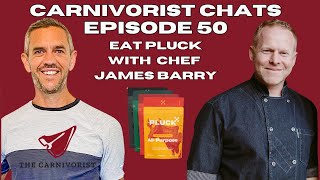
This content was created by James Barry. This content was uploaded by James Barry. This is a YouTube video titled "Carnivorist Chats Episode 50 'Eat Pluck' with Chef James Barry" created on December 7, 2023. It features a podcast-style interview with James Barry, a chef and expert in the culinary field, discussing his journey into the culinary world, the importance of organ meats, and his product 'Pluck' which makes organ meats more accessible. The conversation covers topics like the nutritional benefits of organ meats, the challenges of sourcing them, and the development of new products to include more organ parts.
Chapters
Hello and welcome to Carnivorous Chats. My name is James, your host. I started this podcast to help other folks share their own healing stories and to interview thought leaders and experts in the carnivore, keto and low oxalate space. Before we begin, I'd like to give a shout out to Equipped Foods and the Carnivore bar. As an affiliate, you can use the link in the show notes to get a discount on their products when you check out using the code Carnivorous. Thanks in advance for listening, subscribing and any likes or shares. And now on with the podcast.
Hello everyone, and welcome to Carnivorous Chats. It's James, your host, folks. Today I'm really excited to be welcoming my next guest for today's episode, and that is Chef James Barry. James has been a chef and in the culinary field for over 20 years now, I believe I'm correct in saying. Is that right, James?
Yes, it is. Yeah.
It is such an honor to have you on Carnivory Chats. I was just mentioning to you offline about your company Eat Pluck and the organ meat seasonings. And we're going to dive right into all that fun stuff. Thank you for all that you do. And let me officially welcome you to Carnivorous Chats.
Thank you for having me. It's very mutual. I so appreciate all that you do and spreading the word about health and whole animal. It's, it's, it's. We're all on a mission. We're all a team. So thank you for all you contributed to as well.
You're most welcome. And as I also mentioned to you offline before we started, I've been really enjoying the pure from you guys and I've been putting it in my ground beef burgers, which I have every single morning. So it's a great way to get extra nutrition and up the ante on what I'm already doing for my health. So we'll get into all the details of what you guys are offering at Eat Pluck as we move on in the episode. What I'd like to do, James, if it's all right with you, is to start at the beginning with your. With yourself. How did you get into this space of being a chef? Were you always interested in the culinary field and. And let the listeners know how you started out on this journey?
Yeah, I always joke that I live. I grew up in a household where you knew dinner was ready because the smoke detector went off. So my mom to this day is kind of shocked that she, you know, birthed A chef. I was introduced to cooking at a very young age. I think it was around seven. And he immediately loved it. But I didn't see a career path with it. I mean, at the time, you know, I was born in the 70s. There were two celebrity chefs on TV. It was like, you know, it was like the, the frugal chef, it was some male. I don't even remember his name. I just remember his brand. And then there was, oh, what's her name? She, she did French food, but she. Oh, Julia Childs. That, that was it. That was literally it. So the real avenue that at least I assumed the chef path, that I assumed was you had to own a restaurant. And I, I just for some reason did not. That didn't resonate with me. So I basically made the decision at a very young age that I would make it a hobby. But I was so into it that I was like reading cookbooks for fun. I was like looking at cooking magazines. Like I was really into it, but just kind of went another different path. And then it was 9, 11. That kind of really made me reevaluate my life and look for, well, what am I, how am I spending my time, how am I spending my days? And are the things I'm choosing to do, do they have heart? You know, are they things that I'm really excited and passionate about? And there were a couple things in my life, but I was also doing other things that weren't. So I just pivoted and I started looking into schools. I found a school in New York. It doesn't exist anymore, but at the time it was very much a well respected school where it was teaching people to really think about nutrition and cooking. So not just about the history of culinary, the culinary arts, but really about how do you make the food more bioavailable, how do you make it better for people, how do you, how do you swap out things to make them healthier? Things like that. And that just completely resonated and went to that school. And honestly, it was kind of miraculous. Everything just kind of took off because the school is known for people calling the school to looking for private chefs. And that's exactly what I wanted to do. And so I immediately started building an amazing resume and then eventually got to this place.
Super interesting, James, and thank you for sharing. And if it's all right with you, I just love this because, you know, I feel like I'm talking to a celebrity right now. But you've actually, you've worked for some pretty cool people in your chefing career. I wonder if you wouldn't mind sharing a few of the names that you've, you've worked with.
Yeah, it was pretty, it was pretty amazing. One of the first people I cooked for was a local TV reporter and she was lovely and very well known in, locally in la. But then that kind of kicked off. Word of, word of mouth started and, and eventually I was cooking for Mariska Hargitay, who's very well known for Law and Order. And then from there I got called by Tom Cruise's people and asked to cook for him. And then I ended up cooking for him for two years and, and then from there, Gerard Butler. And then I, eventually I, I, I got to a place where I was like, you know, I, I love my ego, loved cooking for them, loved it. But then I just kind of felt like, you know, I feel like I need to be helping more people though, than just the 1%. I really wanted to help the 99%. And so I pivoted and I started a meal delivery service where I could serve more people. And even there I was serving celebrities like Fergie from the Black Eyed Peas. There were a bunch of other people that are Chris Pine at one point and, and, and then though, but, but here's the, the rub though. I was running that business, but I was still learning how to run a business. So you know, that's the age old thing of like you can be the baker, but you may, you may bake, bake pies really well, but you may not understand how to run a bakery. Like they're two totally different skills. And I was very much like, I know how to cook, but I did not know how to run a business. So while I was running that business, I was still private chefing. I was cooking for like George Clooney and John Cusack. I mean, I was literally huffing, you know, hustling it to make ends meet. As I grew the business and learned a lot of lessons that thankfully I can now apply to my new business.
I wanted to ask you this, James, because in preparation for us chatting today, I listened to a few of your podcasts that you're done. They're absolutely great. And one thing that struck me was, and I'll the listeners know my story and I tell it often, but you may not. I got very, very sick a few years back now and have regained my health by introducing nutrient dense animal foods back into my diet. I was a vegan for six years and my health went off a cliff. And what struck me was you told A story about you got a kidney stone and then talked to the doctor and really put the pieces of the puzzle about how food could affect our healths and what we put in our mouths could impact on the way we felt and the way we live. Please tell the listeners about that experience.
Yeah, I mean, hopefully you feel the same way regarding your illness, that life doesn't happen to us, it happens for us. Right? So even the things that feel dire at the time, they're really beautiful lessons of growth and, and if we choose to look at it like that. And I, I was very fortunate. I had just grad, I just graduated college, but it was such a rush because I was doing theater at the time, and I was part of this Williamstown Theater festival, and it started a week earlier, before I technically was supposed to graduate. And so I. I had to do everything in super time. Like, I had to finish up all the projects, I had to do all my final tests a week earlier than everyone else, while I still had to finish papers and everything. And so how I was eating during that crazy time was I was drinking root beer and I was eating pizza. I mean, that's. And that's literally what I was eating every day, eating and drinking. And I didn't know, I didn't. I mean, I was in college. I thought that's what's the harm in doing that. I. I never had any contrast to what you ate might affect your health until that moment. And I was about two weeks in the theater company, and I just got this immense pain, almost like a constipation. And my friend who was like staying in the dorm with me, he was joking, he's like, oh, you have to go take a poop or something. Like, you know, he was, he was laughing for probably the first hour, and so was I. I. I thought it was just nothing, but then it kept going and it wouldn't stop. And the pain got more and more intense. And he was like, dude, I think something's wrong. You gotta go to the hospital. And here I am. I'm probably like 21. I mean, I'm 3,000 miles away from my family, from anyone I really knew. I'd only been at that theater festival maybe, like I said, two weeks. So I didn't even know the people there very well. Just was in an absolute vulnerable state of, like, not feeling immense pain, more pain than I've ever felt in my life, and not knowing why, like, what was going on. So we went to the hospital and they immediately said, it's either your appendix or It's a kidney stone. And, and then they gave me some morphine, I think, at the time. And, and immediately I felt relief from the pain. And then they just let it pass once they identified that they, they thought it was a kidney stone and it passed and they showed it to me. And l really mean this. I'm lucky that the doctor, when I asked him this question, answered it the way that he did, because a lot of doctors would not answer it this way. But I said, how did I get this and how do I make sure that I never get it again? And he said, well, what have you been drinking and eating? And it's such a simple question, but I promise you, most doctors would not go to food and drink. Like, they just don't. They would say, oh, you know, they might slough it off, I don't know. But I was very fortunate. And when I told them, oh, I was drinking, you know, eating pizza and drinking root beer, he said, well, you need to drink more water. Like what you do affects your health, so you need to be drinking a lot more water, you need to be eating different foods. And it was like, you know, brain explosion of like, just completely altering the rest of my life. And from that day forward, I carried water around. I was more mindful of the fact that what I ate affected my health. And what's scary to me, well, what's a joy is that I learned that at 20. I wish I had learned it earlier and I'm trying to impart that to my kids from day one. But what's scary to me is that I meet 40, 50, 60 year olds that still haven't learned that. So that's a major issue. And you really see it as you drive across the U.S. i did that this summer. I drove from the west coast to move to the east coast. And as I went further inward into the U.S. it's, it's an issue like we, like, we cannot belittle this issue. It is truly, people are obese, overweight, we have chronic health issues. And I'm walking, I'm going to these small towns and I'm going into their grocery stores and they have no options. I don't know if you, if this will make sense to you, but hopefully to maybe people of their listeners. But like if, you know, seven elevens or convenience stores, like in some towns I would go into, that was basically their grocery store. I mean, just insanity, you know, it's things like what we call food deserts where there's just no options, or they're extremely conventional options. Extremely ultra processed options. So no wonder people aren't connecting the food to their health because they can't. You only know what you know. And so if there's no contrast, if there's no one actually like showing you other options, then how would you know?
So true. And I mirror and echo your sentiments on that. And it can be, it can be really challenging. I had my aha moment. Yours was speaking to the doctor, realizing that the food had a huge, profound impact on what was happening to you health wise. And mine was Covid had hit. I was really sick, basically bedbound, losing weight, host a myriad of autoimmune issues. And I watched a presentation online, which is why I'm smiling now telling this story because it had to do with plant defense chemicals and, and Sally Norton and I found, yeah, I've had her on the podcast. And so when I figured out that my diet was actually harming me rather than helping me because I was juicing the highest oxalate foods, bombing my gut every day, thinking I was doing the right thing, and slowly lowered those oxalate intakes and then re added nutrient dense foods back in. And you'll be happy to hear later on when I tell my story that the first couple of foods I added were nutrient dense organ meats. James, I just want to start to hone in a little. We can now again from pain to purpose. And it was your pain that caused you to realize about the nutrient density in foods and also what foods could do to us in terms of both harming and helping us. I think it was in a prior podcast I listened to that you said that your daughter had fallen ill and it sort of. You wanted to find a way to make organ meats more accessible for you by, by formulating this, this form of, of pluck that you did. But before we get into there, I wonder if you could talk to us about why this direction and what has happened to us in, in society in general that we have moved away from organ meats and, and folks like yourselves are bringing us back to this. You know, again, I've had Dr. Bill Schindler on and talked about the historical aspect on the show and also Ashley Van Houten, who wrote the cookbook It Takes Guts. So when I came across you guys, I was so excited to see you in this space. So please let me shut up now and allow you to speak.
Well, you know, I love that you've interviewed Bill because he's a personal friend and I quote him a lot when I'm on podcasts. He Has a fabulous quote where he shared that we are the only species in the world that looks to someone else to tell us what to eat. That hits me. I mean, every time I say it, it flattens me. It really supports the fact that we are so removed from our food system that we have lost our intuitive knowledge of what we need. Because we had it. We are animals as well as every other species out there. Right. Even though our brains might be bigger and might be able to do other things, it doesn't remove the fact that we are animals and we had this knowledge. So the, the question is, is what happened, as you mentioned, like, how did we diverge from this? But then also how do we get back? And I really believe that one of the ways back is to look towards these ancestral, this ancestral knowledge, these ancestral foods that we used to eat. Bill talks about how, you know, millions of years ago we were scavengers at first. Before that we were foragers. But when we were scavengers, we did get some meat. We basically got, we came in after the predators had killed the animal and taken all the good stuff. We got some meat. We got maybe a little bit of other things, but not much of the main three things that eventually changed us. Then it grew our brains, that gave us the ability to have a conversation like this. And as Bill points out, when we became predator, when we had a rudimentary tool and we're able to actually kill an animal, we got three things that we previously had not gotten. And they were blood, organs and fat. Because those are the things the predators eat first. Right? And we finally got those. We also got fire at the time and it revolutionized it, made us who we are now. So that's when I talk about we got to look towards that ancestral wisdom is that's what we got to look at. And one of the biggest issues that I see going on right now is that we're so, you know, obviously we, a lot of people talk about ultra processed foods. That, that's the big kind of topic these days because there is now awareness that these ultra processed foods are so bad for us. Right? But what's happening is we're kind of, I, I find that mentally we're always looking for a simple fix. We're always looking for that kind of magic pill. And, and what I find is we get kind of like this tunnel vision. Like, so right now it's like even for many of the meat eaters, they', oh, just eat rib eye. You know, this kind of tunnel vision of like this Is the answer because it's got enough fat and it's got the muscle, so all you need to do is that. And I just. When I hear that. And I know Bill feels similarly, like, when I hear that, I'm like, wait a second, wait a second. Okay, hold on. If we think about how our ancestors ate, well, let's just. Let's just hypothesize. So maybe there's 31 people in a tribe. Let's just say, right? We took a week to kill an animal. Huge efforts. We got that animal. We bring it back. How many livers does that animal have? How much. How many rib eyes does that animal have? You know, how many hearts? It's like, it's. It's not about picking one thing and being like, oh, I'm just gonna go all in on that. It's. To me, that's not the answer. Because if we're 31 people and we're eating an animal, we're eating the whole animal, and we're sharing parts of it. Maybe the liver is going to the people that need it the most, the elderly, the pregnant people. But then we're getting this. Maybe some of us are getting the sp. Some of us are getting a little bit of heart, some of us are getting the. The ovaries, the testicles. Like, you're. You're getting parts of the whole animal, but you may not be getting just one part. You know, you're. You might be getting other muscle meats, but you might not be getting the rib eye. You know what I mean? So in my mind, we. We have to redefine the discussion. And it's not about ribeyes or even eating, going all in on liver, you know, in terms of organ meats. It's about the whole animal. And so as a chef who's been really good, keen in trying to help people, like, truly, like, I didn't get in it to learn how to make French food or foie gras. Like, I didn't. I'm not interested in the culinary arts, as many chefs are. I'm interested in how can I help people with the food they eat. And so my interest is like, okay, so what are the most nutrient dense foods? And I identified that it was organ meats. I mean, hands down, any measure of nutrients. When they. When those lists come out of the most nutrient dense foods, if the. The. The beef livers on there, it blows everything out of the water. Everything. So to me, that is the true superfood. The question is, though, that how do we get People to eat it because they're not eating it. You know, we've lost the taste for it. We, we've lost the culinary knowledge for it. And then many people are still struggling with how to source it. I mean, before this conversation you mentioned you struggle even finding the organs where you live, right? That's a real problem. So when I identify those three things, I was like, okay, how can I, how can I make this superfood easier to eat and more delicious for people? How do I, how do I solve these problems? And I was very fortunate in that I, that I just kind of came up with the idea of where I could take two, two ingredients that are already in existence. So freeze dried powdered organ meats already happened. You know, this is already something that's done in capsules and then, you know, dried herbs and spices. So both shelf stable, both don't need to be refrigerated or cooked. But if I combine them and I make a powder that you can just add to your food like a seasoning. Now I'm not only solving the, you don't need to know how to cook. I'm also solving the sourcing because where I make sure that it's sourced from 100% grass fed cows, non GMO, not vaccinated, whatnot, you know, from New Zealand. And, and then I'm also making sure that these spices and herbs are organic and that they're, they're as, they're not fumigated. You know, I'm, I'm being very mindful of the sourcing. But the big one that I solve by adding the spices and herbs is I make it taste good. And boom, now you have something that's not only extremely easy to apply, which particularly post Covid, I think is really, really key when we think about health. Covid was a big reminder of like, you know, all these things we adopt, adopted prior to Covid, most people completely abandoned them during COVID like completely. Alcohol sales went up, drug use, baking sugar, it all skyrocketed, the sales of these things. So that tells me that when you adopt a healthy habit, you're going to probably still default to your humanness when your emotions run high or you're scared, right? This is what we see happen. You have a hard day, you go to the freezer and you grab that ice cream, right? No matter how healthy you are, we are human. We can never escape that. So fortunately, by coming up with pluck and do and creating it as a seasoning, it requires no new habit. We already, you're going to salt your food no matter what because that's what gives it flavor. So all I'm saying is instead of using, you know, this, instead of using Lowry's or whatever it is, spice gods or whatever those are, you know what I mean? It's like use this and now you're getting these nutrients that you previously were not. And you're getting it effortlessly and without a new habit, having to adopt a new habit.
I absolutely love pluck and as I mentioned to you, James, that I've been using pure and, and really enjoy it. And the reason that I used pure to start is because inevitably a lot of my followers and listeners are, have struggled with adding certain herbs and spices back in. They may react to them. So I wanted to try out the pure. And it's, as you mentioned, it's such an easy for me. As I mentioned earlier, I just take my ground up beef before I make my burgers, which I eat in the morning and I'm like you said, already adding salt. So I just take the pure and sprinkle it all in to just up the nutrient density that I'm already getting in my burgers. And it's been a game changer, as you mentioned. So easy. James, one of the things as we touch on this subject and we're going to continue on this vein is that I never really realized the difference between swallowing and eating these organ meats. And you often talk about this. There's such a difference and I have noticed it myself. Please tell the listeners what that difference is and what it can mean to them.
I so appreciate you asking this question because it's a very, it's a very important topic for me. So, so just take one step back. So we're talking about organ meats and, and you know, yes, I created this product, Pluck, but ultimately what the big mission, as I mentioned previously, is whole animal. I'm trying to support people in eating the whole animal. So pluck has liver, heart, kidney, spleen and pancreas. So it has five organs in it right now. And guess what, and here's, here's a exciting news is we're going to be adding lung to it and we're adding bone marrow. So continuing that mission of trying to get more and more of this whole animal easily into your diet. And one of the reasons why. So you're, you're eating pure. So pure is just the organ meat. There's no salt, there's no spices and no herbs. One of the reasons we did that version of it because it's really no different than capsules, Right? And this speaks to this question. It's the exact same ingredients that are in capsules. But one of the reasons why I don't want it to be encapsulated is going back to that quote I did from Bill Schindler of how we've lost touch with our food source of our own innate knowledge. And what happens is we're so. We're such a capsule, you know, socialized world these days, right? We're all, like I said earlier, we're all looking for that magic pill. And sometimes it's literal, you know, like even people like Dave Asprey, he's proud of the fact that he eats like, I think he eats like 120, you know, capsules a day. You know, something like that. Or I should. I shouldn't say eats, swallows, right? So, and if that's working for him, great. But I feel like we're losing touch with that once again, that innate knowledge of what does your body need? Because you can buy, let's say, that bottle of organs, right? That the encapsulated organs. You could buy that bottle and it will say on there, you know, eat six capsules. It's like, well, how do they know that you need six? How do they know you don't need two? Four, you know, eight? I don't. You know, it's like this. This idea that there's a standard of what everyone needs is absolute bs. Absolutely. We are bio individuals. We live in different environments. We have different emotional states. We have different backgrounds with different DNA. It's like there are reasons why you may need something different than I need. So in elimination pathways is a big one, right? So if your elimination pathways aren't working, then the person that swallows six capsules of organ meats is probably going to feel nauseous. And I hear this all the time. So one of the reasons why I want you to eat it versus swallow it and why this is so important is because we have a biological system. So our eyes see food, we see color, we see the food. That initiates our response to want to grab it. It initiates the process of hunger. We then bring it closer to us. Now we can smell it. That also supports hunger and eating. And then you start to put it in your mouth. The saliva, the mastication and breakdown of that food in your mouth supports the digestive process. But the whole time it's in your mouth, you're also getting taste. Your palate is communicating to your brain and body. Like, oh, look, this is food. And this has this nutrients in it, and it has this and this and do we need this? And how much of it do we need? Right. And then so forth. It just continues that communication process. Well, I'll use salt as an example. You put salt on your tongue, you immediately connect with that process. Maybe you do one dip of salt on your tongue. Oh, that tastes good. Let me do another. Maybe you do a second. I guarantee you won't be able to do a third, you know what I mean? Unless you're incredibly depleted from sodium. But most of us can get to maybe two. And then guess what happens. That salt starts to taste different. It literally starts to taste different. That's your body communicating you. I don't need anymore. I'm good. You know, you, you've overwhelmed me. I'm. I'm all right. Well, if I take a salt tablet, complete non communication. I swallow that, still don't know the effects, still don't know if I took the right amount. Maybe 15, 20 minutes later, I feel bloated. Why am I bloated? Oh, I got too much of something. So it's literal guesswork. And even when you get tested, and I'm a big proponent of someone getting tested and finding out what their body needs, but even then it's still guesswork because you get tested and you, maybe you, you're low iron. Well, then someone recommends iron pills, right? You're still swallowing them and guessing and hoping that those amounts will raise your levels to the point where they need to go. Even the practitioner that tests you knows that they need to retest you immediately, within a couple of months, because they need to make sure you're not eating too much or, you know, swallowing too much or still not swallowing enough. Right. So they're still guessing. But guess who is not going to need to guess is your own body. If you were just eating the liver, your body, it would taste different if your body didn't want it and need it. So it's an incredible mechanism we have. We just have to take ownership of it and reconnect to it.
Completely agree, James. And it really is so, so important. And by the way, I am a huge proponent of letting folks know that do whatever works for you. I am not pigeonholed in a dogma like I was on my past dietary choices these days. As I mentioned earlier, believe it or not, one of the first forays I did adding animal foods back in the very first was salmon, because being a pescatarian, as my last sort of animal foods that I ate prior to becoming fully vegan, was most known to me. So I added that. But then learning about the nutrient density of organ meats, I actually went and found some liver and begged someone here because as you rightly said, that it's very difficult to access organ meats where I am for some kidneys. And boy, those, those were tough to get down, I got to tell you. The kidneys, yeah. And one of the great things about the way that you do it is you remove a lot of the ick factor as we call it that some people have with organ meat so you can get all the nutrient density. And I'd like you to just touch on about this freeze drying process now what that means. Because it doesn't take out any of those nutrient densities, does it James? And it takes out the ick factor for folks and makes it much more approachable.
Absolutely, yeah. I mean now, any. Now one thing we have to remember is when, when something's living, it is, it is the most optimal, is, it is the most nutritious you're going to get. Right? So the minute you kill that animal, it's starting to degrade, right. The minute the blood flow, you know, the heart stops pumping blood to that muscle or whatever it is, it's going to start to degrade. But it's, you know, small, small ticks. So one of the ways that we immediately try to slow down that process is we freeze food, for example. We. So which is still, it's still going to degrade in your free. It just slow the, the cold slows it down. Right. So that's why you see a lot of times animals being butchered in very cold environments. That's why they immediately sometimes flash freeze or get that meat in the freezer. A lot of times, like in the case of organs, they're freezing it for at least a minimum of 14 days so that it's sushi grade. So meaning that if there are any parasites, anything in there, they're killed off from the cold. But then from there then you have to decide, well, what's the next best way to preserve this food. And so there's lots of different, you know, there's dehydration, there's drum rolls, and then freeze drying is, is another option. And they've just found that with freeze drying there's still, there is still a process of heat. It's still a slight degradation, but it's just not as much as even 120 degrees, which is what most food is dehydrated at. There are also other methods from freeze drying that are they're showing that can be as effective. Like some of those drum drum heating where they do really, really low heat, but they're spinning it as they heat it so it gets, you're able to preserve it really well and dry it out and remove the water. But ultimately that's what you're trying to do. You're removing as much of the moisture as you can while still preserving the nutrients. And that's the best we have right now. You know, that's the best way we have to preserve. When you buy an organ like you, you said you did and you were cooking the liver or the kidney, now once you start heating that you're going to degrade it even more and let alone a lot of people don't even think about this piece too is like, let's just say it's defrosted and it's in your refrigerator and it's taking you a few days to get to cooking it. It's still degrading in your refrigerator too. Right? It's like people talk about this with produce. Like the, the day that it arrived, it's picked from the farm and let's say goes to that farmer stall and you buy it at the farmers market. That is the most nutritious it's going to be. But then if you let it sit in your refrigerator for three to four to five days, it's. Now you notice a lot of times these produce starts to go yellow. You know, it starts to get a change color, it gets kind of more pale. That's a sign that it's getting more and more degraded. Well, the same of course happens to me. So we're just always looking for how, what's the best source of preserving the most nutrients. Right now it's freeze drying from the freeze drying process. It then gets powdered or milled and that's it. So it's technically it's raw, uncooked, frozen, then processed where it's chopped down so that it's uniform size because it's harder to freeze dry a whole heart versus just chopping up the heart, for example. And then it's freeze dried and then powdered and then it gets put in a vacuum seal. We get it and then we, if it's pure, we send it right to you, you know, or if it's with the seasons, we combine it with the seasonings and then get it out. And so it's really the, the cleanest process that I personally found. Sourcing it from the cleanest source, which I believe is New Zealand and oh, I Should say this too. The power. So a lot of people ask why don't you source from, you know, the US there's some really great farms there. And I completely agree. I am so pro farmer and pro regenerative farmers farms and, and anyone out there that's doing it right, you know, I am all for and I want to support them. The reality though is, is that the supply chain is not established in the US and it' very, very hard to get all the whole animal. So a lot of the, the meat processing plants they have, they have HACCP plans that only allow for the retail sale of certain organs. They. A lot of times what happens when, is when a rancher or farmer brings their cattle, the meat processor is technically purchasing that cattle from them and then giving them back only parts of the animal that are part of the HACCP plan. So if you, if they basically have a contract with that rancher, so let's just say 40% of that cow goes back to the rancher. That's the contract. And if they want parts of the animal that weren't in the contract, they have to buy them back from the meat processor. And sometimes the meat processor doesn't even have it in their HACCP plan, so they can't give it to them. So many, many ranchers can't even get access to, let's say like the spleen or the pancreas. Most of them get access to the liver, most to the, some to the heart, kidney, questionable tongue sometimes, but pretty much everything else, it's a crapshoot. You like white oak pastures, for example. They, they get access to most of it, but even they can't get. I think I've talked to them before. I can't remember. There were a couple things that they can't even sell or they, they don't have access to. You know, like I think maybe the lung might be one of them or a couple of things. It's, it's, it's just challenging. And so when I faced that, I realized, okay, we can't wait for the U.S. we, we want to help the U.S. get there and we definitely want to invest in it, but we can't wait for it because people need this help now. And New Zealand is a country where it's one of their, their number, their top three exports is, is cattle, you know, and whole animal parts. And so it's, it's. They've. They've already dialed it in. They, they not only do they. Most of the country raises animals. Well, not only are they Humanely treated. Most of them are on regenerative farms, green grass year round, but they also have access to the entire animal. Like I can get brain in New Zealand. And I'll tell you right now, James, like I'm super excited about this by the way, we are going to be offering brain next year. And I can't even tell you how excited I am about this because here is a organ that we used to eat. In other parts of the world they do eat. And I can't help but wonder, is the reason why dementia is so high now and Alzheimer's is so high, is it because we stopped eating this organ? Because there's that idea of like supports, like you eat the organ and it supports that organ in you. So when I talk whole animal, that's why I'm saying whole animal. Because we, we have a heart, we have a liver, we have kidneys, we have testicles, we have ovaries, we have a brain, we have a tongue, we have all these parts. So if we're eating those nutrient rich parts of another animal, then we're getting those nutrients in our body. And I cannot help but wonder if I know there's lots of toxins in our environment, I know there's lots of re, you know, aluminum potentially is resulting in Alzheimer's. There's lots of possible reasons why these issues have risen instead of going down. But I can't help but wonder if we were eating brain, if we would be offsetting some of the damage that is environmental. So I'm super excited to bring that to people, to make brain accessible to people. Because you cannot get it in the us you cannot retail it in the.
US I am super excited to hear that James, because that is one of the ones that I definitely agree with you that I think there's a lot of things around what has happened to us in terms of our mental states because we stopped having access or eating that. Let's not even talk about all the other organ meats. We're sitting here talking about me as a vegan. But, but as you so succinctly said, so many folks that even include a meat based diet that are just eating only muscle meats and avoiding a lot of the organ meats because either one, they can't access them or number two, there's that ick factor. They don't want to have to cook it or break it down or know about it. So super exciting. Any ETA on these new additions to pluck on? Is it going to be early in the new year? James?
I, I I think so. I mean, I'm. I'm just wait awaiting my import permit now. And as soon as I get that, which should be this month, we'll be placing an order for these things and then it's. We're going to work now. We are keeping. So I mentioned we're adding lung and bone marrow to the blend. So our organ blend. So for example, when you buy pure, let's say by March, I'm just going to throw out a month. It might be earlier, but let's just say by March, you will then have lung and bone marrow in that mix. But brain, we're going to keep out of that mix only because I don't want people's fears, you know, the, the, the fear propaganda that's happened do around mad cow and people making people think that brain is bad for you. I don't want people to not use pluck because of that fear. So we're going to keep brain as its own product. You'll just have to buy it separately. It'll be just like pure, you know, the brain. And you can add it to your ground meats, you can add it to smoothies, you can do whatever you want with it. That's the beauty of pure. And just having the organ meats in a pouch where you can add them to things is the beauty is, is that the, the flavor is not so strong as you're finding with pure. It's not. It's really more neutral. It's got a slight meaty taste, but it's very neutral. So you can technically add it. You can go sweet or savory with it. You really could. I mean, you could add it to a sweet smoothie. If you're someone that drinks smoothies. If you're someone that makes brownies, you could add it to the brownies. Like it, it really can go either way. But the other ones that have the seasonings and salt, those are really savory. And so those ones are kind of locked into that. You're cooking your meals and you're going to add these to your meals or add these to your food as a, as a seasoning salt, for example. But you're not going to probably add those to a smoothie or, you know, or some kind of baked good if you do that kind of stuff, you know, really excited.
And before we just move on to a few of the misconceptions around organ meats, James, I'd like to just touch on the other offerings from Plup, because you have some fantastic other offerings. You drop a Lot of gems in your interviews, which is why I wanted to have you on today, because I just love your enthusiasm, love your product, love the company. And one of the things you said was buy things that are ingredients versus ones that have ingredients in them and some of the other stuff in pluck. What was the thought process behind the garlic, the all purpose and where do those ingredients get sourced? James, for the other folks that want.
To try your other offerings, the seasoning companies or the industry is really interesting. Technically, when you have a food, a food product, you have a formula, right? It's a recipe or formula. And you're bringing that to a manufacturer and you're saying, okay, here's my formula, here's the percentages of the things I use. Produce a sample. And you're expecting that sample to taste identical to what you originally created in your own kitchen or in your test kitchen. Right. What's really bizarre is it never ends up tasting the same. And I've gone to, with, I've worked with three or four different spice companies and every time I get a sample from them, it's totally different. So you're just like what? Like it's a percentage, like it's a, it's a formula. How is this off? But it has to do with how these companies source their ingredients. It has to do with the person, you know, combining the ingredients. They might be a little here, a little off here, a little off there. You know, it's, it's just these slight movements and the sourcing can affect it. Now fortunately, we found this one spice company out of Nevada that sources from regen. Well, no, they, they source not just from regenerative farms but from, from sustainable places. So they're, they're, they're, they're working with farmers that are properly paid that are, that are not being taken advantage of. So they're, they're constantly looking, they're trying to level the field in terms of making sure that the, the farms that they are sourcing their seasonings from are, it's fair trade basically and sustainably grown. So which you would hope that is more regenerative, but I can't guarantee it's all regenerative. But it's definitely not conventional. That's all I can really say. What we, ultimately we're also looking for with things like for example, we use smoked paprika in our all purpose or original and are spicy and smoked paprika. Historically what you see in seasonings is that it's basically it's the paprika, you know, the Bell pepper. And it's basically dehydrated or freeze dried sometimes, depending on who you're getting it from. And then they're adding liquid smoke to it to make it a smoked paprika. We found a true smoked paprika. So meaning that it's actually smoked, the pepper is smoked, gulped, and then, you know, dehydrated, and then. And then powdered. A lot of times these spice companies will add flow agents to make sure that things don't get clumpy. We made sure that there are no flow agents. Sometimes they'll even use wheat in their products to help with the flow agents. We made sure there's none of that. So our product is gluten free. We basically looked for the purest, most natural ingredients that were as little processed as possible. And even lemon peel, for example. So we added lemon peel and lemon. Lemon is just something that, as a chef, I find lemon juice or even zest just brightens food. It's just. It's one of those things that a lot of people don't know that if you ever want to make your food just kind of taste better or just if it. If the flavor is flat, literally just add a little bit of lemon zest in it and it will pop. It just brings so much. It brightens the food, and it makes the flavors in the food bright, you know, like, better. So immediately that's why I was like, okay, I want to add, you know, lemon peel. I want to, you know, I just knew that I wanted to add that because I knew it would add a zing to it. Um, and then everything else is, you know, we chose Redmond Real Salt because I just. I really like them as a company. The nutritional profile is similar to Pink Himalayan, but unlike Pink Himalayan, we know that it's coming from Redmond, Utah. We know that it's an ancient mine. They test it for microplastics. We. They test it for. For heavy metals. And. And then we also test it. So that's one thing that happens is when you order from any company, they have to test their own product. But then when we receive it, we. We test it once upon receiving it, and then we test it again upon co packing it. So, so it's technically by us, it's getting tested twice, and then by them, it's getting tested by twice as well. And we get to see their results and. And then, you know, we get to make sure that it's an integrity. So we're always testing and for toxic, you know, heavy metals before we move.
On to the misconceptions around organ meats. I. I think. And please forgive me. I could. I couldn't recall. I know you were working on it. It hasn't been released yet. You guys are doing an. An extra spicy version. Is that coming out soon, too?
Yes, yes. It should come out in the new year too. So we just came out with a larger bag, so we're kind of just focusing on that right now. But we have. We're going to call it Spicy af and, and I'm formulating it right now. It's going to be a similar profile to the Spicy Mild, but it's gonna have. This is what I'm figuring out right now. If I'm adding habanero pepper or ghost pepper, and I'm kind of messing with both to see. But it's gonna be spicy. One of the things I love about the spicy mild. Well, most spicy food in general, when you get it, a lot of times it's just all heat. There's no flavor. And, you know, that's the sensation that some people get off on, right? They get excited or they like having their taste buds blown out. I don't personally and, and, but I do like heat. So Spicy Mild is very much designed where it's like, when you do get a chance, when you finally, you know, go that route and get to taste it, you'll find that it's got flavor, flavor, flavor, then heat. So the heat comes in at the end, but you get flavor up front. With Spicy af, it's gonna be most likely heat, then some flavor and then more heat. You know what I mean? Like, it's gonna kind of come in layers, so it definitely won't be as much about the flavor, but it will still taste good. It's just gonna be. It's gonna really be. It's gonna be for those people that want the blowout, you know, I'll tell.
You right now, my brother's gonna be one of them. My brother loves the blowout. If he's not sweating, he's not enjoying it. So I will definitely get him a bag of that, for sure.
Cool. Yeah. I mean, honestly, it's an. It's an interesting process when you think about it, when you. When we eat hot things, you know, talking about, you know, ancestral ways of eating, you know, a lot of times certain food, you know, we talk about you can get sick from certain foods. Like, like sushi, for example, A lot of times you're going to probably get parasites from it. But there's certain additions to those cuisines that are designed ancestrally so that you don't get these things or so, so that it's offset. So a lot of people don't realize. Like for example, one of the reasons wasabi is in sushi is to help to kill those parasites in, in the raw. Raw fish. Same with sake, right? Sock? These are two very much a stat when you go to eat in Japan. These foods, they are part of the cuisine. Same with curries, like in hot peppers in, in, in Indian food or in Mexican food. These hot peppers create a response in our body that's no different than killing off a fever. You know, like that's why your body gets hot and you're sweaty. It's like, you know, your temperature rises to when you have a fever to kill off whatever's going on in your body. And well, that's what these peppers are doing as well. And so that's why it's really powerful to eat these hot peppers with the cuisine that it's kind of associated with because it's going to help to support your health and to make sure that you don't get sick from any of the food.
James, I think we need to now go on to the subject of these myths. And I know in this company, and I'm sure a lot of the other companies have had to start dispelling a lot of the myths that have caused us to avoid organ meats over the, the past I don't know how many hundred years and start bringing them back into the fray and into our diets and, and reaping the benefits of adding them back in. What are the, some of the ones that you, these myths that you get encounter most often, I would wager one of them is, is the liver being a filter. I've heard that from you before, but please let the listeners know.
Yeah, I mean the organs are really, that is definitely one where people think that they, they're toxins, they're filtering toxins and also storing toxins. And so that if you're eating them, you're just getting toxins. And that's really not accurate. The more of a, they are more of a filter than a sponge. And I think when people, people may be saying, oh, they filter toxins, but they're thinking they're a sponge and holding on to the toxins, that's not true. Their job is they're processing and converting that potential toxic byproduct into a water soluble form. And that's why I said earlier about your elimination pathways being really important because they're, they're Turning, they're supporting that toxic material and becoming water soluble so that it can leave your body. And how is it going to leave your body? It might leave it through sweat, might leave it through urine, your poop. You know what I mean? Like, your. Any elimination pathway is an option when it's water soluble. Now, if you don't have, if you're not healthy and you don't have proper elimination pathways, then yes, those toxins will potentially get stored in your body. But guess where they get stored? They get stored in your fat.
That.
And that's why a lot of people that are obese, they. When they go through weight loss, if they go through their. Their weight loss is extreme. They get sick because it's. They're. They're losing that weight too fast and those toxins are overwhelming their body. So it's definitely something. There's lots of reasons. You know, I think we are always looking, like I said earlier, for that magic pill. And sometimes that magic pill might be, oh, I just need to exercise, or sometimes that magic pill is I just need to eat right. Right? Or I just need to make sure my gut is good, or I just need to make sure I'm pooping daily. It's like, well, it's not one, it's not one thing. It's. You got to look at it almost holistically, and you got to make sure that all these levers are working and being pulled when they need to be. And, and that's not to scare people, to make people feel overwhelmed. It's more trying to say, like, just take, take little steps at a time. You know, these micro movements are important. And as long as you, if you know where you're going, you will get there. And I. And that's also another thing that people bring up all the time is, well, how much, how much organ meat am I really getting, right? And is it enough? And I'm like, look, how do you know what. Like, who knows what you need? And here's the thing. You can take any aspect of life from intimacy to food, health to exercise, you name it, anything. And if you break that thing down that you're working on, if you break that down, if I, let's say I have intimacy issues, is hugging someone once a month gonna solve my intimacy? My intimacy issues, if I have exercise issues, is me working out once a week gonna move my exercise needle? Not much. But what is gonna move my needle on anything is the little things I do daily. It's all about habits and what we do daily. So, for example, If I want to like someone that goes for a walk after they eat daily versus the person that works out once every other week, the person that's walking. So doing lower impact, but doing it daily is going to be more fit and healthier than the person that did it once every two weeks. And that's the reality is our humanness sometimes pushes us into these extremes of like, I just got to do this and I got to do a burst of it and then, and then you, you burn out and then you don't do it it. And this goes with binge eating, to exercise, to intimacy, you name it, right? We become addicts to like, I just need this rush and then, and then you fall off the wagon or whatever it is. And so I'm here just trying like in and pluck is very much this product of like. No, it's just, just use the micro amount every time you use it. And you're going to get these, this micro dosing frequently because you're using it daily, multiple times during the day. And that's cumulative effect. And we see this, this positively and we see this negatively and negatively. We see it in the world as glyphosate. When glyphosate came out in the world in the 50s and Roundup, we were told it's micro amounts, it will not affect human health. And now it's in our water, our air, our soil, our food. It's in breast milk we cannot get rid of. There is, there is an actual belief that it's killing us like that this is something that will not leave our, the environment. You can't get rid of it. And so it's just accumulating in our bodies. It's accumulating in our environment and our food and whatnot. And it's now extremely toxic. And it probably was even at micro levels, but it's even more so now. So that's an example of micro dosing that we got little bit of because a roundup was sprayed everywhere and now it's even in, you know, some GMOs. And then, you know, over time now it's accumulated. So I just choose to look at the micro dosing and that kind of those micro movements for healthy things. Like I want, I want us to move our health, health, health needle. Doing it with really clean food, really healthy movements. And, and I have no judgment over like, is it extreme or not? I'm just saying just do it. Just do. If it is extreme, then just do a little bit each day. If it's not extreme, still Do a little bit each day. It's like, just do it though. Don't wait. Like, there's that idea of someone had this great quote at this conference I was just at. They said it's not about one day, it's about day one. You know what I mean? It's like, start now. No, it's not. You know, you don't want to be in this place of waiting for this perfect moment or like, oh, well, I want to eat healthier, but I want to first understand what's going on. It's like, no, just you get plucked now. You start sprinkling on your food and boom, that's one little movement. Maybe the next movement is you now go for a walk after your meals. Maybe the next movement is every time you drink a soda, you're now also you're. Instead of grabbing that soda, you're grabbing water. You know, I mean, I think, I imagine you're. Your journey was a perfect example of micro movements, right? You couldn't, you were so sick that you couldn't do drastic things, right? You had to do little things at a time.
100%. I tell the story. I literally slowly started regaining my health and strength back then as I ate more nutrient dense foods, it switched my brain back on because I had had brain fog, chronic pain, arthritis, you name it. I was just as stiff as a board, thin as a rail, and then started slowly incorporating exercise. People look at me now and they're like, James, you're getting jacked here. What's going on? But you know, I tell them I started with exercise bands, just the bands resistance, and slowly worked my way and it, it was nothing. It is still nothing short of a miracle to me and I, I thank so many folks, which is. Brings me full circle as to why I'm doing stuff like this Today is starting the podcast because I listened to podcasts to figure out my way back to health and adding the proper nutrition back in my diet. And James, you touched on something and you know, yes, the journey of a million miles begins with one step. It's so true. And we often talk about in the carnivore community that January is world Carnivore month. But I love what you got going on, man. It's organuary. It's coming. So how can folks now, knowing what they know and if this is the first time hearing about Eat Pluck and your wonderful products, how can they start incorporating more stuff? I know they can go on the website and look at some recipes, but can you give some folks some easy Tips on and incorporating your products back into their diet.
Yeah, absolutely. So you're referring to organular, which is when we take over January, we have an organuary challenge and that challenge is to support people and challenge people that just have organs once a week. And we have a fantastic campaign that starts, you just opt in and in that opt in is coming. We'll definitely look for it at our website, eatpluck.com, on our socials. We're also Eat Pluck. There'll be announcements soon, soon on how to opt into that. And it's just a really fun campaign where we, we educate you on regenerative farming, we educate you around organ meats in a fun way. We're also going to educate on healthy oils and fats to use in your diet and then we educate on whole animal and just how you know the importance of what the quality is and what to look for. And, and then you get assigned these tasks with each email and those that do the tasks at the end of the month, month, you have the potential to win. I think this year it's going to be like nearly three thousand dollar prizes. I mean it's like it's an immense prize of all the different sponsors that are contributing products. It's going to be awesome. I think this will definitely be every year we try to top ourselves. So I think this is going to be an amazing year. But in terms of just, you know, of course you can purchase our products, you can purchase on them on Amazon, you can purchase them at our website Eat Pluck. But we're not just like, I would love it if you buy our products, but if for some reason you're not in a place to do it, then you can still start eating whole animal. And it really starts with that first step, which I'll throw out a few in case one of them applies to someone listening. But the first step might be, let's say eating chicken hearts, for example. Chicken hearts are extremely mild, they're small, you can chop them up so they don't look like a heart. If anything, I treat them like mushrooms. And you can throw them into your ground meats, you can throw them into sauces, soups, stews, whatever you want, but they're extremely mild. And the key with any organ meat, if you're adding it for the first time, something is just keep the ratio down. So if you have a pound of meat, you know, maybe you're only doing two tablespoons of that organ meat into that ground meat. I just caution people from putting more than 20 to 25%. So like if it's a pound of meat, you're not going to do more than like a fourth of a cup because then it's going to start to potentially change the texture of that, of that meat. It might also tech change the flavor. So just keep your ratios down a little bit when you're first starting out. Chicken hearts are great for a start. If you do end up buying a beef liver, you can keep it frozen. It's when we unfreeze it that it's most overwhelming. So just keep it frozen and you can grate it into your ground meats and then put it right back in the freezer and it just will last longer and you just use it, you know, when you, when you can. And it won't be as overwhelming once you graduate from that. You can also do things like just, you know, cut little pieces of that liver off and basically what they call like liver pills. So, and I'm not a huge fan of this, but I'm, I don't want to stop anyone from just getting liver in their diet, so I'll share it. But you're basically cutting, you know, you're taking small liver pieces like the size of a capsule and you're freezing them like that and then, and then basically you keep it in your freezer and then you swallow it so you're not actually chewing it. And that's one of the reasons why I don't like it. But, but it's, if you're not getting liver in your diet, it's a great way to do it. Now the other thing you could do is if you are someone to eat smoothies, you can take those frozen bits and throw em into your smoothie, blend it up and you won't even taste it. And then eventually graduate to other things. Like on our website, as you mentioned, there's recipes you can eventually move towards doing like the tongue. Tongue is a great delicious option. It's not hard to make. It might seem overwhelming because it looks like a tongue and it's not something most people are used to. But if you just go to the recipe, you'll see it's incredibly easy and delicious. Once you do it, you'll, it just gets easier and, and you'll get really fast at it. And I think we've turned a lot of people on the tongue over the years and made them realize that it's kind of the one. It's, it's more affordable than the rib eye that we talked about earlier. But it's also tastier and it's more nutritious. So it hits everything that people complain about, you know, of like, oh, the scratch, you know, all things. These, these, you know, I have to be wealthy to be healthy. You know, that concept of like, oh, like all this 100 grass fed meat, it's just so expensive. It's like, well, yeah, if you buy the ribeyes and the London broils and the New York State strips, those. Yeah, it is. But if you buy whole animal and, or a CSA or you, you know, you, you kind of look outside of the grocery store and look for other options, you'll find that cuts like the tongue are $7 versus that $25 for the ribeye.
Absolutely. And thank you. Those are great tips. Very, very great tips. James, the last thing I just want to chat to you about briefly is that I had mentioned that we had, I had the good privilege of just meeting you very briefly at Ketocon. One other person and his wife that I met at Ketocon, and I know you guys have a synergy together, is Philip Mies. And I had Philip on the podcast as well. And I'm a big fan of the Carnivore bar. How did that synergy come about with Eat Pluck and the Carnivore Bar? And it's such a great one. I tried that when they were first unveiling the Zesty garlic Carnivore bar. That includes your seasonings. Really great, really great.
Oh, that's cool. You got to taste that. Yeah, I, I love, I, I think their barbecue one, the honey barbecue and the zesty garlic, those are my favorite of what they offer. I, I, I think they're phenomenal. Yeah, that was really fun. He, he found us. So Philip gets all the credit for the idea and all that. He found us, but he didn't actually reach out to us. He just started ordering it wholesale. And at first we were like, what is the Carnivore? Because I saw the name of the company, I was like, is the Carnivore bar like a broth bar but it's only meat? Like, like, what is this? I thought it was a restaurant or a cafe. I didn't know it was a literal like protein bar or a meat bar. And so I just called him up and I said, hey, can you tell me about, about you and who you are and what you're doing? And, and then he explained and I'm like, oh. And he was then just developing it and so he was like, hey, can I send you some and get your feedback? And, and a lot of times when we do work with companies, that's what we do is since I am a chef, like, I always offer my services and support the, the development of the product. And he did that. And, and the feedback I gave him was one that they had already gotten and they, and, and, and he listened and he was, he was already on the same page, which was to basically pull back the honey and to increase the plus. And, and he did that. And I really believe, like, that honey barbecue bar to me is craveable. It's. It's my favorite meat bar, hands down. It's so good. The zesty garlic is also good. The, the, the one thing that I know some people sometimes might have issue with is some of the texture because it's kind of gritty due to the garlic, but to me, it tastes like a crouton or something. You know what I mean? It's kind of got that garlicky crouton taste, which I, I don't mind at all. I, I love him. Yeah.
I mean, Philip is just doing such great stuff. I'm, I'm a big fan of theirs as I am a big fan of you guys. Where can folks find you online and connect? I'll make sure to have all the links in the show notes, but. And also let them know in addition to that, where can they find you? Maybe in person at some upcoming conferences that you may have committed to, they should be aware of.
Yeah, that's a great question. Well, we're going to be at what's called Ketocon, but this now they're, they're, they've rebranded now they call it hack your health by ketocon. So we will be there. That's at the end of May, early June. We're going to be in Dallas at an event in March, and, and then we always go to wise traditions that will be at the. Near the end of the year. That's Weston A. Price. We're, we're, we're big fans of them and fully support their mission of food freedom and just nutritious food. Those are the ones we have planned right now. But you can, if you, if we. Well, we actually, we also have a couple of homesteading events that I'm excited about. But we'll, you know, if you follow us on social at Eat pluck on most socials, Facebook and Instagram and I think on Twitter it's just eat underscore pluck. That's the only difference. But find us there and we'll make sure to announce the ones that we're going to and we do hope to see people there. We always give discounts of the product when we sell at these events. So it's a great way to save money. But more importantly, we just, we love talking to people who need support or help. We also love talking to people like yourself who have, who are shouting from the rooftops about their health changes because I really do believe in your experience. I, I really believe that, you know, I, as we mentioned at the top, I've been in this business over 20 years and I, I used to help a lot of people that were vegan and vegetarian. I would, I, I wasn't in the business of trying to convert them to a new diet because I believe everyone needs the dign process. So if you are vegan or vegetarian for some reason you're listening to this podcast. Lucky you, first of all. But secondly, like have the dignity of your process. If you're listening to this podcast, maybe you're starting to think about doing something different. And I hope that the, the barometer for what inspires you to do something different is your body. I always try to tell people that is there's lots of trends out there. There's lots of people that are going to share their experience. Does that mean it's going to work for you? I don't know. But I do know that there's one thing that we all have that will be the barometer and truth sayer of anything that goes through our mouth and that's our body. If your body, if you follow any ethical or, or if your brain follows any diet, your body will then tell you if that, that diet's working or not. And so I just ask everyone out there to listen to their body and ask for help when it comes up. And we're always available. If someone just wants to talk organ meats or learn about the same other ways of how to get them in your diet, we're here to not just sell product but to, to support whole animal nutrition.
So perfectly said. And what a great way to end out the podcast. Chef James Barry, what an honor and a privilege to have you today on the show. I really appreciate your time and thank you. Thank you so much.
Thank you, brother.
And that's a wrap on this episode of Carnivorous Chats.
If you've made it this far, I want to say thank you for listening and also thank you in advance for.
Liking, subscribing or sharing this episode.
Thanks again to Equipped Foods, Carnivore Snacks and the Carnivore Bar.
Don't forget to check the link in the show notes to get a discount on their products.
Until the next time, be well.










