Celebrity Chef James Barry's Secrets to a Nutrient-Rich Diet with Organ Meats
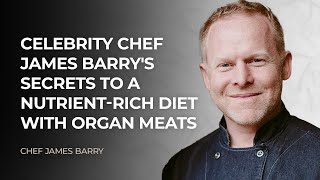
Chef James Barry explains why organ meats matter nutritionally and how to actually eat them. He created Pluck, a seasoning designed around organ nutrition, and argues that ancestral diets got this right. Organs deliver concentrated nutrients for skin, hair, and nails that muscle meat doesn't.
Chapters
Foreign. Hello everyone. Welcome to the Biohacking Beauty Podcast, the top podcast for anti aging skincare brought to you by Young Goose, the world's first biohacking skincare company. A company devoted to unlocking youthful skin at the cellular level, ensuring real and lasting results. I'm your host and CEO of Yungoos, Amitai Eshel, and my aim is to simplify the journey to youthful skin aging. In each episode, we'll provide you with expert strategies to help you biohack your beauty and reverse the biological clock for both your skin and your body. So get ready to rediscover a more youthful and rejuvenated version of yourself. Today's guest is a personal friend of mine, someone I just adore and also adore what he makes. So his name is James Barry. Chef James Barry. He has 20 years in the culinary field and he started as a private chef cooking for celebrities such as Tom Cruise, George Clooney, Jared Butler, Sean Puffy Combs, Barbara Streisand, and John Cusack. Most recently, James launched his first functional food product called Pluck, an organ based seasoning. It's the world's first, first of its kind and an amazingly easy and a personal favorite of mine for, for. For me to be able to introduce more organ meat into my diet. James is also is also a published cookbook author, having co authored the recipes in Margaret Floyd's book Eat Naked and co authored the follow up cookbook, the Naked Foods Cookbook. He most recently co authored the recipes in Dr. Alejandro Junger's book Clean Seven. So I hope you enjoyed our conversation. Really spanned everything that's got to do with, you know, organs, how they affect our body, how they affect our skin, and healthy eating as a whole. So I hope you enjoyed this episode. Without further ado, please welcome James Berry. So first of all, James, welcome to the Biohacking Beauty Podcast. I always love having friends on the podcast. So happy to have you here.
Thank you so much. It really is a pleasure. It's been such a joy getting to know you. We met at all the different biohacking events and just since we go to so many, we keep seeing each other and I love, every time I go I feel like we just get closer and closer. So thank you.
Yeah, first time, I think it was in Ketocon and you know, I just woke up to the booth. Hey man, I've been using your product. I love you. You have a groupie that you don't know about and you know that started from there. But just like I'm, I'M you know, you, you made the, the, basically the seasoning for me, right? Because I, I love organ meat. I love the idea of everything that I'm doing. I love the idea of micro dosing over and over and over again rather than, rather than getting like mega doses at one time.
So I'm so glad you say that though, because. Well, well, first I'll say like, you know, when we went to. Because we all saw each other, I think Dave Asprey's LA event, his last LA event, and it was really interesting because we were one of very few food products at a biohacking event, first of all. And secondly, you know, we're a natural product. Like we're using real food across the board. So there's nothing synthetic, there's nothing laboratory made, you know, which I think sometimes you associate with biohacking that it's gonna be some newfangled modern technique, something different. Right? And, and we got so many comments at that event of people saying you were our favorite biohacking find. And I was like, wow, like, like I never even thought of our product as a biohack. But it really is, to your point. I mean, it really is. Like we're, we're, we're helping you get organ meats into your diet in a way that you don't have to deal with the taste, you don't have to deal with cooking them, you don't even have to deal with sourcing them. Like, like we're removing, we're making it a hack, right? We're, we're removing what used to be a time consuming process, process for people and we're making it easy. But I'm super glad that you brought up the, that you're into microdosing because that is really, I'm finding more and more that's my message to people. Like, I think that in general the body is completely overwhelmed. Modern life, the world we live in, is extremely overwhelming on levels that we don't even really cognitively understand. I think, I think that it's happening on such like, there's so many like little issues that are constantly going on that are affecting our health. And it's, I call them like the nagging, the kind of nagging health issues that we, that keep us kind of low energy or weak or whatever it is that we're just so used to and that we plow through. So I actually tend to believe that on a, on a certain level we are constantly battling and needing to biohack to overcome these low hanging, you know, these low issues, these low frequency issues. But because of that, when we do these drastic things, you know, do these intensives, that our body actually struggles with them more than we realize. And I think if we just did micro amounts and gradually let these things into our body, that we would flourish.
Yeah, I think, look, there is so much to unpack in what you said, but I think we really do not think of aging as entropy. And that is what it is. What we are trying to do most of the time is trying to take what is lost, which is like again, which is something around the aging process or our biological age or whatever that is, and try to aggressively alter it to a younger state. And we can do it in many, I mean, the, the, the wish to do it exists in many different things. You know, I just had a conversation over lunch with our friend Natalie Needham and I was talking, I was talking about, you know, a study that used growth hormone to rewind the biological agent six months. But it doesn't mean that you aggressively pump your body with growth hormone for life and every, you know, so often you rewind another and another and another six months. No, this doesn't work like that. For the most part you can get some result if you're doing something aggressive. You can get a short term results, but you can't duplicate over and over and over again. Most of the way that we should address aging is by lowering entropy, like lowering the mistakes that are happening and not being repaired on a regular basis. And when you do something drastic, yeah, you could get positive results, but you also are providing more opportunities for mistakes that are accumulating in the system. So you might be measuring whatever you want to measure and you're succeeding to, you know, tackle aging there. But there is a very high chance that you're actually exacerbating aging somewhere else. And obviously skin care is full of it, so.
Absolutely. Well, and you think about, I mean, talking about skin, right? And just how the body stores, let's say fat, for example, like anyone that's been really large. And I know Tom, Tom DeLauer talks about this because he used to be large and now he's a Greek God, basically. He's so fit now. He's one of the fitness guys out there. But he talks about how he has these stretch marks because he clearly lost that weight. You know, when you, when, when you get big and you lose the weight too fast, you're, where does, where does it go, right? It's like what happens? The body can only do what it can do. And of course we can Regenerate cells. We could do all these different things, but we can't do it faster than the body knows how to do it. And so I think we're constantly at battle, you know, as we age with nature and just the natural order of things. And sadly, you know, when it comes, like I'm always talking about this with detoxification because a lot of people make the mistake and hopefully your audience is not, you know, they are past this myth. But in case someone still believes this myth, let's demystify it or demysify it, I should say. Some people think that they avoid organs because, particularly liver and kidney because they think that they are a detoxification organ. Yeah, they think that they are storing toxins and that is absolutely not true. Their job is to basically turn toxins that get into your body, into water soluble form so that they can leave your body. And so they're more, they're not a sponge, they're more a filter, right?
Yeah.
And if the actual toxins got stored in the kidney or the liver, then your, your body would not function. And of course that can happen. You know, alcoholism can make that happen. Right. There's things that can make that happen. But, but it doesn't happen in a week. It happens in like 40, 50 years. I mean, it takes a long time. That's how resilient our bodies are. But where it does go is it gets stored in the fat.
Yeah.
And so I'm always telling people like, like if you detoxify too quickly, you could have major issues because those toxins will flood your body.
Yeah.
You know, so, so it's to our advantage as humans as part of nature that we do everything gradually if we can, in my judgment.
Yeah. By the way, it does happen in professional sports where someone would use a, an illegal substance. They're going to get, you know, they, they're going to get, you know, caught or not caught. They're going to get, you know, banned. Let's say it's the Olympics or whatever they're going to get, they're going to pay for, for what they did. But because a lot of sports, you know, mainly like, you know, wrestling or boxing or whatever that is, require you to fluctuate weight frequently. You're actually getting, a lot of the times these athletes test positive again for performance enhancing drugs, not because they've used anything again, but because the fat stored some of it and it keeps releasing into their system. So that.
Absolutely. Well, you hear that around acid. I mean, you hear that around other things too, like. Yeah, like if you've done it too much that eventually like you can have a really. You could go into a sauna and then come out tripping. You know, I mean, things like that. No, it's, it's. I mean all to say the body is miraculous. I mean the fact, the amount of issues that. Oh, you know what? I, I just want to make sure. I'm like, it's, it's not, I'm not seeing any bars on my.
Yeah, I, I can see. That's good.
Okay. You can. Okay. I don't see. Okay, cool. Sorry about that.
No.
All to say the body is miraculous and the things that it is constantly dealing with on a daily level and the fact that we're all doing as well as we are. You know what I mean? And I know a lot of people are not thriving, but they're still alive, they're still functioning. And that says a lot because in many ways, you know, we, the foods that are coming into our diets and I, and, and I definitely, I, you know, when we talked about me coming on, it was like, well, can you connect your, your product to skin care? And I was like, well, dude, like your skin's the biggest organ and what you eat dictates.
Yeah.
Your skin so much. Right. More than anything. And, and so I find it fascinating that we are in this dilemma. And I truly mean we're in a obese demic basically or obesogenic society in the sense that we are in, particularly here in America, we are being promoted to be fat because the foods that we are being provided are artificial. They're not conducive towards our well being. And then we're in a country where the government is kind of pro. The company doing this. Like they're, they're with the companies versus on our, on our side in terms of trying to take care of our health. And that's something that's really important for people to remember is that our government isn't in the business of health. They're in the business of sickness. And so they are on the side of these corporations. They're on the side of maintaining high, high amounts of profit margins. Yeah, profit margins and people in healthcare needing to keep that up. So we're really in a battle like towards not being obese. Because if you do nothing, you will be obese.
Yeah.
Guaranteed.
I think it's also, you know, it's, you are you, you only can change what you measure. I think we hear it more often and it is 100% true. And we're in we're stuck in a loop where what we are measuring when we're talking about our diet is I, you know, saying misinformed. I think it's, it's again, it's very general, but the statistics that we live by are statistics that are dictated by not only drug companies or anything like that, but by conglomerates that own very large pieces of whatever pie that is. So it could be distribution, it could be, you know, poultry and, and, and, and, and meat, like an, and beef. It could be whatever that is. You're getting a huge player that doesn't only, that doesn't only look to cut costs and their end, but they also dictate what you are measuring and they are you, they're sitting on both. It's like they're playing, you know, ping pong with themselves. You know, they, they are hitting, they're serving and they're hitting back. So you're dealing a lot with a system where you cannot affect that system positively even if you're within that system, because you can only affect what is being measured. And what is being measured is also dictated by lobbying, et cetera, by those big conglomerates. Right?
Well, I mean, yeah, it's, it's, it's very fascinating. I mean, I'm, I'm kind of, I'm, I'm in a battle within myself just around like, well, how, how much should I believe in the science? And I'm putting air quotes up, right? It's like, how much should I believe in the science versus you know, just innate knowledge of, well, what makes sense to me as a, as a, as a person, as a human. Right.
Yeah.
Just kind of my own experience with something versus this, the science. And one of the reasons I have that struggle is exactly what you're talking about, Melanie. Like you look at like during the 80s when it was promoted that, oh, you know, you can eat anything you want, but you just need to exercise, you know. And then we only found out, what, five years ago, that that was actually all funded by Coca Cola.
Yeah.
You know, you know what I mean? So they were at, they were teaching us that, oh, you can drink Coca Cola and it's okay because you just need to just go exercise and you're fine. It's like, well, no, it's not that simple. Now we know that, but we're, we're just constantly learning that these corporations are paying that, that these, these, this science is curated by a corporation or by someone with an agenda. And we are, as you said, we're getting misinformed by it. But we think we're informed, we think we know we have it figured out.
Yeah.
I'm battling that within myself.
I get it completely. And also, obviously, you're coming from a person that is dealing with. I mean, you're trained as a person that deals with the end result of that, which is food. You know, I. I wonder how. What. What's the. What's the journey like from. From being a. Just a person that's interested in, you know, in, you know, whatever you're interested to become a chef. Whether it is the end results, whether it is how you treat the ingredients, how does it. How do you become a person that is kind of a spokesperson for. For integrating, you know, organs into their diet?
Yeah, that's a great question. So. Grew up in a household where food was. We were not foodies. You know, it wasn't about. We were very much a frozen, frozen vegetable, very American diet household. My parents didn't necessarily know how to cook that well. Like, I always joke, and it's actually true, though, that the smoke detector would go off and then we would know dinner was ready. You know, like, it was very true in my household that that was the case. You know, hamburgers were known as hockey pucks. You know, things like. So for me to then have that contrast and become a chef, my mom to this day is like, I don't know how. How that happened, but what I've learned since then is I think that food for me became a love language. It was how I express to others how I feel. But then from there, I kind of was battling my own demons like I used to. Well, I didn't know it at the time, but I. Looking back, I'm like, oh, I think I had a. You know, I think I had a. A bad relationship with food because I would sometimes starve myself and then, like, go, you know, kind of binge. You know what I mean? But, like, back in the day, there was really no focus on boys and food and, like, having these issues. A lot of it was towards girls, you know, or women and. And assuming that they're the ones that are anorexic, they're the ones that have these food issues. But it's like, well, a lot of males were going through something too, and to this day, they. They even more so are. But it's just not a lot of attention was given.
Yeah.
So I. I didn't really classify myself as having food issues like that, but I definitely look back, and I was a very picky eater. I. I kind of ate the same Foods over and over. I was scared of food. And yet I loved cooking for others.
Interesting.
And so I had this extreme passion for cooking. I did not see it as a career though. Back in the day, there were really two people that were on tv. It was like Julia Childs and the Frugal Gourmet. And it was like, that was it. And they were on pbs, you know, so the only path towards becoming doing something with cooking was owning a restaurant. And that's crazy hours. And I didn't want to do it, so I just saw it as like, well, this will be my hobby.
Yeah.
And so spent the rest of my life kind of just learning about it and enjoying learning. And then 911 happened. And that got me re looking at my life and just kind of wanting to make sure that everything in my life was. Had heart that it was. I was following my passions and I realized that cooking was a passion and I needed to do it. And then at this time I was like, well, I was living in la and I'm like, well, I could cook for celebrities and be a private chef. And then I can really help people. Because I was also starting from college age on, I was really getting involved in wanting to understand, well, how does food affect our health? Now I had a personal experience that happened that really taught me that food affected my health because I got a kidney stone and I got it right out of college. And a kidney stone, for anyone that hasn't had it, is extreme. Extremely painful. Like, extremely. It's the closest a man could get to having a child. It's how painful it is. And so what I faced in that moment was. And I really, I was like 21 at the time and I did not notice. And this may be shocking to your audience, but let's, let's really face it and let's own up to this. Most people still don't understand this. The food you eat affects your health. Now, I know that's such a simple concept, but I did not understand that at 21, I thought I could eat anything and it was still okay. And the first question after I passed that kidney stone, the doctor said, or I asked the doctor, I said, how do I make sure this never happens again? The doctor said, well, what have you been eating and drinking? And that was the most amazing question I could have been asked. And I was like, oh, well, I was drinking root beer and eating pizza. Like, what's wrong? And he's like, well, have you been drinking water? And I'm like, well, isn't water and root beer like it's not all like sugar. And he's like, well no, no, you have to drink water. Like, I didn't know these things. And most of America, you know, particularly middle America doesn't know this, you know, so it's like, so that was my education. And from that point on I was really curious about like, okay, how, what is human nature? What do we gravitate towards with food? How do I support someone to get healthy if they want comfort foods, for example? And so when I became a chef, that's how I thought. And immediately I realized, okay, as, as humans, we do a food is very emotional. We gravitate towards certain foods based on our childhoods and based on our emotional experiences with those foods and who cook them for us. We carry those through our lives. And so one of the questions when I became a private chef to all the different people I worked for and celebrities and whatnot is I would always ask them, so what did you eat as a child? And what did you eat or what do you eat when you have a hard day, you know, or when, when you're just emotionally rot, like what foods do you gravitate towards? And then you would, you quickly learn what the textures are for that, for those emotional states that they get attracted to. And once I got that information, then I could take that, the texture or the flavors or the genre of food and I could then make the healthy food fit that description or those characteristics. And so that's what I became known for. And what's interesting is a lot of people don't realize that it's kind of this simple. So most people, when you're eating out, most people at home, they're buying the products already pre made. And when you buy a product that's pre made, it's coming from a company or from the grocery store and they're, they have a bottom line, they have a need to make a profit. This is all obvious, right? Well, so they're using ingredients that are cheap. They're also, if it's, if it's a shelf, if it's a product that needs to be on the shelf, they're also ensuring that it has a long shelf life. So they're adding stabilizers, they're adding these, these ingredients to make it not separate, to, to ensure that it will stay on that shelf, shelf for as long as possible. Because the longer it's on the shelf from, you know, grocery store terms, it means they can actually make a profit. Because what happens if you have a perishable good or something that is Too close to its expiration date. The store pulls it from the shelf, they send it back to the company, and guess who pays for it? The company. So the margins on food is very low as it is, but there's a racket to it. And so the goal of any grocery store is long shelf life and stable food. Like, so there's no that the texture or the consistency of the food is stable. So that's why we have all these preservatives and these kind of additives that are doing exactly that in the grocery store. Right. Well, most of us are eating those type foods. So as a chef, I would come into someone's life and I would make a dressing from scratch and I would not add sugar. If I wanted to sweeten that dressing, I would add a date, for example, a real food. If I wanted to sweeten a sauce, I would caramelize onions and then blend those into the sauce. So once again, a real food. I was just using real foods. I was using foods that are ingredients versus foods that have ingredients. And by doing that, I started cooking for these people that were particularly moms that had had children and that could not lose their, their baby weight.
Yeah.
And they started eating this real food made from scratch. Made in the way that low sugar, low carbs, all that stuff. And they lost their baby weight and they were flipping, they were like, what did you do? They started looking at me as a miracle worker and I'm like, I'm just using real food. So that's kind of where I started to gain my fame. And I started working for all those different celebrities like Tom Cruise and George Clooney. And I was just, I was just making, I got known as like the guy who's making things from scratch, that's making real food. That's. That can kind of, that can comes to you with some nutritional knowledge versus is just kind of doing your bidding. So I was kind of like supporting people in that way. But here's what's interesting. So my product is all about organ meats. So you would think, well, are you cooking organ meats for Tom Cruise? Are you doing these things? It's like, I wasn't. Because even though I knew about it, even though I knew that it was a nutrient dense food, even though I knew that it was that of how to do it, how to get it into someone's diet, I wasn't eating it like. So I. It's like it wasn't something that I was incorporating because I still didn't see the importance of it. What made Me feel like it was time to really relook at this was me having kids. So when I had a kid, when I had my first daughter, I was like, wait a second. I want my daughter to be as healthy and as thriving as possible. So what foods are going to support her with that? And of course, it's the most nutrient dense foods on the planet. You can search them online. It's organ meats. Hands down. Hands down.
Well, we know that archaeological evidence showed that a lot of the time in more thriving Paleolithic societies, we can see that the most prized food was the organ meat and that what we call muscle meat or, or, you know, bone, bone attached meat was, was actually fed to the, to the dogs. So obviously we can see, we can see animals eating first the, the internal organs and then obviously eating everything else. Because, because in the animal kingdoms, you're on a very, you know, limited time where you can, you know, when you can.
Yeah, you're looking for the Mac. You're trying to maximize the nutrition as much as you can. Efficient eating. Bill Schindler, who is a professor of archeology, he talks about how, you know, you look back in the evolution of food for how we evolved and how our bodies evolved, and basically you could see a point where we started out as he would say, scavenger, or actually foragers first, which is very time consuming. Then we became scavengers. So at that point, we're still coming in after the predator has eaten most of the food and we're getting scraps of meat. So we are getting scraps, meat there. But still nothing really changed, nothing really evolved. And it wasn't until we got a rudimentary tool and we're able to become the predator. We got three things. He talks about three things that we did not get before, and they were blood, organs and bone marrow. Yeah, yeah. And fat, basically. Yeah. So it's like those three things catapulted us evolutionary wise and enabled it so that you and I could talk as we are now.
By the way, shout out to Bill Schindler. He has an amazing book. What is the real human diet?
No, it's called Eat Like a Human.
Eat Like a Human.
It's a great book. Great book. Lots of really great, authentic recipes on how to cook using old ways, ancestral methods. And he's just a great guy. He and his wife are both fabulous and, and they have a really great school slash kitchen in Maryland and anyone could go to. It's called the Stone Age kitchen.
Yeah, yeah. And they make like super Cool, like cheese from scratch and really, really cool stuff.
And they sell pluck. Like, even, even here he is, he's a professor of archeology. He talks about people eating organ meats and he's like, yeah, man, pluck is so easy to like. Like they're advocates of it too. Cause they're like, like the reality is, is we could talk till we're blue in the face about how nutritious organs are, but the reality is, is 94% of Americans are nutrient deficient.
Yeah.
We're 70% of us are obese.
100%. And, and you know, talking about the skin is an organ. The skin is a very. You want to talk about picky eaters? The skin is a very picky eater. Right. It doesn't actually need a lot of the, it doesn't have a lot of the demands that your heart, your brain, your, again, your kidneys, your muscles have. It has very unique demands. One of them, to a higher degree than other organs is actually, than other vitamins, actually vitamin A, which is the easiest to get from organ meat.
Absolutely.
Basically, the more a tissue needs to regenerate itself, so the faster tissue needs to regenerate itself, the more vitamin E, A, A, more vitamin A it needs. And the, the vitamin A that we get from animal, animal derived vitamin A is significantly easier for your body to, to process, to utilize, to store. So vitamin, Vitamin A is like super, super important. And, and I have another, I have another. Something pretty unique. So a lot of people are, are doing obviously like injections, Botox, things like that. In order for those injections to last a long time in our skin, we need zinc. Yeah. And, and, and organs are especially. Obviously liver is, is rich in zinc. So, you know, that's another reason to eat organ meat.
That is a great reason. And. Well, you know, and let's talk about this for a second because. So what's interesting to me is that, you know, we started out talking about how there's this kind of pervasive. And it's very American, but it's a. There's pervasive philosophy that a lot of people have, which is all or nothing. Like I want to do, I do tons of it or I do nothing. Right. And we started out talking about, oh, we both like the microdosing. We're, we're fans of, you know, gradual a little bit, but really all about doing it often. So a little bit often is. Is my M.O. right. And clearly yours as well. Well, what's fascinating to me is that when we talk about organs Everyone just immediately goes like, oh, I'm going to start taking liver pills. I'm just going to do liver. And I'm like, okay, slow down, slow down. Okay, so if I was. We were a tribe back in the day, let's say we're 21 people, right? And we killed an animal which took a week probably to kill. Right. It took a while. So it's, it's a big deal. We killed an animal, we get that animal back. How many livers are in that animal? It's one, you know, how many hearts? Like, not everyone's getting liver that night. So we can focus on one organ. But the reality is, is that we were designed to eat whole animal, not just Liverpool. And so I'm always trying to point that out to people. Like, look like there's like, it's probably around almost 50%, it's a little under, but it's right around 50% of that animal that is not muscle, meat and bone. So when we talk about awful, which is another name for organ meat, we're talking about around 49% of that animal. And right now, majority of that 49% is either getting wasted, it's going to pet industry or other industry. It's getting designated as not for human consumption.
Wow.
Yeah, it's crazy. So, so what's fascinating though is we always, you know, we're global warming, like, like we're always talking about like, how, how can we be pro planet, right? Well, I'm like, well, if we're wasting 49 of that animal, then the most planetary thing you could do is eat whole animal. First of all.
Yeah.
Secondly, what do we do? So we're throwing out that 49 of that animal, the most nutritious part of the animal also, as we've talked about. Right. Well then what are we doing? Well, we're turning around and we're spending billions, I mean, a humongous industry on supplements to, to fulfill what we're not getting from the foods we are eating. So I'm like, I'm like, dude, this is the definition of insanity. Like we're killing an animal, we're wasting half of that animal and then we're turning around and paying some other industry to give us the nutrients that we could have got that other half of the animal.
Yeah. And to your point, this is again, that, that even if we talk about, even if, even if someone says, oh no, no, that's fine, I take, you know, chelated iron, which is in a very low amount, blah, blah, no, no, no, that's fine. I'm microdosing, but with my supplements, I would still argue that there are the, not necessarily intangibles, but there are the things that we're missing by not taking it, you know, quote unquote from the source. And so, for example, if we're not eating, you know, liver, kidneys, heart, you know, brain, bone marrow, you know, whatever, we are missing on molecules that are used within that organ and can be translated into your own, your own systems. So just a small example, you know, maybe one of the questions that I'm asked the most is so, should I take collagen supplements? Should I take collagen powder?
Right.
Any. Anyone that hears, I mean, the esoteric field of making your skin biologically younger, there some, you know, it's going to take an hour and they're going to ask me about collagen supplements. But where are we taking collagen supplements? First of all, if you are taking a lower grade collagen supplements, it's from hooves and from the hooves of the animal, right? So let's just ignore that fact. But mo. Good collagen is derived from the skin.
Of the animal skin, right. Which also feeds that concept of, like, supports. Like.
Yeah, but within the skin we have other peptides, we have other components, other, you know, matrixes, which would benefit you as well if you ate that skin. Just as an example, if you kept the skin off on a chicken or by the way, if you, if you did the same with, with, I don't know, pork belly or. I'm trying to think of, maybe you can give better ideas, but, like, how can you use that organ? There are like, many ways. No one, no one left that organ behind when we were, you know, in the sub Saharan Africa, you know.
No, they never left it, but exactly. It's like they used every part of the anim. And that's kind of, that's exactly that point, which is I, my, I'm. What we're ultimately trying to do here with Pluck is we are trying to get as much of that whole animal into your diet. We're trying to do it easily, right? So Pluck has liver, heart, kidney, spleen and pancreas. And I'm actually working towards adding lung and bone marrow to it as well. Like, and I, I want to get brain as well. Like, I want to make as much of this animal easily incorporated into people's diets as possible. So that's kind of our mission. But to your point, like, like, if you can get like, okay, like, let's, let's take it back a second. So a lot of people are taking capsules. Right. That. That's how a lot of. And, you know, if this is a biohacking audience, you know, and like, Dave Asprick prides himself on taking, you know, hundreds, 150 pills. Yeah.
In an hour. I don't know.
Yeah. And it's like, well, is that really something to be proud of? Right. I don't know. Because here's what I get concerned about when I hear that someone's getting most of their nutrition from a pill. So we have innate knowledge. So. So Bill Schindler, going back to Bill, he has another great quote, which is, we are the only species in the world that looks to someone else to tell us what to eat. That one always hits me really hard because that's basically we're admitting. Easy. He's saying, like, we have strayed so far from our innate knowledge of what we know, we need that we don't know what to eat anymore. Okay. So whereas every other animal does, they automatically gravitate. Exactly. Towards what they need to eat unless we mess up their ecosystem. Right. As humans. So when we. If you go back to. Okay, well, how do we, as humans know what we need to eat? Well, there's a couple of biological factors that happen. One is we see the food, we see it from afar, and then it pulls us in. So it might be a color. Right. And this is how you should be thinking about your plate as well, mind you. Right? So you first, you. It starts with the visual, and you're. You know, the eyes are a pathway to the brain. So now your brain's like, wait, what is that red color out there? Let me go closer. Right? So now you're getting closer. As you get closer, your nose starts to pick up a smell that's also feeding communication to your brain. And then as you reach out for it, your hands are touching it. Is it soft? Is it hard? That's also communicating to brain. So these are all communications that are informing your cells, hey, what is this? What's going on? Is this something we need? Now you bring it closer. You've got the smell. You put it in your mouth, you bite into it. Now your mastication is happening. There's taste buds that are firing that are getting certain flavor. Now, flavor in nature means nutrition, right? So our body is literally being told, hey, hey, this is. This is something I think we need. This is what we want. Let's tell our brain how much of it we want to eat. Right? So now when you are getting real food, Your body will regulate what it, how much of it it wants and how much of it it doesn't want. And when you pop a pill, you completely bypass that. So. And we can use salt as an example. If I put salt on your tongue, your body has a response that will tell you how much of it it wants or how much of it does want. And I challenge anyone to do more than three dips of your finger in that salt. You'll probably get to two, but by the third one, it will literally start to taste different. Yeah, your body will start to reject it because you're now over, you're blowing out your taste buds. It's just your body's like, I don't want any more in this concentrated form. Yeah, good, right. However, if you take a salt tablet, no response until 20, 30 minutes later. Wait, why am I bloated? What's going, oh, I got too much. So one is basically like guessing what your body needs, which you can really only like, know if you're doing it. Well if you're constantly testing, which I'm sure Dave Asprey is right, but that is the only way you can know when you're taking food in supplements forms or taking nutrition and supplement forms, the only way to know if it's truly working is testing constantly.
Right.
But if you're eating food, your body will know what to do with it. But it's gotta be real food. It can't be, you know, ultra processed, artificial. It cannot be that because the body does not know what to do with that.
Yeah, I agree. I also think we, you know, you talked about disrupting ecosystems. We also have a artificial ecosystem within us, which is our VCR microbiome. And the reason I say that is because we did not evolve to jump on a 777-boeing airplane and meet each other in Los Angeles. Right. We've evolved to stay in a very specific area and to develop a microbiome that interact with that area very specifically. And we know that the microbiome interacts with the brain and kind of directs it. You know, again, like, what, what do I need, what do I need to eat? Et cetera. And, and I think by completely blunting that ability, anyone that, that kind of says something around, oh, I'm an intuitive eater. I would guess two things. Either they are not. Okay, that's, that's the first. They could just be a non intuitive eater, or they have a very regimented practice around what they put in their, their body. It could be like even from the same latitude, a lot of People now, you know, they, they, they kind of try to consume food that's within the latitudes that they live in normally, or they try to go local or they try to go, you know, they eat in a very, you know, short time schedule. So they, they, their body kind of craves whatever it knows would give it the most nutrients. I think we're, we're just, it's very difficult for us to listen to our body. When we wake up at, you know, 5:30 in the morning, we're 6:30, we're already under like halogen artificial lights until, you know, 7pm we go back home, we're like exhausted. I think it's a, the ecosystem we are cultivating within us and obviously not only within us. You know, it could be, you know, again, on our skin. It could be, you know, it could be any, any other ecosystem. You know, our brain and how it, how it kind of recognizes things around us and builds, builds patterns. I think many things are just completely foreign to our, to our hardware.
Oh, absolutely. And, and then the question that comes in my head is like, well, and I think you're saying this is like, well, is it truly possible to get back? And I, I, you know, I don't know, man. I mean, I know there's some people that, that, that go live in the wild that completely, you know, get off grid, but you still, there's certain comforts that we just have that are always going to be artificial. You know, I mean, like, they're always going to be counterintuitive to what we originally, you know, had or how we were created, our bodies were created. But I, you know, I know we've been talking about Bill Schindler a lot, but I got to bring him up again because he talks, he talks about this concept, he articulates it in a way. Now this is something I already had believed when I was in culinary school, but I love how he articulates it. So there's a lot of people out there that look at the human body. Like everyone's talking now about like, what is the ideal diet? What's the perfect diet? You know, and they, and they try to kind of justify whatever they're choosing based on, you know, our digestive process. They'll say, oh, well, like, or, or because plants are, have poisons in them or whatever. Right.
How our teeth are, are shaped or whatever.
Exactly. Right. Well, what Bill, how he articulates it is he's like, look, every animal evolved to have a certain characteristic or trait that supports its survival, right? So some have Claws, teeth, you know, they're really big ears, amazing eyes that can see at night, whatever it is. Right. Well, we have really big brains. Right? And so, but what we sacrificed was a digestive system that could handle these, these plants and these, you know, the poisonous plants and the grains that have, you know, all these issues, you know, all these things out there that, that are potentially trying to survive themselves that don't work in our digestive process. Right. So we lost that ability because we have such a big brain. But what. Because of that big brain, we have figured out how to basically build a stomach outside of our body. And how have we done that? Well, ancestrally, we've done things like fermenting food, you know, by learning how to use different bacterias in the air to actually break down the food and open it up so that you get more nutrition from that food than you would have if you had eaten it raw. Things like that. Right. So this idea that we are just supposed to be so like straight laced and like, oh, you should only eat raw or you should only eat meat, or you should only. It's like, no, no, no, no. Like there are ways ancestrally that we have, we have applied to life to bring out the nutrition, to maximize, to utilize grains, even though they're technically protecting themselves. But how to break it down so that the grain will sprout and now give you its bounty? Or the vegetable that previously would have poisoned you slowly is now actually giving you more nutrition. Like, like we can do that, but you have to actually do it. You can't just eat it raw. You can't even, you know, you can't just not have it cultured or whatever it is, or not sprouted or whatever we're talking about. And I love that explanation of it because we don't have to like, to me it answers that question of like, well, maybe we're not designed to be fully off grid. Like, maybe it doesn't matter exactly how we were in the past, but it also doesn't necessarily matter what it is now. Like, it's maybe a combination of the both. Like that we can learn from how we did things in the past, we can learn what's most digestible, what's most nutritious, and then utilize maybe like for example, how we're utilizing a pluck. Like we're taking organ meats, which are an ancestral food, but we're utilizing modern techniques of preservation.
Exactly, exactly. Well, that is, that's kind of what my, maybe my optimistic view of, of what you said, which was like, can we go back to the way things were. Can we go back to maybe the perfect, you know, diet for whatever you, you, you know, whatever we discover that the perfect diet is. What I would, Is this, what I would say is this. I think a lot of it is continuing to explore and to characterize what really benefits our body. Because as technology evolves, and you've just touched on that point, as technology evolved, we can marry the two, we can marry the fact that we will eat as much carbs as humanly possible because we, you know, in nature, carbs are extremely perishable, especially sugars, extremely perishable. So we need to eat them, like, super fast. And we haven't heard about, you know, like, whatever preservatives we use now with, with sugar. So more science, more advanced understanding of our biology, our, our, our reaction to different foods and then, you know, taking care of that food to make sure it nourishes you. I think that's the perfect marriage. I do want to take you back to, like, your journey and what you did with plaque. So you are this, you know, this chef that's becoming famous for. And I mean, I've met, you know, we have one here in Florida. We have a chef here in Florida, obviously in Florida. I don't know if, you know, but a lot of rich people move to Florida. They like the weather. And there's this amazing chef here that she has a restaurant. We go there extremely often because that's very similar to what she does, right. She takes things that are local and, you know, she'll, you know, I don't like pancakes. Anastasia loves pancakes, but they are made from, like, cassava or whatever. But it doesn't mean that tomorrow she can make a, a, a product that people could create good food without her. I think that is, that's, there's, there's something there that I need to understand how, how you translate it, because I think that is, wow, that's, that's a.
Beautiful way of thinking about it. I, I, I don't think I've ever even thought of about that like that because, because it really is about how, you know, you can, you can understand, like, what, what I hear you saying is that you can, you can be really amazing musician.
Yeah, right.
But you may not be able to teach someone else to play the, you know, the instrument. And, and really, it's like if we're, you know, if I'm just an amazing chef, but then I never pass on my knowledge or can help someone else be, you know, elevate their food Then, then what is my life's journey? You know what I mean? Like what. What is my mission? At least that's how I hear you saying that.
Maybe your mission is the Michelin, right? Maybe your mission is to make the best, you know, pineapple, you know, airy, you know, foam, microfoam, whatever it can be. And I think there is a place for people like that. Like, I really think that everyone's journey, a lot of people become an incredible specialty. They are that specialty. They're the essence of that specialty. That's fine. And that is what I think the magic here is. Because the reason. So my story is this. When I was a teenager, I wanted to be cool. I wasn't. I wanted to be cool, but I was also very, very, very into athletic performance. So I wanted to smoke cigarettes. I knew they're not good for you. And my dream was a healthy cigarette. And I think what you have here is, is a take on a healthy cigarette from the perspective of you are allowing someone to achieve what they want, which is, you know, the. Again, I literally put it in everything. I just made picadillo before this podcast, which is like Cuban chili. And nowhere in the recipe do they say maybe they should put pluck in your recipe. You know, before we went on air, I said, yeah, I have pluck here, but I have no new bag to show because I go through them so fast. So I use, I put, you know, a tablespoon there. So I think the genius is that healthy cigarette principle where I can achieve what I want, which was, in the, in the case of a cigarette, it would be to be cool and, but I can get the benefits that I need, which in that case is the, that micro, continuous micro dose hit of organ meat. So, yeah, I'm really wondering how, what was the, what was the journey in your brain that birthed this product?
I mean, ultimately it is. And not to sound, I hope this doesn't sound cheesy or something like, but it is to be of service to help people. You know, I was, when I was working for Tom Cruise, right, the top actor in the world. I, I was making great money, I had a great lifestyle. I mean, it was working hard, but still, I mean, it was a glamorous lifestyle. I was traveling, you know, to his movie sets, cooking for himself like that, Right?
Yeah.
And, and, and it added this extreme. It fed my ego because the minute someone heard that I was cooking for Tom, it elevated me in their eyes. Right? I mean, every regard people would be like, well, you're in, you're in a dream position. And what did I do? I left. Like, I, I was working for him for two years and I left. And I left because I didn't feel like something felt off in me that I was only cooking for this one person and he's a 1 percenter. Like, I was like, there's more people than need help, you know, And I was like, I'm. I want to figure out how to help them and because I'm them, like, how to help myself. Right? It's. So I left him and I started a meal delivery service and then cut, cut, you know, move forward to then having kids. And I think ultimately it really was the kids that kind of made me dig even deeper into. Okay, here is. Organ meats are the most nutrient dense food. But the reality is if I make a pate or if I cook the organs and give serve onions and liver, like, not all kids are going to eat that. Like, majority kids are not going to eat that. Majority adults are not going to eat that. And I just, I was like, you know, I don't. I'm not interested in a, doing what everyone else is already doing. I'm always, I'm always looking for what isn't being done. And then two, I don't want to work so hard. Like, yeah, like, I'm like, I know you just have a child. It's like, it's like I, as a parent, we work hard enough. Like, I don't want to, you know, make a dish in my kitchen and then serve it and have them not eat it. Like that piss me off. You know what I mean? I would be really pissed. And I don't want to be then spending the rest of my evening yelling at my kids like, you need to eat this. You know, I mean, like, I don't want to shame them and do what my parents did or my dad did to me. You know, that kind of stuff. It's like, like I want to do it differently. I want to be smarter about it. Right? And so it's like, that's where I started to really conceive of, like, well, wait a second. We have this modern technique of freeze drying. It's already happening. There's people using them in capsules. But I don't want us to swallow. I don't believe you. A, a kid can't swallow something at a young age. But also, B, it defeats my kind of like, my perspective of like, we need to eat the food. We need to go through that biological process. It's important. It's important for us to get closer to what our body needs. Right? So that's where it all started to form for me of like, okay, freeze dried powdered organ meat. We already have shelf stable dry spices and herbs. When you make a pate, what you're ultimately doing is you're offsetting the flavor of the organ with the onions with all these different ingredients. And so that's basically what I applied to pluck was I was like, okay, I'm going to take the freeze dried powdered organ meats from capsules, I'm going to offset it and add onion and add garlic and add redmond real salt, which is what we add spices, herbs and. And I'm going to make it taste good. Now what I learned, and I did not know this when I created this, but what I've learned since I created it is, is that it has all these other benefits. So one of them being that organ meats naturally have an umami. Umami is our fifth unique taste. We have sweet, salty, bitter and sour. Okay. Umami is, is a taste that is unique and so it actually brightens all the other flavors. So that's why a lot of packaged food in the grocery stores, they add MSG to their, to their product because MSG is umami. It's known as being an umami flavor. It's a salt salty additive, but it's umami salt. Right? So, so basically organ meats naturally have that. So I then learned like, oh, when you add pluck to your food, not only are you making it more nutritious, but it actually makes the food taste better. Right. Wouldn't you agree?
Yeah, 100%.
Like in a, in, in a different, different way than spices and herbs make your, your food taste. But like we actually tell people, look, if you're someone who's kind of like cooking is not your priority, you're kind of an average cook or whatever and you go to serve your food and even you're putting time into it, you're making it from scratch. But then your family or your, or the people you cook for are not responding like as, as grand as you'd like them to that. If you just add pluck to your meals, your family will start to, you know, praise you and like that you're the most amazing chef in the world. Like, it actually elevates the flavor of your food in a completely unique way. So that's one thing I did not know. The other thing is, is I did not know that it was going to be so versatile. Like, I didn't know that you were going to be. I thought, well, it's a beef organ. I. I'm like, well, oh, well, so I should just put it on steak. But then I started putting on, on. On eggs, and I was like, oh, shit, this is really good. And then I put it on popcorn. I'm like, oh, my God, this is amazing. You know, I mean, like, the garlic.
One, the garlic, when I put on popcorn.
Oh, it's just so good. Right? It's like, Like, I had no idea. And, and so then I later learned this is incredibly versatile. And you could put on chicken, you could put on oysters, you could put on fish. It doesn't matter what species. Like, you could put on anything. And it makes it taste good. So that was, that was a big learning. But then the most recent one we learned was that. And this is something I never really thought about, but I'm like, oh, my God, this is so brilliant. So we started learning that practitioners were giving it, they were recommending it to their clients who had kids that were on Spectrum or kids that were very picky eaters.
Yeah.
And what they did was they told these parents, hey, all I want you to do with your kids food is just start using pluck. Don't change anything else. And what happened was by the parents using plucking the kids food, they still ate it because it's just a season. They didn't know what the kid doesn't know, it's in there. Right. But it started to change the kid's palette. And now the kids are more adventurous eaters. They're willing to try new foods. And I was like, my brain was blown by that. I was like, oh, my God, you're right. Like, the way, like, we don't even think about this. We think that picky eating is so behavioral.
Yeah.
But it's actually not. It's biological as well. It's emotional, it's behavioral, and it's biological. Here in the US we are completely skewed towards salty and sweet foods. Like every, almost nearly every food on the. On the shelf is salty or sweet. Right?
Yeah.
So that is how our palates are shaped. And anyone that is eating the same foods over and over knows, like, like, like, for me, let's say when I was growing up, Skippy peanut butter was huge. Right. And Skippy peanut butter has tons of sugar in it. If you had never had peanut butter, you would think, oh, Skippy is peanut butter. But then once you have real peanuts that are just ground up, you realize that Skippy tastes nothing like peanuts. It's actually. It tastes like a candy bar. You wouldn't know that otherwise. Right. So when I grew up eating Skippy, my, my palate was used to very sugary peanut butter. When I became an adult and I tried real peanut butter, I was like, this tastes disgusting. Right? I was like, this is gross. And then later on I was like, oh, wait a second. If I just keep eating the real peanut butter and stop the Skippy, my palate starts to shift and now I can taste what the real peanuts taste like. And we know that that happens across the board. In general, when you pull sugar out of your diet, you start to taste the sweetness in food, for example. Right. The same thing happens when you start to integrate a kid's palate with sour and bitter and umami. And you don't have to do it in grand gestures. You could do it in little bits. Just add a little bit of bitter, a little bit of sour, a lot of umami, and suddenly the kid's palate starts to open up. Yeah, it's just incredible.
I completely agree. I mean, again, baby Lev is only four months old, so we don't have any of that. Of those, these issues any yet, but we have enough people with kids around us and it is, it is literally the most. Like, you need to play mind games because it's not about, you know, having them just, just try it, just try it. Now that doesn't actually work that, that way. It's not like you need to try it or not try it. You actually just need to introduce it to the sub, sub feasible. Like it's not subconscious, but it's sub. Sub felt threshold where the body is going to then, you know, resurface the, the, the, the interaction with it.
Yeah, absolutely. And once again goes back to the beginning of the podcast, which is it doesn't have to be in large gestures. It can be micro dosing if ideally it is microdosing because, because you have to factor in that. It's also behavioral. It's also emotional. So if you change the look of the food too much, if you change the taste of the food too much, the child will know and they'll revolt. They'll be like, no, I'm not eating this 100%.
Well, listen, James, we try to keep it under an hour. It never works out. Listen, all I can say is this, this, obviously the evil plan of this podcast is to get people to lead better lives, like healthier lives. And we're telling them, you know, you're gonna have better skin if you did, if you Live better lives. So healthier lives. So this, I think, is the quintessential example of what we're trying to achieve in this podcast, where we're telling people, you're gonna, you know, food's going to taste better, but really what we're doing in the back end is improving their overall health. Obviously, again, it's very. Organ meat and skin health are. That's probably the first thing that people are going to notice. So.
Absolutely.
It's. It's.
It's skin and energy. Yeah, yeah. But those, Those are going to be the immediate. Skin will be the first one, probably.
Yeah. Skin, hair and nails and then everything else.
Oh, I got. I. I do have to share this one thing because this is a skin podcast. Right. So once again, lots of learnings. Once the products started getting out there. Well, someone reached out to me. Who? This Canadian man who reached out to me said, look, I wanted to share with you. I'm now a forever fan. Like, I will always be pro pluck. And I said, well, oh, what, What.
What was.
What happened? And he said, well, my daughter was born with some skin issues. We tried all these different things. We tried the conventional methods. It wasn't working. I had heard that organ meats might support it. Of course, she's too young to give her capsules, so we started giving her a pluck and her skin issues went away. And he said, watching my little girl's health improve, watching her skin improve, seeing her no longer in pain has made me forever a fan. So it was a. It's making me cry a little bit now. I mean, because that's what we want, right? That's all I want as a father is I just want my kids to be healthy and thriving. And 100. That's all I want for everyone out there as well.
100%. 100%. Again, I'm on record to say that 80% of the reason our skin ages is because of the environment. But guess what? 20% is a lot. So. So obviously this is like super, super important. We asked you to share a discount code mainly for me because I've been buying it full price for a long time. So I was like, is there a discount code that I can use? But the discount code is. Young goose. One word. We're going to have a link.
All caps.
Yeah, all caps. We're going to have a link in the description.
20% off.
20% off. I'm very excited about that because I buy them in five packs. So it's basically, it's a free one. When I Buy four. Anyway, so, James, listen, I think plaque wins the award of the product I used for the longest amount of time before someone came on the podcast, so.
Wow.
Yeah, yeah, yeah, yeah, yeah. For sure.
Thank you. Thank you so much.
Thank you very much. I highly, highly recommend this product and I recommend going and saying hi to James when, when you see him in a conference. He's that nice in reality.
So thank you, brother. I, it's so mutual. I, I, I, I love your products. I love you. And I, I just, it means so much when not only do we find, you know, like minded and heart based people, but also when we can support each other's businesses, small businesses, to reach the masses. Because that's getting harder and harder and so I'm just grateful for your collaboration on that. Thank you.
Yeah. My dream when I started my first company was to hire my friends. That was the worst idea I've ever had. But having people that I like and products that I like on this podcast is the next best thing. I apologize to all my friends that I had to let go when our first business didn't do so well with friends, but this is the next best. Anyway, James, thank you very much. You've been awesome. Go buy pluck and I appreciate it.
Thank you. Take care.
Bye.
Sam.










