Chef to the Stars on Organ Meats and Finding a Way To Eat Them: Ep 94
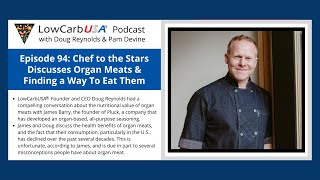
Chef James Barry explains why organ meats are nutritionally dense, packed with vitamins like a prenatal vitamin, and shares practical ways to eat them: start with Pluck, a freeze-dried organ seasoning from grass-fed New Zealand animals, then graduate to grated frozen liver mixed into ground meat or whole chicken hearts.
Chapters
Welcome to the Low Carb USA Podcast, where we seek to inspire you to help us build this community. I'm Doug Reynolds and this is Pam Devine, everyone. So I have James Barry with me here. He's founded an organization called Pluck, which really provides. Their product is organ meat seasoning. And I think we'll go. We'll take a look at that later in the show. James is a chef for about 16 years, and he has got quite a story about how he left that profession and why and how he ended up talking about organ meats. And so I think that's where we're going to start. Let him tell his story and start. Tell us why it is that organ meats are so important. Some ideas. I believe he's got some little tips and things about how you can ease into it and start consuming it if you have problems with it. And then we can come back to the whole plaque story at the end of it. So welcome, James.
Thank you, Doug. It's a pleasure. I have a question for you, actually. So do you eat organ meats?
Absolutely, yes.
How often do you eat them?
Not as often as we. As we should. I've got a ton of it in the. In the. In the freezer, but we don't. Not because I don't like it or anything, just because. I don't know, we've got so many other things to cook and we don't. We don't get to it, but we. I feel like we should. And probably after this podcast I'll become more aware of why I need to be. But we've got livers and hearts and all sorts of things in the. In the. In the freezer right now.
Did you grow up eating organ meats?
You know, when I was a kid, we used to eat liver. My mom used to give us liver, but she hated it.
And.
But that was back in the. In the days before Ansel Keys and all of that stuff happened when meat and organ meat even was seen to be good. And she. She was told. And she believed that organ meat was good for us and that especially as children, we needed this as part of our thing. So once a week we had liver and we. I loved it for even.
Was it with onions, like a liver?
Yeah, yeah. So she used to. She basically cooked it like in the. In the. Fried it in a pan. And even in those days, she had a tray of lard in the fridge, so she would dig out a bit of that and chuck it in the plant and cook it in that. So it wasn't Being cooked in canola oil or something like that. And then yeah, she used to, it was liver and onions. That was the meal.
I love hearing these people's history with organ meats. And I think it's so brilliant that your mom was using lard because the whole concept, you know, liver, beef liver has, is so high in vitamin A that your body needs support absorbing it because it's so high. And the lard, the vitamin D in lard actually helps the digestion of the vitamin A or the absorption of the vitamin A. So it's almost like your mom just, you know, was taught or instinctively knew to combine those two. And so I love, I love hearing the history of this because if you look at most countries, most nationalities will have some kind of national food or some they'll be using. Pretty much everywhere around the world they're using organ meats or another name for organ meats is awful offal. And it's here in the US that we don't do it that much, but everywhere else they're doing it and they just instinctively, over the years they've understood how to combine things to not only make it more nutritionally viable, but also taste better. So I just, I love hearing that. So thank you for sharing that. I did not grow up eating organize. I actually was a very picky eater growing up. And it was really my going to culinary school that enlightened me and made me re examine the foods I was putting in my body. And it was in culinary school that I read a, the Weston A. Price foundation book, Nourishing Traditions, Sally Fallon's book. And that really opened my eyes to ancestral food, to properly preparing food to make it as absorbable and digestible as possible. But what's interesting is that even after I graduated culinary school, I then became a private chef and I, I cooked for a bunch of different celebrities like Tom Cruise, Gerard Butler, George Clooney. So I definitely. And I was cooking for non celebrities as well. But I was getting a really a lot of experience cooking for different people, supporting their health. But I still didn't incorporate organ meats at that time, even though I had started to learn it. And so I think I also was contributing to the notion of that intimidation. And I love that you mentioned that you have a bunch of organ meats in your freezer right now. And honestly that is how I am too. I have organ meats in my freezer too. But the question becomes is why aren't we eating them more regularly? And that was one of the challenges. I kind of took on about four years ago, I was identifying, well, what are the hurdles to getting these organ meats in our diets? And I identified, well, one is that we associate them as being icky. And what's interesting, so in your case, you know that they taste good. But most people out there, if you talk to them and say, hey, let's have some organ meats, they'll make that icky face. And I'll say, but have you ever eaten organ meats? They'll say, no. So I'm like, well, how do you know? Where do you get this concept of them being icky? You've never even tried it, but yet it's there. It's just in our psyche. So that's one hurdle for sure. The other hurdle is people are losing the skill of cooking them. They think they're intimidating. They don't know how to cook them, even though, as you mentioned, it can be as simple as just sauteing it. But yet, for some reason, even that seems intimidating when it's an organ meat. So the culinary arts around organ meats is a hurdle, sourcing is a hurdle. A lot of people don't know where to get them. And then you have. I would say the last hurdle is, okay, you know, you're supposed to be eating them. You know, you. Maybe you're buying the capsules, you know, the supplement form of the organ meat, but yet you forget to take it, or it's still in your freezer because you're not doing it regularly. So I would say it's the kind of. The regularity of eating them. You just kind of. It's not habitual. And so I saw those hurdles and I was like, okay, well, how do we. How do we overcome those? And that's where I then got the idea for my. My current food product, Pluck. But before I even kind of share what Pluck is, I think it's important to talk about, well, why. Why are organ meats so important? Why are they. They a food that we're talking about that we're not getting in our diet, but why should we be getting them in our diet? And before I even go into the nutrition around Orgamens, I think I first want to just identify what is orgami. I mentioned that Orgami, another name is awful, which is, I guess, appropriate since a lot of people think it tastes awful, but awful that name comes from. So when you're butchering the animal, they think that name comes from. It's the parts of the animal that fall off. That's where they think that awful term comes from. And really, organ meats are basically everything but the bone and the muscle. So organ meats will include the more common ones like liver, kidney, heart. You'll have the less common spleen, lungs, testicles, ovaries, brain. Offal also includes thymus and pancreas, which commonly are termed sweet breads. When you go to a restaurant, there's the bone marrow I mentioned. That does not include the bone, but it does include the bone marrow. Tongue, lips, ears, skin, tail, blood, the stomach lining, which is also known as tripe. You have feet. Chicken feet obviously are common, but then you also, pig feet are called trotters. If you ever go to a store and you see trotters on the menu, that's what they're referring to. You have the intestines. Now, the intestines are interesting because the intestines showed up in US Cuisine in the South. And chitlins. And chitlins is actually a. It's actually a food that has came about during slave times. So the slave owners would slaughter a hog. They would keep all the prized muscle meat for themselves, and then they would distribute the other parts of the hog to the slaves. And, and they created meals around these, like the intestines. They created meals around, around the part they were, they received. And to this day, you still, if you go to the south, you'll see a dish called chitlins. And that's what it is. But that's, that's ultimately when we talk about awful, that's what we're talking about. We're talking about those. That nose to tail eating of the animal and how it shows up in the rest of the world. As I mentioned, we. You have like the chitlins in the south, but that's. It doesn't show up in many ways here in the U.S. but we have, we see it around the world. So in Mexico, they have a dish called menudo. And menudo uses the beef stomach. It's like a soup that has the beef stomach in it. Haggis is used in Scotland. Haggis is sheep or calf heart, liver with liver and lungs mixed with suet and oatmeal. And it's in other seasonings and it's boiled usually in the animal's stomach. So they really go all out with haggis. In Ireland, they have blood sausage, sausage or also known as black pudding. And they're using the blood in that. The UK has steak and kidney pie. I remember when I first went and spent time in the uk, I thought the kidney was referring to kidney beans. I didn't know. I didn't know his actual kidney. And I remember I was working at a pub. I lived there for a summer, and I was working at a pub. And I went to taste, and I'm like, well, this is different because kidney sometimes has that. It actually has a little bit of a uriney taste sometimes, depending on, you know, the sourcing and whatnot, but. And how it's cooked. And so I was like, I don't know. I remember I kind of. I was like, what the. Where's the kidney beans? But France has pate, of course, among other things. And so you see it everywhere, but you still. Then you just don't see it here. And what's so interesting to me is that our ancestors ate it, you know, and when usually we're talking about our ancestors, you know, around food, we're talking about our Paleolithic answers, but I'm actually just talking about our grandparents. You know what I mean? It's like not that long ago, our grandparents and really even our parents, as you mentioned, your mom. My mom ate it as well. So depending on how old you are, sometimes it's your parents, they were all eating organ meats. And yet I think it was just about four years ago, this is before COVID we experienced the first time in a long time that the expected death rate was lower. It had lowered in the first time because usually it goes up. And for the first time, and I think it was in 2016, maybe 2014, that it actually went down in many ways, our disease is increased. So even though we may be living longer, our quality of life has lowered. And most people, as they get older, they are suffering from things like arthritis, from heart conditions, from inflammation. And of course, I know you are all about the low carb movement and eating differently than the standard American diet. So you're already eating differently. But the question then becomes, is why organ meats? And I look at organ meats and I think, well, it's really, in a sense, Mother Nature's multivitamin. So organ meats have in them every nutrient, every vitamin and nutrient that you would find in a prenatal, you know, a prenatal vitamin. So the pre. A prenatal is something that scientists or science or medical doctors are telling us this is what you need to ensure that you are going to be able to help form a human life inside you. Doctors, as you know, are always pushing prenatals on their patients, on females.
Yet.
All those ingredients are in organs. So you have things like vitamins, a You have all the B vitamins, particularly B12. You have vitamin C, you have vitamin D, you have E and K. You have essential minerals like iron, calcium, copper, magnesium, selenium, phosphorus, potassium, zinc. You have folate, you have. What is really key about these vitamins is what you have is these vitamins and minerals are coming from a whole food source. They are not synthetic. This is not something that your body is not going to recognize. In fact, the vitamins and minerals you are getting are bioavailable. They are so extremely absorbable that your body doesn't, you don't risk any kind of danger zone. Because there's a couple myths that are associated with eating organs. And one is that you can get vitamin A toxicity. Like you can get too much vitamin A. But when it's coming from A, that's actually not true. When it's coming from a whole food source, the body knows what to do with it. It will either absorb what it needs or it will extinguish what it doesn't need. And that's really key with, or, you know, organs are coming from a whole food source. That's not necessarily true with a synthetic vitamin. Your body actually does, can sometimes go into danger zones if it's, if it's a synthetic vitamin because your body cannot regulate that the same way it can whole food. The other myth you hear a lot with organ meats is that organs are the processing and storage site for toxins. So they store toxins. That's what a lot of people think and that's actually incorrect as well. Organs are more like a filter than a sponge. So their job is to process and convert potentially toxic byproducts into more water soluble forms that can be excreted. So they're taking these toxins, they're turning them into more water soluble forms. So then that way they can leave your body through your detoxification pathways. So yeah, if you're, if your detoxification pathways are not working well, if you're sick or you're, you're, you're just inflamed and you're not a healthy individual, then those, those toxins are going to have a harder time leaving your body. But guess where they go? They don't get stored in your toxins. They go into the fat. That's where we store toxins, is the fat. So, so a healthy animal is going to have a healthy animal being the animal you're eating or, or you as a human. It's going to have the, the available elimination pathways. They're going to Sweat, pee or poop the toxins out of their body. And so the organs are not the storage place for these toxins. And when you think about it, really, what's so powerful about organ meats is there's a concept called like supports. Like, so the organ meats of that animal, if the organs are designed to, as I was saying, like to support toxins and becoming more water soluble, well, they need a lot of resources to do that. And that's why they're so plentiful with, with the, the vitamins and minerals. Why they have such a plethora of that. Right. Well, let's say if the liver is function is, is that supporting that, that tox detoxification and it's got all the, the vitamins and minerals that it needs to do that? Well, when you eat that liver, that liver is probably supporting your liver as well. And that's where the idea of like, supports, like. And that's really why eating nose tail is so important and why the fact that we're only eating muscle meat, most of us is a problem. And I really do see it as one of the biggest problems around the food chain that's out there. And I, and I personally believe now, of course, there's lots of health reasons why people could you support gut health is extremely important. You know, I would absolutely say that sleep is really important. There's lots of markers in one's health that's going to be really important. But I do believe that the, that eating nose to tail is one of the. Should be included in that list is one of the most important things in a person's diet. Because here's the deal. 92% of the US population is nutrient deficient. And that number comes from, I think 2010. So I guarantee it's higher now. You know, and I know that those numbers came up a lot when during COVID right. Everyone kept saying, oh, well, it's vitamin D deficiency, vitamin A deficiency. But the deficiency around vitamins was brought up a lot by holistic doctors, practitioners. And here's the thing that's so kind of embarrassing is it's not a calorie deficiency. Like, we're not, we're not deficient in nutrients because we're not getting enough food. We are, we're getting too much food. If anything, we have a calorie issue, right? So 73% of men, 60, 63% of women are either overweight or obese. So it's not, it's not a calorie issue. We are, we're getting enough Food in our diet. The problem is, is the quality of that food is nutrient deficient and, or it's keeping us from absorbing those nutrients. So I see those numbers and I go, okay, this is, this has got to change. And if we can start eating more nose to tail, then technically, I personally believe we can, we can solve a lot of the world's problems because I look at the food that we put in our body and I say, okay, if I'm nutrient deficient, if I'm, if I'm not operating on all my cylinders, then I probably am not feeling very good in my body or if I have issues going on in my body, I'm not going to be feeling very good. And how we feel is how we treat others, really. So if I'm not feeling good, I'm not going to be treating someone else very well. So if I can support you in feeling better in your body, then that means you're going to treat other people better. And then hopefully we have one step closer towards a better world.
That's brilliant. So I was one of the things I picked up on when you, when you were talking earlier, I was talking about people's, you know, when they, when they get introduced to organ meats, when in their life they started eating it. And Pam loves organ meats now. And maybe we need to go back to ask you a question is when you talk about organ meats, is that only from beef and pork or from cows and pigs or from like, does poultry count, does chicken livers count, that kind of thing?
Yeah, absolutely. Yeah, I'm talking a lot about cow organs, really. That's just because, you know, when you do a, if you do a search right now and you just say, what is the most nutrient dense foods on the planet? You know, and what you'll see come up in the search is you'll see some images of people doing some charts and they'll be checking the different vitamins and nutrients from different foods and comparing them. And inevitably on these lists you'll see, you know, kale, you'll see blueberries, you might see apples, you might see beef, you might see something like acai berries or spinach, something like that. And then if it's a really complete list, you'll then also see beef liver. And what's so interesting is that every, out of all the vitamins and minerals they're checking off, every one of those items will be missing something in one of the categories. You know, it might not have vitamin C or it might not be missing vitamin K or potassium Something. There's going to be something that those vitamins are missing, except for one of them, and it's beef liver. Beef liver is the only item that's being compared that checks off every box. And what's fascinating is that it's sometimes it's not even like just a little bit higher. It's sometimes 19 times higher in iron, you know, sometimes it's seven times. It really, it's amazing. And so when you actually see it laid out, it really is one of those things of like, okay, this is one of the most nutrient dense foods on the planet, but does it just have to be coming from beef?
No.
And actually, when we talk about easing into organ meats, I actually will share how to ease into lots of different animal organ meats. It doesn't just have to be cow. Now, are they going to have different nutrient nutritional values? Sure, of course. And it's all dictated on what the animal is fed, how it's treated, conditions of its life. You know, those, those are to determine how nutrient dense it is. But that's really, that brings up the good point of, like, when you're focusing on eating organs, you want to really be looking at the sourcing, you know, and what is it being fed? You know, for example, chickens. I mean, chickens are truly a product of whatever they've been fed. You know, if anyone understands the poultry industry, they'll know like, that you can actually make the yolk more yellow or kind of golden by just adding, you know, some fish oil to their feed. You know, so there's different things you can do to their feed to change the color of the yolk, to change the nutrition of their meat very quickly because their bodies get changed very fast based on what they're eating. But I mean, I'm more of a fan of like, look, if you have access to the organs, then it's better to eat the organ than to stress over the sourcing. And I know that that could be a controversial statement, but, like, it's similar for me with fish. You know, remember when the mercury and fish was every all people were talking about, and if anything, some people were not eating fish because they were so concerned about the mercury. I think that's a mistake. I really do believe, like, it's not about not eating a product. It's about, let's get these healthier products in our diet. Maybe you're just not eating as much of them, but you still should be eating them. And I really do associate organ meat with that as well. Organ meat and fish, I believe those are two items you should be eating.
Yeah, I'm a very, I bring it up from the stage at almost every conference we do is that this community has become very focused, a lot of them anyway, on it has to be organic and it has to be grass fed and all of that stuff. And yes, if we could have it like that in a perfect world, that would be brilliant. But the fact is that for most people at the moment, grass fed is out of reach because of it's way more expensive and it's.
Oh yeah, I mean particularly right now. Right.
And so I say if you don't let anybody tell me that they, they can't do keto or they can't do a low carb diet or they can't eat properly because they can't afford grass fed meat, I just. That kills me. Yeah, that. And when you get people like Peter Balisted and the people that, you know, really study this stuff and you start to compare the differences. Yes, there are some differences, but they are not, they're not massive. And there's very little danger to somebody's health by eating meat that's not grass fed. And especially if it's, if the other option is to not eat meat at all and just eat vegetables. Right.
I think that's a really important point too because if you look so. Because it does go to sourcing. So one of the things, for example is a lot of people are like, well, where do I buy this stuff? So you can of course go to the Whole Foods and look there. But you know, one of the sources where you will most likely always find organ meat is, is these kind of international or these, these Asian or Mexican markets. And those are not going to be grass fed, that's going to be conventional animals. But if you, if you question like, well, is this actually healthy? Well, look at, let's say the Asian culture. I mean, look at China, look at Japan, they eat organ meats and they don't necessarily eat them from 100% grass fed animals. And they are for all intents and purposes a much healthier society culture than we are in the US so I agree 100%. It's more important to get them in your diet than to stress over the quality. But if we are looking for quality, then yeah, 100% grass fed is ideal. But don't let that stop.
But we need, and we need to support that community and that industry and hopefully in time, as the demand for it grows, you know, as with anything, when you start to talk about volume, then they can bring the pricing down and hopefully one day grass fed. In fact, a good friend of ours, Gary Fettke and his wife Belinda, we went to visit them in Tasmania, that little island or part of Australia. And that's just like an island of cows. And they, you literally pay less for grass fed meat than you pay for grain finished. And they do sell grain finished. And it's done especially for some of the restaurants and some people that like it because it's fattier and whatever. But you have to, there's only certain places that you can find it and it's way more expensive than the grass fed. Maybe one day the whole world will be like that, right?
But yeah, that's incredible. But yeah, I think, I think really important is this to get in your diet. And that's actually what kind of resulted in me creating pluck. So pluck is an organ based seasoning. So what I did was I, I took, so I identified, okay, this is one of the most nutrient dense foods on the planet. We're not eating them. And in my head I figured out, well, here's all the hurdles. And I've shared those already with your audience. So then I was like, okay, so how do I get, how do I get organ meats into people's diets easily and tick off all those hurdles, like make sure that those hurdles are no longer an issue. So make it taste good, make it accessible, make it easy. And that's where I came up with Pluck. So I basically take freeze dried powdered organ meats. We source them from New Zealand because we are focused on the quality. So we're getting that hundred percent grass fed pasture raised cow organs from New Zealand. They're freeze dried, they're powdered and the freeze dry, the freeze drying is basically the closest you can get to just eating it raw. It's like the best, best state of organs are going to be raw, you know, fresh raw organs, even if you cook them, whatever. But that's going to be your most nutrient dense. The next would be freeze drying and then right after that would probably be dehydrating because dehydrating sometimes even a little slightly higher temperature than freeze drying. But pretty much those are those, those methods, those three methods are going to be your maintaining the nutrient density of the organ meat. So I get the freeze dried powdered organs. We have a blend of five organs. It's liver, heart, kidney, spleen and pancreas. So right away, just by using pluck, you're getting five organs, five organs that most of us are not getting in our diet. And I combine them with organic spices and herbs to offset that flavor. So what we created here is basically an all purpose seasoning that's no different than any other seasoning you have in your drawer. It's shelf stable, it can be treated just like any other seasoning. You can either add it to the meal or you can add it after. But what it does is it ups the nutrition of everything you add it to. But it also. And this is where the. It just was a pleasant surprise. Was it? Because organ meat is umami and umami is the fifth unique taste. So we have bitter, we have sour, we have salty and sweet and then umami. And umami is a unique taste, but what it does is it actually heightens the other foretastes. So what you get is when you add something that has umami to your dish, like if you add pluck to dish, it makes the dish taste better and it makes it up to the nutrition because it's coming from organ meats. So it's kind of miraculous in that.
And from that standpoint, that's amazing in terms of quantity. I mean, you're talking about it, using it as a seasoning, right? So how much do you need to add to your meal in order for you to get, you know, sufficient nutritional benefits from it?
Yeah, I love that question because it's such a great question. It's never going to be as much as if I just ate liver, right? Because liver is 100% product. Pluck is not because I'm combining spices and herbs to it to make it taste differently. So my goal with pluck is really to be the gateway to getting organ meats into your diet. Because I want to support your palate change getting acclimated to the taste. I want to support the micro dosing of getting the ore meat. So pluck is really micro dosing of the ore meat. Nutrition plus frequent use equals a cumulative effect. And I like to use this as an example is like, okay, does microdosing work? And we're hearing that word thrown around a lot more, particularly around things like what is it? The, the. Oh gosh, I'm skipping on the name psilocybin. We're hearing that a lot more with psilocybin. We're hearing that a lot more with, with thc, you know, microdosing, that kind of term terminology. But what's key about microdosing is it can go positive, like you know, microdosing of getting the nutrients, but also can go negative. So the example I like to use is glyphosate Glyphosate was found in Roundup around, I think it was 1960s, maybe 50s. We've heard Monsanto. Monsanto is the creator of Roundup. And. And glyphosate was in it. And basically they sold it to us as, oh, this is micro dosing. This is such small amounts, it will not negatively impact the human body or the environment. Well, skip ahead now to where we are currently. And glyphosate is in everything. It's in breast milk, it's found in the soil, it's found in water, it's in the air, it's in our food. Like, we can't get rid of it. So micro dosing does work. It's just basically the way I look at it is like you're just getting small amounts of something more regularly. And that's the key, is you got to use it regularly. I don't want people treating pluck like nutmeg, where you use it once a year. You know, like, this is something that should be on your table. You should be using it no differently than you would salt and pepper and use it on everything. And what's kind of amazing about the product is it actually does taste great with everything. So you. So sometimes people just default to thinking that pluck, because it's coming from beef organs, that it's only going to taste good on beef. And that's just not true at all. It actually tastes amazing on eggs. It tastes great on fish. We've tried it on oysters. It tasted great on oysters. We tried on chicken. It tastes amazing on vegetables. Parents out there with kids who you're trying to up your kids nutrition. This is a great tool for you because, like, when we have family night, we put it on our popcorn. If my kids ever have toast, they put it on their toast. I mean, you name it, we put it on there. And my kids love it. They actually request it on things. And they don't just use a little bit, they use a lot. And that's the other question I get. A lot is, well, how much should I be putting on my food? And I tell people, like, I designed it so that you can put as much as you want. You know, you're gonna. You're gonna follow you. You need to follow your taste buds, but you can use as much as you want. I mean, I typically will use sometimes half a teaspoon on a meal. If I'm making ground meat, let's say that's a pound. I'll use one to two tablespoons. You Know, it's just, it's just really depends on what your taste buds, where they go and I love also so, so we so with pluck. What's fun about this and why I call it the gateway to getting organ meats your diet is because you we tick off those hurdles. So a, we make organ meats taste good. I mean most people who tell me they have gag reflexes when they eat organ meats, they don't have that issue with pluck. So that's one thing. It just, it just immediately you don't even know that you're eating organ meats. So boom, tick off the ick taste right then. Do you need to know how to cook with pluck? No, you just need to know how to season your food, which we all know how to do. This is not a new habit. You could be getting food to go and still sprinkle it on on that. And now you're getting organ meat nutrition. But you didn't need to know how to cook. So now you don't need the culinary know how. You don't need to worry about sourcing. We've already sourced it, we're sourcing it from top New Zealand farms. It's pasture raised, non gmo. We're doing that for you. So that's done. As long as you have it on your table, you're not going to forget to use it. You know, just have it out on your table and use it. Like I said, have it right next to the salt and pepper so you're using it regularly. And then it's not like you're taking capsules and you're forgetting to take it. It's like, no, you just sprinkle it on your food. You sprinkle on every meal. I mean, I put it on salads even you could put it in dressings. I mean it's. We joke that you can do it on everything but ice cream. But we've even had clients say, actually I sprinkled it on ice cream and it worked. It was, it was good.
Now that's amazing. I just wanted to go back to the story I started telling about Pam. We've got a friend here, she'd never eaten organ meats at all. We had a friend here that opened a South African restaurant called Cape Town. And one of the common thing in South Africa, you talk about international countries and that there's Peri Peri chicken livers. Peri Peri is like a Portuguese chili that you don't get that frequently here. But Peri Peri chicken livers was on the menu. Like, oh, man. I, like, was all over it, you know, and she was like, whoa, what's that? You know, and how can you eat that? And then I got some and then she tried a bit and I was like, wait a minute. This actually tastes pretty good. Hey, I want to. She ordered. Ordered her own plan. Like, when her brain wasn't telling her that this is awful, she. She actually. And she was open to it, she realized that this tastes great. And you know, she's. She's the one that comes home with chicken livers from the, from the, from the store now and cooks them up. I don't have to prompt it.
That's brilliant. That's brilliant. Because that's really. That's the key, right. Is a lot of the reasons we don't do things is because we're just unfamiliar with them. They're new. And, you know, change is scary. And that's, you know, actually, that's something I found fascinating during COVID is during all these shutdowns. And initially when Covid first started, there was so much fear and emotions that were coming up in people that what happened, right, is alcohol sales went up, sugary items or baking, anything like that, any comfort foods increased as well. You had addictions increase. So you had basically people throughout the door threw out all their health habits and went to comfort zone, went anything that was a comfort zone or something that was addictive, that was easy. And to me, that. What that told me is that when we start thinking of. Because it's not like pandemics are over, like, we're going to have more pandemics, we're going to have more viruses in the future, we're going to have. These things are going to happen again. They have this entire time. This just happened to be one that hit so many people quickly. But we've had viruses ongoing for forever, right? So in my mind, when we start to think about health, the future of health, we have to think about it from the point of like, okay, we need to ensure that these are not brand new habits, these are not unobtainable health goals. Like, these are things we need to incorporate these health changes so that they're everyday items. They're in things that we don't have to think about, because if we do, then they go out the window when, you know, when trouble happens. And if we want to maintain health and we want to make it achievable and sustainable, we need things that don't require new habits. And that's. That's where I Kind of was awakened to, okay, putting these nutrients, having, having this nutrient density in a seasoning is not a new habit. And so it just, it just makes it so achievable. And the more. And that's kind of been my mission all along as a chef. You know, when I started over 16 years ago, I was focused on comfort foods. I was like, okay, I want to make comfort foods healthy and still delicious. Because I knew that that was the entry point for most people's diets. Because anything new people were like a little scared of. Right. So they always were comfortable with comfort foods. So I was like, oh, if I can, if I can tackle comfort foods and make those healthy, then now you have no entry. Now anyone can do it. And I really do believe, I think I've achieved that with pluck, because it really is the gateway. It's so easy to now get organ meats in your diet. But I don't want you to stop there.
That is what I just wanted to actually at least make sure that we got in there. Because you mentioned that talking about people easing into that and obviously using, you know, seasoning that that's tasty and makes the food taste even tastier is an excellent gateway.
Yeah.
Then the question is, if somebody decides, okay, I want to maybe try this, how do they. How do you suggest they try to transition to actually eating real organ meat?
Absolutely. So I would say gateway is pluck. That's the easy entry point. Then the next step, I would say is you kind of have two options. One would be to purchase a pre. Pre ancestral blend. And Force of Nature is a brand that has one. And there's other ones as well where. So they have ground meats and they've already ground. Ground in the heart and the liver and the kidney, and they've done it in a ratio that you really can't taste it. It's, it's brilliant. Blends like, they're just so. They're so seamless there. It's in there, but you don't taste it. It doesn't change the texture. So I would say that's, that's kind of step two is just to easing into organ meats is to just buy a pre. Pre mixed blend. Alternatively, if you want something a little cheaper as you could just purchase the liver and it can be chicken livers or beef liver, whatever you'd like it to be, whatever you can find. But let's just say it's the beef. When beef liver comes, it's, it's pretty large and it's going to come to you frozen. Typically it's, I've never seen beef liver unfrozen. So keep it frozen though, because here's the thing, we get intimidated by that organ when it's defrosted. When it's frozen, it's just a hard rock, you know, it's not, it's not intimidating then because it's not bloody, it's not slimy, there's nothing weird about it. It's frozen. So keep it in that frozen state because that's going to maintain that, that distance for you initially. And then when you're making something like a sauce or you're anything with any kind of ground meat and it doesn't have to just be beef or lamb, it could be turkey, chicken, elk, you know, whatever, whatever, boar, it doesn't matter. Any ground meat, it could technically even be tofu. I mean, if you're, you know, if you're, if you're a plant based eater, but yet who still wants to get a little bit of organ meat into their diet or something who's not 100% plant based, it doesn't really matter. But what I recommend you do is you pull out that, that liver from the freezer and then grate it. Just grade it into that ground meat and it's still frozen, so it's going to be easy to grate. And so just grade it, keep it frozen. Once you've done grading it, put it back in the freezer and now you don't have to worry about defrosting this huge piece of liver and then knowing what to do with it. So you're easing into it. And in terms of how much to use, I recommend not going over 20 to 25%. So how that looks is if you have a pound of ground meat, then you're looking at basically four tablespoons or a fourth of a cup. So I recommend easing into that. So initially maybe just do a grade a tablespoon amount, then go to 2 tablespoons.
But just don't increase, as you increase the amount that you'll slowly start. Because in the beginning with that small amount, you're not going to even taste.
You won't even know. Yeah.
And then as you increase it, you'll slowly start to detect these flavors.
Yeah.
And, and I think the secret, like, with them, the secret is an open mind, you know, that if you don't, you can program your brain to, to hate anything if you want to. I was like that about fat before I, you know, came across this lifestyle. I was, I literally would Turn my stomach if I ate something with, with like literally with fat, tangible fat on it, right? And yet my brain is. Has changed now completely where I start salivating when I, when I see that when I'm cooking, right? But if I walk past a bakery or something and you've got that bread flavor or something and everybody like goes on about, I literally start to recoil from that. My brain is done to 180 completely. And it's amazing how you can program yourself to recoil or reject certain foods. And you have to get your mind around that as well, I would imagine, because as I said, I've eaten liver since I was a kid, and so I never had a problem with it. But if someone never did and they think it's disgusting, you ought to get. You got to get past that and start to realize.
And that's the thing, you just ease into it. Just do a little bit at a time. And then I recommend just not going over that 20, 25%. Because once you do, it starts to change the taste and it changes the texture. But once again, you don't need to stop there. So then I would say the third stage is now that you're, as you mentioned, your taste buds are starting to change. You're getting a little more acclimated to that flavor. Now I say, okay, now you're ready to graduate to actually purchasing some of the organ. But here's the organ I recommend is you get chicken hearts. And the reason why I recommend heart and chicken is because it's mild, it's actually a little sweet. And the heart is the closest to muscle meat out of all the organs. So what you do is get, when you get them, they're usually in a little container, and sometimes they're frozen, sometimes they're not. But, you know, you might have 10 to 15 in there. And I'm not saying use all of them at first. Treat them like mushrooms. So when you're adding to a sauce, mushrooms, you might add 2, 3, 4. You're not going to add the whole thing unless you're making a mushroom sauce. So do the same thing with the heart, the chicken hearts. Pull out 2, maybe 3, 4, and then chop them up just like you would a mushroom. Okay? Small dice. So then that way, A, they don't look like a heart, and then B, just toss it into the sauce. If you're making a spaghetti sauce or even a saute, you're adding these little bits of heart, but because you're only adding a little bit, you're once again acclimating the person's taste buds, their palate to this change. But no one's going to know. 1A will know that it's heart. No one will think it's a heart because it doesn't look like a heart. And they'll probably think it's a mushroom. To be honest with you, if you, if you cut it up well, it's going to kind of look very mushroomy and just use once again a little bit. But chicken hearts are a great entry point because they take on the flavor of whatever the dish is very well. And like I said, they're sweet. They don't have like a strong taste. And then I would say the next step after that is, okay, now you've used a little bit of liver, you used a little bit of chicken hearts. Now let's, let's make organ meats a main part of the meal, but let's choose a very specific organ meat that is going to be the less disarming for someone or I should say that won't be dis. Like, that won't be hard for anyone. And that's tongue. So if you can, you want to get a beef tongue. And beef tongues are great because what they are also mostly muscle, similar to heart. So it's not going to be like a huge hurdle. They come in, they have that sheath just like our tongue. They've got almost like a skin on the outside of it and it's rough. And what you can do is you just cook that tongue no different than you would braise a meat. So let's just say you have a taco night at your home and you usually will make carnitas or something like that. Well, how you would do that is you'd cook it in a slow cooker or crock pot or a pressure cooker and you would have a little liquid in there. You would put maybe some onions and garlic, some different veggies, something like that, right. Maybe add a little tomato. And then you'd cook it for about an hour and a half to three hours. Right? Well, you do the same thing with the tongue. Don't do anything to it. Just instead of the pork, put in a tongue. And if you really want to, if you're really concerned about it, then do both. Let's. Like I did that recently. I made taco night and I added pork shoulder and tongue at the same time. I cooked them at the same time. And then that. What I did was when, after it was cooked, that. Now that sheath around that tongue is peeling off. And then all you do is support it. You just let it cool a little bit and then you can pull it with your hands. And what's underneath is this very stringy muscle. And what I did is I then cut up that tongue muscle. You know, you get rid of the sheath because that's not edible. It's too, it's too fibrous and kind of rubbery. But that tongue, you just pull it out, you chop it up. You, if you cooked it with that pork shoulder, you chop up that pork, season it and then put it under the broiler and crisp it up just like carnitas. And so now you cook it with.
With that sheath on and then, and then cut it off afterwards once.
Yeah, because cooking it makes it come off really easy. It comes up very, very easy. But once. And now you just have that muscle and then, and then stick it under the broiler after you've chopped it or forked it. If you made it stringy, you can fork it or you can chop it, whichever you want. But stick it under the broiler. And now it gets crispy. Add a little salt or something, it gets crispy and then use it as your taco meat. And no one will know it's tongue. It's not only does it taste really good and you can kind of control the taste depending on what sauce you use with it, but once you're cutting it up or stringing it and no one will know, no one will know. And it's delicious. And now you just made, so you achieved a couple of things you just made. Your entire dish is now an organ. Because the tongue is considered awful. Tongues are cheaper than muscle meat. So you also saved money. They're large too. So one tongue will, will serve like four people. If you get a large tongue, it will, it will serve four people for sure. So you saved money on it. And it's more nutritious than the meat, the muscle meat. So you've just, it's a win win. It's not only is it a more nutritious meal, it's also a cheaper meal. And it can still be a hundred percent grass fed, but I guarantee it's going to be cheaper than 100% grass fed muscle meat. So that's kind of the tips of easing in. And then once you've done tongue, now you can truly make organ meats the center of the diet or of the meal. So now do that. You know that liver and onions, you know, saute that you like. By the time you've done tongue and gone over that you're. You'll now be ready to do anything, really. It's, it's, it's like because. Because you've now busted through the myth of like, oh, this. It's intimidating. It's no longer intimidating because the tongue is probably. Is. There's a couple of organs that I would say are on that intimidating list. I think tripe is one of them. I think brain is one of them. But once you do something like tongue and you see how easy it is and how it really isn't intimidating now, you're going to be more apt to try any other organ that you thought was intimidating.
Right? Yeah, I know what we did here, a lot is, or do hear a lot is make curries with. So like, you talked about steak and kidney pie, right? So maybe that's where I got the idea from. But like, we make huge, big pots of curry and put in some cubed London broil or whatever, but then add an equal amount of beef heart and another equal amount of kidneys, and it's just, just, it's just fabulous. The only problem is that in the beginning, Pam, you know, like, when I first talked about it, she hadn't tried the chicken livers and stuff. And so she was, she was a bit dubious, but. And then she was a bit concerned about the kidneys. But then it got to the point where now I have to, I have to police it and watch her. Otherwise she steals all the kidneys. Like she goes through and she steals all the kidneys out of it. So when I. To dish it up for myself, there's not freaking kidneys left because she's.
That's brilliant.
And it's amazing, like, you know, how she's progressed from, from not being prepared to eat them at all to literally stealing it all.
That is a testimony as well as I think the body knows. The body knows what it needs. And when, when you get over that hurdle of, you know, mindset, you'll see your body, once you get acclimated to eating organs, you actually crave them. You want. You want them more often than not. The key is just getting past those hurdles, you know, and making it so, you know, choosing like I share the easing into them is, you know, if you'll notice, like, what I did was I made it so that whatever you're easing into, it doesn't. You don't have a dominant flavor. You make it so it's not a dominant flavor. You don't want it to be dominant in organ meat. You're making it so it doesn't look like organ meat. You're either grading it or chopping it. And then you're combining it with other things to offset any potential flavors. So you're just, you're just making it easier to get over those hurdles. But eventually, just like Pam, you're going to crave them, you're going to want them, and you're not going to care that it's kidney. You're not going to care. You're going to be aware that it's organ meat, but that's not going to stop you. You know, you're going to shift your mindset and that's really the goal is, yes, I'm pushing pluck because it's the gateway to getting organs in your diet. But I don't want you to stop there. I am supporting nose to tail eating and I really want you to. I want people to do that because I believe it can save the world.
That's been amazing. Man. This has been fascinating. Thanks so much for taking the time to come and talk to us about that. And I don't know, hopefully we can see you at an event sometime and you can maybe we even do a breakout talk or something. We can talk more about organ meats or something. That'll be fun. Okay. And wait, before I, before I go, how can people find you and find out about Pluck and hopefully start their journey towards incorporating organ meats into their diet?
Absolutely. So the website is eat pluck.com and you can go there. We're going to have some new flavors coming out in July. I'm not sure when this debuts, but if you're hearing this in July, hopefully they're out. If you're hearing this before July, they're coming. And those will be. We have an all purpose one right now which is kind of has a little bit of a smoky flavor and a lot of people compare it to Lowry's All Purpose. It's just, it's just a general all purpose seasoning. Really good. We have a spicy version of that coming. And then we have one that's called Zesty Garlic, which is an AIP version that's autoimmune protocol. So it has no seeds or nightshades. And then we are coming out with a hundred percent organ blend. So this one has no spices and herbs, no other spices in it. Okay. It's just the organ meats. And that one's called Pluck Pure. And that one is for the people that really just want. They just want the nutrition and. Yeah. And then you just add it to anything. That has flavor. You could add it to your chocolate smoothie, you could add it to your curry, and then you're just getting the maximum nutrition. But so those are all coming out soon. Eat pluck.com and then you can find us on social media at. And we're pretty much all of the social medias, whether it's a Facebook, Instagram, Pinterest, it's all the handle istpluck. And then my personal one is at Chef Jamesbury. That's Barry with an A. And yeah, finest. We're constantly giving tips on how to get organ meats into the diet. We're sharing recipes, we're sharing the nutrition information. So we're educating and we try to do lots of giveaways and have fun. So for discounts, definitely get on our newsletter. We just had one during memorial day at 25% off. And we have more coming up again. And then for recipes, if you go to eat pluck.com, you'll see a recipes tab. And we list a lot of recipes on getting organ meats in your diet. There's one for getting tongue jerky on the diet on the site. It's really good. And it's basically you take the tongue and you marinate it. You slice it and then marinate it and then you dehydrate it and it's delicious. It's a delicious way to get beef tongue into your diet. Very, very delicious.
Okay, that's awesome, man. Thank you very much. So I'll put all of those links and stuff in the show notes as well so that people can. So that people can get to it and learn about it. And I really, really hope that, that they do. You know, you mentioned a couple of times things about spaghetti and bread and toast and stuff like that, which is kind of a big no no in our communities. But that's, you know, what we're talking about here goes so far beyond that. And whether you restrict carbs in your diet or you don't, either way, consuming organ meats is going to be enormously healthy or add an enormous health aspect to your life. And so I hope that people listen to this and actually try and take your advice and see if they can start easing it into their diet.
Thank you. Yeah. And I think my biggest emphasis with pluck, at least in being a gateway, is just to show people that because I know families, particularly sometimes the parents eat differently than kids and, you know, everyone sometimes can be on a different food regime depending on what's going on for them health wise. But the key is that whatever you're doing, this can help. Like, basically like that this seasoning can go with everything. And I think that's the power, is that I want to meet you where you're at in your food, you know, food journey. And for me, it's not about necessarily telling you, well, what diet you should follow. Even though, obviously if you're listening to this podcast, you're hopefully eating low carb. But even if you're not, don't let where you're currently at stop you from eating nose to tail. And I just want you to get in your diet and we'll meet you wherever you are. Because it's a seasoning. Just use it like salt and pepper. And now you're getting organ meats into your diet, and then hopefully when you're ready to advance to the next stage, you'll do that as well. But let's just get it started. Let's get it. Let's start to get those organs in your diet, because you really will see. I mean, I've heard people say that their energy goes up eventually. I've heard. I had this one person tell me that they. That they were getting their blood markers checked, and they had previously gotten them checked. And every time they got them checked, there was always a marker that was kind of low, and this time it was high. And the. The only thing they've done differently was use pluck. And when they went to the doctor said, why is this marker higher? And they said, oh, probably. Are you eating organ meats? So it's like, doctor, actually. Actually, the doctor knew. What about that?
That's amazing.
I know. It's amazing. So, so, so don't underestimate the power of just making that small change, you know.
Brilliant. I think that's an awesome place to leave it. Thank you.
Thank you for having me.
You've been listening to an episode of the Low Carb USA podcast. You can support us on patreon@patreon.com Low Carbusa.










