“Cooking For Tom Cruise & Everything Organ Meats!” - Celebrity Chef James Barry | The Spillover
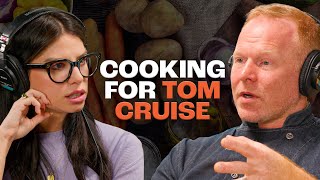
Celebrity chef James Barry has cooked for Tom Cruise, George Clooney, and Barbra Streisand. He started Pluck, a seasoning company made from freeze-dried organ meats, and explains how to cook with them: microdose them into smoothies, blend them into ground meat, or go nose-to-tail.
Questions this video answers
June 7–9 in San Antonio, Texas
Code: Alex (YWLS2024.com)
Tom Cruise (cooked for nearly two years), George Clooney, Gerard Butler, Barbra Streisand, John Cusack, Fergie, Zac Efron (among others)
From New Zealand (100% grass-fed) and the company says ingredients are tested multiple times
Code: Alex (20% off at eatpluck.com)
Chapters
Peter Rabbit, but make it Fashion Prairie Core Homesteading Vibes what does all this have in common? This is the theme that you'll see at this year's Young Women's Leadership Summit in San Antonio, Texas, June 7th through 9th. This event is for women of all ages and there will be a mother's room for nursing moms. The theme is Back to Our Roots, Roots being a play on word for traditional values and garden. Prairie vibes, of course. Dress up on theme, Hear from the biggest female speakers and influencers in the conservative movement, Christian, parenting, marriage and family, health and wellness. Candace Owens, Holistic Hilda, Erica Kazar, Ali Beth Stucky, Riley Gaines and more. Names to be announced soon. And trust me, once some of these names drop, tickets will be scarce. I get in while you can with 25% off by going to ywls2024.com and use code Alex. That's Y W LS2024.com use code Alex for 25% off general admission. I'll see you at Turning Point USA's Young Women's Leadership Summit, June 7th through 9th in San Antonio. This week's guest was a celebrity chef for 20 years for a listers like George Clooney, Tom Cruise and Gerard Butler. Get this. His spirit specialty is organ meats and other nutrient dense foods. He is the creator of my favorite seasoning company, Pluck, which incorporates organ meats into all their spices. You know, instead of microplastics. Pluck is on a mission to make organ meats taste great, accessible and to make it easier to include in food for the everyday chef. I actually have been using Pluck for a while and casually posted about them and then they were like, hey, the chef would totally come on the spillover and talk about how to cook and incorporate organ meats into simple meals and tell you about being a celebrity chef. I was like absolutely. Because I have a lot of questions about organ meats, like why everyone is talking about them, are they a fad or are they here to stay? What makes food more bioavailable, what the benefits of organ meats are, how to include them in meals. And obviously I'm going to ask about his A list clients. I'll tell you one thing, you are never going to look at your spice cabinet the same way after this episode. This is a super fun interview to watch with your friends and family on the real Alex Clark YouTube channel. Maybe you're not aware, but the spillover is produced by Turning Point usa, a nonprofit. That means that interviewing guests in person, having top of the line, audio and camera equipment and shooters and editors to create the episodes is financed by regular listeners like you. Every week I interview an expert or person that has countercultural expertise or advice. If you find yourself loving the show and my guests, please consider becoming a financial supporter by leaving a tax deductible donation at the link in the description. If you're not in a place to be able to do that financially, the next best way to support the show is subscribing and leave a five star review. Wherever you listen, tell people why they will love this show. Please welcome celebrity chef and founder of Pluck Seasoning James Berry to the spillover. Finally, we can get a professional chef's opinion. Are we supposed to be washing our chicken?
Well, most chicken is rinsed in chlorine, so it's not a bad idea. But then again, what are you washing it with? I mean, there's chlorine in your faucet.
That's a good point. Okay, so if I was, which I always recommend, you know, get your chicken from a local rancher or farmer that you know and trust. But if you were in a pinch and you were buying it at the store, you actually think we should be washing it?
I mean, it's a tough question. There are some people that really need to be conscious about what they're eating, what they're doing, because their, their constitutions are so sensitive. But I think most of us potentially are making too much of certain things and we're adding stress to our own lives and then we're eating that food in a stressful state. And then of course, it's not going to either absorb or digest properly. You know, like the state that we're in when we're eating these healthy foods is really important and most people aren't even entertaining that notion.
Okay, so we have to get the juicy stuff out of the way that everybody's dying to hear. First we have to talk about your adventures as a celebrity chef. Who are some of the A list stars that you actually cooked for?
Well, the, the. Well, I was gonna say the biggest, but technically they're all pretty big. Tom Cruise cooked for him for nearly two years. I was in Berlin with him when he was filming Valkyrie. That was an awesome experience. George Clooney briefly when he was dating Stacy Keebler. And then Gerard Butler, who was real fun and we had a good time and cook briefly for like, Barbara Streisand and John Cusack. And I had a meal delivery service as well. And Fergie was one of our clients. Among others. Zac Efron was one of em briefly. And there's a bunch of celebrities that were getting the food from us, but Fergie actually attributed the food to her losing her baby weight. So that was really cool.
Oh, that's neat. Okay, so what were, what was Gerard Butler's favorite recipe that you made him?
I think what they ate as a kid is always their go to and I think that's true with all of us.
So you were making a lot of chicken nuggets, Grass fed chicken nuggets?
I do, I mean, I actually do make these really clean chicken nuggets. And I try to make comfort foods healthy because that's ultimately what most of us gravitate towards. And I, and I don't want people, particularly when they're eating specific dice, to feel deprived. Um, like Tom is from the south, for example, so he, you know, there's certain textures that he enjoyed then. Now I don't know if he's still eating those now, but back then I would make him like three different options and, you know, watch him see which one he chose.
Yeah. So is there some kind of like interview process thing where they want to hire you as their personal chef and so you do some kind of like questionnaire with them to see what types of foods they're into and stuff? How do you know what to even make somebody?
Yeah, it's kind of wild. So I'll just use Tom as an example. So I was already cooking for all these clients. I was a private chef for a bunch of families. No one necessarily. Huge celebrity. But like, I was helping about 10 people at the time and doing well. And then I got a call from the house manager. Usually it's someone who manages their life or their house, and they're like, oh, we're looking for a chef. Could you make a medley of things and let us just taste your food? And I'm like, okay. Now I don't. They don't mention who it is, of course. You know, they don't want you to.
Poison the food or something or Google what their favorite things are, because that could be cheating.
Totally. I mean, they don't, they don't tell you anything initially, and, and so you're just like going in the dark. And I remember I drove into Beverly Hills and I'm driving around and I find this house and the security at the, at the front gate are like in suits. And I'm like, is this a politician? Because it looked like CIA. I was like, what is going? Who am I cooking for? And Then I met the house person and I gave it to her and left. I mean, I didn't go in or anything. I just left. And then I get a call a week later or something like that and they're like, he loved the food and this is for. And then they say who it is. And I was like, oh, wow. And they're like, we would love you to become the chef. And I said, well, no. And I actually said no. I said no.
Why?
Because I was already cooking for a bunch of people and my mission was to really help people with their health. Not one person.
You said no because you had 10 clients that you really liked helping. But if you become a private chef or a celebrity, then you're only allowed to cook for them. Like, are you living there or something?
No, but I mean, you might as well be because you're cooking 10 to 12 hour days. I mean, the days are long. Like when I was in Berlin with him, I mean, I, I think I had a total. Now I'm not talking days, I'm talking taking minutes and combining them. I probably had in three, maybe it was four months. I had probably four days off.
Oh, that's brutal.
Yeah. And it's not his fault. It's just, it's the lifestyle. It's like he's on set, sometimes he needs help there, then there's people visiting. You know, there's just, it just comes with the lifestyle. And I was getting paid well, so I was not, you know, I wasn't sitting there going, wah, wah, wah.
Is this before you had a family?
Yes. Oh, yes, that is a great point. Cause I have two kids now. I have a family, I have a wife. Like, I can't do that. Like, I actually right before coming here, I went to France for a week for, for about eight days to cook for this billionaire to support his health changes that he's going on and train his people. And it was, you know, eight days away from my family, but it was in Paris, so that's pretty sweet.
So if you are getting hired by a French billionaire to make food, is it going to insult them if you do something with escargot or they expect it?
No, no, no. He, he's, he just wants, he just needs to eat a certain way. So as long as I fit the dietary guidelines, I'm good. But he was. You know, a lot of people, they eat the same things all the time. Particularly anyone. I mean, from regular to celebrities to billionaires, they're all just eating the same foods because they think that's what they have to do. And I come in, I'm like, no, no, no, no. I'll show you how to. I'll make it look like you're not even deprived. Like, I'll make what seems like mashed potatoes, for example, on your plate. But it's not mashed potatoes. It's cauliflower or cell or something like that, or parsnips. I'll. I'll make something that looks like a roasted potato and it's not. So I, I'm helping people to get off these kind of starches and eat more like resistant starches. I'm helping people to, to kind of just remove the sugars and whatnot and all these kind of ultra processed foods from their lives. But I point out that Paris trip, though, because I was gone for my family for eight days and I was very much reminded of like, oh, I don't want to do this very often. Like, I'm, I'll do it for a very brief amount of time. But like, I could never do what I did for Tom or any of those celebrities.
Now I'd probably be like, well, I guess your daughters, are they school age?
Yeah.
So you don't want to rip them out of their life? Because I would have been like, okay, well, if you're a billionaire, pay for my whole family to come out. We'll stay there and I'll cook. Okay. So you had said no initially to Tom Cruise's house manager, but obviously they convinced you because you ended up working with him. So then how did they get you to change your mind?
Yeah. So then she was like, well, what can you do for us? And. And I said, well, I can make you meals and bring them. And they said, okay, well, he has, he was with UA at the time, and they were having production meetings at ua and they're like, okay, well, so like catering, you could cater their lunches. And I was like, yeah, as long as it's not over, you know, 12 people, I can do it. And. And that's what I did for a month. I just cooked their production meeting lunches. And I guess he loved the food so much that when they then went to Berlin to shoot the movie, he said, or they said, will you come with us for the pre production? I said, sure. And then that went so well. And that's also when I met him for the first time, which was a trip.
Tell me about that.
Well, everyone always goes like, how tall is he?
And what's the answer?
And I'm like, you're not sitting there going how tall is Tom Cruise? You're sitting there going, I'm talking to Tom Cruise. Like, that's your dialogue. You're like, I'm talking to Maverick or whoever you know, or Joel from Risky, whatever. It's like, he's the biggest actor in the world. And you're sitting there and you're like, he's praising me. Like, that's what was mind blowing. So I was up at the floor where they were doing the production meeting, and I brought the food. I think the food was already there. And I was just kind of checking it to make sure that the hotel had done it right. And he walked out and he's like, have you been the one that's doing all the food for the last month? In the Venom? I am. Hi. And he. He's like, fantastic. You know, and he's just like. He just starts praising me. He's like, let me come and introduce you to everyone. And he opens the doors to the production meeting. And there's, like, Chris McQuarrie, who now directs his movies, and there's the director who did Usual Suspects, and there's. There's just these producers. And I used to be an actor, so I knew these people, and I had followed their careers. And they all stood up and they started clapping for me, and I got so vempt. And I was like, it was just a real moment of full circle of wow. I think I know what I'm doing as a chef. Like, I think I'm. I'm doing this now. Like, I think I got it. And it was that experience that really helped me be confident as a chef, because I had. I'd only gone to culinary school about a year before that, so I was. I was still very green.
And I'm sure that if you're working with celebrities, I mean, in Hollywood, that's where all the trends are starting. So when it comes to food trends, did you have to try all these weird, random diet trends, like juice or whatever it is, so that if they asked you, can you start cooking like this? You knew what it was.
You're so smart. Because not a lot of people realize that. That Hollywood is kind of just following trends. It's not like they know more, it's just whatever is what's the most popular book? What's the most popular trend? And they're just like, okay, I'll do that. And when I first started, it was the Fat Flesh diet. And yes, to your point, I had to learn not only read the book and understand it, but how to make good food. From it.
An actual DM I received this week from someone named Gwen. Alex, I will never doubt you again. I decided to try the Alia body wash you always talk about. But I didn't have high hopes. I've struggled with severe eczema my entire life and nothing has ever offered even slight improvement. After just two weeks of consistently using Alia every day, my eczema has improved about 60%. I cannot thank you enough for turning me on to this product and cannot wait to see what happens after using it for even longer. If you are like Gwen and you struggle with sensitive skin issues, you absolutely need to trust me and try Alia prebiotic organic body wash. This is the best non toxic body wash the entire family will love. There's even an unscented option. Alia feed your skin's microbiome which helps it to repair and heal faster. That's why people with severe sensitivities rave about this body wash. Green tea, honeysuckle and lavender are my favorite scents. If you travel a lot, try Alia's TSA Friendly travel sizes so you never have to use hotel stripping soap again. I even use that on my hands when I travel instead of the provider hand soap because that stuff is full of endocrine disrupting ingredients. Go to alia.com use code ALEX15 for 15 off. The best non toxic body wash on the market. That's alia.com with code ALEX15 for 15 off today. Or look for the code in the show notes. Do you always cook every new recipe first for yourself? Try it before you make it for a celebrity?
Not always.
Ooh, that's scary.
Well, you start to, you start to get confident enough to really trust your instincts and that's really what it is. I mean I feel very much like a vessel sometimes and I'm just, I mean that's like, like Pluck for example, is a good example that like, like I don't know how. I mean I'm the first person to combine freeze dried, powdered, organize with seasoning. No one had done that. It's unheard of in today's day and age to find a food, a real food that someone hasn't done. And so I sit there and I'm like, how did I come up with that? And I think I look back at my career, I'm like, I just was always, I have faith and I just tried to be present and listen and it was, that's what eventually I did as a chef. And I started to realize, oh, I have really good, like, I know when to stop salting. I know what the dish needs to brighten it. And I really, I look at food like music too. So there's high notes, there's middle notes, there's low notes. And so if I taste a food and this happens all the time in my household or just anywhere, if I'm at someone's house, they're always like, can you taste this and tell me you know what it needs?
Gosh, that would be intimidating. So are your friends, like, terrified to have your family over for dinner?
Totally.
I don't think I could be friends with a celebrity chef unless I was going to their house for them to cook. I could never cook for them.
You are. So my wife's a functional nutritionist and I'm a chef. So, yeah, we don't get invited over people's houses because everyone's so self conscious about, like, what, what are we going to serve these two people that are ultra aware of food and how to do it and all that stuff. So it's funny.
So when it comes to food diet trends that celebrities partake in and what they have liked over the years, which ones do you think were the real deal, like, they were legit, made a huge positive impact on people's health, and which ones do you think? Like, that was, that, that was bull that did nothing or made people worse.
I don't want this to sound egotistical, but it was the diet that I brought to them.
Okay. Which was what?
Well, so it's interesting. The first client I had was a local CBS reporter in la. And her person who managed her life called me and said, hey, we are looking for a chef. We're looking for someone to do low fat, you know, this specific amount of calories on, and just kind of listed this whole thing. And I was like, okay, well, that's not me. And they're like, what? And I said, well, that's not how I do things. And she's like, well, how do you do things? And I explained to her, I said, I make things from scratch. I focus on foods, not ingredients. Like, I, I focus on foods that are ingredients versus foods that have ingredients. And I make sure that they're low carb, I make sure that they're low sugar, and I, I make them as fresh and delicious as possible. And I make it so that you don't feel like you're getting health food like that. You're getting genuine, real, you know, fried chicken, but it's not fried chicken. You know what I mean? It's that kind of thing. And after I explained it, she was like, okay, we'll do what you do. And I was. I had her for two years. Like, she was my client for two years and totally achieved all her weight gains or weight loss goals and whatnot. And that's what I think a lot of people don't realize is that ultra processed food, it is not designed for our health. There is no company out there that is. Is doing any of their products for our health. They're doing it for shelf life and profit. So they're making sure that their product will have a long shelf life. Because if you understand the grocery industry, if your product is perishable and it doesn't sell, guess who pays for it? The company, not the market.
You know what I learned yesterday? One container of fast food fries is equal to 25 cigarettes.
Oh, my gosh.
I had never. I was like, man, that right there, that comparison, that just.
It.
It all made sense.
I did the Vans Warp tour. That was one of my. I was a chef for the vegan vegetarians then.
Oh, that's so sick. Scene Kid Alex, 2008, 2009. Alex is, like, dying.
But I was. I was the vegan vegetarian chef on that tour. And it was like 50 cities in 60 days. And I was cooking for about 200 people. Just myself and the rest of the crew is cooking for something like a thousand or more. Sixteen hundred, something like that. And one of the things that was interesting about that is that first of all, the vegan vegetarians that were on the tour, guess what? They mostly ate fried foods and processed. Gross. It was all really gross food. But I tried to make it as healthy as possible. But that what I learned on that experience. So there was a chef who kind of oversaw all of us. And I remember we went to this one town, and we walked into a restaurant. He just looked around, and then he walked out. And I'm like, wait, where are you going? We need to eat. He's like, I'm not eating there. And I'm like, what? Like, how do you. How are you judging this restaurant? We only walk through the door. And he's like, I just know.
Know what?
Well, he just knows that the food's not gonna be good or that it's not what he wants. And I was like, this is interesting. I just remember taking a note of that, but I now understand it. Like, I walk into a restaurant, I can smell the oil if it's turned or burned, and I can. You can smell. You just start to pick up on these real sensitivities around smell, taste, visual prompts. And you start to know like, oh, this is not gonna be good. Like today when I was getting breakfast at the hotel, when I was in the elevator, I could smell that hash brown smell. And it's a very specific smell. It's not the way hash browns smell when you make them from scratch. It's a very like, you know, packaged, frozen, processed hash brown. And then them cooking it in some kind of vegetable oil. And it's that smell that permeates the room. And you know it. And you're just like, oh, better not eat that because it's going to hurt your health.
What were some of the really unique food cravings that some of these a list celebrities had?
I think a lot of people don't realize is they're just normal humans. Like, they love pizza, they love pasta, they like, like breads, they love everything that we do. They just have more, you know, money and recognition probably, but they, they. Ultimately what they're doing is like, I think particularly in Tom's case or any of them, actually, any of these, these people is their body, is their product. You know, it's. It's their brand and they have to take care of it. So they have the resources to get like massages daily, to get. Have a chiropractor on the scene helping them, having back then like ice plunges and different technology that supported their health, whatever it is. And then chefs, private chefs, to cook them really clean food. And that is the difference that truly is. If we all had that, we would all also look fantastic.
You know, who had the best kitchen to cook in.
They were all pretty amazing. Tom's was. Well, I was in. He has multiple homes, but his Beverly Hill. He doesn't even own this anymore, I think. But his Beverly Hills home was. Had just been built and that's the one I was cooking in. And it was gorgeous. It was literally brand new.
Which of your clients would be the most fun at a dinner party?
I think. I think Barbra Streisand would pretty be. Be pretty cool.
Really? Why?
Well, I was only. I only worked with her briefly, but actually I should. I should say that her compound because she owns a lot of land over in Malibu that was probably the most beautiful area. Cause she had a garden. I mean, she had a whole she doesn't have to leave her house kind of thing. It was gorgeous. But she's just been on the scene for so long and she was just such a kind and caring person and was just willing to kind of talk about where she Would take the conversation wherever she wanted it to go. And she kind of was an open book, it felt like.
Yeah, I feel like I could see that with her.
Yeah. And so I think that would be fascinating is just hearing what it was like for her starting out and through. I mean, she's been in Hollywood for how long? I mean, since she was in her early 20s, I think.
What was the most expensive Air1 bill you ever had?
Oh, gosh.
Shopping for celebrities. I'm assuming you have to shop for things.
Yeah. And usually you have a credit card, and then they. You know, it's their credit card, but you're using. I mean, absolutely. I think a thousand.
Wow.
And it was only for a few days of food.
Is Air1 overrated, or is it, like. No, if you can afford it, it's legit.
I would love pluck to be an arrow on one day. So I don't want to try.
Smart. I. Well, I will say I love everyone.
Yeah.
Like, I don't even care. Like, some of it's insane, like, $15 for strawberries or whatever. But, like, it is my favorite thing. Like, I have to stop there anytime I'm in L. A. I think what.
They'Ve done that's amazing is that they've built a culture, right. And they've supported a culture. They. They've built a community of people that only want to shop there. And I think they've done a really good job of exposing those people to new and natural products. So you can't slam them for that. Even though their prices. Yeah, they are higher than other places, but there it comes with a. With a certain cachet. It's like, well, what's the difference between this purse versus that purse? Well, this one's a Gucci, and this one's not. They could look exactly like. But it's a cache of actually owning the Gucci. Right. And that's. That's what Erewhon's done, is they've created a really strong brand that resonates with a very specific type of person.
Celebrities have the money to be able to afford the best superfoods in the world. And in one trend, like, I think is cool, but I want to know if you're like, that's just, like, ridiculous. It does nothing. Or if it's worth it. I want to know about superfoods that are worth the hype. So, like, see cmos.
Well, so sea moss. I mean, seaweed definitely has, like, good stuff about it. But is, like, that the only superfood you should be eating? And CMOs, a lot of times that's used as a thickener. You know, like you could make that to. You could soak it and use that to sort of thicken a dressing or even ice cream. Like, it's a natural. Carrageenan, for example, is a seaweed. So there's. And that's found in a lot of ice creams.
But is carrageenan bad? I thought that was like a bad ingredient.
Well, when they isolate things and, and you know, you're getting them from so many sources. It could be, but it's hard to say. It really depends on how much you're eating of that product, you know.
Okay, so CMOs, it's like, yeah, I mean, it could be, it could be.
Good, but is that the only thing you're gonna eat?
Right. What about hemp seeds?
Yeah, they've got a good, got their place. I just, they've been around for so long, like the flax and the hemp. I mean, it's so funny because the things that are trending now, I was doing 20 years ago.
What about bee pollen?
Bee pollen too. It's got its place.
I think bee pollen is legit. The bee's knees, if you will. One thing somebody begged me to ask you was, is American Wagyu a scam?
Oh my gosh.
For those that don't know, like, wagyu is a Japanese cow. Right?
Right. And marbled meat.
So should you be only eating that if it's coming from Japan or some of these farms are like, we have American wagyu. Is that real?
See, that's, that's interesting because that's been around a while. Like this kind of dry, aged meats and all these kind of categorizations of what the meat is. But the one thing that I'm interested in is how was the animal raised and what was it fed? That's really all I want to know. So I don't care. Like, most marbled meat is not grass fed because that's not what grass fed meat looks like.
What does grass fed meat look like?
It's actually leaner, typically. And, and it cooks differently. Like when you have 100 grass fed steak versus some other, you know, conventional or even wagyu. You do not want to overcook that steak because it will get, it will get really like firm and hard, you know, So a lot of people don't realize that, you know, you need to keep it more red than the other varieties of meat. When it's marbled with a lot of fat, it's gonna be more moist. So you can actually cook it a little longer and it will still be moist.
Okay, so what are the most nutrient dense foods?
Well, I mean, hands down to me, the most nutrient dense food is organ meats coming from a cow, but you could technically get them from elk, you could get them from chicken. They're not as nutritious then, but it's kind of the food. What's fascinating to me about organ meats is, is that we're already slaughtering the animal. Okay. And then we're taking like the organ meats. All of it is about 40 or more percent of that animal. And we're just tossing is the most nutrient dense part of that animal. And we're tossing it, we're giving it to pet food industry. We're throwing it away. It's like it's not really getting utilized. And the question.
So our dog food in America is probably more nutritious than fast food for humans.
There was a study in the 70s where actually. Yes, that was totally true. I think.
Not even surprised.
Yeah, Alpo was like, they were. Than most nutrient dense foods. And I think Alpo was in the.
Top five, which is a dog food.
Yeah. Because they were putting organ meats in it.
Okay, so what are organ meats?
Well, so we classify organ meats. It's also called offal O F F A L, which obviously is kind of funny name because people think it tastes awful. But they're all the parts of the animal except the muscle meat and the bone. That's what we count as awful. So that could be like the tongue, the liver, the heart, the kidney, the brain. It's. It's the hooves, it's the, it's the. If it's a chicken, you got. You got your claws and whatnot. So you. It just. It depends on the species, but it's basically everything but that, that bone and muscle meat. And if you go around the world, it shows up in their cuisines. Like blood sausage is using the blood from the animal. And you find that in Ireland, there's. In Argentina, they eat lots of chicken hearts and different. Different organs. And they're actually on skewers and they're marinated and they're delicious.
I'm so excited to share with you something new and different that I've actually never heard of before. Infrared roasted coffee. I didn't even know this, but every coffee out there, no matter what brand you drink, is what they call conventionally roasted, which basically means that the beans are subject to the flames and fumes which are why almost all coffees are bitter tasting and actually acidic. Infra roasting keeps the flames away from the beans in this proprietary process which makes for not only an incredible taste, but low to no acid. But that's not all. Our new sponsor is the Patriot Red Coffee company. And not only do they use this infrared roasting process, but they're a conservative patriot driven company that is giving a full 10 of their sales back to conservative causes and initiatives. I'm being told that their red special version also blends in the coffee fruit itself. Now, did you know that that coffee comes from a fruit? Well, it turns out this fruit has a very high antioxidant value and is really healthy for you. And they actually put it back into the ground. Coffee kind of sounds interesting, right? If you'd like to try this coffee, they're offering to send you a couple of samples in their cool little single serve pour overs. All you have to do is pick up the shipping. Go to patriot red.com tpusa and the code Alex where you can also get $10 off your first order. If you want to just go ahead and buy a bag. They even have K cup. Otherwise at least get your free samples. Go to patriot red.com tpusa and use code Alex for conservative owned infrared roasted coffee. That's patriotred.com TPUSA with code Alex. Find everything in the episode description. There's that new Stanley Tucci show on Netflix. Have you seen that? Where he's trying all this different food. First of all, it's a beautiful show. It's like one of the most beautiful, I don't know, food shows I've ever seen. But he went somewhere and I can't think of where it was. But they were drinking blood. It was some kind of blood stew or something like that. But it was made in the, in a stomach like over a bonfire. And that was wild.
Yeah, I mean there's, they're doing these things and Menudo, for example, is a soup using the lung from the animal or sorry, the stomach lining from the animal. And it's extremely nutritious and nurturing soup. Like, I have this friend who, her website is awfully good cooking and she was a regular mom who basically learned, you know, was eating conventional American, you know, standard American diet and then changed to eating more nutrient dense foods and getting organ meats into their body. And so she has literally cooked every part of the animal and she kind of showcases it on our website. Well, she was telling me when her kids have get to choose what their Meal is for their birthday, they choose menudo. Like, what family in America would have a kid who chooses a soup that has organ meats in it for their birthday meal?
She's doing it.
Right, Right. Like, this is fascinating. So there's this guy, Bill Schindler. He's a archaeologist, a professor of archeology. He wrote a book called Eat like a Human. He's got an amazing quote and every time I say it, it floors me. But he says we are the only species in the world that looks to someone else to tell us what to eat. Like, take that in. Right? Like, we are, we are animals and we did know what to eat at one point, and now we don't. And so what is it that happens? What happened over time? And obviously there's marketing and there's ultra processed foods and there's preying on the psychology around food. There's all these different things that are up against us, but we have it in us. And I really do believe that eating these nutrient rich foods, like organ meats will support you in getting back to that intuitive knowledge of what your body needs. And it really kind of brings up that conversation of like, well, what's the ideal diet? Well, the ideal, ideal diet for you might be different for me. And it's not because the foods you're eating are better or worse than what I'm eating. It's because your body processes those foods differently than my body does. And so we, I ultimately like to tell people, look, follow whatever diet you want, whether it's plant based or carnivore, I don't care. But there's one person in that relationship of you eating that, following that diet that you need to listen to, because they're the one that will not lie. And it's your body. And that's where I think people make a huge mistake. Because they get on their soapbox and they're like, oh, I'm not gonna harm an animal. It's like, well, guess what? When we plow fields of soy or corn or wheat, we are harming tons of animals.
Tons of animals.
Talk to a farmer. They will tell you. Like, they literally talk about it as though it's a horror movie. So there is no world where we don't kill something to feed ourselves. It's just that's what comes with feeding. That's how it is in nature. That's how it is for humanity. So forget that part. But we get on these kind of like soapboxes of like, I'm not gonna do this. It's like, yeah, but your body is like screaming right now. You have skin issues, your flaky scalp, you have digestive stuff going on. You're not sleeping. You have like, I. Your eyes are all cloudy, you can't remember things. It's like your body is screaming at you that what you're doing is not working. Why are you not listening? You're, you're focusing on your ethics or this idea of, of life, and your body is saying it's not. I'm not processing what you're giving me. Let's try something different.
So this obsession, everybody online talking about organ meats, you're saying that this is like a game changer. Everybody needs to be eating organ meats.
Organ meats are the gateway to nutritional abundance. And I made pluck because pluck is the gateway to organs. That's really it. I'm not expecting people to be on my product forever. Like, I, my mission is to help people eat whole animal. I truly believe, like, there's all those carnivore people that are talking about, like, I just eat ribeye every day. It's like, well, okay, if we were a tribe of people back in the day, and let's just say there's 21 people in that tribe and we kill an animal, which was extremely intense to do, right? People were gone for weeks. You know, finally bring back the animal, a huge effort, right? We have one animal. How many rib eyes does that one animal have? How many hearts? How many livers? This idea that we should be only eating liver every day or only eating ribeye, it's like false. We should be eating the whole animal because that's the most effective and efficient way if you just took the time to kill it. But we're not thinking about the slaughtering of the animal. We're just thinking about, well, I want to eat right now.
What are the benefits? What makes organ meat so special compared to a ribeye?
Well, so the ribeye has lots of nutrients as well. So I think that's really important is to get any kind of animal based protein in your diet. I really do believe, I mean, in my 20 years, you were asking, we'll go back to this, but you were asking about the diet, so. And I did experiment with tons of diets. You want to hear the diet that I felt the most amazing on? It's going to probably freak some people out. It was called Primal Raw. So basically it was taking raw meats from very, very clean sources and raw animal products and just eating that. And I don't really care.
And what did you feel like?
Oh my gosh. I felt clear headed. I, I, any issue that was going on disappeared. Not to be crass, but poops were perfect.
Wait, but that's the goal, that's what I feel like everyone is living towards is to just get to that place where you have perfect poop.
Yes. And you really, I mean people have to understand, like most people don't look at the toilet after they get off. And I'm like, you really need to because your poop is once again your body's communic communication of how things are getting processed.
But when you're eating raw meat, you can't chew it. I mean, right, you just swallow it.
No, no, you chew it.
You do. I just feel like it's hard to chew.
Well, I was mostly eating ground buffalo and we would add like raw butter to it and you just kind of make these like little meatballs and yeah, it's weird because I'm, I'm acclimated to eating cooked meat, but holy moly. I didn't have to eat as much. I was completely satiated, but from just small amounts. And I felt my energy levels were incredibly high. My wife did it too. We both felt to this day, we both believe that is the diet that is optimal.
So then why not stay on it?
It's not practical.
Okay?
I mean we all live in them, we live in this world and it's like, do you not want to go out to eat with other people? What are you going to eat? Steak tartare every time you go out? Like, it's just not real realistic. And then we also had, had our firstborn and we had a little baby at the time and that was fine. We were eating that way because she wasn't eating solids at the time. But once they start eating salad, you're not going to give them raw meat. You know, it's like, because if there is any contaminants in that meat, our bodies are going to be able to potentially like deal with it because we have developed immune systems. But a baby is still developing their immune system. So you don't want to expose them to things that could potentially cause them harm. Think about everything that's in a prenatal. For example, so you have folate, you have iron, you have magnesium, potassium, you have all the different vitamins, particularly vitamin B. You have A, you have K, D, all those. Right? That's what science is telling you. Hey, take this when you're trying to create a child because this is what will support the development of that child. Well, guess what? It's all an organ, all of it. And what's beautiful about it is it's a real food. So, you know, like B vitamins for example, or any kind of vitamin or supplement. When someone says, oh, eat that with food, that's because it's fat soluble. So it needs the food to digest properly. Well, the organ meat is a food so you don't have to do anything extra. You just got to eat. Has all those nutrients. It has them in, in ways that nature has created so that they're most bioavailable, which means they're most absorbable. Like for example, what is it? I might murder this. But like, well, iron is, it supports the. The iron absorption is supported by vitamin D, for example. So if you're ever making a pate, for example, it's good to cook the liver in lard because lard has vitamin D in it.
Yes, I was going to ask you about that. What fats or oils should we be cooking these different organ meats in? Like how you prepare brain, for example. Is it better to use olive oil versus butter or you know, liver? Use this.
Yeah. If you can get access to brain. You gotta try it. I mean, it's something our ancestors ate. They ate a lot with eggs.
What's the texture?
It's, it's really soft. It's like, it's almost like an egg in a sense. Once you've cooked it, it's not too strong and it's mild tasting, but it like you could even make a pudding with it. And you know how people make like avocado puddings, for example?
Yeah.
And you don't really. Well, you can kind of taste avocado, but you don't really know. You could make a. My, my friend made a brain pudding and no one knew it was brain.
That sounds scary. Okay, so you gotta go through, let's do this. Go through all the major organ meats, brain, tongue, whatever. Is tongue an organ?
Yeah.
Okay, go through them. Tell us what is the taste, what is the texture and the best oil or fat to cook it in.
Okay, so cooking fat in general. I'm a big fan of any animal based fat, so. And what a lot of people don't realize, for example, if you ever make potatoes, the best fat, hands down, to cook a potato in or to fry a potato in or bake it, whatever you want to do, roast it. Duck fat, Amazing. It was almost like the fat of the duck was designed to go with a potato. It is. If you want to wow people for Whatever the next holiday is, like, cook, roast your potatoes and duck fat, and people will freak out. It's so, so good. So animal fats. I use coconut oil as well. Olive oil is one too. If you're doing, like, low heat now, some people say you can do high heat. I personally find that the olive oil can get burned if it goes too high. So I keep it at a low heat or I don't heat it at all. I cook, put it in dressings and whatnot. I use lard a lot because it's so clean. And lard is a lot of times when. Particularly if you get it from leaf lard, it's what they used to make pastries in. So it was like the. The original Crisco. Crisco is a vegetable. Hydrogenated vegetable fat. But before they did Crisco, it was leaf lard.
Yeah. You got to throw out the Crisco if that's in your.
Totally, totally. But leaf lard is so good, and it makes pastries that are amazing. So a lot of people just don't realize these fats, they're solid at room temperature, they cook really well. You don't need tons of it. And they. You'll see that the food actually tastes better and it tastes cleaner.
Okay. Because I was trying to bake recently with coconut oil, like a coconut, coconut shortening thing in place of Crisco, and I feel like it sucked. Yeah. And so then maybe I need to be using lard.
You'll like the taste. It doesn't taste. As long as you get leaf lard, it will not taste like pork. It's clean. It's very. It has kind of no taste. But it just. Your body. It's about how your body kind of receives this food. And I find when I, like, if I eat fried foods in a restaurant, I start to get all phlegmy. Like, literally, I start to get Flemmy. And my body reacts to it. Sometimes I can get a headache. So there's something that there's a reaction on my body, and that's because of the oils. They've been burned. They're not the proper oils to be cooking or frying in, whatever it is. But when I use clean fats, I feel nothing except good.
So let's do nose to tail, starting at the top. What's the taste and the texture?
So, okay. Tongue, as you mentioned, is a great one because a lot of people do, like Taco Tuesday, for example. So they're making a pork butt or pork shoulder or something like that. And they're doing it in a pressure cooker or slow cooker. And it's really great because you can leave it, you know, put it in the pressure cooker and leave it and then when you're ready to eat, it's done. Right. Well, what I always tell people is one of the biggest issues we're running into these days is the cost of food. Right. It's like food prices are so high and people are struggling to make ends meet. They're a little confused on like, well, do I choose to put my money towards this really high quality meat or do I put it towards, you know, a family experience, whatever they're having to make choices. So tongue is a beautiful example of it's coming from the same hundred percent grass fed cow that, that rib eye. That's, you know, $25 a pound and it's six or seven dollars a pound. It's the same cow. And tongue has even more nutrients than that ribeye. It's delicious. It's just, it's just people are not familiar with how to cook it. So one of the things you do is, let's just say you're making that pork butt or whatever, barbacoa or whatever, you put the tongue in there as well while it's in some liquid, and you let it cook for about an hour and a half. And the tongue has this kind of sheath on it, this skin. It's a very kind of sandpapery skin, just like our tongue does. But on the cow, it's even thicker. Well, after an hour half cooking, it kind of just starts to peel off. And what's underneath it is this beautiful, delicious muscle. It's the closest to muscle meat that you're going to find in an organ. That and heart are the two closest to muscle meats, which is really important if you're diving into the world of organ meats. Liver is a totally different texture. Like if that's the first thing you do, we have to remember we're very attuned to texture. And so if it melt like liver, if you leave it out, it will just start to melt on the counter. Muscle meat doesn't do that. Right. So liver is not the best first, you know, organ to start eating. If you're someone who's sensitive to texture.
That'S interesting because I think everybody does assume that it's beef liver because that's just what is all over social media right now.
Totally. But it's not nes. It's very nutritious. But we're talking about two different things. There's One is getting the nutrition, but there's the other is am I going to eat it, making it palatable. Right. And it's like the. The. The tongue. And I would say chicken hearts are the two that are the easiest to start incorporating into your diet, like tomorrow.
And so how do you prepare those?
So the tongue do it just like you would like the pork butter or the shoulder, and you basically, you're cooking in a slow cooker or a pressure cooker. After an hour and a half, it pulls, you know, that skin part peels off. You have this thin muscle that you can then either take a fork to and like, kind of, kind of string it.
Oh, so it'll look like pulled pork kind of.
Yeah, totally. It can look like that or you can cube it. And then what I do is I stick it. I put like, pluck on it or salt or whatever, and then I put it under the. I put it. I roast it, basically, or I broil it. You know, I put it in the oven under the broiler, and it gets crispy. And then I just toss it in, whatever sauce I'm using or salsa. And then I add the pork butt as well to it. So then it's not like whenever someone's introducing something new, I always say, just look at ratios, you know, like, let the thing that you're used to be the most dominant meat that you're eating, and then introduce that organ meat at a lower ratio. So maybe. And the tongue is. Is a lot smaller than pork butt. So right away you could do the whole tongue and then a pork butt, which is probably. The pork butt's probably like four or five pounds, and the tongue might be under a pound. And it's not that they're. They're kind of small. Mix them together, though, and no one will probably know it's there. But you just spent a lot less for. Has more nutrition and it has more flavor. So it's truly a gateway to getting this quality meat in a more affordable manner and in my opinion, a better taste. And once you taste it, you'll realize, like, I'm going to do this all the time. And it's at taco places. Like, if you go to, like, San Diego or authentic places, they will have lingua on the menu, and that's tongue.
Oh, neat. I didn't know that they have them.
Here in Arizona, too.
I'm sure if you're preparing heart, for example, I mean, I'm just thinking of a heart. Like, is there valves and weird things that you need to cut Off.
No, not. There's no valves, but there is like this kind of membrane that you, you can cut off. So I think the general rule, and this goes for muscle meat as, as well. Like, if there's ever too much fat or something feels kind of hard and tough, like, just trim it off. Because that's most likely something that's not going to cook in the same duration, the meat, the actual muscle. So it may, you know, my, you know, you know, like, even when we do steaks, we were chewing it and you're like, you get that kind of like, tough stuff and you end up throwing it out or giving it the dog anyway.
Right.
So it's the same thing with the heart. You'll feel it. There's these kind of thick membranes on it. You just kind of trim them off. We have actually on our website a fantastic recipe for heart jerky. So you can literally slice it into thin strips, marinate it, and then stick it in your oven and it tastes really good.
Well, you mentioned chicken hearts and I'm thinking that has to be teeny, teeny tiny, like a chicken nugget, right?
Yeah.
So how do you make something like that?
So what I love about the introduction to chicken hearts is they're very mild and they take on the flavor of whatever you're cooking it with. So you could do a couple things, like, let's just say you're making ragu or spaghetti sauce, right. I always tell people, treat the chicken heart just like you would mushrooms. If you were adding mushrooms to that sauce, maybe you're putting three in, two in. You're not putting tons, you're not putting like 20, just putting a couple. And you chop up that heart. So that way a, it doesn't look like a heart, right. So you're removing that kind of, that mentality, the mental block, and then you just chop it up, throw it in the sauce, it cooks in the sauce, it takes on the flavor of the sauce. And I guarantee this, no one will know it's in there. Not a single person.
Because that's the thing is people are like, I want to introduce this to my family. I know it'll be so good for my kids, but there's no way my kids are going to eat this.
There's lots of ground meats now being sold and they're usually in the freezer aisle that have organ meats already blended into them. Some of them are only 10%, some are seven. It varies depending on the business, but those ones, you'd be hard pressed for anyone to know. That if you are making hamburgers with it or even meatloaf, for them to know that it's in there. So there are lots of entry points to start getting organ meats in your diet. And I've gotten, you know, going back to your question about, like, what are some of the benefits? Like, I've gotten feedback from people like, they sleep better, they have better energy. This one father wrote to me that their child was born with skin issues. And they tried all these different things from western medicine, all these different, you know, medicines that were, they were recommended. Nothing worked. And then they learned about, they had already heard about organ meats, but they, their child was young and they couldn't get the organs in their child. And they learned about plucks. They started putting pluck on her food and her skin issues virtually went away.
Oh my gosh, that's amazing.
We are living in a like something like 93% of Americans, maybe it's higher than that, are nutrient deficient. So we all have chronic issues going on. And a lot of us aren't aware that they stem from the food choices we're making. Because we're not calorie deficient. Right. I mean, the US Is kind of known for being obese or overweight. And so we really, like, we need to look at what are the food choices we're making and how do I then incorporate these healthier, more nutrient rich foods into them. You don't have to do a lot. I'm a big fan. That's why when I'm talking about pluck, I'm always like, look, it's microdosing. You're putting a teaspoon or less on your food microdosing, but you're doing it frequently. And that's cumulative effect. And most of us, we have these constitutions that are really like delicate. Like a lot of people, their elimination pathways are not working. They're not going to the bathroom daily. They have issues going on. And if you bombard that person with too strong of a nutrient dense food, you could hurt them. I mean, there is getting too much of something. There's getting too much of a good thing, and there's also not getting enough. Right? So I love the concept of gradual little bits, but doing it frequently, those are the things that move the needle. If you think about it, if you're someone who's, let's say, like, your issue is intimacy, right? Well, if you, you are dealing with that issue by hugging one person a month, which is how most people deal with organ meats, they eat it once a month. If that. Does that really move your. Your intimacy needle?
So if. Yeah, if you are actually starting with preparing organ meats, how often should you start incorporating them to get your body used to it?
That's what's kind of interesting is that, like a lot of the supplement companies that capsuled organ meats, they'll say, like, you're supposed doing 2 ounces of organ meats day. I'm like, well, how do you know? Like, you and I are different sizes. I don't know how much you need. But that's the power of eating it versus swallowing it. And that's why I'm a big fan of eating the organ meat. And that's why we don't put it in capsules. It's a seasoning. So you can, you know, put it on your tongue or whatnot, put it on your food. Because this also connects us to our intuitive needs. Right? Of what. What does our body want? Need, Right? So let's use salt as an example. If I give you salt and you put it on your tongue, it will most likely taste good the first time. If I put it on the second time, it's borderline. But the third one, your body will literally reject it. Your body will be like, okay, I'm done. No more salt. I'm overwhelmed. If I give you a salt tablet, you swallow that, we have no idea how your body responds. There's no communication happening of what you need or what you don't need. Fifteen, 20 minutes later, you have this delayed reaction and you feel bloated. Why am I bloated? Oh, I got too much salt. So one is working with our kind of our natural biological process that we have. And what is that? Right? Well, think about it. It starts with the eyes. You see something, then you start moving closer to it. It's the nose. You're smelling it. Maybe you're bringing it closer to your nose and mouth. Maybe now it's the taste or even more so, the smell. You now bite into it. Mixture of saliva, the mastication that's happening. These things are all communicating to your body. Do I need this? Do I want this? And then you swallow it. And hopefully your body the whole time has been saying, yes, eat this. Now here's an interesting thing, and I wonder if you've ever experienced this. Have you ever gone to the grocery store and you're kind of like, I think I want that. Whatever that food is that probably is not good for you. You know what I mean? Let's just say it's like Cookies. And you're like, I think I want to get that. And then as you go to get it, your stomach growls or does something that turns or like you, you know, you fart or say, you know, there's something that happens in your body. And it's just like, that's probably your body saying to you, do not eat that. Like, our body is communicating to us all the time, but most of us are not listening.
Whoa.
And that happens to me all the time. So I know it's gotta be happening to someone else. Cause I'm not special. It's like everyone is getting communications from their body. And a lot of people who understand muscle testing, they test for this kind of stuff. They test to see how is my body going to receive this product. Because there's knowledge that our bodies have that I don't think we fully understand. I mean, there's so many things where we're still learning about nutrition. So that's why I emphasize the state you're in, to me is more important than the food choices. But that's not to say that the food choices are not important. Like, I still do believe that we should be eating real food. Food that is not. Doesn't have ingredients, but that is an ingredient. I think when you're grocery shopping that you should be mostly shopping on the outside of the aisles because that's where the fresh produce is. I do think organic is important because you then know it's non gmo. You know, there's certain regulations that come with organic. However, if you're someone who can't afford that, then just eat real food though. It's. It's still more important to eat that real food versus that ultra processed food. So I think we, we need to set these kind of guidelines for ourselves. Is like, okay, best case scenario, next case scenario, and then don't touch.
Let me tell you a little something about your hoo ha from somebody else with a hoo ha. You can't just be letting anything up in there. Okay? Now what you do on a Friday night is your business, but what you do during your period. I feel my obla duty, my obligation and my duty combined to tell you woman to woman, you can't be putting just nasty tampons covered in chlorine and glyphosate up there. All right, Garnu, this is what I'm telling you ladies. G A R N U U. It's a conservative owned, feminine product company. It is the best that I found. 100% organic tampons, no chlorine. No dyes, no fragrance, nothing funky up in there. G A nuu.com you can use code ALEX for 15% off. You're going to get your Garnu subscription sent Straight House, which is so great right in time for Strawberry week to start. No late night drugstore runs and also no advertisements with men telling you about what it's like having a period because everybody's doing that now. Go to garnu.com and use code Alex for a discount on your glyphosate free, chlorine free, fragrance free, dye free tampons. Okay, so what are your top tips for eating beef liver?
So beef liver, I mean, honestly, like a lot of people are sensitive to the taste because it is kind of very iron. It's higher in iron. It's very, it's great for women who have menstruation issues. Right.
What do you mean by that?
Well, when you, you bleed monthly, you're losing a lot of iron. A lot of, a lot of women are anemic.
Ooh.
So beef liver is a great ingredient to add to your food, particularly during that time of month.
Okay, that's fascinating. Now I always see conflicting things. Sometimes I see people say cut it up into tiny pieces, wrap it up, put it in the freezer and then you swallow it frozen with like a glass of orange juice or something. Like take it like pill.
Well, I wouldn't do it with orange juice, but because why not? Oh, orange juice. I mean, eat an orange, fine, but the juice is like five oranges. And that's, that is a shock to your system, your blood sugar. So blood sugar is something you really have to look at, you know, of. How quickly do these foods affect our blood sugar, insulin rates and whatnot? And I'm not a nutritionist, so I don't want to go into the weeds about that, that because I probably will not tell it very well. But point is, is that when you do juices, you're not getting the fiber that's part of the fruit and you're also getting more of that. Like, you would probably never eat five oranges in a sitting, but when you're drinking a glass of juice, you're getting the sugar from five oranges.
So do you like this idea of swallowing frozen beef liver like a pill?
It's an option. If that's, if that's how you're going to get in your body, go for it. I mean, I think getting it in your diet is more important than how you get it in necessarily. But I personally, it goes for me it goes back to that. I want to masticate, like masticate things. I want to use my mouth. I want to. I don't want to just swallow my food. I want to use my biological process of eating.
So if you're preparing it, how are you doing it?
Well, I usually. Honestly, I don't prepare it. I use pluck. That's why I created pluck, because I don't eat organ meats. I don't eat the straight up organ meats. And most people that are in the field, it's so funny because I'll talk with all of them. So how long that organ meat been in your freezer? Because we all know to eat it. We have best intentions. But they'll all say, oh yeah, it's been there a year or two.
Because everyone's intimidated on how to cook it.
Exactly. Even the people that know they need to eat it. Exactly. So I'm looking for the gate. I'm looking for the easiest path, the most delicious and easiest path. And that's why I created pluck, because I, I created it for myself and my kids.
Right.
You know, and I'm. And I'm sharing it with the world because I believe it works.
So if somebody does have it sitting in their freezer though, and they're like, I want to be avengers. I really want to cook this for my family. What are you saying?
What I would recommend is if you are someone who's making a smoothie in the morning, you, you, you have, you have like those little chunks you talked about. Maybe make even slightly bigger ones, and then you just throw those in your smoothie. That's very easy path to getting it in there. You won't taste it. It's not a big deal. The other thing you can do is I was talking about the ground meats and how they have some already pre made with organ meats in it. Well, you can make your own. So you buy your ground meat and doesn't matter what species it could be. Turkey, chicken, lamb, beef, doesn't matter. You take the frozen organ meat, the liver that you bought, hopefully from a farmer's market or something, so you know that it's clean when you buy it. It's frozen. Keep it frozen. Because what's intimidating is when it's defrosted. Okay, so keep it frozen. We want to lower. We. We don't want to be intimidated by this food. Keep it frozen. Pull it out. You're dealing with ground meat. Just grate it. Use a regular grater. You grate it in there. You keep the ratio down. So let's just say if it's a pound of meat, you maybe do a tablespoon to 2 tablespoons max of that grated liver while it's frozen. Yeah, just grate it in. You'll see it just comes out just like, I don't know, grated carrots, but it's not even, it's not that firm, it's softer. And. And then you just fold it in and no one will know what's in there.
Folding it into what?
To the ground meat.
Okay.
I'm not saying like, I'm literally talking about if you're making hamburgers or something like that, like, literally just fold it in. If you're, if you're already sauteing the meat in a pan, then you can still just grate it right into that pan. But make sure that there's some kind of sauce or something that has lots of flavor. That's going to offset, you know, making, bringing the awareness of anyone that is in there.
I love this idea of a beef liver smoothie in the morning. I know that I mean, you may not have this offhand, but. Can we think for a minute? Could you give us a beef liver smoothie recipe?
Oh, well, I mean, I do that. So I use this product which is. So this is pure, which is just the organs. So it has no salt and has no seasonings. So it's liver, heart, kidney, spleen, and pancreas. This is the blend that's in all of the products. Okay. So what I do is when I'm making my smoothie, I have, you know, pick your protein, you know, whey, bone, broth, protein, whatever you want it to be. I add a, I add a tiny bit of ice. I add the liquid of choice, which for me is usually water. I add the spoon of the protein powder. I also add sometimes collagen. I sometimes also add the, the part of the milk that colostrum. Thank you. So it's colostrum. And then the other one is something that's very popular right now for muscle building. It's. It's not niacin, it's something else. But I add those and then I add either pluck pure or if I was someone who didn't have the pure and I already have the organ meats, I would then add like, you know, just a 1oz little cube of the organ meat and I.
And then what, like, is there berries or what do you.
I don't personally use. I don't do the berries. But you could, you could, you could add some frozen berries or fresh berries, whatever you want.
I mean, what are you doing for the flavor? Because everything you're saying is just, like, a bunch of powders.
Yeah, but that powder that. It's the protein powder, whatever it is, chocolate, vanilla, whatever it is, that's the most dominant flavor.
Got it.
And that's really the key is I'm. I'm adding the origami or pure to something that already has flavor, because this does not have much flavor. So that's the key is the other three are savory, so I wouldn't add those to something that's sweet. But the pure you could add to sweet or savory, or you could, like I said, use the frozen chunks. But the key is the ratio, and you need to be adding it to something that has flavor.
Okay. That is so hard.
And you could do that with hard as well. Like. Like, we don't have to limit it just to liver. You could do that with the heart. Now kidney is a little stronger. It does. Some people report that it has a urine, like, taste.
Ooh, yeah. That's not a good endorsement.
No, I know, right? But what you can do is you can soak it in buttermilk or lemon juice, and that will help a little bit. And then you just make sure that you're adding it to something that has tons of flavor. Like, the spaghetti sauce is a great example. Spaghetti sauce has tomatoes in it that are already very flavorful. They're a little acidic, so they kind of dominate other flavors. And you can really add anything to that, but just keep it, you know, keep it light, you know, like maybe a tablespoon at max.
Are there any organ meats that should be off limits?
Well, the government will say brain.
Why is the government saying that?
Well, they're. They're holding on to this concept of mad cow, which was totally inaccurate. These animals were being fed sick animals. So a lot of times, like. And this goes with pasteurized milk as well. We're a fascinating nation because we. We just want to go, go, go. We want profit, and we just want to go, go, go. So, like, for example, agriculture is all about yield, right? How much can I pack on that land, grow it and produce? And when you think about, like, pasteurization. So pasteurization of milk really came from something that when someone back in, I think the early 1900s, or maybe it was even before that, they were trying to cut corners, like, so they were basically. They took beef cattle and brought them to the alcohol production facilities, and they let those animals Eat the swill, which is the leftover grains from these, the alcohol production. And they basically had horrible conditions. They, they were not being raised on a farm at all. I'm talking like they were in like.
You know, buildings, warehouses in like New York.
Yeah. Being fed horrible food in act like food that's not good for them. And then they would milk these cows and then they would sell them. The milk came out blue and what they then tried to do is add things to it. They even tried to add brain. They were trying to add things to make it look creamy and milky and. And then they sold it to the region as farm fresh milk. And people got sick and it was like a lot of people and a lot of kids died. I mean, I'm talking thousands. And so then there was an uproar of like, hey, we need to get regulations going because people are dying from these, these companies. And they then many years later they came up with pasteurization. And then now that's all we know. But what's fascinating is the nutrients of that milk are killed when you pasteurize. And so what they do is they then fortify it and they do that with a lot of ultra processed foods. But what's so fascinating me is that they don't go back and say like, well wait, why was the milk blue? And maybe we should go back to raising cows the way they naturally should be. They don't. They just go forward and say, okay, well what can we do?
What can we add to it?
Yeah, what can we add to it to make it work? Oh, we can add fortified ingredients, you know, and it's just like we do this in every regard and I don't understand it. It's like, it's like the desire for the money, the desire for the growth, whatever it is, is trumping our own health.
So how important is it, the type of farm that your meat is coming from?
Genuinely, I believe it is important. But there are multiple studies. Some say that it doesn't matter and then there's some that say that they do. We need more studies on it. But I would assume it does matter because if you eat like, you know, poorly, don't you feel poorly?
Like, of course, yeah.
Skin starts looking good. Imagine if someone's eating you, like, they'd be like, what is this, this oily skin, like, what's going on here? Yellow eyed, all that. Whatever it is, right? Whatever is going on for your health that is dictated by what you're eating. Well, the same goes for the cow, right? I mean, if we're raising sick animals, then we're getting sick from what we're eating. Like it's not like it disappears when you cook it. It like that's one thing they talk about even with milk, which I think is fascinating. So the pathogens that they're trying to kill, when they ultra pasteurize, it's not like they just disappear, they're still in the milk, they're just dead.
So then how good is it for you when you're drinking dead pathogens?
Well, it's well in fortified milk. I mean that's a whole other thing. It's like definitely not good for you because we're not, we're losing the natural nutrition that was in that milk. And we're, we're now fortifying with these laboratory, you know, made vitamins.
So is eating grass fed meat, I mean really worth the hype? Like that is actually super important.
I do, I think it's important for the planet because regenerative farms, which is where a lot of these grass fed farms are doing it, I think that is very, it's, it's, it's, it's basically a way of farming that puts planet, you know, at first as well. So they're the cat, the care of the animals is on the farm. It's built into the farm. They kind of almost create like a cycle or circle. So you have the cows eating the grass, then they let the chickens follow the cows and the chickens. Chickens are very protein heavy eaters. So this idea of whenever you see like eggs and it says these chickens only ate vegetarian feed. Like that's bad, that's really bad because they eat tons of protein. You could talk to a farmer and they'll be like, oh my God, they eat so many grubs and meat and they'll eat anything. They're not vegetarian, they're not plant based eaters. So what they usually do is you have the farm animals, you have no tilling. Usually you do things on the farm that support the eco culture, that supports the animal's health and overall creates more abundance from what comes from the soil and it is more nutrient dense. So these are all things that are to our advantage. That means that the food we're getting from these farms is healthier, it's to our planet's advantage. So yeah, I think it is worth it. But I don't want people to get so stuck on that that they then because they can't find a regenerative farm that they just don't eat it, they do something else.
Do we really need to be getting organic cayenne pepper.
Well, it's so interesting when you get behind the scenes what people are willing or not willing to do. I talked to many companies when I was formulating pluck and looking for a spice broker. They were like, we never work with organic spices. And I'm like, why? They're like, because they're dirty. People don't realize that, like that basically when you are sourcing spices. So most, let's say chili peppers, they're just left out on these kind of like docks and they're just left to dry in the sun. And there's like mice and stuff going through them and all that stuff. And there's critters living and pooping in them and all that kind of stuff. And then they just, they, you know, they then process it and send it to the US and it's like that's why they use fumigants, you know, to, to clean the spice as much as they can. Now I'm not saying the fumigants are good for us. They're probably not. But there's a reason why the industry now does that. But do we need to do it for everything? I don't think so. Like, we do use organic spices and herbs and what they do is like a steam process. So they have found a more natural way of, of kind of cleaning the product. But I think once again, it's more important about, well, where, where is the company I'm buying these spices from? Where are they sourcing it from? That's more important.
Do you have a morning routine and then a dream morning routine? I don't know about you, but I have such lofty goals for what I wish my morning routine was like. I want to wake up with the sunrise, do red light therapy, hear some birds chirping, make a full breakfast from scratch, read my epic Times newspaper, and then get ready and miraculously get to work on time. My co workers are cackling. The reality is I'm lucky if I have time to get makeup on and I'm still not making it to work on time if that is closer to your reality. Also, you're going to love the simplicity of a three step skincare routine from Neemi Skincare. No matter how rushed I am, I never skip my skincare routine before putting makeup on. Because no matter how expensive or luxury your makeup products are, a bargain basement skincare routine will make it all look like crap real quick. Neem Skincare is modern skincare with timeless, conservative values. Get the anti aging products that you need in a three step simple routine. Cleanse, tone and moisturize. A baby could do it. Go to neemi skincare.com and use code Alex Clark for 10 off. Neemy Skincare neemi skincare.com with code Alex Clark for 10 off. Find everything in the episode description. So besides Pluck, which again you have your, your pure mix which is just organ meats, but then you have a lot of savory spices. So if I'm needing like cinnamon, nutmeg, things like that, what are some brands that you think like they're doing it right, Like I would trust them.
Well, Ceylon Cinnamon is definitely, if you see anyone using that, that's a very high quality cinnamon.
Oh yeah. Why is Ceylon Cinnamon better than regular cinnamon?
I think it's because it's a true cinnamon. And what the other varieties are not are kind of like hybrids or something like that. I actually not as adept on that one. But in general I look for sustainably grown. Right. And I look for fair trade as well. I think those are really important because there's a lot of companies that take advantage of the farmers. Farmers are like a dying breed, you know, and we, we really stick it to farmers a lot and we don't realize it. The, the farmers need our help to, and we need to support particularly these small farmers more often. And that goes across the world because a lot of this stuff is being sourced worldly. You know, it's, it's, it's a global industry, not just coming from a specific state. Right. And we want to make sure that anything that we're purchasing is not harming someone else's life, which it is, you know, usually. But I'm looking what I find fascinating about the spice industry when you buy a blend. Okay. And a lot of people don't realize this because they're like, oh, it's cheap to buy this blend. And why is pluck more expensive? Well, those blends don't have organ meats in it. But also, if you look at those blends, what's the first ingredient? When you, when you read an ingredient panel, the first ingredient is the. Has the most of that ingredient and the last is least. Historically in those blends, it's salt. Salt is a cheap ingredient. And that means that it's the, you know, it is, it has the most volume of salt in that blend. That's why most blends are very salty. If you look at pluck, salt is the fourth ingredient. It's like onion, organ meats, garlic salt. And that's because the Other industry is doing that because salt is cheap and they know that they can make sure that they're, that their price point on that product is very low. But what people are basically buying is a lot of salt with a little bit of spices.
Geez.
So I'm looking for things once again that if I'm going to get spices, I want to either make my own. So I'm buying just the granulated garlic, granulated onion, and then I'm combining them based on what I want, or I'm looking where salt is not the first ingredient. And then I'm also looking for is it quality salt? You know, I mean, we have to be aware of like there are very poor quality, like sugar and salt are the cheapest ingredients. So you always want to, if you see that in the ingredient panel, you know that that product is pretty cheap.
So if somebody opens their spice cabinet and they're looking at their bottle of whatever spice, what are the ingredients that immediately, if you see this on one of your spices, you should throw it out.
Absolutely. And I think there's a lot that are like this. So the minute I see any kind of vegetable oil, the minute I see any kind of flavoring, and then preservative as well, and then sugar, those are probably the four that I, I just toss it or I don't use it. And it's in a lot of stuff like, like very popular brands, like people assume, because it's a seasoning. Oh, what are they going to do that's harmful? Oh, they'll do it.
Are there microplastics in our spices?
Possibly. I mean, there's, there's, there's a belief that there's microplastics in everything. I mean, did you see there was some guy on one of the social medias who was showing people he took a can of Coke because a lot of people think, well, it's in a can. That means there's no plastic. Right. And he took it and he disintegrated the aluminum around it, the metal around it. And guess what, what was left? It was a little plastic bag, right?
Yeah, it's a little plastic bag. Same with those paper boxes of water. It's coated with plastic in the inside. I mean, really, you gotta only drink of glass.
Yeah, it's like the microplastics is, is insane. So I mean, at this point, I think this is kind of, my point is like, like I think we have to assume that the quality of food is poor. So now what do we do? Because that's the reality. Is that either you think it's good and you're paying top dollar for it, and then the company's lying and they're not, which happens all the time. I mean, I think even Whole Foods a few years ago came out, it came out that their olive oils were not actually pure olive oil. And same with avocado oil, not actually pure avocado oil. So we cannot assume that these businesses have our best interests in mind. They want our dollar. So it's once again, and you hear this a lot, but it's very true. You need to vote with your money. You have to. A company wants to make money. So if you keep buying that cheap core ingredient product, they're going to keep making it.
What is pluck doing to ensure that this kind of filler crap is not going into your seasoning?
So when we, well first sourcing, right? So we're sourcing from very clean companies. We source the organ meats From New Zealand, 100% grass fed. They test it there when we receive it. We also test, we test for, we test for heavy, heavy metals and any contaminants. And contaminants could be like E. Coli or whatever it is, anything like that. So you're testing when we receive the ingredients and then once we package it, we test again. So it's basically getting tested like three or more times.
And so is that what you're paying for, for in the cost? Because immediately people are gonna be like, well, why is this spice so expensive?
You're paying for the fact that it's not just salt. So once again, salt is cheap, right? So we're using organic onion. Granulated onion is the first ingredient. And that's not cheap, it's expensive. And then of course, the freeze dried powder, organ meats, organ meats themselves when they're wet, not too expensive. But then you take that organ meat and you freeze dry it. Now it gets expensive.
Does it denature the organ meat at all to have it freeze dry?
Freeze drying is one of the best ways to do it. So obviously raw is most nutritious. Then you have freeze drying and then dehydrating. Freeze drying is even lower temp than dehydrating. And then of course, cooking would be the last.
The question I have is, I mean, I'm thinking about when I salt and pepper my food, it's just a tiny, tiny bit. And if I'm using organ meat seasoning, like pluck how much? How you know, what are the benefits of just sprinkling a little bit of that on my Food. Am I really getting the organ meat benefit by doing that?
Yeah, it's a great question. Well, look at what you are eating. So you're already using a seasoning that has nothing like this. And in many ways, if people are using like Lowry's or Old Bay, like that probably has more harmful ingredients than helpful ingredients, right? So you're already eating, you're already eating a certain way. So I'm not saying all we're changing is your seasoning. So yeah, it's micro dosing, it's micro amounts. But as long as you do it all the time and guess what, you're eating it. So you get to follow your, your body's desire, right? If you're taking capsules, I hear this all the time, people follow the bottle. It says take six or eight capsules, they swallow them, they feel nauseous. I'm like, yeah, probably because you don't need six or eight. They're like, oh, but how many do I need? I'm like, well, you won't know until you eat it because your body will tell you. And so one thing that happens a lot is when families buy pluck, the kids dip their finger in there and they start eating it and they don't want to stop. And like, I can't tell you how many families I hear this from is like, they're like, my kids were crying because we ran out of pluck. And that tells me two things. So yes, it tells me that it tastes good, but more importantly, it tells me that we don't get that kind of behavior around something unless our body truly needs it. It's almost like a addictive thing that comes out like our body needs, I need this, I want this and I don't want to stop. And so don't stop. Put more of it on there. You know what I mean? You get to control how much you use. And because it's low in salt, you can also add more salt if you need to. And what I always tell people too is like, look, if you're someone who's like, look, I went and got tested, I know that I'm anemic, I know I need this amount of orgami. And I would usually recommend, okay, I would start with about 1 ounce to 2 ounces of meat, which ends up being about a teaspoon of freeze dried powdered organ meats. And I would just get pure and then I would add it to your smoothies or to your sauces or to your own seasonings.
Okay.
You know what I'm saying?
What Are the different flavors?
Well, there's original, there's spicy, mild. I know this is spicy, but it's very mild. And then we have zesty garlic and then pure.
Zesty garlic is my favorite.
Yeah, I love that one.
And I use this stuff. So I have the original at home and I have zesty garlic. And I like it on meat, but I also love it on vegetables. Like if I'm cooking green beans or whatever. I love the zesty garlic on there.
My family, we put on everything. My kids put on popcorn corn.
Like, oh, that's actually a fantastic idea.
It's so good. It's kind of game changer. So the organ meats provide an umami. So we have salt, sweet, sour, bitter, and umami's the fifth unique taste. And what umami does, because it's unique, is it brightens all the other flavors. So what's fascinating is when you add pluck to your food or organ meats to your. I mean, maybe it's just pluck. I don't know if you would add wet organs if you would get this, because they do have an umami, but it's concentrated when it's freeze dried. So it might just be the concentration, but when you add it to food, it actually makes your food taste better. So if you're someone who's like, yeah, I'm cooking for my family all the time and I'm never getting like the proper adoration or feedback from them about my cooking. It never tastes as great as I hope it's going to taste. Just start using pluck. I promise you they will. Literally, they will. Like, I've heard this from countless people. They're like, all I did differently was I use pluck that night. And my family had seconds and they all said, said, oh my gosh, this is so good. Like, what did you do? And it was a dish that, you know, we all have those dishes we make every week and a half or whatever, and it's the same dish. That's what they were making. So it's like the umami and the pluck made everyone rediscover the dish.
One huge thing that my audience is like neck and neck on, and everybody wants the. The answer to this is what are truly the most healthy pots and pans to be using?
Yeah, definitely not aluminum. You want to be careful that because any you put anything in that's acidic, whether it's lemon juice, vinegars, anything like that, that's going to leach the aluminum. Now something that I love cast iron personally, but you do have to be careful with cast iron because it does leach iron out of the cast iron. So if you're someone that's anemic, you should only be using cast iron. That's a great thing to do. Oh, so every time you cook in a cast iron, you're getting some additional iron.
Iron.
But if you're someone who has an abundance of iron, I would not be cooking cast iron. But I love stainless steel and cast iron. Those are the two. My two go to. I don't use those enameled, you know, non sticks. I know that they're coming out with kind of cleaner stuff.
I'm gonna say this and they'll be like, we'll never sponsor your show. That's fine. I think that the non toxic, non stick pans are an absolute sham.
Totally agree.
I think they're full of lead. I also think the quality is, is crap. I think they even tell you you can't, you can't even use this pan over more than medium heat because it starts to like crumble and the paint falls off and all this. I'm like, then why would I cook in this if I can't even use it on high heat? I just think that's ridiculous. So I would love to know from you, these are like from a professional chef. If money is not an option, I can spend any amount. What are the best knives and the best pans?
Well, okay, so the best knife is the one that feels good in your hand.
Okay.
Really? Like, I think you can spend a lot of money on things, but it's, it's all about like when you're chopping and if you're buying it from a knife store, you, they better have like a chopping area for you to test it. They, they should. And if they don't go, go somewhere they do because you need to feel it in your hand. It's all about the weight. It's about how it, it's shaped. But you want to feel like, when I rock this, this knife on the board, how does it feel? Because, and then of course, the next piece is like it. Does it keep its sharpness sharp? You know, it's, it's sharpness.
Yeah. How often do you need to be sharpening your knives?
Whenever. Like as, as often as you can. And, and I am a like fully gonna out myself that I do not sharpen mine enough. And my family's always kind of making fun of me because we have dull knives and I'm. Well, they're not crazy dull, but they're, they're dull. And it's just, I get lazy. That's the, that's the truth of it. But you really need to do it. Like, probably like most chefs are doing it every few days, some every week, but you really, you gotta do it all the time.
And how long do you sit there and do it?
Just until you, you, you do it. And they have some different tools out there that help you get the point. You know, if it's a French knife, it's like a 45 degree angle. They have some different things out there. But the point is, is that you do it a couple of times and then you feel the edge. If you can feel the edge with your finger, you don't run it across your finger, you'll bleed. But I'm just talking. You tap it, you feel it, it. Or you can cut a piece of paper, whatever it is, like, you know, you just try it, you know, and see is it sharp. And if it is, then you're good.
Okay. And then best pots and pans. Brand.
It's. It depends on what you're cooking. Most people do not need anything more complex than stainless steel. Now there are the, you know, the.
Copper, you know, like, I like all clad.
Do you? I use all clad. I love all clad. They're the original, you know, kind of stainless steel. I use all clad. And then I use, I think it's lodge or lodge. I'm not sure how to pronounce it.
It.
The cast iron.
Okay.
It's so funny. I almost worked for. What's that cooking store, William Sonoma. When I first I used to live in Portland, Oregon, and I almost work for them. And, and I learned then that they, you know, they, they have three options, right? So they have a low end option, a middle option, and a high end option. Historically, it's not the high end option. That's really like amazing. They just know if they have three, that you're gonna. And you're someone who doesn't know you're gonna buy the high end option. So that's, that's the industry.
I mean, interesting. So really you only need what the.
Middle one most likely.
Okay. This month it's never been more clear that you have a very serious choice to make for your family. When you're shopping for meat at the grocery store, what is more important, health or convenience? Being able to stroll through the grocery store and grab chicken and ground beef and just trust its origins or, you know, what it's been injected with that they're safe for your kids to consume. Well, that is luxury. And it no longer exists. Meat companies and restaurants are walking back the quality of their chicken this month to no longer be antibiotic free. On top of that, the majority of meat in the store isn't even from America. We have to put a stop to this as consumers by putting our money elsewhere. And I do that by getting my meat shipped from small farmers and ranchers in the Midwest through Good Ranchers. Even other popular meat companies are sending you meat from New Zealand and they tell you it's from the US because I mean, they package it here. It's so corrupt. Good Ranchers is the name and meat that you can trust because they're a conservative family themselves with little kids and they also worry about the food that they're eating. This month. Good Ranchers is bringing back their price Lock guarantee for a limited time. That means the price of your monthly subscription if you order right now will not raise, despite meat inflation for two years. You will pay the same price on your meat per month from good ranchers until 2026 if you order today. No other meat company, no grocery store can offer you that. Good Ranchers is the only way that you can go about not having to sacrifice convenience or health. GoodRanchers.com with code Clark gets you 10 off and price lock guarantee until 2026. That's GoodRanchers.com with Code Clark for 10 off and price lock guarantee. Find it in the show notes. Good Ranchers, American meat delivered. What was the biggest eye opener for you personally when it comes to corruption.
In the food industry, that things are not like that? You can think that they absolutely have the best intention. You can think something around a food, think, oh, I've got it solved. I know exactly what I need to buy. I just buy organic this, I buy grass fed that, and I'm good. And then you learn, and I have learned this, like, oh, actually they can grow something organic. This is around a legume or a bean or grain. They can grow something organic but then dry it in glyphosate and it's still considered organic because it was grown organically.
Okay, well, that's absolutely horrifying.
And I'm not saying they all do that.
We need to change that. That needs to be a, like, restriction.
I mean, the other, the other issue is that, and there's a lot of people, the food babe is one of them. There's a bunch of people that are very loud about this. But like there's industry, craft, all these major industry that they're selling cleaner product in, like Europe, Europe and then selling the poor ingredient product to us, like, they're using the red. Red 40 right. In our products, but they're not using them in Europe. And it's like, why? And it's solely like, immediately you go, well, why are they doing that? It's because our government doesn't have our backs. Right. If they had our backs, then they wouldn't. They would be listing on, like, have you. Do you remember how there was always this kind of talk about, like, can we list if there's a GMO ingredient on the label? And it keeps getting killed in most states. You know what I'm talking about, where you have to list if it's a genetically modified.
Well, I thought we do. I thought it says bioengineered food product or whatever.
Not always. It's just in certain states it passed, but most states it did not pass. And it's like, we should. There's a handful of things I just believe that are very important. Food freedom. First of all, we should be able to choose what food we want to eat. If I want to eat brain, I should be able to eat. If I want to have raw milk, I should be able to eat it. And it should not be illegal. Yeah, that's one thing. The other thing is, of course, medical freedom as well. If I should be able to choose what goes into my body, that's not food as well. Like any kind of medical things, whether it's vaccines or whatever, I do believe that that's really important. And then third thing is we should have transparency. If you have something listing and it just says artificial flavor, and then they can hide other ingredients in there. The artificial flavor industry is regulated by itself. Like, so no one regulates. They regulate it. And they put things in there that are not listed. Like, they don't tell us. It just says artificial.
Right? Yeah. Within the. The name artificial flavor, natural flavors, there's 30 ingredients. There's so many things that you don't know, which is why it's good to. Especially if you are sensitive. You have a child that has autism or whatever, and you're really careful about the food. Avoid things with those labels because within that, there's so many things that we don't know.
And natural flav is another one. Like, just because it says natural, that just means, you know what that. Like, so. And this is true. And people will think I'm crazy, but so strawberry flavoring has a beaver butt in it.
Right.
And. And they can say it's natural flavoring because it's coming from a beaver, but it's like, that's, that's still like, what else are you putting? Like, I don't care if it's natural, artificial. I don't want all those ingredients in there. They're hiding ingredients. Sometimes they're putting hydrogenated oils in the flavoring. You know, there's things that they're doing that are just not transparent. And I want transparency. If I'm buying something with my money, my hard earned money, I want to know what's in it. And I don't want someone to trick me. And I feel like that's what's happening is that we have these intentions. Like, I want to take care of myself, I want to do right. And we're just getting tricked left and right. And so there's this concept of like, well, no matter how much I try, I can't achieve it. So that's why I'm more and more just saying, okay, well, let's forget that because we cannot trust these companies. We cannot trust our government around this because they're not, not. They're not putting our health first. So what can we do? What power? Well, we have power with our money, what we spend. We also can we have power over how we feel. Like our state of mind, like, taking a breath before you go to eat. Like, everyone, it's like some people are just like chowing down on their food. It's like, okay, just slow down.
I think that's also why French people are so much thinner. Even though they're eating so many carbs and stuff and dairy is that they will take hours at a meal, really taking their time, letting their food digest sitting up straight when you're eating, you know, all those different things actually do matter and how your food's being digested. And Americans, oh my gosh. I mean, it's just embarrassing the way we eat.
We are conditioned. I mean, my kids have 30 minutes to eat food. And you figure like a kid leaves their class, they have 30 minutes, so they leave the class. The first five to 10 minutes are just the cafeteria. So they have maybe 15 minutes to eat. And my daughter comes home all the time and she's like, I didn't have time to eat. And I'm like, yeah, I get it. Because we usually take an hour to eat, eat minimum. And so we're building this society that doesn't value that stuff. And I'm just like, well, that's our power. That's all we really. That is the only power we really have is our state when we eat the food and then our choice around what we buy.
So speaking of ch. Choosing what to buy, where can people buy pluck seasoning? And if this is their first time ever trying it, which one should they start with?
Yeah, so we can find us@eatpluck.com you can also find it on Amazon. You can just look up organ seasoning, the original, which is our, our, our. It's kind of like an all purpose. This was our first product and it's, it's definitely our most. Our best seller. People love this one. It's very kind of got like that Lowry's all purpose flavor to it. Some people even compare it to old Old Bay. But this is definitely. I. This is probably one of my favorites. However, this. What's funny is this is our least selling one.
Spicy.
Yeah, Spicy mild. And I think it's because that's why we changed it. This is just an old bag, but we changed to say spicy mild. But it's still not our best seller. May if we change, say taco seasoning, people will buy it.
Oh, you should say taco seasoning. Yes. See now as a consumer, if I were to see taco seasoning, I'd be like, okay, now I understand the use. It makes sense to me. So yes, you should do that.
Yeah. But what's funny is when people try all of them together, this is their favorite.
And yet when it's like a blind.
Taste test, this is their favorite. And I would agree I use this one more than I use any of them because it's.
Okay.
That's good to know because it's not too spicy and it's just got a smoky flavor.
The pure was the one that has no flavor. It's just organ seasoning.
Just organs. And they all have the five organs. The beef, liver, heart, kidney, spleen and pancreas. Now what's really special about this one?
Zesty garlic.
Zesty garlic, which you said is your favorite. I'm so proud of this blend. So there are people out there that can't eat nightshades. They can't eat seeds. It's called autoimmune protocol, or aip.
Yep.
And they. If you look at the AIP community, it's a pretty big community, but they're kind of stuck eating mostly like curry flavors.
Yeah.
Like all the seasonings have a very kind of familiar or similar kind of range. So I set out to create. I made this aip so a lot of people don't even realize this. This has no nightshades, no seeds. I think it's amazing.
Like I. Oh, that's Great.
That's great too. No one knows it. You know what I mean? So you can get this if you're sensitive to nightshades or seeds. And then you won't realize that it's that kind of seasoning because it's got a very ranchy, Wouldn't you say? It kind of reminds me of ranch.
Yep. Absolutely. Yeah. So eatpluck.com and then do my listeners have a special discount?
Yes. Save 20 by using the code Alex.
Awesome. Thank you very much. And we'll put that in the show notes so it's easy to find with my code. Alex, if you want to try Pluck, I highly recommend it. Like I said in the beginning, I was not ever planning on interviewing him. It just was so cool how it happened, because I was using Pluck Pluck Cooking recommended it on social media, just without a code. I don't. I didn't know you. I didn't know the company personally. And then Pluck reached out and they were like, well, Chef James would totally come on and talk about, you know, being a celebrity chef and all this. And I was like, oh, my gosh. Yes. That was perfect. So I'm so happy how it happened. Where can people follow you? And then where can people follow Pluck on social media?
Yes. So you can follow us on most socials at Eat Pluck, and you can find me at Chef James, Barry and I do. If we have a moment. I told you I would do this, and I would still love it because I just. I want to give as much value to everyone. I don't want you, anyone to think like, I'm just hawking a product, like, I really do care. I want people to be healthier. I want people to make different choices. I believe we have the power in us. And one of the things you can immediately do after hearing and watching this show is you can stop buying dressings. Processed, ultra processed, prepackaged dressings, because they have those. Those hidden vegetable oils. They have all those additives. They have all, like, just really poor ingredients. So what you can immediately do is make your own. And you will feel so different in your body. And here's the ratio to do it, you get a mason jar. It doesn't matter what size. And then you do a ratio. It's three to one. You can do five to one, but three to one is a good one. And three to one means three parts oil, one part acid. An acid could be lemon juice, it could be balsamic vinegar. It could be any vinegar. It could be lime juice, juice. It's whatever you want it to be. And the oil could be olive oil, it could be walnut oil, it could be whatever oil you want it to be. Ideally not some kind of canola or something like that. Try to get an extra virgin oil. That's all you gotta do. Three to one. And when I say three to one, it's about the vessel use. So let's just say you use a tablespoon, three tablespoons of oil, one tablespoon of vinegar. Vinegar. Put them in the mace jar, cover it, shake it, and you just made your own dressing. That's delicious in like 30 seconds.
That's one thing. A lot of restaurants that even are like, we're organic restaurants, we're clean. The one thing that I would be real skeeved out about is the dressing that they have for you there. That's usually never seed oil free. So having your own, putting in a little container, a mini glass jar, keeping it in your purse, whipping that out, and just having your own dressing. I also like telling people, if you have to get coffee out, out, keep a little thing of raw milk in your purse and then pour that into your coffee instead of using the milk at the coffee shop.
Totally. I mean, and there, that's a whole other topic too, by the way, is like the restaurants and what they're serving. I used to, when I lived in LA and I had that, a meal delivery service, I would go to this place called Restaurant Depot. And most cities have this place. And that's where most restaurants are buying their food. Some of them get it from Cisco, but it's the same concept is like a big warehouse that has all these name brands. And it was so fascinating because I'd walk in and I see all these carts and they would have the name of the restaurant. And it was all restaurants that I thought were so clean and they had like craft dressing this on there. And it was like, oh, you're just buying your ingredients from Restaurant Depot. And sometimes it's not even freshly made, but you're putting it in a different container so people think it's fresh.
You live in Boston and I'm just curious for anyone if we're ever traveling or, or live in Boston. What are your favorite restaurants in Boston? Listening.
Oh, I'm still learning actually, because I just moved there in August and initially I was going to the restaurants and I'm like, oh, this is. These are horrible. And I was like, where did we move? I was so upset. But recently I started finding some really good ones. But I can more give you tips where I used to live, which is Portland, Oregon.
Okay.
So Portland, Oregon has got amazing food culture. A lot of it's comfort foods, but if you're gluten free, which I know you're eating, more gluten free is a great place for gluten free. So they have new Cascadia, which is a bakery that's designated gluten free. They have this really amazing sushi place called Bamboo Sushi that's all gluten free as well, which is really hard to find in sushi because even soy sauce has wheat in it. So you have to get a wheat free sauce, like a tamari sauce if you want to go gluten free. And then of course, the tempura at these Japanese places is definitely not gluten free, but this place does it with rice flour and. And it's phenomenal. There's a bunch of other ones, but those are like, those are two that I just hands down, if you go to. If you. If you go to Portland, Oregon, go to Bamboo Sushi. It's delicious.
Thank you. Oh, my gosh. This is such a fun episode because it's the best of both worlds for my audience. We got a pop culture fix. We got our health and wellness fix. So thank you so much. One of the most unique guests I've ever had on the show, Chef James, thanks for coming on the spillover.
Thank you for having me.
The way that this interview came together was so fun, so natural. It ended up turning out so great. I thought Chef James let my crew actually take home some samples of Pluck and two of them already purchased more with Code Alex because they loved it so much. All of those links, by the way, to get Pluck are in the show notes. Like I told James, I've been on the pluck train for a while now, and I love finding cool companies like this to tell you about that are changing the food industry because that is so important to me personally. And I don't even get paid to tell you about them. It's just from the heart. Heart and my tummy. Next week's episode is with one of the best experts on autoimmune disease and Hashimoto's in the western United States. With my new diagnosis, plus the amount of people struggling with autoimmunity skyrocketing, this was an important episode for me to do. And he has helpful health tips that will really just help anyone, not just those with Hashimoto's. You're absolutely gonna love him. Look for that next Thursday at 6pm Pacific and 9pm Eastern. A new, earlier time we're trying out. I'm Alex Clark, and this is the Spillover. Love you mean it. Bye. It.










