Elevate Your Child's ADHD Diet: The Power of Organ Meats with James Barry
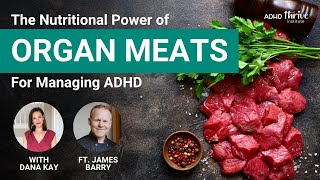
Culinary expert James Barry argues that organ meats are nutrient-dense foods that can support brain health in children with ADHD. He calls them "Mother Nature's multivitamin" because they're packed with B12, choline, and minerals most Americans lack. Simple strategies include mixing small amounts into ground meat, grating frozen liver into recipes, or adding powdered organs to smoothies.
Questions this video answers
January 25, 2024
Freeze-dried powdered liver, heart, kidney, spleen, and pancreas
About 94% of Americans are nutrient deficient
Chapters
We really, many of us in the field call them Mother Nature's multivitamin. So, and what we mean by that is that they really have basically every vitamin in them. So they're excellent sources of quality protein, of course, but they also have an abundance of vitamin A. They have all the B vitamins, particularly B12. They have C, D, E and K, which is in the form of K2, which is previously was known as like the activator X, which is what activates bone development. It has essential minerals such as iron, calcium, copper, magnesium, selenium, phosphorus, potassium, zinc.
Welcome to the Soaring Child Podcast where parents of children with ADHD learn tips and tricks to help their child soar at home, at school and in life. We feature interviews with experts, medical professionals and parents who are just like you, who are learning how to reduce ADHD symptoms using food and other natural strategies. Because children with ADHD deserve to soar just like every other child. I'm Dana Kaye, your host. Hello, parents, this is Dana K. Here with another edition of the Soaring Child podcast. Now this is an interesting one. You know, everyone's listening to the podcast to look for that unique approach to help their kids with adhd. And so this episode, I think, is going to give you a very unique approach. I want you to stay tuned because we are going to learn about the forgotten superfood of our ancestors. Today we have the privilege of speaking with James Barry. He is a culinary Expert with over 16 years of experience and has cooked for some of the biggest names in Hollywood like Tom Cruise, George Clooney, my personal favorite, Jared Butler, Sean Puffy Combs, Barbara Streisand and John Cusack. But what brings him to our show today is something even more compelling than his star studded client list. James actually has ventured into the world of functional foods with his groundbreaking product, Pluck. It's an organ based seasoning designed to make it easier for people to incorporate organ meats into their diet. And you're probably asking yourself, why organ meats? Well, as you will discover in this episode, these nutrient dense foods have been vastly overlooked, but they hold this amazing, incredible potential, especially for improving brain health and managing ADHD symptoms. So we're going to delve deep into the science behind the nutrients in organ meats. We're going to explore practical ways to actually include them in your kids meals. Yes, we are going to get your kiddos to be eating organ meats and we're even going to tackle some of the controversies around this topic. So now it's time to welcome James Barry to The soaring child. Hi, James. Thanks so much for joining us.
Oh, thank you for having me. This is such a pleasure.
It really is. When I, when I met you at their conference not long ago and I tried your product, I was like, I have to get you on to my podcast because the kids, you know, organ meat is one of the things that I recommend families, you know, give their kids to help with that brain health and to be able to sprinkle it on the food without them even knowing. Absolute gold right there. So why don't we just dive right in?
Why?
Why? You know, can you explain what are the nutritional benefits of organ meats and why are they so often overlooked in modern diets?
Yeah, such a great question. So, you know, we really, many of us in the field call them Mother Nature's multivitamin. So and what we mean by that is that they really have basically every vitamin in them. So they're excellent sources of quality protein, of course, but they also have an abundance of vitamin A. They have all the B vitamins, particularly B12. They have CDE and K, which is in the form of K2, which is previously was known as like the activator X, which is what activates bone development. It has essential minerals such as iron, calcium, copper, magnesium, selenium, phosphorus, potassium, zinc. And so I could kind of keep going on because there's so many. But what I like to equate it to is everything that science tells us we need in a prenatal, like the folate and all the other vitamins I just mentioned, that's in organ meats. So the thing that science is telling us that we need to support creation, creating life in a woman's womb, is what is in organ meats. So in many ways, what we're finding is when people start to reintroduce organ meats. And I say reintroduce because really, ancestors, atheists, our grandparents, they ate them. So, so the question becomes, well, why are we not eating them now? Which we can get into. But basically, when we reintroduce these, these very nutritious bioavailable resources into our diet, we find that we don't need to take as many supplements. Because the truth is we are a. We are a nutrient deficient society. It's something around 94% of Americans are nutrient deficient, but we are not calorie deficient. So that's a really important distinction, right? People associate nutrient deficiency with, I'm not eating enough food. Well, it's not that at all. It's that we're Eating the wrong foods.
You are 100% right there and you are speaking to my heart 100%. And you know, I love that you said that when you eat organ meats you don't have to take as many supplements. I love to get our nutrients through food first. And so that is like speaking to exactly what I preach. So, you know, you touched on a number of the vitamins and everything that are in there. I know from the ones that you mentioned, you know, B vitamins, they're so important for brain health and cognitive function. Can you just sort of elaborate a little bit on that? You know, why, why do these help help brain function? Why do they help cognitive function particularly? Obviously my audience is, is children with adhd.
Yeah. Well, you want to think about, I guess a good question to ask, which is tied to whether we eat our nutrition versus whether we swallow it is what is the source of what, where, where we're getting these nutrients. And in some cases when you're swallowing these nutrients, you're getting it from synthetic forms. And synthetic forms do not, they're isolated, they're sometimes not paired with the, the, the nutrient that's going to support the absorption. So when we think about, we can even equate that to when you're told, okay, well, you have to have this supplement with food. Right. They'll say, you know, take this with something. Well, that's because it's a fat soluble, you know, supplement. Yeah. Or vitamin. Right. And if you don't do that, then you're going to feel nauseous if you, if you don't eat it with some fat and, or it won't, you know, even absorb properly. What I love about getting your nutrients from food is it's already paired, it's, it's already in the form that is most bioavailable. So when we say this is good for your brain or good for your heart or good for your kidney, like what we're really talking about in, in a certain regard is like supporting, like. So the idea is that the organ that you're eating has the nutrients to support that organ. Well, in turn it also supports that organ and you. So for example, let's just take heart. So heart is high in Coq 10. Well, Coq 10 is, is a, is a pre, you know, it's in heart, it's preformed and it's vital for energy production and prevention of oxidative stress. So it's, and cardiovascular health. It's something that you're told, oh, if you have cardiovascular potential for cardiovascular disease, or any issue, they're saying, take Coq 10. Well, guess what? It's in heart. Yes. Right. So all you need to do is actually just eat more animal heart. Same thing with lungs. And this is a fascinating study. I think it was in the 20s or 30s, but there was this study that you probably couldn't replicate nowadays. But back then, they were able to get the consent from these mothers to basically put their babies in this kind of orphanage for a certain amount of time. And what they did was they observed these kids eating. They would basically put the foods in the kitchen, and they let the kids decide what foods they would gravitate towards. And so it was a real study of showing, like, you know, that. That question we probably all have as parents is like, well, is my kid gonna eat junk food if I put junk in there? Like, are the kids just want sweets? Like, do they automatically just always gravitate towards that stuff, or do you have to completely keep it out of your kitchen? Well, in this study, they had fresh fruit, they had certain vegetables. They even had organ meats. They had things like brain and bone marrow. And I mean, this is back in the day when they had all the access to so many of these things. And guess where the kids gravitated? The two foods that were the highest were bone marrow and brain. The kids were actually gravitating towards brain. And I always find that fascinating because. Because what I'm thinking to myself is like. Because right now, most people, it's a. It's a real trend to eat liver.
Yes.
Right. So everyone's like, oh, eat your beef liver. Well, I think it's fascinating. So as these little children, they did not eat that. And that makes so much sense to me, because when you think about it, this concept of like, supports, like. Right. So when do you really need to eat liver? Well, it's when you're needing support with your liver, but when you're a child, you're not. You're not talk. You know, you're not filled with toxins yet. You know, you're still your. Your body is developing. And what two organs are really developing? Your bones and your brain.
Yes.
So isn't that fascinating that the kids innately knew to eat those foods, Whereas when you're an adult. Yeah, eating liver would probably be helpful because you have. You know, we've. We've been in the world for a certain amount of. Have the toxic burdens. Maybe our elimination pathways aren't working as well. So. So this idea of, like, supporting, like, but also coupling that with intuitive Eating is really, really important in my mind. And, and something I'd love to share too, because it's all, it's all a part of what we're talking about is this idea of eating, your nutrition versus swallowing. And this is really, really key. So we talked about how most people are taking supplements. They're swallowing the, they're bypassing this natural digestive process. So there is a communication that happens when you stick something in your mouth. The saliva builds up, it's support. It's now starting to communicate to your body to prepare for digestion. It's also communicating with your brain and your body is there, there's a connection right there. Right. But it's telling your body, it's basically asking your body, okay, I'm about to get food, do I need this food or do I not need this food? And how much of it do I need? Right? And we can all kind of like use the example of salt. We've all done this, right? You put salt on your tongue and your body either says, this is good, I want more, or it goes, no, no, no, no, no, I'm good, I'm good. Right. And there's a clear point where it's no longer tasty too. Like it tastes good at first and then it, like it changes. Like it doesn't taste good. Like you literally, like physically could not, yeah, you could not add another bit on your tongue because it's, it's, your body is saying no more. Right. Well, when you swallow a salt tablet, you, you bypass that completely. And so what you're doing is, is you're, you're swallowing that salt tablet, you maybe get a 15, 20 minute delay response and then suddenly you're like, why am I bloated? Oh, I got too much of something. Right. So one is working with your body, communicating exactly what the body needs. The other is complete guesswork. And we all experience this. Like you're told, take this amount of supplements. If you were to buy organ meats in capsules, the back of the, the, the, the jar will say six capsules.
Six capsules. I know, they're like six. Yeah.
What? Like six capsules for you. For me? For who? I don't know, but I, I talk to so many people and they tell me, o, I, I, I tried that and I got, I felt nauseous afterwards. So I'm like, yeah, probably because you don't need six capsules. But there's no way for your body to tell you what it needs unless you eat it.
Fascinating. I loved the way that you explained it, and it made me laugh because my little son is always the one that puts that salt on his. On his tongue. And he puts the. When we're ever at a restaurant, he'll like, put this, you know, from the shaker. And I have to take away that shaker all the time. And he's never got to the point where he's, like, gone. That's too much because we always take the shaker away. But it'd actually be a very, very interesting experiment. I might actually try it one day, or maybe not. There are so many nutrients in organ meats. And, you know, again, as I said, it's one of the things that I suggest with families that I'm working with, because it does feed the brain. One of those is choline. It's essential for brain, for muscles, for liver. And we just. We just don't get enough in our food. There's a lot of studies around choline sort of improving that cognitive performance, anxiety, even, and mood disorders, which is particularly important because a lot of our kiddos that have ADHD have mood issues. You mentioned B vitamins as well. Can you. Can you talk a little bit more about. About those B vitamins?
Yeah, Well, I mean, you're gonna find some of these in. In beef as well. Like, you hear B12. A lot is with that. But. But really, I mean, the B vitamins, they kind of support every biological function in the body, right? I mean, from getting better sleep to heart health. I mean, something I hear a lot in adults is, you know, you'll hear high anxiety. And this is something that we're seeing a lot in kids these days, too. Yeah, well, a lot of times we jump to that. It's environmental or it's life, lifestyle or something that's initiated in the outside environment. But more times than not, it's actually a nutrient deficiency. A lot of times it's tied to B vitamins. So that's something that I would immediately look at if you have an anxious child or you yourself get that racing heart every now and then when you go to lay down that before you jump towards going to the hospital and getting, you know, some kind of surgery that's gonna scar your heart to, you know, regulate heartbeat. Like, I would absolutely look at. Are you nutrient deficient first?
Yeah. And look, doctors, traditional doctors really don't go down that path at all. And it's no fault to them. They are there to treat disease and, you know, put a diagnostic code on there and give medication and save the heart, for example. But, you know, really, we should start with that. That workup. But not even, you know, not even to the point where we've got that disease. It's. Let's start before. Let's start feeding the body, because as you said, we are nutrient deficient these days. You know, our soil is not what it used to be. You know, for kids with adhd, proper nutrition is so crucial, and nutrient deficiencies definitely can exacerbate symptoms. And you know, that that nutrient profile that you were talking about with organ meats really can address a lot of those deficiencies. So how do you recommend we get these into our diet?
Yeah, well, so as we mentioned, eating that is key, right? So eating. What I also love about the idea of eating whole animals, that's how I kind of like to talk about it, is we mentioned earlier that a lot of people are on the bandwagon of like, oh, I need to be eating beef liver, and that's the only organ they focus on. Well, first of all, when we talk about offal O f F A L. Perfect name, right? Yeah. Or organs, that's another name for it. It's had many names over the years. Variety meats as well. But the. When we talk about that, we're really talking about every part of the animal except the muscle and that literal bone. So bone marrow is part of awful, but not bone. So. So that covers a lot. And. And what I try to tell people is, like, if you think back ancestrally, if we were a tribe of, let's just say, 32 people, and we killed an animal, which took a lot of effort, right, for us to get that one animal. And here we are, 32 people. How many livers are there? How many hearts are there? Like, how much liver do you think you're getting? Most likely not much. Most likely you're getting. They're giving it to people that are sick. They're giving it to people that are pregnant. They're. They're. They're giving it to people that need it immediate, immediately. Right. But so when we. When we kind of stop at the liver, we're really missing the whole point. What we got as a tribe was the whole animal. And like, just as an example, spleen, for example, spleen has five times more heme iron than liver. Everyone thinks liver is the highest in. In iron. It's not. It's. It's spleen. So as long as you were eating the whole animal, you were getting these nutrients from other parts of the animal that you weren't getting from just having the meat, and that's really what I want to teach people is like that when we talk about organ meat, we're not saying just pick one. We're talking really focus on as much of that whole animal as possible. So how are you going to get that whole animal? Well, you're going to probably want to join some kind of like meat share. Where you're getting key is you're getting the whole, you're getting like a half cow share or a quarter cow share. So that way it's cheaper. But also that way you're getting a variety of different cuts, you know, and hopefully you're getting things like the tongue or different parts of the organs. When you go to just the butcher, you're going to be hard pressed to find some of these things depending on where you live. So you're going to need to find that cow share that's you know, at your local farmer's market. You're going to need to go to either online for a resource there. But you know, another underused resource is ethnic markets. So for example, Mexican markets, Asian markets, they eat more whole animal than we, we, we do. You know, the, the Anglo Americans do. And it's like, it's just, it's a shame because you know, we focus so much on is it grass fed, is it mm, a hundred percent grass fed or not. And most likely if you go to these ethnic markets you're not gonna find 100% gross fed. But I would kind of offer the, I would offer the, the, the topic of conversation to be, well, is it better to, to only do a hundred percent grass fed or to eat the organ? And if you're not finding the organ 100% grass fed, which means then you're not eating it, I would say it's better, it's far better to eat it and there's ways to kind of ease it into your diet. There's ways to support kind of the cleansing of that organ. You can soak it in. You can soak it in like lemon juice. You can soak it in buttermilk particularly. That helps like livers and kidneys. It helps with the taste a little bit.
James, I'm going to have to stop you there. I know that there are going to be listeners going, there is absolutely no way that my child is going to eat a tongue. There's absolutely no way I'm going to eat a tongue. I would eat a tongue. But I'm sure there are many parents listening going, no, not happening, not happening. What do we do in that instance?
So let's ease you in. So how I would ease the organs in to the diet is I would start with pluck. Now I know that may seem like a shameless plug, but it really is truly the easiest way to get the organs. So pluck is a. Basically it's a, it's an ancestral superfood powder. It's got lip freeze dried powdered liver, heart, kidney, spleen and pancreas. So five organs. And we combine it with organic spices and herbs and we turn it into a seasoning. So you can sprinkle it on popcorn, you can sprinkle it on toast, you can sprinkle it on avocados, salads, meats, fish, chicken, it really doesn't matter. Even though it's coming from a hundred percent grass fed cows, it's extremely versatile. So you can put it on any foods. I mean, I've even sprinkled it on oysters. I've taken. We sell this one that's just organ meats. It's called pluck pure. So there's no seasoning in it. And I put that in smoothies, you can put that in gummies. If you're making gummies, no one will know as long as you play with the ratios. So that would be your gateway to getting organ meats because it's effortless, it's easy, and it makes food taste delicious. I've never met a kid who doesn't like it.
Yeah. And I tried it at this conference and I tried a couple of different flavors and they were delicious. You would not know that there was organ meat in it.
Yeah, you literally don't know. And what we find is when most kids taste it, just don't tell them what it is. They don't even know. But, but once they taste it, similar to how we were talking about the salt is I find kids can't stop. So it's, it's like they, they want more and more. And I've even been told by parents that their kids cry when they run out. And, and to me, to me, yes, I'm, I'm honored, you know, that their kids think it tastes good, but I actually think it's a bigger, it's a, it, it's bringing awareness to their nutrient deficiency that the kids really, their bodies crave these nutrients. The body knows what it needs. And kids, even more so than adults, are tuned in, they're not overthinking things that are tuned into what their body craves and wants. And so that's a real sign of that. But we don't want to stop. There so that's just the first phase or the first stage of easing organ meats. And I would say the second stage is you have a couple options there. So one would be to buy ground meat that already has organ meats in it. It's usually found in your freezer aisle of your grocery store. And there's, there's companies like Force of Nature, they have, or they have ground meats that already have like liver and heart in them. It's about 10% they put in, but it's, it's good. It's significant amount.
Where I actually haven't, I, I wasn't aware of that. I, I use Force of Nature. I know the brand and so I didn't realize that they actually put some of the organ meats into the ground meat.
Yeah, it's called, they call it Ancestral Blends. A lot of times they use some kind of name like that. And so those, those ground meats are perfect for when you're making hamburgers or meatloaf or spaghetti sauce, bolognese, anything like that. Those. That's going to be a really great way because it's low enough where you shouldn't taste it. You really shouldn't, particularly if you're adding other things to it like the tomato sauce and different herbs. And you can even still add pluck to that. We, we get told a lot of people do that still. But that's a really great way to start easing it into. When you're eating ground meats and not having your family know now that they are more expensive than you know, like you might find ground meat for 8 to 9 99, but this is going to be more like 16 to 17. So it is a little bit more expensive.
That's sad though when you think about it, because it's like, what would they do with that normally, like a lot of the time and probably be chucked away like, or something or given to the animals you think about like you just include. You're doing the same labor that you would be doing if you were just grounding beef anyway. So why is it double the price? That's.
Yeah, good, good question. And I'm not sure. I think it's more just. They're just trying to set it as. I think it's more kind of just the marketing. They're almost saying like, well here it has something different in it. So we have to change the pricing. But the real is the organ meats are actually more times than not cheaper than the muscle meat, depending on what organ. But so to, to your point Though, if you want to save money, here's kind of, here's step, kind of B of step two. So step two B is you can go to that farmer's market, you can buy beef liver. Okay. But when you buy that, you're going to get it frozen. So don't defrost it. Because really, that's what's overwhelming. Is defrosted organ meats overwhelming? Because we don't normally work with them, we're unfamiliar with it and they are a different texture. So when you have a huge beef liver that's defrosted, you're like, what am I going to do with this? No one's going to eat all this all at once. And you can't make too many pates because even then I get told all the time, mother's telling me, like, oh, I made a pate and I was the only one that ate it, you know, so you don't want to get in that situation where you're trying to support your family's health, but you're the only one that's willing to eat it. So what I recommend is you keep it frozen. And then when you are having ground meat, you take a grater and you just grate the frozen organ meat into the ground meat. You don't need much. Like, let's just say if it's a pound of ground meat, you'll use like a table to take 1 tablespoon to 2 tablespoons of grated liver. And no one will know. Once again, no one will know.
James, the tips and tricks that you're giving today are absolutely gold. I wouldn't have known that. I like going to my butcher right now or my farmer's market. Actually, the farmer's market's probably closed down now that it's getting, getting cooler here. As I said, it was 32 degrees this morning, so. But that is awesome. That's an awesome tip. Thank you for sharing that. Okay, so that's to be.
Yeah. And so that. And then key is after you grate it, put it right back in the freezer so it's always frozen. And that way it's not overwhelming. Now, something you can also do that people do now, you can't do this as much with the kids. Well, you, you can. So here's a couple other. So one, one thing that a lot of adults do is they take that beef liver and then they'll cut little pill sized pieces of that liver and then they put a, put it on a sheet tray. You know, you could put like parchment paper on your sheet tray. And then you put the little bits of liver, like I said, only the size of like a capsule or sometimes even smaller, and you put those on the tray and then freeze it just like that. And then put those in a freezer safe bag and then keep them in your freezer. And then what you're doing is you're just swallowing these little tiny whole bits of liver. So that's something you could do as an adult. The other thing you could do is you could take that liver or even heart. You can blend them and then put them in like small. I wouldn't do a full ice cube. I would do something that's a little bit smaller, but some kind of mold, like an ice cube tray where you then can freeze it. And then let's just say if you know for a fact that your kid does smoothies, and this is where I recommend it, smoothies or purees or anything like that, you then take one of those little frozen chunks and you throw it in the. The smoothie. Once again, they will not know it as long as the ratio of that organ frozen organ meat is less than the actual smoothie. So if you. Let's just say you were making a smoothie for two, then you're talking about a tablespoon size. And as long as it's not too big, they were not going to taste it. And you just blend it right in the smoothie and they drink it and they're like, oh, it's so good. Because it's a very. When you're. When. Whenever you're doing anything with organ meats, the key is that ratio.
Yeah, definitely is.
Yeah. And so you just want to be aware of that. Now that's kind of like, you know, another thing to do with that beef liver. Now here's something. And I'm so excited to share this one because. Because just recently, someone heard me talking on another podcast giving this tip, and they said they did it. And I. And they confirmed that I was absolutely right, that it was glorious, delicious, all that stuff. So I'm excited to share this one with you because I have recent proof that I am correct about this. So what I suggest is that this is kind of step three is you purchase chicken hearts. Okay? You go to the store, they'll usually have these. At a store, you can find them fairly easily. But get chicken hearts. Now, those hearts kind of look like mushrooms a little bit. They're about the size of a mushroom. And so the next time you are cooking a spaghetti sauce or a chili or anything like that what I want is think of something that you would be adding mushrooms to anyway. Right. Well, one of the things that really help us is to kind of switch things up is you don't want it to look like an organ because then your mind will play tricks on you, and you also don't want it to taste too strong. Well, chicken hearts serve this really well because you can chop them up just like you would a mushroom, and it just looks like little pieces of really mushroom. And just treat it just like you would a mushroom. Like if you were adding mushrooms to a sauce, you would probably not add 15 mushrooms. You would add two or three. Right. And you chop them up and you'd add it to the. So do the same with the hearts. Just do two or even three hearts. These little chicken hearts, dice them up so they don't look like a heart. And here's the beauty about chicken hearts is they're incredibly mild in taste. They're almost even sweet. So they take on the flavor of whatever you're adding them to very well. And so this person recently did this that she added a hand, just two chicken hearts diced up into her chili, and she couldn't even taste it. And she loved it because she was so excited because now she was getting organ meats into herself and her family and no one knew. So chicken hearts are a really great kind of like, launching pad and where you're actually now working with the organ, which is overwhelming for some people, but it's not a bloody organ. Like I said, it's really. It's just a mild entry point because they're just. They're so tiny, you know?
Yeah. And I think, look, you've shared some really great tips for families, you know, getting started. You know, I. I remember when we were speaking at the conference, you were saying that once kids start eating organ meats, their. Their palate starts to change. How does that happen?
Yeah. So organ meats naturally have an umami flavor. So we have, you know, four, really, five identified tastes. So we have sweet, we have salty, we have bitter, sour. And then the fifth is umami, which was discovered in Japan in the late 80s. And they're all unique tastes. You know, if you. You probably noticed, like, when you eat things that are salty, you then crave things that are sweet. Right. And in the US we really skew towards that. Salty, sweet. Most foods that we purchase in the grocery stores, they're either very salty or they're very sweet. And that's because those are two very cheap ingredients. And, you know, you have salt, that's also cheap, and sugar, that's cheap. So you'll see those in most products off the shelf. So one of the ways to move away from that salty, sweet palate, and you'd be surprised at how powerful the palate is, but is to incorporate those bitter, sour and umami foods into your diet. And you don't have to go all in. You can really ease it in. So no different than when you have a pet, you know, and you're changing their food. You, you start with the old food, 95%, 5% of the new food, and then over time, it's suddenly now 95% of the new food and 5% of the old food. And that's what you do with a kid. Like you, for example, if you have a young child who is really skewing towards salty and sweet, you can start to take sauerkraut juice. So that's cultured vegetables. You can buy those in a store or make them yourself. And then take some of the liquid from that and just add it to the soup that you're serving them or add it to a sauce or dressing. And once again, you're not adding so much that it's the predominant flavor, but you're just introducing that kind of sour to their dishes. You can also like pickle things like pickle onions, and then give them that with their hamburgers, things like that. You can, you can start to just incorporate these sour foods because pickled foods are typically sour unless they have sugar in them. Some bitter foods might be like the bitter greens you start to see during the winter. Those, those are things. And so a good way to incorporate bitter greens is to make pestos. So pesto is typically made with herbs like basil or oregano and whatnot, but you can actually add arugula. You can add some of these bitter greens. Just don't add too many, but you can add a little bit and it blends and it's just a green sauce. And if your kid's willing to eat green sauces already, if they like pesto, just put lots of cheese in there and they won't, you know, they'll love it. But you can add, incorporate a little bit of those bitter greens. And then in the case of organ meats, so pluck, for example, is a great source of umami, we are told constantly from practitioners whose parent who are working with parents who have very picky eating kids, very limited palate or limited in what they're willing to eat. So their palates are very kind of narrow. They are told by their practitioner, just use do one change, which is start using pluck on the food. And then they get reports back that they're. The parents said, oh, my kid's now eating more adventurously. And it's, it's really. Because the umami in the organ meats is very prominent in the seasoning and it heightens the flavors. So what happens is you can add it to anything and it actually will make the food taste better, kind of. We joke that it brings the yum to your, your, your table. Like it just makes, it makes everything you add it to more delicious because it brings out the flavor amazing. And then. But it's bringing it out in that unique way, that unique flavor. And so over time and, and I guess the way you would, the way I would kind of talk about, well, what is umami? Because I haven't really said that. So umami is kind of savory. It's slightly meaty. Things like tomatoes have umami, mushrooms have umami and organ meats and, and so does meat. But there's umami in lots of foods, but it's very prominent in organ meats. And so it just, it just brings that extra oomph to your food and it introduces a new flavor. And over time, you will start to see that your child is going to be more conducive towards savory foods and start moving away from just sweet foods if you use it regularly.
That's amazing. You have given some amazing tips today, James. I am going straight now to actually purchase a number of different flavors of pluck. We do have it on our store, so we'll definitely be dropping the links to those into the show notes. But James, thank you so much for joining me today. You know, you're sharing your experience, your knowledge, your knowledge about just the importance of organ meats and how they're not only important for brain health and adhd, but just important for everyone, really, at the end of the day. Thank you for sharing your time and your expertise with us. Please tell listeners where they can find and follow you online.
Absolutely. So we're on socials at Eat Pluck and then you can find us online, our web store. And I definitely would go to the web store as well for recipes. Like we mentioned tongue. There's a really great tongue recipe there and that's eat pluck.com amazing.
Well, thank you once again for joining me today, listeners. If you've enjoyed today's episode and found it useful, we would be so honored if you could subscribe or follow the podcast ratings and shares are also a fantastic way to support us, but they also help us reach others who could benefit from the information that we provide. Your support of our podcast is essential for us to be able to help and reach more families and give more families hope with children with adhd. So listeners, thank you for tuning into this week's episode of the Soaring Child. I'm Dana Kaye, your ADHD health practitioner. Keep on thriving. Thank you for listening to the Soaring Child podcast today. To learn more about how to help your child with ADHD soar using natural strategies, visit our website@adhdthriveinstitute.com and follow us on social media. Dhd thriveinstitute.










