Episode 99 Eating Like a Human With James Berry from Pluck Seasoning
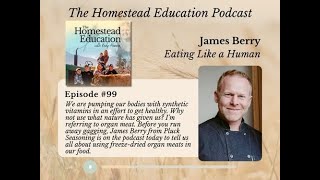
This is a podcast interview (Homestead Education, Episode 99) featuring Cody Hanner and guest Chef James Barry (founder of Pluck Seasonings). Barry recounts his chef background and the origin of Pluck—a line of freeze‑dried organ‑meat seasoning powders (liver, heart, kidney, spleen, pancreas) created to make organ nutrition easy and palatable—and describes product variants, sourcing (New Zealand grass‑fed organs), recommended uses (seasoning, mixing into ground meat, pet food), and dosing (a teaspoon of Pure ≈ 2 oz wet organ). The conversation also covers homesteading and homeschooling experiences, whole‑animal use, food and sleep as health levers, and a closing "keep growing" reflection.
Chapters
Hi there and welcome to the Homestead Education podcast. Do you have a homestead farm or just dream of a rural life? This is a show to help you and your kids grow your own food and grow as a person. I'm your host, Cody Hanner. I'm a homesteader, homeschool mom of six and small town enthusiast. I was raised by an old school rancher and blessed by the grace of God to have been exposed to so much of what rural life has to offer. Join me every week to talk about homesteading, homeschooling and growth with a homestead education. Hi everyone. So, as promised, I have a super interesting episode today with James Berry from Pluck Seasonings. So. Hi, James.
Hi, Cody. Such a pleasure.
Absolutely. So I've been excited to just hear about you and what you have and kind of get some background on this for a long time. So do you want to introduce yourself, tell us a little bit about you?
Yeah. So I'm a professional chef by trade. I've been in the field 20 years now. It's amazing to say I started out as a private chef to a bunch of celebrities like Tom Cruise, George Clooney, like, you know, names that everyone might know. And I, I loved it. I mean, I just, I loved supporting the individual to be healthier and, and to be, you know, good at what they do and health wise and. And then eventually it got old and I was like, you know what? I want to help more people. And I started a meal delivery service in Los Angeles and they did that for about eight years. Killed me because it was, it was hard.
Anything in Los Angeles is hard. But I mean, that's maybe just my opinion.
No. Yeah, it was. And actually when we had our first child, we, we then left and we went to Portland, Oregon and I sold the business and just kind of got my health back during our second child. And it was during that time then I came up with my current product, which is called Pluck. And really my, my kind of mission and my goal this whole time as a chef has been to try to help people with their health. And so how I do that is I really try to meet people where they are and where we kind of all are as humans is. Is comfort food. I mean, that's kind of what we all get attached to, right? We're emotional eaters to a degree. You know, like the things that connect us to our childhood, the things that connect us to our traditions, whatever they may be. And so I was.
Read the book the Comfort Crisis yet?
No, I didn't. I never even heard of that one, so.
Good. Anyways, he has a whole thing about how comfort food and how we're actually like wired to go for the comfort food, so.
Oh, I'm writing that down right now.
Yeah, it's such a good book. Like, I mean, sorry. He, like, it's all about him hunting in the Arctic for 30 days. Like, it's pretty cool.
Oh, I love that. I love stories like that. Cool. Yeah, so I, I, that's kind of what I specialized in was helping people with their health and taking comfort foods and making them healthier. And so once I became a father, it was like, okay, what is ultimately what any of us want for our kids is we want them to be healthy and happy. Right. To, to basically out outlive us. And so. Right. That's the goal. And, and so I was just, I, when my kids were both pretty young, they're about four years apart and the, the oldest one was about five and the youngest was a little over one and they both got sick on this one trip to Canada. We, they got Shiga toxin, which is a form of E. Coli, so it can be very deadly.
Oh yeah. I was a safety specialist for years. So.
Okay. So you know, sugar toxin's serious and it can be deadly for elderly or for young.
Young. Yeah.
And the older one got through it in like couple days pretty well, but the younger one, it would not let up. And you cannot give antibiot. You probably know this, but just in case the listeners don't, you cannot give antibiotics for this. It's. You can actually hurt the person if you do.
So have to like let it run its course and let the body.
Yeah, just have to let it run its course. Exactly. And it got really scary. You know, she, she couldn't keep you. Basically when you're, when you have this, you can't keep anything down in. So that, and that includes even water. So I just watched her turn. She was already very lean child, but she went from lean to like skin and bones. And it was scary. And I just remember thinking to myself, and then at one point it turned. So it was like eight day. I mean it was long, like six or eight days. And then it turned and then all she would eat was toast. And you know, like that's kind of like when you get sick, you won't touch anything except the thing that you can hold in. And so kind of became a toast addict. And like, no joke, like she would not eat anything.
I'm laughing because I have a, a three and a six year old and they're toast addicts anyways.
Okay, okay, well then you'll, you'll appreciate this because here as a parent, I'm like watching her eat. I'm glad she's eating, of course, but I'm also watching her eat just toast. And I'm like, I really wish I could put something on that toast to make it healthier, just something. And that's kind of where I started to get the idea of pluck is, is, is, you know, really kind of taking, taking what I think is Mother Nature's multivitamin, like the, one of the most healthiest foods on the planet, which is the organ meats of the animal, and making them so that they're not only delicious, but that you don't have to know how to cook it. Cook them and you don't need to worry about sourcing. Like, just make it as easy as salting and peppering your food. And that's, that's where I got the idea. And so I took five freeze dried powdered ore meats. I took liver, heart, kidney, spleen and pancreas, freeze dried powdered forms, and I combined them with organic spices and herbs. And so now you have literally what you would call like a ancestral superfood powder that you can season all your food with. And I love that. And that's, now you'll appreciate this, like, now that my kids use it on everything, but now I watch my daughter put it on her toast and I'm like, yeah, you know, like success.
Can you figure out a way to mix it with cinnamon so they can do cinnamon sugar toast?
You totally could. We, we sell, we have four products and one of them is just the organ meat. So you can literally take that one and create your own pluck. Like just mix your own seasonings that you want, like nutmeg, cinnamon, you know.
Because, yeah, the cinnamon sugar, I think would, you know, lock in that whole putting it on toast thing.
Oh, yeah, yeah. Kind of like the savory thing a little bit too.
So, yeah, my kids are, they're very aware of the organs and so in some ways that's a positive, but in other ways that they know when, like, I make a lot of dog food out of organs and they don't love the smell. So if they thought I was trying to sneak organs into their food, they'd probably like revolt.
I'll be, I know. I was kind of shocked when we just learned before this started that you hadn't tried it yet. Because I, I, I would, I want to hear how they respond because I think they're gonna love it. And I don't think it will be an issue because we. We typically. It's not. But of course, most of our customers are not making dog food regularly, so I don't know.
I don't. I don't think my dogs really care. They're pretty excited, so.
Well, you know, it's funny, actually, a lot of. I'm glad you guys are using organs for your dog food, because a lot of pet food does not have organs in it, and they really do want it and they need it. And so we even have a lot of people that buy our pluck pure and they sprinkle that over their dog food and.
Okay.
Or cat food. Even cat. Or dog. And the animals go crazy for it.
Absolutely. I mean, so I mentioned before the call that we're hog farmers. So we go. We sell, raise, butcher, whatever. About 350 hogs a year.
Wow.
And so that's a lot of meat in my freezer. And that's actually a lot of customers who don't always want, like, the fat and the organ meats and that type of stuff. And so I'll take that back from the butcher. And then again, that's what I use for my dog food because my family isn't big on the organ meat.
Are you rendering the fat for just lard and stuff?
Yep. And we started using lard primarily instead of a lot of other fats, and the flavor is so much better. And what I've learned about it is just. I don't think I'd go back.
Yeah, I. I totally understand. It's. It's interesting because it's the closest to human meat and. Or, you know, the biology. But that actually makes the fat really good for our skin.
Yeah, it's.
So a lot of our skin is.
Better for our bodies because we were meant to digest that. And it's like you said, it's the closest to us biologically. Like, why.
I was going to say there's a couple of skin care companies. One of them is called Pharaoh Life, but they. They use lard in their skincare.
Okay. I use a skincare that uses tallow. So. Yeah, similar. That's a. Think of the name right now. I probably should know it, you know, so I could boost her. She's great, but, you know.
Yeah, no, I think that's it. Oh, what is it called?
Tubes and Company.
Okay. I think I've heard of that one, actually.
Yeah. They do face creams and makeup, but their face creams are all tallow.
Yeah. I feel like tallow is the predominant one. When you find an animal based skincare and then lard is kind of making a little bit of a show. There's a couple companies that are starting to use it.
Yeah, there really is. I think the problem with lard that I find is there's a lot of people who just don't consume pork.
Yeah, yeah.
And you know, for religious reasons and stuff. So, I mean, we even, we have a lot of people in our area that don't consume pork. And I have like, firefighters will be out on the line and I'm taking pork burritos out to everybody. And then I have like just some bean ones on the side for those guys.
You know, that, that's kind, that's so nice. But I, Yeah, I'm. I'm kind of amazed learning about your, your story about the six kids. Homeschooling, homesteading. It's like I was a stay at home dad for about four years and it was, that was with two kids, primarily one though, because the other one was in school at the time.
Okay.
You know, like first grade or whatever. And it was some of the hardest work I've ever done. So I can't even imagine doing it with six kids and doing it from home, you know.
So this is actually one that I talk about a lot. My husband is a, he's a stay at home dad too. He's. He was a disabled veteran. He was blown up three times in Iraq. So he has, he's, you know, he's functional, but he's not. So he can't work a full time regular job. So we farm and we homeschool the kids and then I have my own business that I run from home. But the trick is the self sufficient kids and my kids, from a really young age, I start teaching them how to care for themselves and how to care for the family beyond their own needs. Because I think that that's. We are facing an epidemic of very entitled kids. And I'm not even saying that as an insult to the children or to the parents. I think we were taught we're supposed to do for our children. But when you look back just 100 years, we were training our children to be our partners. And that's what I do in our house is we have six kids that are our partners.
Yeah. That's amazing. I mean, I, we struggle. We were constantly like at them to try to, you know, support them in being self sustainable and it does show up. But whenever they don't have to be or I say not have to be. But whenever they can try to not be, they try to take it. And you're just like.
But like, absolutely. They're kids. Like, I chase mine around and I'm like, why is there garbage everywhere?
Right, right. You're just like, you just all have to always have to be on them up, hopefully up to just a certain age. I mean, my oldest is 11, so I haven't experienced that yet. But, but I, I just, I am seeing more and more of it coming out, particularly because they watched me cook. That was actually, that was actually really a, a struggle or a pain point for me. I'm wondering how it was for you. So as a chef, I kind of like to get in the kitchen. I like to get it done and. Or I use that as my downtime. So I do both. So. So it's sometimes I'm listening to music, podcasts, something like that.
Yeah.
But the other thing I do is I just like to get it done. And I can be really fast and I can, and I can, you know, be very efficient in the kitchen. But I had two kids that both were watching me cook that wanted to participate from a very young age. I mean, like my youngest was probably sitting on the counter or somewhere near there, like at 2 and wanting to be a part of it. And so I immediately had to slow down. I had to, you know, like include her into it. And I say had to because she was not going to let me not include her. You know, they, she wanted to be a part of it. And I, and I quickly kind of like had to adjust my, my mindset to not just trying to get it done, but actually using this as time not only for, you know, father daughter time, but also time to. Okay, this is, this is where I get to support them in learning how to be self sufficient. Like if I teach them how to cook, then they can do what you were telling me before this started about your 15 year old cooking dinner for the family, you know?
Yeah, you know, it's. You got to change how you do your routine. One of the ones. Yeah, one of the ones I did so that I still. There was like two options. One of them is I would go in and prep cook with my headphones in. I would get all the vegetables cut up, I'd get everything out and then I'd only have them in there for the magic, you know.
Right, right.
And. Or the other option is when they got a little older and they could start using knives and stuff, then they would come in and we would do prep cook together and Then I'd be like, okay, thanks guys. You set the table while I whip everything up, you know? And now that I have 15 year olds and I have a 18 and 20 year old too, they, they can all cook. I mean, they have their nights that it's their night to cook. And a lot of times they're planning their own meals. They aren't just cooking whatever mom tells them to cook, they're doing the planning as well. Like my daughter, she actually, she was like, I want to cook dinner every night in December. And I was like, okay, well, I don't know that this is the best month for you to do this. Money's a little tight, you know. And she's like, oh, that makes it better because I'm going to try to do it without the grocery store, just with food we have in the house.
Oh, wow.
And so I said, okay, well, I know we're out of cheese and stuff, so let me see what I can figure up. And I did about a $200 budget for her, which our budget is usually pretty low because we grow so much of our own meat and vegetables and that type of stuff. And so I did about a 200 budget for her and she did dinner and snacks for the entire month without the grocery store.
Amazing.
Yeah, I was so proud of her.
That is some of the best education you can give someone. I think. I really do, because, you know, as you get older and I'm always telling people this, it is impossible to be healthy if you are eating out all the time. It's impossible. And that has to do with, for so many reasons, some of them having to obviously do with ingredients because, you know, there's low margins with food products and restaurants, so they're cutting costs with their ingredients. And so really the only way to do it is to control the ingredients, which means you're cooking from home. And a lot of people either don't like cooking because, you know, they just weren't raised, you know, being taught to enjoy it. And that's okay. I think, I think there is this kind of belief that just because we eat, we're supposed to love cooking. And I don't, I don't think, I don't think that has to be. I think it's teach their own, like, if you like it, you like it, if you don't, that's okay. There's ways to get a, you know, get through it without liking it, but then, you know, knowing what to do in the kitchen and how, how to actually make it enjoyable or how to make it efficient. One thing I'm always telling people is instead of thinking about, and I'm sure this is probably actually how you guys need to cook with you're saying eight people, right? So six kids, two adults. With that many people, you're probably having to do this is you don't actually follow a recipe necessary, you're following a formula. Yeah, right. So you're thinking about, okay, what do we need in this meal? We need, you know, dairy, we need protein, we need vegetables, we need a starch. And you, and then you're just building it out from those things. And then, you know, like something I used to do when I was training to be a chef is you just, you pick the container that, you know, like, let's say you guys have probably a couple casserole dishes or something. You're like, okay, when we fill this dish, we know it feeds us times two, you know, like this meal and next meal. And so I always was telling people, you just use visuals, you know, you just figure out that container and you just build it into that container.
And that's another one is like, well, for example, my husband hates leftovers. Drives me insane. Unless it's barbecue. And then I think, I think leftover barbecue is nasty because it tastes like stale smoke. But, well, I think it reminds me of my younger days going to like bonfires and stuff. And the next day you stink, you know, like all your, you go to put on your favorite hoodie and you're like, nope, not wearing that, you know, and that's what the leftovers smell like.
So what do you do though, if he doesn't like leftovers in your family? 6. Do you truly not have leftovers or are you just repurposing them? Making them.
Yeah, where he repurpose them into something else.
Yeah. And then he's not thinking, this is what we just ate yesterday.
Yeah. So, you know, like a big one I do is I'll do a pot roast. Well then there's never enough meat left to like, you know, serve all of us again. So then I'll turn that into pot roast soup where I add some more broth if I need to, I shred that meat out, I add in some grains, you know, whether that be like rice or barley or whatever we have on hand or noodles or whatever and make like a crunchy bread to go with it. And it's a totally different meal.
Has someone entered? Oh, can you shut the door?
I'm surprised mine hasn't opened so I, my, I can hear my 3 year old playing out there, so I'm surprised he hasn't came in to say hi.
So that's like, we're, we have a teacher strike right now, so our kids are home. It's, it's so talented. I mean, I'm saying that to a homeschooler. I know that doesn't get lost, but it's very challenging when you. Both my wife and I are, own our own businesses, so we're entrepreneurs where we work from home and so our lives aren't set up really to homeschool. And, and yeah, and it's interesting because I've actually had some, I've had some kind of mixed feelings about that because we have some really close friends in Connecticut who did homeschool. And I just had a conversation with them a few weeks ago about this, about how I just, I really believe in my heart that what they did and what you guys are doing in any homeschool out there, I'm like, I believe that's the way to do it. Like, I really think that you, you, you, at least the kids I see that go through it are very balanced. They're, they have a nice confidence to them. They, they have a self sufficiency for the part. And, and particularly when I think of this Connecticut family, like, their kids are amazing. They are really amazing kids that can really dive into a subject or dive into a passion and get very, very good at it. Like, very top level.
Yeah, absolutely.
And I had to kind of like I was sharing with them, like, I just had to kind of reconcile the fact that we didn't set our lives up like that and, and I, I, I can't do it that like, I just, I made different choices and that's.
Okay because you, you know what's best for your family.
Yeah. Well. And sometimes I don't like, but, but sometimes it's like, I guess. Well, I mean, I, I know what's. Yes, you're right. I know what is best instinctively. But I guess what I'm saying is that this is the best for us. But I, I recognize that homeschooling, there's something very special about it and I find that it's very effective is what I guess I'm saying.
Yeah. You know, we weren't homeschoolers originally. We've only been homeschooling for eight years, which when we say only, that seems like a lot. But when we have a 20 year old, you know, that's that we pulled him out in junior high.
Yeah.
And we were living in Oregon at the time we live south of Bend, and it was just not a good system for us. And we were trying to figure out what our next option was going to be. And that actually leads me into my story, which was one of the reasons why I was so interested in talking to you was my husband was diagnosed with end stage liver disease.
Okay.
He was given. They didn't know. We, you know, we're in the Portland VA and they're like, it's. It's terminal. Come back in a year if you're still alive and we'll check you for cancer. That was literally what they told us. And we just walked out the door and we were just like, what do we do? We didn't know what to do. And one of them was, we wanted to. If we only had a year or less with him, we wanted to spend more time with our kids, and we needed to figure out how to raise all of our own food. And, I mean, my husband and I couldn't do that alone. And honestly, he was so. I don't even know what the word for it is. I. I don't know if it was depressed or angry or what, that he had a hard time even doing a lot of the farming. Like, I did a lot of it at that point. And we needed more help now. When we first started homeschooling, we didn't do it right. I was like, okay, we have to do our sit down and do school for six hours a day, and then we go farm. Now we're like, yeah, we farm. We should probably do some school today. Like, okay, bust your books out while I'm drinking my coffee.
You know, it's almost like life is the education.
Yeah, exactly. You know, I have teenagers, so I make sure they get through their algebra. I make sure they get through their things that they need. And we spend the rest of our time studying things that they want to study, right? Like, they're. They'd go to a co op, they're doing a debate class. And the debate class is on whether or not cows cause methane issues. Well, they come home and they're like, mom, can you help us with this? I'm like, oh, you came to the right lady. You know, I'm like, see this bookshelf? See the bookshelf that I've been dying to share with you? I can share it now, right? And I mean, they're. One of them's reading An Industry Worth Fighting for for, written by the Tillamook dairy farmer, and the other one's reading Red Meat Repub. So, I mean, they're just. They're deep into this, you know. But that was what changed us going from our more commercial. I mean, I worked in commercial agriculture for 20 years. Or. No, not 20 years. I've only been in working for 20 years. I worked in commercial agriculture for like 14 years. Yeah, I majored in ag. My dad was a cattle rancher. That was our life. And when we realized, I. I mean, I came home from that appointment that day with my husband and was like, well, I don't accept this answer because his wasn't from drinking. It was from the burn pits in Iraq. So I'm like, okay, what are our options? And so I joined every Facebook group out there, you know, on liver cirrhosis. My dad had actually died from liver cirrhosis, but from. For other reasons. And I called my stepmom and I was like, what did he do? What did the doctors tell him? You know, like, I. I researched everything there was to research. I had a stack of books this big, and I knew that I was. That if I had any chance of healing him, it was through food and going as all natural as possible. That was seven, almost eight years ago now. And he's doing great. He actually had surgery this year on something else. They did a biopsy while they were in there. They said, we see a little bit of cirrhosis on the edge of your liver, a little bit of scarring, but other than that, you have a fully healed liver. So whatever you're doing, keep doing it.
Yeah, the body is a miraculous thing. And I'm always trying to tell people, like, I mean, really my first stop when anything seems off. You know, if I have a sore throat or. Or phlegm, anything, I immediately go to.
Really, as I'm clearing my throat. Yeah.
I go to basically two or three points, which is, what am I eating, how am I sleeping? And. And what's my environment? You know, am I in a toxic environment, More toxic environment? You know, like. But I really look at those three things, and the one that you can immediately, you know, adjust is the food, because sometimes sleep takes a little longer to digest. And then, of course, if you're in an environment that you can't leave, that's challenging. But. But I always look at those three and. And it's amazing that when. Particularly when you focus on the food one, because that is the one that, you know, you're doing the most often. I mean, I guess sleep is probably the second one.
Yeah.
But. But those two can huge do Huge, huge changes in the body. Really, you can See the, the most benefits from focusing on those two. And, and for me, so I didn't grow up eating organ meats, even though I, I believe that they're, like I said, the healthiest food out there. But I didn't grow up eating that way. I mean, I grew up eating TV dinners. And like, I was born in the 70s, but I, I was like, anyone born in the 70s will understand this. You're kind of raised like a couple generations back. You're, you're raised the way your, Your parents were raised. So, so in many ways, we were eating 1950s food, like, you know, like steak, potato and frozen peas, you know, things like that. It was very kind of like, packaged. And, and, and I, I say we.
Were latchkey kids that lived off of macaroni and cheese because I was born in the 80s, so.
Totally. And I, I remember kids like that, the latchkey stuff. And, and so, yeah, so I, I, like, I, I always joke, but it's actually serious, which is we knew dinner was ready because the smoke detector went off. Like, no one cooked in my family really. You know, it wasn't. That wasn't. We, we didn't eat for. We weren't foodies. We were functional eaters. And, and so, so that's why it's such a. I, I always believe that, that you only know what you know. And the only way to really understand where you want to go is to have contrast like that. I always think, like, that, like, like, contrast to me is a very good thing to have because it teaches you what you do or don't want from. And so for me, growing up that way really helped me dial in my desire to get healthier with food. And so as I've, like, incorporated, like, I'm, I'm a big, big proponent of whole animal now because a lot of people that are eating carnivore, a lot of people that are following specific diets, they're. They're kind of zeroing in on like, only very specific parts of the animal, like the ribeye or you. You name it. It's like very specific parts. And I'm like, no, no, like, we need to think, we need to think more because we talk about, we talk a good game about environment. We talk a good game about, like, oh, the way our ancestors ate. Right. Well, no one in the past. And you're going to very much understand this as a homesteader. Like, you don't waste like that. That's not something you do.
Like, when I butcher a chicken, we use that whole thing and it covers several meals, too.
Do you. And I imagine you use the feet as well for broth, right?
Or.
Yeah, use the whole thing. That's. That's the.
I can use the feathers. They go in my compost.
Oh, amazing. So. So that is like, to me, the most ecological and humanistic way to be. And it's fascinating because the way our society is now and the way the food industry that, you know, we're so kind of removed from our food sources, but one of the things that's developed is that when you look at how an animal is slaughtered these days, it. They classify like the. The inedible parts or the. The kind of. The waste parts. It's about 40 of the animal and that this is including the organs. And when you then kind of remove the organs that people do eat, you're still left with about 30% of that animal. That's just getting tossed, basically.
Yeah. I mean, with a steer, you're looking. I think it's 48 that you get back in meat and, like, bones and fat and stuff. Yeah, yeah.
So not even 50. See that? And that's my point.
I mean, of course, when you're looking at a steer, they also have the giant rumen that's full of, like, liquid. You don't want anything. You don't want that. But still, that's a huge.
Significant. Yeah, it's very significant. So I'm always trying to tell people, like, if you want. If you. You could type climate change, you could talk about electric cars, whatever. I'm like. But the most ecological thing you could do is just eat whole animal. Like, start using these parts of the animal that are so nutritious and so good for us and stop putting all that money towards supplements and all these pharmaceuticals. It's like you can get these nutrients naturally. To your point, like, we can actually get our health back naturally by just eating the real food source.
Yeah, you. Absolutely. I mean, I think that. I mean, I have a. I'm a big one on. I think we could turn so much of our environment and our health around if we just focused on soil health and eating natural foods.
Yeah, absolutely. You know, absolutely. And. And, you know, there's this great quote from Bill Schindler. He wrote the book Eat Like a Human. He's a. He's a professor of archaeology, and he says we are the only species in the world that looks to someone else to tell us what to eat.
Yeah.
And that, that, that quote always floors me because it's like, you know how many species there are in the world. There's a lot. And we did at one point know what to eat, because we are an animal, just like they are. And all animals know. They have their instincts and know what they can eat. And so the fact that we've gone so far to not know anymore is. The point that I'm trying to make to everyone nowadays is like, so how can I, like, even as a chef and as a business owner, now I come to the table like, so how can I help people get back to their own instinctual, instinctive knowledge of what to eat? Because it's not working where we look to. Because if you're. If you're on Instagram and socials or on Google and you're. You're basing your diet off of that, right now, you're probably very confused because every saying something different, you're probably feeling overwhelmed by the thing. Like, if, like, like me, I grew up being told, you should be eating your vegetables, and now all these influencers that are carnivore saying, no, don't eat your vegetables because they'll kill you. It's like, what, like we're talking. Yeah, absolute.
I just go with, don't eat vegetables that are covered in pesticides.
Yeah, there you go.
Although, you know what? I was at the store the other day and I. We talked about this with the Mac and cheese before we hopped on. It's all about some What's. I always lose my word. Moderation. You know, we. I there. They had their can sale at the store the other day, and you could buy entire flats of, like, corn and tomatoes and peaches and all that stuff. I think it was like, for $5 a flat, I'm like, I'm sorry, I'm buying that. Especially when I have children that plow through food. But I also know that the rest of their meals come directly off my farm. So.
Yeah, in moderation. I mean, I. I think I was just having a conversation with someone today about this. It's like, there's a lot of food shaming going on. There's a lot of, like this. This kind of. This mentality of, like, you have to be wealthy to be healthy. And it really bugs me. And. And I just.
You know, I had someone the other day, they told me that homesteading is for rich white women. And I was like, I'm not rich. And we all work our butts off, you know?
Yeah, I would say. Yeah, I would not say that at all. That's. That's absurd. I mean, I think I. I think that the more that we can kind of make kind of like meet people where they are, you know, in their diet. And. And what I try to do is just bring awareness of, like, well, what. What. How does. How does. Whatever you're doing, no matter what diet you're doing, like, how does it feel in your body? Like, if. How can I support the person in just kind of like, feeling what their body feels like eating that food? And sometimes it's as simple as, like, saying a prayer before you eat. You know, I mean, just to slow down. You know, maybe it's putting your fork down after every bite. You know, just anything that kind of will slow you down a little bit. Not. And not multitasking while you eat sitting down, not having, you know, phones and all that stuff at the table. But anything that kind of a, get you to eat slower because that gives your body time to. Not to kind of communicate to itself, but then also B, give a little space after you finish eating to see, like, how. How do I feel? Like, how did this. How did it. How is this bot. You know, sitting with me? If you've. Because I used to. I grew up thinking, okay, at the end of most meals, particularly holiday meals, that you should be unbuttoning your. Your pants and undoing your belt. Like that's a normal thing.
Yeah.
I grew up thinking, like, oh, you should be burping and having flatulence every night. You know, like, excessively. Like, I.
That.
I thought that was normal because we did. I thought that was all just this is how we are. And so the more I've kind of recognized, like, oh, these are health ailments. Like, these are. These are chronic illness kind of things like skin rashes that won't go away, thinning hair, eyes that are always red, things like that. Like, you start to pick up on the signs and you're like, oh, okay, so this is a. Negatively affecting my health. But I thought it was because I didn't sleep well last night, or I thought it was because, I don't know, my genes, you know, whatever it is.
I didn't realize the mental health and, like, energy that is associated with your food.
Absolutely, absolutely. I mean, honestly, like, so I mentioned sleep, right. So sleep, to me is actually, for me is more important than what I eat. And here's why. It's because the sleep that I got the night before determines what I eat. If I didn't get good sleep, I make poor food choices.
Yeah.
So that's why I now put sleep ahead of food, because it helps determine what I eat. And it Helps me manage what I eat if I've been well rested. So. So I think that's the really key. The key is that we slow down. We kind of start to really look inward as we eat and as we go about our day to see how is, how am I not only interacting with the world around me, but just my own conditions, the habits that I've created, like the hours of Slee Do a night, the food that I put in my body, the people I interact with, the conversations I have, like really kind of looking inward to see like, where, where does this stuff land with me? And then as you start to get more sensitive to it, then notice like, oh, when I eat, I mean, you know, for me, for example, it's like when I eat sugar, when I get sugar, when I eat sugar, I feel bloated. Like, I literally feel it. My butt, my belly feels like it's full of air and I'm like, oh, okay, so maybe next time I won't choose to eat that sugar because now I know how it makes my body feel.
Yeah, that's awesome. You know, it's. What's that saying that you are the, you're most influenced by the five people that you spend most of your time with?
Absolutely.
And I think it just goes so far beyond that. Like you're most influenced by the five things that you spend the most time with. And when you're looking at your food and your sleep and the books that you consume and did I already say food and the electronic time that you spend and that type of stuff, those all are having just as much or a bigger effect on you sometimes even than the people you spend your time with.
Oh, I wholeheartedly agree. Like, well, and, and I also, what I hear us talking about now is like habit as well. Like, what are, what are your daily habits? And I'm, you know, one of the questions we get around pluck is that, you know, well, how much organ meat am I really getting? And I'm like, okay, well, let's talk about that. So, so if you're someone that has been tested and knows that they need very specific amounts of vitamin A or, or, or certain minerals like iron or whatever, then you're going to want to probably purchase our product pure, which is just 100 organ, which is very similar to capsules. A teaspoon of that equals 2 ounces of wet organs.
Okay, okay.
So that's, that's basically how it works, is because when you have 100% wet organ and you freeze dry it, you're left with about 20%, 20 to 21% of that organ. And you know, when it's freeze dried and powder, so you lose a lot in water weight. So I'm always telling people, okay, like, so 2 ounces of wet is about a teaspoon of the pure. And that's great. So they have an outlet that you can add it to your smoothies, you can add it to food. You can do whatever you want with it. You know, your ground meats, you can mix it in. No one will know it's there. So that's a great way.
It have a. When you just do the plain. Does it have a flavor?
It's very neutral. It's got a little bit of a meaty taste at the end, but very. It's. It's very slight. So I know people.
I bought a collagen one time and see, I went to college right next to a rendering plant. I don't know if you've ever smelled a rendering plant in the line that you work in. And I could, like, at the. This collagen that I bought tasted like the rendering plant. Like, I couldn't do it. I tried so hard. Like, I even like, cut it in half and I'll do two smoothies a day.
No, yeah, I would. I would be curious because I find this is pretty neutral. And I mean, there's people. There's people that are putting it on their eggs. Now, I personally wouldn't do that, but they're like, they're hardcore carnivores. So they're not doing seasonings or spices. So they're just using like salt and then pure. And they love it. They're like, no, this gives this nice umami flavor to my food. And I didn't have that before. It's great. It adds a variation. I'm like, cool. Um, but why? I. So then the seasonings are not 100 products. So the reason when someone says, well, how much am I really getting of those ones? I always say, okay, well, think of it this way. We focus. We're kind of designed to focus a lot on the amounts that we eat or do of something. But what we really should be focusing on, and this is what we were just talking about, is habit. So what we should really be focusing on is duration. Like, how often are you doing whatever it is you're doing? Because, for example, most people, as it is right now, like, they're not eating organize, so they're not doing anything. And if they are, they might be eating them once a month to maybe once every six Months, if that.
Right.
So let's just take another topic. Intimacy. If you're someone who's working on intimacy, you are you really going to move your needle, your intimacy needle, if you hug someone once every six months? So twice a year now, right? It does. So it doesn't matter if it's a long hug or a short hug or it doesn't matter because you only did it once in six months. But if you did a touch on someone's shoulder every single day, that's going to start to move your comfort needle and move you towards more intimacy. Right. So it's not, or let's say a hug each day. And it could be a short hug at first, but it's eventually going to grow to a longer hug. So you, you actually build more, kind of like more of whatever it is your habit is that you do daily. And to me, that's the marker we want to look at is what are we willing to do daily. I don't care how much of it you do what, but what will you do daily? Well, and for my money, I know we're going to season our food because we already do it. It's not a new habit already put.
I keep the salt shaker right next to the stove.
Right. So you do it already. So that's all I'm saying to people is like, look, instead of doing what Lowry's whatever other season you're putting on your food, just use this. And now you're getting micro dosing of those organ meats, but you're getting it every time you eat. Yeah, you get cumulative effect. And we know cumulative effect works because of glyphosate. Glyphosate. In the 19, late 1950s, it was put in Roundup. It was sold at very, very minute amounts, like crazy, crazy small amounts in Roundup. At least that's what we were told. Well, over time, because people use Roundup and they non stop back then and still do now. And then they started putting in GMO seeds and whatnot. It's now in everything. We can't get rid of it. It's in our soils, it's in our water, it's in our air, it's in our breast milk, it's in hummus, it's in, I mean, it's literally everywhere. Yeah. And so that is, that is a negative way that micro dosing, you know, worked. But it also can work for the positive. And so I just choose to use it with orgame because I know I'll do it if it's in Pluck form. And I probably won't do it. If I have to, you know, deal with, you know, a whole liver or a heart. If I have to deal with that every week, I probably won't do it.
They're. Yeah. I mean, like I said, we actually deal with organ meat a lot in our house. And with that, I. I'll admit, like, a deer heart has a smell, and a pork liver, or probably any liver turns to goo in the meat grinder. Like, it definitely has an effect. You know, when we have that visual and sense going on with our organ meats, we don't think that they're bad. We just. It's harder to make them part of our regular diet.
Yeah, you can't get past that hump. And that's. That's actually how I dealt with people as when I was chefing for private clients is. Is I. One of the things I immediately identified is I would talk to the client about their comfort foods. What did you eat when you were a kid, when you were in emotional state, when you were rewarded? Like, I got an idea of what. What their baseline food, food go to is. But then I would go to, what's your texture? What. What are the things, the smells? What are, you know, what are the identifiers of what inspired or. Or kind of turned you away from food? And once I learned that, I could. I could really take anything and make it to their liking. And so it's the same thing with organ meat. If you're used to grinding it and smelling it in that way, then immediately what I would do is, is give it to you in a totally different form so that you don't have to. So one thing I always recommend to people as a potential step towards easing organ meats in their diet is you keep it frozen. You actually don't defrost it, because the minute you defrost it, it becomes overwhelming. It's bloody. It's kind of a different texture. It's.
Yeah.
You know, it liquefies when it's really warm. So you keep it frozen, and then you can just kind of grate it into your ground meats and just do it. So then there's no smell. It's minimal smell when it's frozen. It's. You really can't smell it. But then you just grind it into your ground meats, mix it in, and then if you keep it at a low ratio, like, so let's just say for two pounds of meat, I would only use, like, a tablespoon of grated.
Okay, that's a smart way of doing that.
You don't need tons.
But like, I mean, that's how I sneak spinach into their food. I put it in their tacos, you know.
Exactly. Same concept. So then you just do that and you mix it really well and no one will know. No one will, you know, and then add seasonings and stuff like that.
And so tell me a little bit more about your pluck seasonings. I mean, we've talked about how to use them a little bit. Like what, what flavors do you have? Because you said you had some different seasonings.
Yeah, so we're so, so what I'm trying to do with pluck is really solve those hurdles. And we just talked about that one, the texture one, you know, and the cooking of the one and the flavor. And then the other one is sourcing. You know, a lot of people don't know where to source really good organs that clearly you guys are getting some good ones. But like most people don't.
Well, yeah, and there's only one per animal. So they're just not as.
Yeah, totally, totally. So what we do is we source from New Zealand from 100% grass fed cows. What's nice about New Zealand is it's, it's an island and they do get green grass year round, which as you probably know, is unheard of in most of the world.
Like, they also, I believe they have the only non GMO honey because. Or that can be certified by the non GMO project because they're on that island.
Yes, because there's no contaminants. Yeah, yeah, totally.
Yeah.
They can control their environment a bit more than any of us can. So we source from there and, and then we, we basically when you get it, it's, it's about a month supply in the bag or you can get our large. Like for you guys, you would probably need our larger bag since you're a bigger family. But basically we, you treat it like some people put it in their food where they're cooking it. Like I said, they mix it in the ground meats or whatever they do. They treat it like salt, as though you're salting your food. But we even recommend you use it as a finishing salt. Like have it on the table because then you're getting maximum flavor and maximum nutrition. Because the key, I mean that's really ultimately why I would want people to be eating this because I want you to get the nutrition. But I know you won't get this nutrition unless it tastes good. I mean, that's, that's Actually, yeah. It's kind of fascinating. If I learned anything in my culinary career in 20 years, I've learned that if you're, if you have a food product, it's got to hit two things and really only these two things. But if it doesn't hit both of them, it doesn't work. It will only be a trend. It won't, it won't be lifestyle. And it's got to be easy and delicious. I believe when you hit those two things, you tap kind of human nature, which is we look for things that are easy. We can, you know, we can get overwhelmed and, or lazy. Right. We just kind of just, we don't want to deal with all these new things all the time. And then we want it to taste good. We, if it, if it's healthy, it doesn't taste good, we'll do it maybe for a couple weeks, but we won't do it very long.
No, nope, that is absolutely true. I mean that's, you know, when we changed our eating habits. For my husband, yes, the work of growing the food was harder, but that was what our, that was our hobby, that was our daily life. But when it came to eating, our goal was how he felt like he had so many things taken away from him. He didn't want his food taken away from him too.
Yeah.
And so that was my goal, was making his, making our normal diet, our comfort foods taste just like they always have.
Yeah. But be healthier, right? Yeah, yeah.
And you know, we made some mistakes at first. You know, we went with the manufactured products and low fat milks and things like that. And you know, now my husband drinks two or three glasses of raw unseparated milk a day and has lost 70 something pounds and is as healthy as he can be.
Yeah, that's amazing. I would be curious. So there's this idea of like, supports, like, and I'd be so curious to see if that even improves your husband's health even more. Which is so the idea being that you, the part of the animal that you're eating is supporting that part in you. So liver supporting heart, supporting your heart. And if you look at the nutrition, you know, in these organs, like for example, I'll, I'll just, just share a few. So like liver, that's the one that's the nutritional powerhouse. That one is mo, the most concentrated form source of vitamin A, which is also known as retinol. It's known for maintaining reproductive health, your eyesight, skin health. It's bioavailable, meaning that's easily assimilated into your body. And it supports, you know, heart disease and Alzheimer's as well. So it supports you not getting those things as easily. Kidney is rich in B12, which obviously muscle meat is as well. But it also has selenium and, and heme iron. It's, it's high in folate, which plays a role in repairing DNA and producing red blood cells. And then heart is a perfect one because there's this thing called CoQ10 that if anyone's in the cardiovascular world or has any heart issue, you probably heard of CoQ10. It's, it's an anti fatigue, anti aging nutrient. So it's, it's, it's the one that's kind of protects us from cardiovascular disease. Well, it's very high and hard and then you have pancreas, which is very high in natural enzymes. So and then spleen is, is even higher in iron than liver is. So it's just a real. And it supports immunity. But what's interesting, and this is why I really talk whole animals. And you, you just made a beautiful point which is one the of, well, when we kill the animal, it's got one heart, it's got one liver. So how do we truly get all, everything we need from that one heart? Well, you don't necessarily, but that's why when you eat the whole animal, you're getting it from other sources. Spleen has the iron as well. You don't just need it all from the liver. And if you, if you get it from different sources, as long as you're eating the whole animal, you're going to get something, you're going to get what you need. And what we find is that actually when people have the options to eat what they can or what they want from that animal, you tend to gravitate towards what your body needs. And that's a fascinating one that goes to like our own instinctual kind of.
Yeah.
You know, desires or our instincts of what we need. But there was this study, I think it was like in the 30s, it was a long time ago, and it was done in this orphanage. And what they did was they put all these foods out. And back then it was like whole animal foods plus fruit, vegetables. It was everything. It wasn't just like, you know, chickpeas or something. It was like literally anything. Yeah, they had brain, they had bone marrow. I mean, they had every part of the animal. And it was a study to show that kids will gravitate towards what their body needs. And it was true. And you know what the 2 number most popular foods were. It was bone marrow and. And actually brain. So. So kids naturally gravitated towards because what. What does a growing kid need the most of? Right. Bone marrow and brain, really. Right. They don't need liver necessarily, because. Yeah, that's something you need when you're. When you. When you get older and as your body is struggling to detox. Right. So the filtering organ. So you're going to need support around that filtration as you get older, when your body's been taxed by your environment. But when you're a child, hopefully you. You haven't been taxed in that way yet. And so. But they're in the development stage, so bone marrow is absolutely something that's supporting development, brain supporting development. So I just. I love that kind of stuff. But that is. Yeah, sports, like, likes. Yeah. Like, supports, like, they, you know, that.
There'S something to be said for that. I'm. I'm interested in watching that more with my children because, like, my little guys, their absolute favorite is my homemade broth. Like, they will drink it like it's soda.
Yeah.
So.
And it's high in gelatin. It's gonna probably even have some bone marrow in there. It's like. Yeah, makes sense.
So, as we're getting close to the end of our time, my favorite question asked everyone is, what does keep growing mean to you?
Keep growing? Oh, well, I see it as, like, having a beginner mind. Like, that's. And that's something I'm very much in right now. Like, I. I really try to approach everything as, like, well, I don't know. Tell me. Let me learn. Like, like that learner, learner kind of beginner mind where. Because I think it's really easy, particularly I'm 50 now, and it's easy for me to come in a situation, go like, oh, I already understand this. I know that. I know this. I've lived a life. It's like, no. If I come to that situation, like, truly with that open mind, open heart, like, it's amazing. I get. I get a lot out of it. And. And the truth is, I don't know everything. Like, we're in a. This modern world is moving fast, and there's so much I don't know. There's so much I don't know. And so I. I truly love going to, like, conferences where instead of sitting there with my arms crossed, you know, and, like, pretending like, you know, listening to the speaker and being like, oh, I already know what they're gonna say. Like, I truly Like, I lean forward and I, and I have my notepad and pencil ready and I'm like, I'm like, let's let, let me learn. Show me, show me the education, you know, whatever it is.
You know, what I do with that is like social media marketing and like how to do like back end workflows for my business and stuff. I take these like beginner classes or I'll download or pay for like a beginner course on that stuff. And I treat it like I am brand new every time and I like rework all my systems to make sure that I'm most, the most up to date as I can possibly be on those things. Even though I've been doing social media marketing and backend stuff for, you know, years.
Yeah, but it's always changing and you probably, you probably really are learning a lot every time, right?
Yeah, absolutely. So tell us everywhere we can find you and what we should go buy and.
Yeah, yeah, I know that's true. You asked what the products were, so we have the pure, which is 100 organ meat that has no salt, no seasonings, no spices. That's, that's called pure. It's a black bag. Then we have our, probably our most popular product, which is called Original. It used to be called All Purpose, but it's, it's basically the first one we came out with. It's a yellow bag. I would say it's closest to kind of like a Lowry's Allpurpose or an old bag. It's got that flavor.
Oh, yum.
Yeah, super yummy. Super. They're all very versatile, but because that was our first one, we, we just said it was All Purpose so people understood.
Yeah.
And then we have a zesty garlic and that one's really unique. It has no nightshades, so like no peppers, no tomato, nothing like that. No peppercorns. And it also has no seeds, so like no cumin, no, you know, literally no nothing that would be a seed. And that's, that's nice for some people because there are some people out there, fairly large population that can't do those things. They're very sensitive to those things. But what's cool about it is it kind of tastes like ranchy. It's kind of got that herby, garlicky taste to it. It's really, it's, it's probably one of my favorites. I. Because it's so unique. I love it. I love that one. And it's even got a little carrot in there. Like a lot of people don't know that it's got some carrot in there. And then making those veggies in too. Yeah, get them in. And then the third one is. Is called Spicy Mild. And it's really kind of like our. I would say it's kind of like our. I have a dog behind me throwing up.
Oh, gross.
Nice. I don't know if you could hear.
It, but I heard something. But I. Yeah, I figured it was a kid or something, so.
Oh, my gosh. This is non stop in this household.
Right.
But the Spicy Mile is closest to like taco seasoning and it's too spicy. It's pretty mild. We are going to have a spicier one coming out later, but for right now, this one is more mild and it just is a great, great. Like everyone uses it like a taco seasoning, you know, for anything.
Awesome. I, I grew up in California. I'd live off of that.
Oh, there you go. Where did you grow up in California?
In Northern California. Like wine country.
Okay. I was in San Jose. I grew up.
Oh, okay. One of my dad's shipyards was in San Jose.
Oh, nice. Yeah. Yeah. So you were like in like now.
I grew up in Mendocino County. My dad family's ranch was in Sonoma County. Yeah.
Yeah. Nice. Yeah, that's funny. I, So I lived in California and then I moved to Oregon as well. I. Well, first I was northern, then I was southern, and then Oregon.
Yeah.
So, but I was in Portland, not Bend area. But, but, but. So you can find us@eatpluck.com.
Okay. And I'll link all this in the show notes.
Yeah. And you can find us on socials as well at Eat Pluck and you can find me at Chef James Barry and. And we're happy to. I'm happy to make a discount code available to your audience if you'd like.
Okay. That would be great.
Yeah, we can, you can put in the show notes, but we'll make sure they get a 20 discount. You can just tell me what that. Well, you can even tell me right now what you want that to be. And we'll. And I'll get that created.
Just make it easy.
Like Cody 20 Kody Kod Y20, everyone, for 20 off your first awesome, guys.
Like, you'll definitely want to hop over there and grab this. I'm going to be doing it myself. I'm so excited to work on changing our habits and changing our diet. So thank you so much for having or for coming on today.
Yeah. Thank you.
Thank you for joining me today at the Homestead Education and I hope that I have given you something to think about this week. To help others find me, please comment and leave a review on your favorite podcast player. You can also follow me on Facebook @the homesteadeducation and Instagramsteducation. Do you have questions that you would like answered or just want to say hi? Please email me at hello the homesteadeducation.com until next time. Keep growing.










