From Autoimmunity to $20M—How to Build a Business Without Losing Your Health | Amy Lacey
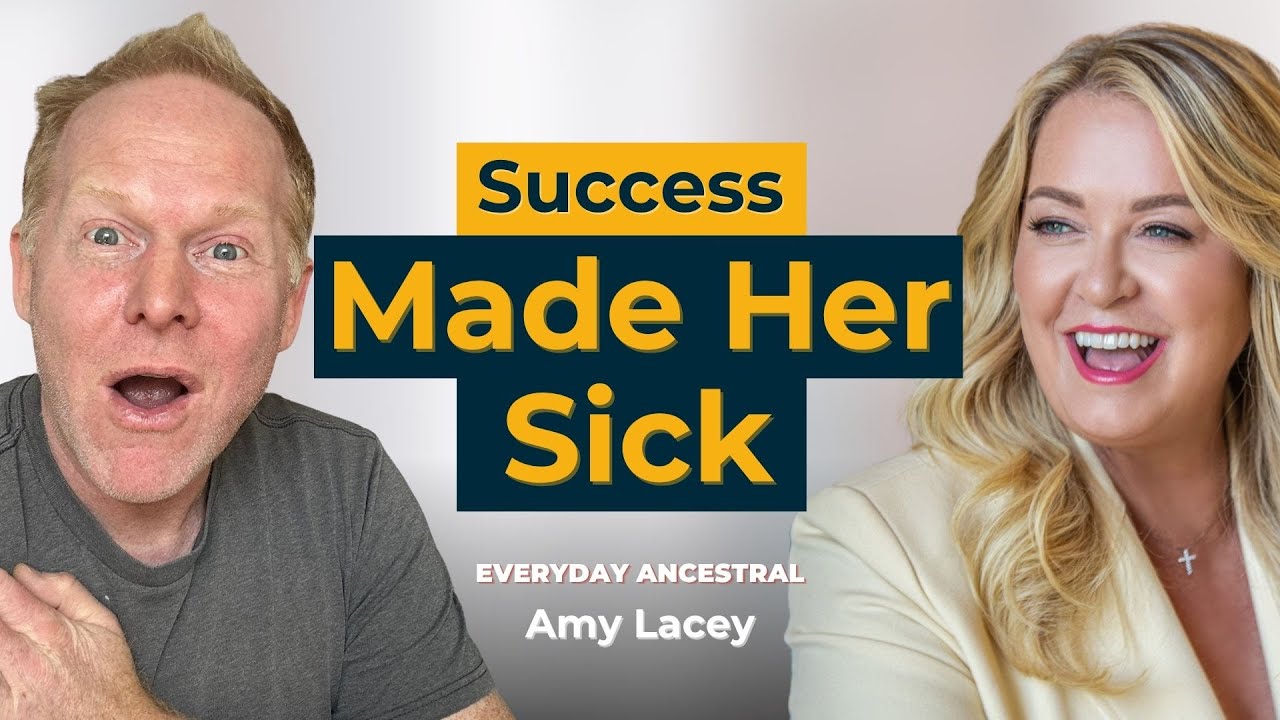
Amy Lacey built a $20M cauliflower pizza crust company after a lupus diagnosis forced her onto a grain-free diet. She scaled from farmers markets to Walmart while navigating gender bias in VC funding and the toll of relentless hustle on her health and family. Therapy and learning to say no became as critical to her survival as the business itself.
Chapters
What if the cost of modern success for women isn't failure, it's disconnection? Today on Everyday Ancestral, I'm sitting down with Amy Lacey to talk about what happens when a woman wired for rhythm, intuition, and connection is pushed into a world built on hustle, pressure, and endless performance. You built one of the most successful grain-free food brands in the country. I mean, you launched in many ways that the grain-free food movement. While also being a mom and a wife.
Yes. So I have been married for 27 years. It'll be 28 in March. I have 3 children. To tell my story, I gotta go back to the beginning of how it even happened. We started the cauliflower buzz. We were the first cauliflower pizza crust. We were gluten-free, grain-free. There was nothing on the market like that. I mean, the best thing out there was Udi's. And if you know Udi's, it's not that great. When I grew up, I had a single mom, a dad that was an alcoholic drug addict, wasn't in my life. When I got married and we started having children, I was like, I'm going to create traditions and special moments and we're going to have, um, you know, these family fun nights and the family is going to be the most important thing to me. Like my children are going to be the most important thing to me. I'm going to just like live vicariously through them a childhood I didn't have. So I had set up this family fun night Friday night, which was pizza, like Domino's or whatever we were going to eat that night, roundtable pizza. And then it was board games or, um, movies. Basically what happened to me is one day I woke up after a Friday family fun night and I couldn't get out of bed and I was inflamed and my body was attacking itself and I was in so much pain. And so fast forward, I went to the doctors. I was diagnosed with lupus and Sjögren's. So a lot of autoimmune issues, connective tissue disorder. They immediately put me on shots of steroids, which if you've ever been on steroids or your audience has been on steroids, it keeps you awake at night. Some prisons use it as a form of punishment. Like it makes you crazy. And then for the side effect, excuse me, of steroids, They put me on Wellbutrin for the anxiety to try to calm it down. Wellbutrin's used to help people quit smoking, but it's also an antidepressant. And then they put me on Plaquenil for the autoimmune issues, which is the drug that everybody was trying to get during COVID And I was kind of bedridden. I couldn't even walk. So when I started living gluten-free, grain-free, my inflammation went away and I quickly went off all the medications. So fast forward, I wanted to bring back family fun night. After 9 months of being really sick, I went online looking for a healthy gluten-free, grain-free pizza crust, and I actually found a recipe. So I did find a recipe, made it. It was a complete flop. It was a mess. It was yucky, and it was using cauliflower, and I didn't even eat that vegetable because it was white. I mean, let's face it, it's the last veggie standing on a veggie tray. Nobody ever eats it.
That's true.
It's white. Is it really a veggie? Um, and it smells when you cook it. So I wasn't a huge fan of it in the beginning, but eventually I perfected it, loved it. My kids loved it. I started helping other people, kind of becoming a coach without even knowing it, but I was helping other people get off their medications and eat gluten-free, grain-free. And then one of the clients there said, you know, you should take this to farmers market, teach your kids how to talk to people. It'll be fun. And Northern California, where I lived in Chico, California, had a pretty robust farmers market. And I was able to get in there. And pretty soon I was in a couple of local grocery stores. This pizza crust was, and then people were pre-ordering it and I was up all night making it before I could ever, um, you know, even go to farmer's market. So the business started that way. It was really to serve the person I once was, which was a very sick person, and it was never meant to become what it did. And it literally went viral online.
Yeah, from a blog, right?
Yeah, so I had, um, another client who was a single mom whose daughter was severely autistic and she was nonverbal. And the doctor actually put her on a low-carb diet for that. And, you know, you are well-versed in what sugar can do to you. Um, you know, autism rates are just through the roof and, you know, it's attributed to our food industry. The doctor put her on a low-carb diet and she knew my pizza crusts were low-carb. They just Gluten-free, grain-free, mix them low carb. So she asked me if I would send her some, and of course she was a single mom, so it was near and dear to my heart, and I sent them to her for like seven months. And one day she called me and asked me to go visit her. Her name was Jesse, and when I opened the door, she had lost ninety pounds herself because her daughter wouldn't eat unless she sat down with her, and they were eating other things besides my crust, but they were eating like one or two of my crusts a day every single day for seven months. And then Kenzie came running up to me and gave me a big. hug and said thank you. And she was talking and she was, and Jesse was so excited to share that with me because she was going to school that year. She was going to have an aide, but she was going to get into school, which had not happened yet. Fast forward a few months later, you know, I'm still doing farmers market, but I'm in a couple grocery stores and we're online now, direct to consumer. We have a Shopify store, but we're not really doing much. And, um, the business was starting to suck money. My margins were horrific. And you and I just talked about offline margins and how important they are. And I had no business sense. I was not in the food industry yet. So I wasn't really, I just knew that my bank account was getting lower and lower and lower. And I had gone through our savings and we were remodeling our house. I'd gone through the budget for the garage. So we didn't have a garage. So I just, you know, I'm a very, I'm faith-based. Um, and so I got on my hands and knees. I've never done that and prayed. And I was just like, look, I'm helping all kinds of people, primarily diabetics, type 2 diabetics, get off of their medications and live a healthier life, but I'm not making money and it's eating up and it's starting to cause a problem between my husband and I about the finances. But God, I don't have the ability to shut it down. Like my ego doesn't, I don't wanna shut it down. I love getting the letters and, and the accolades and the people telling me, thank you for, for getting me off my medications. So you're gonna have to shut it down or make it successful. Because I don't have it in me to do that. And that night, no joke, I had a dream that said, share Jesse's story. So the next day I had one employee, Jimmy, smelled like Jimi Hendrix but a female, very, very, um, into healthy eating and, you know, just anti-sugar, all of that. Um, anyways, I told her about Jesse and I said, I dreamt that we should tell Jesse's story. I'm not sure how to tell it, but we should tell it. And She said, you better ask Jesse. And Jesse was so excited. She's like, I'll be the Jesse of cauliflower foods, like the Jared of Subway without the perversion. And I know this is long, but I need people to understand what happened to know where I was in this space that is dominated at the time, all men, very few women. Now we have all kinds of women rising up. With that being said, we decided to put Jesse's story on Facebook. And it ended up going viral. And in January of 2017, in that month, we sold more than we had the entire year of 2016. And by the end of January, we had done $5.3 million in pizza sales. And then by the end of 2018, we did $21 million, and we were the number one pizza crust on Amazon for 16 months straight. So here I am, this Stay-at-home mom, just trying to heal myself and become a mom again. And I had some business background. I had I had actually worked for Big Pharma. I had actually had an online clothing store, so I understood how to sell online direct to consumer. But I had no Amazon experience. I had no food experience. Zero food experience. So I didn't you know I knew how to apply for a cottage license. I didn't know how to find a co packer. So I had to learn all of that. And it was a man's world, so heavy back then. So, so heavy man's world. And I remember somebody told me to go to Fancy Food Show. Actually, if you're a new brand, I don't advise you to go to that show as the first show. Um, you could go walk it, whatever, if they'll allow you to walk it. I don't even know if they do, but that was the first food show we went to. And they had this event where they were talking to new brands the night before the show started. And so Jimmy and I went to that and I just always remember this guy, Bob Burke.
Yeah.
Later on, you know, Bob later on became on my board. Um, but at the time he was, he came up and he started talking to me and we started talking about cauliflower and he started using all these acronyms that are used in the food industry. And I didn't know any of them. So I said, you know what? I'm sorry, Bob. I can't talk to you right now. I need to use the restroom really bad. I've got to go right now. And I walked away and went in the restroom and I didn't come out for like an hour. I'm like, I ditched Jimmy. I was so nervous because I didn't have a clue of what he was talking about. And I didn't want to come across ignorant. And the next day I was showcasing my products at the show. We had a little tiny new brands in the new brands pavilion, a little booth, which is basically a tabletop and that's it. He was going to come see me. And so I'm looking up all those acronyms, trying to figure out what he's talking about, but too embarrassed to tell him that I didn't know what he was talking about. And that's one thing I would say is to anybody starting out, don't be embarrassed. Don't be shy. And especially if you're a woman, like People want to help people in general. It doesn't matter if you're a woman or a man. If I had told Bob, hey, I'm so new to this and I don't understand what you're talking about, he would have sat down with me and explained it all. But I didn't know. I was intimidated. It was the majority of people in that room were men, and it was very intimidating. So that was like my first experience in the food industry of just feeling the pressure of being in a man's world as a woman. Coming into an industry that I was just starting to learn about.
Now, looking back at it though, is there a difference, uh, in, in this world of entrepreneurship of how women approach it versus men? I mean, for so long it's been such a male patriarchal society, a male-dominated business acumen in many ways. And I've always felt like instead of women being in their own power, They are expected to be like how a man would show up with his power. I think they're different powers.
Literally, James, I went into therapy over it. So if I can fast forward, you know, when people were starting to be interested in my company and acquiring it, and I funded the whole thing myself at that point, we had EBITDA, we were the margins. I got the mar— I learned about margins and, you know, customer acquisition and all of that. And we were doing very, very well. And so I had a lot of people coming to me offering to invest in the company and/or buy the company. At that time, it seemed like a venture capitalist might be the best option for me. I didn't want to sell the company at that time. I wanted to still be very involved. But at that time, there were no— I mean, there's— it's an explosion of female venture capitalists now, which I love because the interview process with a female venture capitalist is so different than with a male venture capitalist. But at the time, I was 4% of women to ever get 8 figures of an investment. Like, 4% of women were getting that kind of money. It just didn't exist. My valuation of my company was devalued, and I believe because I was A woman. And here's why I think that from the group that ended up investing in my company. When I went out to the boardroom to Boulder, Colorado, there were 19 men in the room and 1 woman and myself. So there's 1 other woman. In that situation back then, I was very locked into eye contact with her, eye contact with others, but asking her questions. She knew nothing about what I was talking about. They planted her there so I would feel more comfortable.
I knew it. I was just gonna ask if she was a plant. Yeah.
So insulting, right? So insulting. I don't know, maybe women don't think that's insulting. I found that extremely insulting.
Yeah, I'm sure they didn't mean it to be insulting, but yeah. Yeah. What do you do though? I mean, because those, those rooms are mostly filled by men. I mean, particularly back then.
Yeah. And, and these men were really They were just learning about direct-to-consumer and email marketing, and that you can actually make money off of your email. And, and they were just all grocery store previous, like the brands that they dealt with were really big brands, but just grocery. So they were taking in a lot of what I was saying, very interested in it, giving me that respect and that credibility. But when it came down to investing in me, the day that the investment was supposed to close, They devalued my company. There was zero reason for them to do that except for to get a better deal. But I really believe it was because I was a woman. If I had been a man, they would've never— that company with the EBITDA, the margins, the amount of money we were bringing in, no debt, no investments, easily should've been a 9-figure valuation. And it was cut in half. I look back on that, and my attorneys and my financial advisors were saying, "Don't do it. It's a bad deal. It's a bad deal. They they can't do that to you. They're doing they're playing you. Be strong. They're playing you." But then I had my family saying, "Do the deal.
Do the deal." Yes, a lot of money. Yeah, yeah.
Ever got this the most money any of us have ever gotten combined. And I knew I could help move everybody out of Northern California if I.
If I sold a portion because I was going to take some off the table, it felt like it was more in response to you being female versus you being green.
It felt well. By then, I had surrounded myself with the Bob Burks of the world. I had them in my business, so I had experience in my business. You know, I had great people helping me. The CEO who ended up selling Rayos. He was helping me. I had a lot of great people around me helping me that were experienced, that were lifelongers in the food industry. And so I do believe just knowing the group I was working with and all of their brands, like for example, they had another brand, very masculine brand, military brand. Joe Rogan represented them for a while. Just a very Masculine brand. That was the brand that they took previous to me, and then here I am. And in all of their portfolio, there was only two female brands ever that I know of that they've ever had myself and one other one, Cool House. And she was only involved with them for a very short time. I think they have a couple women working for them now, but at the time when I was involved, they had no women working for them. The plant. At that table was, um, the one of the co-founders' girlfriends. And everyone told me I was being devalued because, um, not for the lack of experience. I mean, you know what it's like, James, if you're a scrappy person and you're willing to get scrappy and get creative and do whatever it takes. And no is not an answer. No is next opportunity. You just twist that no into something that's, that's finally a yes. You know, How it is, if you're that person, you're a very valuable founder and CEO and entrepreneur because there are those founders that I've met, and I, I'm not trying to say they're all men, but pretty much men at the time that were hiring people to do all that. They weren't in the weeds. Yeah, I, I, I do feel like I was devalued because, and, and if I look at their deals, with Kill Cliff and some of the other deals they did, they're huge deals. And then I look at Coolhaus and myself and they were not, and we were the only women. So I mean, gosh, if they listen to this podcast, I won't even get in trouble. I didn't say their names, but I think they've changed a lot. I think the food industry has changed a lot. I mean, look at all the women. Look at Lauren, Sweet Lauren's Cookies. I was on a panel with her. She was doing nothing at the time. She's blowing up. I'm so excited for her.
Her.
And there's all kinds of women. Jamie Kern Lima in the cosmetic industry changed that. I'm learning a lot because our current— my current company just launched a skincare line, so I'm learning a lot about the skincare industry. The food industry, as you know, has completely transformed since I launched. I mean, the grocery store, the frozen aisles, there's healthy, there's things you can eat, there's cereal that's better for you. There was none of that. It was terrible cereal for you. I use cereal as an example because there's so many options now, and at the time there was like nothing. And I remember when I was really sick, I met a dietitian and she's like, cereal is like giving your kid a candy bar. Don't eat cereal. And now there's all kinds of options. So I think women have been able to transform the food industry. I think they'll transform the cosmetic industry as well because fragrances and all the things that are in cosmetics right now, especially the big brands, and you're putting them on the largest organ in your body, your skin. So I think women and men like you— I don't want to discredit men— women and men like you are changing industries. And I think because we have to work harder and be scrappier.
You're running a different business now though. Yeah, how are you running that differently?
Yeah, so when cauliflower took off, I had to learn everything. Like I said, like I had no experience in the food industry, so I I felt this urge to be everywhere. So I was I was flying to New York all the time. I was flying to Austin. I was meeting with Whole Foods. I was flying to Bentonville. We were getting into Walmart, and I was just gone all the time. And here I have these three kids who are. Teenagers, and then a little one. And my husband, who's running, you know, he's a physician, he has his own practice. He's worked, you know, he's gone to school for 7, 9, 9 years total to have what he has, not to make money, but to change people's lives. And that was his dream. As a family, we always said we would not have a nanny. You know, we had the ability to stay at home. I had the ability to be a stay-at-home mom, and I didn't want to take that for granted. So Jim cut back on his practice and he went part-time, and then they used to call him Dr.
Mom.
So that one of us was always home. But if I could go back, and I, and I won't do it in this business, I was gone more than I was home. And I felt like I had to, I felt like I had to hustle that hard to be successful in this industry. And now what I'm learning is I didn't have to do that. I don't have to do that in the current business. Um, I don't have to travel as much. I don't have to be at every show or every event. It's okay. Like, the business, it may grow slower, but it's okay. It's important to be at home with your children. So my youngest and I, we're close, but we're not near as close as I am with the older 2. He's very close to his dad, and that's because in those really important years, I wasn't there and his dad was. And I look back on that and I can't change that now. He's 17. Like, we have We go fishing together, we bond, but he will go to his dad for help, whereas the other 2 used to go to me. And I can't ever get that back. And it's not worth it. It's not worth it. No amount of money is worth sacrificing that. Either hire somebody you trust that can be there in your place. And I know the hustle is real. Like, you've gotta hustle still. I still have to hustle in what I'm currently doing. There's gotta be balance. And I think for women, When I'm, I'm getting ready to speak at the end of the month in San Diego. And one of the things I'm going to talk about is balance, balancing, like being a wife, being a mom, having a business. Like it is tricky. And I think it's harder for us to balance than men.
Definitely.
Yeah. And it's very, very tricky. And so my advice is no means a lot. When you say no, you're saying yes. To something else. When you say yes, you're saying no to something else. And so I say no to a lot of shows right now and a lot of events so I can be at these events where my son is playing sports, or I can be at everything. I will not not be at something. I've taken red eyes to be at swim meets, um, because I missed so much during cauliflower. Because in my mind it was like, let me just build this and then I'll sell it and then I'll always be home. with them. But that's not how it works. When you get the buzz of entrepreneurship and you change people's lives and you can create a product that changes people's lives, when you sell it and it's gone, you mourn the loss of that. And you see opportunities where you can make a difference in other areas, like the supplement area. Not to change subjects, but the supplement area is just— excuse my language, but it's a shit show. I'm on Amazon, but be very careful about what you buy. There's no regulations. There's nobody out there making sure that we're doing the right things. And there are a lot of people doing wrong, bad things right now in the supplement industry. It kind of reminds me of the beginning of the food industry, like the FDA. I mean, one thing that I always say is that the FDA allows a 20% variance on your labels. So I could have 20% more sugar or hydrogenated oils, which I don't in my products, but if I did, I could. And not claim it.
20%.
20% allowance. So you could have 20% of whatever ingredient you don't like in your product and not claim it. You can be 20% off. You can look it up. You can, you can Google it.
Well, let alone the, the ingredients you don't have to list, right? The ingredients that are within the ingredients that you don't have to list, like natural flavors has other ingredients, but no one lists it.
Exactly. So, and then there's all this thing in the supplement, like we're, we're getting off subject, but I think it's really important. And I hate to say this, like I, I'm not this huge feminist. I love men. I think men are awesome and men have created amazing things in this world, but men have also created those little rules. And in the supplement industry, I mean You can get a patent on a list of ingredients and not list them and call it something. And it's, it's just a joke. Like I interviewed with Sean Wells, we did a series and he was like, yeah, if you see that, run, because those people are hiding something.
When life gets busy, you're moving through your day. It's not always easy finding real food. That's why I've been keeping these with me. Our sponsor Prima makes protein bars using simple traditional ingredients like grass-fed collagen and whey, organic raw honey, beef tallow, cacao, coconut, sea salt, and they're offering 25% off for listeners of this show. Look, I have a simple test when it comes to protein bars. First, I have to recognize all the ingredients. Second, it's, it's, it's gotta not wreck my gut. Well, Prima passes that test. Each bar has 21 grams of animal-based protein and all 9 essential amino acids. Look, go give them a try. Go to eatprima.com, use code ANCESTRAL25, and get 25% off. Women are held to a different standard. You know, the man who is away from the household for work, who's traveling more than is a father, He doesn't get slack. He doesn't get treated the way a woman who's in that position does.
Yeah. I was treated— I'll just go by the school alone events where I would miss— my kids were playing sports. All 3 of them played sports. I would miss some events during Cauliflower. This is before I was taking the red eyes to make them. And I was isolated from the moms, like the moms that were all there. I was treated terrible. I can just remember being at food shows where we were talking and men would, like, we would be in a circle and I might be the only woman there. And men would talk to each other, looking at each other in the eyes and not even make eye contact directly at me. And it's just whether they were talking about sports or food or what have you. It's so different now because you go to a food show now and the supplements and like Expo West is all together right now. The supplements and the food industry still together. You go into that show, there's so many female-founded brands. And so men and female, they're working together better than ever. But yeah, back then I just felt like it was really, I really had to fight for my position in that circle. And be taken serious. You know, when you're interviewing people to buy your company or to invest in your company, you're going through a series of due diligence like no other and a series of interviews. And it wasn't just the people I chose. I can honestly tell you, out of all of them, like 12 of them, there might have been maybe 3 women in any of those interviews. There to interview me at the level that the men were. Now that's all changed because there's all these women venture capitalists that have popped up and it's incredible. But I think the reason why is because the stat was 4% of women get money and 96% of men get it. Like the rest is going to men. That's a huge, that's so, that's such a discrepancy there.
Yeah, that's huge.
And, and now I would, I, if I'd known we were going to talk the subject, I would look at the numbers today. I don't know what they are today, but I know they're a lot higher, but they're not high enough.
Yeah. It's not equal.
No, it's, it's like 18% now versus 4%. And we have the people like Sara Blakely who paved, you know, a path for us and, and gave us like, she was the one.
She did Spanx, right?
She did Spanx and she started with $5,000 and she, had a manufacturing company that was run by men, and she had to really like say, no, we're doing it this way. And she had to prove herself at Nordstrom's and places like that. She had to like just be really scrappy and prove herself. And so she was kind of one of those people that I looked up to in the food industry. I looked up to her and how she handled things, and I was like, okay, she's kind of paving the path for women. And I'd like to think that I'm one of those women too that's paved the path, but it is, it was hard and, and I had to go into therapy over it too. I can just remember I was on the board and I'd be in board meetings and I'd go to talk and just be talked over. Like I had to fight for the respect. And I'm not saying all men are like that, but it just in the industry, it's just, it was such a good old boy industry. And now I don't think it's so much that way, but I think a lot of industries are like that. You know, Nestlé brought me out to speak on their panel. They had this big event for all their employees, and so they asked me to come out on a panel, and I was the only female on the panel. And it was interesting because the questions that were asked to the other panel members were pretty They were good intellectual, great questions, but for me it was very fluffy, very fluffy questions.
Interesting.
Um, one of the things though that was happening during my time, and this is in 2019 now, I think the change from 2017 to 2019, the food industry was huge. And I think in a lot of industries it's really become huge after COVID. One of the things that was really interesting is, um, when I went to Walmart, when I went to Bentonville, Arkansas. The way that we got into Walmart is they came to us. They called me and they said, we want you to come out here. It wasn't during a time where they were interviewing and looking at brands. It wasn't during that time. And it was a female that called me, and she had just replaced a man in her position. She was the frozen buyer. She just replaced a man that had been there for like 25 years, and she was a nutritionist, and Walmart wanted to up their game and, and bring in products that were healthier and have a healthier section. So she was, she was 26 years old, she was a registered dietitian, she was a nutritionist, she had no buying experience. It was crazy. If you're in the food industry, you know how Walmart is. You don't want to put your brand in every single Walmart because when Walmart decides they're not going to have you, like Costco, Then you're toast. Like, you've got inventory out there and, and it could really kill a brand.
They'll send it back to you and charge you for it.
Exactly. And it can just kill a brand. So she was like, I want you, every product you have, and at the time we had 6, and I want 'em in every single Walmart. And I was like, yeah, okay, yeah, let's do this. And then I go back to my advisors who have experience, male, Bob and those guys, and they're like, no, no, no, no, you are not gonna put every product in every Walmart. Because the minute they decide that it's not turning and you're going to have chargebacks and it's going to kill you, it's going to kill your margins, it's going to kill your EBITDA, it's going to kill you. So I had to educate her on how a new brand should go into Walmart because literally Walmart just said, okay, let's clean up our act and let's get rid of these good old boys and start hiring these young females. And they had hired like 5 females in different departments. It was interesting that some of these bigger companies had decided to, that, you know, they needed to bring in some women executives and women buyers. And Kellogg's the same thing.
I do wonder though, 'cause you mentioned that with your new company, you're finding more balance. Is that balance connected to relationship with your husband, to your kids, to your own identity? Where, how have you achieved that balance?
Yeah, so when the venture capitalists came in and they bought the majority of my company and I took money off the table, a lot of people thought I was just gonna like go away and, you know, move to Florida, buy my dream home and sail away on, on the ocean and be happy. And that wasn't the case 'cause I wanted to still be involved. It was like my 4th child, it was my baby. And so I, was part of the negotiations was I wanted to be on the board of directors. I was willing to give up the CEO position because I needed to be more of a mom. And it was at a point where I felt like I was going to slow the company down with my lack of experience. So they put a CEO in there that had a lot of experience, and I was okay with that. And they let me be part of that decision-making. But once they took control, they Fired my team, they changed the recipe, and they put me on sabbatical. And while I was on sabbatical, they changed my passwords to things like the bank account and things like that. Now, that was a huge, big fight, like big problem, and I had to really fight for my position at that time. And I'll be honest, behind the scenes, like I could be really stoic and put up a good argument, A lot of wisdom, a good argument. I don't yell, scream. I have strong emotional intelligence. And, you know, Patrick Lencioni wrote a book, and one of the things he says when you're hiring people is to hire people with emotional intelligence. And it's a fact, it's been studied that women have more emotional intelligence than men. And I remember when, this is before I sold, so I'm kind of going away from what I was going to talk about, but I'll get back there. We had one man we hired on our team before I sold the company, and once we hired him, we started having drama, internal drama. And I'm not saying it was his fault, but it was like the way that, that he worked with all of us, it was so different. We all got along so well. And sometimes women can be catty, but for the most part, women can get along with each other. And, and so going back to the venture capitalists, I had to go into therapy Like, I had to go into therapy. And one of the things I learned about in therapy, well, I learned a few things. I learned that I should have dealt with my childhood trauma, and that's probably why it manifested into autoimmune issues. So for all of you out there listening, if you have any kind of trauma in your life that you've buried—
Which we all do.
You gotta deal with it because eventually it will manifest itself into illness. It's like, it's known. So when I turned 40, that trauma I experienced as a 12-year-old, Manifested it into lupus and Sjögren's. Definitely. I know that's how that happened. So I could feel the trauma. I felt like I was experiencing trauma again, like I was losing my 4th child and I was losing control. And you know, when you, when you don't have control, your emotions can become very angry. And, and I didn't like how I was. So I, I went into therapy. I didn't tell anybody. In the company, I was in therapy, but it was just to really keep that emotional intelligence in place. It's interesting because I can remember, and I won't say his name because he's very well known in the food industry, very well known. You will know him. He's gone through many exits, but he was also on our board. And I remember I just stayed very, very calm, and he started— he couldn't handle it. He started screaming, yelling, eventually hung up on me. And we're friends now, but I just think it's so important to have strong emotional intelligence. I also think it's just really important if you're a mom and you have kids to sit down with your spouse. Now, Jim was never part of the business. So like, you know, you look at Poppy, the couple, they were together the whole time in that business, and I didn't have that. And Jim and I talk about it a lot, and if we could go back, we probably would've done that together. He would've just taken a leave of absence, but he was so firm in how hard he had worked to get where he was. And he wasn't doing it for the money, he was doing it to make a difference in people's lives as well. But we would've done it together. I think that would've been a big difference for us. And we probably would've homeschooled our children and taken 'em on the road with us instead of me being gone all the time. I won't be gone now. I limit how, and I sit down with my family and I say, okay, there's these events, And how do they fit in the calendar for our family? I will not be gone more than once a month for a few days, whereas before I was only home for a few days every month. There's really no difference in what I'm doing now as far as the success goes than what I was doing then, other than me being really gone and busy. And then when I'm home, I'm just very present. So, and I would say this is really important for little kids too. I used to, with Cali, Valerie, I'd have my computer out while I was playing with them or doing something with them, or I'd have my phone out. I put all of that away, and I— if I just spend an hour with them doing what they want, like, you know, one of my college kids is a gamer still, and I will go in and like game with him, like look at what he's doing, spend that time with him. My daughter loves fashion, so I'm And I put everything away, it actually buys me more time. And it will with your little ones too. Like, put everything away, do what they want. If it's Legos, if it's gaming, if it— whatever it is, do what they want, not what you think they should be doing, and connect with them in that way. And if you have an hour of connection with them like that, it's going to buy you so much time, and that's what they're going to remember. So if you ask my kids, Back in 2017 about me, they will say, oh, my mom was gone all the time because she was— she had this pizza business. And now if you ask them, they don't even— they don't say, oh, my mom has a soursop business. No, my mom, um, we just skied in Breckenridge. My mom was skiing with us. You know, my mom— and when we went to Breckenridge, it's an annual trip we take every year. Many years with cauliflower, I was in the lodge. Making videos, making pizza recipes. I wasn't out on the slopes with them. So even though I was there, I wasn't there is my point. So be there and you can, in an 8-hour day or a 10-hour day or whatever your day looks like, just take an hour and devote it to them at their level. That's the key. You got to do what they want to do at their level. And it makes a big difference. And the other thing that I think really helps is having them involved in the business. So we have a warehouse. I send the kids there all the time to package up things, and they're really involved. Of course, they're older, so it's easier. But I can think back on it when they were little. I should have had them helping me make innovation, make different pizzas and stuff like that. And we didn't. We did it for photo shoots. We pretended we did that, but we weren't actually doing that because innovation, I was quick and I was, you know, in a hurry. Let's get more products out. And I didn't have time to play around in the kitchen with the kids. I think it's really important to have your family, your whole family involved in your business.
Is entrepreneurship truly something that is ideal for how a woman— and not saying that women can't do it, there's a very difference, but, but, but saying, is there a sacrifice? Is there something that as in a society that we miss when women are in the warrior role? And more and more, I'm just hearing so much about how burnt out so many of the women I know who have been in that warrior mode are. And yet I don't hear as much of it for the men. So it's almost like there is this element of like that they're kind of a little bit more designed for that mode for longevity.
That's why I say that I wish I would've brought my kids in more and Jim in more because he was Dr. Mom and he wasn't—
He's still not the mom.
He's not the mom.
Right.
He's not the one they wanna, When they're sick or they're not feeling good, they want you.
Yeah.
And, and that is such a hard balance. It's such a hard balance. And that's why I look at Poppy, for example, because they're so popular right now that they had that big exit and they had their kids with them and it was like a family thing. And so, yeah, she was in the limelight. She was there and he was behind the scenes, but their kids were also with them. And you see that their kids are with them a lot. So it just, and not everyone can do that, you know, especially if they're not experienced success yet, because that costs a lot of money to have your kids going with you.
And to have your partner also focusing on a business that may not be profitable at the time. But I think that's, that's kind of my point is that I, I started out thinking one way and what I'm now hearing you say though, That's very moving to me is that it's not necessarily about, oh, men should be in this role, women should be in that role, but it's more about like, well, how do we choose to be in that role? Like, can we include the kids? Can we as a family do this? Can we in a sense bring the pieces that may be missing when you're away? Can we bring those with you? Can we bring it so that who you are as a woman is being supported? Well, not just a woman, as a woman and a mother and a wife is being supported In your role as a warrior?
We went viral, so I didn't have a choice. It kind of just happened, but I definitely fed, I put fuel on the fire for sure. I think it's okay to go slower. I think it's, I go much slower now. It's okay that, you know, my current business isn't doing millions right now. I know it's going to, it's, it's got the growth. It's okay to slow down because there are other things that are important to me. That it's okay to have a slower business, less money coming in. For me, and it's easy for me to say that because I have, you know, the money that I made from the other business, so that's easy for me to say, but I look back on it, if I could go back, I would've slowed cauliflower down so that I could have been more present. And I think it's okay to have slow growth in that you can still be a mom and still be A wife, and you've got to have a lot of self-care. And that's the other thing I would say is that I always was in some kind of mastermind. I always had some kind of coach because you've got to have self-care. And you know this, like whether you're a man or a woman, your business is only going to grow at the pace that you're growing internally. And so for us, I think it's really important if you're Balancing that role of motherhood, wife, entrepreneur, CEO, founder, whatever the business is, you better have a lot of self-care. You better take a lot of time for whatever that looks like for you— journaling, massages, whatever, eating right, exercising. That's another thing that I had a full circle moment. I got sick again after, like, I, I worked myself to getting sick again. Here I am creating a product To help me serve the person I once was, and I just made myself sick again.
Through stress and overworking.
Yeah. And it was just like this full circle moment, this hamster that couldn't get off the wheel. Like, I just, for the purposes of why I created the brand to begin with, I allowed it to take over. I look back on then and I, and I wasn't, but now I am. I'm always in some kind of a mastermind that's pouring into me. Or with the coaches pouring into me so that I know and they can help me. And, and one of the things they'll say to me is, what is the number one thing you need help with? And I will say balance, work-life balance, time management. It used to be my health, but now time and health is right up there too with time. But time is so important to me.
Yeah.
So I think giving yourself permission to go a little slower and not look at other people and say, oh, I gotta be like that person. Are going to be like that brand. It's okay, it's going to happen. If I look at the brands that are still around that are really successful, they have longevity. Look at Cauliflower. It's not— it doesn't exist anymore. And, you know, I had sold it in 2022, the rest of it, and by the end of 2023, they shut it down. It grew so fast, so quickly. And I think these longevity brands It allows for more balance, and I think they last longer too. Like, they have more of a chance of being successful. I know that this is probably not answering it the way— like, we're not getting into the weeds of what you're trying to get into, but I just want to be really practical about what has helped me and the differences from then and to now. Like, the brand I have now is going very slow. I know it's going to be around forever. I know it's not going anywhere. And it's okay that I can go a little slower. I don't have the same— before I can remember looking at other brands going, oh, I got to be like them, like Nut Pods. I got to be like her. Well, Madeline had been around for a long time, but I wanted her success instantly. Just like take a step back, enjoy the moment, be really present in the moment. Take it one day at a time. Lean on other people. Don't think that you're the only one that can do everything. You're— for me, my faith is number one. My family's number two. And I look at it back then, cauliflower is number one. My faith, my family was somewhere way down, like number five.
That is a really important piece to all this and to this whole talk is, you know, one of the most ancestral things we can do is be present, but our modern society really pushes us into comparison mode, into judgment mode, whether it's to other people or towards ourself, right? Because you're being, inundated with information that you would never ancestrally know. I would never know what 1,000 people think of me, ever, of a photo of me or whatever it is. You know, I would never hear of so much world news. I would never hear of so many opinions based off of something that I share, right? Our nervous systems are constantly being taxed. Our presence is constantly being challenged. And I think tethering yourself, from what I'm hearing you say, tethering yourself to family, And faith is so crucial to then being able to go back out and continue on your path of mission and heart with what you believe the world needs, you know, but it starts and ends with family and faith. You have to be grounded in something to then be able to go out and fight the good fight.
Absolutely. And it's what's going to fuel you to keep going. But if you're on comparison mode and you're on social media and you're spending your time and energy doing those things, thinking that you have to work harder, smarter, faster, whatever you're thinking, and sacrificing what's really important, then you're going to be like me. You're going to wake up one day and your youngest kid doesn't go to you and you're sick again. And yeah, you got millions in your pocket, but what good does that do if you don't have your family or your health? Trust me, like I think I used to think all the time, oh, if I had this amount of money, life would be so much easier. No, not at all. What makes it easier is just being grounded. Slow down, appreciate what you have, spend the time with the, the things and the people that are important because the success will follow that. It will follow that. It might not be as fast, but it will follow that. And again, fast in our industry.
Well, I have a final question I always ask my guests. Um, so if you could wave a magic wand and bring back one ancestral practice, what would it be and why?
I really, I, I don't know if this is going to be a good answer or not. This is going way back and it, it, I think I'm thinking of Robb Wolf and the caveman and hunting and gathering, but I just wish we had meat and food that was as clean as back then, like hundreds of years ago. We have so many preservatives and like chicken, you can't buy a chicken and it tastes good anymore. It's rubbery. I just want our food industry to clean up. Like there's nothing better than catching your own fish, cleaning it, and eating it. I want us to go back to the hunters and the gatherers. I mean, that's going way back. And I don't know if that's answering it the way you want me to answer it, but—
No, I want you to answer it however you want.
I like to just know that, like, I'm a big meat eater, and if I'm going to kill a calf, a cow, I want it to be eating the right things. And I don't want to eat a chicken that's loaded with steroids. I want us to Stop creating food for a fast buck and start creating it for our health because there's so much disease out there that's coming out because of the way we're eating. And we need to go back to the basics. Like, I look at my great-grandmother who lived to be 102, and I remember once I asked her, Grandma Birdie, how is it that you live so— like, she's And she said, I don't drink that sodie. That's what she called soda. I don't drink sodie. I don't smoke. I don't drink alcohol. I grow my own fruits and vegetables and I don't put any of those pesties on them. She used to call them pesties. Sodies and pesties. She raised her own chickens. She grew her own garden. She plucked her chickens. She ate it. She like went back to the basics. She made her own bread and Gosh, we can't— like, you can't even make your own bread and get decent flour unless you're in Italy. Like, I want us to clean up our industry so that we can all be better for it.
I love it. Yeah. Well, I so appreciate you taking your time. I know you're so busy. And I do want to just quickly share too that, you know, very much what Bob was to you, or just people that had already been in the industry and how they, they kind of helped to lead you. I mean, you, you, you were so kind and generous in that way to me when we first met at that trade show. And, and I, I just, you really stand out as someone who really walks her talk about that. You're not jaded about it. You're not above, you know, anyone else. It's like you were, you're right there and you were just so accessible and so generous and so kind. And I am really grateful to that because I, just like you, I didn't, you know, when I started, I didn't know what I was doing. You know, I was—
I'm grateful to you for your phenomenal products.
Oh, thank you.
And I loved putting them on our pizza. I have your little jars still and I have them here. I mean, I love your products. Like, you're one of those people that is genuinely putting it out there to make the world a better place, not to make a buck. That's kind of going back to what I was saying. Like, I want us to all go back to the basics and quit trying to tweak everything to make it cheaper and faster. So I appreciate you too, very much.
Well, thank you, Amy. And thank you all. If you're enjoying this podcast, there are a few easy ways to support us. One, tell a family member or a friend, say, hey, you should check out Everyday Ancestral. 2, you can leave us a rating or a review on whatever podcatcher that you are using to listen to this show, or you can make a purchase from one of our sponsors and, and/or our guests. And Amy's going to share where you can find her. We're going to put that in the show notes. And of course you can subscribe to the channel, but Amy, where can people buy your products and learn more about you and just connect?
Yeah. So Living Beyond Medicine. Is a great channel to go to. We're all about the fruit soursop, which is grown in other countries. It's hard to get in this country. It's been around for generations, like 700 years. It does amazing things. So we're we're able to source it and get it in here into a supplement form and skincare form. So go to livingbeyondmedicine.com. I'm all about living beyond medicine, trying to get off of any medications you're on. Um, just living a more natural, uh, healthier life. And as far as me personally, if you want to connect with me on Facebook or Instagram or LinkedIn, I manage all those myself. Um, so you can DM me at Hey Amy Lacey on Instagram and I will, I will message you back. Um, I love connecting with people.
Yay. Well, thank you again, Amy. Come on, everyone be well. Stay curious. Thank you so much for joining me. Thanks for joining me on Everyday Ancestral. If you enjoyed this episode, hit subscribe so you don't miss the next one. You can find the show notes, links, and resources mentioned at eatpluck.com. That's eatpluck.com. And hey, if you know someone who'd get something out of this, share it with them too. Stay curious, live well, and keep it ancestral.










