How Do I Equip My Kids with a Love for Healthy Eating? Katie Kimball Has the Answer
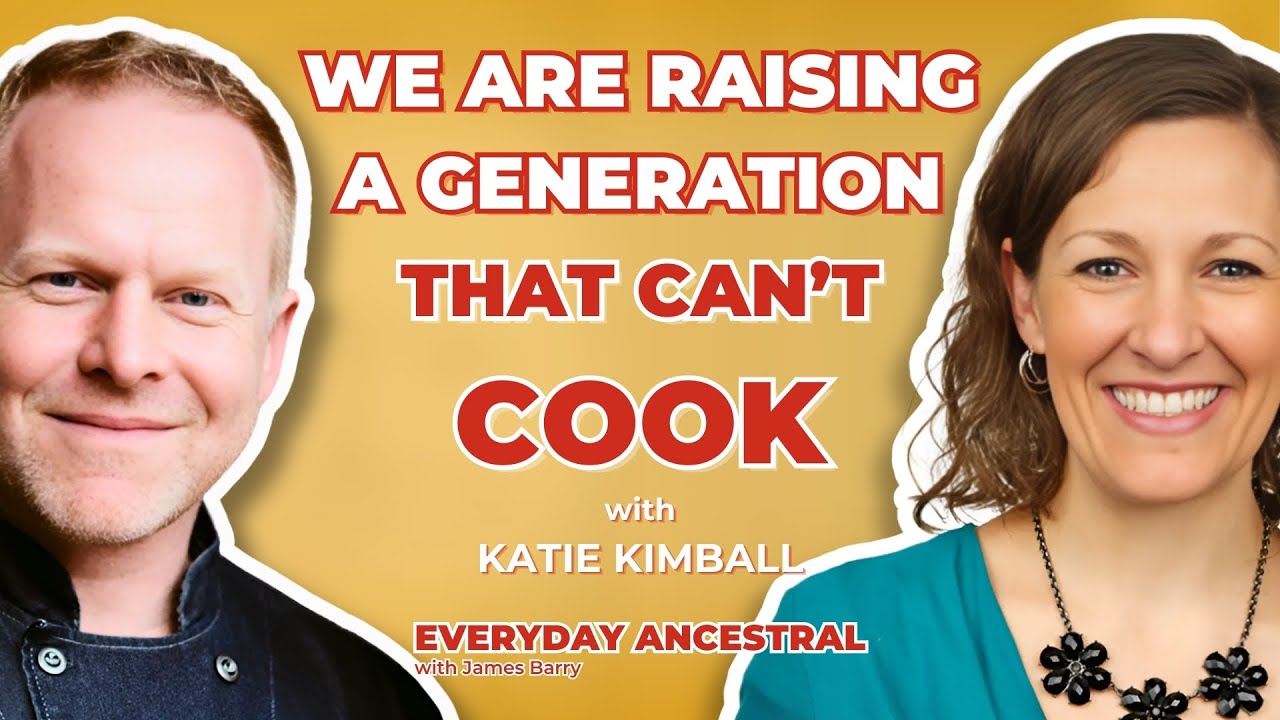
Katie Kimball, a former teacher and mother of four, teaches kids cooking skills to build healthy eating habits. She tackles picky eating through repeated exposure, letting kids help cook, and letting them choose portion sizes. Her Kids Cook Real Food program is skills-based, not recipe-based, and designed for ages two through teen.
Chapters
I am so excited. We're gonna be talking about family and kids today with Katie Kimball. Katie helps change kids' relationship to food, both through work in the kitchen and helping parents of picky eaters. She's a former teacher, 2-time TEDx speaker, writer, and a mom of 4 kids. She created the Kids Cook Real Food e-course, which was recommended by the Wall Street Journal as the best online cooking class for kids. That's pretty cool. Her blog, Kitchen Stewardship, helps families stay healthy without going crazy, and she's on a mission connect families around healthy food, teach every child to cook, and instill those all-important life skills. Welcome back to Everyday Ancestral. I'm your host, James Barry. Please enjoy Katie Kimball. Katie, thank you so much for joining me with, uh, with our audience for Everyday Ancestral.
I'm looking forward to digging in. Thanks for having me.
Yeah, well, I mean, you, you really speak my language, which is cooking. But you specifically focus on kids and cooking, which is also kind of a sweet spot for me since I'm a father, but you're a mother and you have 4 kids, right?
4 kids, last I checked.
Now you used to be a teacher though, right? You, you mentioned to me you taught, uh, 3rd grade. What brought you over to the cooking side? Was it becoming a mother or?
I knew I wanted to be a teacher since at least kindergarten. Like, I never wavered all through elementary school. What are you going to be when you grow up? You know, it was always a teacher, went to school for it. And it's kind of ironic that I only taught in a 3rd grade classroom for 2 years because then I started my family and I knew that I couldn't be a really good teacher and a really good mom at the same time, and I would probably break. If I tried to do both. So that was kind of an easy decision to come home and just focus on being a mom. Pretty quickly, as young married people, we were in the red, and I thought, oh, I do need to make some money, even if I can't be a full-time teacher. So that's kind of where I started my foray online, and I had this idea for a book, Kitchen Stewardship, which really grew out of, you asked when I got into food and cooking, it was 100% because of being a mom. In our birthing classes, they talked about getting so much protein and eating egg and all these, all this food stuff. And I'm like, oh, so not just Hamburger Helper? Like, it's not going to cut it? Oh, okay. And so that was very much my, my first steps on my journey was thinking about this little being inside of me and how much every bite I took counted for him. And then as I began to feed him, you know, as himself outside of my body, how much every little bite counted in an 8-pound Body, you know, or when we were feeding, he was heavier than 8 pounds. But, and so I dug into nutrition. I started learning to cook from scratch. I was terrible at it. I screwed everything up. I burned everything. I broke everything. Like, you name it, I have messed that up. And so a lot of my internal thought conversations was, gosh, how can I help other moms not be so bad at this? Because I know that there are others out there who really wanna feed their families well. And also feel that tension of like budget and time. And so that's where I started out thinking maybe I could write a book to make money, which is hilarious because books don't make money and books are not fast. So I just did not know what I was doing. And someone told me, you should start a blog to see if anyone cares about your ideas. So that's how I started writing about cooking and health and nutrition online. So it was kind of my heart for teaching and the fact that I needed a couple bucks. But it's turned into a real passion project. And a real mission. And we shifted into teaching kids. 2009 is when I got online. 2016 is when we launched Kids Cook Real Food. And that again was just a gap. It was just an empty space that it didn't feel like anyone was filling. So I'm hearing a lot of moms say, Katie, I really do wanna get healthy. I wanna cook from scratch, but it's so hard because I was never taught to cook at all. Like, I don't know, it's just this huge mountain to climb. And I started to have this vision of like our kids 20, 25 years from now saying the exact same things. Oh, I wanna get healthy and it's so hard 'cause my mom never taught me to cook, right? When we're uncomfortable doing something, we're not asking our kids to come learn from us. Well, we don't know what the heck we're doing. So I thought, somebody needs to step into this gap and figure out how to make sure that this current generation of youth goes into adulthood knowing how to cook so that they have half a chance and hopefully having some habits of real food, right? So that they have half a chance of starting out healthy instead of kind of being behind the 8-ball and going, oh, I wish I could get healthy. I'm already, you know, I'm in 20-something and I'm already having ill health.
Can someone get healthy not cooking from home? Like not, not home cooking?
I mean, I think so if you have a lot of funds. You know, like you can buy now really, really good high-quality food and have other people cook it for you or prepare it for you or chop it up, you know, in the big box stores. But it would take a lot of funding.
Yeah. So what you're really doing is supporting people with a baseline of cooking knowledge, how to take care of themselves and to do it You know, realistically, right? Not just on a budget, but just realistically.
Yes. And as a family, I mean, quite honestly, if I were, if I had like a family legitimately asking that question, like, can we just, can we just kind of like pay someone else to do this for us? I would say, really? Like, is that really the foundation you want to lay for your kids? Because when your kids launch into the real world, it's highly unlikely that they're going to have a massive budget for food. So if that's their habit, If that's all they know is that, you know, we eat healthy food, but we pay for someone else to do it, they probably aren't gonna be able to replicate that. So I firmly believe in giving our kids the foundation of the skills and the tools and the knowledge to know what to do so that they can walk into a grocery store at age 18 or 20 or 24 and be like, oh yeah, like I recognize this stuff. I've got a chef's knife. I know how to cut it up. I can feed myself.
How do you define healthy then?
Ooh, how do I define healthy? That's a great question. I mean, health is in our bodies and in our mental state. So if we are getting out of bed and we're pretty, and we're happy with how we feel, you know, we're able to get good sleep, we're able to do the things we want to do with our bodies, and also we're setting ourselves up for, you know, like when I'm a grandparent, I want to be a really cool grandparent. I want to be like on the floor with the kids. I want to be playing catch in the backyard. I wanna be able to say to my grown-up kids like, yeah, of course you can go away for the weekend. Of course I'll take all of your kids, however many that number is, you know? I don't wanna be like, oh, I'm so tired, or I have all these doctor's appointments I need to go to. Like, that's just, that's a horrible vision of the elderly years. So, so I think staying out of doctor's offices, staying off prescription drugs, you know, not having chronic diseases, but more than that, just feeling vital. feeling like your body, you're in control of your body, and that you can approach your day with vitality.
And then how would one's food look? Because obviously, you know, you're talking about teaching people how to cook, but what should they be cooking? You know, what's the focus of health in how you teach it?
Oh, it's so controversial out there. You know, everybody says eat this or don't eat that. For me, it's pretty simple, pretty Michael Pollan food rules. type of stuff where we eat food that grows in the ground or animals that eat food that grows in the ground as, as close to the way they are naturally created as possible. So if I'm going to eat a hamburger, hopefully it's a grass-fed hamburger. If I'm going to go out to eat, I'm going to have a hamburger and I'm not going to worry about what that cow ate, but I might have it without a bun because I know that for my body, that amount of like white flour, high sugar carbs is not going to make me feel that great. Do I think that's what everyone should eat like? No, probably not. But as close to nature as possible, I think is really, really important.
So that's interesting though, because you're— so you're not necessarily advocating any specific diet in your programs or when you're teaching. You're really just trying to get people to be comfortable in their own kitchens, sounds like.
Yes, in our, in our cooking classes, I know that we have members who are vegan, members who are paleo, um, all, all across the board. So it's, it's just a matter of, you know, Here's a fruit or a vegetable or a meat or some whole grains. How are you going to get this from field to fork?
I was talking to this, I want to say, I think she's 20 recently. And I was just, I just kind of brought up how, you know, back in the day, you know, kids would be supportive of the family life, like particularly if you had families that had You know, six to twelve kids. It's like the older kids were supporting that culture because they were taking care of the younger kids. What do you think has changed that we need an outsider, you know, or an outside organization like yours, Kids Cook Real Food, to teach these kids and our families how to cook? Like, what has changed that now requires that? Because I, I, I would think that. Back in the day, people seemed to know more what and how to cook. Do you think?
For sure, these skills were passed from parent to child. And so I don't exactly know how far back we need to go when that was just natural, right? For sure, 100 years, absolutely. Kids are cooking with their parents. They have to. They absolutely needed to. Everyone in the family had to pitch in. And part of that was larger family size. Part of that was less convenience. Options, right? We didn't have convenience food. We didn't have washers and dryers. Everyone needed to put in some hours. I think Kids Cook Real Food is needed, unfortunately. I wish I wasn't needed, to be honest. I wish this was easily a skill that could pass from generation to generation, but we've got a gap. We've got a missing link where I would say, so I'm a child of the '80s personally, so I would say somewhere in the '70s, '80s, and '90s, Convenience food became very much the norm, right? Very much the default. And so, and our parents, I believe, were very well-intentioned. They loved us. They wanted to see their kids have better lives than themselves. Do you hear that a lot? Like, I want my kids to have a better life than me. And so they look at their childhood and they're like, oh, I had to do chores. I was responsible for all this stuff. I just want my kids to be able to go to school and play and be a kid.
Right?
Loving, well-intentioned, but unfortunate because they're missing that step of passing on the skills. So I really think it started at minimum with the '70s, '80s, and '90s parents not passing on their knowledge of cooking. And some of them were already convenience food cooking, so they didn't, they might not have had the knowledge, which means that our, the current generation of parents, so many of us do not have the knowledge of how to cook. We just don't. So how can we pass on what we don't have?
So how did you get it? So it sounds like as a child of the '80s, you, you, I know you were motivated by getting pregnant and wanting to change your diet and make sure you, you were eating well then, but how were you raised and was it different from how you're eating now?
Yes, it was different. In fact, I always say that it, I had like a weird trickle-up teaching to my mom. So my mom learned an awful lot and changed a lot of her cooking and food prep in her 50s and 60s, learning from my blog. Like she started making homemade yogurt and making sourdough and using fresh garlic and peppers for the first time and cooking with more legumes. It was, it's funny. It's really that weird that she learned from me instead of me from her.
I mean, honestly, it's kind of amazing because you talk to most people in the health field and they'll be like, oh yeah, my parents and family never listen to what I suggest. Like, it has to come from someone outside of the family. So that's, that's amazing on many levels.
Yeah, my mom was amazing. I mean, she was an incredible example of being a lifelong learner for me. And so that's deeply knit, like, into the fabric of myself that I love learning. And so as soon as I, I couldn't wait to be an adult when I was 12, I was like, I can't wait to be an adult and be on my own. And so as soon as I had like my own apartment in college, I would get a stack of like cooking magazines and cookbooks and I just devoured them. I wanted to learn to cook for myself. And I do think I was fortunate. Not only was my mom a wonderful example of a lifelong learner, but she also was less of a convenience cook and more of what I'd call a hybrid cook. So she did make her own bread, not all of the bread we ate, but like at the holidays. So I, I had seen bread Being made. I saw a lot of baked goods being made. And she cooked, like I said, like hybrid from scratch. So she would make her spaghetti sauce from scratch, but she would use Campbell's Cream of Tomato Soup. So it's like, oops, like so close, Mom, so close. So there was a lot of that where there were like convenience food ingredients in what she made. But we had a lot of, you know, like roasts and potatoes and carrots. And she made homemade chicken broth. So I do think I was fortunate that a lot of my, like, here's how we eat habits that I took into young adulthood were at least better than Hamburger Helper and frozen dinners. Like, I knew what cooking from scratch looked like a little bit, and I was excited to learn more. And so how did I learn? I failed my way through it. I burnt canned biscuits. Like, I put— the first time I cooked with real garlic. I was trying to make an applesauce pork chop recipe for some friends who were coming over in college, like 5 of my girlfriends. And so the recipe called for a clove of garlic, James. So I went to the store and bought what I thought was a clove of garlic. Of course, it was the whole bulb.
The whole bulb.
I'm trying to cut up the whole bulb, and the papery stuff is like stuck to my knife and stuck to my face. It's everywhere. I'm like, what is going on? Like, how is anyone supposed to use this? It was nearly inedible. Luckily, I wasn't patient enough and I gave up before I got the whole bulb into the applesauce pork chops. So I just failed my way all the way through, but I'm a little better, a little bit better now than I was then.
Oh, that's beautiful. I mean, but really it's that, it's those failures that really make you a great teacher, right? 'Cause you can encapsulate what works or doesn't work. What are you seeing I mean, you've been doing this for enough years now where you probably are seeing patterns in terms of what people know and what they don't know. And so what are some of those things that are being revealed over the years? Hmm.
A lot of kids have food allergies is honestly the first thing that comes to mind, just because I needed to be really cautious when I created the course. To make sure that it was accessible to everyone. So we were, we were pretty cautious to use very little dairy, very little gluten, always offering alternatives. And in fact, I designed the course to be skills-based, not recipe-based. So what I always tell my member families is, I don't want your kids to have a small collection of recipes that they feel confident making. I want them to have a really comprehensive toolkit Of skills where they can look at any recipe and go, yeah, I think I can make that. It's that confidence in those skills. And so because it's skills-based, anyone with any eating style or any allergies or preferences can access it. But we know that about a third of our members have food allergies in their families. And so I just, that's kind of near and dear to my heart that I think those families need to learn to cook from scratch because their lives depend upon it, right? They may not be able to trust.
Mm-hmm.
others to cook for them. So they're like, my kid, my kid needs to understand this. And we have a lot of people coming in with 12-year-olds with zero cooking experience too. That's definitely a trend that surprised me because our class is set up with levels: beginner, intermediate, and advanced. And it's supposed to be kind of like preschool, kindergarten, early elementary, upper elementary, and beyond. And we have a ton of families right from the beginning have been coming in with 10 and 12-year-olds saying, can I start them at the beginner? And I'm like, as long as they don't mind 5-year-olds in the video, yeah. But you're right, they need to learn how to peel a carrot before they can, you know, learn a chef's knife.
But that— I have to think that that is less about just convenient food and more about parenting. Would you say?
It's a combo deal.
Hmm.
Yeah, I mean, it's a little bit of both. You know, you asked about why aren't we passing these skills on to our kids? And part of it is convenience food that we literally don't have the skills of cooking to Yeah. But part of it too is that we are more likely in our society to just have 1 or 2 kids. And the culture is saying, put them in travel sports, keep them busy, keep them scheduled. Like, the parents are able to provide these very full lives for their children, but they're full lives outside the house. And so this idea of passing on like how to clean a toilet or how to peel a potato or cook a roast, like, it's just not necessarily on people's radar. It's not cool. It's not happening to do that with your kids, but it's It's getting better. That's definitely a truth that I think the pendulum is shifting. There are a lot of parents right now who strongly believe that their kids need life skills and that they need to learn them in the home. And so that's really exciting to see.
Oh, that is definitely exciting. Yeah, it is interesting though. There seems to be like a devalue of domestic duties. You know, I grew up with someone cleaning our house and I remember my mom saying, well, I would rather Make enough money and pay someone to do it because I really don't like it, you know? And I get that.
I feel it, man.
Yeah. You know, and then we do that as well. We have someone doing that. And I don't think either of my daughters have ever cleaned a toilet, to your point. And, you know, they're 12 and 8. Um, cooking though has been something that we do a lot, but that's more because we do cook from home. But I, I do see your point. If, if these are things you're outsourcing, then there's no. opportunity for your kids to really do them. Do you think— now, where does picky eating come into play, you think? That, and I would offer maybe the helicopter parent, the person that thinks they have to do everything. And I know that they may seem different, but I actually think they're connected sometimes.
Picky eating and helicopter parenting?
Yeah.
Oh yeah. That's for sure one of my theories. I mean, we know that picky eating is increasing. If it's not shown statistically, and it is, Anyone can see it. You know, we, when I, when I talk about picky eating, I have a TEDx talk out there and the comments are really interesting. You'll have a lot of people in the older generations be like, just make the kids eat. Like nobody was a picky eater in my day, blah, blah, blah. Um, it's very cute. But the, the point is we, we do have a lot more picky eaters and some of it is very physiological. We have, you know, we've created a, an environment where we're overloading with toxic burdens, our kids. And that is actually sometimes showing up in picky eating tendencies. We've given our babies food pouches and they're not getting messy. They're not engaging with their food and sticking it on their face and on their head. They don't even get to smell the food before it swoops into their mouth out of these pouches. That's a major factor as well. So we were doing a lot in our culture in the name of convenience that's creating picky eaters. Can parents Are parents the cause of picky eating? Research says no, but parents can exacerbate the problems that are happening. And that feel of helicopter parenting of like, I have to protect my kid, sometimes translates at the table into, oh, my child won't eat, you know, this roast beef or this roast chicken that I have. And as a parent, I want my child to stay alive, right? That's one of my primary drivers as a parent. And when my kid's not eating, the worry cycle goes into, consciously or subconsciously, my kid's not gonna stay alive. I gotta keep 'em alive. Therefore, if they won't eat the wonderful roast I've prepared, I should feed them something else.
Chicken dino nuggets.
Dino nuggets, mac and cheese, french fries, et cetera. And the convenience foods make it so easy for, again, well-intentioned, loving parents to kind of tumble down this path of letting their kids choose what to eat, which is really, really, really dangerous.
Yeah. Do you— I mean, it's interesting because, of course, restaurants perpetuate it because you go to a restaurant and there's a child's menu and then there's an adult menu. And what it's like, really, is that— should there be a difference?
Do you want to know when kids' menus started? It's back in the early 1900s. And generally, families didn't take their kids out to eat because it was too expensive. That just wasn't a thing that was done. If adults were going out to eat, they were, they were leaving their kids at home for sure. And so just as a marketing strategy, restaurants decided, what if we create a children's menu that's quite inexpensive? And that's the hook to get parents to bring their kids in. But the original children's menus were either child-sized portions of the adult meals, or they were what dietitians at the time said kids should be eating, which was fairly bland food, but it was not at all the type of kids menu we see today. They were incredibly healthy, just low budget. And then somewhere, I think in the '50s is when we started to see this shift toward this like kid-friendly food. It's just the whole convenience thing. The post-World War II culture was, was pretty toxic.
Well, remember Denny's had that kids eat free? You know, campaign. Now, what do you happen to know what's an example of what a kid's food was back then?
Hmm.
I know.
I know.
I'm just so fascinated to think, like, well, what is considered a healthy food back then? If, because, you know, of course now it's like rice. There's some kind of protein sometimes, and then there's an optional— I always find this fascinating— optional vegetable or, like, applesauce. It's like, of course the kids are gonna choose applesauce, you know?
Right.
But you know what's even more alarming to me, though, is now I know that there are some dietary movements of like, oh, you shouldn't be eating vegetables, right? But technically the restaurants are not doing that for this reason. Okay. But you will, you will go to a restaurant and this could be an adult meal or a kid's meal, and there will be zero vegetables on the plate. Zero. It will be literally a meat protein and then like a tiny little bit of a starch or carb or something. That's it.
Ugh.
And I'm like, so is this just a play to force us to get like a salad or to get, you know, sides or, you know, what is this?
I have no idea. I'm not sure that I've seen a restaurant just completely not serve a salad or veggie. Could it just be that those are the most, like, sensitive things to buy? It's harder to keep produce fresh. So they're—
I think it's a— I mean, I really think it could be just a money play. I think it's because you can get those, but you have to pay extra for them. They don't actually come on the plate. And that's, that's kind of a new thing in my judgment. I feel like it used to be like, well, there were There were categories. Every plate had a protein, a carb, and a vegetable, um, which I know are carbs too, but you know what I mean? It's just, they, they had kind of that set thing. I always think of Stouffer's, you know, um, what, what, no, Hungry, was it Hungry Man? Hungry Man TV dinners or something? They always had those little categories of the foods. And of course, most of us would just jump right into the apple pie piece one or whatever it was, the apple crumble.
Yeah. Well, it's the same in school lunches. I feel when you're describing a TV dinner, I'm like, oh yeah, that's literally a school lunch because there you have to have 2 starches and 1 protein and a fruit and a vegetable and a dairy. School lunches are a hot mess. I mean, these kids are, they're forced to take the vegetable. They're usually canned. They're usually overboiled and limp and brown and, you know, like, that's not, to me, that's not an attractive vegetable. Uh, the number or pounds of vegetables that go in the trash after school lunch has to be magnanimous.
Yes, absolutely. The amount of food waste. I mean, the amount of food waste that happens in even a household, right? I mean, sometimes we'll make food, the kids won't eat, eat it. They'll, or they'll eat part of it and then they'll just, they'll say, oh, I'll eat it tomorrow. And they never do, you know? And so that's even something we're working on in our own household. How do you take what you're teaching other families and how does it look in your household?
Oh, I'm a hot mess. No, I'm kidding. But by and large, our kids eat very well. In fact, when you were talking about the kids' meals, I was thinking the last time we went out as a family, my 10-year-old, who's my youngest, actually did choose the side salad as his side with the kids' meal. I think it was, I mean, it was like grilled cheese. I sort of turn a blind eye when we're out because it happens so seldomly. Like, yeah, fine, if you want the white bread grilled cheese, Go ahead. But I thought it was really sweet that he ordered a salad, and they were overwhelmed in the kitchen. We had to wait 55 minutes for our food, and when his finally came out, it was grilled cheese and French fries, and I thought he was going to cry because he didn't get his. He was like, I really was looking forward to that salad. Right? Says no American kid ever. That's not true. Lots of American kids love salads, but it's not seen as the norm. And so I do feel proud of my kids that they like their vegetables generally. They, you know, they know how to eat a balanced plate. I remember one of the early times when my 2 older kids, they're now 16 and 19, when they were 9 and 12, they started making a dinner meal once every other week, and they made pizza the whole first year. That was just part of our training. Like, they're going to be able to not have to meal plan. They're just going to get mastery. And that practice of walking into the kitchen and making some food. And then they mastered that recipe too. But the first time they served it, they served a side of steamed vegetables. And I thought, that's so— it's just so sweet. Like, it shows what habits do for kids, that they knew that we generally would have a vegetable. But with pizza, right? Like, James, with pizza, does anyone serve a side of steamed veggies?
No, salad, yeah, but not steamed veggies.
Pizza, maybe a salad. Exactly. Um, so I thought that was just really sweet that to them a meal had some vegetables in it. And I was like, oh, I did something right.
It is interesting to kind of teach your kids, right, from a young age how to cook and you let them model you or whatever, shadow you and then also participate. And then as they get older, like our 12-year-old, sometimes she'll cook dinner and it's always fascinating for us to sit back and watch what happens and not try to You know, prompt her on what she should do, but more just like, well, okay, show us what you're, what you want to do and just see how all those teachings or that osmosis plays out. Um, I can't say it's always a success, but when it is a success, it's like, wow, like you, you did it. Like, that's amazing. What you mentioned earlier, that, that kind of fear that comes over parents of like, oh, my kid's not going to get enough or. I'm so worried they didn't eat their vegetable at lunch, or they didn't do this or that. What kind of wisdom do you have to share with those parents now from all your experiences? Like, what would you tell that— let's imagine that's you and your younger self, which I'm sure you had moments like that. I'm sure we all have. So what would you tell your younger self on how to cope with those fears?
Well, I love that we're on Everyday Ancestral, so I think we can take a page from, you know, years past. In the early 1900s and the 1800s, were parents popping in a tray of French fries and mixing up boxed mac and cheese when their kids refused a meal? No, they didn't have that option. And so first, when we become clenched with fear, we have got to remind ourselves that this is one meal. out of thousands of meals our kids will eat. This is one moment in 18 years of parenting. And for a child to refuse a meal or refuse a food, it absolutely cannot be a crisis that dictates what our next actions will be, right? We are the adult with the fully formed brain. And when we decide this is how our family's going to eat, right? And we are going to eat more organ meats, whatever it is, you decide how your family's going to eat and which health guru you're going to listen to about vegetables and meats and grains and carbs and all this stuff, right? But your kids and their actions and their emotions and their not fully formed brains should not be dictating changes in the very good decisions that we've already made. And so consistency is king when it comes to feeding kids. I'm thinking about a mom named Jessica who went through my No More Picky Eating Challenge, and her son, very picky, had a very limited range of foods.
Mm-hmm.
And when I told her that we need to, first of all, we need to let the kids choose how much they eat, because to say, child, you have to eat 3 pieces of broccoli, is a losing proposition. Because think about this, if I actually say that, and I'm going to follow through, because good parents follow through on the words that come out of their mouth, that means if the child says no, I have to force-feed them. That's terrible. That's terrible. It's disrespectful. It's disgusting. And so we, We can't say things as parents that we are not willing or not able to follow through on in a respectful manner, right? I'm not going to make my child chew 3 pieces of broccoli, therefore I should never say, you have to eat 3 pieces of broccoli, because there are only losers in that situation. So this mom had fallen into that trap where she's like, if I don't tell him to eat 3 cucumbers, Katie, he's not going to eat any cucumbers. I don't think this is gonna happen. And I said, listen, You choose what goes on the table. You don't have to offer cucumbers and cookies, you know? Just offer cucumbers or offer, in this case, she chose to offer cucumbers and strawberries. And it was amazing because the first time she let him make his own choice about how much he ate, he ate exactly the same number she was going to require he eat. She was blown away. And so for parents, the message there is we've got to be consistent in doing what we say we will do, We need to make the decisions on the nutrients and the foods that we offer, not our children, but we also need to allow our children to have agency in how much they eat. And what that really does is lifts the pressure off parents. If I realize it's not actually my job, it's not my responsibility to make sure that my kids are not only being served, but eating a perfectly balanced diet at every single meal for 18 years of their life, It's not my job. And if it's not my job, I don't have to stress about it. You know, I need to provide well-balanced options. Yes, back to the TV dinner. Should we offer a protein? Probably a starch if your family does well, you know, with those. Maybe, probably a vegetable, maybe a fruit, maybe not. If you're giving lots of good choices and you're happy with your kids eating all those choices, You're winning. You do not have to stress about how much they eat. And there are kids who have a lot of struggles with food, and I'm not saying that parents should never consider the fact that maybe their kid needs to, you know, widen their palate or open up, but step one, before we figure out what's going on in the kid's body, before we, you know, dig down to the root cause of their picky eating, step one is to remove that pressure at the table. And I do think luckily my younger self Knew that. I think that's part, and not always. I mean, I certainly have said like, oh, I can't believe you're not eating, like, just eat the broccoli. But I knew even from a young mom age to like make sure I provided a variety and to not require. And so a lot of my kids have cycled in and out of phases. Kid number 3, John, he had a no green foods phase for like 3 years, 2, 3, 4, and 5. He really wouldn't eat. green foods at all. And we just kept putting one piece on his plate every single day. And he had a couple pinnacle moments. He was in a friend's garden and started munching on green beans off the stalk. And I was like, oh my gosh, he's eating green things. So that was a turning point. We realized that Costco frozen green beans are nice and long and they taste like fresh. So he would eat frozen green beans out of the bag, like the rest of us would have cooked, and I'd throw frozen on his plate. That's my convenience food swap.
Well, you bring up a really interesting point that, you know, a lot of people, they sometimes think they offer their kid it once and then they're like, oh, my kid won't eat it. I guess I won't serve that again. It's like what you're indicating is that no, it's, it's really about kind of getting them familiar with things is sometimes that, that does take time. Um, do you find that that involvement, like how, how do you support that involvement? for kids to be less picky, what does involvement look like?
I mean, getting kids to interact with food away from the table is an amazing opportunity to reduce that pressure, right? So if you're having power struggles at the table, your kids aren't eating everything you provide, it can be very stressful. And we know that physiologically stress reduces appetite. That's not what we want for our picky eaters at the table, right? And so a great way to remove the stress at the table is to get kids involved with food in the kitchen. And because then they can experience those smells and sounds and the texture with their fingers, and maybe they lick their fingers, that's okay, especially picky eaters. We wanna worry about health over hygiene or variety over hygiene. But when kids are getting exposed to those foods without the pressure to eat it, It's gonna really help their relationship with food because that's what I tell parents is like, you, you don't actually want your kid to just eat a balanced diet for 18 years. Like, that's not your goal because then what happens when they leave your home? Right? They're not gonna have any skills. You want to help your child build a really good relationship with food where they're open to trying new things, where they understand a little bit about balance, where they understand that food fuels their body, right? That if they wanna do soccer or they wanna do drama or play their instrument or do well in school, Mm-hmm. That they're going, oh, what I eat at breakfast, lunch, and dinner is actually going to impact those things that I care about. So it's, we really need to help our kids build a relationship, especially the tools and the skills to create that food for themselves. But we know, I mean, science says that when someone's involved in the creation of something, they're more likely to accept it on the other end, partly because they want to close that loop and finish the job. So that means eating it at the table. Partly because there's like that pride in ownership, right, in creation. So kids are much more likely to taste or try things that they've had a part in, but also physiologically, we need a lot of exposure. And the more preference or the more sensitive your child is, the more exposures they might need to a certain food before their body says, this is okay. And luckily, the exposures aren't only that one little piece of broccoli on the plate for 3 years. It's anytime that they're washing the food, they're cutting the food, they're cooking it, they're serving it to their family. All of those count as exposures. And so we can stack those up a lot quicker if our kids are involved at the table or at the, in the kitchen and not just at the table. So it's a, it's a faster process too.
I love that. How much of parent modeling do you think is involved? I, I, I, I think of 2 specific experiences. So one is when we first visited some friends abroad. Their daughter was pretty young. We did not have kids, and they had like a little drawer that had all their the goodies that the parents ate, and they didn't. It was their secret, you know, their secret drawer. And they were their daughter was young enough where it didn't come into play then, but it was just an interesting example of like, oh, so you guys eat one way when you're not around your daughter and another way when you're with her. And and then fast forward to now I have kids. Now I was. Historically a very picky eater, and I worked through a lot of that going to culinary school, but there's still some pickiness in me. Like, I gotta be honest, right? So I was very intentional of not displaying my pickiness, you know, when the kids were 0 to, you know, 10 or something like that, you know, like, just like from very early on. And I've tried to maintain that as long as possible. And yet what's fascinating is that natural pickiness is just kind of coming into play. And I have to admit, part of me is like, oh, are they witnessing it in me? Am I modeling this? Or is this just kind of part of growing up? You know, you kind of get empowered. What would be your thoughts around that?
I have 17 thoughts. Let me figure out where to start. You mentioned natural pickiness in your girls. I mean, there are some genetics of taste, where it's possible that just physiologically you've passed on a bit of that sensitivity or just, I mean, you're a chef. I tell my parents of picky eaters all the time, maybe your child will be a connoisseur or a chef or a wine sommelier. I never know how to say that.
Sommelier, yeah, totally.
That one. Because they have more of an ability to taste those subtle nuances in food, right? So it can look like a curse, When you're just trying to get your kids to eat their vegetables. And maybe someday that that will be a blessing that they have that gift, you know, of being able to really taste everything. So it definitely could be, like you definitely may have passed on some pickiness without modeling. You asked if modeling's important. Holy cow, is it ever. It is maybe primary importance. It's up there. I mean, I think your friends did the right thing in keeping their adult stuff out of the way. I do tell parents like, The later you can introduce sweets and desserts to your kids, the better, because they don't know what they're missing. It's not like, you know, it's not like you're hurting them. I think my mother-in-law, my kids' grandma, she always used to think that I was like hurting them or withholding something fun from them, you know? And I'm like, listen, like, they think raspberries are as good as M&M's because they don't know M&M's exist. Like, just give them their raspberries, grandma. So each of my kids progressively, like, had their first sweet or dessert later in life. Like my youngest, he was 3 before he really even knew what desserts were, which was fun. But I'm thinking of a mom who was asking me just the other day in our picky eating membership, she's like, listen, my husband is not on board. Like he won't do it. Like he will get up and make himself a hamburger, or he will bring the sweets into the house if I say, well, I don't think we should have, you know, this or that junk food or whatever. And, uh, it's such, it's a super tough situation. It's very common that one or the other partner is not fully on board, and it makes a massive, massive difference in the kid's progress toward building a good relationship with food. I told that mom, I said, you know what? Get a black opaque tub and put all his stuff, like agree, like don't just do this to the husband, but like get him to be a little bit on board. Like you don't have to change your eating. You just can't let the kids see you do this. Like, you need to have— I think it was a particular— the son was like maybe 10 or 11. He was a little older and he was really struggling with his own sort of sweets addiction. And like mom said, I can't do anything. I can't finish this process. I can't even start the process when they're all in the house. So I'm like, just have him like, this is dad's tub. It's unmarked, unlabeled. And he's just got to wait until the son's in bed or at school. That's not a long-term solution, but I believe so strongly that our kids see what we do. They see what we do a lot more than they listen to what we say, and they're going to emulate it for sure. So yeah, the parents, if— I've got a lot of parents who are emotional eaters too, and they come in really worried, like, I don't wanna pass this to my kid. Like, I see this deficit in myself. And I'm very, very concerned that I will pass emotional eating on to my kid. I said, but you're in a good place because you see it, you recognize it, and you're going to be able to, you know, have conversations with your kids when they're older, but also kind of keep that at bay in the primary part of family dinner. And that's one reason family dinner is so important, because modeling is how kids learn to eat, which is another change from ancestral eating, right? Because we're so busy, sometimes we're doing the kids' meal. Shoop, here you go, kids. Have your chicken nuggets and mac and cheese. Or even if it's the meal that everyone's eating, the parents are buzzing around, or the, you know, one parent might not even be home yet from work, and the kids are eating separately from the adults. That is, it's a recipe for problems. And so another thing I do is talk about, we've gotta have family dinners. We gotta have at least one adult and one kid eating together. If you can't have— You know, the perfect, like, family dinner where everyone's at the table and the candles are lit. Like, that's okay. You don't need that. But a child needs an adult to be eating with them. That's how they learn.
I love this. Um, I, I think these are some really strong takeaway points because the thing is, and, and I, and I love that you're not just about diet, you know, like that you're not advocating a specific diet, that you're more about the skills. And, and, and the practices, you know, of, of how we, how we as a family nurture these skills. So what I'm hearing, big takeaway is family dinners. And I, we, we very much take this seriously. It's, it's no phones at the table. We, we sit all together at the same time. We even sometimes recount, like, give me the high of your day and what you're grateful for and what you learned. Like, we, we sometimes do round robins, you know, around the table. Um, so I love that as a really important takeaway towards, uh, supporting, um, not only the health of the family, but the health of your child and what they're eating.
The good news about family dinner is that the benefits start at 2 per week. So I think if people aren't eating family dinners and they hear that, they're like, oh, James and Katie, you're telling me something that's way too hard. Like, we can't Do it. It's okay if you can't do it 7 days. You got 21 meals a week, breakfast, lunch, dinner, they all count. And 2 per week.
2 per week.
The benefits. Yeah.
That's a great, that's a great starting point, everyone. 2 per week. If you're not doing any, um, 2 per week. And then I love also the focus on involvement, like get the kids involved in the cooking. Um, you have a program that is designed for specifically that. Will you talk about that?
Absolutely. Well, first of all, if people want to get knives in the hands of their children, because that is the trick to unlocking the produce section, right? We gotta be able to cut up the fruits and vegetables and the meats and everything. Go to kidscookrealfood.com/everydayancestrals because I love giving away our knife skills class. It's always our members' favorite. For ages 2 to teen, we teach the same way to hold the knife and the same way to hold the food. And so when your kids can start to build those basic skills, They feel super empowered, their confidence raises, and they're encountering those fruits and vegetables in a way that they can make friends with their food and build that healthy relationship. So that's what I do. I mean, that's what I do for families. I change the way kids interact with food, whether that's learning to cook or helping picky eaters. It's a blessing. It's a blessing to be on this mission, really.
Yeah, well, you're on a fantastic mission and you're doing such great work reaching so many people. Um, it's just such an honor to get to talk to you and learn more about how you support these families and of course your own family. 'Cause I, I love the fact that, you know, we have to, that idea of, you know, walk your talk, right? That, that it isn't just about teaching others, but it's about also what we get. Is there something that you've learned? You have 4 kids of different ages. Like, is there something that they have taught you? Um, that maybe is new, you know, and that you're now bringing into your program because of something that they showed you?
Oh, I learned from my kids and my failures all the time. Uh, I'm thinking of one incident. I think because, I mean, because I do what I do, we talk about food a lot more than your average family and even maybe mention, you know, I might be talking about picky eating. And so my little guy one day hadn't eaten his main course and he walked over to me with his plate and he said, Mom, am I a picky eater? Oh, and he was so sad. He was morose. And I'm like, oh buddy, like, what do you mean? He said, well, I took a chicken wing. We had like air fried chicken wings. He said, I took a chicken wing because I knew you'd want me to, but I didn't want to eat it. He's like, I don't like chicken. And I think I'm a picky eater. And it was nice because I was able to use what I teach in my program. And I said, you know, but you like barbecue chicken when we have it, right? Oh yeah, I do. I said, well, and you know, you like— basically he doesn't like chicken that's hard to chew, which is super common for kids. Things that are hard to chew are just, they're difficult. And you don't like to do things that are difficult. I don't as an adult. You probably don't. You're like, oh, the most difficult thing on my list, that's where I want to Start. No, we like to do the easy stuff. So I just, I tried to like open his mind and say, okay, like, it's not that you don't like chicken, you just don't like this chicken with the bone and with the crunchy stuff. I said, it's okay. Do you like vegetables? Yeah, most of them. Okay. Would you try new foods sometimes? Yeah, that's okay too. I'm like, so buddy, like, don't worry, you're not a picky eater. Um, but I like, that's what I like to do for parents is give them phrases. that they can pull out, you know, when food instances happen or when power struggles are about to occur to just settle that down. And I could see that his nervous system just settled. He kind of leaned into me and just breathed. And I thought, okay, phew, like the crisis has passed.
Before we go, I want to just touch base about the sensorial, the textural, side, kind of the— what we're seeing more and more, you know, kids are the canary in the coal mine, and we're seeing more and more kids with sensory, um, I don't know how— honestly, I don't know how the best to describe it, but there's just, you know, you've seen spectrum kids, you're just seeing kids with something different than what we maybe have labeled it in the past. It might have still been there, we just didn't have a label for it. I don't know. How are you working with parents with those kids?
Sure. I mean, we know that sensory processing disorder is an actual disorder, but there are a lot of kids who just struggle with sensory processing. And you're right, it's getting much, much more prevalent. My personal theory is that it's an overload of environmental toxins and/or psychological stress. That our bodies are just crying out and saying, this is not okay. And so how does that come into play with eating? First of all, parents need to understand that sensory issues with eating aren't just the texture of the food. It's not just, you know, taste and touch, but even if kids are overwhelmed by a lot of sounds, imagine an elementary cafeteria, right? If you have a sense, a sound sensory processing struggle, Mm-hmm. You probably are just going to shut down and not eat. If you have a visual sensory processing struggle and you're served a plate with a bunch of food on it, you're going to shut down and you're not going to be able to eat. So all of our senses play into eating. So that's for sure, like, step one for parents to understand. And then that we want to work with our kids' sensory struggles instead of against them. And so, you know, in years past, People might've said like, just eat it. Like, it's fine. Like, you just need to eat this, or something like, but you like chicken, you like barbecue chicken, why aren't you eating the chicken wing? You know, and I've definitely, I've pulled that too. Like, hey, wait, you like sauce on your pizza? Why aren't you putting sauce on your pasta? This is ridiculous. It's the same stuff. And so, this is why I do think it's great for parents to understand that from a kid's point of view, what we see as, Chicken or an apple or tomato sauce is not assessed by the child's body in the same way, right? You got a crisp, crisp, you know, Honeycrisp apple versus kind of the, like, I don't know, multi, like sort of soft, like a McIntosh or a Red Delicious, completely different foods to a child. Whereas the parent, we're speeding along going, just eat the apple. It's just an apple. You ate an apple last week, right? Completely different foods. That, you know, air-fried crunchy chicken wing with the bones in it, completely different food from a slow cooker shredded chicken thigh with barbecue sauce. And so that is definitely something my kids taught me and something that I have to work with a lot of parents on is, you know, never assume that because your child ate something in one form that they can access it in another form. And so when we talk about working with a sensory sensitivity, A lot of parents realize after hearing me speak and after thinking about this, oh, my kid really struggles with super crunchy things, or they struggle with meats that are hard to chew, or they struggle with mushy textures. And so, okay, they struggle with mushy textures, so we're not going to do refried beans, we're not going to do mashed potatoes, we're going to do crispy roasted chickpeas, we're going to do hash brown potatoes fried up so that they have that crisp brown edge. Same food, completely different presentation, completely different experience for the kid. And it's good for kids to hear too. When I talk to my son, you know, it's not that you don't like chicken, buddy, it's that some forms of chicken you prefer more than others. And so that allows the child to have a relationship with food instead of this black and white dichotomy of like, I like this, or I don't like this, or my parents are making me eat this. We need a lot of empathy. And a lot of creativity when it comes to our kids with sensory struggles.
Now, what this brings up though, because I, I do, I, I absolutely see the point and I know that it's something that is important to be mindful of. And then there's that other side of like, well, this is first world problem. Like, like that we should be just grateful that we have food and that yes, it might not, it might be hard chicken tonight because It was white meat chicken, and we normally would use dark meat, which would have been softer. But one of the kids doesn't like dark meat, so this is what we did to make it so that everyone would eat. But then it makes the chicken hard. So I get it, buddy, that you don't like the hard chicken, but we have to eat because this costs money, and we're not money doesn't grow on trees. You you get what I mean? Like so where does that kind of where does being sensitive and mindful of your child's perspective and How does that mix with also the realities of the world is sometimes we don't get what we want, and yet we still have to endure?
And that hearkens back to that ancestral eating too, you know, where a lot of people will say, oh, there aren't any picky eaters in India because they have to eat what they have. First of all, it's not true. There are picky eaters everywhere. But does it tend to be higher in first world? Yes, because we're pushing that snowball down the hill every time we acquiesce And give the kids exactly what they want. So I do think there's a difference between like, oh, you won't eat the main course? I'll go make you mac and cheese. And, oh, you don't like these refried beans? I'm sorry, honey, this is what we're eating tonight. And then later that week or the next week, you try some crispy roasted chickpeas just to see if you can get your kid to encounter legumes in a different way. I do tell parents definitely not to make a second meal. Okay, and again, we cannot force our kids to eat. We can tell them, this is what there is, and that's reality. It's like, it's an unfortunate side effect of prosperity that we don't have to say, this is what there is, you know?
Yeah.
100, 200 years ago, most families, this was what there is. You wanna starve? Go for it, kid. You know, that was reality. And the side effect of prosperity and our culture and convenience food and cheap food and everything is that we don't have to say that anymore, which means that parents get like constricted with fear that if I ever say, I'm sorry, this is all there is to eat, you can either eat it or you can go hungry, that that's like a faux pas, that they're gonna be put in parenting jail if they say that. Not true, not true at all. Should we try to make sure there are a number of options on the table? Yes. Might there be a meal where your kid just doesn't eat?
Yes.
Do you have to save them? No, because life is life. Like, it actually kind of makes my day when we run out of something that my kids love because I think it's good for them to feel a little bit of reality, you know, a little bit of scarcity. We don't always have everything we want. So how does that balance? It's just a dance, you know, it's just a dance and it is a balance of sometimes saying, or well, always saying, This is the meal that I have chosen. This is the meal I have served. You may choose what you want to eat and how much you want to eat, but you're not going to go get something else out of our first-world pantry, right? Like, I do think that that is the best. The kids have to have those boundaries to feel safe. On the other hand, should we be creative sometimes and make foods that we know our kids will love and help them to understand, oh, I don't want to encounter potatoes in a mushy fashion, But I actually do like potatoes in a crunchy fashion, or I don't really like the bitterness of raw broccoli, but when we roast broccoli, it brings out a little sweetness and that's really interesting. And I can encounter that food in that way where we're just, right, see, we're building that relationship, but within boundaries.
Yeah, I like that a lot. And I feel like to a degree, if you are getting the kids involved and you're eating together as a family, some of this stuff will naturally play out. Like, the kid, like, I'm thinking specifically of last night. My youngest was like, the chicken's really hard. And I'm like, you know what? You're right. It is. Like, that's a bummer. I don't like it either, but this is what dinner is tonight. So how about we just eat what we have and then next time we'll make sure we don't do it this way again. You know? So it's like this awareness of like, yeah, you, you, you are right. Like, you're right to feel whatever you're feeling and acknowledge whatever they're experiencing. And it's like, but we're, we're not going to waste the food. Like, sometimes we just have to eat what's in front of us. And it sucks, but—
And that's part of modeling too, you know, is that sometimes we eat things that are less preferred. I do try to encourage kids and families to serve small servings of new foods because I don't want kids to feel that pressure of like, oh my gosh, my parents said I can't waste any food. So everything that hits my plate, I now have to eat because again, that interferes a little bit with, with that relationship. But, but I hear you. Sometimes we just say that this is what we got.
I love that though. It just, in general, it feels like there's just a mindfulness, um, and an agreement that as parents, we don't want to be shaming our kids. And a lot of us that grew up in the '70s, '80s, we were shamed. Let's just be honest. We were, we were shamed and we were taught to not leave the table. Until we finished the plate. And then that caused a lot of avalanche of other stuff. And I think that's why there's such a knee-jerk reaction of just like, well, let the kids rule the house because we don't want to input, you know, all these phobias and issues that we all grew up with, you know, on them. But I think a healthy dose of boundary and listening and mindfulness really does go far.
It does. And that, that like clear your plate stuff and the shaming that you're talking about in the '70s and '80s, it's pretty deep-seated. My dad was raised in the '40s and '50s, and a couple months ago he said he went out to eat and he couldn't finish his meal. He apologized to the waitress that he didn't clear his plate.
Wow.
Just saying. Like, that is pretty— that's deep inside his being.
Oh, you're reminding me.
Wow. I know. I was like, Dad, it's okay. Just get a to-go container.
Well, you're reminding me though of like how there was always— my dad was always so proud that his plate was cleared.
Mm-hmm.
Yeah.
So that's like, that's generations. That's a number of generations. And I do think the current generation of parents is trying to change that. As with many changes, we tend to push the pendulum too far. We go, oh, this was way far on this side. We have to completely shift it to the other side. It's like, no, no, no, no, no. The other side is too permissive. We really want to go in the middle, but sometimes that's hard to do without a little adjusting, a little failure, right? So we're failing as a culture and we can pull it back to the center as a culture.
I love that. Well, thank you so much, Katie, for joining me today. Where can people find you?
kidscookrealfood.com or Katie Kimball Kids Cook on Instagram.
We're going to put all of the links in the show notes. And as Katie mentioned, you can get her free knife skills class. Just click that link. Thank you so much, Katie. I look forward to more TED Talks from you and more classes. And I think actually we've already discussed in 2025, I will be participating in one of your summer classes, correct?
Yeah, Life Skills Now Summer Camp. So definitely watch for that. So I don't know about no more TEDx talks, I don't think, but maybe a book. I'll— I have a book or two on picky eating that'll be the next things to be birthed from here.
Yay. Well, I can't wait to help promote that. Thank you for joining us, and thank you for watching or listening Everyday Ancestral. Make sure to check out our, our other episodes. Share it with your friends, share it with your family if you enjoyed this episode. Um, and Stay curious. Thank you so much for joining me on Everyday Ancestral. If you enjoyed this episode, hit subscribe so you don't miss the next one. You can find the show notes, links, and resources mentioned at eatpluck.com. That's E-A-T-P-L-U-C-K.com. And hey, if you know someone who'd get something out of this, share it with them too. Stay curious, live well, and keep it ancestral.










