LivBtr with James Barry
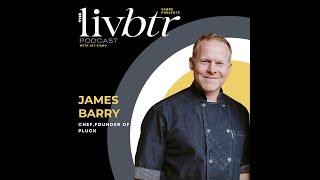
Chef James Barry trained at the Natural Gourmet and cooked privately for Tom Cruise for two years. He built his nutrition philosophy around cooking from scratch and avoiding processed foods, now eating mostly carnivore with some vegetables while experimenting with organ-meat powders called Pluck.
Questions this video answers
May 16, 2024
Liver, heart, kidney, spleen, and pancreas.
The Natural Gourmet (New York; program referenced—school no longer operating in same form).
Wholesome to Go.
eatpluck.com
Chapters
I just want to have peace Pay for the bill Let them take my.
Car Never see the receipt. Good, healthy prize. But everybody around.
Prosperity.
What's up, guys? And welcome to the live better podcast. This is your host, Jay Siano, and this is the show for people trying to optimize every area of their life. Let's go.
I just want to have peace.
What is up, everybody? And welcome to another episode of the live better podcast. Today's guest is chef James Barry. James was connected to me through his product pluck, which contains organ meats and is a very creative way to get these things into your food. James has cooked for many celebrities, been a private chef for Tom Cruise, Marissa Hartigay, George Clooney. The list goes on. And we're going to learn all about his background and how he created pluck. Welcome to the show, James. James, you have an amazing background. Really excited to hear about it, excited for my community to hear about it and dive into pluck, which we didn't start discussing yet, but if you can give us a brief background on yourself. Welcome to the show.
Thank you for having me, Jay. It's truly an honor to be talking with you. A fellow. What do you call yourself, A redhead or a ginger?
I call myself. Well, it's funny because I'm definitely a redhead. When I was born, I was bright red, and as time went on, like, my hair got more brownish. My beard stayed red, and my younger son is bright red.
Bright red. Yeah. I saw him, and that's how my hair was growing up. So. But I just think it's funny, people call all redheads now gingers. I'm like, where did that name come from?
I'm like, that's definitely a newer thing. That was not. Not a thing for me either.
Like, I was a redhead. I was. It was brutal, right? Growing up, I mean, redheads, it was like we were different. We were born different, and we were treated differently. And. And, you know, I was compared to Ronald McDonald. I mean, I was made fun of left and right, you know, so I have a very thick skin.
You know what? It's funny because it's. It's not a topic that's often discussed because there's so few of us, so. But when we see other redheads, right, you have this, like, instant bond. You're part of this.
This.
This tribe, essentially. But it's. It's funny that you say that, because I have. Obviously, I mentioned a son that's a redhead, and we're different, but I feel like we have some superpowers. You know, and, like, I've learned a lot more about, like, redhead DNA. And anytime I meet a lot of people, it's interesting, like, that are fascinated with redheads, where, like, they'll stop me and just want to talk to me because right away they always see the beard, and that's like, the conversation starter. And anywhere I go with my son, it's like, we can't walk 10ft without somebody commenting in a positive way, though. It's always like, oh, my God, your hair's so beautiful, and, you know, you're so handsome and all positive things, which wasn't always the case with myself and I. And I hear what you're saying.
Yeah. I'm glad, though, to hear that it's positive for your son, because I. So it was always positive with adults. Always.
Yes.
Particularly women. Women and old men, they always were like, hey, Red. They just loved that connector. And. But it was kids that were cruel. It was all always kids just being different. So that's really promising. You probably. Your son's probably fine in school, right? No one even comments on it in school.
You know what?
He.
Every now and again, you'll hear a comment and he'll get upset about it, but it's very rarely. And he's actually super popular social butterfly. Everybody gravitates to him. His personality is like a 15 out of 10, you know, so he's. It works really, really well for him.
It is interesting, though, because it's such a rare topic to get to talk to because, you know, there's not a fellow redhead I'm talking to. And so, yeah, it's interesting because. Because you're forced to be seen. Right. Whether you want to be or not. The minute you. When we were younger, you would go into a room and you were for. I mean, it was. You were. You stood out. Didn't matter whether you wanted to or not. So you were forced to be kind of a focus.
Yeah.
And then. And then, you know, in many ways made fun of a lot of times by kids, so. So I kind of learned to navigate. I'm curious for you as well, if it helps shape who you are. But I learned to navigate people really well. Almost like the way someone, like comedians talk about how they learn to use their humor to connect with people.
Totally.
Like, I. Immediately, my personality was shaped in, like, okay, how can I take the focus off myself? But also, how can I, like, make sure that I'm not, like, I don't know, an asshole? Like, like not made to stand out, you know, or made the Butt of someone's joke, like, how can I kind of neutralize the room? And so, and I tend to do that even to this day. Like I go into a room and I'm just like very forthright about meeting people and immediately kind of try to humanize the situation so that nothing is taking out of context.
Maybe it's funny because I'm like, as you're saying that I'm, I'm reflecting on, on, you know, my childhood and trying to think about how much of that shaped me because a lot of what you said definitely resonates, but I was a fat kid redhead, which is a whole other level.
Right.
You know what I mean? So like, I don't know if for me it was the fact that I was overweight or if it was the red hair or if, you know, so I've always had a, a very high level of emotional intelligence and I can connect with any human on the planet pretty, pretty quickly. And I think that, that some of that definitely comes from exactly what you described where, you know, I was able to always kind of like spin a situation into my favor in some way and use things that I was standing out for to my advantage as opposed to, you know, not using them as a disability, kind of leveraging that in a very strategic way, which I definitely still do to this day for sure.
Yeah, really fascinating. This is totally a topic.
I know, I didn't expect to get into this conversation, but I love it, I mean, rare that you could actually have this conversation. So I'm glad other people get to hear it. Maybe we'll start a podcast, the Gingers.
Yeah, or the Fire Crotches. That, you know, be kind of like.
You know, either way we, you know, we could choose and only have red headed guests.
Totally. You know, when I first moved to Portland, when I first moved to Portland, that was something that they were trying to do in Portland. And this was interesting because I didn't, I moved to Portland, Oregon from la and I did not equate that, oh, the weather in Portland would be conducive towards more redheads. But, but Portland at the time, the first year I moved in 2015, they were trying to get the world's record of the most redheads all encapsulated, you know, all kept in one area. And so they didn't succeed on that year. But I just found it interesting. And when I was living there for eight years.
When you say weather. Yeah. What do you mean exactly?
Like, well, like I think the weather is very Scottish, Irish, it's very overcast and you know, very conducive towards very light skinned people.
Got it right.
You know where they are. They're not going to get sunburned. It's not like Florida or something or you just, you can't go outside very, very long.
You know, it's. Yeah, it's funny because I don't even like think of that. You know, I spend half my life in Florida and I'm outside all day.
Really? You don't get sunburned? Nothing.
I mean, I lather up, you know, listen, I went to college at the University of Arizona and never put an ounce of sunscreen on and was outside, you know, obviously the majority of my life. I'm paying for that now because I'm constantly getting, I have to get a, a full scan of my body quarterly and I've had stage zero melanomas, removed things of that nature. So. But that was like, you know, that was not normal amounts of sun. That was an obnoxious amount of sun with zero skin protection, which was idiotic. You know, especially with my mom constantly telling me like, you have to make sure you have sunblock on. You know, all the things that I do for my son now. But it's funny because I never really thought about like the weather being a component. I've only thought about again like the superpowers we have where you know, apparently it takes more, it takes more anesthesia to put us under. We're way more resilient to many different things. Higher pain tolerance, you know, to certain things. I think it's, I'm only paying attention to the things that I'm proud of.
Yes, that's good perspective. Now have you heard this? Because someone once told me this and I don't, I don't, I haven't really looked into it, but that redheads are closer to Neanderthals than non redheads. Have you heard that?
I have not. But you know, I do spend time here and there, like researching because anytime that I come across somebody who's like super obsessed with the fact that I'm a redhead or my son, you know, if I'm in a situation, I mean there are times I remember recently I was, I was in D.C. and running to an Acela train and like the woman at Starbucks just would not let me leave Starbucks because she just wanted to talk. I, I very rarely meet redheads. And like she's, we're talking and it's like 5:30am I'm like grabbing coffee, you know, trying not to miss a train and she's Going into all these different statistics with me, and this is somebody that, you know, you. I would have no idea has any interest in. In, you know, it wasn't like she was redheaded, you know, so it's. It's fascinating. It's really a fascinating topic that I don't pay enough attention to, and I'm glad that you're bringing it, you know, to my attention more.
Who knew? Right? That.
Right.
So here. Here's a question, and, you know, and then, of course, we can get off of it, but have you ever dated a redhead?
I have.
Okay. Is that something you rarely see? You rarely see two redheads dating? And I'm always curious about that. I'm like, why? Like.
Well, because I don't think there's that many of us.
Right.
So it's kind of, you know. Well, that and my own experience, you know, from an attraction standpoint, there's Jessica Rabbit and then there's everything else. I. You know, in college, I found a Jessica Rabbit. And, you know, we dated for. For some time, and. And, yeah, it was. It was. But I think she actually, thinking back, I think she enhanced her red hair, though. Yeah.
So that's different. I'm talking like a true redhead. Like, she was a true redhead.
But I like, actually, like, modified the color to make it even more. More red, you know, like. Like less. Less orange, you know, like almost more red.
I say I found growing up that I rarely was attracted to redheads. You know, I don't know. As I got older, I was. As I got.
Did you ever date one?
I hooked up with one once when I was older, but we didn't actually date.
Yeah.
And I always.
Angie Everhart was Angie Everhart. Is that the redhead? She was beautiful. Yeah. Yeah.
Like certain actors, you know, and there's a handful now that they're very attractive. I can recognize it now. But as a kid, it was almost like, ew. And I don't know why. That's why I was kind of curious if you experienced it.
You know, I'm not a psychologist, but I think that based on your experience of being a redhead, you didn't really want to be one at times. So you didn't want to associate with. With them if you could pick and choose.
No, that's actually probably, like, spot on, because I did. I fought. I remember around that junior high, you know, around the age your son is. Right. Like around that 11 to 14. I was. I really. I battled with it. I was really. It was really upset about it many times. And I remember some Nights crying, you know, just like, why. Why do I have to be this way? And.
And then.
And then, you know, and then that passed. And then I embrace it and realize, wow, this is a superpower. I really.
Yeah. Do you have blue eyes?
I do, yeah.
That's the most rare combination. My son and I are both redheads with blue eyes. Very rare. Most red heads have brown eyes.
Oh, okay. I didn't know that.
Yeah, see, we're learning.
We're learning.
All right, so let's dive in. Let's transition into your background because you have been a private chef for some amazing humans.
Yeah. Yeah.
Even though you're a redhead, they.
They let me into their. Their world. I can't believe it. Yeah, I. So I became a chef kind of late in life. I always loved cooking as a kid, but for some reason, you know, back in, you know, back. I was born in 73 and back in the day, being a chef meant you worked, you owned a restaurant. Like, that was kind of it. There wasn't as many opportunities, so I. I just was like, well, I don't want to. I don't want to work late nights. I just. I don't know, as a young kid, aware that I didn't want that kind of lifestyle. So for the longest time, I just saw cooking as a hobby, and that's how I. I would. I would read, like, cooking magazines. That's how into it I was. Just for fun, you know, and cookbooks. Those would be my. My reading, my nighttime reading. And then it wasn't till 9 11. 911 happened. And, you know, I really equate that is, you know, our generation's Pearl Harbor. And it just awoken me to, like, what am I doing in life? Like, am I doing the things that truly have heart and am I doing the things that I'm here to do? Yeah. And what were you doing before that?
So what?
I was working in the entertainment business as a. Pursuing acting, and then I was also substitute teaching on the side to ensure bills were paid. So I was doing both of those. And I still love the creative process. I love. I'm not as much into acting per se, but I love writing and I love. I just love creativity. But I. But I felt like the substitute teaching was not in integrity at the time. Like, that I wasn't. That wasn't really what was in my heart. I love teaching, but being a part of the LA Unified School District is. Is not. It kind of takes the air out of the room. It wasn't. Suddenly, you were just a cog opposed to like really helping kids. I didn't feel like it was really helping kids. So. Sure. So 911 happened and I realized I just kind of audited my life. I was like, well, what is it I've always loved? And I realized it was cooking. And then it was like, okay, well then how do I, what do I want to do in cooking? Because I definitely still don't want to work in a restaurant. And then I realized, well, actually I wouldn't mind private chefing in the entertainment business. To me, I saw that as a perfect marriage of like, I get to be around creatives and, and then I.
But I build a network.
Yeah, build a network and help people. And so I found this school in New York. Well, initially I was looking at a lot of schools, California, all over the country. And I, I noticed there was this one culinary program in California where I was doing the research on the teachers of this program and they had all gone to a New York school. So I thought to myself, why am I going to go to the California school? Why don't I go to the school they all went to? So I found this program in New York. It's no longer around anymore, but it's called the Natural Gourmet. It was exactly what I wanted. They kind of were really fusing nutrition and food and, and that's something that may seem obvious to people nowadays, but a lot of chefs, they don't actually understand healthy food. They think healthy food is that age old, like grilled chicken, steamed vegetables. They don't, they don't really understand that how you prepare the food is what's going to make it healthy. Yeah, you know, I want to dig.
Into that because I think it's funny, like my lunch today is grilled chicken and vegetables. So, you know, and I like consider myself like super healthy.
So.
So we're going to dig back into that here in a bit.
No, for sure. And it's not that, that's not healthy, but that's, I mean back in the 80s and 90s, that is what people saw healthy food as. Bland, like very kind of specific foods, chicken and steamed vegetables. And hopefully people are now aware that there's, you can do so much more.
There's so many more options now.
It's like so many more options. And so this school was really doing that. And I had no money at the time. I, I spent a year raising money. I did some stupid, I mean, I say stupid, I think because it was illegal, but it wasn't stupid in terms of what I was trying to do. But. So I was a substitute teacher, right? So what I would do is I would go by. I noticed that there was never any water in the vending machines for these kids. And so I had been there a long time. I got to know the kids, and they were always saying, like, I want, like, ice water. And I was like, okay. So I would sell them. I would freeze. I buy water and bottles, and then I would. I would freeze it and then bring it to school and sell it to them for a dollar. So I literally did it. All school year, I did that. And. And I. And I slowly made money for culinary school. That's how it's.
That's amazing. Just giving them what they want.
Just giving them water, you know, like. But, yeah, it's so funny. And so I went to this culinary school, and it ended up being the best thing I ever did because that school was known for creating really great private chefs that could cook healthy food from. And really cook any diet. So if you were vegan, they would be able to fulfill your needs. If they were. If you were just eating healthy omnivore, they could fulfill your needs. And so my first two years out of school, maybe even three years, every job I got was because someone called that school saying, hey, I'm looking for a private chef in la. Oh, well, James was a really solid guy. He's very dependent. Because I was. I was like. I went to. I got perfect attendance. I did everything. Like, I went. You can imagine if I was selling water to go to culinary school. Like, I took it very seriously. Oh, yeah. Like, I was dialed in. There were kids that were just out of high school, going to culinary school, and they would just, you know, f off. They were just like. They were, oh, we're in New York. Let's go party. And I'm like, no, this is my life. Like, I'm. Yeah, I am here to learn. And I did everything I could. Like, any opportunity that came, I was doing it.
And it paid off, obviously.
Oh, it completely paid off. I mean, I got. I got. I was able to cook for Tom Cruise. I ended up cooking for George Clooney a little bit. I had opportunities to cook for Mirska Hargitay. I mean, just this endless list of celebrities and eventually some billionaires. I remember when I eventually did go to, like, one of those hiring agencies that help you find chef jobs, they looked at my resume and said, who did you work with previously? I'm like, myself? What are you talking about? No, no one. And they're like, how did you build this resume, and I'm like, I don't know. It was just word of mouth, and they were blown away.
So did you end up cooking for Tom Cruise and George Clooney through the school? Like, they. Somebody reached out on their behalf, and.
For George, it was word of mouth because. Because once I was in kind of the Hollywood system, sure. You. You get to know assistant. It's really the assistants that are bringing in different chefs. So for Tom, it was his. The person who ran his household. They called the school. The school recommended me. Now, that story is kind of interesting because you don't, you know, Tom Cruise doesn't let you know you're cooking for Tom Cruise because they don't want. They don't want you doing anything to the food that, you know, they. You don't know who you're cooking for when you first provide a sample of your. Of your style of cooking. And I just remember it was very kind of, like, weird. Like, I got this call and like, hey, can you do this? And I actually initially said no, but then they're like, well, oh, no, I'm sorry. At this point, I said yes. I'm like, oh, yeah, sure. They. They said, can you just bring a sample of your food? So I. I'm driving it into Beverly Hills, and I get to this house, and there's like, what looks like almost CIA at, like, a. A guard booth. I mean, they're in, like, black tie, you know, black tie suit. I'm like, what is. Who is. Is this a politician? I'm like, who is this? And then I. I dropped off the food, and then I didn't meet anyone. I left. And then I did a little research on the person who called, and I eventually connected it to him. But what's so interesting is when they. When they offered me the job, I actually said no. Really? Yeah. Mostly because. Well, because I was. I was already cooking for a lot of people, and I got the sense that they wanted someone full time. Like, they wanted them. They kind of wanted to own whoever was cooking for them so they could be available all the time. And I was already cooking for, like, five other people. And I liked my freedom. I liked being. I was cooking out of my. My location. And. And then I would deliver the food or they would pick it up, and so. But they love the food so much, they said, well, what are you. They basically asked the question, well, this. Okay, if you don't want to do that, then what are you willing to do? And I said, well, I can. I can. I said, what else do you need? And they said, well, we need food for luncheons, like for the lunch meetings. I said, great, I'll do that. And then I did that for a month. Never met him at this point. Just was cooking for all his United Artists. This is when he was helping to run United Artists and I was just cooking for the luncheons. And then I guess it was going so well. They asked me to fly to Europe with him for pre production on a movie. And that's when I met him and I met all the other people associated the movies. And it was a real moment for me, actually, because, you know, as I mentioned, I was pursuing acting. So I knew, I knew all these different. I knew Tom, everyone knows Tom, but. But I knew all the directors, I knew the producers. Like, I knew the names of Hollywood. And so here I entered this room. This is when Tom was shooting Valkyrie, and I entered this room. This is the first time I'm meeting him, but I got to meet Bryan Singer. I got to meet Chris McQuarrie. They did usual Suspects, which was a big movie back in the day. That was amazing. Yeah, exactly. I got to meet Tom's partner at the time, I'm forgetting her name right now, but she was also very well known. And what was so amazing is that I walked into this room, Tom brought me into the room just to introduce me to everyone, and they all stood up and clapped for me. So here are all these people that I historically had been researching and was following in their careers. Here I was in a room where they were clapping for me and it was just a real moment of like, oh, I've arrived. That was the moment where I said, okay, I know what I'm doing. Like, I'm a chef and I know how to cook. But before then, it was like, you know, like that whenever you first learn a vocation, you're like, ah, I'm an imposter. I don't really know what I'm doing. But that moment was like, okay, I know what I'm doing. Doing.
Yeah, you were, you were authenticated and validated in that moment.
Yeah. And then from there I ended up cooking for him for about two years. I. After that job, I went ahead and stayed with them. So they, they eventually got me as a full time chef. But I, I fought it for a little bit. But he, he was a really good guy. Everyone always asks, but he really, he really was a good guy.
And I have to ask, what was his favorite meal?
Oh, man. Well, he's from the south, right? So he's originally from the south, so a lot of people don't realize that. And you know, he, he's, he likes his comfort foods just like anyone else. He's just incredibly disciplined. Right.
Yeah.
I mean, he's, he's the ultimate actor that took his brand or himself and really made it a brand. Yeah. You know, I think, I think a lot of people, they, they just, they're actors and they don't take it as seriously, but he's just like, no, no, my body is my brand. My, my, my look is my brand. And so he works his ass off. And I think everyone knows that because he's been around for so long. You can tell, like, he's the quintessential focus. Like he, he's the focused, clear headed, this is my business kind of person, you know, and he's very, very well respected for it. Very well.
I mean, just the stunts that he does, you know, he has to be in an amazing physical condition, you know, to do all these things.
I was cooking, I was cooking for him when he did. What was that movie that he did where he was in the fat suit? I remember it, but it was the, it was. Jack Black was in it and Robert Downey Jr. And Ben Stiller.
Yes.
I can't believe I'm forgetting that, that movie, but. Oh, wait. Oh, what is it called? I'm seeing it. I'm seeing it. All right. Well, that movie, though, when he was filming that, I was cooking for him and that was, that was wild. Like, kind of. I had to make everything so he could drink it because he was so limited in how he couldn't move his mouth very well. So I had to make everything so that he could drink it out of a straw while he was shooting that film.
I mean, were you, like putting steaks into these or was it.
I was getting very creative because, like, that's the thing is like, like, you know, just like anyone, you get sick of it. Right. You don't want to have like a strawberry or a chocolate smoothie every freaking meal, you know, I mean, like, so I was trying to make it really creative where, where he could feel like he was still getting a variety. And it was challenging. We, we struggled a little bit.
I'm sure. I'm sure. Well, what do you think it was that had them so enamored with your food and, you know, wanting to work with you as much as possible? What do you think it was that you were doing differently that they gravitated towards?
Well, I think this was true for all my Clients then, because I worked with a lot of families, a lot of women who had been struggling for years to lose their baby weight. And. And when I started cooking from them, they finally started losing it. And I really see it. And this is actually a really great question, because it's ultimately the answer is. Is really how I see food. I feel like trends come and go.
Yeah.
I mean, I. I now been around over 20 years in this business, and when I first came out, the Fat Flesh diet was the big book, you know, and. And. And then Atkins was here and there, and then there was Skinny Bitch, and I mean, you name it, there was just every fricking trend out there. But the one thing that I don't think is a trend is just eating real food. And that's really how I approached it. Everything I did was from scratch. So there were no dressings from the grocery store. There was no sauces that were in a jar. Like, I made everything with real food, even to the point where, like, if I sweetened something, I used a date. You know what I mean? Like, I didn't use sugar, Things like that.
No. Stevia. No, no.
Stevia was not a thing.
Yeah, it was sweet and love.
Yeah. And I wouldn't. I wouldn't have even touched it, you know, I mean. Yeah, yeah. So I was.
Yeah. I mean, because I'm. I'm very healthy. My wife's a dietitian, nutritionist, got her master's at nyu, and I'm fortunate to have that at home cooking for me every meal. But it's back to my point earlier. You know, I'm still grilled chicken, mixed vegetables. I'm not hyper focused on, you know, are the restaurants I'm going to using seed oils, you know, like, I have to do it in a way that I could still also operate and function, you know, in a. In a relatively convenient way while eating healthy and, you know, whole foods and things of that nature. I restrict my eating window as well. But talk a little bit more about, you know, how. How people can actually embrace what you do and do it themselves.
Yeah, I think that's really important. What you just said is that you got to make it work for you. We can't live in this ideal state of what we think life is like. We have to live in this world. I'll just share this little story, and then I'll get even more specific about things that people can do. So my wife is actually also. She's a functional nutritionist, so she's also in the health field. And we. When we were first together. We would always kind of. I always had to treat myself like a, like a, I would test different diets because I had to understand the diet, but not just from a theory level. I had to understand how to cook for it because I had clients that were always asking to do these crazy diets. And so I would have to understand them, you know.
Yeah. Throw at you.
Right. Like, yeah, Master cleanse was huge. Then I would have to. Average soup, cabbage soup, all. Yeah. All that stuff, Man. It's like I had to, I didn't really understand how to do it. And so I did this one diet. We did it together, and we did it for 30 days. And it was the best I have ever felt. Ever. Still. Still to this day. And you want, you want to know what it was? It was, it was basically what you call primal raw. So I was eating raw, raw animal product.
Really.
I was making sure that it was really clean. Like, I was getting really, like, untouched buffalo ground buffalo, for example. You really had to make sure it was coming from a very clean source. But I was doing that. I was doing raw butter, raw cream. Anything that was raw, I would do. And it wasn't just animal. But that's primarily what you eat is. Because a lot of the vegetables that we think that we, we should eat raw really don't do your digestive process very well. Raw. So.
Okay. Yeah, I mean, I, I definitely have been mindful about increasing my animal protein, you know, as I'm trying to put on more muscle and.
Right.
You know, and, and my good friend Dr. Gabrielle Lyon, who just.
Yeah, she's heavy into talking about that.
Yeah. Yeah. I was just weathering in Austin actually, and, you know, all the things. But raw. Where would I get raw food like that that I know I can trust?
Well, yeah, and that's the thing there. It does exist. But, but here's the thing. So we did this for 30, 30 days. A1 thing is I ate a lot less than I do when I eat cooked meat. I, I, it's like I was so satiated by, even by just a little bit. My poops were the best they ever had been. Like, just incredible nut. You know, the kind where you don't have to clean, you don't even have to wipe. It's so freaking beautiful. Right? And, and like, it's just like, it was amazing. It's like, amazing. Right? And we did this for 30 days, and it was awesome. But to your point, it wasn't realistic because you couldn't go out to eat. You couldn't unless you're, you know, you're going to eat, I don't know, like, unless you're only going to restaurants that are serving. What's the raw meat dish, you know. Yeah, it's usually an appetizer.
Tartar.
Tartar. Thank you. Yeah. So like, you basically are stuck on a restaurants like that. And then even, even then, it's just not realistic. We couldn't really go to parties. We just had our first daughter, our first baby, and we couldn't give her raw food yet. So it just became not realistic. So here's this amazing diet and it just, it's not going to last. So I still now go back to defaulting to, okay, let's just focus on making things from scratch. So one thing that I immediately recommend everyone does if you're going to take one step, is just start making your own dressings. Because that's one of the hidden places where you just get a lot of crap. Like a lot of things that are just. We have to remember when we're buying in the grocery store, there's a couple of really important points to remember. One is that the cheapest ingredients are salt and sugar. So you're going to find it in everything. Right. Because all the businesses that are selling food want to maintain, they want to make a profit. Right. So you have to use cheap ingredients to make a profit. So salt and sugar is going to be in everything. The other thing is, is oils. Oils are expensive. Fat is expensive. So they're going to use cheap oils when they can. And so you're going to, even if it says on the, on the package, oh, it uses olive oil, I guarantee it's not extra virgin. Unless, unless they say extra virgin. It's what it is, is it's probably like a mix. It's probably like a little bit of olive oil with some soy oil or some canola oil or something. It's going to be some kind of mix to cheapen the cost of making the product. Yeah. So that's one thing that's really important. The other thing is, is when you make a food product, you are making it so that it can last on the shelf as long as possible. Because if your food doesn't sell immediately, you don't want it to get pulled from the shelf and then returned to you because you pay for that for sure. People don't realize that grocery stores screw the manufacturer is everything, right? Everything, Everything. So you need to have a good shelf life. And to do that, you have to use these ingredients that are preservatives these things that are going to make it last on the shelf. And so the, a mix of those cheap ingredients, the preservatives, those are the things that are causing issues in our body to the point where I'm sure you grew up learning this too. Like, there was that urban myth, which I don't think is a myth, I think is true, is that human bodies are decomposing slower than they used to because we're so filled with preservatives.
Oh, yeah, for sure.
Right, for sure. So that's really. Right away. One thing you could do is just start making your own dressings. And one, like a quick, quick tip to do it is you just do a ratio. So in the US it's, it's typical to do about a three to one. So you do three parts oil or fat, whatever, whatever you're using, to one part vinegar. So that could be extra virgin olive oil. That could be really any oil you want to choose. I don't want to tell you what oil to use because I know sometimes that's dictated by people, what people can afford. So, sure. The key is, is like, just choose three parts oil to one part vinegar. Now, I will say vinegar can be lemon juice. It could be lime juice. It could be literal vinegar, like balsamic or white vinegar. You can mix. It's just acid is what we're saying. It's like three parts oil to one part acid. And really what you're doing is when you're doing ratios, you just got to make sure that the container you're measuring it with is the same for both. It doesn't matter what you use. It could be a tablespoon, a teaspoon, it could be the cap to the oil. It doesn't matter. You just got to keep it the same for both. So if you're, you're measuring it with the oil, you got to do the same measurement for the acid. But if you just put those two things in a mason jar, shake it up, you've got a vinaigrette like ready to go within 30 seconds, as long as you have the ingredients on hand.
I mean, it's so. I mean, I, I eat a ton of salads, and I'm definitely just eating these sugary, salty dressings, you know, which is why I always typically ask for the dressing on the side. And I try to use it very sparingly. And actually it's funny because I posted on my, on my Instagram story when I was traveling, I saw something on ketchup, and I literally posted on my story, like, I, I'm quitting ketchup because anytime I come across these things, I'm like, I just remove things from my life.
I find it's easy. A lot of people don't. You know, we grew up in an age where some parents are like, oh, you're so restrictive, or, I want to say yes to my kid, not no. Right. But the reality is, is when you, when you have a boundary, it actually makes life a lot easier. Like, that's why eating carnivore diet is so amazing for so many people. It's not just the health benefits some people are getting, but it's also like, you just remove any decision making. You just, it's like, what am I eating today? I'm eating meat. What are you eating tomorrow? I'm eating meat. It's like, it's like you no longer have to think about it. And you can just kind of dial into what a lot of the bodybuilders figured out, you know, decades ago, over half a century ago, which is you, if you eat the same thing over and over, you know, you, you get kind of like in this zone of like, your body knows what to expect. You get in a zone of how to prepare it. You can prepare 50, you know, grilled chickens all at the same time. It's like, it becomes easier. It's the same thing. Like Einstein wearing the same suit every day. It's like, when we remove these kind of extraneous decisions, life becomes a lot easier on a certain level.
Yeah, No, I do that quite a bit, actually, from. I started with my cloth, my closet. You know, I typically only wear black and I have a lot of, like, these pants. I have like seven pairs of the same black pants. You know, it's just, it's. How many decisions do you need to make in a day? Right? When I have to wake up and take an ice bath first thing, then I have to do my workout. Then I have, you know, I'm also super disciplined and my days are like on repeat. Right. And it's funny because Dr. Gabrielle Lyons said when she was speaking, she said that her most successful, highest functioning clients are the ones that have every single thing planned out, you know, for the day, essentially.
Which is, which is actually a really good health tip too, and one that a lot of people kind of underestimate, which is meal planning.
Yeah, yeah. And it's like, that's the thing. Like, I have always paid close attention to bodybuilders and, you know, tried to be as healthy as possible, but I Don't. A lot of them, obviously, meal prep on Sundays for the week.
The whole week. Yeah, they do it. They do everything they're going to eat and, and they just eat the same thing over and over. Yeah, there's a lot of power in that. You know, it's like when you, when you meal plan, you remove that. Like that's what I'm talking about. Even with, with making your own salad dressing, right? We just remove the thing that's kind of the lowest hanging fruit, the thing that can, can be easy and doing it in a ratio is very easy. Doing in a mason jar, you shake it up, you're done. But like, if you remove these, these things that are really the things that push us over the edge and why meal planning is one of those for me is that when is, when is the part of your, what part of the day are you kind of at your weakest in terms of your making food choices? It's really the end of the day, right? It's like after you've been making all these decisions all day, if someone comes to you at 5:00 and says, hey, what are we having for dinner? You're just like, it, let's just have pizza. You know, I mean, like, you're just like, I'm over it. Right, right. But if you've planned it ahead of time and you're like, okay, I know I'm busy. You know, I'm working all day Monday and Wednesday, but Tuesday I have time. So Monday and Wednesday are going to be slow cooker days because I could throw everything in the morning and it's all ready for me at 5. Tuesday, I'm going to do a little bit more of an elaborate meal. You know, you can literally plan it based on your schedule, based on your workload. You already have. You already made a list, a grocery list. So now you're also not going to the grocery store and making emotional purchases or hey, oh, this candy bar is on sale. I'll just get it now, you know, Right. It's like, no, it's not on your list. If it's not on your list, you don't buy it. That's it. You know, so these, these little movements, this little bit of pre planning affects everything. It affects the choices you make all week, it affects the food you bring into your house, it affects your stress level. So then there's none of this kind of like arguing with your partner of like, well, who's cooking tonight? Why? Why am I always doing everything? Why can't you do it? You know, whatever it is. Right.
No, it's all routine. Yeah, I love it. I just, by the way, I just thought of a few really, I think, amazing ideas that we'll talk about offline. Okay, so let's fast forward to Pluck, or if you want to. Because obviously I want to talk about the product which I've been enjoying, thank you very much for, for sending it our way. Do you want to fast forward to what was the idea that sparked the creation of that, or do you want to keep going through kind of and get to that point?
Maybe I'll do a quick share. Yeah, Combo, quick share and then fast forward. So this is because this connects to something we were talking about before we started press and record, is that, you know, one of the things you see in every health influencer out there, any person, including our partners who are in the health field, anyone that is supporting someone else's health, the person that is kind of suffering the most in that relationship is the person who's dispensing the help. Right. It's because you're helping everyone else be, be healthy. Be, be healthy. But it's you who's suffering because you're the one who's not being healthy.
You know, selfless to a fault.
Yes.
I say that to my wife all the time. I'm like, yes, you're so proud that you're selfless, but you're suffering as a result of that because you don't have boundaries. You don't spend enough time watering, you know, yourself.
Right.
Like, totally agree.
It just. And it comes with the field of helping people, but it also comes just with being an entrepreneur as well. Right. When, when you have major output, it's hard, it's hard to stop and, and just feed yourself because we get so. We get so kind of caught in the cognitive, the machine and we forget to just kind of like stop for a second, take a walk and just realize I haven't been breathing deeply for the last hour or I haven't like, I'm actually really hungry because I haven't eaten in seven hours or I haven't had a glass of water, whatever, or I didn't work out, you know, whatever it is. So for me, I was running a meal delivery service. After I left Tom, I started a meal delivery service in la. It's called Wholesome Go. It actually still exists. I just don't have anything to do with it anymore.
What's it called?
Wholesome to Go.
Okay, that was actually going to be a natural question that I was going to ask you. So I'm not surprised that you ventured that in that direction.
I did and I, and I did. Didn't do it very well. And I'll tell you why. Because I tried to.
Also not easy to do and scale.
Exactly. And I, and what I did wrong was that I tried to take the personal chef experience and, and apply it to the entire business. Like so we were trying to personalize everyone's meal. Well, that works when you have 20 clients, but when you have 80 to more, it's impossible because suddenly you're cooking like a deconstructed chili, for example. Because this person doesn't like chilies, this person doesn't like peppers. This person wants turkey, turkey, ground turkey, this person wants beef, you know, no thank you.
It sounds like a logistical nightmare.
It seriously was. And yeah, so I, I learned my lesson there. But I ran it for eight years. Feel like I helped a lot of people, kind of supported them with their health.
It has to be more of a mission driven thing.
Yeah, absolutely.
Where that's exactly what it is. And I have friends that are, that are in that business and you know, I've helped try to solve for their scaling issues because that's really my superpower is helping businesses scale.
Yeah, that's what I read about that. Yeah. Yeah, I'd love to talk to you more about that offline too.
For sure.
But so I did that and my health was suffering. We moved from LA just so I could get out from under that business because I couldn't while I was in la, I really couldn't get out from it. And so leaving LA forced me to really put, make the business autonomous where it could run without me. I ended up selling it to some people that I didn't think were the right people for it, but I just needed to get out, you know, I mean, and they ended up having to sell it a few years later because they, they didn't, they ran it into the ground and, and they were in debt. But, but here's the thing though. I got out of la. I was a stay at home dad for a few years because we had just had our second child then. And it was during that time that I got my health back and I was able to sleep with the baby on my chest. I did that a lot, you know, and had many, many days where I just kind of like just rested. I got to exercise more, I got to start focusing on my, my health again by eating better. And within a couple of years. What also people don't realize is when you're always stressed out. You also lose a major superpower, which is your creativity, your imagination. You lose it. You completely lose it. And I had lost.
You don't have enough space.
No, you don't have space. You're exhausted. And I lost my creativity and imagination when I was so stressed out running that business. And I got it back when I was in Portland. And that's when I got the idea for Pluck. It was a mix of kind of this overarching mission of I've always just wanted to help people with their health. And that question is always dogging me of like, okay, how do I help the person? Because as humans, we just want to eat comfort foods. So how do I make comfort foods healthier? And how do I get you to eat these foods but not have it be conditional, like where you're only eating them because you're being disciplined, but more that it's something so easy and so delicious that you, it doesn't matter what state you're in, you just do it. You know that it's, that it's like brushing your teeth. So I'm always kind of dogged by that question. And I identified, of course, that organ meats are hands, hands down, they are the most nutrient dense food on the planet. I mean, even more so than beef. And we're not doing it, we're not eating it.
So based on the recipe in Pluck, you're able to get the health benefits of that just through the seasoning? Essentially.
Yeah. Because so what I did was I took, I took what was already in capsules, right? The freeze dried powdered organ meats. And a lot of people that was really, there's really two main ways to get organates. It's to eat them, you know, to purchase them and eat them, cook them, eat them, or to take capsules. That's really it. There's no other secret sauce to it. And. But I, I really, I kind of identified well, I'm like, well, the. But the reality is, is people aren't cooking them, they're not eating them that way. They don't know how to source them, they don't know how to cook them. And then they also think they taste gross, so they're not even going there. Right. But then the people that are doing the capsules, you get capsule fatigue. You know, you forget to do them, they're expensive. But the other big issue that a lot of people don't talk about is, you know, I'm all about, you know, we could talk ancestral tour, blue in the face but if you're. If you're taking capsules. What's ancestral about taking a capsule? Because you're completely bypassing your. Your natural digestive process. Like, we have a. We have a biological system that works really freaking well, right? Your. Your eyes can see the food. That's why when you plate food, it's so important to have colors and. And textures going on around it because your eyes see it. That starts the I'm hungry process. Like, I want to eat this, right? We eat with our eyes, right? And then. So that's the start. But then when you put it in your mouth, there's a whole process that starts. Like, if I put salt on your tongue, your. Your body immediately tells you instantaneous, like, oh, this is good. Or it's like, no, no, no, you're good. Don't. Don't do anymore. And everyone can experience this because we'll do, like, one, and we'll be like, oh, this is good. You'll do another one. And it's like, it's a little different. You try to do that third, and it's like, nope, nope, it's gross. There's something off, like, body saying, no more, no more, no more. Right? That's what happens when we put it on the tongue and we go through our natural biological process. There's a communication that happens. But when. If I swallow a salt tablet, I swallow it. There's no communication that happens. It's delayed response. 15, 20 minutes later. Why am I bloated? Oh, I got too much. And we hear this all the time, right? If you take a capsule, like, oh, I feel so nauseous after taking this capsule. Well, that's because you're not working with your body. You're just going off of what someone. What a bottle said, you know, the bottle said to take six. I'm just doing with them. Like, how the hell does the bot. How did that. How does that company know what you need?
Right?
You know, I mean, your body knows. And so I'm really. I feel like part of my mission is not only to support people in getting organ meats. And really, I. I say whole animal because I'm really just. I'm not trying to say, don't eat muscle meat. I'm trying to say, let's just eat the whole animal. Like, let's, like, let's not waste the whole animal. So it's. It's kind of supporting that mission, but then it's also like. And let's get back in touch with what our own bodies need. Needs are There's a. There's a professor of archeology, Bill Schindler. He wrote the book Eat Like a Human. You should have him on your show, by the way. And I can set that up. Yeah, he has a great quote, and it's that we are the only species in the world that looks to someone else to tell us what to eat. Like, let that land. Right?
Yeah, exactly. That's fascinating.
Right? It's like, on a level, it makes me so sad. I'm like, gosh, man, there's a lot of species in this world, and every one of them knows exactly what they need to do. Why do we not? What makes us so different?
Fascinating. Yeah. It's fascinating, too, because they're, you know, people are so passionate on either side of eating animal protein. You know, so every kind of philosophy, if you have one philosophy, somebody has an equal argument for another philosophy. And anytime that I'm having the conversation about, like, you know, us being carnivores or, you know, I was talking to somebody. I. With Eric Hinman, I think we were each. It was like three or four of us in a circle on Friday. No, Saturday. And we were talking about, like, somebody was saying that, you know, humans really primarily ate plants early on and kind of went into this thing. And I'm just listening, like, you know, how do you know? Like, I don't. You know, like, and then when you think about, like, us having canine teeth.
Right.
Like, heard so many things about that. How much meat are we supposed to be eating? Everybody has a different philosophy on all of that. It works. Works really well for me. I happen to eat, you know, a heavy carnivore diet, but I incorporate whole foods and salads and, you know, all the things. I'm not strictly eating meat, which I did for actually probably two, three years at one point. And I, you know, I did the Atkins. I just ripped out carbs and I. I lost 45 pounds.
Wow. Is that when your body started to transform? Was that the start?
Oh, I mean, that was the biggest physical transformation of my life. I was at the peak. I was at just shy of. Call it two. I was like £240.
That's pretty big.
And especially at my height, I'm not quite 5 10.
Oh, okay. That is big.
Yeah. And. And I, you know, today I weigh in at, like, one probably, like, just right around 170.
Yeah, that's a nice. That's a sweet spot. That's a good one.
It's a sweet spot. But it's interesting because I just did an in body scan and, you know, I'm. I definitely am not as lean as I'd like to be. For. For me, I'm very lean. You know, I've never been really this lean and in this, in this shape, but I think I can get in better shape too, as my body composition continues. Continues to change.
You only know what you know, right? And it's like that. I mean, that's. That actually speaks. That's.
That's the quote that started this whole conversation. I think we have to read the actual.
Yeah, my Maya Angelou, do your best until you know better and then do better. Right? Yeah.
There you go. Amazing quote, which I will now probably get tattooed on me on Thursday.
So thank you. But, but, but to your. I've also come to that conclusion of like, you know, we all have to have our. We all have our journey with our diet and our food, but we have to have the dignity of that journey. I've been in rooms where people, you know, it's Weston A. Price foundation for the most part. Most of those people are very hardcore, like pro animal, like eating animal and eating other things as well, but. But eating the whole animal. And I was in a room with probably at that time, it was like 300 people. And the person was talking, they were refuting the China Study. So it was this woman who'd become very well known for her basically showing how the China Studies. Just propaganda. And. And so the first thing she said was like, so who in this room has ever been vegan? And every single person Rose raised their hand. Like everyone had. We all started somewhere. You know, most people that are in the health field, they're there because they either got sick or they know someone, someone they loved got sick, right?
It's.
You go down a certain path just randomly, right? So it's like, right, we're all here for a reason. Like you said, I. You grew up feeling fat, right? So it's like that probably supported you on this journey of like, hey, I want to feel better in my body, right? We need the dignity of that process. So if that means you're vegan, vegetarian, pescavore, whatever, pescatarian, whatever it is, kudos to you. The thing that I just ask people, and this kind of goes back to that intuitive eating, which is I just say, look, whatever diet you follow, that's your head making a decision, right? But when you go to listen to whether that diet is right, let your body dictate the answer. That's all I ask people. Just if you're Getting digestive stress from what you're doing. That's your body saying, hey, it's not working right.
Exactly. And I feel like there has to be better ways with our technology today for us to really have customized solutions to that problem where I can go somewhere I can get my labs done, get whatever scans I need done to know what I'm deficient in, and have a program set up for me based on me, not you, me. Right. Because we can't all be eating the same when we're all completely different.
Right.
Like, it makes no sense to assume that something that. That's going to work for you is going to work for me and vice versa. Totally.
I mean, and the reality is, is look at. Look at how many different diets there are in the US but yet it's something like 93% of Americans are nutrient deficient. Like, that's a shitload of people. Like that. That is a very high number. And so that. That. That tells you that it almost doesn't matter what diet you're on. Like, you're still gonna have to figure out some kind of supplemental thing because food is just not what it used to be. You know, they've been tracking produce since the late 50s, and every decade, it's degrading every single decade. So it doesn't. Like, the tomato of today is not the tomato of yesterday. And even if it's heirloom, you know, you just don't know. You don't know what you're getting. I just learned this summer. I was driving. I mentioned you earlier that I moved from the west coast to the east coast, and I was driving across the country this summer, and I learned that even if produce is organic, it doesn't matter whether it's organic or not a lot of times. And this is with grains, legumes, and, well, beans and legumes. Grains. I'm trying to think what else. But it's. It's those kind of crops. They will dry that crop with glyphosate, so it doesn't matter if it's organic, because normally we're choosing organic because we're. We're under the suspicion or expectation that it's going to be glyphosate free, but that's still not the case. They dry the crop with glyphosate, but they don't have to. It's still organic because it was grown organically.
Got it.
And they're not connected, you know, according to the, you know, fda. So. So right there, that kind of tells you, you know, we have to assume that the majority of the things we think, you know, we're doing, that we have the best intentions of doing. We think we're being so clean, we have to assume that it's probably not as clean as you think it is. So then the question becomes, okay, now what do you do? Food. Like, do you keep getting stressed, you know, more and more stressed about, you know, managing at micromanaging every label of food you eat, or do you at one point just say, you know what, I'm gonna throw that out the window and I'm just gonna listen to my body as I eat things and I'm just gonna follow that with the intelligence, the kind of common sense that sometimes I might crave ice cream. And it's not about the ice cream. Right, sure. You know, so you have to kind of balance it out with modern living. But ancestral knowledge of like, what does my body need versus okay. We're also in a very stressed out life. We're constantly being bombarded with misinformation. So how do you navigate those two things? And I just say you keep, keep asking that question and hopefully you will eventually figure out your own body.
So I'm sure everybody's wondering by now how you eat, what do you eat? What is, what is your routine when it comes to eating? What's your typical day?
Well, I created pluck kind of from, from me and my family, and I'm, and I'm just grateful that I have enough resources to then provide it for everyone else. But like, so one of the ways I eat is I use pluck a lot. I put it on everything and pluck is, it's free. I took, I took the freeze dried powdered organ meats from the capsules, but I combined it with organic spices and herbs to make it taste good. So then that way instead of swallowing a pill, we're eating it and we use five organs. We use liver, heart, kidney, spleen, and pancreas. And we make it taste really good and so tastes great. Thank you. I'm really glad you think that. And every now and then I do meet someone who's just like, it's not for me, but it's pretty rare. I mean, I was able to use my kind of chef intuition on making sure it was delicious first. That was the first thing.
Well, I think you accomplished that.
Thank you. So I put that on everything. And for the most part right now I'm really kind of counting my macros because I'm also trying to kind of fine tune my body. I've been. I have this idea, this goal of what I want it to be, and, and I'm turning 50 this year, and I'm just not going to let up till I, till I reach that goal.
Like, I just, I'm right behind you.
Nice.
My birthday is in a couple of weeks, and I'm trying to do the same.
Yeah, it's like you want to almost, you want. Every year you gain, you want to feel better than the previous year. That, that's my goal. So whatever it takes to keep aging gracefully and feeling younger or better than I did the previous year, that's what I'm going to keep doing.
And so I, it's funny because I, I, my earlier years were so terrible for so many reasons, and alcohol and I was a DJ and in nightclubs all the time and all that stuff. So now it's like, easy for me. Every year, you know, I just, I get so much healthier and feel so much better. I feel like in some ways I'm aging backwards because I lived in this, like, fog of hangovers essentially for so many years. So now it's easy.
That's, that's amazing. I mean, how many people get to say that, you know, because when I was driving across the U.S. it's, it's clear we have issues here in the U.S. like, it's crystal clear. We're very privileged on the, on the coast. You know, we have a different, it's almost like we're, we're in a different time period, you know, but as you go in into the US Inward, it's almost like going back in time and you just see people eating these things that you're just like, man, I learned five years ago not to eat that. And there. And you just see the health issues and how, how many people are not feeling good in their body. You could see it on their face. You can just see it. But the biggest issue is that people don't realize, and it took me a long time to realize this. It took me till I was in my 20s. But a lot of people don't realize that the food they eat affect, affects their health. Like, I know that that seems very rudimentary to a lot of us, but it's just, it's not true. Like, a lot of people still do not realize that if I eat this food, it's going to result in this, my body feeling or whatever issue that's going on, that there's a lot, that there's a lot we can do with our health just by changing what we eat. I wish I could support people in really seeing that even more. The problem is, is once again people don't really make changes. We're such a interesting creatures, us humans, is that we, we won't make a change unless we, unless we get sick or someone close to us gets sick. You know, it's just like, yeah, it's like for sure. And dietary change is one of the hardest ones for people to do, you.
Know, what do you do? What's your, your fitness routine like?
Well, so I'm now. So I'm eating fairly carnivore. I do still eat some vegetables, but I mostly, you know, meat I put pluck on it. And then I'm also still trying to cook organs. When I feel inspired, I work out. I basically work out five to six days a week. So basically like today was a Monday. So I'm doing a whole body weight. I do lots of weights when I do whole body and then, and then the next day is cardio and I just flip flop every day. I'm also, I'm also delving in. I'm now doing some testosterone just to kind of. Because my numbers were getting down. They were getting really low.
Yeah, I actually, I'm very intrigued by that. I've been learning as much as possible.
Yeah, I don't, I'm not gonna scream from the rooftop like some people do and be like, oh, this is amazing because I'm still, I'm still new at it, but I'm, I'm trying it because I definitely was recognizing that as I've gotten older than my body is changing and that it's getting harder to, you know, make adjustments, you know.
Sure.
And so I was.
Which is normal.
Which is totally normal.
Your levels are lower.
Yeah, exactly. And then once I got measured and I saw, oh, hey, this is also equated to. I mean there's so many chronic health things that are equated to hormones. I think, I think the fact that we have the medicine is now measuring these things and, and seems pretty accurately measuring them. I think it's worth to listen, you know, because it's like, yeah, I know a lot of people that are reversing some chronic illness with it, chronic depression, things like that. It's like you'd be surprised how much that kind of stuff, stuff affects your every day.
Yeah.
And I do, I feel good. My sleep definitely increased. My sleep really, really helped.
Do you monitor any of your. Do you wear a whoop or an aura ring?
I was. And then when I moved I kind of put it in Some box. And I don't know where it is probably.
It's funny because it's like one of those things where I'm so attached to my whoop data now that it's like almost too much, you know, where like I'll wake up and I'll track my sleep and I'll be like, oh man, like, I really got, I slept really light last night. Today's gonna be a, you know, I'm not gon operate at, at a higher level today. And you kind of like think that into existence a little.
I think that, I think that's so insightful. I think you're right on. I mean, like, it's kind of like, you know, a glucose monitor. Right. Like a cgm, Right. Like, you're not necessarily, unless you're a diabetic, you're not necessarily supposed to be wearing that all the time. Right. You wear it for a couple months to, to see. Okay. When I'm eating this food, this is what it's doing to my body so that you can kind of get better at, at your eating. So you're not raising, spiking your levels. Right. I kind of see it the same way with the, these, all these measurements is I'm, I'm very pro. I think it's really important to have a baseline to know when I'm feeling like crap. Oh, this is why, you know. Or yeah, you know, I slept this way and this equated how I feel, whatever it is, whichever way direction. But I do think at one point we still, I don't know, I'm always trying to like, I feel like, you know, you know those little pendulum balls, you know, and they're constantly going like that. I feel like I'm always striving to kind of find that balance in the middle. And if I stay too far to the left of like measuring everything, then I'm missing out on, well, what are my instincts, you know, but, but, but they both serve each other. Like, it helps to. You need to base. You need to know some measurements to know what's going on.
Yeah. But you, to your point, you could just kind of learn the measurements. Right. And you could take periods of time that you're going to track it it and then get rid of it and follow your intuition with the understanding and knowledge that you.
Yeah. And then come back to it as you do, as you need. That's kind of my philosophy with a lot of things. You know, I, I think it, it really is about like, what is our innate intuition around things. I mean, I'm sure you're, you're similar. It's like as I've gotten older, I've gotten so much better about just listening to myself, you know, that intuitive knowledge and trusting. Like, hey, if I have an instinct about a person or an event or whatever it is, I'm going to listen to it now. And I, and I think we, the more we can apply that to everything, the better off we're going to be. Because in many ways, and I'm sure this would can create a whole other podcast, but, like, in many ways, that is what makes us different, is it's, it's your instincts versus my instincts. It's like that's truly what's unique. It's, it's, we each have very unique instincts. And in many ways you could say those are godly, right? That those are, those are messages from, from through your experience or through your vessel, whatever it is. And, and they're unique to you. And so if you're not listening to those, then, you know, are you really here? You know, are you really being your unique, beautiful self?
Totally agree. We could talk for another, like, week straight, I think, and I would love to do that. Where can everybody find Pluck?
So you can find us on our website@eatpluck.com you can find us on Amazon and, and then you can find us on socials. Pretty much all the socials were at Eat Pl. Pluck, except for Twitter or whatever's now called X. It's Eat underscore Pluck, but otherwise you'll find cdpluck. And then I'm at chefjamesberry. And yeah, check it out, everyone. I, I, it's the truly the gateway to getting organs. It's the easiest and what I think most delicious way to get orange in your diet.
Well, I'm in, man. So now, now that I've tried the product, I've used it several times and I'm enjoying it. I'm definitely going to incorporate it into all my foods. And I really appreciate you spending the time and, and educating us and loved our conversation.
Yeah, ditto. I, I look forward to getting to meet in person. Like, I love meeting people. I just feel like, oh, immediate connection, you know? So thank you.
100.
Thank you for having me.
And we're even more connected, you know, that we got that whole redhead. We'll keep exploring.
Seriously. Yeah. Thank you again.
Thank you so much.










