Organ Meats: The Most Nutrient Dense Food with Chef James Barry
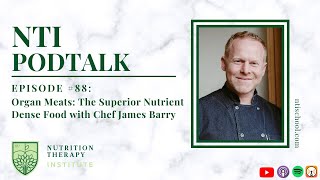
Chef James Barry and Diane Kahler discuss why organ meats are among the most nutrient-dense foods available. Barry created Pluck, a seasoning blend that incorporates organ meats to boost nutrition in everyday cooking.
Chapters
Hello, and welcome to the NTI POD Talk. My name is Diane Kahler and I'm director of Nutrition Therapy Institute. Join me as I talk to interesting people in the field of health and wellness, food and farming, and anywhere else we find conversations that matter to our community. By listening, you'll learn a little about NTI and a lot about the things and people around you that make a difference for your wellness. Welcome. And let's get started. Hello there. Dr. Diane Kaylor here, director of Nutrition Therapy Institute, here to welcome you back to another edition of the NTI POD Talk. I am so happy to have Chef James Barry on our POD Talk today because there's a lot of alignment in our interests. We have a chef program here at nti, and so this is very much, you know, in line with what we teach here. But also Chef Barry has a product that we're going to talk about today that is in line with most everything that we teach here, both in our chef program and nutrition program. So, Chef James, thank you so much for being here. I'm really excited to talk to you.
Thank you for having me. I'm excited as well.
Yeah. All right. So, you know, I'll just say at the very beginning, as I was mentioning earlier offline, you and I have met before, even though it may not have been a memorable occasion in that we stayed friends for many years, but we have met before through the Weston A. Price Foundation. And I, I just have to tell you that one of my first memories of meeting you, and I don't remember why I remember you, but it was many years ago at a Weston Price foundation meeting. And, you know, it's, it's group meals. Everybody kind of sits with everybody else. And I remember sitting at a table with you, and this was many years ago. And I believe I remember you saying it was one of your, it was maybe your first meeting, your first Wesson A. Price foundation meeting. And I think I remember you saying something like, why is everyone so interested in organ meats? Or something like that.
You were.
Again, memories are not always crystal clear, but I think you were quite surprised, and maybe it wasn't a questioning of why, but you were quite surprised at how passionate people in the Weston Price foundation are about organ meats. And maybe that's why it was sticking in my head. But anyways, that's great.
I, I, I learned about Wesley Price when I was in culinary school. So this was 20 years ago, and I think I went to my first one. Oh, gosh. I mean, not probably around 2,000. And, well, I've been to many before that. I used to have a meal delivery service and I, I went to a few of them then. But then I, I really got more involved when I met my wife and we had our firstborn. And I just remember going to this one in Santa Clara and they used to do the GAPS meetings right after the Wise Traditions, and I would kind of. There was one GAPS session where I was, I helped out with the food and whatnot, and maybe there was two. So I, it's funny, I mean, I feel like I've just been a part of the Wise Tradition kind of culture for so long that I don't even remember all the instances at this point.
I know. Yeah, I, my, I, I started going to meetings like in 2005, 2006, something like that.
So, yeah, it was probably right around there, I'm sure.
Yeah, yeah, yeah. Anyways, that's, you know, we are not here to talk about the Western Price foundation, although we do have that in, in, in kind with one another. The long history of participation there. I am interested in what made you want to become a chef and what made you want to get this, get training in how to cook foods. Because I just think that so many people are not interested in knowing how to prepare their own foods. They're so used to this mass abundance of, you know, restaurants and seven elevens where they, you know, pick up food when they get gas. They're, they're used to having food that is prepared by others everywhere they go. And they, My perception is that many people feel like it's no longer necessary or not even something that they desire to do, to cook for themselves. And then, of course, as a, as a professional chef, you're cooking for others as well. But what was your interest in becoming a chef?
Yeah, it's interesting. I, I definitely believe that cooking or being in control of one's food is the really, truly only way to get healthy. But at the same time, I, I acknowledge that just because we eat doesn't mean we need to love cooking and that it's not for everybody. But I, I, I loved cooking probably from the age of about seven. I, I learned how to scramble an egg and I just immediately fell in love with it. And, and only later, you know, when I was much older did I realize, oh, well, cooking is kind of a love language for me. It's how I express how I feel to people. But I never saw it as a career. You know, I grew up in the 70s, 80s, and it just, you know, back in the day, many people May not remember this, I mean, but there were like two celebrity chefs and it was Julia Childs and like the Frugal Gourmet and they were on pbs and that was kind of it. And so this idea that you could do anything but own a restaurant didn't exist. And, and, and so, or at least that was the only path I thought a chef could go on was to own a restaurant. And I just, even at a very young age, didn't want to do that. And it wasn't until, so I didn't embrace my love of cooking at all. I just did as a hobby. I would read cooking magazines for fun, Just love learning, but didn't see it as a career until 9 11. That, that kind of hit home in terms of really making me rethink my life choices and just really looking for things that have heart, only wanting to do things that have heart. And, and, and so I audited my whole life that, that event made me look back at everything and I, and I, and I, I, at the time I was substitute teaching and I was also acting. I was in la and I, I, I basically looked back at, well, what did I love as a kid? That's how I audited my life because I knew that that was a pure time for me and that that was probably more part of my essence in terms of what I was interested and passionate about. And it was cooking. And so then I started looking into schools and I found one that fit my needs because like I said, I didn't necessarily want to become a restaurant chef. So I was really looking for a more personalized private chef program or one that would really help me become more of a private chef because that was the route I wanted to go. And then that eventually turned into.
It.
Was kind of interesting. I was cooking for, you know, the pinnacle of celebrities. I was cooking for Tom Cruise. He just, you know, a list actor, you would say, and many people would say, oh, you arrived right. You know, they would think like, you're good now. Just, just keep doing what you're doing, making good money, all that kind of stuff. But I just didn't feel like it was enough. I truly wanted to help more people in my style of cooking was helping people. And so I, I basically left that cushy job. And I, I mean not, not that it was, it was hard, it was a challenging job, but it, but I just mean it was cushy. And then I, that I was making good money and I knew what to expect. But I left that to start a meal delivery service and I did not know what I was doing. I think, I think that's something that we all kind of make the mistake of sometimes. Anyone that kind of goes that entrepreneur route, we think that is the, as the craftsperson or as the chef that we know how to run a chef business. And you know, just because you know how to make a pie doesn't mean you know how to run a pie business. And that was, that was my big learning curve. But then from there, then it became, after I did that, then it became, well, I want to create a food product, do something totally different. And then that's where I am now.
Okay, so what, what was the sort of length of time in this progression from being a personal chef, then doing a meal delivery service to the product which, the, you know, we're going to talk about that, but what, what kind of time length are we talking about?
Well, I, I think I went to school in 2004, so yeah, 20 years ago. And then right away. So this is kind of interesting for anyone that's thinking of becoming a chef or even just start. Is in school right now. You, you really can't learn how to work fast. You can't just, you can't go to school, read a book and then understand what it's like to be in an intense kitchen. You have to actually do it. It's a physical thing, it's not just a mental thing. And so what I did right away is I recognized that. I recognized that, okay, even though I wanted to be a private chef, I still had skills that I needed to learn. I had gone to culinary school. I was already private chefing for different clients, but I knew that I, there was a big gap. And so I immediately started looking and kind of manifesting situations that I was putting myself in the fire. Like I did this one called the Vans Warp Tour, which was a tour across the country and even in parts of Canada that was 50 con, 50 states in 60 days. It was just during the summer, but it was really, really intense. Like probably the, some of the hardest work I've done. That, that and being a stay at home father, which probably the two hardest, hardest jobs I've ever done. But, but basically the, the Vans Warped Tour really taught me how to cook. Not only for a lot of people, but how to do it quickly. It made me a better chef. And then I got out of that and that's when I then felt, okay, I think I can do this. And, and then I just started getting private clients and I started cooking for a lot of them and Then eventually it turned into cooking for more celebrities. That required more of my time. So then it went to just that one. But that was probably about a four year period because I, well, three or four years, I, I graduated in 2004 but I started my meal delivery service in 2007. But I still private chefing, so I kept private chefing and I ran that meal delivery service for the next eight years and I still private chef during that eight years. So around 2015 is when I moved from LA. I was selling my company not necessarily for a lot of profit, but more just because I was, I was burnt, I was really burnt out. And this is, this is something I would also impart to people is you have to know that while you're, you have a bit more control around being an entrepreneur, like you can kind of control your hours a little bit more. But the, the biggest thing is, is that most entrepreneurs, and I talk to a lot of them, most of them, they're out there trying, particularly if they're a healthy entrepreneur. So they're out there trying to support people's health but yet their health is the one that suffers because they're, they're taking care of everyone but themselves. And, and that was me. I ran myself ragged. I was up, got very little sleep. I mean I worked all the time. Even when we tried to go on vacations, I was still working and my health went down the tubes. I wasn't working out, I wasn't eating well, I wasn't sleeping well. I feel like I aged like five years. You know, I age, I felt like I was five years older than I really was. That's what I mean. And so me getting out of that business was really a health decision of recognizing, you know, this, I can't take this business where it needs to go. I'm burnt out. I self funded that business. And so that was also one of the things I learned is like if you're not paying yourself right from the get go, you're going to get burnt out pretty quickly. And, and, and so, so then I had, I, I, that ended around 2015, 16 and then we had our second child around then. And that's when I did the stay at home. And fortunately my wife was able to kind of COVID our costs while I did that and I was able to get my health back. And by getting my health back something really important happened. Is this, because this is also something a lot of people don't think about is when you are running your business and you're maxed out and you're tapped out, you lose your creativity. Like you literally, it's hard to think. And so I was just kind of running to stand still with that meal delivery service. And then during the four or five years I had just being a stay at home dad, while that was challenging work, I got to sleep a lot, I got to recover. And it was during that time that I got my creative mind back and I started dreaming more and I started just getting that health back. And that's when I came up with the idea of Pluck. And as I'm sure we'll go into, what's so amazing about pluck, and I'm still kind of, I'm in awe of it myself, is that it's a natural food product. It is a real food product that no one else had thought of. And it's, it's like that is such a rare thing in today's day and age. Most new products are laboratory made. They are not just taking two real products. I'm just miraculously the person that actually combined two natural products together that other people had not. And I just feel really happy about that because I think we suffer from not having enough natural products out there, like real food products. So it excites me when I'm able to, you know, that I'm able to promote one that I really believe in.
Yeah. Yeah. Well, so let's talk about that. Tell us what this product is and kind of, you know, you've already sort of introduced how, how you progressed and transitioned into starting this company. But, you know, this is a very, as you say, unique product. And there had to be some sort of like, aha moment where you came to the conclusion that you needed to create this. So tell us about the product. Tell us about pluck and talk about how you got to that point.
Yeah, it's a, it's a, it's kind of a mix of the type of chef I am. So I'm, I am the type of person. I'm not interested in celebrity culture around chefing. I really, I'm really about, like, how can I help people with their food choices? How can I, how can I make health more achievable for an individual or a group of people? And I've really identified that. Look, we're human. We gravitate toward comfort food. So I, I can't reinvent the wheel. I can't force. You have to meet people where they are. You can't force them into a diet that they're not ready to do because it won't last. And I'm only interested in what's sustainable. I, I haven't, I have no interest in trends. I don't care about someone dieting for a month that doesn't do anything. It does, literally does nothing. So I'm, I'm all about what is the thing that's sustainable. And so I'm always looking for, okay, how can I take these comfort foods because those are clearly sustainable since that's what we gravitate towards. So how can I make these comfort foods more accessible, like more healthy? And that's kind of how I am as a chef. And then you, you marry that with. Then I became a father and I was constantly trying to figure out, well, how can I get these nutrient dense foods into my daughters without dealing with picky eating, without kind of the hurdles that come with so many healthy foods and nutrient dense foods. So it started with me identifying, well, what are the most nutrient dense foods out there? And organ meats are, hands down, the most nutrient dense food. I mean, I'll argue anyone on that. They just are.
Yep, same here. Same here.
Right. And, and so then once I identified that, it was like, okay, well, and I, and I know there's probably so many people listening this, that can acknowledge this. You know, those of us that have been in the field that know that organ meats are the most nutrient dense foods, I always ask that in a group. I'll say, I said, okay. I'll be like, okay. So, you know, organ meats are supposed, you're supposed to eat them. They're good for you. So how many of you have organ meats in your freezer and how long they've been there? And everyone will say, oh, a year or two years or whatever. Right. And, and because the reality is, is even when we know we're supposed to be eating, experience hurdles. And so I identified those hurdles. And, and what I identified was one, that there's still an associated ick taste with them. Whether it's psychological or literal, people just don't resonate with the taste all the time. There's sourcing hurdles, and then there's also cooking. Like, people just don't fully remember or know how to cook them properly. And most people are overcooking them and that's why they taste poorly. So once I identified those, I said, okay, well, how, how do I make people, how do I support people in getting this nutrient dense food, but getting it as easily, as deliciously and effortlessly as possible? And, and that's, I started thinking about, well, how, how are organ meats Eaten currently? Well, they're, they're either eaten wet, you know, so if someone buys them from a farmer, they then cook them themselves, they make them into pates, or they're taking capsules. I was like, well, wait a second, you know, capsules, it's freeze dried, powdered or meat. There's very little done to it. It's, it's probably the most, the second most nutrient dense way to eat them. The, the first being raw and uncooked. Secondly, you know, freeze drying is the next most nutrient dense, wet form preservation method of eating them. And so we already have this very dry product. When you freeze dry them, there's very little moisture. So it's just, it's, it's something that you can keep on the shelf. And it's usually like a two year shelf spa shelf life. And, and then I started going, well, what's in a pate? Oh, there's onions, there's garlic, there's herbs, these things. And I'm like, wait a second, we have dried herbs, we have dried onions, garlic. And I'm like, well, why can't I just combine those dried ingredients and create something that is really a seasoning blend that people are adding. And that's really where it came from, is just taking, deconstructing the pet, the pate and making it into something that's shelf stable. And, and what I later learned, I didn't necessarily conceive this early on, but what I later learned was a. So basically pluck is five organs. It's liver, heart, kidney, spleen and pancreas from a cow. 100 grass for cow. And then we combine it with organic spices and herbs. So it's a, it's literally a seasoning blend. You can put on anything. And what I learned as, as I started to put this product out there was how versatile it was. I thought originally it was just you just put it on meats because it's coming from a cow. But I was so wrong. I mean we now are told people put it on everything from ice cream to cheeses to popcorn to grains to salads to fish. I've put it on oysters. It's just incredibly versatile, which was a real lesson to me. And then also it doesn't require a new habit. And that was something. When I identified that, I was like, oh, now I'm on to something. Because we launched right during COVID and if people remember when Covet happened, the all these good, you know, healthy habits went out the door and basically everyone started doing all these things that are Usually very addictive. You know, alcohol cells went up. Sugar, anything sugary went up. Baking, like all these things that aren't necessarily conducive towards a healthy diet all increased and everything that was healthy just went out the window. And I get it. Because people were scared initially and there were, there were. When we have high emotions, we gravitate towards comfort foods. Right? So I get it. But that's why I was really excited to think, well, if I can create something that doesn't require a new habit, that's easy and it's delicious, then anything could happen. Covid 5.0 could happen. It wouldn't matter because it's easy and it's delicious and you don't have to. It's not something new. We already are, we're going to season our food. Whether we're angry, sad or remorseful, we're going to, you know, we're going to season our food. So that's what I, you know, I've learned about this product over the years and I truly appreciate that because that is, the goal is, is to get people to be healthy all the time, not just selectively.
Yeah, yeah, I, I totally agree with you about that because I think so many people look at healthy eating as something that they do, you know, for a short period of time when they want to achieve a specific short term goal, and then they kind of go back to, you know, all, all the junk food and comfort foods and all those things come back in either slowly or quickly. And I think it's, you know, I think it's amazing that you sort of tapped into this concept that if you can find something that is sustainable, that is something they're going to do all the time anyways. It's a great way to uplevel the nutrient density of whatever they're eating and hopefully keep them on track to extend the length of time that they are actually making those more, you know, we'll say healthy choices because they are, you know, making something that tastes good and they have a psychological understanding of the nutritional benefits of it and that helps motivate them to stay on track with eating healthy. So I, I think it's, it's amazing. It's great. Yeah.
Yeah. Thank you. I, I, I definitely think it's something I have learned over the years is, is kind of, I, I look at all, I look at health very differently these days. And I think I used to look at it as like, oh, you set goals, you know, you, you, you have an outcome that you're looking for. You, you decide to do it, and then you set it, you know, and a lot of protocols are six months. A lot of fitness training can be three months. So I think you're right. Like, health as a chunk, you know, like a chunk of time. And I really don't look at it like that anymore, because now I've come to realize in my age that the things that truly move the needle are the things we do daily. And I think that we're always. We're looking constantly for these huge movements of outcome, and we strive for them. But what happens, and this. This is proven every year is at the top of the new year is people get all these lofty goals, and. And numbers will show you that they've all dropped off by February 1st. So they get big goals. They barely last two to four weeks, and then they go right back to what they're doing. So I'm now a big proponent of set smaller goals, ones that you can do daily and just do those and don't overextend. But I mean, I'm always telling people, like, simply going for a walk after every meal, like, that is a lot. And if you do it daily, you will see changes. Drinking more. For every soda someone's drinking, just drinking one glass of two or even two glasses. What every time you do it, every time you drink one soda, you drink two glasses of water. Just doing that, but doing it every time you will see movement. And that's one of the biggest questions. 1. One of the top questions we get all the time is like, well, how much am I really getting? And I'm like, well, let's look at what you are eating. Because here's the deal. It's something like 94% of Americans are nutrient deficient. Yeah, it's a huge number, but we're not calorie deficient. So that tells you right there that whatever your people are doing isn't working. And it's. And. And it. It's not an issue of I'm not getting enough food. It's about I'm getting the wrong foods or I'm getting foods that are not working for my body. And. And so then. Then it becomes like, well, what's. What's. The true issue here is, is that probably people are so numbed out and we're so kind of disconnected. As you started this talking about this, we're so disconnected from our food sources. We're so disconnected from how this food is affecting our bodies that we don't even recognize the gains or the losses anymore, that we're we're just, we're in this kind of like, very kind of average state. And, and, and so I'm always just trying to show people, like, look, I don't care if you want, you know, if, you know, if you're testing and you know I'm anemic and that I need a certain amount of organ. It's great. We have that product for you. It's called pure. It's just organ meats. It's. It's equivalent to getting the fresh organ meats. You just. 2 ounces of fresh is equal to 1 teaspoon of freeze dried. Okay. Like, go, go, go crazy with that. Do that. But if you're someone who's not testing, which is the majority of people who are just kind of winging it, they said you're already using seasoning blends. And most seasoning blends are. The majority of them are salt. That is the cheapest ingredient. It's usually the first ingredient, and that is what they have. And the rest is just a little bit of flavoring. And some of them even have ingredients in them that are hurting your health. So you're either adding something that's too much or you're adding something that's actually harming you and you just don't realize it. And so my whole point is, like, you're getting Mike, so just switch to pluck and you're getting amazing flavor. Because salt is not our first ingredient. It's our fourth ingredient. So we truly put flavor first. And organ meats is the second ingredient. So it's like your flavor first. You're getting real food nutrition, but you're getting the micro dosing. Yeah. Small amounts. However, if you're doing it for every meal, if you're doing it daily, which is how I recommend we do anything healthy, you're going to get cumulative effect. You're. It's going to affect your health. Just like. And I always kind of talk about the negative effects of microdosing, which is glyphosate. When glyphosate was put in Roundup and was sold to America, we were sold as it being very micro amounts. Well, those micro amounts have compounded to the point where now we cannot get rid of it. It's in our breast milk, it's in our air, it's in our soils, it's in our water, it's in our food. It's everywhere. And it started out as micro, micro, micro amounts, like small, tiny amounts. So anyone think that that thinks that microdosing doesn't work? It Does. And glyphosate is a horrible, you know, is an example of a horrible act of how it works.
Yeah, yeah, yeah. I. I have not thought about making that analogy, but you're absolutely right. Yeah, yeah. Sorry. Go ahead.
Oh, no, I was just going to reiterate. It's just. It's the little things we do. It's the little things we do, and it's more about duration of how often you do them. That's what will move the needle the most. It will either move it negatively or I'll move it positively. And that's really up to us.
Yeah, I love that. You know, I am a huge fan of organ meats. And everyone who listens to this podc and anyone who has been a student at our school, whether it's in our nutrition program or the chef program. You know, I talk about organ meats a lot. I always say organ meats are the most nutrient dense foods there are. And there are people who push back on that, you know, students even, who push back on that initially. And then the more it comes up in the teaching and the more they see about the nutrient density, they suddenly are. They're. They're like, okay, I, I see it now. I, you know, I. It's right there in black and white or whatever color the slide is that I'm showing that there is obviously a. A superior nutrient density in organ meats, but there still is that. That wide gap between. I recognize that they're beneficial and I want to start eating them, but they have that psychological, as you say, yuck factor. And what I hear a lot of people say is my grandmother used to make, you know, liver and onions, and it was awful. I hated it. Made the smell, the house smell. And so they have this. This psychological memory of, of something that tastes bad, smells bad, whatever. And as you say, a lot of times it's because people don't know how to cook them properly. But they, they, they. They need something, you know, and I'll. I'll use another, like, maybe poor analogy, but it's like a gateway drug, right? They need something to help get them. And I think, you know, I always say, well, yes, supplement. You can do supplements. If you don't want to eat, you know, liver every day like I do, you can do supplements. But to have a product like this, that is the interim, you know, combination of both, that is something that adds not only nutrient density, but flavor to foods. I. It's, It's. It's a great, A great way to get them on board with Feeling better about making a decision that they know is going to improve their health and actually starting to see the benefits of it after that cumulative effect. So I totally agree with everything you're saying.
I, I think. Well, I love that we're going in this direction too, because the, so the, the lingual neural response is something I'm. I've been getting more and more passionate about. And it's one of the reasons why I think it is why I push this form of organ meat. So what if you're someone who's not eating them? The reason why I push you to eat it with use pluck as the gateway versus a supplement, encapsulated supplement is, is specifically around the lingual neural response. And what I mean by that is. So we are talking about how we're disconnected from our food sources, but something we're even more disconnected from is our own instincts around what our body needs. And you know, Bill Schindler, who's a professor of archaeology, is a great quote. He wrote a book called the why Am I. I love his book. It's Eat Like a Human. Thank you. Thank you for your patience. As I remember that. Yeah, Eat Like a Human. But he has a great quote that's. That says we are the only species in the world that looks to someone else to tell us what to eat.
Yes, absolutely.
And that is, that is truly a disconnect because that a. We're animals just like all the other species, or most of them at least. Right. And. And so we instinctively knew what we were supposed to be eating in the past. And so we no longer have that skill. But it is in there. And the only way to truly tap that is to eat the food versus swallow it. And I use the example of salt. So if I give you a salt tablet, you swallow that salt tablet, you have no communication between your body except suddenly, maybe 20 minutes later, you feel bloated. Why am I bloated? Oh, I got too much of something. Whereas if you put salt on your tongue and you have that lingual neural response, which is basically your biological response to. And it starts, you know, I'm talking about it with salt on the tongue, but technically, ancestrally, it starts with our eyes. You see something in the distance. What is that? It starts with maybe a bright color or some kind of color or some shape. Right? And this is even how I'm talking about. This is something that if any chef is, you know, in, in training, is listening, this, this is how you want to think about food when you're cooking it for Your cut, your client, which is. Is you want to. You want to go beyond just taste. And you have. You want to think about how. What it is that connects us to food and our own ancestral kind of instincts. And so it starts with the eyes, and then it. As you bring it closer to your face, and sometimes that then goes to your hand or touch because you're then grabbing it from a tree or a bush or whatever, right? And then it gets closer to your nose, and now it's a smell. And these are all. Every aspect of this, from the eyes to the touch to. To the. To the nose, the olfactory. They're all communications that are happening to your brain and your body is responding to, do I want this? Do I need this? Now you're putting in your mouth, there's this mastication that happens that breaks open that food and the flavor starts to hit your flavor receptors and. And your body, the whole time, more communication. Is this. Is this bitter? Is this poisonous? Is this something that has. Is it flavorful? That might mean it has nutrition. So communication. Communication. Does my body need this? How much does it need? And it's instantaneous. And we know that with salt. You put salt in your tongue, instantaneous reaction. You can try to dip it a second time, it might still taste good, but I guarantee it will not taste good the third time, because now you're. You're. Your. Your flavor receptors are completely blown out. And they're like, stop, stop, stop. Right? They tell you that it's because they. And they tell you that because it tastes weird, it tastes different than it did the first time. And so that's. Now your body communicating to you, like, I'm good. I got enough. Like, let's stop. We don't get that when we swallow a capsule. Well, we do. We get that communication, but it's late. It's. And that's why a lot of people that do those capsules tell me. They're like, oh, yeah, I. I followed the bottle. It told me to take six to eight. I swallowed six or eight or whatever they did. And they're like. And I felt so nauseous. And I'm like, yeah. Because there's probably a few reasons. One is because you probably got too much. Your body wasn't ready for it. It could be that your elimination pathways are not working very well. You're. It could have been that you didn't have anything else going on in your stomach at the time. And so you just. It's too. It's too intense of nutrient, you know, loads of, but there's lots of reasons. But had that person been eating it, they wouldn't have been. Their body wouldn't have let them go that far.
Yeah.
And so that's why I'm just, I'm such a proponent of like, look, make your own food choices, but listen to your body and do it in this natural way of eating versus swallowing as much as you can. Now, I know anyone out there, and I'm currently on a protocol myself. Like, sometimes you get tested, you get your blood tested, you get your stool tested, you learn, okay, I am depleted in certain ways. I need support. And you're getting. In that instance, yes, supplements absolutely make sense. It's highly recommended. Then it's being overseen by someone that can kind of gauge, you know, you're, you're testing your body, you're gauging things, they're supporting your process. But if we're just guessing, there's no way to guess or there's, there's no way to fully know unless you're eating the food. The guesswork is just swallowing things. That's always guesswork. Even, even when a practitioner is working with you, it's still guesswork. But they're guessing based off of tests.
Yes.
You're guessing off of just random, you know, things. Some, sometimes even, you know, your brain or your ethical soapbox or whatever it is, that's. Those are guesses. You don't, you don't really know unless you eat it.
Yeah, absolutely. I love that and totally agree. You know, I, I am definitely a food first practitioner and, and that's what we teach here, Food first. You know, supplements are just, as the word says, supplement on top of an already existing nutrient dense diet when needed, but certainly not reliance on supplements as your only source. So I love how you make that connection between, you know, with organ meats, having a product that can act, you can actually use as a food that is different than getting a piece of fresh meat or fresh organ meat and cooking it in a way that you're not comfortable with and maybe don't like the smell of and all that kind of stuff. So that's all awesome.
Well, we see, we see it. By the way, it's so interesting when kids, we see it in kids the most. But when kids get access to pluck. Now these are obviously kids who are not eating organ meats in their diet. You know, they're not getting organ meats in their diet when they get a hold of pluck and they stick their finger in there and put it on their tongue. They actually have, most of them have a, almost addictive response, like a, like, oh, I want more. And they can't help it. Now, I know it is flavorful, but I, I would bet anything that their body is communicating them. No, no, it's, it's, it's the nutrition. I need more of this nutrition. And yeah, that. It's so fascinating. I can't even tell you how, how many. Diane, how many customers will tell us. Oh, we ran out. My kids started crying. They were so upset. You know, kids get really into it and, and I, and I, and that's, I mean, my own kids love it. They, they put it on everything and it's like, yeah, the, the excuse is for the flavor, but our bodies know what it needs. And when you get real food nutrition, the body knows exactly what to do with it. And it will not let you overeat unless you're completely disconnected from. Let you overeat. It, it won't let you go into this kind of like, danger zone of getting too much of, of, of a good thing unless you're disconnected. Yeah.
Yeah. I am so glad we're talking about this because, you know, there, there are these theories and concepts about how the tendency to overeat and, and this obesity epidemic that we have is because people are so nutrient dense and they just continue to eat and eat and eat because their body is signaling to them to eat more with the intention of actually getting more nutrients in. But people, as you say, are disconnected with that. And so they're just eating more, you know, whatever, chips or whatever, they, they get the signal to eat, but they're missing out on the signal of eat to get more nutrients, not eat to just get more calories.
And it's not their fault too, right?
No, no, no, no. Absolutely. Yeah.
Because nutrition, like I said, historic. I mean, historically in nature, flavor meant nutrition.
Yes.
That's when, when you found in, in nature something had flavor that indicated to your body. This is built into our cells and it's our, it's our ancestral brain that knows this, that flavor equals nutrition. But now, I mean, we're all messed up, right? Because things can have flavor but have zero nutrition. You know, all these kind of ultra processed foods and it's, it's completely confusing our, our bodies and brains. And then we end up with, yes, an obese and overweight nation because of it. And it's not our fault. It's. They're, they're, they're playing off of our kind of like ancestral brain, our ancestral knowledge of what it needs and they're tricking us. They're, they're absolutely tricking us and manipulating us. And, and you know, for, so, for that level, it's not our fault, but it is our fault when we then put it in our mouth. So we like, I don't want to take all the blame off, off of us. We're choosing it with our dollars and we're choosing it, put it in our mouth. And that is our, we have to always remember that we have to be of sound mind and body. That is our choice based on what we put in our body. Right. Once we put it in our mouth. Yes. We lose some of that control because now it's this laboratory ultra processed food and they're, they're putting, playing with our, our bodies kind of hunger signals and all that stuff. Right. As you mentioned, but before that act, you have to remember it is your choice. And I hear like when I used to Private Chef all the time this, I heard this all the time. My kid is so addicted to Cheerios. Like I don't know how to get them off and I'm like, well Cheerios don't grow in trees. Who's bringing into the house?
Right? Yeah.
You know what I'm saying? Like this, this is. Anyone that's addicted to something, just stop bringing it into your house. And I promise you, you will, you will initially have some growing pains with that. You know, you'll go through a period of like, you know, withdrawal. But then once you get past that, you'll see it's actually pretty easy to not eat junk if it's not in your house. You just can't bring it in.
Yep. Yeah, absolutely. And you know, like in the same vein of that anytime, you know, I am working with a client or I talk to making dietary changes, it must be a family wide choice. Right. Because you can't have one cupboard with one person's foods in it and another cupboard with another person's foods in it. Because if the one that has all of the junk food and the highly addictive foods is sitting there, the person who's got the other cabinet is going to start dipping into that cabinet. And there's no way that you can actually achieve long term sustainable, you know, meaningful effects if you're, you've got all these different paradigms going on in the same household. And it's another reason why I'm so much of an advocate for, you know, family meals where everybody's eating the same food. I, I see it so often where the, you know, the, the parents get one meal and the kids get something else because whatever the parents are eating is deemed unsatisfactory or not enough flavor or something that the kids wouldn't like.
To adult or something.
Yeah, to adult. Yeah. And so they're, you know, they give their kids Mac and cheese and chicken nuggets and the parents are eating something else that potentially has vegetables and all kinds of stuff, but, you know, oh, my kids won't eat it. So they get a separate meal. And I'm like, no, no, no, everybody must eat the same thing. And you know, you put intention into making that same thing as nutrient dense as possible. And, and so, yeah, it's, it's, it's a, is a passion of mine to make sure that, that you're not trying to do separate food paradigms for each person in the household.
I wholeheartedly, excuse me. Wholeheartedly agree. I, I also, yeah, I'm doing. Constantly teaching people to do the same. It's, it's one of the first things, like when I used to work with clients that I would tell them is, is stop making three meals. You make one meal, you know, that kind of thing.
Yeah.
And it's interesting, you know, a lot of times, and I'm sure you see this as well, like people will fight you. And what you, you mentioned that even in the classroom when you talked about organ meats, people fought you. What. How did they fight you? Like, what was their argument?
Well, I think they, they are surprised to hear. So I think a lot of people think of, you know, their grandparents or their great grandparents, depending on how old they are. They see and, and liver and onions comes up a lot because that is sort of a, I guess a traditional way of preparing liver is liver and onions. And they see it as kind of old fashioned and. Oh, that's something my grandmother used to do. And my grandmother, you know, it didn't smell good. And, and then you had the, you're pairing it with, I don't know, the smell of mothballs. Maybe I'm aging myself because I remember that's what my grandmother's house smelled like was mothballs. But. And it just seems old fashioned and kind of like, why would you even do that anymore? That, you know, who eats, who eats liver? Now that's one side, and then the other side is people like, oh, that's disgusting. The liver is so toxic, you know, And I'm like, no, no, no, you don't understand. You know, you need to understand actually how a liver works. If the liver were the storage place for toxins when we, or an animal is born, our liver would be this, you know, tiny, tiny, tiny. All the toxins we consume throughout our life has a storage place so that it can grow over life to accommodate all of those toxins. That's not how it works. The liver processes toxins. Yes, but it processes them in a way that gets rid, that, that puts them in, into a, a way for the body to get rid of them. It is not a storage place for toxins. And I hear this so often, people say, well, doesn't the liver store toxins? No. Well, of course if the animal is, you know, unhealthy and eating a bad diet, and we're going to talk about that here in a minute, then potentially the liver is a source of toxins. But if you're eating organ meats, particularly liver from an animal that is, is eating its, its natural diet, liver is not toxic. And those are the two big pushbacks that I get.
I think I, I always tell people, I'm like, it's not a sponge. You know, people think it's a sponge and it, it's not. It, it has a job to do. And if it didn't do it well and it actually clogged up the way people think it does, then it, then it wouldn't be doing it, it wouldn't be able to do its job. And so then the body is, we forget how miraculous this human body is. I mean it's, it's truly miraculous. It is an amazing, amazing machine that we don't fully even understand and we're constantly learning about, you know, and, and I think, yeah, I think if anyone thinks that anything we have in our body is just kind of superfluous or it just is, is just designed to like get clogged up and then you know, kind of that's it, then, then they're completely undermining their, the miraculousness of this body. But yeah, I always mention that, you know, basically what the, the, the liver is doing is it's, it's taking these toxic byproducts or they're not toxic necessarily, but they're byproducts and it's converting them to water soluble forms so that it can leave your body because it needs to be in water soluble form to leave either your, through your sweat, your pee, your poop again, that's how it gets out of our body. And the reality is, is that where do toxins get stored? Well, they get stored in fat. And even when an animal is unhealthy, what happens usually first is they get fatty liver, you know, issues like, so there's fat that starts to build up around the liver and that's where the toxins get stored. Because if they got stored in the actual, then you're on your way to dying. And that's, that's, you know, and that it does happen of course with alcohol disease and whatnot. And that can happen, but it takes a very long time, which is a sign of how resilient the body is. And, and, and then that is, you know, something that's important is when people are losing weight or detoxifying. That's, that's a, yet another example of why you don't want to go too fast with things. Because if you detox too fast and you're someone who's extremely overweight, who's been eating like a standard American diet for a long time, you're going to have a lot of toxins in your fat. And if you detox too fast, you're going to get sick. You, you will absolutely get sick because those toxins will not be able to leave your body fast enough because you're losing the weight too fast. So yeah, you know, the, the better, you know, like that slow and steady is to me like the way to do most things.
Yeah, yeah, I totally agree. Well, so let's talk about quality. You know, obviously you have put a lot of thought into this product for the nutrient dens. What about quality of the ingredients that you're using? How do you identify sources for your, for your ingredients and how do you ensure that you are choosing the best quality ingredients?
It's an interesting discussion because I, I think that there's lots of easy, you know, low hanging fruit answers I could provide, you know, organic grass fed 100%, which I will talk about. But, but I think I, I could kind of go in a different direction as well, which is, I think to, on a certain level we are getting too bogged down with some of these details because the, the, the reality is, is that even the things we're doing and I'm, and I'm sure you know people like this, I definitely know people like this. I used to work with a lot of people like this that they're so hyper vigilant about all these different terms and the sourcing of these things and they have to be from this and they have to be from that that they, they literally work themselves in a tizzy if it's not like that. And what I've been learning over these last 20 years is that actually more times than not the Things that we think we're doing that are so pure are not that there's some like we're only know what we know. And a lot of times, I mean, think about how many times in our lifetime has this come up where, oh, the, the extra virgin olive oil we've been sold is actually not all full, fully extra virgin. It's like it's a hybrid of a little bit of olive oil and all these other oils, you know, like that we're being sold one thing and then learn later that it's something else that is happening constantly. So we only know what we know. And, and by putting so much emphasis on these kind of labels and these qualities, we're forgetting about two really important pieces and they tie into quality very much so. But one is what is the energy or the life force of the animal, particularly if you're eating animals. But it could be vegetables as well. Like where is it being raised, where is it being grown? Anything like that. So thinking about that and then what is my energy when I'm either preparing it and, or eating it? Like those two things are really, really important in my, in my judgment. And so to talk about quality, 100. Grass fed is an environment that a cow is designed to eat. Now what does that mean though? Because grass fed, technically it's very rare in the, in the world to find a region where an animal can graze on grass year round. They, it's very challenging. Now New Zealand, they pretty much can. And that's one of the reasons why we do source a lot of our grass fed be from New Zealand. Because it's a very high quality, it's an island. They're able to control their resources in a way that other countries cannot. Does that mean that they are perfect? They are not perfect. We saw that they're not perfect during the, during COVID Right. Like they had, they had regulations and things like that that many of us didn't agree with. Right, yeah, so, so there's. They're human too, but they are fairly, you know, they are able to kind of raise their cows with grass, green grass longer. Now does that mean grass fed is only good in New Zealand? No, because obviously there's other farms where they're able to use hay or, and other supplemental kind of grasses. Sometimes they ferment the grass so that the grass is more nutritious and easier to digest for the cows. But they're obviously looking after the cow's welfare and that's ultimately what we're talking about. About. Right. We can talk about what they're eating. But really what we want is them to be raised at naturally and properly and humanely. That's really what we want as, as consumers. And, and what's interesting is that even within that we're a little confused because I know my wife's cousin is, works in the industry and she's constantly sharing with me how she will have to go. She'll go to these, she lives in Ohio and she'll go to these. Or sorry, Iowa. She lives in Iowa and she'll go to these farms that are selling their meat is 100% grass fed and she'll learn that their cows are unhealthy because a lot of people don't know how to actually raise their cows on grass. Like they don't really understand that a cow still needs some supplemental sources. They got to make sure the grasses are mixed, that they, they're getting nutrients just like us. Right. We can't eat the same food all the time. Right. So we, or we're going to miss out on certain nutrients. And so it's just, she's, it's, it's just fascinating because you start to learn like it's not a perfect system. So let's stop pretending it is and let's focus on the things that really do matter, which is our energy, humaneness, how things are raised, but then also our energy when we're eating them. So I'm looking for 100 grass fed. I'm also looking for it with a spices and herbs. Here's another kind of like pulling back the curtain. So herbs and spices, when they are, or they're organic and this goes for even fruits and vegetables. Yes. You, you, you're. The understanding is that it can't be genetically modified, which is a good thing. You're hoping that the company is being honest. Of course there's cross contamination and you, so you never know. And they're not testing every single one of them. So they don't know either. Right. We're just, they're just, they're just, they, they do here and there tests and they hope that it's, it's okay. But then like spices and herbs, those, spices and herbs in general are, it's a very dirty business, particularly when you're importing spices and herbs from abroad. They leave them on, they leave them out to dry a lot of times, like peppers, for example, they're leaving them out to dry on these huge canvases or, or something like that. But they're on the ground. There' critters and things that crawl in there and, you know, do their business. And so that's why you, if you talk to most brokers that are doing spices and herbs, they'll say, oh yeah, I never buy organic because it just, you cannot trust the source all the time. And so I like to just fumigate everything because I don't want anything that's going to cause me ill will, you know, in that food. So then that becomes another thing of like, okay, well, but is fumigation something that you care about or not right? So at all these different touch points, there's something that's not right and it's not perfect. And it goes. And it's not perfect in conventional. It's not perfect even in organic. So that's why then when I think about spices and herbs, I default to, okay, well, can we find, can we focus on a company? Or let's just say if you're buying for yourself, can we go to farmers markets? Can we go to places where you're actually getting it from the person that's growing it? You can even go visit their farm. So the more you can actually see and experience what they're doing versus just being told, that's really great. But if you can only be told, then, you know, follow your instincts on that and, you know, see how it feels when they talk to you, if it feels authentic or whatnot. But I think ultimately at the end of the day, we have to either, we have to make a choice. And the choice for me is, okay, it's got to be real food. I'm looking for things as natural as possible. So I do choose, you know, organic, non gmo. But sometimes if it's way more expensive or it doesn't look good, like, because you'll be in the store and you'll see the organic and it looks horrible and then conventional looks better. Sometimes I will buy conventional. Like I, I tr. I just follow my instincts with it. But I don't make blanket statements of like, this is how it always has to be because sometimes it doesn't work work. And then I, I look for wild fish not farmed because the farmed, you know, fish, you don't, you don't know what it's being fed, which is, goes back to that is it, how is it being raised? What's what, what's its feed, is it humane, all that kind of stuff, what's the life of that, of that fish or animal? And then if it's meats, I'm looking for 100 grass fed. But sometimes you can't find 100 grass fed. Sometimes it's conventional is all you have. So and this is kind of why I then default to is it better to buy a processed grass fed meal that you don't, you can't control the ingredients that they added preservatives and they added all these stabilizers to or to buy conventional ingredients that you are now in control of that you made yourself. Right. It's like one fits your ethical or your ideas of what you think you want. But one is, is you're in control of the ingredients and, and you get to pick and choose what, what's in it. Then I would always go that route. I always look that's, that trumps like we create this hierarchy of what matters to us. And I guess that's all I'm really trying to advise to people is like don't expect it to be perfect because it's never going to be perfect. If you want to convince yourself that it is, then great. But it's not, it's really not a perfect system. It's a broken system and a lot of times companies are lying to us. And so what can we do now? Now that you have that information, what do we do next? And I don't want someone to then default to processed foods. I would, I still would rather have them eat organ meats and meat and fresh vegetables and fruit. So to me the next best option is to choose the thing that you have access to that's real ingredients that doesn't, that that is an ingredient versus has ingredients. And then lastly I would just add and, and it kind of goes back to what I said earlier which is like what is your energy then when you're eating this food? So because if you're so hyper connected to all these labels and then you're eating these foods stressed out because it didn't fit your definition of labels or you're going out to eat and you're not enjoying yourself because that restaurant doesn't have your, the thing that fits your labels. Then is it really that, is it really a good life? Because we're only on this planet for a short time and, and I think it's really important to, to find a good state of where we are. Like I would rather eat a conventionally sourced meal and eat it in bliss. Like eat it in a state of like, like truly believing that whatever I put in my mouth is gonna, is gonna provide health and be in a state of parasympathetic mode than to be stressed out not enjoying the people I'm around. Because you know, it's not 100 grass fed meal, which is really, that's the norm. Right. Because it's, it's pretty hard when you are eating out or even going to someone else's house for dinner that they're going to meet your standards. So what I'm talking about may seem like it's not. It, it's the, it's the exception. But actually what I'm talking about is the norm. It, the exception is where the, where the situation is fully in your control. That's the exception. So I'm, I know that was a long winded answer and it hopefully wasn't too confusing to people.
Okay, that's okay. I, I totally agree with you that even though we may have these standards that we assess based on the words that are put on the label of the thing that we are buying, we still can never be sure that those words actually reflect what's in the package or the bag or the box or whatever. Because we can't, each one of us do everything that is necessary to sustain our own existence. We have to rely on others at times, some point in time. You know, whether it's accessing those base ingredients to prepare those foods in our own home or, you know, going to a friend's house or going to a restaurant, whatever, you are still relying on someone else to do something. Because I can't grow all of the spices and herbs. I can't grow all of the, you know, I eat avocados every day. Well, I can't grow avocados and in, you know, in Colorado. So you are still relying on someone else to be authentic and, you know, hopefully tell us the truth and actually use those labels with integrity.
Yeah.
Yes.
Accountability and transparency. You just hope, you hope so.
I totally agree with you. And we can only do the best we can because as you say, if you get too worked up about it, you will work yourself into a frenzy where you stop eating. You know, you stop eating. And the more you restrict your diet, the more likely you are to become nutrient deficient.
So when I always, I always point out to people as well, when I was, particularly when I was private shopping. And this is connected, is that I can feed you the best food in the world, but if you're not digesting it properly, it really doesn't matter.
There you go.
And when you're stressed out and overwhelmed, we do not digest properly. We just don't. And so you really, you know, I'm, I'm more and more trying to steer the conversation towards what is the energy we're in when we're eating and really making sure that we're account holding ourselves accountable for that and not just putting all the focus out outside of ourselves, but that we are really like kind of gauging of like, like for example, like taking a moment before you eat, the prayer or gratitude, anything like that. I'm always telling people like that's a good first step because that just gets you to stop for a second and check your energy. And that's a, that right there will move mountains for people. I mean it really will. And there's so many things like you know, we talk about in the placebo effect, right? You know, in any of these studies. Well, the placebo effect is really it the reason they have to test for it. Because it actually works, right? Yeah, it works.
If you believe one third of the time, placebo effect works.
It works.
Yeah.
So I'm always telling you like, look, that is a sign that if you believe it then it will, then it's true. And so why not believe that no matter what the sources of the food that you're eating, why not believe that it's, it's going to give you health, happiness and joy or whatever it is that you know, you, you meditate on. It's like, like why not? What's at loss for you to do that? I still do believe you should be focusing on ingredients and like we said the grass fed and organic. Like I think you're, it's to your advantage to think like modern world but, or buying local and knowing your farmer and all that kind of stuff. But it doesn't hurt to still add in no matter what you eat. This is going to be, this meal is for my health, this is for my advantage. It's going to make me better. You know, whatever, whatever you want to put in there and to truly believe it. I, I can't even tell you. I mean this isn't necessarily true for people that are celiac, but for people that are sensitive to gluten, I know for a fact, I've watched it happen, they will start there. Let's say they're eating a meal that is gluten has gluten in it. If they get them in themselves in a state of true like bliss where they believe anything that goes in their, into their mouth is going to be for their advantage and for their health. They will eat that meal and have no digestive distress, none. So that's placebo effect to a degree. Right. So like it's not going to work every time but what, what, what's it, what's, what's that risk for us to just put ourselves in a state and to make these, those kind of choices from that state? Like, and it really. And someone could argue like, oh, well, are you saying I can eat donuts and you know, put myself in a joyful saves? I'm like, no, no, no, that's not what I'm trying to say. You're still, I want you to still make the choices that are in integrity with your body and your, in your desired outcomes. But I also want, don't want you to get so bogged down with the details of those choices that to your point, you're either not eating or you're stressed out or you're not socializing, you're not living life. I think we have to, we have to pick what's important. And at my age, like, I really do see, like, life is very short and we need to make sure that we're enjoying this ride because once it's gone, it's gone. That's all we know. We don't know what happens after we die. We really don't. Right. I mean, there's lots of stuff that could happen. You could be reincarnated. But we don't know. We don't know. So what we know is we have this body, we have this lifetime. And so the more we can fully enjoy that. And, and here's what I'll add as well, is that, you know, just like we were talking about that, that kind of preconceived notion around how people look at food and, and this idea of like flavor and, and can't you stop eating because the flavor doesn't have nutrition tied to it? Well, I'll offer as well that I think we, we have socialized ourselves to believe that food needs to matter so much that we need to celebrate our lives with all this junk food. Like, we have to remember that is a socialization. That is not a, that is not a basic instinct. It's not. Most people look at food like probably ancestrally, they looked at food as fuel. They did not look at it. And sometime it was a group thing where you're, you're together in your heart, you're enjoying a meal together, but you weren't necessarily enjoying the food. You were enjoying the company and the act of what you just co created together. Yes, the food contributed to that. But we weren't like, I guarantee, you know, back in the day, I'm talking incessantly, didn't make a cake on someone's Birthday.
Yeah.
Right, right, right. This didn't happen, you know.
Right, right.
So this idea that we, we think that we have to, you know, kind of reward ourselves or for anything with food, and this idea that I love food, like putting that kind of emphasis on it, is. It's a one, I think, I think it sets us up to make choices that are not conducive towards the desired outcome we want.
Yeah, absolutely. Yeah. I'm just, I'm looking at the time, and I have taken up so much of your time today, and I am having such a great time here. This is, this is really a fascinating conversation, but I, I, I'm. I want to be respectful of your time. And I'm just noticing. Oh, my gosh, we've been on here for over an hour, and I think you and I could talk a lot about many things.
Definitely.
We're very much in alignment on thoughts and beliefs about many things. So tell us, you know, where to find your product, how to, how to access your product, and how many. You have several different flavors. Right. Am I right about that?
Yes, we do. So we have. There's four products. One is this one. This is our first one. It's called All Purpose or Original. We changed the name to Original, and it's the yellow bag. And that one is our, Our probably our best seller. And you can find it on our website or on Amazon, but our website is eat pluck.com. and then we have a green bag, which is called Zesty Garlic. And that one's really cool because it's also autoimmune protocol, so it's AIP friendly. And it has no nightshades or seeds, so that's a really neat one for anyone out there that has sensitivities. Then we have spicy mild, which is really. It's kind of. It's our Original with slightly different blends. So it has very similar ingredients, but just slightly different amounts. And then it has. It, it has like a. Gosh, what did it. I think it was jalapeno or I could. Now. It's so funny. I'm forgetting now what, what spice I put in there. I don't know why I, I normally know this stuff, but basically we made it spicy, but it's not too spicy. It's very mild. It's a good entry point for, particularly if you want to start exposing your kids to a little bit of heat. But I designed it to be flavor first, and then the heat comes in right at the end. Oh, it's cayenne. Sorry. So it's Cayenne that's in it. And, and then our fourth one is one I mentioned earlier, which is called pure and that one is just organ meats. So it's, it's a way for people to maximize the nutrition because this, the other three have a percentage of organ meats in it, but those three are really about kind of lifestyle and gateway. So we're introducing organ meats into your diet. Yes, you're going to get them over time, but if you really know I need more nutrition right up front, then the pure is a great option because you can also add it to anything that's sweet or savory. That's kind of what's nice about the other three products are very savory, but pure. You could add it to brownies if you wanted to. You know, I mean like literally you can go in it, you can put it in a smoothie, a sauce, a dressing and we, we usually mix it into ground meats as well. And then the other cool thing is, and this is a whole other topic I'm sure we could go off on is like. But pure is also really great for pets like cats and dogs. And because it has no salt in it, it has no spices and herbs, which you don't want to give them. And what's the topic though that's so absurd is that a lot of pets, you know, food doesn't have organ meats in it. And it's so absurd. It really should. So we find that adding a little pure to our cat's food or a dog's food, just, it just, they go crazy for it. So it's a really great way to get your picky animal to eat their food or to just give them a boost in nutrition just like you're doing for yourself.
I never thought about that. That is a great idea because yeah. Pets need, need to eat nutrient dense foods as well.
Well, and they, they not they want it like when an animal, you know, in the wild, when an animal kills another animal, that's the first thing they eat is the organize.
Yeah.
You know, and the stomach as well. They eat the stomach of. And they usually what happens, they'll eat the stomach and they'll get some of the nutrition from the animal that they killed of what the animal was eating.
Yes.
A lot of people. Yeah, yeah. So they get it from the stomach, but they, that's mostly what they eat. They don't, they don't go straight for the muscle meat.
Yep. Yeah, yeah, that's, that's a great idea.
But you can find us@eatpluck.com and Amazon, and then you can also find us on socials at Eat Pluck as well. And I'm, I'm Chef James Barry on social. So either.
Okay. Oh, great. Good, good. Do you do social media every day?
I try, I'm sure. I wonder if you're similar. Like, I, I fight it and I really, I know I shouldn't, but I like, you know, those of us that grew up without it, it just, it's really challenging for me to, to really like to, to want to share every aspect of my life every day. That's, that's the wall I hit all the time. I know. Yeah.
Well, and actually, I will admit that I don't do social media personally at all. Good for you. Yeah. You know, for our school, I have a staff member, well, several staff members that participate in creating our social media presence. And so that I don't have to do it because it is not something that I want to do, but I'm always, I don't know, interested, certainly, but a little enamored by people who can have the wherewithal to do it on a daily basis. Because I'm like, oh my gosh, that sounds so draining.
But it does to me too. But they, Yeah, I. Kudos to the people that are doing it, you know, and it, it is interesting too, you know, because talking about ultra processed foods, I kind of see social media in the same light because, you know, we were talking about how these ultra processed foods are designed to get us to eat them. You know, they're not designed for our, our health or our nutrition. They're designed to just consume. And that's really what social media is designed to do as well. Like, they, they, they have algorithms that know exactly how long a video should be so that you'll keep, keep you, you'll keep interest, you'll keep engaged, you'll keep consuming the social. So I don't know, like I said, those of us that know different, it's just, it's really hard to get on board when you, when you're aware of, like. Well, I, I don't see ultra processed foods being good for me.
Right.
So how can social media be that good for me either?
But ultra processed consumption of.
Yeah, exactly. But it is also becoming the, the normal way to communicate. And so maybe it's creating value that way. I, I don't know.
Yeah, yeah, yeah, I'm, I'm, I'm on board with that as well. All right, well, you know, as I said, this has been a really fascinating conversation. Thank you so much for your time today. And I hope people give your product a try and use it as a gateway if they have not yet taken the leap to incor include organ meats in their diet daily.
So thank you so much for your support, Dan.
Yeah, absolutely. Yeah. All right. All right. Thanks, Chef James. We'll we'll connect later. Maybe at another Western price meeting?
Yeah, Hope so.
All right.
Take care.
Okay. Bye.
Bye.
Hi. Diane Kaler here again. If you found this conversation interesting and haven't already become a student at NTI, check us out@ntischool.com. we hope to see you soon.










