PLUCK: Revolutionizing Access To Essential Nutrients With James Barry
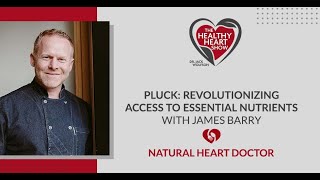
James Barry, founder of Eat Pluck, created a freeze-dried seasoning blend from grass-fed beef organs (liver, kidney, heart, spleen, pancreas) mixed with herbs and spices. He calls organ meats "Mother Nature's multivitamin" and designed Pluck as a gateway to nose-to-tail eating, sprinkling nutrient density onto everyday foods without the taste barrier.
Chapters
Welcome to the Healthy Heart show where we pull back the curtain on conventional medicine and dive into the root causes of cardiovascular health. If you are concerned about high cholesterol, high blood pressure, heart attacks, stroke or atrial fibrillation, this is the place for you. We will provide natural heart information that will help you prevent, treat and reverse any ailment, leaving pills and procedures out of the picture. Here are your guides to holistic heart health Board certified cardiologist and Amazon best selling author, Dr. Jack Wolfson and Natural Heart Doctor naturopathic physician, Dr. Lauren Lattanza.
Hello everyone, Dr. Jack Wolfson, board certified cardiologist at Natural Heart Doctor. Welcome to another episode of the Healthy Heart show where we provide you the best heart health information with myself and the best guests to again help you achieve the 100 year heart. So again, welcome to another great episode and I've got a wonderful guest today with a very, very, very interesting product that we're going to be telling you about. And his name is James Berry. James, welcome to the Healthy Heart Show.
Thank you for having me.
It's a pleasure. So James has actually been in the culinary field for many, many years as a private chef. Certainly he's worked with some superstar A list celebrities bio that I got, people like Tom Cruise and George Clooney, Gerard Butler, Puffy Combs, Barbra Streisand, one of my old time favorites. When I was a kid, my parents used to always listen to Barbra Streisand and John Cusack, a fellow Chicagoan like myself. So most recently, James launched his first functional food product and it's called Pluck. And we're going to be talking about Pluck. It's an organ based, get that organ based, liver, heart, kidneys, all this stuff. And it's a seasoning. So it's really like he said, it's a functional food. It's not a supplement, it's a functional food. So it's really fantastic to be able to get this into our diet, also into our kids. We'll talk about that. James also co authored some recipes in a cookbook with Margaret Floyd. It's called Eat Naked and the Naked Foods Cookbook. And he most recently co authored some recipes with Dr. Alejandro Younger, who's of course a very famous physician. His book is Clean 7. James, again, welcome to the program.
Thank you for having me.
All right, so listen, all this experience that you have working with all these different famous A list celebrities and stuff like that, do me a favor, give me a little backstory kind of how you got interested in Becoming a chef and then what. How did you kind of fall in love with the idea of eating organ meats?
Yeah, well, I always loved cooking. From age 7 on, I just fell in love with it. I think for me, it was how I conveyed how I felt my feelings towards people. So, you know, for my parents, I always was trying to convey my love for them. And so my first time, when I was in junior high, I took a culinary class that they were offering. It was the first class I got an A in. I wasn't an A student. So that one clearly, you know, clearly something. Something, you know, hit for me with that. And I remember I was such a picky eater, though, so. So I was. I was. I did not eat. I was not adventurous. I really didn't. I didn't grow up eating organ meats. I didn't eat really much of anything that was adventurous at all. I had my first taco in college, if that puts perspective on it. And I learned to make a tostada salad in this culinary class. And I was so excited to make that recipe for my parents. And that's when I think I realized, you know, for me, I didn't eat the. I didn't eat the tostada salad because I was too picky. But I would just. I loved making it for them and putting that love into the food. And I think that's where it hit for me. However, I never saw it as a career. I thought it was something that just to do as a hobby. Don't know exactly why. I think. I think because in the past, most chefs had to own restaurants. They had to work late nights, and I just didn't want to do that. And then I basically 9, 11 happened, and it changed how I looked at my life. I audited what I was doing. I said, you know, I only want to do things that. Have heart. I only want to do things that I'm fully invested in. None of this kind of just making a payday just to do the other thing, you know, the other thing I love. So I shifted gears. I went to culinary school in New York and immediately got out of that and started private chefing. I knew I didn't want to work in a restaurant, but I'm in the field now, private chefing, working with, as you mentioned, some really big names. And it just didn't feel like enough. I just. I was getting incredible response from how I was making food. People that had baby weight, they had. They couldn't lose for years suddenly started losing it for me. You know, when I was cooking for them and all I was doing was cooking real whole foods and I was just, I was properly preparing stuff. I was, you know, soaking grains, I was soaking nuts because I wasn't, I wasn't eating or cooking the way I am now. But I really did a lot of those kind of, and I did a lot of foods, but I properly prepared them and people's bodies responded and I wanted to help more people. So I dropped out of the private chefing world and I started a meal delivery service company and that was in la. Did that for years. Killed me because I didn't know how to run a business. I was a technician, not a, not a business owner. And it was really hard. And then I left. That and three years of just kind of being a stay at home dad, which was probably the hardest work I've ever done. And in that time, that's when I came up with pluck seasoning and I knew that this was something I had to do.
Yeah, that's fantastic. And again, you know, a wonderful journey. And certainly for those people that are out there that are business owners and stuff like that, I think obviously we can all attest to the fact that it certainly can be very difficult and lots of different moving parts and as a business owner, oftentimes it's very difficult to stay healthy. You're so engrossed, you know, in your, in your day to day life that again, choosing the right foods can be difficult. And I think that's really what's spectacular. One of the most spectacular things about your product that we'll discuss really is that kind of just it's such a convenience for what it is and yet the nutritional benefits of what you're providing is really, is really outstanding. Take me again to your love, I guess, for organs and really how you came to embrace how important it is to eat these foods. And let me also preface this by telling the audience again that everything we're talking about pertains to heart health. We may not directly say, hey, organs are great for people with high blood pressure, cholesterol, coronary artery disease, atrial fibrillation, cardiomyopathy, stroke, recovery, whatever it may be, but please always understand that every GU that I have on the show, it always goes back to heart and certainly total body wellness. But if you would, James, kind of tell us, tell us about your love for organs.
Yeah, it really came about later, even when I was private chef and I wasn't necessarily making organs for those clients, but it really came from being a father, you know, when I, when I had my first daughter. I just started really thinking about what are the most nutrient dense foods in the world? I mean, and organ meats, hand down, hands down, you can compare them to anything in the world. And they are incredibly abundant in nutrients. I call them Mother Nature's multivitamin. And when I think about chronic disease, when I think about the issues we face currently in society, I mean, we are a nutrient deficient society, but yet we are not calorie deficient. And that is really important distinction. People need to understand. If we just focus on the US we are an obese nation, but yet we're nutrient deficient. And if you just think about that for a moment, that is insane, right? That is absolutely insane. Because that's basically saying we're eating lots of food, but the food is not nutrient rich. And so that tells me something is wrong. Something is wrong with the system, whether it's the standard American diet or just in general how food is marketed to us. And when I think about that, from my experience, I think, well, what are the foods that we're not eating? It's nose to tail. It's nose to tail. Hands down, there's not enough people eating nose to tail anymore. And so that was my mission, is, okay, how do I get the most nutrient dense food on the planet, this nose to tail eating into people's diets? But how can I do it where I avoid these hurdles that we face when we talk of. When you talk to anyone about organ meats, what are the hurdles that you hear? Tastes icky. I don't know how to cook it, or I don't want to touch it, it's slimy. Or I know I need it, but I don't know where to get it. And then maybe the fourth is, okay, I know I need it, I'm getting supplements, but I just sometimes forget to take the supplements or they're expensive. Really. I mean, those are pretty much the things I hear. Is that kind of in congruence with what you hear?
Yeah, most certainly. I think number one, as you put it, you know, is that finding a good source of those particular products and then the fact that we are just not used to preparing these foods, cooking these foods, eating these foods, and then even if we can accomplish all that stuff for ourselves, then. Right. How do we get our family and our loved ones on board with that? And I think, yeah, it provides a lot of different hurdles, which I think, you know, again, you, you seem to have solved, which is fantastic. And I think, listen, I love for people to eat Those organs, I think that they are, as you said, the most nutrient dense food on the planet is liver. I'm a huge seafood promoter as well. For all my listeners who know me, I believe that seafood is the healthiest food on the planet. People who are in the carnivore space or in the heavy meat space, I think that they neglect the seafood and I think it's really detrimental to people's health. People with the highest levels of omega 3 DHA, EPA, for example, of the, the lowest risk of every illness, including the most recent, you know, one that people discuss, which is Covid. But that being said again, you know, with these, you know, with these organs and now getting it, you know, the quality, the finding the source, cooking it, preparing it, and then getting into our diets and those of our loved ones, I think still represents a problem.
Yeah, and you know, I love that you mentioned seafood. I mean, seafood organs, you know, I mean the organs of the, of the fish, I mean that's those. I would love to be able to utilize those as well. I mean, you see those obviously like cod liver oil, you know, you see that, those kind of products out there. But absolutely, when I refer to organs, I, while my product uses bovine, I absolutely am referring to all species, except maybe human. But you know, I laugh, but you know, there is a concept, it's an ancestral concept of like, supports, like, and I'm sure you're familiar with it, that idea of like, if you eat spleen, it's going to support your spleen. If you eat liver, it's going to support your liver. And that's kind of what motivates me. I mean, I think that if we can get, and that's why I specify nose to tail. I think as you said, liver is definitely the most nutrient dense, but I'm for all the other parts as well. I mean, testicles, I know there's a lot of influencers out there that are eating those ovaries. Tongue is a great one as well, you know, and what's interesting about tongue and some of these other organs is they are cheaper than the muscle meats. So when people say, oh, you know, I want to, I want to get this pasture 100% grass fed animal. But it's just so expensive. I said, well get, get these other cuts, you know, and if you can't find them, go to your local farmer's market, go to your local rancher and just ask for them because I guarantee they have them. They have them. They just, you know, they don't bring them to the market because they don't know if anyone's going to buy them. But if you go to them and you say to them, I will buy it, they'll bring it, they'll give it to you.
Supply and demand. Totally, totally agree. What about chicken? Chicken, turkey. Foul as a source of organs.
So chicken, chicken is an interesting species. I think normally chickens, if you look at historically chickens were not eaten all the time. They were a specialty. Chickens take on what they are eating more so than even than other animals so that you can quickly change their nutrition, the nutrition of the, of the meat just by feeding the chicken differently. And it's really quick. But the issue is, is the poultry industry in the US is atrocious. I mean it's really bad. And even when you go to smaller markets now, there are small farms that are doing it better. But even they are beholden to some of these species that really aren't that nutrient dense. I mean there's, there's, we, I think we currently, I think it's like 98% of poultry is all one breed at this point. And it's the, you know, the, the broad breasted chicken where you know, you have the white meat that's bigger. But historically, and I think Cook's venture is a, is a organization that's now trying to bring that more heritage bird to market. But if you look historically at what a bird would look like, you know, a chicken, they're not as, they're not as robust around the white meat. They're more dark. Me, it's a totally different flavor. And so my concern with it. Well, okay, when I recommend to people, when you're easing into ornaments, I always say start with chicken hearts because chicken hearts are so mild, they're so easy to incorporate into anything. Just chop them up really, really great. But the key is, can you find a good source? And so that's all I say. If it's conventional chicken, I wouldn't eat it personally. That's just my, I wouldn't do it. But if you can find a good source of chicken hearts, then I would absolutely start with chicken hearts. I think they're mild, they're easy to do and no one will really. You won't deal with the hurdles that we brought up earlier. Any taste hurdles or cooking hurdles because they cook so fat. I mean it's just like a stir fry. Easy stir fry with chicken hearts. Really easy.
The Healthy Heart show will be right back after we take this quick break to hear from our sponsor. Would you like to drink? Great tasting Coffee that's also good for your heart. Health Cardiology coffee is your answer. This five star rated coffee is delicious. It's a gourmet coffee that begins with whole organic beans. Hand selected and carefully roasted. It's tested and certified to be free of pesticides, mold and other toxins. Cardiology coffee is great for your heart and you're going to love how it tastes. Order now online@CardiologyCoffee.com now back to the Healthy Heart show.
Yeah, no, the certainly, you know, to kind of wrap this up, not wrap this up, but I mean, but to hit home on that point as far as. Yeah, we're always talking about free range, grass fed, pasture raised animal products, ethically raised chicken, ethically raised cattle, you know, so on and so forth. Definitely agree on that sense. Now you back to that seafood. I do want to reiterate that I do talk to people when I say seafood is the healthiest and certainly, you know, wild salmon, sardines, anchovies, shellfish. But I love to be able to get the whole anchovy. I don't know if you've ever enjoyed that before. And I'm able to get them frozen from our local whole foods. They get it in pretty much just for me because nobody else eats them. But we get these five pound boxes of frozen whole sardine and we eat the whole thing.
Right.
So that contains the brain and the eyeballs, you know, and the heart and, and of course the bones and a great source of calcium and stuff like that. And the skin, it's, I mean, how can you beat that? As you said, the concept of like supports like. And the point really in a lot of those ways is that if you eat the nutrient, if you eat something, if you eat liver and all the nutrients in liver, well then of course that would support your liver. And if you eat testes or ovaries or pancreas or whatever it may be. Yeah, you're going to get all of those vitamins and minerals that went, and fats and proteins that went to support that organ.
And you know, you look at every other country, pretty much every other country incorporates these parts of the animals in their, in their food, in the national food. I mean whether it's menudo in Mexico, that's, that's utilizing, organize. I think that's the, if I remember correctly, that's the stomach lining and sometimes some other parts of the animal you have blood sausage and you know, Ireland, you have steak and kidney, steak and kidney pie. In the UK which is using the kidney of the cow. So there's. Every country is utilizing, but yet the US Is not. And, you know, where I go is like, well, what happened? Because we used to, you know, you go back to World War II. Organ meats were eaten before World War II. I mean, you talk to most people's parents. Well, nowadays you have to say grandparents or great grandparents. You ask them, did you eat organ meats growing up? They'll say, absolutely. Liver and onion, you know, I mean, I talked to my mother who grew up in Brooklyn. They used to go to a butcher shop, pick out the chicken they wanted because it was living. And then they would take that chicken and go in the back and then they would get, you know, deal with it, pull off the feathers, kill it, everything. And then they would get a warm carcass later that day. You know, I mean, that's how in touch they were with the food that they were eating. And I think that is one of the hurdles we're facing now is that something happened. Something happened where organ meats were seen as well. We know that it was classist a little bit that people saw muscle meat, particularly after World War II. They saw eating muscle as more luxurious. You had more people working in the household, not only the male, but also the females. You had more money coming in. So people thought, well, we're going to buy the more expensive cuts. So suddenly organ meats were not as in favor, and they were seen as kind of poor food. And you can even trace it even further back to like slavery times when the slave owners would get a pig, they would give all the organs, like the intestines and stuff like that to the slave, and they would keep the muscle meat. But little did they know they were giving the slaves the more nutrient dense foods. And that's where you get like chitlins. Chitlins is a southern food, and that is pig intestine. So Oreo meats, they were a part of our history, and yet for some reason, the majority of us are not eating them anymore. And that is ultimately what I am trying to solve. But it is that hurdle. It is that hurdle of what people associate. When I think about food from my chef perspective, food is emotional for people. I mean, it is absolutely tied to your emotions. And I mentioned I was a picky eater. And, you know, a lot of that when I, you know, as an adult, I look back at that, I go, you know what? I think I was just playing out other emotions and I was looking at food because that was the one thing I could control. So there are other things in My life, that felt chaotic, chaotic. And so of course I got picky because I needed to control something. And that is, you know, for me where I think that food kind of pickiness came from. But ultimately food equals emotion. So how do we get over that hurdle? And for my money, I believe we do that when we can remove that barrier, when we make it so that it tastes delicious because people, if it tastes good, they'll eat it. And then if we make it easy because people have, people want things that are easy. Even though I don't agree with that, I just. People do. We want things that are easy. And so that is ultimately, I think what Pluck is solving. I make it easy and I make it delicious. You don't even have to know you're eating organ meats.
All right, so eatpluck.com is the website and James Berry is our guest today on the Healthy Heart show and he is the former celebrity chef, now CEO of Eat Pluck and inventor of Eat Pluck. So James, tell me about the Pluck product. Tell me again where you're getting the foods from. Tell me about the quality of it, tell me about some of the blends. And then let's talk about how we get this into our diet, which really is going to be pretty darn simple.
Yeah, that's key, right? Keep it simple. So we're utilizing five organs in this current blend. It's liver, kidney, heart, spleen and pancreas. Every one of those organs does something different. We talked about the liver. I mean, you know, liver is high. We know is the typical mineral that's associated is the iron, it's heme iron. The heart has CoQ enzyme 10 or CoQ 10. The pancreas has natural enzymes. So every, every organ is doing something a little similar and a little different. And so I take those organs, they're freeze dried and I'm getting them sourced currently in New Zealand from 100% grass fed farms. Because as we've already discussed, quality is key. I really do believe the health of the animal is going to equal the health of you. And so sourcing is really, really important. It's hard to get some of these items. Normally I think we talked about like, you know, sometimes you're able to get the liver from, from your local place. I know a lot of people sometimes have access to liver, but I don't know many people that have access to pancreas and spleen. So I'm really trying to support that nose to tail eating with the five blend. And what I did was I Paired it with spices and herbs, organic spices and herbs. So you got some onion in there, you got some garlic, you got some parsley. It's just herbs and spices that are offsetting that potential. That taste, you know, that taste that's associated with organ meat. Now, for some people, they love it. I mean, they love organ meat. But others have that hurdle. So I was really trying to get. I was trying to reach that person who's not eating organ meat at all. So that's basically what the blend is. And it's currently an all purpose blend. You could put it on everything. What I kind of. What really thrills me is because I worked with the product for a year before I put it out. And I'm limited to my palate. You know, as a chef, if I had a color, it would be very specific color palette. But I don't do everything. I don't try everything. And so since Pluck has gone live and people have had access to purchase it, I'm getting feedback of like, oh, I tried it on pomegranates and it worked well. I tried it on ice cream and we were talking about how it would probably taste great in a Bloody Mary. You know what I mean? There's. There's things that I never did that now people are telling me and I'm just, I'm giddy to be able to say it truly is all purpose. Like, even though it's coming from a cow, you can put it on salmon, you can put it on chicken, you can put it on lamb. I mean, it just, it just works. And I think it's because it's umami. And that's something that, if you don't know, for anyone listening, umami is basically the fifth flavor. So, you know, you have bitter, sour, sweet, salty. And then they discovered a fifth one in Japan, it's umami. And it's really. I think you would describe umami as kind of meaty, savory. And what it does is it actually brings out the flavors of the other four flavors, so it actually enhances the other flavors. So umami is an amazing thing because you can add it pretty much to almost anything and it makes things taste better. So to me, that's a win win. You're getting the nutrients from organs and you're making your food taste better. So, you know, what else do you need?
Yeah, and the fact that it's all organic, obviously, that's why we're at Natural Heart doctor. We're big fans of what you're doing. And it sounds like Just so delicious. I'm sure to anyone who's listening, when you talk about the onion, you talk about the lemon peel and the garlic and the parsley, mustard seed, thyme. You're getting so many fantastic things in there. Of course, the fantastic sea salt that goes along with it, or Redmond sea salt, real salt. Really just one wonderful, wonderful stuff. And I don't know if I can wrap my head around putting it on ice cream. I think for the, you know, for the kind of rare, let me say, I don't want to say rare occasions, we eat 100 organic, you know, grass fed ice cream. We typically get, you know, Strauss's. There's a place in Arizona near our office that serves Strauss's soft serve ice cream. So occasionally we'll do that for treats and stuff like that. But again, I don't know if I maybe I'll have to just pony up and try putting it on there and see how it tastes just for the experience. But even then, even if you don't choose to do that, right, you've got soups, you've got chili, you've got, I'm sure, sprinkled on top of a salad. This is absolutely spectacular. So, so many different. I think that's the beauty of a seasoning, really. And all these things, of course, again, have cardiovascular benefit. The benefits, of course, of onions, of garlic, of lemon peel as a source of, you know, vitamin C and antioxidants, anti inflammatories as well. I mean, so just everything in there is just food is medicine. We all know that. It sounds cliche, but it truly is the truth. And you guys are really making it easy over at Pluck, because as much as sometimes we want to get the organs into people and have that conversation. I talk to patients all day long and I ask them these things. How often do you eat seafood? How often do you eat organs? And the response is generally never. Or I did when I was a kid and now I don't. So bringing this back in, I think you're really doing some fantastic work, James. I really appreciate you being on today.
Thank you. And you know, the question then becomes, well, do I still need to eat organs? How much pluck do I use? What am I, you know, ultimately getting? And the answer is, I'm not trying to take away from eating organs, actually. I know people that put pluck on organs and it tastes delicious. So if anything, I'm. This is. Pluck is the gateway. Pluck is like for the, for the people that just want to ensure that they're getting micro dosing of organ meats into their diets in frequent use. That's really what it is. Is it going to replace capsules? Maybe. It depends on why you're using the capsules, how much you're taking. Is it going to replace actually eating liver? I don't think it should. I think you should still eat liver, particularly as you mentioned, seafood, organs, eating the whole anchovy, anything like that. Absolutely. You should keep doing that. But I guarantee if you put some pluck on your anchovies, it's going to taste even better. Like it's just, it's just there's no reason to not. There's no reason to only do one of the many options you have of optimizing your health.
Well, James, again, I think you're. I know. A winner here again, for everyone listening, eatpluck.com is the website. We'll have links in the show, notes and stuff like that. And I'm trying to convince James right now to save me some room on my new shelf at Natural Heart Doctor in Scottsdale as we open up in early February. And we'll just have a nice little pluck section over there so people can purchase plucks right from us as well. Hopefully you're not sold out of inventory because again, I think your concept is really going to take off. And again, just really offering a tremendous service to all the people in the world and all these children, as you mentioned, that are overfed but undernourished. What a phenomenal, phenomenal way to get this super, super food into people's lives. So again, James, thank you so much for being on the Healthy heart show. I'm Dr. Jack Wolfson, board certified cardiologist at Natural Heart Doctor. Cheers to your 100 year heart. See you next time.
That does it for today's episode. Thanks so much for listening to the Healthy Heart Show. Please help us get the word out by liking and subscribing to our podcast and our Facebook page, Natural Heart Doctor. Please show support for our podcast sponsor, Cardiology Coffee, your resource for organic, antioxidant, rich mold and pesticide free coffee shipped straight to your door. Learn more by adding ardiologycoffee on Instagram and visiting cardiologycoffee.com this podcast provides materials for information and educational purposes only and should not be considered medical advice. We encourage you to contact your physician for any of the health issues discussed here.










