Real Food Is Medicine - Chef James Barry
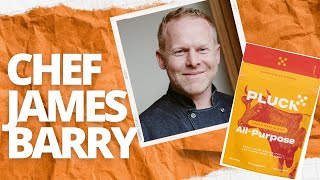
Transcript of a Thrive on Life podcast episode (recorded Sept 2023) in which host CJ Finley interviews Chef James Barry about food-as-medicine, organ-meat nutrition (his product Eat Pluck), and broader lifestyle topics. They discuss James’s motivation for promoting whole-animal eating, barriers to adoption (taste, sourcing, time), strategies for behavior change and community outreach, and personal themes of presence, parenting, relationships, and building mission-aligned businesses. The episode closes with contact info for Eat Pluck and a brief definition of “thriving.”
Chapters
What is up, Thrive fam? CJ Finley here again with another episode of the Thrive on Life podcast. And today it's a Sunday, and I'm going to start a little bit differently than I've ever started before because I got my man James here, and he's just been laying in so much value to Aaron and I since he's showed up, and I want to show some gratitude to that. So before we jumped on this podcast, he was helping with real estate ideas, he's helping with relationship ideas. And I want to give you the floor a little bit here to one, talk a little bit about how you ended up in Austin here today. Because one of the things I love podcasts for is the connections. And today I feel like I have a. Not only a new friend, but somebody that I can look up to in a lot of different ways. And I want to thank Eric Hinman for making this connection. But I'd love for you to kind of walk through how you even ended up here in my podcast studio today.
Yeah, Eric. Props to Eric. I mean, ultimately, Eric is the connector, but what brought me here was the Austin Fit Fest. I was a vendor, so that's why I was coming. But I was, like, very aware of, like, you know, if I'm going to come, I really need to maximize this trip because I just had this instinct. I'm like, you know, the Fit Fest, it's a new audience for us. A lot of the people there, there's a lot of martial arts, there's MMA, there's CrossFitters, but there's also a lot of weightlifters. And, and, you know, I'm not trying to degrade anyone that's in that field. I'm very passionate about that field of, of kind of bodybuilding and, and way of looking at the body. I'm, I'm really into it. And a lot of the, those, the people in those fields tend to gravitate towards foods that are not natural. Right. A lot of it's these powders, you know, and a lot of these kind of like laboratory made stuff. So it's just, it's just kind of a, like, it was like a reach. I'm like, okay, I'm going to be bringing organ meat nutrition to these people. I don't know if they're going to even be interested. I don't know if they're going to see the value. So I was, I was kind of just concerned, like, am I, am I showing up and putting out a certain amount of financial cost to this trip and Then what am I getting back? And it's always fascinating because you never know what you're going to get back. You could get back something that was not in your zygost when you chose it. And yet it's beyond, beyond amazing. You know what you get back. So I purposely reached out to Eric and other people in my community. I said, hey, I'm coming to Austin. Can you make introductions? Is there any way that you can support me in maximizing my time there? And thus I'm here with you.
Yeah. I had a whole hook to start this episode, and I started thinking about how the universe puts us in the right place at the right time. And it's one of the reasons that I wanted you to share just kind of how you ended up here. And to me, you ended up here because you're trying to solve a problem for people, a massive problem. It's one reason that I wore my Real Food is Medicine shirt here today so that you could see it, that I'm on the same page as you. I'm in that arena. I see athletes all day, every day. I'm an athlete myself. I've lived it for over 30 years. And we're always looking for a leg up in how do we perform better. And you came here thinking that there's one of two things going to happen. Either people are going to not jive with it, or they're going to love it. And I'm the. I take the front of I love it. And then our buddy Eric Hinman takes that front as well. And I wanted to share that specific story because anybody that's listening to this, I think a lot of people don't realize how close of a connection you are to the people that are your people. And I mean, again, it's Sunday morning. Like, we've connected through text. I've never even seen your face besides on Instagram. And we hit it off like, I was your friend for 10 years, and that happens because you're putting yourself out into the world to solve a problem that other people attach with. So I just want to say thank you. One, for trying to solve a problem like that. But then, two, how did you get interested in that specific problem in the first place? So you mentioned organ meat and with eat pluck. Like, I know there's always a backstory when it comes to the problems that we solve. Is it something that you suffered from, a family member suffered from? Why are you attached to going into something like the Austin Fit Fest and basically going into the Shark Tank and Telling people that they're not doing it the right way.
Well, and I, well I don't actually, I don't mean to insinuate that. I'm more just saying like there is another way because I don't, I don't like to shame anyone's journey. And, and there are guys, I mean, they're a ripped guy. I mean they clearly know more about other things. I'm just kind of saying, hey, I want to shine a light on real food. That there is, there is the, the most nutrient dense food out there on the planet is not being used for human consumption in the, you know, for the most part when we slaughter a cow, you know, most ranches are taking the muscle, they're taking some of the bone that's still on the muscle. They're taking maybe the liver, maybe the tongue. Not necessarily, but they're almost kind of disregarding about 48% of the cow. And then what, what is happening that. Well then the slaughterhouse is either it's got contracts with either pet food industry or zoos or whatever, it's going somewhere else and sometimes it's getting trashed. And yet then we, in this, this, our pursuit of that magic pill or our health, wanting to thrive, whatever it is, or, or get, you know, bulkier or whatever, we then are dumping $50 billion in the supplement industry. And I'm like, well the, that doesn't compute. Like if we are truly going to value this life, we're in value the life of the animal that we've just slaughtered. We should be using a whole animal. We should be using every part of that animal for our consumption, not for some industry that's doesn't, you know, even care. I mean pet food industry for the most part doesn't even care about the pets. You know, I mean, they're like, look at what, look at the food that most animals are getting.
Looking at margins.
That's what they're looking at, margins. And then look at all the health issues that are coming up with pets. They're human issues that never used to come up. So it's like clearly there's something backwards going on here. Like when, when we are looking for the magic pill to thrive and yet the thing that we know is the most nutrient dense food on the planet that mother nature provided and we're not using it and yet we're looking for other tools. It's like that just seems off to me. And no one can deny that we don't have an issue going on. I mean you, I just drove across the U.S. like, we have an issue, you know, when we're on, you know, the coastal cities, we're in a bubble. In Austin, you're definitely in a bubble here, right? I mean, Texas. The rest of Texas is not like Austin, right? So there is. There is an issue going on. And my. My kind of concern is that.
The.
People that need this information aren't actually listening to this podcast. So then it's like, well, but that. Does that refute what we're saying? No, because to your point, we just need to amplify. We need to continue to talk about these. These things, but try to talk about them on a truly, like, granular level. Not in a, like, sweating the small stuff kind of thing. More like, what can the person that's having these issues do? What are some simple steps, like, simple movements that they can make? Because if we go all in on, like, oh, you gotta do this, like. Like. Like there's some influencers. They're just. They're so. They're so invested in a very specific way of health that it's like, to be healthy, you have to be wealthy, like, middle. That doesn't jive because most people are making $35,000 a year. So you tell me we were just supposed to, you know, let them kind of die on the Titanic because that's what we're in. So we are in a deep, you.
Know, down, down slope that brings up an amazing point. And a lot of. And it pokes a kind of, like, poking me because a lot of my content will show red lights. I'm in my $10,000 sauna, I have my cold plunge at my house. But I also was an athlete that had none of that. So I think it's a very unique thing. It's very unique because we live in a world where people are confusing health with performance. And when I think about my life where I'm training twice a day and I need certain modalities to help me continue to throttle at that. The average person doesn't need that to be healthy.
And.
And I think a lot of influencers or influential people, whatever you want to call them, I like to sit in the bucket of, like, I like to be a positive impact. I don't give a shit about how many followers and stuff I have to influence other people. I want to live my life to push my needle forward. But I'm fully aware, like, my parents don't need to be doing half the shit that I'm doing. And it's really cool to see the product in front of Me, where this is something that I've worked with my parents specifically on is it's not necessarily what you need to do, it's what you shouldn't be doing. And that's where. When you talk about products that you're adding on to your foods, so different dressings, different things that you're adding to the food that cause even more harm, that's where I think there's a huge disconnect in the world where, like, they don't understand that. So they don't understand, like, if I go to the store and I buy one type of mayo versus another type of mayo, that there's going to be a drastic difference. And the thing with the mayo is, like, a lot of people are probably eating that every single day. So they're either eating the healthy version or the unhealthy version every single day. And getting them to eat meat or getting them to eat other things might be easy, a little bit easier to do because they're already kind of doing it. And I don't want to tell them, like, oh, you need to go to the butcher and get this type of meat. Like, that's very hard. The barrier to entry to do that is. Is hard. It's why I don't really talk about it on my social media. But getting them to maybe take away some of the certain things that they're doing to then implement something like pluck is a lot more manageable to do. So if I were talking to them, let's say, because they fit in that demographic that you're talking about, it's just like, what information do they need to know? And because she's my mom, my mom will listen to this rather, how many people out there of that demographic are listening to things like this? Like, we're in a bubble. They're probably not listening. But how do you get somebody to understand the value of a product like this and how to integrate it into their life?
Yeah, I feel like the message I'm kind of more and more boiling down to. And that's slightly mission a little bit. I mean, my mission is to support people in eating whole animal. But how do I get people there? Because there's a lot of hurdles. Right. And one of the entry points I'm finding, and this kind of connects to your question of how did I get here? Is educating people that the food you eat affects your health. And I know that's such a simple thing. And a lot of people listening be like, well, duh, of course. But I'm telling you, I just Drove across the US People don't know it. They don't get it. They don't see the connection. They do not connect that the food they put in their mouth is going to directly relate to how healthy they are. And if you really think back at it, when did you learn it? Like, when did I learn it? And for me, I learned it when I was in my early 20s, but I learned it because I did get sick. I got a kidney stone. And that it was the most painful thing I've ever gone through. But it doesn't stop there. Like, the only reason then I connected the dot to it was something I ate was because when I passed the stone, the, the doctor who was in the, in the room with me, I said to him, I said, so how do I ensure I never get this again? Because that was crazy painful. And he said, well, what have you been eating? Had he not asked me that question, I don't think I would have connected that it was caused by the food I was eating. So these are little, they seem like little things that we kind of toss over the side of our head because we've been in the industry or we've been in this. We, we're so far along in our health journey. But it's like, that's. Those are huge mo movements. Huge. And I'm telling you, the most of Americans are clearly not getting it because if they, if they did, then they wouldn't be buying so much. Coca Cola and Pepsi wouldn't be two of the biggest companies in the world.
Yeah, this is such a hot topic. Do people care enough about their health? That's like, is it because I live in a bubble where it's cool to care about your health? But when I was on the east coast, it was almost like, I hate to say it, but it was almost cool to be sick. Like, people are just like, oh, like, I gotta take this or I gotta do this, or here's what the doctor said. And there's no, there's no environment where you have your community that actually cares about what personal health looks like. And I feel like you can't, you can't teach something that you don't truly know in, in this space. And we grow up in a society where you go to school and the teachers are teaching you something and they might have just. They, they might not be living it. They just know a fraction of it. But in terms of, like, what health looks like in terms of food and you say, eat real food, this is where it's such a hard topic to Wrap your mind around because I'll even ask you this, like, what is real food?
Yeah.
How do you define that to somebody?
And it's confusing, confusing right now, right? Because most of my life I've been being told, eat your vegetables. And now all these influence saying don't eat your vegetables. It's like, what the fuck?
So and then to that point, vegetables 50 years ago different than vegetables today totally because of fertilizer and pesticides and what's coming out of the ground now. Same thing with meat. The meat is different. So that's where I've really struggled is how do you convey that to somebody? And you brought up an amazing point and I want to give you, I want to really give you credit for. I poked you a little bit where I said the supplements versus the real food. And you answered in a way I knew you were going to answer. Where it's like, there is no right way. Like, and that's so huge in health and wellness where each individual's n equals 1. What I eat is going to affect you differently and the person next to you differently. It's going to affect us all differently. And I think that's another thing that we have to get away from where we try to put like eat this certain thing on other people, but that might not necessarily agree with them or they might be getting different results from that. When we're talking about how somebody should be eating throughout the day and we'll stick to eating the whole animal. You mentioned the cost. How does somebody who might be living a middle wage lifestyle in your view, eat in a more nutrient dense, healthy way? What would that day to day look like? Because that is what I think most people need to wrap their mind around rather than the influencer saying, take these supplements that are going to cost you $200 a month and go to your farmer's market and spend $300 a weekend. Where do we meet in the middle?
Well, I think there's some, I think first of all we need to simplify, we need to recognize and honor that. Modern living is overwhelming. People are stressed out. You mean your new parent. You know, you're now entering a whole new stage. Who you were is not going to get you to the next moment because now you have another being that you need to, you know, care for and be in who you're responsible for. And you've never done that. So this, now moving forward, this is you anew, right? And you're gonna find you're gonna make lots of mistakes, but then you're gonna do some things well. And then you're gonna find at one point you're gonna think, well, I can now tell people how to be a parent. But then you're gonna enter a whole new stage with your. With your child. And they'll be like, oh, I don't know. You know what I mean? Like, everything to every moment you think you know something is the next moment you realize you don't. And I almost, like, there's something on that kind of tip of my tongue, based on what we're talking about, that I just feel like I'm just going to throw it out there and kind of hear your response and hear your audience's responses, like, does it even really matter? Like, does what you eat, does any of these things you do truly matter? And here's the kicker. It only matters because you know better. So there is an aspect of our journey that we need to. We are. You're honoring by doing and speaking how you speak. You know, doing what you do and how you speak. That is you honoring your health journey. Right? But the person that's not doing it yet, you're not going to convince them. They have to learn for themselves. So how. What is the mover for people in changing, Making any health change? I mean, literally, you can talk to any practitioner, any doctor, and it is two things. You either get sick yourself or someone you love gets sick and or dies. Those are the two reasons people make changes. So I hear that, and I'm like, well, that's too fucking late. Like, I mean, it's great. Like, clearly you made changes. You feel better. I know it works. But you're lucky because you. You learn those changes early on. What if you're 60, you know, I mean, you mentioned your wife's father died in his 50.
Two.
Two. That's young. Like, my, my grandmother died at 56. I think it's young. You know, Dave Asprey's talking about living till 140. Like, 50 is not even halfway if you're doing something like that. Right.
And to your point, the most on the outside, I would say unhealthy person in my family is also the oldest. She just turned 93. My mom's mother is obese and she has knee pro. She had knee problems, which is. That's one of the reasons why she. She can't. She's not mobile. So that created a lot of issues. But where does it come, like, in our mind? Our mind is so powerful. She, I think, has taken on less stress than everybody else in our family. She's Kind of like the type of person that, like, does what she wants when she wants to do it. Like, she's the. She's the person in that's escaping. She literally has, like, escaped her. The home that she's in. And I love it. Like, every time I hear it, I'm just, like, laughing. I'm like, I have a little bit of that in me, and I love that aspect. But it also. It made me change the way that I was viewing health because I was like, this doesn't make sense. Like, the. The person who has least cared about their health, really, in our both sides of the family. And then you have this interesting thing where my dad's side of the family has always been about, like, being skinny and like, on. On the outside, external, like, caring a little bit about their health, but they all die of cancer. And I'm just like, hmm, why do they. Why does that happen? Well, like, their mentality and their mindset around what was healthy. They eat a lot of pizza. They ate a lot of processed foods. Whereas, like, my grandmother might be overweight, but she cooked a lot and she did a lot of different things. She ate a lot, a lot more meat, I would say. So I'm just. I'm having the opportunity to analyze just like you're talking about and change my trajectory, not just from a physical standpoint, but from, like, a mental standpoint. And that's where I think. I think there's a third way that people can change. And they just like you said, for me, I got sick. I saw people that in my family either lost a parent really young, or they themselves passed away. And that brought fear to me. Not necessarily fear of death, but fear of I didn't get to live the life I wanted to live prior to that happening. The third way, though. And I think this is where social media and podcasts and things like this are so important in today's world is I started understanding that what. What people were capable of when they felt their best. Visualization is such a heavy thing for me. We'll bring back up Eric Hinman. Seeing him perform at the way he does, I was like, how does a human being at 43 perform like that? Well, that puts an imprint in my head of like, oh, I'm 32. Getting older is not a problem anymore. I'm excited. Cause I'm like, I'm gonna be more of a badass in my 40s and my 50s and my 60s than I am now. And I don't think generations prior ever had that. So I think the first two ways are 100%. Up until now or up until the past. Like, five to 10 years are the path. But now that we can see it, I don't give as much grace to people because I'm like, you see people out there. You see people like me who used to look like shit, feel like. And be a shitty person, completely transform their life. You can't tell me that you can't do the same thing. And another reason I believe this and another reason that we'll parlay this into this next part of the discussion. My parents are a great example of this. I would. I. I think over the years I've gotten less preachy of, you need to do this, you need. Just like you said, there's no right way. I've taken that prescription out instead. I've said, here's what's worked for me. I'd love for you to come try it with me. So when they flew out here and they spend time with me, they get in the sauna with me, I cook for them. I'm like, hey, like, don't worry about going to the grocery store. I just want you to eat what I eat for the next week. They do the red light, they'll do the sauna, they'll do even, like, the mental health stuff. Like, when my dad comes here, he's not allowed to turn the news on when he first wakes up. He either has to stay in his room or he has to come out here and he has to engage and, like, be in a different mindset. And he did blood work with me last time.
He's.
I'm getting them to follow a little bit of my lifestyle. And at the end of them spending time with me, they both look at me like, we feel really good. You can't tell somebody to convince them. They have to feel a little bit of it. And the third way of visually showing people what's possible, I think all we need to do is keep doing that because then it might convince them that, oh, I just need to enter this one little space and if I feel better, that's what'll. That'll trigger that. Because now, like, we talk. I talk to them about this stuff all the time, and they are seeing a little bit of improvement in different areas. We have a better relationship overall. For you, how have you tried to not only improve the health of, like, yourself and your family, but what have you seen, like, work well, I don't like the word convinced, but I guess that's like, what have you seen work well, Is there any stories like I just told or what has worked well with getting people to try new things? Because I think that is the premise of everything that we're talking about. If somebody is willing to try something and it helps them feel a little bit better, then that's when I think they get that spark or that hook.
Yeah. Well, I think there are two things happening and I can even use your story as kind of the explanation in a sense. But one is you're doing this for you. You're not doing these things to convince them of anything. You are, you are modeling. I'm going to focus on these things for myself. I am going to take care of myself, I am going to heal myself. I am going to throw like you are living this life and thus you are a model for other people. But you don't have to do any convincing because you just doing what you're doing will eventually be what someone needs to hear and see. But they're going to find you and your lifestyle in their time. Right? So, so it, it's so much about timing, it's so much about the other person being ready to hear it. There's a, there's a piece of curiosity. Like you, the, like I find like this is such a simple thing, but I find a lot of times when we meet, we, we enter a new situation, we're meeting people. One of the biggest mist mistakes I think we make in community and relationships is we don't listen enough. A lot of times you go into situation and I'm sure you've seen this here. When you go to any parties or whatever, it's like there's just people talking. But how many people are actually asking questions? You know, I mean, hopefully in this community you're getting that. But I, I just noticed a lot of times you just see more and more people just needing to talk. They just need to be heard. Right? But I find when you just sit back and just listen and you, you hear them and then you ask questions based on what they are modeling to you, not based on your own agenda, but what they're modeling to you, you, you co create curiosity because a. The person feels heard and you're really listening now. Like I had, this is kind of a tangent, but I had a very, I was in Iowa and I had this kind of bizarre conversation with someone who is very much in the glyphosate industry, like very much what I would say is part of the problem. But like he, he's got patents and shit. Like he's like very much in big ag. Like, huge, huge scientist in that arena. And I didn't know him. I was just. He was the next door neighbor of the people I was staying with. And I walked into the situation and he was saying. I was like, well, what do you do? And he's like, oh, I'm a. I'm a. I think he's like some kind of geneticist with seeds. And. And I was like, I'm like, oh, so you're the. You're the fucking problem. Like, I totally shot the shit out. I was joking, you know, just kind of like rubbing him, you know, showing him that I'm just jiving, you know, and. And. And he got really serious and his face changed and I was like, oh, I just poked at a very sore subject. And he got. What are you talking about? What do you mean? And I was like, oh. And I had to literally take in for the second, like, let go of my agenda of how I was going to relate to this guy and just sit back and go, okay, this is a source subject. I need to like, go into listening mode. And now just start asking questions because he just. His defenses just went up and this is sensitive. And so he. He starts going off and I'm like, oh, well, this is awesome. Then I get to stand in front of you and talk to you because I have been dying to talk to someone in this field because. And then I started asking questions. I'm like, you're always hearing how like mon. He didn't work for Monsanto, but he worked for a similar kind of company. And he was like. I was like, you know, you're always hearing how Monsanto is the enemy, they're evil. I said, but I've never understood that because they're a corporation made of people. So you tell me all these people are evil. They're humans. They have good days, they're bad days. They can't all be malicious of trying to hurt people. I said, so what is your motivation of why do you stay on this path of thinking that glyphosate and these synthetic fertilizers and that this way of doing agriculture is so important, like, what is your why? And he straight up went into it. And it was like, oh. And I just listened, but I just kept asking him questions. So suddenly this conversation that was gonna go one way went a completely different way. And the other people that were on the periphery of the conversation who were freaking out when I first came up and kind of rubbed up against him, they were like, get me out of this conversation. I'M like this, they're gonna start fighting. But I just, I just completely turned it around where now I was curious and then, and I listened and they were all, they all commented later. They're like, I cannot believe how you navigated that conversation. Like, that was amazing. That was an amazing conversation. Not only with the information that came out, but just in terms of how it was so quickly diffused. And it was all because I went to a curious place instead of like, well, I know things and you don't know things. And it's like, I'm better than you. It's like there is no, there's no your way is better than my way. There is, there's your way and there's my way. We are bio individuals. We are on our own journey. Like, we could get really metaphysical, right? Because there's people that believe that we have multiple lives, right? And none. I come from a place of like, I don't really know. Like I don't know what happens after death. I, I'm not saying I'm not religious or whatever, but we, I don't really know. It's, you're, it's faith. You're putting faith in something that you don't have tangibility around. Like I even think of like aliens, for example. Like, everyone's always so focused on like, are there aliens out there? Does it like, we should put money in NASA and discover new planets. I'm like, why? Like, we have an amazing planet right here. Like, let's not put billions of dollars towards trying to find out if there's other life. Because if they're here, we're the ants. We're the ants in this situation. If they have the tech to be here and we don't, do you think they really care about us? Like, we're nothing. We are nothing compared. If someone has the tech to go back in time or travel here, whatever they're doing, like, we're probably just being observed no differently like, than an anthill, you know? And so from that perspective, like, why don't we just invest in this planet, what we have right here, and treat people kindly and make sure that no one is living a life where they have to be in the streets, homeless or without any care, without any, you know, positive role models, anything like that. Like, I just feel like this is all made up anyway. This, this is a blank slate. So how are we going to co create something that is for people to thrive? Because our bodies want to thrive. Our, our bodies are beautiful. Humanity is amazing. This planet is amazing. We have amazing resources, and we just kind of piss it away. And it's like, I just don't understand it. And that's honestly why I focus on organ meats. And it's. It's what we've kind of already talked about. It's like we're already slaughtering this animal. This is from Mother Nature. It's here for our taking and we're not using it. So how do I make it so you can use it? Well, you've got, you, you, you don't. You think it tastes gross? Okay, you don't know how to cook it or you don't know how to source it. Those are the three main issues. Or you don't have the time, you know, to just explore any of it. So I'm going to make it in the simplest form I can. And I'm gonna make it so easy that you don't even need a new habit because you already season your food. I'm gonna make it so you just sprinkle it on your food. Done. So now what's your issue? You know, mic drop.
So, leaning into the curiosity, I'm curious. How did you learn how to reprogram yourself to be like that? Because to me you ask, why are we like this? Why are we doing these things? It's all programming. Like. Like I don't know the exact percentages, but how many percentages of us go to public school, go to college, and then get a job? It's literally like, you talk about ants, we're just following the person right in front of us. And I hate the word boss. How many times I heard people in the corporate world be like, my boss. Like, nobody's your fucking boss. Like, you are the boss of your own life. Like, nobody is dangling this thing over you and controlling you. You are in control. And I think it's flipped where most people think I'm not in control. I'm going to watch the news, I'm going to listen to my boss, I'm going to listen to my teacher, and like, that's the life that was made for me. How did you reprogram yourself to get in a way where you can even think to, oh, I poked this guy. I'm going to take a step back here because at the end of the day, there's this book Getting More by Stuart Diamond. You wanted to get something from that conversation. You wanted to be more interested than interesting because you know that walking away in your own life, you are controlling your life. And if you just talk the whole time, you're not going to be able to control your life much better because you're not getting new information. You're not deciding is this information I want to use or not. How did you, James, get the ability to do that?
I, I don't really think about it in that way, but I, I would say that there was one point where I became aware that life was more about community than it was about how much money you have, how many, you know, certificates you have on your, your wall, even, even to a degree, how much you've accomplished that it's, that it's ultimately at the end of your life what truly matters is whose hand are you holding or whose hand is holding yours, right? It is truly like, like I look at, I, I, I've, in my lifetime of re. I just have come come to boil things down to very simple places. Like I was talking about life and death, right? So I know that when we are, we're born, we're born into a body. I know that when we die, this body doesn't leave this planet. It decomposes its st. But it stays here. Whatever happens before I was in this body and whatever happens after this, but I don't really know, okay? Now I can spend the rest of my life looking to try to figure that out, but I feel like that's a, that's a life unlived because I'm in I all I do what I like everyone focuses on what we don't know or what's on the other side of the fence. And I'm saying, let's focus on what we do know. We know we're in this body. So then maybe that means that this life is about living in this body and it's about being in our senses and connecting and feeling and loving and holding and being physical. Like, maybe that's what it's about. And if that's what it's about, then that's how I'm gonna learn my lessons. And so someone could even say, well, what about paraplegics? Like, they're not in their body. I'm like, no, no, they are in their body, but they're in a restricted body. But that's their journey. And so a lot of this then becomes kind of letting go of the ego of like me thinking that my way or the highway. And it's more about like, well, everyone is on. So, so I'll go back to this bigger concept of like, why are we here? So if we are on this planet and we are, and there is this idea of like, that we are. We come back to this earth to learn our lessons. Okay, this is a. I never talk about this, but I. I actually really do believe this. And I believe it because of different things in my life that have happened. There's a really great book called, oh, Gosh, why Am I Skipping On It? Many Lives, Many Masters. And actually, in this book, when I read it, the way that this book talked about life and death, I was like, that's what I believed before I even read this book. So the fact. It's almost like I read something I already believed, and I was like, that must. That was like a clue to me. Like, this must be true. Then. Like, how can they know what I was already thinking? This is some random person who wrote a book, right? So there was already synergy. But the idea is that we come onto this planet, and the only way we can learn spiritually or energetically, whatever, however you want to look at essence, be beyond body, is to be in a body. So you come to this planet to learn, and then you leave, and now you're an ethereal gas, whatever you are. You know what I mean? And you're just something else. And every time you need to learn, you got to keep coming back into this body because you have to be in the body to learn, right? So from that perspective, does any of it matter? Because if you look, we look at our life from this very, like, standard, like, well, I'm here from this age to when I die, but what if you're here for a hundred lives, a thousand lives, a million lives? What if it never ends and you just keep coming back to learn, Right? And I. I don't say this as an out of, like, oh, well, it doesn't matter. I'm more just saying, like, that this life is about learning, and it's not about being right. It's just about learning. So. So if that is the case, then that means any path you go down is a source of learning. And so is it more important to be right, or is it more important to honor the path that you're on? And what I see happening, and it's growing with the. The way that the influencers in social media has been almost becoming now, our resources, though, like, you know, the Dr. Spock book of, like, baby, Baby medicine was back in the day for people. Like, people are talking about things, and if. I feel like, if anything, we're confusing things because they're like, the vegetables are good. No, they're bad. Eat red meat. No, it's not good for you. Eat. You Know lean meats? No, they're not good for you. It's like. It's like it's constantly fluctuating because humans are inconsistent. So whatever path you choose, though, is going to lead you somewhere. And then what happens is that we get instincts. And that's where I go, oh, those instincts are godly, because those are. You get different instincts than I get. So that's your vet. You are a vessel. You're getting these instincts. And so now there's clues going on on your path. And so something is happening that I don't understand because it's not physical, it's energetic, it's religious. It's. It's something different. Right. And so you're getting instincts around, well, maybe I should go down this fork in the road versus that one. And then you go down one, you're like, no, this doesn't feel right. I need to change. And we're constantly just navigating our lives with those instincts. And sometimes part of your journey is learning to listen to those instincts. But the thing I'm. I'm very positive of is our job is not to shame ourselves over our choices. However, if that is what you do, then that's the journey you're on. And only when you're ready to change that will you then learn something new. But the whole point being that it's not necessarily about the right or wrong. It's more about whatever journey you're on. It is uniquely yours. Don't, Don't. You don't need to shame it. But hopefully your goal is to honor it and then let that carry you to the next place. And I use this quote a lot, the Maya Angelou quote quote. But I really find it's brilliant. And it really encapsulates everything I'm saying is do good until you know better and then do better.
So much to unpack. There's a couple words that stood out, though. You. You mentioned shame. And one of the themes that I took away from what you were just saying there was we need to be more selfish with our time. And I think a lot of people get sh. Put shame around that word, selfish. We always talk about being selfless, selfless. And there's people out there that say, like, be selfish to be selfless. When I say be selfish, you were selfish in that conversation where you poked that guy because you realized me spending time arguing with him isn't going to lead to anything. We're literally just wasting time. And when you go back to the thought of nothing matters, it's almost like, nothing matters, but everything matters. And what I mean by that is that quote has literally changed my life. Because when I started to understand the people around me that were dying of ailments and people that die too soon and this could potentially be me, I started living more because I started realizing that none of this actually does matter. Like, it could happen at any moment that we leave the body. However that looks, however you want to believe, that's on you, but it could be at any moment. So what I do know, going back to the point of, I love how you're pointing out, like, what do we do? What do we know? I do know that I have a finite amount of time in this body. So when I write that equation out, it literally translates to make every heartbeat count. Just like I was telling you before about thrive, my life, and the brand. And it helps you live in a way where you have less arguments, where you are more kind, where you do show up in service, where you are selfish with your time here on Earth so that you can give more of yourself while you are here. So I love how you went about navigating that, because it hits home so much with me and even how we're sitting here in this podcast studio in my house because I started thinking about the finite amount of time I have, how do I want to spend that time? And if anybody that's listening to this, if you've known me my whole life, you've seen the transformation of, I used to be the guy that you were literally talking about. I would poke the bear to poke the bear, because I thought it was funny to, like, get all riled up and have this argument and try to be right rather than understanding. Like, I don't even want to spend my energy in that way. So if I don't believe that this conversation can be mutually beneficial, then I'm just not even going to have the conversation. And I'm going to steer my com, my time, and my energy elsewhere. Again, I want to poke a little bit more. I want to go a little bit deeper into. Is there anything in the business world, in your relationship with your wife, like your kids, what has taught you to lean more into that way of thinking? Because one thing that this podcast has taught me and some of the content that I've put out has taught me, is that. And fitness is. Your mindset is really everything. If we're talking about changing people's health, it has nothing to do with the food and everything to do with how are they showing up every day as a human being, like, what is going on between their two ears? What are the, what is the thought processes? If you don't change those thought processes into being positive and understanding and kind and empathetic and of service to others and of, and being selfish with your time, nothing else is going to change. It's not going to happen for you. Are there any specific instances that have been like inflection points in your life that have helped you lean more into that type of mindset?
I think what's coming up is that I kind of realizing that I have more power than I used to think I did is huge.
When you say power, what do you mean?
Well, like, like that idea that you, you are the, the summation of the people you're surrounded by. You know, things like that, that, that the, like the situations you put yourself in sometimes dictate the path you go down. Right. You were talking about earlier, you stood party and you would, you would. Might have one intention, but then if a group of people came in and said, hey, let's go do this, you were like, okay. And you just kind of followed them, right? That in many ways you were letting other people dictate your, your path and what, what, what you did next. And I think that I, I think most of us do that. I think there's this FOMO concept of like, I don't want, like that idea because, because you could really take that heartbeat, you know, value every heartbeat as also, like, I gotta do everything. I can't, I can't miss out on anything, any part of life, because if I do, then I'm not really living. And it's like, I think that's a very youthful perspective. And I think as I've gotten older, I've realized actually for every. Yes, we're saying no to something else. And particularly once you have a kid and you realize that time. And everyone always says this, but as your kid gets older, you really feel it. You're like you're in a phase. Like your kid's zero to six months, that's one phase. And then suddenly they're six and now suddenly they're seven or six months and now they're seven years old. And you're just like, wait, wait, so they're no longer a baby. Wait, how did, how did, how did I, did I miss that Because I was working that whole time or I was traveling that whole time, and my other partner was the one that had to deal with the, with the child when they were a toddler or whatever. It is like there's. It quickly, like Children are a perfect example of how fast life goes. And that 0 to 17 to you or I feels like nothing. Like, particularly to me. I'm almost 50. Like so 17 years, that's nothing, like, that's a blink of an eye for me. But I mean, I'm term in terms of my own life is what I'm saying. Like, I look back like, like I'm, I look at things more from 25 years or more, you know. You know, I mean, like, like I can't believe that I've already lived almost 50 years. So the idea of 17, I see now how small that time frame is. So you think about it, that's what you experience as a parent. 0 to 17, 0 to 18, whatever. That's, that's kind of the time that your kid's going to be potentially with you in your household and then they're gone. They are their own person. That's not a lot of time. And so I, I have quickly just kind of come to realize that I need to really focus on what is the priority, like what is my mission, first of all, in terms of what I'm trying to serve, support while during my time on this earth. But it still is trumped by connection to my wife, connection to my family, connection to myself. I mean, because, because it all feeds the mission, you know, of why I'm here on this planet. Like, if I can, if I can model to my two daughters the type of what, what a man and what a male can be, then hopefully I'm setting them up for the type of males or men they might attract if they, if they go that route, you know, they, maybe it's women, but either way, whatever partner that they attract, I want it to be someone that is like respectful, someone that's kind and someone that is asking questions, that's curious. You know what I mean? And so it just once again goes back to we have to be the change. We have to be the thing that we want everyone else to be. We just have to live it. But I also think we have to have kind of humility with it because this idea that we're perfect is just such bs. I mean, I, I think it's hilarious because you talked about like, like what's the journey of what got everyone here? Well, you talk to anyone in this field, everyone has faltered. And that's why they, they are here where they are. If they're, if they are a high performance person, it's because they used to not be a high performance. We all need the contrast, right? That's what makes us change is contrast. So you have to honor the journey to recognize contrast. You have to like value your time. And having boundaries is a good thing, I think. Like saying like, you know what, I actually don't go out past nine, I don't drink, I don't do this. Like for me, I'm not celiac, but I am gluten free. And I mostly do it because my wife has Hashimoto's and it helps to be gluten free. And so the whole family does it in solidarity. And I gotta tell you, it's. I love it. I love having that restriction. And everyone's always like, oh, but I don't wanna have diets, I don't have restrictions. I'm like, no, it helps because when you're in a situation where there's lots of desserts and junk food or anything like that, you can't eat it because not most of it's not gluten free. And it's so much easier to know that I don't even have to go there.
So. Oh, this is such a hot topic. They are like everyone that just said that to you, they are going to experience restriction in another way through. They're going to get sick and then they're going to be restricted by what they are going to do. They're going to have a sugar high and then come down. So they're going to be restricted in their mood and how they feel. But nobody thinks about that. And I love what you're saying. It reminds me of instead of doing a thousand Reps, just do 50 reps. Well, and when I get the heartbeats and I talk about the heartbeats, that's really what it's about. It's understanding there's finite. You can't do everything and you can't be everything to everyone. If you're everything to everyone, you're nothing to nobody. And if when you recognize that things are finite, you're saying, okay, I have this constraint that I can only do so much. What if I took a step back and just performed well. And again going back to, I'm really big into like education reform and the systems that we were brought up in, creating our thinking. And that's where the people around you, when you had that discussion with those person like couldn't fathom themselves in the shoes of you, who diffused it and actually gained something of value from that conversation. Because we're not taught to do that like in the system we're raised. Like, I remember if I went back to School, it was like, focus on eight classes in a day. And I look at that, and I'm just like, one. Eight classes in a day. You're one of 30 students in the class. How am I supposed to understand anything about eight topics in one day? Like, I now know as, like, a parent, and I'm, like, looking at the different things. Like, you only have so much brain power to focus on, like, two or three little things that really need to get done that day. And then the rest is just like, let's just make it happen the best that we can make it happen. So when you think of what James was just saying here, think of your life and in totality, what do you want to do really well? And most people say, oh, I want to be a great parent. I want to be great in my relationship. To your point earlier, nobody's intent usually is to be malicious, but if they don't. If you don't think right now, what does it even mean to do well in those areas? You're allowing yourself to say yes to other areas, which then is a no to being a great parent, a no to being great in that relationship. And I love this part of the discussion. We're getting close to wrapping up, but since you are like, I'm really looking forward to our relationship outside of this podcast and, like, getting to know you a little bit more because you're further along in that journey than I am in terms of having a relationship and with your partner and then your kids and your business. I'd love to know, how do you balance all that? How does it look like to live a life in the day of James and balancing those things that he wants to do? Well?
It's constantly now, like, it's constantly asking questions. So it's never, like, in no way am I perfect. I'm a work in progress. Right? But I think the fact that I recognize I'm a work in progress is key. Like, I'm not trying to be perfect. I'm just trying to do the best. I'm trying to do the best I can every moment. And I'm also trying to leave this situation better than it was when I came in. So that's my. Those two are constantly working together. I have learned that multitasking doesn't work. That was a big lesson. I used to try to do everything. I used to have five jobs when I used to own a meal delivery. When I lived in la, I owned a meal delivery service. I was private chefing for, like, four different celebrities. I was also an apartment Manager. And then I was also trying to just have a life, right? So I was so divided, and I didn't do any of them very well. I did them all okay, you know, But I learned. And as I lost my health, you know, running my meal delivery service, and I was barely getting any sleep and I wasn't exercising, I wasn't eating right, everything was just kind of spiraling downward. I sort of. I realized once I got out of that environment, which is really key, I think there's a lot of people that always talk about it's the environment that is supporting your habit, whether it's bad or good. Right? So really important, like, if we go back to even health, that you ensure that the things that are going to support you in thriving are not in the environment. Like, like. Or the things that are going to deplete you from thriving are not in the environment. So I don't bring foods that are not the things I want to eat into my environment because I know that my humanity will motivate me to eat them if I do. So I've learned now, just don't bring them in the house. And that way, if I do want that ice cream, it's not in the freezer. I have to actually work to go get it. And then that gives me some space. Sometimes we just need a breath between the craving and the. And the. The action or whatever. Whatever it is, like the. The feeling and the action. Maybe that's the better way to describe it is we just need a breath in between that because a lot of times it's. Something else is going on. It's like I'm just emotional because I'm having a hard day. I'm thirsty, I'm dehydrated. I need some fat versus I need sugar. Sugar. You know, it's. It's. I need more protein. You know, there's always something else going on and. And I think it's recognizing the humanity of that. I may not get it right, but I have. My goal is to thrive. My goal is to be around for my daughters. That's my. Why I want to be not just like, alive, but I want to be functional and thriving. And. And so the other big lesson that I've learned that's really changed me is that I no longer see the business plan separate from the health plan. They are one. And that's been revolutionary. And so I, like, this is actually a really important distinction is that. See, I look at everything as like, well, this. Who said. Like, who said this is how it has to be? Like I literally have gotten to the place now where I look at everything is okay, all started out as a blank canvas and we have socialized ourselves to believe this is necessary. So let's look at the business work week, 40 hour work week. Well if that was supposed to be the way everything is, then why aren't other countries doing 40 hour work weeks? France doesn't do a 40 hour work week. Italy doesn't do a 40 hour. Like there are other countries do different work week hours. So then that tells me like, oh, so it's subjective, it's whatever works for that society. Well if my business is online, which nowadays a lot of people are, are co creating here or manifesting, then it's really up to me what I want it to be. So now I get to build it around what works for me. So I make sure now that my work week or my work day is first starts out with family time obviously getting kids out the door, getting them to school, getting them to their day, but then exercise or even that sometimes before family time. But either way exercise is built into that cooking time. To actually make my food from scratch because that's one of the biggest movers of health is actually controlling the ingredients of the food you make and then, and then making sure that my day ends at a certain point and not carrying my day into the rest of my evening or my job, not carrying the rest of, you know, my job into the evening, but really like drawing a line of like when I leave this office I'm done and if I need to go for a walk around my block to just kind of shift gears, then you do whatever you need to do. But that I truly I, I try to like break off these, these kind of blocks of like that self care with that includes exercise and food, family time with as a parent, as a father ideally. And this is the one that gets kind of left behind for a lot of us is husband, wife time or partner time. Like that, that one gets, you know, is lower on the list because I mean I, I, some parents put it up pretty high but, but it's like that one's a challenging one. Like we just moved, we don't have childcare set up yet. You know what I mean? Like it takes a lot of effort to, to put that as a priority, but it is important and I always am striving to make it a priority. But I'm not perfect at that one. However, what I do, talking about partners, the people that we choose, one thing that is a constant with me is that I Do choose my partner daily. Like, I wake up and I. And I look at. I try to look at her with those fresh eyes every time I try to listen to her. And admittedly, like, there's still sometimes, like, divides. Because she'll even say, like, I told you this and you didn't do it or you didn't remember. And I'm like, well, I wasn't really listening. And I said. And so we actually even had a conversation where it's like, well, you sometimes come to me where I'm in the middle of something and you expect me to be listening. But I'm in my train of thought. I'm. I'm in my tunnel vision. So what would help is if you touched me, first of all, because I'm very tactile. So that would help me if you touched me and then I shifted my body image or my body to face you. And then tell me what you need to tell me, and I will listen and make sure my eyes are on your eyes. Like, I need your support in that. Because when you come to me and I'm in my world, I'm still in my world. Like, you can't expect me to leave my world because you're the one that interrupted me. So if you want to interrupt me, then you need to do it in the way that I will best hear you receive. Exactly. And you could say, that's selfish. That's this. It's like, no, no, no. That is. That's the boundary. We all are unique in how we listen, how we love, how we take in information. And what you want is to get to a place where you can communicate with your partner. What best works so that they can receive you in the way they need. So in a sense, you're telling them how to best push your buttons. Like. Like, if you were like, I don't know what to. If you're a bicycle, you're basically explaining them like, this is how to ride me. Like, this is how you do it. This is the kind of bike I am, you know, whatever it is.
That was one of the biggest learning lessons and in my relationship she had. Aaron actually has a word for me. Coach mode. I like, I gotta, like, turn. Sometimes I gotta turn off coach mode. So that she receives things in a way which doesn't come off as me being, like, aggressive versus me just being super passionate. And I think a lot of. A lot of males probably deal with that. And that's a we. We've created words to help us understand each other better. Timing of day is A huge thing we were talking about in our, like, previous discussions of like, I used to or she used to fire hose. We would fire hose each other. So as soon as we felt something, we would bring it to that person immediately, rather than saying when would be the best time to actually bring awareness to this thing that we want to bring to the table. And that was game changing in my relationship. Then everything else falls in line, but in terms of, like, the time spent, like, that's what I'm suffering from right now is that individualized time. Because with an. An infant and understanding and like, no family that lives in Austin and getting time alone is just not a thing. I think something has helped me though, is just looking at life as seasons. Yes. You were talking about. It goes by in the blink of an eye, and it's very short. But then also I'm. I think of my life. I'm 32, and I'm like, shit, man, give me 32 more years of knowing what I know now and how to go about it, and I'm only gonna get better. And this becomes really exciting. There's seasons to everything. I don't need to have it all figured out now. I don't need to spend all the time in the world with her right now. I just need to understand in my mind and fully buy into what you said. Choosing that. I'm going to choose that when the season comes where it opens up for that time. I'm gonna choose that time and like, take of advantage advantage of that time. And for me, it really was when she had given birth to Aiden, we spent a lot of time together because that was the first time in our relationship where she just had three months off. Her whole focus was him. So in my mind, I had been like, even my podcast, I didn't record. I can look at my. We're in the studio so I could look up the different photos that I took. I didn't record in this room for three months, and I just told myself it's okay. And my downloads went down, my stats went down, everything else went down, but my love for my family went up. And that's where now I'm like, back on grind mode. It's freaking Sunday, and we're. And we're doing this, and it's just like, there's seasons to everything. And I'd love to. To wrap up on. On these topics because, like, relationship is huge for me, and it's. I feel like we could go a whole. Under a whole nother spectrum. The last question I have, because it's something that, like, when I saw on your website, not for pluck, but eat Naked Kitchen, you work closely with your wife. How have you navigated that over the years of, okay, you're talking about communication and understanding each other, but in terms of, like, business, like business and creating things, there is an end result that we're after. It's like, if you don't make money and you don't move the needle, the thing doesn't stay alive. So how have you navigated that? Because it's, it is something that Aaron and I are trying to get better at, and I don't even know where to even look to sharpen our sword when it comes to that.
I, yeah, it's, it's, it's challenging. I, I, it's challenging and rewarding. I think what we have learned is we, we, we quickly acknowledge each other's lanes. And so that was really important. So when I met her, she was a nutritionist who thought she could cook, and I was a chef who was learning nutrition. But when I met her, it was like, okay, this woman understands nutrition in a way I will never get it. Like, this is her clearly her passion, whereas I will get cooking in a way she will never get, because that's my passion. And so I quick. We literally kind of just lobbed off the extra things we were doing in terms of, like, trying to be. Cover all these topics within our field and more just like, oh, I'm the chef, you're the nutritionist. So that was really helpful. So that right away created a respect of like, well, you do something different than I do, and I respect what you do. I used to say early on, because I was worried people would be like, well, you're only recommending her because she's your wife. And I'm like, no, no, you have to understand, she's so phenomenal. What she does. I have such high regard for how she does it. That it, that's just, that that's just a bonus for me that I'm married to her. I would re referring you to her whether I was, if I was divorced to her, married to her, not, not friends, whatever. Like, she's that good. Like, I, I only get behind things that I think work and people that I believe are really good. And so me being married here has nothing to do with it. I'm just lucky. I, I get, I get to be lucky because I get to be around her all the time. Right? So there's that. The, the other thing that we struggled. Now here's something we struggled with a lot and we finally got better with it. But it frickin took forever. I mean, I want to say like 10 years was we're both entrepreneurs, like we're both go getters. And before we had a kid, we would spend like 10 hours a day or more, sometimes 14 hours, just like bust on our asses on our own work and then come back together and be like, oh, hey, how you doing? And you know, it was like we were just so in this, this like she'd be in her office, I'd be in mine and we'd just be kicking ass, doing our focusing on what we loved. And it was like we could do that all day and just love the fact that we were in the same building doing it right. We could do that literally all day. But then we had a kid and it was like that, that was a tough transition because now you have two entrepreneurs who both want to just go focus on their careers and there's a kid asking for the attention. It's like, well, no, it's your turn to take care of it. No, no, it's your turn. And we would l literally fight over who has to be with a kid. And that happened a lot for a long time. And it's not that we didn't love our kid or our kids later on. It was two. It's more that we were just like, we just really, we love like our missions and our careers too.
And that is one of the best things that you can do for your child is to show them how passionate you are to just be alive and, and put something out there.
Totally. And then, and no joke, this only happened like two years ago now. We've gotten better over the years, but it was still coming up like every now and then this kind of like almost like, like fight over who gets to be working on the career and who has to be in parent mode. It was a fight over being a parent. And this friend of mine who had, who had experienced, he's got two sons and he had experienced the loss of his wife to cancer at a very young age. So he's now raising his sons as a single father. And I told him this, I brought him that. We still have this struggle sometimes. It was definitely not the way we had gotten better. I want to stress that in 10 years we definitely had improved, but it was still present. And I said this to him and he said, james, why are your kids a burden? He's like, this is an amazing time. You're lucky to get to spend time with him. If I could spend time with my wife right now, I would. He's like, they're in your life right now. They're young. They want to be with you. Like, you should be happy when you are getting father time. And it's just like hearing it from someone who had gone through that. And I'm getting even teary thinking about it. It just hit me and I was like, I'm a fucking fool. Like, you're right. This is precious time. And that to your point of like. Like being a father to kids that are eventually going to be a part of this world and then be my legacy, that is just as valid as building a business and building millions of dollars or doing this. And if anything, it's potentially even more valid. Right? But I'm just saying, like. Like, it's not like, once again, it's going back to that. It's not one thing is better than the other. It's more about because there's plenty of people out there that don't have kids. And I'm not trying to shame. It's not like I'm not one of those people. Like, having children is the only meaning in life. It's that. That's bullshit. There's plenty of people that don't have kids, and their life is extremely meaningful. So it's not about one being right or wrong, but it is about being present. So when you're with your business, be present. When you're now with your kids, be present. That's the best we can do. I'm not saying who you have to be. When you are present, you might be exhausted. In that presence, you might be happy, you might be sad, you might be depressed. Like, you might be in an emotional state that you didn't expect. But be present. That's all you need to do. And that comes with. Be curious. Like, don't just say the same things to your kid every day. How was school? What did you do? Like, first look at them, like, when they walk into the room, does your face light up? Because I know inside it. You light up. Like, I know inside us. We are. We are thrilled to be connected to our children and our partner. Like, otherwise, we wouldn't have made this choice, right? There is a thrill in deep inside us, but are you letting it out? Are you feeling it? And that goes back to, we're in this body. Like, it's okay to not be. It's okay to not be perfect. It's okay to not control the state you're in. It's okay, but be present. With wherever you are. And like, I just find that that helped me so much. And no joke, I came back from that weekend of seeing that friend, and my attitude had completely changed. My. When my wife was like, hey, you know, you gotta be with the kids. I'm like, awesome. Oh, my God, yes. And I like, literally felt excited. And it wasn't like me putting that on. Like, I was like, I cannot wait. And I, it was just that shift. It was like a mind shift set of. A shift of like realizing it's not a burden. It's actually something I do want, but I just need to honor it. I need to honor that. And I wasn't honoring. I was putting more weight towards my burdens, you know, because the truth is, I'm not trying to pin. We're not millionaires. You know, we're not like, our, our businesses are doing well, but we're. They're nowhere near where we want them to be, right? So I'm not at the, I'm not out the mountaintop.
And when you're a performer and like when you're a high performer, no matter where you get, you're always, you're always.
Always same thing exactly, right? So it's, you know, I'm never gonna reach that end. So that's even more a reason of like, okay, then I really just need to focus on being present because that business will never be where I need it or want it to be. There's no end. I am always growing. Even when I eventually celibis, I'm still now growing. I'm just transitioning. But so ultimately what I feel like this boils down to in the whole conversation, in a sense, is like, but how am I showing up? How am I treating myself and those around me and, and, and how am I kind of valuing the realities of what this life is, which is we are alive. We. That's what we know. And so like right now I get to. I am in a joyful place of getting to be present with the fact that I normally am on a zoom when I do a podcast. And I get to actually be in the same room with you. I get to look in your eyes. I get to feel the emotions that, based on what we're talking about and seeing them in your eyes. And that's all information that is feeding me and being curious. And like, I just saw that. I said this and his eyes watered a little bit or they're. They. They changed their shape and I'm like, oh. And I get to take that in. So it's constant feedback of watching you, taking you in, and then letting that into my own body and reality. And then it's a loop, right? It's a beautiful loop of connection which then feeds us to what really matters. And it's this. It's this connection.
It is this. And that's why thank you so much for stopping by here today. It's something that's so fulfilling. One of the reasons I started the podcast was this quote, unquote, to me is flow state. It's. I can forget outside of. I hear Aiden, like, whining right now or crying. Can't wait to go play with him after this. But outside of that, I'm just here. And it's one of those things where I love how you said presence. I've been since I've become a father, it's like presence over presence. So presence with a C over presence with a T. And making sure that my time with him is quality because it might not. I can't beat myself up. I can't always be everywhere. And he's going to go off into the world and be his own man. And I'm very much looking forward to guiding him there. But in the moments that I am with him, how is he going to remember it? Is he going to remember that I'm distracted? Because that's what I remember. I love my dad, but I remember a lot of times where he was distracted and he wasn't fully with us. And I know. Yeah. And I know that if he reflected and we sat out here and have a conversation, she'd be like, yeah, and we'll justify it in certain ways. And then in other ways, he'll be like, yeah, I should have been more present. And I have the advantage of having a relationship with him over the years where I can then say, do I want that for myself? And it's no. And that's humanity. It's really just like you said, being bet. What was that quote that we were just like about Maya Angelou? Yeah.
Do. Do good until you know better and then do better.
Yeah. And that is, I think if you're in my shoes and you're 32 and you have your parents, One of the things I've been trying to do is give grace to them more. Is just like, they did what they could to their best of their knowledge. They didn't have the Internet when they were growing up. They didn't have social media. They didn't have friends that were challenging them on, like, is this the best that we can do? They Were just doing their best. And for me, my goal is to just do better than them. And then Aiden's goal should be to do better than me. So I really loved how we. We got to this point of the conversation. And it's just. It's been. I'm grateful that we have this moment.
I just want to share this last piece because I. I'm just feeling very drawn to share it with you. The awareness is obviously part of what we're talking about, right? Is. Is, you know, the presence with. Presence brings awareness because you. Because when you're present, you're. You're feeling. You're in. You're in the. The. The senses, right? You hear. You hear the room, you see the person, you feel the chair. You know, there we're. We're present. Present is in your senses, right? And that awareness of being in the senses and the difference of when I am present versus when I'm not. Contrast, again, is really key. And one thing that I have learned that is so different from how my dad was is I bring that pres. I bring that awareness of my own state to my kids. So, for example, we just did a huge move from the west coast to the East Coast. Huge transition. I was extremely stressed preparing my old home for renters. And I mean, I was. It was very stressful. There was so much that had to get done. The list was so long. And I was do. I was the one doing it. And I remember my daughter at one point was. She was asking me questions, and I was really, like, kind of, like, sharp. I was really like, no, like what? Like almost kind of yelling, but. But she hadn't done anything wrong. And I was. I suddenly noticed that my voice was different and I was kind of sharp. And I said to her, I said, honey, you need to know something. I am stressed out right now, and this is why. And so when you come to me with this kind of situation and you hear me, my voice go up and you hear me kind of being very sharp at you. I'm not actually angry with you. You didn't do anything wrong. I'm like, I really. You asking me. This is totally fine. I'm just so stressed that I don't. I can't answer it in any different way right now. Like, it's going to come out with me being really sharp because I am feeling sharp. It's going to come out with my voice kind of higher because I can't. I'm having trouble relaxing. So that's the state I'm in. But I don't want you to take my state on. And so that my awareness to her, it's amazing. Like my daughter at my 11 year old, she's got a way of communicating her state in ways that I only just Learned in my 40s. She gets it. And I think it's because of that. I think it's because of the presence and I think it's because of that awareness. And I think it's, it's about like the honoring of like where we, where we are is okay, but then there's no but. Where you are is okay. And where you're going is also okay. Just give yourself the dignity of going wherever you need to go. And if you end this life having learned, then fabulous, because I believe that's what this life is about. And if you end this life having not learned and maybe caused destruction and hurt people, then if there are other lives, which I do believe there are, you're going to be coming back learning the same freaking lessons. So learn what you can today, because enlightenment is on the other side. It's not end of enlightenment, it's continued enlightenment. It's continual growth, but it's on the other side. You just gotta listen, be curious and be present.
We're gonna end there. Thank you, James. We end the same way every single time where first and foremost we want to support you. So we want people that have listened to this to reach out to you, James, connect with you, learn a little bit more about what you're up to and potentially either be a new friend, business partner, customer, whatever it may be, how is the best way that that person could get in contact with you.
So the product that I'm really focusing on and supporting people to eat whole animal is pluck. It's an organ seasoning. We call it a ancestral superfood powder. We make it so it's got five organs. Liver, heart, kidney, spleen, pancreas. We've got a website called eatpluck.com you can find us on social, which is also Eat Pluck. You can find me at Chef Jamesbury. I welcome anyone reaching out. I'm a big fan of community and particularly anyone that this podcast brought up. Any questions or if you're just like BS on you, you know, and you want to call me on something, then let's have that discussion. I, I don't, I don't pretend that I'm right. I just, I'm just sharing what my heart, my heart's saying. I love that.
Be sure to reach out to Eat Pluck. And then at Chef James, Barry, you're going to want to talk to him. It's been awesome. Like, you didn't. Y' all didn't even get to hear the conversation we had before we even jumped on here. So I would love for you to have a similar conversation with James here. So please be sure to reach out to him. Last question we always ask, ask everybody. If you were to define the word thriving, what does that mean to you?
Well, given the conversation, thriving for me is, is. Well, what's coming up is smiling. Thriving is smiling. You know, I mean, if you're smiling, then in that moment, you are thriving because life can be hard. And, and if you can find, if you can find that happiness, that smile, that joy, that, that moment of forgiveness for whatever is hard, then to me, you're thriving.
Very simple and profound at the same time. Because as humans, like that's, that's something that we can choose to do, like, compared to other animals, is like, we have this action where we can feel joy and then show that joy. And that was one of my biggest takeaways from this podcast, which I always talk about at the end of the show is my biggest takeaways is understanding that, let's say you are happy, release that smile, choose to actually show the world. And I think there's not enough of that. For instance, I was telling people that they should reach out to you. How often do you see a post or do you see something and it gives you a smile, but you never tell that person or you never say hello to the cashier, even though you know in your heart you're just like, I should probably just like start a conversation. My challenge to you is if you listen to this episode, my biggest takeaway was to show more of those sides. Even if it's my bad side, like, even if it's that stress side, is to talk about it is to bring that to fruition so that somebody else can have an under. A better understanding of myself and therefore a better understanding of the world. So I really, really appreciated that view and I'm going to take away that from this podcast. At the end of every show, I ask you, the listener, a few things that could help us. Please share this episode with somebody that you feel that I could help. My number one goal is to, as James was mentioning, connection and community is to connect people and help other mission based people, brands and businesses thrive. The best way I can do that is you listen to this, you liked it. You can think of somebody else out there that might benefit from it, share it with them take that action. And last but not least, give us that five star rating and review. That's how more people are going to organically see and share us. Thank you so much for tuning in, as always. This is CJ Finley with the Thrive on Life podcast, Thrive on Y'. All.










