Tastiest Ways to Eat Organ Meat with Pluck Founder Chef James Barry | The Ingredient Guru
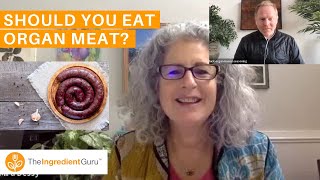
This is a recorded interview between host Mira Dessy and chef-entrepreneur James Barry about his organ-based seasoning product, Pluck. They discuss why organ meats (nose-to-tail eating) are nutrient-dense yet underused in modern U.S. diets, practical ways to source and cook organs, and how Pluck acts as a convenient "gateway" to add organ nutrition (micro-dosing) to everyday meals. James describes Pluck's ingredients, current formulation (≈15% bovine organ blend), product road map (Pluck Pure, spicy and AIP/garden versions), sustainability-driven packaging choices, and where to buy (eatpluck.com).
Questions this video answers
Liver, heart, kidney, spleen, and pancreas.
About 15%.
Direct-to-consumer on the brand website: eatpluck.com.
Instagram and Facebook: @EatPluck.
16 years.
Chapters
In our modern day and time, we generally don't tend to eat organ meat. If you're someone who goes to a farmer's market, if you work with a functional medicine practitioner, or maybe even you've been reading books and you see that we really should be eating tip to tail and that means consuming organ meat. And you're possibly thinking, I don't know, I'm here to tell you that I totally get that it's not something that a lot of us have grown up eating. But my guest today has a solution that is so unbelievably delicious, you're not going to mind what you're eating because it's just that good. Let me start by telling you a little bit about him. James Berry has been in the culinary field for 16 years. He started as a private chef. He had the good fortune of cooking for celebrities such as Tom Cruise, Mariska Hargitay, George Clooney, Gerard Butler, Sean Puffy Combs, Barbara Streisand, John Cusack. He knows a lot of people. Most recently, James launched his first functional food product, Pluck. It's an organ based all purpose seasoning. It is the first of its kind and an amazingly easy and delicious way for people to get organ meat into their diet. James also co authored the recipes in Margaret Floyd's book Eat Naked and co authored the follow up cookbook Naked Foods Cookbook. And most recently he has co authored the recipes in Dr. Alejandro Junger's book, Clean Seven. James Barry, thank you so much for being here.
Thank you for having me. Mira.
So I have to tell you, I forgot to show this in the introduction, but this is Pluck. This stuff is so delicious. I love it. I put it on so many things. How did you come up with the idea for this?
Oh my gosh. You know, I. Sometimes I feel like it was like, you know, a godly moment, you know, it just feels like kind of, I don't know. I feel very lucky that I came up with it. I mean, I just think it's such a rare time to even come up with a new food or combination of foods because obviously both of the ingredients that I'm using, they all existed in the world. No one had just combined them in this way. So I feel very fortunate. But I guess looking back at my culinary career, I've always kind of thought outside the box. I've never been that guy who wanted to work in a kitchen at a restaurant and never wanted to do that. I really got. I've always been passionate about cooking, but I specifically really enjoyed taking comfort foods and trying to make them healthy. Like basically trying to take all the food that we're eating in our everyday life, but make it healthier and still delicious. Because I think everyone still has, I think we are getting, we are finally moving out of it. But for a long time now, everyone has had that idea that healthy is tasteless and plain. Yeah, that has just been prevalent for so long. And I have really, I think most of my career has been about trying to, you know, change that view.
Well, and I think one of the things, you know, obviously knowing you, you know, you're going to use real food, whole food ingredients. One of the that I absolutely love about this is the ingredients are just great. First of all, they're very easy to understand and it's just straightforward, real stuff, you know. So this has onion, pink, Himalayan salt, garlic, bovine, organ meat blend, smoked paprika, lemon peel, black pepper, mustard seed, parsley, green onion, thyme. Everybody understands what all of that is, but the way that you've put it together is just mouth wateringly delicious. I have to tell you, one of my new favorite on the run snacks, which I got from your wife by the way, is hard boiled eggs with a generous pinch of this on them. And if I'm running out the door, I can throw two of those in a little container, dump some of this on and I'm good to go.
Yeah, I love it. I love, as a father, as a human, I love knowing that I can sprinkle organ meats onto anything, popcorn, whatever. Really, truly anything. And I just, I love that I'm getting that superfood in my diet. Because as you started out this whole show, like, we all know to a degree, we know that we're supposed to be eating organics, but we're not getting them in our diet. And that's ultimately what I'm trying to do. Pluck is, is a gateway. It is a gateway to getting organ meats in your diet. Is it the only way? Of course not. You can be, you know, getting the actual, you know, organs into your, you can be eating those or, you know, like liver and onions, you can be doing that kind of stuff. But pluck is the easiest. And I personally find that if health is easy, then you're going to stick to it. And that's what I want. That is my mission is to truly help people get healthier. But do it if like to actually stick with it. You know, I'm not looking for trends, I'm not looking for people to just do something for you know, the first three weeks of January, you know.
Well, and yeah, that's so true because people start off with good intentions, and then it kind of just peters out. You know, one of the things that I love about this, it really is so delicious. And you don't even have to tell anybody what it is. You just put it on things. So, for example, you know, my grandson is 7 years old, and when he comes over, you know, I'll sprinkle some of this on it. He loves it. He doesn't know. He just knows that it tastes good. Good. And to me, that's the best part is it's just delicious.
Kids love it. It's so awesome. I haven't met a kid yet that doesn't like it. And once again, as a parent like you, just. We're all busy. We're always challenged, particularly if you're not meal planning, you're not really comfortable in the kitchen. We're always challenged to make sure that we're feeding ourselves properly and more importantly, our kids. Right. That their needs, their health needs are getting met. And that's definitely one of the motivators of me creating this is wanting to ensure that my kids were getting these. This nose to tail eating. You know, you mentioned the bovine organ blend. That's five organs you're getting when you use pluck. That's liver, heart, kidney, spleen, and pancreas. I don't know many people eating spleen and pancreas. Even if, you know, I mean, I just don't. And my goal with this company is to eventually get other parts of the animal. It's just very challenging in the US to source nose to tail on a commercial level. Like, you could do it as a family, going and buying, you know, a cow share and then get it privately. But when you're trying to sell to the entire US or sell retail, very hard. Very hard to get nose to tail.
Yeah, well, and you know, you're right, because now that you mention it, when it comes to beef, I. I've had liver and kidney. I don't typically tend to eat beef heart, and I certainly have never eaten pancreas or spleen. And so that you're getting a little extra. And I think one of the other things that most people don't realize is organ meats, we tend to have this distaste around them because we think about them as being inside of us and detoxification organs or whatever, but they're actually really nutrient dense, healthy, healthy options for us to include in our diet.
Yeah, bioavailable These are nutrients and vitamins that your body recognizes and can assimilate, you know, absorb. It's. It's. They are truly Mother Nature's multivitamin. And it's there. It's there for our taking. I mean, you know how the organs are being currently used in the US Mostly.
No.
So you basically have pet food. That's where the most of the organs are going is for pet food, feeding zoo animals, things like that. Sometimes parts of the animal are being refed to the conventional cows. So that's where you got. That's where you got mad cows. Right. And then. And then there's a very small amount that are being sold and certain cultural stores, you know, because there are cultures that it's built into the. The culture. Like Menudo, for example. Menudo is in part of the Mexican culture, and that's. Oh, Menudo is, I think, the. I think the stomach lining. I'm looking it up right now. I always forget if it's the intestine or the stomach lining, but Menudo is part of the Mexican culture. There's haggis. That's part of, you know.
Right. Haggis is the sheep lining.
Yep.
And the organ meats all mixed up and stuff.
Yeah. They use the lungs as well, and they use the suet, which is the, you know, part. Some of the fat. And then there's chitlins. This is fascinating. We can just even talk about, like, okay, so organ meats are also known as awful. And they think that that name came from the falling off. So awful. These, when you butcher an animal, these are the parts of the animal that fall off. So that's where they think awful came from. But of course, since then, you know, people, particularly the US They've tried to brand it different names. So they. That's where you. Organ meats, you also got variety meats is sometimes the name used, but also pluck. Pluck is actually used to be a name for organ meats. Oh, yeah.
I did not know that.
Thank you.
I learned something. That's awesome.
Yeah. If people look it up, that's one of the original meanings of pluck. And, you know, a lot of this kind of rebranding of it was because organ meats, while they are very nutritious, one of the most nutritious, nutritious foods in the planet, it's kind of had quite a history, you know, like a lot of people, particularly after World War II, you had more people working because you had not only the male working, you had also the female working. After World War II and of course there was this huge uptick in jobs and the industrial kind of revolution kind of stuff. And what happened was that basically animal meat, muscle meat, was seen as the wealthier cut. And so organ meats were kind of relegated to poor people's cut. And everyone wanted to be, you know, luxurious, wealthy, prestige, it was like a prestige thing. But during, during World War. So this is after World War II, but during World War II, the government was actually concerned there was going to be a shortage in muscle meat and animal protein. And so they started a campaign to actually get people to eat organ meats and to see it in a different way. And it worked. And that's why so many of us have our grandparents, our parents who ate organ meat. But then something happened. So my mom ate organ meat as a child, but she never served it to us when we were adults. And so now my generation, or even a few ahead of me and now definitely below me, we're not, none of us are eating organ meat. You know, we've either lost the taste for it or associated as being a certain taste.
I think it was also harder to procure because I remember as a kid, you know, so my, my nana, my father's mother definitely ate organ meat. Like I remember the first time I saw a whole cow tongue sitting in the refrigerator. It was a little bit of a shock because I was little, I was maybe 6 or 7 when that happened. But she used to be able to buy it at the butcher. And then by the time my brother and I were actually like cognizant of going to the store with my mother, I don't recall seeing any of that there. So I think grocery stores also stopped providing it because they were trying to encourage like this higher level trade perhaps.
Well, they got more money. Those other cuts make so much more. You know, that's the irony, right, is that we talk about, you know, grass, 100% grass fed meat, you know, and the importance, the nutritional value and. And then on the other side of that is, well, but it's so expensive, you know. And so people are choosing do I buy, you know, 100% grass fed or do I buy conventional or do I just buy organic? You know, that that is probably one of the biggest hurdles for most people are trying to eat differently is, is the cost, right? But the irony is, is that the organs are way more nutrient dense and they're cheapest. They're the cheaper of all, all of it.
They're cheaper and they're also more satisfying. Like it takes a Lot less of something like that to be satisfying and nourishing than a larger portion of muscle meat.
Absolutely.
At least that's my experience. Like when I make liver, I'll be honest, my husband won't eat liver. I sneak it in. But when I make liver, I wind up eating a much smaller portion than he does because it's just so filling.
Yeah. And that makes sense. And. But like you said, it's harder to procure these items. The ways that I found are the best is going to a farmer's market, talking to the actual farmer who's selling meat at your farmer's market, and basically just ask them. They don't have, most of them don't have access to the entire animal because there's two kind of pieces. There's the person who's raising the animal, but then there's the, the meat processing plant. And that meat processing plant has a, has a HACCP plan. And that plan is usually only really designated for the parts of the animal that they're going to make money from or that they know they can sell. And so most of them don't have a HACCP plan for every part of the animal because it just takes more labor. Like even the pancreas. One of the reasons why you don't see the pancreas very much is because it's, it's a little bit more labor intensive. You got. Whereas most of the other stuff kind of falls out and it's a very quick cut. The pancreas takes a little bit more finessing. And so a lot of them just don't do it. And they just throw, they throw anything that isn't easy. They just throw it all in a bin. And then that's what's going to feed either pet, pet stores or sometimes it's feeding, it's going into hot dogs. You know, we can't forget that hot dogs actually contain a lot of the parts of the animal that no one will purchase. Like the lips and the, and the, I don't know, parts of the head that you just won't see. That's what's in hot dogs. So it's really, it's, it's twofold. You got to talk to your farmer, you got to see what they're able to get and then ask them for it. I promise you they'll give it. Like, the tongue is usually something they can get. And if you want the tongue, which I highly recommend people try, the tongue is delicious. Like, you cook it just like you would any braised meat. Like so let's say if you have a pulled pork recipe, cook it just like that and after it's braised, it's got this sheath around it that just kind of like you just lightly cut and it just comes right off. If you've braised it long enough, just, it gets so soft and comes right off. And then what's underneath is meat that is really like muscle meat. It's the closest to muscle meat of any other organ in the body, of the animal's body. And it shreds just like carnitas and it's. And so then what we do is after we braise it, we then add some pluck to it or whatever.
Of course you have to.
We do, we do, we put it on everything at my household. But we, you know, you put some salt or pluck or whatever you want to do and then we put it under the broiler and crisp it up a little bit and then we eat it with tacos and it's delicious. It's, it's truly, it's. You wouldn't know, you wouldn't know you're eating tongue, let's put it that way. But yet it's so good. Highly recommend people doing that. The same with heart. Heart is actually not as strong as some of the other organs and really ultimately the cow's heart is usually something they can get. It's just overwhelming really. That's it. It's just so big and same thing with the tongue, it's just so big and you're unfamiliar with it. But I just offer that, you know we have recipes on the Eat Pluck site for some of these things. We have a heart, a beef heart jerky that is really good. I can't remember if there's a beef tongue recipe yet but I'll make sure to do that because it's delicious. But I really, you got to talk to your farmer to get this stuff. And then if you can't, if your farmer just doesn't sell it or doesn't have it, you know where you could go now it's, it's not going to be organic, it's going to be conventional but is to go to like a Mexican market or even, even like a Japanese or an Asian store. The other cultures are using these parts of the animal so you can find them there. And then if you, if you want to be more conscious about the grass fed grass finished, I would go online. You're going to find it at like us Wellness meets. You're going to find certain farms will sell it to you, then they'll ship it to you. But that's.
And the other thing is you can also check out Local Harvest, which is a website that connects people with local farmers in their area. So, so that's another good way to maybe get to know your farmer.
Yeah. And if you do a cow share, that's definitely where you're going to get more access to parts of the animal you're just not going to see.
And I bet, I bet if you do, like, I know some people who, I live in a very suburban area, so cowshares are perhaps a little more challenging one just due to space, but also because we have to go further afield to get them. But I do know some people who live in a slightly more rural area who do that. I'm wondering, if you do a cow share, do you get more for your share if you're like, hey, I'm willing to take the tongue, the kidney, the heart, the whatever, because the other people don't want it?
That's, that's possible. A lot of times what they'll do is, you know, they're just going by weight. So they're saying, you know, okay, each family gets, you know, 50 pounds or whatever it is or it's obviously more than that, you know, but yeah, usually they do that. But you're right if you, if, let's say you're doing a half a cow share or a full cow share with let's say four or six other, you know, five other families, the six of you, that's a decision between you guys, you know what I mean? And you're right, most people are not going to want it, so take advantage of it. It's, there's, there's really good ways to do it. And I know it's overwhelming for people, but here's the deal. Like, we are, you know, the real epidemic that's going on, a pandemic is, is, is obesity. You know, and we're, and, and we cannot, we cannot get around the fact that we are in the US we are an obese nation, yet we are, you know, we are nutrient, nutrient deficient. And that when I think about those two things together, that, that's, that's sad. Like, that, that really is upsetting for me because that's telling me that we, we have access to food or what you would call as food, but it's probably not food. It's probably not the food we should be eating.
It's empty calories. Yeah. Highly processed, hyper palatable and not nourishing at All.
And when you then think about, well then how did our ancestors eat? Why is it that the human body, which has not changed in a long time, why is it faulting the defaulting or having issues now in this period of time, in the last 200 years, why are we having so many health, chronic health issues? And I look at it and I go, ok, well one is we know that whole foods, that's not a trend. Whole foods are not a trend. Whole food is the way that we've been eating. Always we haven't. And it's really the processed foods that are the newer things. So we know that much. But the other thing is, is that our ancestors were eating nose to tail.
They were, they needed to eat everything. I think one of the biggest challenges that we run into is because we have such an excess and because we have the processing that we can do to deliver, as I said, hyper palatable, highly attractive foods that really have no nutritional value. Like there is not a scarcity of food. And 200 years ago, like if you butchered an animal, you ate the whole thing. You even like cracked open those bones to get out the marrow and then made stock out of the bones. And now bone broth is coming back and that's great, but I don't know too many people who own a marrow spoon.
You're right. But to me though, it says like that ancestral food, that's what's missing. That's what missing in, in my, for my money. And I know that there's people that will have other opinions, but I just, I look at that and I go, you know what? We can do better. And we, and you know, what's, you know, if you talk about the agricultural systems and the decline of basically people think that the world's going to hit their. It's, it's break, you know, it's, it's breaking point, basically that we're not that far off from it. And what's the solution that's being shared. It's oh, regenerative farming, which is what the Native Americans did before we decimated them. Right. So if anything we're being told, we're being, we're learning that all these ancestral practices are actually what we need to rebalance ourselves physically in this human body and on this planet.
And you know, it's so fascinating because I did have a conversation and I'll link it down below to a regenerative farmer and he was talking about how much better for the earth what they do is because they're able to sequester More carbon. They're able to nurture the ground and the grass and then from there the animals and it truly becomes this beautiful cycle that is sustainable which is, you know, it's much better than the current major philosophy which tends to be for mono cropping and chemical fertilizers. And so I love that we have the ability to introduce people to organ meat in a gentle way that makes it because I mean I have yet. I remember I had my book editor over for lunch one day and I served her this and I just put it on the table and she's like, what's this? And I said, oh, it's a seasoning, try some. And she didn't read the label. She should have known better. She was sitting at the table, she puts them on, she's like, oh my gosh, that's delicious. And then she ordered more and I believe she ordered from you. But you know, this is a great way to introduce them to it. And it's like, okay, if I can eat it this way, what else can I do? What else can I learn to incorporate? So this is, this is the gateway food to organ meats.
And I think, you know, the consistency you just mentioned this and we mentioned that earlier is consistency around health. I really, that is so important. Anyone can make it decision and try something for one day or even a few hours. But if we are not going to truly move our health needle unless we are finding consistency. And so I am all for what is consistent, what is moving your health needle but that you can do every day. And I agree with you, it is not going to be these huge broad strokes. It is going to be these little things, they matter. These micro movements, these micro doses, these things matter. And you know, so pluck. What I do now, this was just a lucky happenstance is that pluck doesn't require a new habit. We already season our food and when I first came up with it, I didn't think about that. But when I was getting familiar with the product, that's when I was like, wait a second. This is really game changing because now we're getting these organ meats in our diet. Micro dosing, but frequent use, there's no new habit. So it's easy adopting, it's just easy to adopt it. And now it's going to be regular, it's going to be something you can sustain because there is no new habit, there is nothing, no hurdle to get to it.
Sure, sure.
You know, and that to me is, that warms my heart because like I said, my mission is to help people with their health. It's not just to sell a product. So if I know that this is something that actually is going to help you, that you can actually sustain, then it is a win. It is a win for me.
That is great. It really is. So I have to ask you, what is your current favorite way to eat? Because I am sure you keep coming up with new ones. What is your favorite way to eat? Pluck. Right. Now.
In my household, we don't do it often, but I would say that the one that just is, like, blows everything out of the water is the popcorn. Like, if you've ever, you know, if you like popcorn and you normally, let's say, put nutritional yeast on it or something, and you. You've done that and you're like, oh, this is really good. Like, once you try it with pluck, you can't go back. Like, it's just. It is so. It's so good with butter or olive oil sprinkled over it and then some pluck. It's just. It's game changing. It's so good. But we don't necessarily make popcorn often. That's just the one that is, hands down, just monumentally, like, favorite. Yeah, it just blows us out of the water. The way I use it. I mean, honestly, I do. I really do put it on everything. And so I would say I really like putting it on my salad, actually. So I sprinkle it right over. Right over the lettuce.
Oh, I'll have to try that. I haven't done that.
Put dressing on it, you know, olive oil, whatever you can do. And then I sprinkle some pluck right over it. And I love it. It just adds, like a saltiness and umami to the salad that wasn't there before.
That's great. Well, my current favorite I have to share is I love beef liverwurst. And so I get it from US Wellness Meats. It's just really wonderful. It's my slice off little pieces all the time. And so my favorite thing is to sprinkle plaque on top of the beef liverwurst. It's just really good that way. It makes the liverwurst even better.
I love that you're bringing that up because some people like, well, do you put it on your actual organs? And I'm like, well, yeah, it makes the organs taste better, you know, So I. Yeah, I love that you're doing that. What I also am excited about is we are going to be having some new flavors coming out in the new year. So I'm really excited to expand and reach more people because one of the, you know, there's a few different audiences out there. So Pluck is really trying to support those people that want to get organ meats in their diet but don't want to have to taste the organs. So, so in the Pluck that you're showing people, that percentage of pluck is about 15% in there. So the actual organ meats in there is about 15%. We are then going to be coming out with a hundred percent blend for. So for those people that are like opening their capsules on their food that really just want that organ meat nutrition and don't want anything kind of splitting the difference, we're going to have that available. It's going to be called Pluck Pure. So it's going to be literally just organ blend. And what's kind of fun about that is that you're also. And I'm still figuring out how to market this because I think anytime you, you, you say something's good for humans and then also say it's good for pets, you kind of. There's a, there's a weird, weird association. So I'm figuring out how to market it. But it is going to be something that you could put on your pet food, your pet's food, and they'll go crazy for it.
Yeah.
So we're going to kind of COVID the, the gamut there. You know, people that are the gateway and then the people that are like, no, I want, I don't care how it tastes because 100% organ meat blend is, is not going to be tasting that great, but it's going to be 100% of the nutrition. And then you can combine it with whatever flavors you want. A curry, a spaghetti sauce, ground meat, whatever you want. Just like you would Pluck. But you, you're going to want to mix it with some other flavors.
Sure.
And then we're also going to come out with a spicy version of our all purpose. And then we're coming out with an AIP version which is called Garden vegetable.
Nice.
And that one has a higher percentage of pluck in it. And it kind of has a ranch like taste to it, which I'm not sure why it does, but that's. It just kind of tastes like ranch dressing to me for some reason. I don't know.
Well, hey, that's not a bad thing given how many people love ranch dressing in this country. Yeah.
But I'm super excited because our, you know, our mission, like I said, I'm really trying to get nose to tail eating. And I really just want to make it easy. I want to make health as easy as possible so that it's sustainable. I have ideas down the road for utilizing more organs, but we just kind of have to take it one step at a time because we need to kind of support the supply chain and expand people's thinking since this is a new product. And as we mentioned earlier, like the, the US supply chain for organ meats is not really established for human grade, you know, for human consumption. So I'm trying to ease into that and support our economy to start seeing that it's worth changing how they're doing things because there's money for them and supplying more parts of the animal. So I hope to have, you know, access to the testes, to the ovaries, to the lungs, to just to as much of that animal as possible. There's this. I know I'm talking a lot, but there's this.
No, no, no, you know what? So one of the things that I love though is it's very clear that you're, you're passionate about this and wanting to use that. And what I love is that if a farmer is going to go to all of the work of committing to being a regenerative farmer and having grass fed, grass finished, pastured, free roaming animals, it's our responsibility to eat as much of that animal as we possibly can. That is the best way to honor that animal.
Absolutely.
And so the fact that you're like what else can I use? How else can I incorporate this? Like that is so wonderful because quite frankly the parts that you're talking about are even if people were willing to eat them, you can't really buy them at the grocery store.
No, you can't. Here's this interesting concept. We're talking about ancestral eating and stuff. There's an indigenous concept that's called like supports. Like the idea is that if you want to support your liver, you should be eating liver. If you want to support your heart, you eat heart. And when you look at the different components of these organs and they do have vitamins and minerals that do support those parts of your body. Like the heart of a cow has co examined coenzyme Q10. Right. Which is a known for helping the heart of humans. You know, so and so this, that idea of like, you know, getting access to the ovaries. Right. I mean that's something that's really going to be important because if there are, if this like supports like is true, which I tend to default that who cares if it's true or not? Sounds good to me. Let's do it. Right. There's no, there's no harm in it. Right? So if there's no harm to me, then. Then let's look at the glass. Half full versus half empty.
Right.
But if that is true, we're definitely going to be needing to support, continue to support the hormonal level of people as these next generations and of course, for ourselves, because if anything, if anyone knows regarding what's going on nutritionally, hormone levels are hugely affected by stress, by the environment, by what we're eating, aging, things like that. So these are things that if you want to age gracefully, you're going to have to start looking at hormone levels and potentially eating parts of the animal that are supporting your testosterone or your estrogen, you know, things like that. So that's why I want to get, I want to get access to these things. I would love to be able to get access to brain, which is a really hard one to get due to mad cow disease. There's still a stigma around that. But. But yeah, I hope in the near future we'll have access to those things and, and can support people. And I just, I really. There is a part of me, Mira, that believes that once, once we do it, that health as we know it will change. I just, I feel it deep in my bones, like. And you know, you know how you can tell, too? It's when someone drinks bone broth or when someone eats, pluck. You look at, watch how their body reacts.
Yeah.
Like, I don't know about you. When I first drank bone broth, like, my body curled into it, like, I physically couldn't help but curl because it felt so nourishing, but not on, like, a nutrition level, but on a deep, like, deep, deep, like, primal level. And that's how I feel when I taste organ meats. I feel like, oh, this is bigger. This is bigger than just vitamins in, vitamins out. Like, this is, this is tapping my DNA. There's something tapping here.
Absolutely. And the other thing is, it's so interesting to me because when I've shared, you know, bone broth or plaque or other things that are made with organs with people, I generally try to not tell them what it is first and let them taste it because if they can get past this, yes, their body goes, yum. Because we, like you said, we crave that. We need it, our bodies can utilize it, and there's not enough of it in our modern diet. And so that's really a Great way to. Like, this is a really great way to encourage people to get more of that in. In a way that's not very overwhelming. It's admittedly difficult to look at organs in plastic wrap and think, I have to do something with that. But if it comes in this cute little package and it tastes so good and all you got to do is dip in and pinch, that's great.
Yeah, I was definitely trying to solve those issues, which is the taste. And I always have to say the associated taste, because I think if people actually tasted part other parts of the animal, they'd find actually it doesn't taste the way you think it's going to taste like.
Right.
I think people are associating all organs as tasting like liver or kidney, and they just don't. They don't all taste like that. They don't all have that kind of irony or metallic taste or that uriney taste if it's the. If the kidneys. So one was trying to get over the hurdle of taste. The other was getting over the hurdle of overwhelm with cooking it and knowing how to cook it. Right.
And.
And then the third was really like, okay, I know I need to be eating it. I'm taking the supplements, but I forget to take my supplements. So those were the three hurdles I was really trying to solve, and I think we accomplished that. You know, it's so easy now. And like you said, when you're using pluck, you're not thinking, I'm eating organs. There's no, There's. If you didn't read the package, as you said, there's no part of the process, you would know that you're eating organs.
Yeah. Yeah. No, and it's great. I mean, I. The only. The only thing is I have realized I probably could get away with getting an unmarked shaker and just putting it on the table.
Right.
Because right now it lives in a little container on my stove, you know, next to my stove, where I season as I cook.
Yeah, that's definitely down the pipeline. So we. We initially did not use a glass shaker or anything like that because we're right now in an E. Comm site. So we're only available on our. On our website, the eat pluck.com. so that's the only place you get us right now. And since I knew we were going to be shipping, it was really important to me. You know, I kind of look at the business is not just like, yes, my mission is to help people get healthy, but I'm also trying to help the Planet. I'm also, you know, I'm being mindful kind of of the triple bottom line. Right. So the Prof. People profit planet. And so building with the business is also the culture of the business. I'm trying to make sure that the day is not overwhelming. I'm trying to make sure that we're maintaining those of us that work a pluck, that we are building into the day, our own self care. So there's time to eat a homemade lunch, that there's time to work out, to get outside that. It's actually built into the business plan. And the busy days, that's one thing. But then the planet pieces, I was like, okay, I'm aware that, okay, we're going to be shipping this product. Glass is heavier, that uses more fossil fuels. And then if it breaks, then now you're shipping double because you have to then ship again. You also have to surround that glass with more material. So that's where the pouch came from. It's like, oh, so sorry, your dog heard pluck.
Yeah.
But, but so the, the pouch is really, it's it when we ship out to you. So what we do is there's no packaging needed with it, so there's no added packaging. The, the. It's a soft pouch and so goes inside, you know, a craft paper, recycled paper envelope. We include a sticker in that envelope right now so that you can rebrand any container you have. Because we all have them. We all have tons of containers. And so that's kind of how we're serving the planet right now. But I'm very aware in the near future we're going to have to, once we're in retail and things like that, we're going to then move towards a glass shaker.
Yeah, yeah. That's very cool. Well, James, it has been fabulous to talk with you. I learned so much. Thank you so much for sharing. And once again, would you tell people where they can find you?
Yeah. So where the website is Eat Pluck, PL U C K. And then you can find us on Instagram @Eat Pluck and Facebook @Eat Pluck. And then my personal is chef James Barry with an A, B, A R, Y. And definitely go to the site and look for recipes where we're constantly increasing how many recipes are on the site. We're doing that pretty much weekly and there's lots of really great recipes not only using pluck, but also of other organs.
That's great. Well, thanks so much. It was fabulous to talk with you. And I will put all of the information in the notes down below so people can connect with you on all the things. And folks, thanks for stopping by. Thanks for checking this out and please make sure to click like and subscribe. Don't forget to hit the bell so that you'll know when we have new videos. Take care.










