The Dirty Truth About Grocery Store Chicken (Don't Trust The Labels!) | Levi Powers
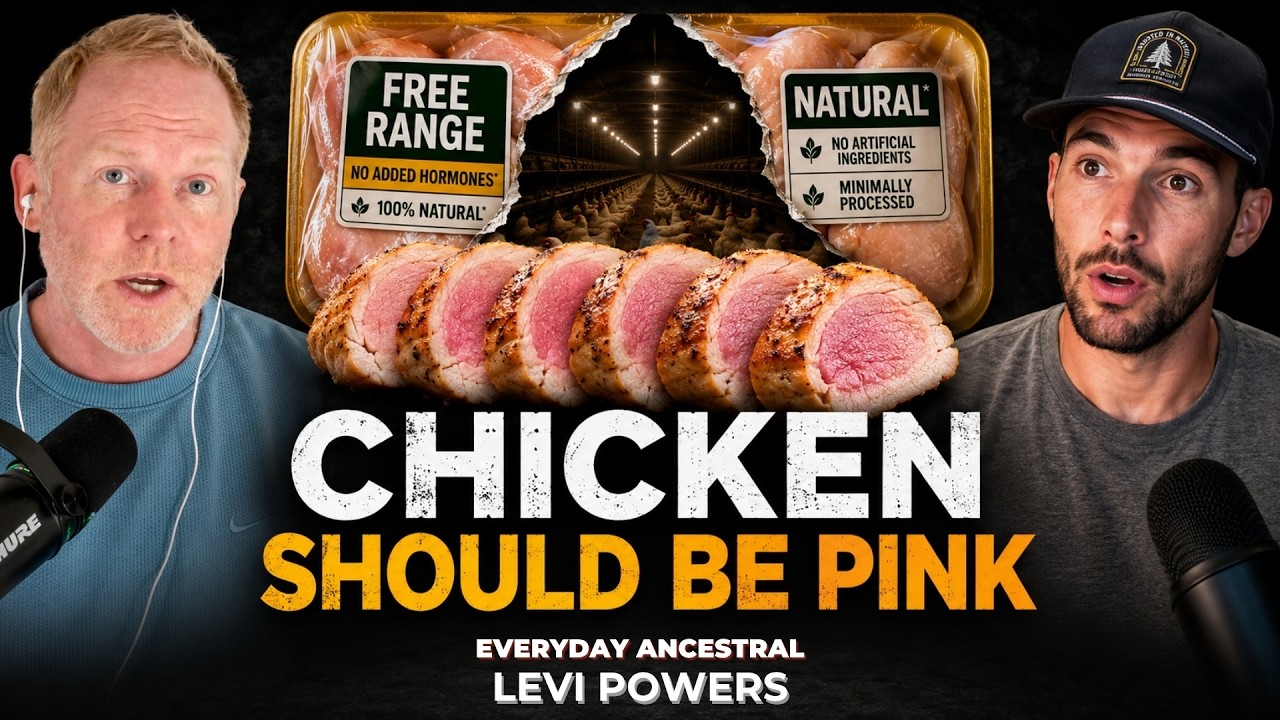
Levi Powers of Alden Hills Organic Farms explains why grocery store chicken labels lie. "Free-range" just means not caged, "natural" has no legal definition, and conventional farms raise birds for 5-6 weeks in massive barns. Pasture-raised birds moved daily to fresh grass taste richer and have more nutrients.
Chapters
Free-range, it really means nothing. It just means that they're not kept in a cage. There's no regulations on that. Most of the organic chicken you're gonna see on the market, they're really not getting the nutrition value that they think they're getting. There is a lot of misinformation with what people think that they're buying when they go to the grocery store. A meat chicken is only going to live less than 6 weeks, if not closer to 5 weeks. They want that bird to basically just sit there, eat food, get fat. They don't really want it moving around too much. The diet will show up in the meat 100%.
So as a chef of 20-plus years, I've always been about taste, But it was becoming a father that made me really start to think about function, because I want my kids to thrive and I want to be around long enough to witness it. And it was when my daughter became ill, my wife and I, we struggled to get the right nutrients into her. It was a true wake-up call. That experience is why Pluck was created. So Pluck is a superfood seasoning made with 100% grass-fed beef organ meats blended with organic spices and herbs. The beautiful thing is it doesn't taste like organ meats. It just tastes like the seasoning you're already using. But better, because when you add it, you're adding these bioavailable nutrients that your body can actually use. If you can salt it, you can Pluck it. Learn more at eatpluck.com and save 15% off your first order using code EA15. For most families, chicken feels like the safe choice. It's familiar, affordable, easy to cook. And for decades, it's been sold to us as the healthy protein. But what if the package at the grocery store is telling only part of the story? Today, I'm joined by Levi Powers of Alden Hills Organic Farms to pull back the curtain on chicken, what the labels really mean, how the birds are actually raised, and how we can make better choices without getting overwhelmed. Levi, welcome to Everyday Ancestral. When you look at the average chicken package in the grocery store. What do you see that the consumer misses?
The labeling and packaging side of food is very interesting, especially meat. And it's something that's come up a few times with country of origin labeling. There is a lot of misinformation with what people think that they're buying when they go to the grocery store and what they're actually getting. We've had a farm here in southern Wisconsin where we've raised certified organic and regenerative beef, pork, and chicken. And we've done farmers markets, we've done shipping, we've done a lot of different things. And that was the one thing we kept coming back to with customers was trying to educate them on what are they actually buying, what are they actually spending their money on, are they getting what they think they're getting, especially as, you know, everyone's very price conscious right now, even, you know, in the last 4 or 5 years at the grocery store. So I think people trust what they see on a label just by taking it by face value. But the truth is there's very little that they should be taking on face value in the grocery aisle. That's the truth.
Well, let's go label by label if you don't mind, because I think this will greatly help people. One thing I think is interesting is that usually it will say hormone-free. My understanding is that chickens are never given hormones.
And that's where there's, there's so much nuance. So hormone-free will mean more with beef and pork where they might receive some of those. With chickens, you really don't see a lot of those because a meat chicken is only going to live 7 weeks, 8 weeks on a regenerative farm. On a poultry farm, or, you know, like a confinement poultry situation, that bird's probably gonna live less than 6 weeks, if not closer to 5 weeks. So—
Whoa, whoa, whoa. So wait, let's back up for a second. So 7 to 10 weeks for regenerative farm.
Yes.
6 or less in a conventional situation.
Because they've got it down to a science. And so that short lifespan really doesn't allow for like even antibiotics. Like chickens do not get antibiotics either. Um, the only time you'd give antibiotics to a chicken is if it was like a laying hen where it's gonna be alive for a while and you wanna maintain a level of healthiness. But for a meat chicken, The cost of the meat chicken's life in a confinement setting is less than what you're gonna pay for the antibiotic. These confinement houses raise tens of thousands to hundreds of thousands of birds at a time. Slight tangent here on how a confinement farm values livestock. We actually interviewed a guy who worked for some confinement barn. He was running confinement barns out in, I think it was Nebraska. He actually said, When it came down to the economics of, of raising poultry in barns like that, they would actually decide where to set the heat in those barns in the winter to like even suboptimal because they knew they would lose birds. But the price of raising the heating bill was more than it was to just lose like whatever percentage of birds they were gonna lose by having it colder than they needed. It's an input-output. It's a factory. That's all it is.
Yeah, I've heard before there's like the poultry mafia basically, so that are something like 5 to 7 companies that run basically 98% of the poultry industry. And I'm sure my numbers are off, but it's probably not far. Most of the farmers that are, you know, working with this mafia, they don't actually make much. They need to count their pennies because it's such a tight margin.
And I can't speak to that too much. But I'm familiar with a little bit of that. And usually, they're in contracts, It's kind of a system, and I think we see that on the beef side too, really all the meat production actually, I would say, where the only person that really wins is the packers or the retail, and even the groceries. I mean, the grocery stores aren't winning either, like, if we're being honest. So somebody is winning somewhere in there, and it's not the farmers, and it's not the consumers, and it's not the grocery stores. So who does that leave, right?
From your understanding, can you break down— so we see some of the things we see on chicken labels as natural. So what does that mean?
There are a few labels and terms that are actually like regulated by the government. And the one is certified organic. Natural means nothing. This is natural chicken. Well, that means nothing. So that is a made-up term that a lot of the big brands will use because it's, it does send the right image to their customer of like, oh, this is natural chicken. And a lot of times they'll follow up with, you know, no hormones, no antibiotics. underneath it. So you're like, oh, that's what natural means. But there's no governing agency that decides what natural means.
What about free range?
Same thing with free range. There's no regulations on that. We're part of the American Pastured Poultry Producers Association, which is a fun one. And they came up with their own, 'cause we've been fighting this forever. What's regenerative? What's pastured poultry mean versus just poultry? Like, what does that mean? Were they actually outside in lush pasture with bugs? And like, there's such a difference between this bird was able to go outside And this bird was outside eating things, being a chicken, doing the stuff, right? Free range really just means that they can do whatever they want. That really doesn't mean that they're out in pasture getting sunshine. We see this a lot in the egg side of the game where they'll say free range eggs. Well, if you go look, most of those brands, it's just a dirt lot, right? Because they weed every little bit of grass in there and they'll do it within like 2 days.
Right.
They're voracious, right? We move our chickens and our turkeys every single day. So they're getting fresh pasture every single morning. I mean, that's just how we do it. And so that helps the pastures not get damaged and it gets 'em outta their own manure. So free range, it really means nothing. It just means that they're not kept in a cage, honestly, and they have outdoor access so they can go, go in and out of their side yard. That's what it means. So.
Which is the one where they're basically in captivity, so in some kind of warehouse, But then there's a small hole and then there's a controlled space where they could go outside. I thought that that was supposedly a free-range parameter, but then I would talk to the farmers and say, well, yeah, well, we have to do that to use that label, but the chickens don't actually go through there because it's cold out there and they want to stay in the warm spot, so they stay inside.
Yeah, that would be the free-range definition for sure. And that's what's interesting too, because there is some nuance in farming. Um, we raised laying hens through the winter and the same thing, we raise them in a greenhouse, light, airy, and we would open the door at the end and there's a foot of snow and the chickens are like, yeah, we're not going out there. You know? So there's that side of it. And then in the summer they're moving every day. But the other side is like when they're kept in that environment 24/7, their whole, I mean, it's a different situation.
So. And once again, going back to what you said earlier, it's 6 to 8 weeks, like depending on the circumstance. So this is not a very long life.
Meat birds do not get outdoor access. They don't.
Oh, so you're talking egg birds when we talk about that?
Yeah.
Okay. So that's probably a very important distinction is so a lot of these labels are on the egg side, but for the meat birds, I think we really only see what, natural, organic, and then sometimes free-range or pastured, right? And as you said, the free-range and pastured is, is not regulated and can be confusing because people assume free range means pastured, but it doesn't necessarily.
Exactly. The association, the Pastured Poultry Association, has come up— they've come up with their own definition. Actually, uh, Christian Alexander with Alexander Family Farms out in California, he spearheaded all that.
Yeah, they're great. I, I love Christian and, and what they're doing.
Oh yeah, fantastic. And the dairy side, really always cool stuff. So he spearheaded a lot of that, of coming up with a working definition of what is pasture and what does that mean. And so a lot of the farms like us, we're going off of that. The only one that means anything is certified organic because someone's going to come inspect you each year. You have to prove all your stuff. And this is where organic fails. As I tell people, like, you can have a certified organic candy bar, right? I mean, you can have certified organic junk food. We see it all the time. It just means that all the ingredients and the supply chain is clean, but that doesn't mean that it's good for you either. So really the education piece that we push with our customers is the 3-legged stool. So one, Certified organic is a great place to start because then you're, you're verifying that everything's non-GMO in that entire food chain supply chain. And that also goes down to on the processing side, you know, what sort of chemicals are they using in the processing facility?
Right. Let's, let's briefly touch on that because a lot of people don't realize they are washed, right? The, the, the birds are washed once they're defeathered. And usually what it's chlorine if it's not organic.
Yes. Yep. Chlorine's the easiest one. The only certified organic option is a peracetic acid, and you have to have that kill step with the USDA. You have to, cuz we get asked about that a lot. Well, do you have to do it? Say, well, yes we do actually, or they, they shut us down. There, there's no option there.
And I think that's cuz of the fear of what, E. coli or salmonella, right?
And Campylobacter. Yep. Which is really common with chickens. So I tell people, you probably do want that kill step in there. Having the organic option is a, is a good thing. Trust me. And that doesn't even include the cleaners that are used inside the processing facility on the tables, the knives and all stuff. So that's something that we, we don't use those really heavy toxic cleaners, we use certified organic ones, they obviously have to still do the cleaning job, but it's a different level. And that's worked out really well for us as well.
So but the other piece though, is a lot of sometimes people think that organic is the highest standard. And what I heard you kind of say is like, well, it's not exactly always what All of what people hope it to be. So can chicken be organic, still not raised in the way people imagine? And I think you're basically saying yes. So can you elaborate on that?
Yeah, 100%. And that, that is like our biggest competition for the local farms. I'll use the brand name, not the actual name, but like Amish chicken, right? Oh, it's Amish chicken, certified organic or whatever. Yeah, but that's still confinement raised. So they're getting organic feed. So that's one step better because there's no GMOs and they're having to meet Um, certain criteria for humane handling, treatment, spacing. So how many birds per square foot? So it's better, but at the same time, those birds are still not outside. They're still not living life as a chicken. They're still being raised in a barn. And that's most of the organic chicken you're gonna see on the market is that it just is.
One that I'm always confused about, the eggs will say like vegetarian fed. But my understanding is that chickens eat a lot of protein, and that's the whole point of why they're kind of dirty, right? Is because they're going into the cow poop and they're eating the grubs, they're eating lots of the worms. So they're— they very much need a meat-based diet.
Yes, that is the truth. Laying hens need like an 18 to 20% protein every day or they will not lay eggs. They'll actually stop laying eggs. So if you see vegetarian fed on the label, that's like the easiest red flag to say these birds are not outside at all, because if they're vegetarian fed, that means they're not eating bugs. Well, if they're not eating bugs, that means they're not going outside. So that's like the easiest one. If you see that, definitely barn-raised.
That's such a good tip. We're going to definitely show the contrast of regenerative farming, but can we first walk through what modern industrial chicken production actually looks like?
Generally, like I said, they're not living long. They're going to arrive at a confinement house. And like I said, usually it's— I forget the exact number, but I want to say there's some barns that are, you know, upwards of 100,000 birds, if not more. They'll be there from day one.
There's usually no windows, right? Because I feel like I've driven by some where you just see these rows of very large warehouse kind of rectangular-shaped buildings, and you see like fans on the top where they're emitting something, but there's no windows. So is that Usually a poultry house.
Yeah, definitely is. I think pork might be very similar to, to those situations. But so with the meat bird, when I say it's kind of become like a factory setting, they have it down to a science. I mean, to the day what feed proteins they're getting, what day they switch the protein, what day they butcher them, how to get them to where they're all the exact same size. It really becomes an input-output product. That's all it is. And so when they come in there, They have one person that's usually running the barn and his job is, they walk the barn every day, they make sure everything's working, they pull all the dead chickens out, which you will always get dead chickens, but they're dealing with a lot of dead chickens. But they wanted a controllable environment where they're controlling the heat, the feed rates, where they want that bird to basically just sit there, eat food, get fat, and then they take it and then they take it and they process it. They don't really want it moving around too much. They want to know exactly the same product with the same input every time. That's what they want.
In a sense, what we're talking about is the cost of cheap food, because they're doing— they're trying to control the circumstances so they can control the pricing, right? And then, of course, control their profit margin. What is the cost, though, of when we are focusing on cheap lean protein? We're not asking, well, how was the bird raised? What is the quality of this protein?
I think that's exactly it, is there's, there's a bunch of different costs. You've got your cost on the environment, because you're not regenerating things. You can raise these animals In situations where you are regenerating your own environment. Then there's also the cost to the consumer because they're not paying a lot and they're really not getting the nutrition value that they think they're getting. There's a lot of costs and a lot of them are hidden. A lot of them feel very hidden.
When life gets busy, you're moving through your day, it's not always easy finding real food. That's why I've been keeping these with me. Our sponsor Prima makes protein bars using simple traditional ingredients like grass-fed collagen and whey, Organic raw honey, beef tallow, cacao, coconut, sea salt, and they're offering 25% off for listeners of this show. Look, I have a simple test when it comes to protein bars. First, I have to recognize all the ingredients. Second, it's, it's, it's gotta not wreck my gut. Well, Prima passes that test. Each bar has 21 grams of animal-based protein and all 9 essential amino acids. Look, go give 'em a try. Go to eatprima.com, use code ANCESTRAL25, and get 25% off. What about breed? Do you know much about the hybridized bird? Because from my understanding is back in the day, poultry was first of all not a common food, and that when it was eaten, it was actually more expensive than, you know, beef or pork. It was also a different breed, so it wasn't a very heavy-breasted bird, and it was very flavorful. But where we land now in our current modern poultry production is a very heavy-breasted bird, very little flavor, and a very consistent size. I think older bird was also much smaller. Is that your understanding?
We don't do a lot with heritage breeds on our farm. We've done them in the past. Um, we do use like the White Feather, which are more of the production breeds that grow faster. When we made that switch, we actually did do some blind taste tests, and we found that most of the flavor came from the pasture and that the flavor was identical in the different breeds of the chicken. It really came down to, were they getting outside? Did they have good clean food and water? And so that's why we've, we've moved more that direction. Most of the birds are terminal crosses and most of 'em are bred for meat production.
I was gonna say, so that's interesting though, that it's the pasture or in a sense their lifestyle that's providing the flavor. And so that makes sense why, you know, conventional poultry is so flavorless, 'cause as you said, it's such a controlled cold environment. Is the food or what they're eating on the pasture, does that dictate flavor even more so than maybe people realize?
It's the same thing as drinking a wine from Bordeaux, right? It's, it's unique. The environment shapes that product, and we see that with beef especially, especially grass-fed beef. They will pick up the flavors from your pastures. What kind of plants are they eating? Chicken is a little bit less so just because they don't— they live such a A shorter amount of time. But I can tell you, we worked with a chef for a while and, and he was like, he's like, I think we might have to stop ordering chicken from you. He said, not because the chicken's not good. He said, it's fantastic. But he said, our customers keep sending it back cuz they're like, hey, you didn't cook my chicken. He's like, no, the meat is pink. It's cooked. This is what real chicken meat looks like. It's pink. It's not white, bland. The customers are just like, this is weird. And so the diet will show up in the meat. 100%.
That is so fascinating. Yeah, isn't that interesting that, you know, as businesses, we really are beholden to the kind of commonality of, you know, what of expectation of kind of how the societal norm of what people expect. Are all conventional brands bad?
No, they're not. And that's, that is a little bit of a surprising thing, especially after we just talked about all the confinement house. But what most people don't realize is that the largest producer of pastured poultry in the US is Perdue Farms. They have a brand called Pasturebird that they acquired a few years ago, and they are 100% legitimate. They do— they're doing some awesome stuff. They're really scaling up pasture poultry, which I think is really important for the industry. But if you see their product, you can very much trust they're doing everything the right way out on pasture, fresh grass, sunshine.
And you were mentioning that the— their kind of warehouses are different, right? They have no bottoms, or what is that exactly?
So we, we use the same thing. We call them prairie schooners, or they're basically what they are— they're, they're large greenhouses that are out in the field. So we use ones that are like 20 foot by 40 feet. So there's, there's no bottom in them, there's just roll-up sides. And then, um, the birds are in there and they've got their, you know, the food, water, and then open pasture. We move those every single day so they're getting fresh grass, um, fresh sunshine, all stuff every single day. Pasture Bird created that same model, only immensely larger. So they'll run 6,000 birds in a coop that's that much bigger, and it's actually robotic, so it slowly moves throughout the field all day long. And the birds can come and go completely, completely free range, completely moving wherever they want. I think they're really pushing some of the technology and some of the innovation on pastured poultry.
I love it. It really just goes to show, you know, we vote with our money. If we keep choosing pastured birds, then the companies like Perdue are going to find ways to make that happen because they want to keep consistent with what people want, and they want to make money. So what does a healthy farm or a healthy lifestyle for a bird look like?
Kind of stealing a term from Joel Salatin, who's kind of like the originator of a lot of the regenerative farming movement, but he would always say, you know, the chickenness of the chicken or the pigness of the pig. And it's letting the animal be in its natural environment its whole life, living a good life. You know, we are going to process that animal. We are going to eat that, and that is going to nourish us, but we want that animal to live out its life how it was created to live out. It needs to be outside. It should have sunshine. It should be able to chase bugs. It shouldn't be jam-packed shoulder to shoulder with a million other chickens. That's its existence. We feel the same way with our beef, our pigs. They're outside, they're in the woods, they're rooting around, they're Chasing butterflies, whatever they do, they're doing it, right?
I like to think of it of like the quality of the life of the animal you're eating is in the meat. It's that, that energy, there's an energy exchange. I think we are distanced from that, like that we're taught to— right now I find it fascinating that most kids will understand protein, vegetable, carb, you know, they look at food from these very kind of nutritional macro bites. But they're not asking the question, what was this food fed? Was it allowed to be a chicken? Or was it just treated as a product? And they're Not thinking or asking these questions to the point where it's not even a consideration. What I hear you saying is that it it's a huge effect. It has a huge effect on the quality and taste, the nutritional value. So I guess the question then becomes is if someone wants to start asking these questions, and let's say they're going to a local farmers market or to a local farm, like what? should they be asking? Maybe 3 questions they should be asking to better get a grounding into the quality they should be looking for.
It's a good question. And I would kind of go back to the 3 legs of the stool that we like to use. So one is organic is a good start. They don't have to be organic, but if they follow organic principles, that's— it's very common with local farms. Yeah, I'm using non-GMO or I'm doing whatever. So that's a really good first Starting point. Second is, is it pasture-raised? So is it outside? Is it able to move around? How often do they get fresh grass? How often are they moved? We see this with grass-fed beef even where, you know, some of the, you know, other farms you might see at the farmer's market, I mean, they might never move their cows, but they're grass-fed because they're eating hay and they're out on grass all day, but they've never— it's not high-quality grass. They're never moved. They're in the same spot their whole life. I mean, they have a pasture, but like you have to be, and that's terrible for the soil. And the environment. So that's, are they moving? Are they pastured? How often are they moving? What's their fencing look like? Or what does their, you know, coop look like? That would be a really good question. And then that final thing is, is it local? This is going to be more important to some people than it is others, but, you know, buying from someone in your community, that's going to keep those dollars in your community, or buying someone within your region, that's going to keep it regional. And that way you're not, you know, buying chicken breasts that was raised in, you know, Southern California and shipped here. So some people, that's a really big thing for them. But I think if you keep to those 3 stools, those are the big ones. So I would ask, what are the feed practices? Is it non-GMO feed? Is it certified organic feed? Who's doing the processing? Is it on-farm processing or is, are they using a, you know, maybe an organic butcher or a local butcher? Is the animal moving? That's probably the biggest one for us. Is the animal moving? Is it moving every day? Is it moving every couple days? Is it outside? Does it have sunshine? Like, is it pasture-raised? Is it outside?
It's interesting because you mentioned at the beginning how they don't really live a long life. But I think we almost have to look at, well, if we're killing it at 6 weeks and you think about the quality of the life that they had during that 6 weeks, could that bird continue to live for 20 weeks? Could that lifestyle sustain it? In more cases than not around conventional poultry industry, the answer is no. Like, they have to kill them at 6 weeks because if they wouldn't be able to survive in some of these circumstances much longer. I almost think we have to start looking at it from that perspective because we're just focusing on the price. Obviously, that 6-week bird is cheaper than the 8 or 9-week or even 10-week bird. But when someone pushes back on you around regenerative meat or saying it's too expensive or it's unrealistic, how do you respond?
Well, in my mind, my first response is usually like, Yeah, Doritos and Oreos are also really expensive too. I don't know if you've been to the grocery store lately and you're paying $5, $6, $7 for that. It's like junk food's expensive too. It is. And so it's, it's kind of this interesting time where it's not like there is cheap meat out there. And so people are making, you know, making a decision based on cheap meat, expensive meat, but food is expensive everywhere too. So that's kind of the funny thing where you're gonna get what you pay for. Um, it, it really comes down to a quality thing. And we even encourage some of our customers to maybe eat less meat too. And we worked with some chefs that do a really good job of this too, is say, hey, maybe eat less meat, but if you're gonna eat meat, it should be high-quality meat, you know? And I'm like, hey, that— there's totally a place for that as well.
So we kind of covered when someone's going grocery shopping, they want to be looking for organic, uh, local. What about when they're going to the farm? What are maybe 3 questions they should ask the farmer? Like, I'm imagining one is, what do you feed the birds?
Yeah, I would start with the feed. I would go back to the movement thing. Are they outside? Are they getting moved regularly? If it's beef and pork, one thing you might want to ask is what sort of health things are they doing? You can be certified organic and vaccinate. We were vaccine-free for 10 years and we would lose a calf probably every 3 years to tetanus just during the process of castration. The decision we made is that quality of life-wise, let's go with this very proven tetanus vaccine that's going to prevent some of this stuff instead of just saying, hey bud, hope you make it, you know, because they're gonna, you know, when we do that operation, they're going to be in the dirt, they're going to be out in the environment, and they're going to be susceptible for it. But I would ask them what, what are they inputting to their herd aside from food and water? Those will probably be the big ones.
Even, um, other high-quality farms like White oak pastures, I know that they do blackfoot, or black hoof, I should say. That's the only one they do. So it seems like even, even that most people are having to kind of pick their battles. And, and usually there's one thing that they really have to be mindful of because it can take out the whole herd or a single calf. But either way, you're trying to do it for the quality of the life of the entire herd. Yeah. To that point, what are some things about agriculture, running farms, working with animals that the public just doesn't get? Like, they're not getting this feedback. What are some of the top things you think you would love people to better understand?
Yeah, we've got a saying on the farm. It's, you know, everybody wants to be a farmer until it's time to do farmer stuff. We get that a lot where we'll have customers say, you know, take my high school boy for the summer and teach him to work. Or, you know, guys are like, I'm about to retire and I've always wanted to farm. So can I come do chores with you for a few weekends or something like that? And we're like, sure, You can do that. It's not at all what people think. We've had people who worked on the farm and they didn't last long where they said, yeah, I kind of just thought I would come out here with a cup of coffee and just look at the cows and be like, what a beautiful morning. We have a lot of work to do today and tomorrow and the day after, and it never ends. You've got thousands of animals that depend on you doing your job, you know, to feed them, move them, water them, keep them safe. It's an insane amount of work. And most people don't understand that. Just 2 weeks ago, we're in calving season here on the farm. Our livestock manager was out here on a Saturday night till 1 AM pulling a calf on a Saturday. It's when you have to work, you work. And a lot of people are used to going home at the end of the day. A lot of people are used to having weekends off. It's like, no, there's really none of that. It is an insane amount of work, especially for usually the economics of it. It's, it's tough.
Yeah, it's a lot of work for, for once again, going back to the whole profit margin, not huge amount of profit, right? Like, correct. You almost have to just love what you're doing and believe in the bigger mission of, you know, food is medicine.
My dad always say, you know, farming, it's a lifestyle, it's not a career. And that is really true. So we've been really lucky on the farm to be able to find people to work on the farm that they really love it. And they're able to fit in, especially into slots that even things that I don't enjoy, or I don't love, you know, and we can plug people into those roles, and they wake up wanting to do every day.
So Well, should anyone want to experience working on a farm, can they reach out to you?
Yeah, absolutely. I think we've got a careers page on our website with my email, so we're always taking resumes.
So I always close with this one question. If you could wave a magic wand and bring back one ancestral practice, what would it be and why?
As I'm thinking of my wife right now, because she's like forest bathing or, you know, grounding, she's doing all this stuff. But I'll go with the, you know, part of what got us in touch, which is just lack of food waste and then using the whole animal. A lot of stuff gets thrown away. A lot of stuff doesn't get used. I think it's really cool to have a product like yours that we're actually being able to use some of those organs back into the product. People get those into their diet. We'll go with whole animal eating. There you go.
Well, I really appreciate you coming on. Thank you for helping to pull back that curtain on something so many of us eat every week, but rarely understand. And for everyone listening, this conversation, it's not about being perfect. It's about becoming more connected to the food we buy, the farms we support, and the choices we make for our family. So the next time you pick up a package of chicken, don't just ask, is this healthy? Start asking those questions of like, how was this animal raised? What was it fed? What does this label actually mean? And is this the kind of food system I want to support? The truth is we're voting with our dollars, and if you buy it, they will keep producing it. So that's how we bring about change, right? Is we stay curious and we really vote for the things with our money that we want in the world. Thank you again, Levi, and thank you all for joining me. Please click the links and check in with Levi, learn more about what they're doing on their farms. And then of course, if you enjoyed this episode, share it, follow us, leave comments. We love your feedback and it will help lead us to even better episodes. So please, please provide it. Thank you.
Thanks, James.
Thank you so much for joining me on Everyday Ancestral. If you enjoyed this episode, hit subscribe so you don't miss the next one. You can find the show notes, links, and resources mentioned at eatpluck.com. That's eatpluck.com. And hey, if you know someone who'd get something out of this, Share it with them too. Stay curious, live well, and keep it ancestral.










