The Truth About Saunas, Cold Plunges, & Radical Business Grit
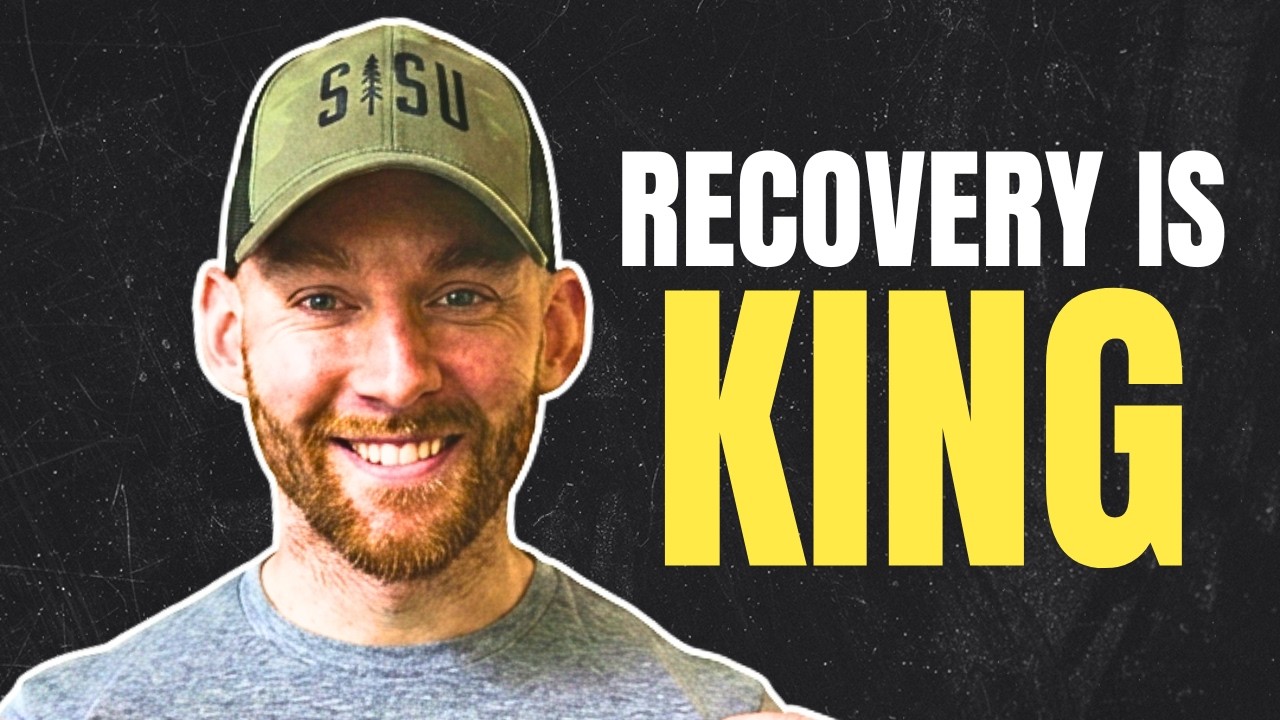
Peter Nelson II, founder of Sisu Lifestyle, discusses building a sauna company while balancing family, faith, and fitness. A Finnish study found that 4-7 weekly sauna sessions cut all-cause mortality by 40%. Nelson explains his "5 Fs" framework for priorities and why he chose Amish-handcrafted traditional saunas over infrared.
Chapters
Pete Nelson II, what a pleasure, man. What a pleasure. Um, I, I'm so excited to get just even a brief amount of time with you. We had a conversation now probably a few— good, good amount of time ago, and, uh, you just had your third daughter.
Yes, it's, it's been a ride. It's been a roller coaster. And, uh, I feel like the last 3 months since you and I talked So much has changed, but also so much, like so many good blessings in my life have happened and just trying to build a business along the way. It's chaotic, but it just feels so right. Yeah.
And we're going to talk about that business, but talk to me about what's changing because as a father and a husband and a business owner myself, I find this topic doesn't get discussed enough about the juggling of all these personas, all these balls, like what's been going on?
Yeah. So especially the last 3 to 4 months, I've had to really look, look at like, what are my priorities and understand what needs to be pruned, what, what I should add, what are the opportunities that come my way that I should say yes to versus no to. And, uh, like any father, as you have more kids, uh, you start to get extremely focused on what moves the needle for you and your family. And which meant, which ultimately ends up meaning that you have to say no to more things. to protect what matters most. So, for me, it really goes into the 5 Fs for me, which is faith, family, fitness, faculty, which is my work, my purposeful work, and finance. And it's like if those things are not in order, things get out of kilter. And so, when you add another variable, like the biggest blessing of a variable in the world of a kid, it really throws— I wouldn't even say a wrench, it just throws another variable into the mix to where you have to figure out how are you going to keep yourself sane, how are you going to keep yourself thriving, how are you going to make sure that the family's thriving? How are you going to take care of your health? All these things. And so, for me, the last 3 to 4 months, I've had to say no to more opportunities that have come my way as a result of, you know, like, our— my— like, Sisu's growing, our— my personal brand is growing, we've got a nonprofit, and there's different opportunities that are coming our way where before we didn't have these opportunities. And now it's like, man, I hate being the guy that's always saying no, but I definitely want to continue to protect the things that matter most. So, To really answer your question, man, like the things that are changing, it's like we have a nonprofit with our family called the Nelson Family Foundation where we donate money directly to and hand-deliver checks to cancer patients in need here in the Cleveland, Ohio area where we're from, where I grew up. Sisu, we've continued to grow the company, but also we're trying to add more margin to the, to the business as well, which, like any business owner, you're already— you're always trying to protect your profit, but it's one of the easiest things to escape. And so that's always been a a puzzle for us, but I feel really good with where we're at there. And, um, but before all that, it's really like, man, I just want to make sure I'm getting present time with my family. So it's the presence and balance of it all that is the hardest part.
Yeah. So, Sisu Lifestyle, uh, I mean, you come from an athletic background, but what, what brought you to cold therapy? Or, or, uh, or maybe is that how you would say it? Or it's contrast therapy, maybe. Is that a better word?
Yeah, yeah. Interestingly enough, I was a personal trainer back in the day. That was my first gig outside of my time in the military and ended up managing the gym and owning a gym out here in Cleveland. We really grew the brand and it was a ton of fun. But, along the way, found sauna therapy, ended up buying one for our house, loved how I felt in those sessions. My wife and I would routinely after putting our youngest down go out to the sauna and break bread each night and just enjoy like each other's company without our phones. And then we started hosting and then we bought like a horse trough, filled it up with water and ice in the summer. And then in the winters, you would just fill it up and crack the ice every day with an ax. And it was, it was something special, you know? And I always appreciate those early days with sauna and cold because you just didn't know much. You were just like, man, I feel great. The data is starting to come out saying that It backs up the protocol and how I feel.
Was it Wim Hof that turned you on or what even got you? Because you said sauna, so were you doing the heat therapy first?
Yeah.
Yeah. So then, what got you into cold? Was it the Wim Hof kind of craze that started?
Yeah. I think Wim— it wasn't Wim Hof specifically, but I think he was one of those other people as you're perusing social media and cold plunging was just becoming a thing, like a trend, if you will. So, I think it was just naturally you saw some people like social media influencer is doing and you're like, oh, I should give this a try. And next thing you know, you're freezing your butt off at 10 degrees outside. And, but, um, yeah, cracking of the ice is intense because I—
because not, not all ice plunges do that, right? Don't get that cold. And, um, that's intense.
100%. Yeah, it's like, I mean, for what it's worth, like, in Cleveland it could be like -10 to 10 degrees outside, uh, and if I'm breaking the ice, like, That water's 32 degrees, all of 32 degrees, man. And if you're not ready for that, you almost like get mad in the water because you're like, why am I doing this? And afterwards you just have like this euphoric feeling. But, but yeah, like Sisu really came about after we became a customer of a manufacturer that we bought off of. So we saw that there was a lot of opportunity for us to, you know, make a splash in the Ohio space. So we actually started dropshipping through this manufacturer, and we had a really awful time trying to sell a single sauna. And then after about 12 months of no sales, we ended up pivoting, uh, and decided to quit the, the main— or the, the dropshipping altogether. I was with, uh, and still am with the same partner that we started the dropshipping company with, and we were early morning trail run. We're saying, man, this is what we're done. This is stupid. Why are we even wasting our time? And ended up deciding by the end of the run that we should actually pivot into manufacturing because we could solve all the issues that we were starting to see, which Was like crazy long lead times, decreases in quality of wood, not premium heaters, things that are not built to last, and just so many different things. So we ended up deciding like, man, if we were to rewrite the playbook on what a great sauna brand looks like, it would be US source, US made, Amish handcrafted here in Cleveland, Ohio, quick lead times, premium heaters with Wi-Fi, Ladderock, great steam from the, from the heater and cedar that is thick and like meant to be utilized for sauna in a way to where it's going to keep it really well insulated and smell really well or aromatically. So there's so many different checkboxes that we ended up crossing off and we ended up deciding to like, let's pivot into manufacturing. And August of 2022 hit and we launched Sisu as people know it back then. And that was at that point, 18 months without a single sale in that first month.
Wow.
We ended up hitting 9 sales. So it was like nothing to 9, and we just had this momentum. And then that continued to scale and scale and scale. And so now we're 3 and a half years in, man, and it's just been an absolute blessing and a rocket ship, but it's still extremely challenging, just doing your best to try to manage it all.
And I'm sure all the competitors, right? Because when you came in the space, it wasn't as impacted as it is now, right?
Yeah, for sure. And I would say that there's, there's not a lot of manufacturers, but there's a lot of wholesalers, people that were like us that were selling another manufacturer's product. There's just so many things that need to be true for you to be able to roll up high production with quality for sauna manufacturing. So there's still not a lot of manufacturers out in the space. It's just very capital intensive, very, you have to really understand quality, QMS systems, manufacturing capabilities, lead times. You have to have really good lines of credit. It, uh, there's just a lot of things that need to be true for you to, for you to do it really, really well. It's one of the reasons so many like custom sauna manufacturers that are doing like the $50,000 to $60,000 units, because they could do 1 to 2 of them a month, no problem.
Right. And cover all their— yeah, cover all their costs. What, what is it that you— because there's just so many people out there that I think do see it as just a trend, you know what I mean? That they, they don't realize the real health benefits. So can you talk about those?
Yeah, there's so many benefits. I mean, the reality is that sauna is not a trend. I mean, sauna has been utilized for centuries over in Europe and most specifically Scandinavia up in Finland. I mean, people have been doing this as a very customary part of society and a practice for hundreds of years over there. And most recently in 2018, the largest peer-reviewed study had ever been done It was a group of like 2,300 men. Uh, there was a control group and then a test group. And essentially what they ended up finding was that those men that would sauna 4 to 7 times weekly had a decrease in all-cause mortality rate, which means that any related, uh, any, any related part of death or any related cause of death went down 40% compared to the group that only did it 1 time per week. And so when you stack up the consistency of what sauna use is doing for people, it's allowing people to be able to live longer, live better. It's improving their quality of sleep, especially when you stack sauna about an hour away from, uh, from sleep. It, it allows you to be able to go to sleep quicker and keeps you to sleep longer. Um, and people are getting farther into their deep sleep. It's decreasing, uh, Alzheimer's and dementia. It's improving VO2 max and improving resting heart rate. There's just so many big things that sauna is doing as a result of consistent use. And so what that looks like in practice is 170, 176 degrees is your minimum threshold that you want to be hitting. 15 to 20 minutes at a time, 4 times weekly. If you want to pour water on the rocks, do it. Uh, but you should get to the point in the sauna where you're like, man, I need to get out of here, but don't stick through that for the next 2 to 3 minutes. And that's like where that heat shock protein response comes in that everybody's always talking about. Heat shock proteins are really just like mechanisms that go into the cells that clean up any cellular waste and make sure like the cells are resilient to stress. So the people that are sauning more are really more resilient to mental stress and physical stress compared to those that are not. So there's so many different things that sauna's doing for people, but to me it always comes back to like, how often are you doing it? Are you doing it with the people that you love? Sauna's meant to be a community-driven environment. And so when you're including your significant other, your friends, or you're having your business meeting in there, that's when sauna really shines in my opinion.
It's kind of interesting cuz really historically sauna was a community event and if anything, it's these modern times that are turning it into an individual or because they can just have it in their home, right? I mean, back in the day it was like, It was like bathhouses or something, you know?
Yep, exactly. Yeah, I mean, and there would be like 20, 30 people in bathhouses all the time. Now that, that is coming back, uh, which is sweet because I think that people are starting to understand that they want more time off their phones and less time in bars and more time together and sweating and feeling better the next morning.
Yeah, yeah. And our friend Eric Hinman is, uh, really helping that along, that, that, that community messaging with that.
Very, very much so. And so, we're starting to see a lot of people replicate what Eric's doing all throughout the United States because instead of them going to their local bathhouse or going to their gym, their YMCA sauna, instead they're literally hosting at their own home with the residential sauna and they could put 6 to 8 of their closest friends in there with them and enjoy rounds of sauna and cold plunge and throw some meat on the grill and eat good food and hydrate. And, it just makes people feel like, wow, I feel clear, I feel lighter, I feel like I've got the monkey off my back and I can enjoy the rest of my night and go to sleep great.
Now, you mentioned the rocks. So, do you guys only do traditional saunas or do you also do infrared?
We only do traditional and that's by design right now. There's some good research on infrared, but there's not enough for us to be able to say like, all right, hey, not only do I feel undeniably great after, say, 20 to 30 minutes, but I would want to make sure that the research is also pointing very similarly to infrared before we pull the trigger, which means right now the 2 biggest things of why I would steer somebody toward infrared is for skin health and depression. Skin health and depression is more so as a result of the red light and of the full-spectrum infrared wavelengths that are penetrating the skin. But, the reality is that for you to get the same type of response that you would get inside of a traditional sauna, you need to get upwards of 45 to 50 minutes at a time. And, that's as a result of you essentially inducing the fever from those infrared wavelengths. Penetrating your skin and then raising the core body temp up to a minimum of 102.1 degrees. That is the goal body temp for you to be able to get the benefits of sauna. It just takes so much longer in infrared to be able to get up to that compared to traditional. Depending on how recovered I am or how poorly recovered I am, I could hit that in 10 minutes inside of a traditional sauna, sometimes 20 minutes depending on how good I feel.
Yeah, I have experienced both as well, and in my opinion, nothing compares to traditional. It's just, it's a whole other beast, you know. I mean, you go— I, I— my friends have one, and when I was staying with them, I would go in if I wasn't feeling well. I would go in there for training. I mean, I— there were so many uses, and it was a daily use.
Yes, 100%. It, it's really, you know, for me, when I, when I'm looking at the whole space of sauna, you've got These like $400 to $500 like sweat pop-up tents that people have that it's really like a steamer that goes inside the sauna and, you know, you sweat it out. And then there's the tent pop-ups in the backyard and then there's infrared saunas and traditional saunas and steam rooms. And there's so many different types of sauna. The one that just continues to come back is like the gold standard is traditional sauna. That doesn't mean that the other ones are not effective. Like, yes, they are effective, but most of the time it's really viewed as a stepping stone. Like, people end up wanting to graduate to the traditional sauna eventually. Infrared is really, really good for apartment condo dwellers that don't have the means to, you know, wiring up a 220 line to a sauna and, and having that permanent setup. But having that is still better than nothing. So the protocols that, you know, you would have somebody use for 2 to 3 years are going to end up looking different once they have their actual Nice.
So, when did— what have you seen with the cold therapy? Because when I— my friends who had the traditional sauna, they also had a horse trough and we would do the traditional sauna, go in, and it really did support sleep from my experience. Because obviously, for anyone that isn't already adept to this, you want your room to be cold when you're sleeping. You want to have the whole idea of a cooler bed. It really does support sleep. And, your body temp just gets there with the, with the cold, the ice bath. But what, what have you seen from combining the two?
Yeah, it's actually really interesting. So the recommended protocol when I'm combining sauna and cold prior to bed is you want to finish on sauna. And the reason being is that your body temp is elevated above baseline and it's going to compensate in the opposite direction As you're starting to cool off. So, let's say my body temp's up to 102 degrees, I need to get it down to say roughly 97 degrees in that ideal sleep state because I'm trying to get— even if I wasn't using sauna or cold plunge and I was just to go into my bedroom and go to sleep, my body's going to naturally cool itself off to be able to get into that state. But, what sauna does at the very, very end of a sauna cold plunge protocol is that it actually gets you down below baseline even quicker. Compared to if you were to finish on cold. The reason being is that it, it, it naturally needs to cool itself off. So it goes below baseline and now you're able to go to sleep quicker and faster. If you finish on cold, it's the opposite, right? So like now my body temp's actually below my baseline, even when I go to sleep or the, uh, compared to when I go to sleep. And now it's gonna try to naturally cool itself, or I should say warm itself back up above baseline. And so, uh, what I've noticed and what I encourage people to do is when I'm combining the two is finish with sauna, most of the time you're going to end up feeling really, really good and be able to go to sleep quick. However, some people, I wouldn't say everybody, but some people have noticed that when they do cold prior to bed, they sleep even better.
That's weird.
Yeah, this is where the physiological adaptations change per person. Some people just enjoy the cold prior to bed way more and other people can't. For me personally, it's like taking a shot of espresso prior to bed. I'm just gonna be wired and I'm not gonna be able to fall asleep. Whereas otherwise there's other people, say like yourself, that could do the cold and you're just knocked out.
Yeah, I knock out, man. I knock out. Yeah, cuz I run hot. And so when I do the cold or I take a cold shower or something, it really does just help prepare me for sleep.
Yeah. And I, I think that that's where you have to take— this is my whole thing with research is you have to take research with a grain of salt, like use that to inform you. But you have to use your own intuition. Uh, sometimes like some things are just not going to align with the research based off the protocols that you find best fit for you. And so for me, like I'm very much more lock in step with, uh, what the research says. And I, and I know that I feel really good that way, but some of my friends and some of the athletes that we work with are like, nah, man, like I, I live by the cold at night. I'm like, man, good for you. That's not me.
Yeah, no. Yeah. One, one size does not fit all. I love that. Um, Sisu, can you talk about that? Because when we met, that was honestly the first time I'd ever heard that term. And then since, I've seen movies with the name. I've seen it pop up everywhere.
Yeah, so sisu is a Finnish word with no literal translation to the English language, which essentially means never give up. And like all the different words that are thrown at it are perseverance, tenacity, bravery, grit, resilience. Like that's what it means. And so the best way I like to describe it is The point at which you feel that you need to quit and you decide to push past, that is the moment that Sisu starts. And so for us, we were like, man, how cool would it be for us to not only create a brand around this, but just really live out the lifestyle around like what Sisu means? And so ever since I was a kid, it's always been about, you know, living in the blue-collar town of Cleveland, Ohio. It's a very gritty town. Grew up in a middle, middle-class family. My father like really led the example with running ultramarathons. and marathons and, um, you know, caring for my family. My mom was like a professional softball player, but that she had epilepsy. And it was just like this, this crazy, uh, concoction of like, man, I didn't end up realizing until we started the business, like, man, like my life and my father's life and our family's life is really rooted in what Sisu means. And so since the start, we're just trying to get people to understand that like the true fulfillment in life comes from embracing things that fulfill you and that are very difficult. But it's not necessarily, hey, I need to go make $200,000, $300,000, $500,000 a year for me to be fulfilled. It's not that. It's more so like, how do you take obstacles and tasks head-on and do it with all of your passion?
Now, you mentioned the nonprofit because I know there's a lot of mission behind Sisu other than just getting fit, which clearly that matters to you as well. But can you talk about that mission?
Yeah, so Nelson Family Foundation is essentially the umbrella that sits over this charity race that we started in out of respect for my father. Actually, this year is going to be year four, and it's called Hell on Hogsback. Hogsback is this notorious, like iconic hill in Cleveland where it's just freaking steep, dude. And so what we ended up doing as a result of my dad coming down with cancer about three years ago, he ended up coming down with tongue cancer, and then in surgery was a twelve-hour surgery. He ended up having a stroke at the very end and in the recovery room in front of me, and it was just really tough to deal with. The whole family was in shock, and they they told him that he wouldn't necessarily be able to run again, or if and if he did, it would be really difficult. And so, imagine being a Boston Marathon qualifier, multiple time hundred miler, like the man of the family. One of he was one of nine as as a You know, in his family too. It was just family means so much, but like I said, an example means so much. So imagine having like this total reset at 60 years old. It was just really difficult to grasp. And so this was March of 2023 that he started to take his first steps again. And what we ended up doing was we decided to create this race called Hell on Hogsback, which is that hill that my dad and I used to train on. And how cool would it be to get some friends and family to come out and run 12 hours out of respect for my dad's 12-hour surgery and raise funds for cancer? patients that couldn't say yes to that type of procedure and treatment. And, 95 people ended up showing up that first year. We were only anticipating 10. And, this year, we're anticipating 400+. And so, last year—
Wow.
We gifted— last year, we gifted 2 $10,000 checks directly to families in need here in the Cleveland area. And, my kids, my wife, my sister, the whole family is involved with delivering the check. And, we go through each and every beneficiary application and It's really hard to say no to, uh, to everybody.
Anyone. Yeah.
Yeah. And so we narrowed it down to 2 this past year. And this year the goal is 3 $12,000 checks. And so, uh, to really put it like my dad's story into example and like what, you know, he's the ultimate guy of like what Sisu means. 4 months after we learned how to walk in March of 2023 was Hogsback year 1. In August, I think it was like August 23rd, 2023, he ran 40 miles. Uh, in 12 hours up and down this hill. And it was the greatest testament to the human spirit I've ever seen on display. And we enjoyed, we cracked open a beer after, enjoyed the beer together. I had ran 50-some miles that day with him. And, um, it was just such an emotional, crazy moment, man. And so ever since then, it's just been, man, like, how could we make sure that we really build community and more so like give back and pay it forward to the community the best way that we can? And I think that really comes back to getting people to move with common purpose, have a good time, but like train together and push together.
What do you think for the person that's listening or watching who's just struggling to get off the couch, who, who's, you know, looking at the social media, seeing all these, you know, built, uh, you know, people talking about doing saunas and the Sisu life, and they're just feeling like, that's not me? Like, what, what is something you think that they could do to support taking that first step?
Yeah, you know, really good question. And to me, the sisu doesn't mean you have to be this absolute stud of an athlete. You know, to me, sisu is the decision of you just saying yes to that little decision of like, I'm just going to go for a walk today because I know it's going to make me feel better. Embracing your sisu means that I'm going to have that conversation with my wife that I've been dying to have, that I know that I should have, but it's going to be a hard conversation. Sisu means I need to be present with my kids and not on my phone. I think that people overthink that for you to live this crazy fulfilling life, everything has to be an Instagram highlight reel, and that's really not the case. Sisu in its pure essence is you just living the right life and living in ways that are disciplined and really impact people for the better and you help serve people. Uh, my, my, uh, nudge to the listener that is listening to this that may not want to be the 400-pound back squat, sub-3-hour marathon runner is like, just embrace your sisu, uh, in the littlest ways possible. And I promise you that your life will be better as a result.
Yeah, I love that. Do you ever have days where you, you struggle to get off the couch?
Oh man, dude, every day, every day, man. You've got no idea. Like, really, I feel like, you know, that one of the biggest things I did, uh, so we built out— I'm taking this, uh, interview from our garage gym. One of the best things that we did over the last 10 years is just accumulate some equipment. And now we host our friends. And, uh, sometimes when people come out of town, they'll come over at like 5 AM and we'll, and we'll lift. If I did not have friends that were coming over at 5 AM, I would be sleeping through my alarm every single day.
Yeah.
And so to me, like setting the accountability with other people is unbelievably important. Like bring people along for the ride. It just makes your goals a lot easier to achieve. Um, but like in, in a completely different light, like right now, like completely speaking transparently, like May's been a difficult month for Sisu. Like we haven't had a difficult month in a long time, you know? And like our revenue's down, not the way that I would like to see it. And it's like, man, it's stressful, you know?
Like, yeah.
Do I feel super motivated? Like, No, but do I know the things that need to be true for us to continue to drive this business the way I want to? Like, yes. Like, and I know that I need to do that. And so it's like the discipline part of it. So as much as I'd love to say like, man, dude, like life is perfect, I think the point of Sisu is like, man, life ain't gonna be perfect, man. Like, how are you gonna show up?
So yeah. No, I love that, you know, and I think it's important. This is another thing that I don't think gets talked about enough is like, you know, being a business owner When we're dealing with people, whether it's through social media or not, there's so much pessimism out there. You know, they think that you're only doing what you do just to make a buck, and it's like, it's so much more than that. There's so much more heart and mission to why we're doing what we do, particularly for those of us that create our own products, you know, that manufacture these things, that we're not just dropshipping. It's not just an idea. It's— this is truly your life. And it's for your family's survival. It's for your survival, and it's truly what you believe people need. So it's so much more than than I think a lot of people give us credit for. So I I salute you for what you've created because it's not easy. There's nothing about it that's easy.
Yeah, it's not it's not a passion project. Like this is this is my life. I'm not consumed by it. Like if if C two That if for any business that I ever decide to start, um, for the rest of my life, like, I'm not the business, but like, I do own the business. Uh, and I want to make sure like it's a tool to live my best life and to make sure like my family's best set up and like everybody that's inside CCU that's working with it is best set up. Um, but I, I think it's— we, we just partnered with, uh, Bo Nix from, uh, the Denver Broncos maybe like a month ago. And when I was sitting down with him, there was this question that, uh, he had to answer in a recent interview.
Yeah.
Which was, if football were to be taken away from you right now, like, how would your life be? And he's like, my life would be just as great as it is now. And because the reason is that the input of football, yes, like, that's what people know me as. Like, I don't necessarily identify as a football player. He's like, I identify as a Christian leader, a family man that serves community. I'm like, that's rad.
Yeah.
You know, so for me, like, I've always viewed it very, very similarly. If I, if I become all consumed by one or two things in life, like, I don't have much balance, and I, I don't want, I don't want that for my family or myself.
I love that. I, I so appreciate you being vulnerable with it and just talking through it, because I think, uh, not only have you created a fantastic product, not just a single product, multiple products, but also, um, you know, you're really modeling that. You're really modeling, you know, the family and faith First, and that, that's the grounding for everything else. So, uh, and, and, and, and with very little sleep, having just, you know, a 5-month-old. Um, so I appreciate you taking the time out. I, we're going to put in the show notes, uh, an opportunity for people to, um, purchase stuff, um, with our affiliate code. Um, I think they get 15% off with that, correct?
I I don't think it's 15%. I think it's like a hard dollar amount. I forget what it is.
Okay, well whatever it is, we'll put it in there. But it is it is a good discount. Where can people learn more about you? Because we didn't even get into your ultra running to your your traveling to Antarctica. There's so much that we could have gotten into. But where can they go to learn more about you?
So you can follow me on Instagram. It's @PeterNelsonII. I'm the second. My dad's the senior. So, @PeterNelsonII. Same thing on YouTube, LinkedIn as well. And then, you can find us online, our website is sisulifestyle.com. And, there's a lot of really good stuff out there. There's been a number of really good podcasts that I've been very fortunate to be on too. So, if you want to hear the long-form version of the Antarctica, winning the Antarctica Ultra, the different ultramarathons that we've ran, strength training, everything, Uh, there's a lot of good ones out there.
Yeah. Pete, Pete is someone who truly does walk his talk. Like he, he's not, uh, you know, a chiropractor that's hunched over, you know, walking with a limp.
Actually, you see my rounded back right now?
Yeah.
Careful, careful.
He is talking fitness and he is fit and he does it. He does it. He really does do it. So, uh, so once again, hats off to you, um, for who you are, how you show up. And for what you've created. Thank you for sharing.
Thank you so much. Appreciate the opportunity and feel the same exact way about you, man. Just really grateful our paths crossed.
Yeah. All right. Thank you everyone for participating and, uh, learn more about Sisu Lifestyle. I promise you will not, uh, you'll, you'll be very happy you did.










