Trad Wife or Boss Babe: Why Modern Labels Leave Women Lost | Tracey Martin
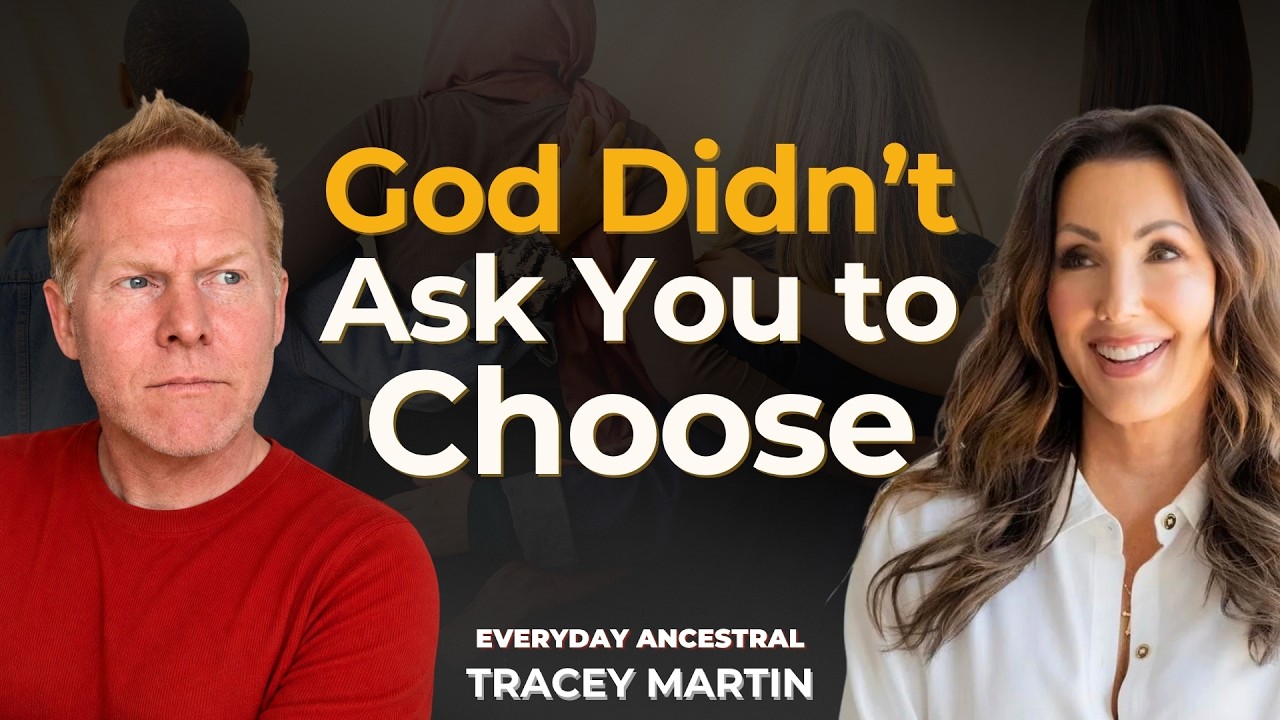
Tracey Martin, a life coach, argues that labels like "trad wife" and "boss babe" trap women by tying their worth to external achievements. She distinguishes self-esteem from self-worth, saying true confidence comes from recognizing your purpose as created in God's image, and emphasizes generational healing through older women mentoring younger ones.
Chapters
I think it's great you can make a sourdough loaf, but what are you gonna do when a crisis comes to your family? So many women, honestly, today are very lost because they're very distracted. There's a million voices, and what's the identity of each one? When our identity is in question, we're in crisis. God didn't ask women to choose one role. The world did.
This episode is for the women, the ones holding the rhythm of the home, the ones remembering the appointments, making the meals, carrying the emotions, keeping the family moving, and somehow still wondering if they're doing Enough. And if you're a man, don't skip this one. This conversation matters. My guest today is Tracy Martin, a wife, mom, grandmother, and transformational life coach who has spent more than 30 years walking alongside families. Tracy, welcome to Everyday Ancestral. You say moms are the heartbeat of the home, but so many women are beating for everyone else while quietly losing themselves. What do you think women most need to feel seen and be heard right now.
So many women are lacking the confidence to make the decisions for their families, to instill what they know to be wisdom, wise counsel into their kids, and then the generations are absolutely impacted. So I think so many women honestly today in today's world are very lost because they're very distracted. There's a million voices and what's the identity of each one? And so many times with women, a lot of our struggle is our identity. And we go through seasons of life. And no one, if you didn't have a generational grandmother or a mother or someone that actually poured into you and you pass that down, sometimes you look for other people, including influencers. I'm not knocking them. However, sometimes they don't have the best message for women to actually bring us to a whole place to where we can raise really strong kids.
And as you mentioned, it's kind of built, or at least historically, it's been built into our society, right? I mean, I remember growing up, a lot of girls were dissuaded from math, science, they were dissuaded from Speaking up about not just their feelings, but in general, in, in a room full of people. While it's changing, there is a generational history to it, right?
Yes. Yeah. And, and, and also you have to look at it too, different generations, older generations, maybe they didn't have the language, you know? I mean, we perpetuate what we experience. So if you look back at women today, we have more resources, more tools, more conversations. We're willing to address things a little bit easily before generations before that. It brushed under the proverbial rug. We didn't talk about it. It's the way my parents did it, so therefore I, I do it the same way. Nobody questioned that generational impact. We didn't question it, whether it's food, nutrition, lifestyle, entrepreneurship, habits, behaviors. We just didn't really address it. And then when you look at the, so much of the information in the culture today, which pretty much dictates a lot of how relationships will be, the culture kind of shifted away from women. And it, you can go take this all the way back, way back into whether you wanna say it's feminism or not, but Working, you know, outside of the home, stay-at-home mothers, all the different labels that social media puts on women rather than realizing that you have to define that for yourself first. And if you don't have the confidence or you don't have the influence of your village around that is like-minded, you start to look at elsewhere. And sometimes those resources are not as healthy as you would need them to be. And when you're young and you're trying to navigate life as a young woman, it's really difficult when you have all the different languages and all the different messages. Because we try to see ourselves in those particular labels or in those particular roles. And I think without the guidance of anyone that's older or generationally, sometimes we kind of flounder. I know I did myself. My mom is incredible, but I didn't get the messaging of what I would love to have had. I had a strong mom, but she was not the nurturing, loving mom that I would love. I had both. I had my aunt and I had my mom. So I had the best of both worlds. And my prayer and my goal was to take the best of each and become that for my family. As well as the women that I coach. I always believe that our goal is to kind of morph our life into to be the person that we wished we would've had or we didn't have in our life, whether it's someone of wise counsel. And that's when I looked at both my mom and my aunt, amazing women, beautiful homes, beautiful households, but different personalities, different skills and strengths, and different ways of nurturing. And so, that was something that I really wanted to impact. And women today, The world tells you how to parent, how to be a mom, how to be a wife, but they're not looking at actually the, like you talk about the ancestral, what actually is needed at the core of raising healthy, strong kids. And so many of these modalities of whether you want to call it detachment or how you're going to feed your child nutrition, it's been demonized over the years. And women are very, they're lacking a lot of confidence in making those decisions and choices. And I completely understand it. I really do.
How do you see the current movement towards tradwife? You know, on socials and whatnot, people are more and more talking about either wanting to be a tradwife or men are saying like, I'm looking for a tradwife. But in general, that label tradwife, I have to imagine that it means something different to you and to some of the people that are setting that intention. than what it used to mean?
Go back to Proverbs 31. If that to me is the traditional wife, that's the tradwife in general. And she built a legacy. She worked with her family. She also created her own income. She had all these different things, but she was a mother first. And I think the tradwife movement, and this is strictly my opinion, definitely I'm very, very much opinionated on this because I think it's leading a lot of young women the wrong way. Before it was hustle culture, boss babe, tradwife, you're in your soft girl era. How about we just raise strong women to raise strong, resilient kids and to make families really strong as a whole, not just one particular thing. And that's why when I coach with women, it's a holistic approach. It's the whole person. You look at different seasons in life. So when you're in your 20s and you're listening to social media and you're hearing tradwife, I think it's great you can make a sourdough loaf, but what are you going to do when a crisis comes to your family? Are you strong enough to handle it? Do you have the emotional strength and the emotional intelligence to be able to navigate this? Nobody's talking about these messages based in the strength of a woman, not all the different outside labels that are so surface. You know, am I a tradwife? Yeah, I cook, I clean, I do all my things, I raise my kids, I'm with my grandkids all the time. I'm a female entrepreneur, I'm a speaker, I'm an author. God didn't make me one-layered, and God didn't ask women to choose one role. The world did. And so I think we have to understand this, you know what I mean? We have to understand that women are multilayered for a reason. Yes, we are the life givers, and yes, we are the ethos of the home, because we're usually the ones at home. But at the end of the day, there are multiple different families that maybe you need 2 incomes. And I coach a lot of women. We do an event every November in Phoenix, and it's called Refined Women. And it's about even— we have huge conversations around entrepreneurial women, because so much of it is, is if you want to navigate and you want to contribute to your home, Don't do it in a corporate setting. Do it, create something. If you're an entrepreneur, you wanna have a problem solved out in the world. You wanna be part of a specific organization. It, it just, to me, it's a better fit for being a mother because you do have more freedom with that. And some people don't have that. They don't have that luxury. So let's equip women rather than tell them what labels they fit in, because a lot of times that's what makes us lost. I'm not quite that. I'm not quite this. Where do I go? Where do I fit? And my approach is always, we need to raise strong women. And we need to tell our daughters too, life is not easy. And if you don't have a strong role model, the world will give you one. And you really have to look at what is that influence. And that's why I think so many women, when you look at the tradwife label, you have to define that. I mean, tradwife, what exactly does that mean? And that's why I said, go back to the Proverbs 31 woman. Read it because it will tell you that woman is built for anything life throws at her. Women today are not that way. And so when you look at that, you're like, what's the messaging? And that's why, you know, when you look at the labels, there's a— the world defines the labels and we find ourselves within that label. Well, what if it's not exactly who we are, what we want to be? Then we think something's wrong with us. We think we're doing it wrong. And that's where the lack of confidence comes in.
I see what you mean though, because I think traditionally a tradwife would would be someone who's very resilient. Exactly what you're saying. And yet I think that some people are looking at it as to your point, like as as a placement in the home, like as a category of of who they're supposed to act, how they're supposed to act, who they're supposed to be. But resilience is ultimately what traditionally the woman was. She was she was absolutely. Held down the family and dealt with anything that came into the family. She embodied resilience.
It, it's true. And that, that's where I think the messaging has gotten lost. And I don't, I don't know if this was, of course, I believe, you know, just with the, the way culture is, the labels is, the social engineering, all those things are real, right? But if you have someone that's rooted in that and understands the, the true wealth and the true cost of what it means to be a woman. And the resilience of it. That's why women are attacked all the time. We're pitted against one another. We're supposed to compete rather than cooperate. We're, you know, all those things. And it's like, no, if you understand the resilience of a woman, someone that can birth a child, raise a child, a crisis happens in your home, you take care of that, you rise it above. I mean, one of the greatest compliments I think my husband ever gave me was that, babe, every time I walk out that door, I never worry about you and the girls. And, and that's, that's my job is to hold this down while he goes out and battles the world. We chose those roles. That was our family. It's not everyone's family. But at the end of the day, if you're raising strong, grit, resilient, driven people, life's going to happen anyway. And can you deal with that crisis in a logical place, in a solution-based place, or are you an emotional wreck to where your husband is worried about you while he's out there also trying to provide and build and create for the family? And so these messages get very skewed, and then someone attaches a label to them and all these different things. Whenever way back in the day, it was just being a strong wife. It was being a good mother. It was rooted in whatever that was. And I always go back to the word resilience because I want people to know that whatever life has for you, whether it's adversity, trauma, whether it's success and brilliance, whatever it is, you need to be equipped for it. At the end of the day, you've got to be equipped for this. And then you have your children watching how you're handling this. And that's how we raise strong women and strong families because otherwise we're searching and seeking for everyone else's validation or do I fit this label? Or, you know what, I'm going to be a boss babe. Well, what exactly does that mean? I have so many young women I coach, and I love, I love having this conversation with them because they're in their 20s, one of my favorite decades to coach, because I believe that 20s are your defining decades. You make a lot of decisions in that 10 years. And so for me, I always tell the girls, I said, what's your end goal? And they're like, well, I want to be a wife. I want to be a mom. I want to have a family. I said, okay, what are you doing now? Well, I'm going to college. I'm looking for a career or an identity. I said, are you prepared when that time comes and you get married that you may have to put that on the back burner? If you truly wanna be a stay-at-home mom and raise your children. And they're like, well, nobody's ever asked me that before. And I said, well, I'm asking you because I want you to think of everything and be equipped for all of it. And then guess what? Your next season, once you raise your children and they're gone and they're doing their thing, the next beautiful season, your second act or whatever, you, you're so much more equipped for that and have so much more depth. You'll be way more, I mean, you'll be so successful at that. And what, what the world doesn't tell women is, is that second act. is really beautiful. Aging is amazing. Just this stratosphere of aging has been so hijacked by the marketing and about the fear of it. And then, women just, they literally buy into it. And, it's like, no. I mean, I'm 61 years old and I have raised 2 beautiful daughters. One's married. I have 2 grandsons, one on the way in December. My daughter will come here and birth at home. It will be this beautiful village, which is the way that it's supposed to be. It's supposed to be disconnected. We're disconnected We're supposed to be connected back to our families. And I believe that so much of that is a woman's role of the cohesiveness of the messaging and understanding that I can fill this gap, I can fill this gap, I can fill this role. And then if you have that beautiful synergy of the understanding of a husband, equal honor and different roles and equal value as well, which I think is another thing that the world has pretty much said, oh no, it's not that way. And then this messaging gets in your ear and What if we shut the noise down and we actually understood that you're built for this? And like I said, God didn't ask women to choose a role, the world did. And we don't need to do that. We need to fulfill our complete purpose in Christ.
So as a chef of 20-plus years, I've always been about taste, but it was becoming a father that made me really start to think about function because I want my kids to thrive and I want to be around long enough to witness it. And it was when my daughter became ill My wife and I, we struggled to get the right nutrients into her. It was a true wake-up call. That experience is why Pluck was created. So Pluck is a superfood seasoning made with 100% grass-fed beef organ meats blended with organic spices and herbs. The beautiful thing is it doesn't taste like organ meats. It just tastes like the seasoning you're already using, but better, because when you add it, you're adding these bioavailable nutrients that your body can actually Use. If you can salt it, you can pluck it. Learn more at eatpluck.com and save 15% off your first order using code EA15. A lot of people may look at you as a boss babe, like, so they might look at you and be like, well, look at her, she is owning her business. She's a go-getter. She's so successful. She's doing all these things. How do you coach women To be in balance with it all? Because what I'm seeing is that many women, particularly of a certain age, you know, those that are in their 50s and, and going to their 60s, they're, they're hitting exhaustion because I think they've been trying to do it all.
What women don't see is we live the world in absolutes. So if this is a tradwife, this is all you can be. This is all you, this is what you're defined as. There's so much context and nuance in there. Yes, I've built multiple brands. We were in 150 stores in Nordstrom's when I had fashion brands. But what you didn't see was the things I turned down because it would've affected my family. My family was always first. I have a creative side. It's just the way that I'm wired. I love design. I loved fashion. I loved writing. I loved creating. And then I got into coaching all these different brands, but I started as a personal trainer way back in the day through nutrition and fitness and strength training for women when nobody was doing it. I owned a gym. I mean, I have, I'm a 4th generation entrepreneur. I have, I have a lot that's God, God's put on my heart. I don't need someone else's permission to how to define it or how to live it. I just need to have those conversations with my husband and I need to be able to make sure, hey, I'm gonna go after this. Is this a good time for our family? And if it's not, then I pull back. If I built, and we were in, like I said, 150 stores in Nordstrom's, and then all of a sudden here comes Nordstrom's and they're like, hey, we got an order. We want, we wanna put you in 19 stores. Not gonna do it. I'm gonna take that back because I know the effect it will be on my family, my kids. I'm not going to go after that. This is not the season for that. This is the season for building and creating and having fun and being with my kids and my daughters seeing me navigate all these things. And during that time, we had a lot of family crises. My oldest daughter's vaccine injured. And so that was a complete horrible thing to go through. But again, it's navigating through adversity. And my second book that's called Leaning Into Legacy, I talk about the Forever Forward Method, which basically means that you have to be equipped for the next season. And if you're living in the present moment, God has equipped you for what's coming. It's a waiting season. But when I look at that and I talk to young women and entrepreneurs, my goal is to encourage them, if this has been put out, put on your heart, figure out how to navigate that. But as your season comes into as being a wife or being a mother or whatever you choose, something has to shift. So James, when you said balance, you know, I believe balance is a myth. I believe that it's integrating your life. I mean, like with my father, he was, he, like I said, I'm fourth-generation entrepreneur. He built this huge company. Well, everything was integrated. I mean, our friends were some of his employees. You know, on Saturdays I would go with him to work and I would watch him, but I would be included into it. I learned these skills and these life skills and these valuable, you know, honestly, it's just decision and discipline that I learned by watching my dad. And then I took those skills and I applied those to my version of my life. I didn't need to replicate what he did. I needed to do it the way that God placed it on my heart. And I also had the option of having an incredible husband who is a provider and who is a protector and who had that role. And so I knew that I had my rock. And if I needed to go out and do something and express or be there for another friend or show up for somebody else, I would always check in at home. And if he's like, hey, we don't have the time right now, we need this, or hey, can you handle this, babe, or whatever? Yeah, then I'm the one that has to at that point in time. And this is the messaging that nobody's telling women. We are very layered, but not every season will get all of your attention. And so you have to look at where does that— that's why when you said balance, there is no balance. It's where your attention goes, your energy will flow there. And so if I'm in a building and creating season before I have children, I'm going to go all in. When my children enter the picture, my focus changes, my energy changes. I'm still going to have this because it's fun, it's creative for me, it's an outlet for me, but it's not my main focus. My kids are. And then when my kids moved out, then I jumped back in full force with all— I mean, I have my coaching studio, I'm doing tons of hours. And then my daughter got pregnant. I'm like, oh, now my role is a grandmother. So then I got to figure out what that looks like for me. How often do I have my grandkids? How can I pour into them? How can I be the peace in my daughter's chaos? Because I didn't have that. I want to be that as the— and that's why I said the generational layers. We're not talking about them because we're one of the only cultures who dismiss that. You know, we disregard older people. You know, other cultures, they're revered. You know, they're brought into the home and we let them sit in a nursing home by themselves and just disintegrate. And it's really sad, you know, but I do believe it's changing.
A lot of what I hear you saying though is awareness. And for some women that I've met, particularly in more traditional households where the man is the patriarch, I see their identity getting lost, the women's identity getting lost. I see them being disregarded. So how do you support a woman who isn't self-aware, or she doesn't believe that her thoughts and emotions around things matter for the household?
So Tom and I've been married 32 years, but before that, I married my high school sweetheart, and it became a very, very abusive Marriage for a couple of years. And so I was that woman. That's why I think God just placed all these layers on me and said, okay, you're going to have to go through all this stuff so you can coach and look back and raise other people, which is a blessing. I fell to that. I mean, it was his family. They were a very wealthy family, a farm family. I got lost in that. You know, my voice didn't matter. I was dismissed. And then you start to literally just breathe for air. My sanity was the gym, was strength training, was lifting. I competed in bodybuilding. I competed in fitness shows. I trained people. I dove into that because I was needed. I had value in that area. This area in my home, I really didn't feel that. You know, I was dismissed and I was kind of down the totem pole. And so a lot of that comes from my faith, for sure, knowing that I was created in God's image and I know that there's got to be something more out there. And I'm a little bit of a rebel, probably a lot a bit of a rebel, to where if you're telling me I can't do something, I will do it. And I think that that ultimately comes back to that, like I said, that resilience core of watching even my mom and my dad and their company and him building it and how my mom took that role. And my mom stayed at home every night, dinner on the table. I mean, I was raised on an organic farm. We raised our own animals and our, I mean, all that. I was raised that way. So that was my core. That was my foundation. And so when I started to look at the inconsistencies of Wait a minute, I'm really valuable in this area, but not in my marriage and in my husband's family and in their eyes. So there's an inconsistency and something just didn't fit. And then it was having really wise people around me. I had a couple, you know, who were like, hey, you know, Tracy, are you sure you're happy? Is this okay? And then I broke down and told them about the abuse and how bad it was and that, and then it became that literally that surrender moment to God to say, hey, I can't get out of this without you. And when I had a gun to my head, I knew that I was literally by the grace of God that I got out. And then you kind of, the pendulum swings too far, and then you become this strong, independent, nobody's going to control me. I'm not going to do this again. I don't need this. I don't need that. And then I met my husband who was this incredible strong man that saw that and nurtured that, even though so much of it was just— It was a natural thing. It was not like these intentional things that we have today. All these conversations are out there in front. It was just this beautiful natural dance, and I felt safe, felt protected, so I naturally slid back into that role. And again, there was no necessary conversations around it. I went to one counseling session. It was so funny because I just didn't believe in it. And she said, put your life on a movie screen and tell me Who's the villain and who's the hero? And I could see it crystal clear in third person. I only went once. I'm like, I'm good. This is amazing. And then I looked for those examples out in the world. And I just think that that was just an innate way of the way that I was raised. I mean, my family has gone through so much loss. And so, I mean, oh my gosh, I mean, I'll send you a copy of my book. You have to read how just— and I watched my parents, that was my role model, navigate all this. and see the adversity and the loss and all these things. And then I realized that nobody's going to come to save me, and I have to be the one to find my voice. But when you have that strength in your faith, you realize you're not doing this alone. And then, like I said, finding my husband, who was just a very generous, kind— he's a formidable force, he's a big guy, but yet I felt very safe and very cherished at that point. And so, I think naturally my nervous system calmed down. I've started questioning things, although I've always had that very strong, independent, resilient faith and also character. But I also understood that now I need to be interdependent, not independent, because this is a way of creating a family. And honestly, it was just my work that through finding the right people and mentoring in that, that I was able to. And that's why I love what I get to do.
So what I hear you saying is that when, in a sense, you were first married to someone that was in toxic masculinity, and then when you met someone who was not in toxic masculinity, but just who was just masculine, it almost allowed your feminine to come out more, right?
1,000%. And, and, and it was interesting because, um, like I said, there, we didn't have the language for it. You know what I mean? Like, like now everybody kind of puts things in compartments and I'm just like, It was just a natural way of paying attention and being, like you said earlier, self-aware, and being like, I actually feel better in this situation. I don't feel that I'm walking on eggshells. I don't feel that at any minute there's going to be some sort of an explosion. I don't feel that way. And so then attaching to that made me make different decisions and choices, and it was a natural regulation that just happened. Today we talk about this in language and dialogue that we didn't have back then necessarily. And he came from a divorced family and he knew he had that decision and he didn't want to be like his father. So then he went the opposite direction. And whenever God brought us together, it was literally just, we need to do this. And then we had— there was never a combative— I don't think we've ever even— we've never raised our voices at each other. It's just that mutual respect. And we look at each other as each other's counsel. When I have to make a decision, I sit down. There's this level of mutual respect for that. And there's not this thing to where any, nothing is a demeaning role. You know, if I have to come home and cook dinner or if he comes home and cooks dinner, you know, it doesn't matter.
It's true.
It's a true partnership. And there's true, like I said, equal value. However, he is the major breadwinner of our home and supporter. So then his decisions need to be put at the forefront. And I don't take that as less than, which is a lot of women do. They have that ego in there that they have to fight for their role. But again, that was society-based social engineering that this is, oh, you know what? You've been oppressed for so long. Now you can do your own thing. Now you can do this. And it's like, but what if that messaging is actually the farthest from the truth? With, like you said, being with a strong man and a soft feminine, that feminine is one heck of a force. And that's where women have not understood. They've downplayed their own femininity. And that's where I'm like, nope, we need to bring that back up, you guys, because that's ultimately The best way to have to where relationships, we're, we're in, we're, we're in communion with each other. You know, there is no competition between my husband and I.
I do wonder though, for the women that do feel like they need a, a different, uh, mirror of who they are, what does it look like for a family to support a woman's healing instead of simply benefiting from her strength?
I mean, so much of it starts with really transparent conversations. When I mentioned a little bit ago, um, that I, you know, dove into like Like coaching a lot of hours because my girls were older and I'm like, oh, I'm out of that season. This is good. Opened up another coaching studio, was in the middle of 2020 and COVID and crazy stuff and never turned one client away. We never shut down. It was just absolutely crazy in that time. And I went too far the other way and my family had an intervention on me. They sat down and again, this is great because they felt safe enough, right? And they sat down and they go, hey, Mom, it's great that you're doing this and you're helping all these people and this is wonderful, but we still need you. And I was like, ah, and I got a little, I got a little angry at first cuz I was like, excuse me, I'm doing this. But then I realized, wow, they actually are being number one, safe enough to have this conversation with me. Number two, asking for what they need. And ultimately, if I say my family's first, my family's first. And so I, you know, cut back on my hours, changed some schedules, did some things, and ended up, you know, kind of rearranging because I needed to meet that need. Women, we don't have the language. And that's why I move in with some families. I mediate conversations like this because so much of it is, is sometimes we don't have the language. And so many people hear, they listen only to respond. They're not actually hearing the person, you know, what their needs are, what they're asking for. And if you can be in a vulnerable place and say, hey, I don't know where I'm going from here. And when our identity is in question, we're in crisis. And so much of the world and our roles as men and women are rooted in identity. And when that starts to shake a little bit, we start to be in crisis. And that's why so many people run to therapy, counseling, and modalities. I'm like, no, wait a minute. What if that fire is exactly what you need to go to, to refine and prepare you for what their next role is? We haven't had those conversations that everything is preparation. And I could not be the grandmother or the mother that I am if I didn't go through what I went through 10, 15 years ago. If I didn't watch my mom and decide, oh wow, I'm not going to do that. And then I watched my aunt and go, oh, I want to be that. You have these roles and then you start to then put those things in place. And women absolutely have the ability to do this, but the world's just kind of told them that they didn't. And we lack the confidence too. We lack the confidence to make these decisions and you have to try life on. I'm mad. That's why I said I love my 20-somethings and I actually love coaching my women in their second act. Because so many of them are lost. You know, they're like, now what? I raised my kids. I gave up everything. I don't have any of this. And I'm like, who do you wanna be? 'Cause you're still becoming that woman. This was a season in life. And when you realize it is seasonal, it changes the game.
I have a gift for you. It's called the Freedom Meats Guide, and it's all about reclaiming your health, eating the most nutrient-dense traditional foods, bone broth, organ meats, raw milk, and more. See, these are the foods that built strong and resilient people for generations. And this guide will help bring them back into your life. Whether you're just starting out or you're deep into ancestral lifestyle, this is the roadmap. And all 24 pages of it are available for download for free via the link in the description. Look, start feeding your body what it really needs. You deserve it. I never thought about it in this way, which is You know, when we get a fever, our inclination is to stifle or take aspirin to kind of get rid of it. But in a sense, what you're saying is like, no, no, no, the fever is supporting you in getting healed, you know, healing or getting better. We have to let the fever play out within the household. We have to let these dynamics, we have to kind of honor the ebbs and flows within the household and let that take us to the next place. But to do that, what do you need? Like, what is the mindset? What does the person have to transform in themselves to actually See it as this is a season, it's, this is the next season and I need to be open to it.
So much of it's rooted too, James, in humility, you know, I mean, and really good communication skills, you know, cuz so many people, they shut down, they make it about themselves and then nothing ever happens. And it's interesting when you use that, um, analogy because it, it's so true cuz what does the world say when you, when you start to have pain or discomfort? Oh, I gotta wind down from the day. I need a, I need a drink. I need a glass of wine. Mommy needs a drink of wine. This is this, right? You know what? I'm going to go see my therapist and get on some antidepressants because life is really difficult. You've just been pulled away from the equipping, from the resilient building, from all these things. And like I said earlier, as a young girl watching my family go through so much stuff and so much adversity, and way back in the day, my dad, my uncle, my dad, they, my uncle made some bad decisions and we lost everything. They took our home, our car, my dad's business. I mean, they took our horses in a horse trailer away. And as a young girl at 16, 15 years old, watching this happen and living through this with only a small young person's, um, ability to comprehend. And then my parent, we never talked about it. All I saw was them navigating forward and addressing everything that was put in their way and overcoming. That's all that I saw. I mean, since then we've had conversations.
Yeah.
But during that time, I was a young girl. My little brother passed away. All I knew is he wasn't coming home. I didn't know what it was in the conversations. My mom slipped into depression and then she pulled herself out of it. And so I saw these things navigating. There was never alcohol, there was never prescription drugs, there was never any of that. There was conversation, there was nurturing, there was circling around, there was— and sometimes there was quieting and there was blocking for sure. But when you look at these things and you realize that it's that fire That, I mean, what is Isaiah 48:10? The fires of affliction. When you go through something difficult, you've heard people say, cancer changed me. Going through this difficult thing, this loss, it changed me. I like who I am on the other side of this fire and this adversity because I've had to grow and build. And that's what everybody says was pull you out of this because it's uncomfortable. You know, self-care. You need to put healthy boundaries in place. You need to go through no contact, which is, which is the craziest thing in the world to me because you're in a, you're living in a family. Yeah. And now you're gonna go no contact with all these generations that got you where you are. Well, what if you actually got the skills and tools or a coach or mentor, whoever you wanted to do, and brought these people in? I mean, I have to tell you, when, when families bring me in, it's such a, first of all, it's a privilege. The conversation of listening. I had one young couple in Dallas and she was divorced, built a massive company, and, but in doing so lost her family. You know, her kids were with her, but her daughter. was watching a version of her mom that she didn't understand, 'cause her mom was dating, her mom was going out in the world and doing these things, and she just wanted mom. And so they brought me in for 3 days and I sat there and I just asked the mom, can you listen to your daughter for 30 minutes and just let her speak and listen to it from a place of humility and vulnerability? And this little girl basically said, mom, I, I just want you. I just want you in a pair of sweats and a messy bun in the kitchen. I need to come home and know that you're here and it's safe. I don't need to see you dressed this way, going out with men and doing these things. And not that anything was wrong with that, because she, the mother believed that she deserved to go and that's what she wanted in her life. But there's a transitional message here that we've never gotten. I deserve, so I go do. Well, what is the impact on those left behind? And that's why I said it's that humility, that self-awareness and self-regulation that maybe I'm not behaving the way that I need to, to make sure that everyone, because I am responsible for my family. I am responsible for my children. And that's where women say, oh, motherhood changes you. It should.
There's a real emphasis on knowing your priorities, knowing, you know, what matters the most to you. And so that's kind of your, you know, your center, right? That you're always, you're always moving towards what matters the most. What is a small practice that might help someone, uh, get clearer on what their center is? Because I think ultimately, that's what some of the people that are, are getting overwhelmed that are not doing the— what you're talking about. That's really the missing piece is they're, they're not sure where to begin.
You know what, so much of that is the small daily disciplines. And if you're talking about a family, my favorite thing to do is to tell you to make a meal and go back to your dinner table. Go back to your conversations, nourish at every level. Because as you know, with your background in food and nutrition, nourishing someone is, it's very layered. You know, it's, it's where is your sourcing come? What food are you preparing for? What's the love that you're putting into this? You're sitting down, you're nourishing your family. I do dinnertime coaching, which is fun because you literally are sitting here with a meal, sharing a meal, and most people, their guard is down. And they're not rushing around from the day. They're like, oh, we're having a meal, you know, we're gathering. And then have those conversations. Give each person, depending upon the age of your children, give each person a, you know, let them have the floor. Hey, how was your day? What's going on? What are you concerned about? Where are your priorities right now? I mean, when our kids are in their late teens, early 20s, it's all about them. They could care less about anyone around them. They're striving for what they're trying to, their place in the world. And as parents, we're like, oh, they don't care about— they're so self-centered, they're so this. Well, that's our misunderstanding about their place in life. So imagine if we had the ability, and this is why I love equipping families, is that we had the ability to sit down and say, who are you right now? Because I still see you as a 10-year-old. You're now 22, you're now out there navigating the world, but I still see you as 10. So who's got the— who's the one with the real problem? Me. So I have to go, hold on a minute. Now I have to shift from parenting to almost like a coach to where I have to shift that role. And I have to learn that I don't need to interrogate my child. I need to interview my child and get to know them better. And then doing that a little bit by little bit, because if you have children, so you know that sometimes these conversations don't happen when I want them to. They may happen in the middle of the craziest moment. I'm like, game on. I got to be ready to go as a parent, right? I need to receive this right now because they're ready to go. And so it's so much of our humility as a parent and adaptability to realize that we need to have these conversations. But when you start to open up the door and actually ask the other person, who are you today? I mean, I've asked my daughters that all the time. I'm like, who are you? What don't I know about you? What don't I know about you? Who are you today? What do you need from me? Maybe you didn't need me in this capacity, and then I feel like I'm no longer needed, which goes back to what the world says, Build an empty nest. You're an empty nester. And I'm like, no, I'm building a bigger nest. I'm not going to be an empty nester. And when they're ready to come back, everything will be here. And when they want to go fly, go fly. And if I have a problem with it, that's me. One of the most quiet, anguishing parts as a parent is knowing you've done a really good job. They're out there living their life and impacting the world the way that you need them to. But women have to understand, ask for what you need. And stronger women are really difficult at this, very difficult at asking for help and receiving help. Really difficult. And, and because you feel like that's weakness and it's not, it's actually a strength to say, hey, I'm, I can't do this on my own. And, and we weren't meant to do life on our own as women. We were meant to be in community. You go back ancestral-wise and you look at when women had, had children, they were surrounded by women, grandmothers, aunts, sisters, you know, friends. They, they were surrounded by women. Mm-hmm. The husband and the father was there, but everyone cooked, took care of the mom, cleaned. Everything was taken care of where the mom could be in the moment and just be the best that she could do and birth that baby. And so, that's been taken away from women, the disconnect of it. Nutrition. I coach tons of women who don't even cook at home anymore. Everything is fast food, everything is run through, grab it, everything is takeout. You're disconnected from a relationship with your food. And if we learned as women to reconnect back to what nourishes us, whether it's relationships with other women, whether it's actual food nourishment, or whether it's seeking purpose out in the world, it changes who we are, just our own ethos. And that's where I think most people don't have the conversations to have. And seek help, seek the people around you, find a mentor, find someone that you see as a role model and someone that you're like, oh, wow, I want to sit with, you know, my aunt or whoever. I really value what they're doing. And just ask questions because most people want to share. You know, most, most people will want to share on things that have worked for them, but it's, it, I get it. It's, it's, it's tough, but it's the daily disciplines and the daily decisions and habits are more than, more important than people realize.
Supporting your kids and asking questions really does start in the home and it starts with how we model it, right? So when your kid does ask you a question and you just say, oh, don't worry about it, or you shuttle, you know, you shush them, you know, that's basically you're modeling and you're teaching them to stop asking questions. So I think it definitely, we can all take that note and just kind of turn it back on ourselves and just Just to your point, just ask ourselves, are we maintaining curiosity in the household, in the home? I do want to turn it to the man because I asked the men to stay, stay with us on this journey here. What's a simple way a man can help a woman feel seen and supported without waiting for her to fall apart or ask perfectly?
So, well, again, so much of it is setting those intentions for the relationship. So I just coached a young couple that just got married and we had this very conversation about this. You know, he's like, I want to make sure that when You know, my, my wife, I'm out there traveling and doing something that she's— that everything's okay. And those things are. And I said, well, then you need to understand, just because she's strong and just because she can doesn't mean she always should. And so a lot of times men will take a step back and they'll be like, oh, my wife's got it. She's good. She's amazing. She's this, she's that. And our nervous systems are very different than yours, you know, very different than men's nervous systems. And, and men have a 24-hour cycle. We have a 28-day cycle. So there's a lot of biology that has to go into this as well, and conversations as well, which men are not taught or even not talked about. You know, and a lot of this is just now coming to light with people cuz they're willing to have these conversations. But so much of it is how do you design your home? You know, I mean, like, like little things. Like my husband will call on the way home, hey babe, do you need any, do you need anything from the store? You know? And I'm just like, no, not at all. I'm good. Or, hey, yeah, can you? And he's exhausted and he's tired from the day. But he, and he doesn't know what my day was like, but he's like, I'm coming by. It's convenient. I want to help and support. So I'm going to go by and do this. There are a lot of men who'd be like, that's her. She can do it. She's got all day. She can do it. But they don't know what you're also equally going through in the course of, in the course of a day. And it depends on whether you have small children at home. I mean, brand new newborns, whether your kids are gone, because we're all quietly going through some sort of a shifting and changing. And, and a lot of times people are so worried about the, the, the wedding day, they're not thinking about their marriage. You know, like, what are these roles, right? I'm putting so much time, money, effort into wedding planners and all this other kind of stuff. But I'm like, and that's why I love working with young couples. Like I said, the 20s is my favorite. I said, so how are you going to navigate life? You know, do you want to be a stay-at-home mom? Have you told him, your fiancé, that you want to be a stay-at-home mom? Or is he, or he's Is he thinking that you're going to be bringing in also income, or is this going to be all on him? Is he going to be the sole provider? These are conversations that nobody has until they have to, and we're not prepared for them. And then we get resentment, we get competition, we get, I'm more important than you. And then unfortunately, we become this combativeness in our home, and that's the energy that's around our home. But for women and men both, ask for what you need. 1,000%. And if you preempt this, there's 3 ways to communicate with some— or there's 3 different things. Number one, you always start it with, I know this about myself, and you disarm the other person. I'm exhausted, I'm tired, I'm doing these things. I know this about you. You know what? You're exhausted. You're out there battling the world. You know, we're all dealing. Therefore, how do we come together as a couple? And you can even flip that. Honor him first. Babe, I know you're out there, you're battling the world. You know, you're doing— I don't know what you do in the course of a day. I don't know the people that you come in contact with. I don't know the energy suck that you have on you, but I know it's difficult. And myself, I'm going through this. Therefore, as a couple, how do we navigate this? And I think so much of it is we don't communicate, so we're actually miscommunicating. And a lot of times when you have context, it changes how you receive something. But if you can sit in humility, And being willing, you know, to be in service to the marriage and the relationship. A lot of times you'll ask for what you need and the other person is happy to meet that.
You used a word when you talked about your second husband, your current husband. You said we respected each other because marriage historically, ancestrally was sort of an ownership. There was a, a long period of where it was literally an ownership, the man owning the woman. And then there was the money that was exchanged or land or whatever that would come with the What do they call it? Not the diary.
The dowry.
Yeah. Dowry. Thank you. Ancestrally, I have to wonder if that ownership, even though we might not be aware of it, is still kind of energetically tied to marriage. If we remove that concept of ownership and actually look at it as like, no, this is a person who I respect, a separate person from me, and choose a person who you respect. And then you honor the differences, the uniqueness, and the separation. And you honor the fortune, you know, that gratitude of like, oh, but this person's choosing to be with me and I'm choosing to be with that person. But if we start to shift that energy a little, I have to wonder if right away the household would feel completely different.
Yeah, because otherwise you have what you're talking about is like the master-slave mentality. You know, sometimes the pendulum swings too far. I definitely, I definitely experienced that when I left the situation I left. I'm gonna make my own money. I'm gonna, I can, if I wanna go do something, I wanna go do something. And then when we got married, it was, I was the problem because he was extremely generous. I was the one that goes, oh, but wait a minute. I, I'm staying home with our little girl. I'm not contributing. You know, that was, that was the language that society told me, you know, because I came from owning a gym, training, making great money all my own to marrying. And I, nobody had that transitional conversation. Like I said, like, okay, Tracy, Now you're in this role. So then there's always the residual that I dealt with. And that's why literally, I honestly think why I love to do what I do, because I've navigated all this. And it was funny because I remember having that thought, like, I needed to go and make enough income to where I want to get my hair done, if I want to get my nails done, if I wanted a new outfit, if I wanted to go see a friend for lunch, I didn't want to ask my husband for money. And then he's like, babe, this is ours. You're contributing by birthing a child and being home every day in the family. And that's why I said, when we first started talking, when he said, when I leave the house, I never worry about you, it clicked with me that I'm like, this is my role in my season now. And who knows where it will be when I get— but this is where I was then. And then it became this beautiful thing to— I was mindful. I mean, I was definitely mindful of budgeting and things like that, but I would say, hey, Is this okay that we do this? But I'm not asking for permission. I'm respecting his role as my husband and the main breadwinner to go, hey, I don't necessarily know all the ins and outs of our finances. I need to— I'm not asking for permission as like a kid would say, hey, mom, can I have $20? I'm asking him out of respect that he's the one that handles this. And since then, we always talk about women understanding. So you still have to know what's going on, but I still have to steward properly what these things are. And that's where that language has been kind of flip-flopped a little bit. Because if I'm asking my husband, hey, I want to go see a friend for lunch, can I have $50 or whatever? Or, hey, can you put some money in my— like I have a small account, can you put some money in there? Or whatever. He doesn't even question. He actually gives me stuff before I even ask. But then it was funny because then I was like, oh, I have to go have my own. That's the world getting in my head saying I need this. It's soul and No, it's not. I'm stewarding what's ours. And that's where the language, like I said, people sit so much focused on the wedding day and not the marriage and the roles and how we're going to navigate all the important decisions as a couple in communion rather than in competition. And when that comes up, you have to address it, but it typically has to be placed from a humility place of how can I do better?
Looking back at Tracy, who, who was in that relationship with her first husband, what would a current day Tracy tell younger Tracy of how to act differently or how to be differently in that relationship?
Well, I, I think it goes back to, like you said, it goes back to the value of how I saw myself. You know, I mean, I didn't see myself to the value that I was, otherwise I wouldn't have tolerated it. And, and, and I participated in that as well. I mean, people always say whenever you're out of a, a domestic violence situation, you're such a victim. I'm like, no, I participated in that. I changed who I was. I walked on eggshells. I didn't always tell the truth cuz I was afraid of what he was gonna do. Absolutely. I reacted to him rather than owning myself. And that's when I did that, I was able to walk away. And, and so much of that comes down to influences of other people understanding it. And I didn't always tell everybody the truth, what was going on behind closed doors. Absolutely didn't tell everybody the truth. And, and again, it goes back to society and how people see you and your identity. You know, oh my gosh, they're they're the great couple. They've been together since high school. It's just this amazing love story and blah blah blah. Meanwhile, behind closed doors, you have no idea. And so when we start to then have that authentic truth and be like, you know what? I'm lying to myself. I'm not telling myself the truth. And if I can't tell myself the truth, I'm never going to tell anybody else the truth. And and I didn't have, and that's why I said I wish I I become the person I needed in my life. And that's why I love doing what I do. I wish I had someone like that in my life that I was able to get through this. Fire faster, but it just wasn't God's will. It wasn't going to happen that way. But so much of it is that we get what we tolerate. And I did a live the other day on Instagram, the difference between self-esteem and self-worth. Self-esteem is the success, the business, the accolades, the things that I'm achieving. Self-worth is who I am while I'm doing those things. You can have great self-esteem and be the most lost person in the world. I mean, we all know people who are brilliant businessmen but train wrecks behind closed doors, or can't show up for his family, or struggling with alcohol addiction. And healthy people don't try to destroy themselves. And so when you, when you look at it through that way, and the language changes as well in your home, around you, the people that you hang out with, who you take advice from, all those things changes. Like, maybe I'm not seeing myself for who I am. And why I keep bringing up my faith, if I looked and understood that I was created on purpose, for a purpose, in God's image, I mean, come on, you know, he's got so much out there for me and, and who am I to not fulfill that? I want to look to always being prepared. Where's my next challenge? Because who I am on the other side of that challenge, I'm better, I'm stronger, I'm evolved, I'm expanded. Okay, I want to keep going there. And, and we look at challenge in a societal way and in the label way of, oh, numb it out. You're depressed, take an antidepressant. You don't want to go through that. You're unhappy. Don't go through that. Don't be disappointed. But we don't— we, if we raised our kids with the mindset of sometimes you're going to be disappointed, how do you deal with that? Sometimes you're going to be bored. Go outside. You don't need to be, you know, your attention doesn't need to be ran 24/7. Sometimes you may not like your vegetables or you may not like your dinner, but I'm not going to drive through McDonald's. Not going to happen. It's not good for you. It's not healthy for you. Let's look and steward our lives and our bodies the way that we're supposed to and value it and realize we only get one. You start to show up differently. And that's why it is really true. We are the obstacle, but we are the pathway. You know, we absolutely are, can be both. We just have to understand and have the wherewithal and the self-regulation and self-awareness, like you said. Am I doing the best I can do? You know, and if I don't feel like I am, how can I do better? How can I show up better? And it may start really super small. It may be like what you do. I mean, like, I need to really look at my health and wellbeing. What's my food? I'm going to look at that comp— I mean, I always tell my clients, get your food right, you'll get your life right. Because it all, it just, I mean, it literally is a ripple effect. And then we look at that component, right? And then we're like, oh, don't outsource these things. You make sure you have the confidence to do what you need to do. You don't need to outsource everything. And that is the ancestral way, is to bring it back to our family, to wise counsel, to generational wisdom. And then you look at, okay, I've got this down pretty good. I'm mastered at this. You know what? How am I showing up for my kids? Is there generational healing that I'm perpetuating from my family that I don't want my family to go through? It's got to stop with me. You know, it has to be me. And that identity and that burning of that identity, it is uncomfortable, but it is such a beautiful process. I mean, it goes back to the metamorphosis of a butterfly. It's a beautiful, painful process. When you get on the other side of that, everyone around you and your entire life, they all benefit from that, as do you. Ultimately, it comes back to us. How are we doing and how could we do better?
What is one sentence a woman could say to her family when she needs support but does not know how to ask?
So asking for it is the sentence, number one, but start with yourself. I'm struggling. I need some help. We innately as behavioral, we want to help. We want to. Whereas if a wife comes home and says, you know what? I don't know what's going on with you, but I can't deal with this. You immediately become defensive. So if you sit down in a moment intentionally and say, hey, I'm really struggling and I need to let me know in what areas I'm struggling. I'm not pointing fingers. Yeah, I'm not pointing fingers.
But you're pointing back at yourself.
Absolutely. I'm owning that because ultimately it's going to have to be me that changes it. Ultimately. Otherwise, I'm reacting to a negative situation. I'm not mindfully responding to it because that's still me. It's like when people say, oh my gosh, I was offended. I'm like, well, or are you just easily offended?
Tracy, it's been so lovely talking with you. I could I could talk to you for hours. Final question. If you could wave a wand and bring back one ancestral practice, what would it be and why?
Oh my gosh. Well, the season that I'm in right now as being a grandmother, I would say generationally serving younger women. It's such a void. It's such a void. And, with watching my daughter birth her baby at my house and being that grandmother role and being able to take care of her and nurture her and be that peace in that chaos. There's nothing more privileged of meeting new life in a healed place. And I just think we need to tell women the truth about their strength and their bodies and what actually God created them for. And I just, I'm huge on older women being that healed person for their family and breaking those generational chains and bonds. It's, it's the only way we move forward.
Yeah, I think I just, I think this dynamic is, uh, is really important. As you mentioned, Many times you just said like, we're not having the conversations we could be about this. And I think it's really important that we start looking at ourselves and start looking at how we're boxing ourselves in within, as individuals, but also within the family and see where we can start to breathe more life and curiosity into the roles we play within these units.
100%. 100%. It starts with us.
People who want you to come into their homes. I love, uh, you mentioned it and I didn't dive into it, but Tracy literally will come into your home and stay with you. Right. And it will basically get to see you for many days because as she told me, people always act one way the first day, but then after a few hours, they start to let the guards down and really show their true selves. So that's why she makes it a multi-day event. But how can people do that with you?
You know what? A couple different things. So, I have a website, tracielmartin.com. There's information on there. They can follow me on Instagram. I'm very vocal and very educational on Instagram because I don't want to just put out content. I want people to have education, a lot of good information out there. And then our event on November 14th in Phoenix is a great introduction. It's a gateway conversation to that. They can get to know me, get to be comfortable, get to understand what our values are in the room. And, it's multi-generations of women in that room. And, we talk about nutrition, I mean homeopathy, naturopathic, we talk about food sourcing, we talk about female entrepreneurship, family dynamic, marriage, relationship, parenting. It really is everything that's relevant. So, it's just reaching out. We do have a form that people can fill out and then what they perceive their pain point is in their family or in their household or whatever it is. And, I also work with individuals one-on-one. The home is always better in person. Um, but then I do individual, um, Zoom calls as well and virtual. I work with people all over the country, um, to where, you know, we just need to evolve to a better place to where we have and we raise stronger families.
I love it. Keep, keep supporting people and finding that, that core or not, and that kind of center of what, what matters most to them. Uh, thank you so much for the work you're doing, Tracy. Thank you all for joining us. It's always a journey. that we're on. And it's, it's not about one piece at a time, but it's about how, how we kind of just, just taking one step and connecting the dots as we go, but mostly just being present to what we have and who we are. So thank you always and stay curious. Thank you so much for joining me on Everyday Ancestral. If you enjoyed this episode, hit subscribe so you don't miss the Next one, you can find the show notes, links, and resources mentioned at eatpluck.com. That's E A T P L U C K dot com. And hey, if you know someone who'd get something out of this, share it with them too. Stay curious, live well, and keep it ancestral.










