Transform Any Meal with This Innovative Organ Meat Seasoning - James Barry Pluck
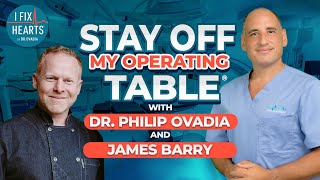
Chef James Barry developed Pluck, a freeze-dried beef organ seasoning made from liver, heart, kidney, spleen, and pancreas, after a health scare with his daughter. One teaspoon of the pure blend equals about two ounces of organ meat. The flavored versions are roughly 20% organ, designed to slip nutrients into everyday meals like eggs, sauces, and smoothies.
Chapters
Chances are you wouldn't be listening to this podcast if you didn't need to change your life and get healthier. So take action right now. Book a call with Dr. Ovadia's team. One small step in the right direction is all it takes to get started. Contact us@ifixhearts.com talk. That's iFixhearts.com talking foreign.
Welcome back, folks. Thanks for joining us. It's the Stay Off My operating table with Dr. Philip Obadia. Bill, I'm pretty sure we've never had anybody on the show sells what this guy sells, although we have had chefs before. So I'm really interested to get into this and I'm not going to spoil it. Take it away.
Yes, indeed. No, Real, real happy to have James Barry on with us today. Like you said, he's a chef. He's really got actually a fairly low, fairly long standing background in the kind of metabolic health space and has gone some unique directions, including his, I guess maybe it's his latest product or whatever that we'll talk about, which does fill a pretty unique space in the, the metabolic health world, carnivore world, all of that. It kind of crosses over with. But before we get to that, I'm going to give James a chance to introduce himself and tell our audience kind of maybe what got you into the metabolic health space to start with.
Yeah. Thank you for having me on the show, Phil. Yeah, it's been quite the journey. 20 years. Started out as private chef cooking for celebs and I'll name drops since. People love that. Tom Cruise, Butler, George Clooney, Mariska Hargitay, Barbra Streisand briefly. And just had a really amazing experience getting to cook for that 1%, you know, those very wealthy, high performance actors and even some billionaires. But yet something was still yearning in me. I just felt like I'm not here just to serve the 1%. I want to support more people. And I knew that how I was cooking was working because I was working with even before the celebrities, a lot of mothers who were struggling to lose their baby weight. And I just started cooking for them. And all I was doing was cooking real food. Everything was from scratch, even dressing, sauces, literally everything. And the weight just melted right off. So I knew I was on, I was onto something. Started a meal delivery service in Los Angeles, did that for eight years, nearly killed me. And then I took a few years off to support raising my youngest daughter. And during that time I really kind of my what came to me was now that I'm a father. I really wanted to make sure I was supporting my kids health with the most nutrient dense foods on the planet. And so that's what set me down the path that I'm on now.
Before you get into the particular path right now, I was reading just a little bit about what happened with your daughter. Yeah, give us the, at least give us the, the headlines on that because that sounds.
Oh yeah. I mean, any parent. I mean, what is it that we ultimately want for our kids? We want them to be healthy, we want them to be happy. Right. We want them to thrive. And my. We went to Canada to see my wife's father. It was our first trip with our youngest, who was our newborn, but she was about a year old now. And they both got Shiga toxin, which is a form of E. Coli for those that don't know. And it's deadly for young kids and the elderly. And my oldest, they both couldn't keep anything down. But my oldest had passed through pretty quickly and she recovered about three, three days later, maybe four. And I had to go away on a work trip and I thought my youngest was also on the mend. And this was about five days in for her. And I came back and she was still not able to hold anything down. And she was literally skin and bones. I mean, it was very scary. And it was that moment in my desperation, I was just thinking to myself, what can I give her because she can't eat solid foods. And then at the time she started to kind of get a little addicted because I think anyone that is struggling to eat anything, once they find the food they can eat, they kind of go all in on that food, whether it's crackers, saltine crackers, like probably, probably when we were all younger and seven up, which is what our parents probably put in front of us, but she started eating toast and she just would not stop eating just toast. And I'm like, this is not very good for her health, but it's better than nothing. But that's where I started thinking about what if I could put something on that toast that would not affect her kind of pickiness at the moment. You know, it wouldn't deter her from eating it, but that would increase the nutrients. And that's where I started to get the inkling of the idea for what if I made a seasoning or something like that was very nutrient dense, could just sprinkle it on top of that, you know, buttered toast. And she wouldn't, she would just the flavor, but she wouldn't realize that I was giving her mother nature's multivitamin.
And. And going back to your kind of earlier days as a private chef, you mentioned that you kind of recognize this power of, you know, making things from scratch and using whole, you know, real ingredients. How did that come about? Because, you know, as you say on your website, you know, you were a child of the seventies, as am I. And, you know, we grew up in sort of a processed food environment. So what do you think led you to sort of the original concept as a chef that, you know, the way to improve your client's health was getting back to this whole real food?
Yeah. It's funny, to this day, my mom is still amazed that she got a chef. So growing up, we knew dinner was ready because the smoke detector went off. That's the kind of household I grew up in. We were not a foodie household at all. Frozen dinners, probably similar to both of you, you know, because the microwave was invented while we were younger. And, you know, we went from frozen dinners to eventually microwave stuff. And meal was basically some meat, frozen vegetable, and a baked potato. That was pretty much what most. Most of our meals were. And yet, for some reason, I. So I had a neighbor who was kind of a more conscious chef because really cared about the ingredients he put in his food, and he kind of introduced me to that, oh, you can actually make spaghetti sauce from scratch. It doesn't just have to come from a jar, because that's all I knew. Right? We all. I think this is a really important point for anyone's health journeys. We only know what we know. Right. And growing up in my household, I did not know you could make things from scratch because my mother rarely did and my father rarely did. So I. There were so many things that I thought, well, this is just how they're done. They're in a jar, they're in a box, they're in a package, and that's someone else is doing it and some magic, you know, recipe, and it just appears like this. And no one at home could do it like this. That's what I grew up thinking. And so as I got older, I started to really learn. Oh, no, that's not at all how you can control your ingredients. You can literally make things how you want to make them and put in the specific nutrient dense ingredients or the no sugar ingredients or something like that to make it fit your dietary needs. And I remember when I went to culinary school, yeah, I guess it was in culinary school I learned how to do this, was. I learned how to make hummus. Now, this may not sound revolutionary to our modern day society, but, you know, I've been a chef for 20 years, so early on, and like, a lot of the stuff I was doing early on as a chef are now just becoming popular. So when I, you know, 20 years ago, when I was learning to be a chef, learning how to make this exotic, you know, recipe like hummus, which was exotic at the time, was mind blowing. That it could, it only required four ingredients and that I can make it so delicious and so clean and it could be better than what you find at the grocery store was mind blowing to me. And that's what took me down that path of you can make anything from scratch.
What, I guess what ultimately drew you away from being a chef, you kind of touched on it a little bit earlier, but maybe go into that transition a little bit more. You said you went from chef to the food delivery. Talk about that experience a little bit.
Yeah, I mean, as a private chef, it's an amazing ego boost to say, oh, you cook for Tom Cruise. There's actually a really funny story. So I was cooking for him when he was in Germany shooting Valkyrie and I was with him for nearly two years. And. And when I arrived on the set in Germany, inevitably people come and say, oh, what do you do? What are you here for? And I said, I'm Tom's chef. And they said. And they would just get this very quizzical look on their face like, huh? And they would repeat the question, what do you do? I said, oh, I'm a chef. They still were dumbfounded. And then someone, you know, translated or did something and they said, oh. And I basically learned that chef in German means you're the boss. So they all kept thinking that I was saying, I'm Tom's boss. And they didn't understand. And I was like, I just cook his food. But ultimately, it's an incredible ego boost to be cooking for these celebrities because the minute you say, oh, yeah, I cook for Tom Cruise, everyone just assumes you must be an amazing chef. So it's a really beautiful ego boost, but it ultimately just didn't feel fulfilling. It was def. It was hard work. I was learning a lot, I was giving a lot, but I just felt instinctively that I'm on a bigger mission. And I had started the meal delivery service, so. So there's many business books out there and I think the one I'm thinking of is called the E. Myth. But there it basically in this book they talk about how you can be a great Baker. But you may not know how to run a bakery. That's me. I was a good chef. I could pull off, you know, cooking for people, but I did not know how to run a business. And so my. My going down the path of creating a meal delivery was truly like my business education, because I did that for eight years. And I made the mistake of starting it out where I was trying to recreate the personal chef business that I had just come from. I was trying to create that for everyone. So I was like, oh, whatever your needs are, will customize. That works great. When there's 55 to 20 customers. When you get up to 100 to 150, you cannot. Like, we were literally making 80 different chilies. You know, this person didn't want onions. This person didn't want green peppers. This person didn't want yellow peppers. This one wanted turkey, ground turkey, this one wanted beef. Like, it was insane. And I immediately had to pivot and change. So I was really, you know, flying by the seat of my pants with that. But I still got through eight years and I was able to sell the business, not for much, but I was able to get from al. From under it. And what I think any entrepreneur can identify with is when you know you are. I was self funding it. I was working three, sometimes four jobs to make sure that not only everyone else was paid that, but that I was paid. Because for the first few years I wasn't paid right. I was making sure that any income that came in was covering the people working for me and then, of course, covering the growth of the business. So I had to work many other jobs. I was very much divided. It was taxing on my health. I didn't eat well, I didn't exercise. I was not getting very good sleep because I would have to stay up so late working on the menus for the next day. So it was definitely one of those examples of where here you're a health business supporting everyone else's health, but whose health is failing, it's the person running the business. And I assume everyone out there that's in the health field can identify with what I'm saying, because I haven't talked to one person yet that doesn't identify with that. So that was kind of what got me out of it, was just realizing I. I need to get out from under this business. The business actually still exists. It's just, I don't think they honor how I set it up. I don't think the food's at the same quality, but it was While I was a stay at home dad, which for anyone listening who is a stay at home parent, that was the hardest work I've ever done, was being a stay at home parent. So kudos to anyone out there doing it because it is hard work. It's very repetitive. It's kind of insanity. There was a piece of it that felt. I felt like I was going insane because we would literally every single day was the exact same thing, the exact same conversations, like Gaga, you know, kind of thing every day. And I literally felt like I was stuck in a hamster wheel and I was starting to go insane. But during that time I did get my health back. And that's where I started to get this idea. And I will share too, that when I had the meal delivery service, I had multiple other fantastic ideas, ideas that other companies have now taken and made multimillion dollar companies with. But I had them a long time ago. So one was to take bone broth and make it concentrated so you could just reconstitute with water. I had that idea before anyone was doing bone broth. I also had the idea for cultured condiments, which is really how ancestrally condiments were used. So ketchups and any condiments you put on the plate with your food were actually fermented. So they were. The original ketchup was fermented so that it supported digestion, it was a flavor aid, but also a digestive aid. And of course now they become just sugar laden, you know, flavors foods or whatever. But I had an idea of kind of bringing that back. You know, this is before Primal Kitchen, this is before anyone was really being conscious about the ingredients of their condiments and sauces. But I could not pivot. So I was getting these really great ideas. But I was so swamped by this meal delivery service that I just couldn't, I couldn't get out from under it. And so once I did and I got my creativity back, my health back, that's when I came up with Pluck. And when I conceived of Pluck, which is an organ based seasoning, which is a beef organ based seasoning, no one had done it before. So that was the other thing that blew me away, was like, here I just come up with something that coexists in the world already. So organ meats and freeze dried powdered form already exist. They're using supplements and obviously dried herbs and spices already existed, but no one had thought to combine them to make it to re bring kind of organ meats back to eating them versus Just swallowing them and Capsule. Capsule form.
Yeah. So let's dig into that a little bit. You know, you talked about how you were really. You had this idea about getting, you know, nutrient dense kind of seasoning that would be, you know, you could put on your daughter's toast or anything else. What. Maybe talk about that development process a little bit, how you kind of thought about, you know, doing it as organs instead of maybe just, you know, some people would say, why not just use the beef? You know, and how that whole thing came about and then how you got it so. Right. Because I'll jump ahead to our shameless plug at the end. I am now a big fan. I. You know, it tastes great, and I know most people, you know, initially they hear organs. Like, you know, we don't want to eat organs. You know, we don't want to taste organs. But this really is a product that tastes great and, you know, can develop. Can deliver that. That nutrient density that they do. But how'd you kind of go through that development process?
Yeah. Thank you. First of all, I don't. I definitely never take it for granted that people just the response I get from it, because any small business, you know, you start in your kitchen, right? You're. You have an idea. You just see it. It's almost like a little baby. You're nurturing the baby, and you're seeing what works. And I was having dinner parties. This is before COVID And I was having dinner parties, and I was. At the time, I couldn't even find. So Cluck has five organs, and it has liver, heart, kidney, spleen, and pancreas. But I couldn't find that the outside of a capsule. And I needed to find like, a, you know, a powdered form of it. And all they had was liver. So I bought some liver, and I started combining them with spices and herbs. And ultimately, what gave me the idea was that when we make a pate, we're taking different parts of the animal organs. Sometimes it's multiple species in a pate. You might have pork and beef mixed together or pork and chicken mixed together. And I was like, you're just adding onion to that, and you're adding garlic sometimes and herbs. So I'm like, if I can get the organs in dried form, why can't I get the herbs in dried form and just mix them together and kind of make, in a sense, make a dried pate? And ultimately, why I went toward organ meats is because, you know, anyone can look this up, but, I mean, organ meats are truly nature's treat. They are Mother Nature's multivitamin. So yes, they have similar nutrients as beef, but they have even more than beef. So beef is of course high B12, it's got all its nutrients. But organ meats have micronutrients that we're not necessarily getting just from the muscle meat. And then of course there's other thoughts that if you look at even standard processes, one of the earlier companies that were taking glandulars and put, putting them in their supplements and they did studies showing that actually that glandular that was in the supplement would target that same glandular inside the body that took the supplement. So there is this idea of like, supports, like. And explain that. Yeah, so the idea is that the part of the animal that you're eating is supporting that part in you. And if you think about it, and this is where a lot of people kind of. I think we have three main hurdles when we talk about organ meats. And I think that I'll share the hurdles, but I think that one of the, one of the issues with the first hurdle, which is the taste, the ick taste. And this is people that have never even tried them, they just immediately think they're icky. And I think that it's the association and the misrepresentation of thinking that organ meats are a detoxification organ. And so that means it's filled with toxins. This idea that it's like a sponge and it just holds onto these toxins and that is just extremely false. I mean organs, if they did that. So if an organ was like a sponge and just held on to all the toxins that it was filtering, we would die. I mean like our bodies wouldn't be able to do what they do. Our bodies are miraculous. And so if the organ was so inefficient, then our bodies would be inefficient. And that's just not how it is. Our bodies are extremely efficient. That's why so many people can live in chronic illness for 60 years or more. Right. It's because our bodies are so efficient. So really what the organ is doing is specifically we're talking about the liver and kidney. Those are the detoxification organs. They're ultimately taking the toxins that come into our bodies and they're turning them into water soluble form so that they can then get excreted out. So how do we excrete out? We have sweat, we have poop, we have pee. Right. If you are ill and you don't, your elimination pathways are not working well, then yeah, your toxins do get stored in the body, but where do they go? They go to the fat. They don't stay in the organ. Now true, if you have fatty liver disease, then yes, they're getting stored in the fat that's on the outside of the liver. But that's something that you know how healthy cow is not going to have. That is where, that's where quality comes into play. And that's one, that's the other hurdle that we solve, which is sourcing. A lot of people don't know how to source your organs, don't know where to source them. So we're sourcing them from New Zealand, which is an island. They get green grass year round, which you cannot find in the US has winters, we have times of the year where you cannot get green grass. So New Zealand though has it year round and they control their environment very well because it is an island. And also the meat industry is one of their top three exports. And so they've also set up a supply chain where the entire cow is processed and available. So you can get things like brain is something you cannot get here in the US it's illegal to sell that in retail. You can get glandulars that you can't get here. So there's, it's an amazing resource over there. And it's definitely viewed within the industry as the top place to get 100% grass fed beef organs. And most of the supplement companies, that's where they're getting them. So we solve the sourcing for that. The third thing we solved, which is the other hurdle is cooking. The culinary knowledge. We've lost the culinary knowledge. You know, our ancestors ate organ meats. And when I say ancestors, I'm just talking about our grandparents. We don't have to go that far back. You know, my, my mom talks about growing up on liver and onions and she grew up in Brooklyn where they used to walk by poultry markets and you would pick a live chicken and then you know, say, okay, I want that one and come back in a few hours and you'd have a warm carcass. I mean it was so tangible and so there was such a connection to the animal and what you ate, your food sources. And now, I mean, so many young kids don't even realize that pork comes from a pig because it's two different words. Right? They don't even realize it's, it's, that's the same thing. So there is a complete disconnect with our food systems these days. And because of organ meats not being as popular an item as they were once. Back in the day, we. When something's not at the store, when you don't see it, you don't buy it. And when you don't buy it, you don't cook it. And so we're just losing the how to around the culinary knowledge of organ meats. So ultimately, that was what I was solving with those three things, and what I ended up with, it's kind of been. It's been a real learning process because. So I. I originally, as we've already talked about, my desire was to support my kids in my health because I want my kids, as we mentioned, to be happy and healthy, But I also want to be around long enough to be with my kids, right? So my health is just as important. And so I knew, okay, I gotta get mother nature's multivitamin into my diet. I created a way to do that so it's easy and delicious. But then as the product got out there, I started to learn. Parents would contact me, say, oh, you might. My child had a skin issue that they were born with. We tried pharmaceuticals. We tried different things. Nothing was working. I heard that organ meats can sometimes support that. And we heard about pluck, because I can't give my kid a capsule. So we heard about pluck. We started putting pluck in their food, and the skin issues went away. And I said, oh, my gosh. I. I didn't know that, you know. And then we had other practitioners tell us, yeah, I have these clients who have some kids. You know, they're on the spectrum. They're very sensitive to textures and flavors, and they won't. The kids are just extremely picky, and they won't do anything beyond these few foods. And they're not very nutritious foods. So I told these clients or I. This is the practitioner telling me this. They said, I told my clients, start using pluck. And that was the only thing they were going to change. And now their kids are eating more adventurously. And I was like, oh, that must be the umami in the pluck. So pluck has an umami flavor. We have four of them. That's talked about a lot in school, but there's a fifth that we learned about in the 90s from Japan. But basically, it's salty, sweet, bitter, sour, umami. Well, umami is a unique flavor, so it brightens the other flavors. It literally makes food taste better, and it triggers that part in our brain of want us wanting more. It's kind of triggers that addictive part of our brain. This is why the ultra processed food companies use MSG in their products, because it brightens the flavor and it hits that addictive part in your brain. It's the glutamate in msg. Organ meats naturally have glutamate, so does beef. Right? So there's. These are. It's just naturally in there. And I'd much rather get it from organ meats than msg since MSG is, you know, can cause havoc for some people.
You just solved a long standing question of mine because I never could figure out why MSG got into the food supply to start with. But that's great to know the. Maybe talk a little bit more about umami because, you know, this is something that I don't think people are familiar with and you mention it, you know, on the website and everything and you know, it helps to enhance basically other flavors, but it's not really a flavor unto itself.
Well, it's best. It's hard to describe umami, I think because the other four are. The description of how it tastes is kind of in the word, right? It's salty, sweet, bitter, sour, like no, there's kind of no doubt. Okay, I know what those are. But umami is more like savory or meaty. That's how I would best describe it. And there's many foods that are umami. I mean, I'm sure people have seen in the stores umami seasoning blends. They're usually made with mushrooms. So mushrooms right away are an umami. Tomatoes are, as we mentioned, organ meats. There's many products out there, but they're not. There's some that when you concentrate them are just stronger in umami. And soy sauce, for example, is umami as well. That's what you're adding to sushi when you use soy sauce is that umami flavor. And ultimately it is. It's a unique flavor. So just like when I have something salty and I'm eating something salty, this is why kettle corn is so popular. So you're eating something salty. When I introduce something sweet, it's a completely unique flavor to what I'm eating. And so what happens is now it's not like I'm cutting the salty with something else that's salty. You know, they don't blend together. It's like the sweet stays maintains its own flavor and the salty maintains its own flavor. And so now you have, in the form of like kettle corn, you have something that's salty sweet. Salty sweet. So every time you take a bite, your Receptors, your taste receptors are literally getting bounced back and forth. Oh, this is salty. Oh, no, it's sweet. It's salt. And they actually feed each other. And that's why, typically, if you eat very salty french fries, you want something sweet to kind of follow it with. And because they literally, they're like the yin and yang. You know, they trigger each other. One will feed the other and back and forth. And that's really what we're talking about when we talk about salty sweet is we're talking about the standard American diet. That's literally what the standard American diet is. Everything in the standard American diet is predominantly sweet and salty. And so when we talk about picky eaters, that's what we're talking about. We're talking about people that are stuck in salty sweet. So one of the ways to kind of support someone to get more adventurous is just to introduce the other three flavors, sour, bitter, and umami. And you don't have to do it. It's not all or nothing. Like, I even recommend what people start to do. The practitioners would say, well, just add a little pluck, right? So that's getting a little bit of umami, and you can add it to their ketchup. If they're eating nuggets or something, you don't have to go all in and just sprinkle it on their eggs. You can put it in something they're already eating. But I even offer, don't just use pluck. Like, you can also take sauerkraut juice, which is going to be sour, and you can add a little bit of that juice to their ketchup or something, like whatever they eat. And just little introductions of these other flavors to the food that is common is going to start to open up their palate. And over time, what you do is you just keep increasing slowly, just like you would a pet. You know, if you were changing a dog's food, you'd go from 100% of the old food to 5% of the new food, until eventually the new food is 95% and 5% of the old food. Right. You do the same with a child who's stuck in one pattern. But the umami truly is. What's beautiful about umami is that instead of, yes, it's a. It's. It's a unique flavor. But what's also interesting is it brightens the other flavors. So one of the comments we get, and this is another thing I did not know when I created it, but we get this comment all the time as people are like, okay, so I cooked a meal I normally cook. It's in my staples of things I cook every other week, right? And all I did differently was I used pluck. And that night, my family wanted seconds. They all kept complimenting me on my cooking. And they kept said, what did you do? It's just so amazing. And I'll offer if anyone out there tries what I'm suggesting right now. So if you just switch in pluck to your meal, you don't have to tell them it's plucking. Take all the credit. Let them believe that you are now a better chef, because that's what pluck does. It makes people believe that your food is better than it was before you were using it. And that's the umami.
That's amazing. I'm on the website right now because.
I'm winning you over.
You know, love biohacking. I love trying new things with my body. I love trying new things in my mouth. And I'll be frank, I've wanted to find a way. I love the idea of liver. And every time I try to make myself eat liver, it's not the flavor, it's the texture. Yeah, texture just sends me right over the edge. So anything I can do to. To help myself out there, by golly, I'm going to do it.
And we get that comment a lot. You know, I've talked to many people, practitioners, and others that are like, you know, I just cannot handle the taste of liver, or I get a gag reflex when I try to eat organs. And I'm like, yeah, it can be a texture thing, it can be a smell thing, it could be a flavor thing. And with pluck, we decimate those traits, right? Because a, it doesn't look the way an organ meat normally looks. It doesn't taste the way an organ meat normally tastes. And you don't need to know how to cook it, so you're not touching it. You don't have to actively smell it while it's cooking. Because really, what happens when you cook organ meats, the taste and smell increase. And that's one of the big mistakes people make when they're cooking organ meats is they overcook them. They. You know, if you think about it ancestrally or prehistorically, when, back in the day, when tribes would go hunting, okay, this was a huge endeavor. They were going to feed their entire tribe. Sometimes it would take days, sometimes weeks. It was not a certain thing. They didn't go to the local grocery store, right? So they didn't know what was going to be on the other side of this. And a lot of times they would fast because fasting, as any of those listening that fast know, it heightens your senses, so it increased your ability to hear. It increased. It increased your kind of facilities to support hunting. What's the first thing they would do after fasting and after they've caught that animal is they would replenish their stores. And the way they did that was they either ate the heart raw or they eat the liver. Those two organs were how they replenished their stores because that's. They knew instinctively, they ancestrally that these were like the multivitamins of that animal. And I always try to point this out to people because a lot of people, you know, we're kind of stuck in this world right now where people are lobbing on to just one part of the animal. You know, I only rib eyes and Liverpool, you know, that's it. And I'm like, man, if you lived back in the day when there was, you know, a tribe of 21 people and the hunters ate that liver because there's only one liver in that animal, and you were hoping to get that liver, guess what? You got nothing. So I'm really trying to promote whole animal health. And I think there's nothing more planetary focus we could do than eat the whole animal. Because here's the reality of what is happening right now. And I was just at a Wyoming slaughterhouse and they confirmed, I mean, I know that they're not the only slaughterhouse. This is. A lot of slaughterhouses are very antiquated. They're very stuck in the kind of old way of doing things. And there are newer ones coming, but most of them did not have a supply chain for parts other, you know, 50% of the animal. So they would. They have a supply chain for the muscle meat, for some of the bone and some certain parts of the animal. But about 50% of that animal, this is what the Wyoming slaughterhouse confirmed, just gets thrown out, literally just trashed. It's not going to other industry, it's not going to zoo animals. It's literally just getting trashed. And to me, I mean, you guys tell me, is there any industry where they would just. They would produce 100% of something and then just discard 50% of it? Like, it. Wouldn't that be the definition of insanity, you know, an inefficiency? So it's just horrible to me that we're. I mean, it's such a disrespect to that animal. I mean, to me, that's the most inhumane piece of. What happens sometimes is that we're just, we're not utilized. You're going to take this animal's life and then not utilize the whole thing. It's, it's very, to me, that's a very American, you know, modern American way of looking, or industrial way of looking at eating, of food processing. You know, most other countries, they eat the whole animal. You go to Mexico and they're, you know, they have menudo, which is, which is a soup using the stomach lining. You go to France and they have the pates. You go to Scotland and they have the, the haggis, which is sheep and calf heart, liver and lungs mixed with suet, oatmeal and seasonings. And if it's traditional, it's boiled in the stomach of the animal, you know. And then Ireland or. Yeah, Ireland has the blood sausage. UK has steak and kidney pies. And I remember when I was once in the uk, I was out of college, or actually I was there for a summer while I was in college and I was working at a pub and they were like, hey, would you like some steak and kidney pie? And I was like, oh, yeah, that sounds great. Thinking that it was kidney beans and. Oh, no, that was animal kidney. And it tasted like it. And I was like, that's a strong taste, though.
I have a theory that the reason that the English were able to explore the entire world and colonize pretty well all over the world was they were just looking for something good to eat.
It's very possible. I mean, in many ways, though, you know, it's so interesting because here we are, we're wasting 50% of that animal. And then what's happening where we're a nutrient? So it's something like 94% of Americans are nutrient deficient and we're not calorie deficient. And I'm sure Phil's talked about this many times. It's. We are an overweight, obese nation. So it's not, we're, it's not that we're not getting enough food. We're getting the wrong foods. And I think it's very fascinating that we're still getting plenty of food, but yet we still have to go and supplement our health for our health. And we're, I mean, the supplement industry is a multiple billion dollar industry. I think it's 40 or 50 billion billion dollar industry. So if we just ate the other parts of the animal, I wonder if we would have to buy all those supplements. I mean, I would, I have to assume that it would get cut at least in half, if not more. And I think what's interesting regarding that comment is one of the issues, you know, if you, everyone, anyone ever watched the Shackleton documentary, they talked about how a lot of them died from scurvy of not getting vitamin C if they had eaten parts of the animal. There are parts and there are some, there is an organ, there are a few organs that actually have vitamin C in them that they could have actually gotten their needs met, but they didn't. So it's very fascinating because you go to certain parts of the world, like Alaska, for example, they have their nutritional guidelines and because, you know, they can't grow their vegetables and fruits year round in their nutritional guidelines for the winter, it adds organ meats under new it, you know, it will say like vegetables and fruits and it will say organ meat. Because they know that those are going to give them the nutrients, the micronutrients that certain other foods would also be giving them, but that they can't get you, you know, certain parts of the year you can get organ meats year round. Yeah.
So your pluck has liver, spleen, kidney, heart and pancreas in it.
Yeah, five organs. And we're actually thinking of adding lung too because going back to that like supports, like there's more and more, there's more and more respiratory issues happening. And so my thought is let's see if that supports. We're going to even offer a brain product at one point. We're not going to combine it with our main blend because I know some people are really scared of brain, but for those that want it, we're going to offer it once again trying to support the like supports. You know, Alzheimer's and dementia is at an all time high. We know that there's toxins in our environment that are probably contributing to this. But my thought is that, well, back in the day our ancestors were eating brain. You know, if you grew up on a farm in the Midwest, you were eating brain with your eggs probably. And of course we know that Alzheimer's endometrium was lower back then. So part of me just thinks if maybe if we're eating brain, it would help to offset some of these environmental toxins. So I'm just, I would more, I'm just more lean towards if it's natural, I would, I like to give that a try first before we go the pharmaceutical route. So yeah, so I'm trying to even get more organs in there. But here's what's interesting. So each of those organs that we have in Pluck. We mentioned that, you know, technically every organ has the nutrients it needs to do its job. And that's where the like support like comes from. But for example, a lot of people don't know this. They focus on liver. But spleen for example has five times the heme iron than liver. Plus the spleen does have some vitamin C. Pancreas is the one that has natural enzymes. So anyone that's taking pineapple enzymes for digestive aids, Pluck has the digestive aid in it because it has pancreas. So I really do turn towards, I truly believe whole animal nutrition is important and I believe that we can get potentially the majority of our nutrients from that whole animal. I really do believe that.
Yeah, sorry Phil, go ahead.
I was just going to ask what do you think the, you know, the sort of dosage needed is right? You know, how much of these organs do we need to get? You know, I think people really don't understand how nutrient dense, you know, organs are. You know, you mentioned earlier, it's sort of nature's multivitamin nature superfood. People, you know, in my experience don't really understand just how nutrient dense these things are. And a little bit goes a long way. You know, what do you typically kind of recommend to people in terms of how often or how much they need to be consuming of this to get the effect?
It's a great question. And yes, I want to just stress how concentrated they are, particularly when they come in freeze dried powdered form. So the way I like to kind of bottom line, how, what is how nutrient dense are organ meats? I mean anyone can do a search. When you do a search, it will come up and it will show usually like salmon, beef might show kale, blueberries, something like that. And then it will show beef liver. And you'll see on that graph that they show for what nutrients are and vitamins are in, in each of these foods, inevitably one of them will have something that has nothing or very little or trace amounts or. Yeah, you'll just see like kind of holes in the graph on certain things. The only one that checks off every box is beef liver. And when we talk about is it nutrient dense or I like to describe it as well the thing that science tells us we need to create life prenatals, they, they say you need a prenatal to support creating life. All of those minerals, vitamins, nutrients are in organ meats. So organ meat is like nature's prenatal in a sense. That's how nutrient dense they are. They are. I'm not a doctor, so I'm not going to tell you to not take a prenatal, But I am saying that they are. They are similar in terms of the nutrient density of the prenatal vitamin, but they are mother nature made versus, you know, laboratory made. And when you take a hundred percent organ meat, a raw organ meat, and you freeze dry it, you go from 100% down to about 21%. So you lose between 79 and 81% in water weight. That's how concentrated these are. So when I like for pluck, we have a few different varieties. We have three that are flavored very, you know, savory flavors. They have red Monroe salt, then they have spices, organic spices and herbs. And they're each distinct flavors. And then we have one that is pure. The pure one is just organ meat. So that when we always tell people, like, if you're someone that knows, hey, you're anemic, you know, you've been tested, you've gone to Dr. Phil and you've gotten tested and he's told you, hey, this is what's going on. This is what you need, then 100% pure is a good option for you because you can control your dose. So 1 teaspoon of pure is equal to 2 ounces of organ meat. Now, the other ones have nearly 20% organ meats in them, and then they're mixed with spice and herbs. I look at those as more like, I'm just someone who wants the nutrients. I want it regularly, and I don't want to have to think about it. I just want to go into lifestyle mode and just kind of always get it in. And we've known people who got tested who are anemic and who just use the seasons and their numbers went up. So we know it works. But the pure is for the people that are like, look, I'm truly like, I need to treat it like a supplement versus a food. So that's one thing. And then in terms of how much dose does everyone want? And I love talking about this. I'm very passionate about this piece. So I think it's interesting because if you get a bottle, a supplement bottle, we'll say take six, between six and eight capsules. And I'm thinking to myself, how do they know what you know? You know, Here we have two people, you have Jack and Dr. Phil. Do they need the same amount of supplement, like capsules? Like, how do they know? And then, you know, you hear people, influencers saying, oh, you need 2 ounces of organ meats. And I'm like, how do you, how do they know who's coming up with these numbers? And I, there's part of me that believes, I think they're just trying to sell their supplements. And there's, what's interesting is when you swallow a capsule, you don't really know what you're getting. You know, you only know if you get tested. And when you get tested, you know, am I low in something or am I high in something? Right? But even when someone recommends, take this supplement, they're recommending the dosage because they're basically, they know you're this depleted or you have this much, you know, and they're trying to offset it, but they don't know exactly when you're going to hit the numbers. They need to retest you to make sure you are hitting your number numbers. In many ways, when we swallow something, we're bypassing an ancestral communication pathway, which is our neuro lingual response, which is basically our, the process of eating. This is something that has, you know, our bodies are basically Homo sapien, right? So they've been developed evolutionary biology for the last, what, three, is it, two, three hundred thousand years, something like that. So, so basically we have a communication system that was been, has been developed, a biological system that was designed to keep us alive. If you ate something and it was bitter or it didn't have flavor, that was an indication that it could kill you. And if you ate something that had flavor, usually equal nutrition, right? So this is a whole process that was naturally there that you completely bypass when you swallow something. So I am a huge proponent of, okay, we are the only species in the world that looks to someone else to tell us what to eat. There's 9 million species in the planet. How are we the only one? Right? We're the only one because we've confused ourselves and we have the marketing and the laboratory made foods and the Franken foods, like we're just so confused and. But our bodies do have the knowledge. It's deep, deep in there, but we can't access it. We're not going to access it the way our it was back in the day because we don't live in that world anymore, but we can get closer. And I truly believe the only way to do that is to mindfully eat real food. But you have to eat it and you need to be mindful. You can't just scarf it down standing up or sitting in your car in traffic. You need to actually slow down, maybe take A breath before you start eating. Maybe do a prayer, maybe say grace. Anything to just get you to take a breath before you start eating. Put your fork down in between your bites. Just slow down, focus on chewing and let the flavors and that communication, that neural pathway communicate with your brain in. In your gut of what it needs and how much of it needs. And I truly believe that if you eat your organs, your body will tell you. And I'll give an example that's very tangible. And I think that everyone listening can identify. If I put salt on your tongue, the first dab might be tasty, the second dab maybe. But the third dab does not taste good. And the fourth dab definitely doesn't taste like, literally, the taste of the salt changes in your mouth, and your body starts to say, I'm overwhelmed. Stop. Too much, right? We all have done this. We all know that our body will, like the fl. The taste of the food, will change if we're getting too much of it. That is your body's neural communication pathway working. So what if you swallow a salt tablet? What happens? Nothing. You get no communication. Maybe 30 minutes later, you're like, wait, why am I feel. Why am I so bloated? Oh, my gosh, look at me in the mirror. I'm so bloated. Oh, I just got too much. Assault, right? So one, our body's working with us, and the other, it's guesswork. And I'll give another example, like when you work out or when you try to lift something heavy. Another way that this communication pathway works is when you're trying to lift something heavy. If your grip is giving out, it's because your body cannot handle the weight of what it is you're lifting. So our grip is a form of its own neural pathway. And when it gives out that it's saying, no, don't lift this, because you're going to hurt your body. You're going to hurt yourself. So those weightlifters that are wrapping their hands around those heavy weights and not smart, in my judgment, because you're working against your body's survival instinct.
Now I got to go rethink my straps, which are.
You didn't think that Oregon seasons would make you rethink your workouts.
Think about that.
Oh, you want. You want to go even deeper? This is something I haven't said in a while, but I really do believe it. But I'll throw it out there just for fun. So I truly believe that organ meats can save the world. And what I mean by that is that I think that most people are chronically ill. I think that we treat the world how we feel, so we don't feel well in our bodies, and then we treat others like that. And then I believe if I can support people, if all of us can support people in feeling better in their body, then that means they will treat others better and then we will now have a better world.
Yeah, we certainly love that sentiment. And you know, I think we're aligned in that thinking that, you know, it's really, you know, whole real food is what originally made us human beings. And getting away from that has really worsened every aspect of our lives. And the more that we can get back to it, the better. You know, I just love the concept of a product like Pluck and. And then you've delivered well on the concept. And really, you know, like I said, I wholly endorse people getting it. You know, I thought it was interesting, you kind of alluding earlier to practitioners sort of prescribing this and how great would it be that instead of writing the prescription for the pharmaceutical, you know, we just write prescriptions for whole real food and we write prescriptions for Pluck. And I think, you know, we could make a lot of progress, certainly on the health aspect. And as you said, I do believe as well that would lead to improvements in so many other areas of our lives. Because we've seen it, you know, we've seen the people that improve when they start eating whole real food. And it's not just their, you know, their measurable physical health that gets better. It's really all aspects of their life that get better. Great. Yeah. Why don't you tell people where to get it, how to get it? You alluded that there are some options, some different flavors. Talk about that a little bit.
So you can find us on Amazon, you can find us at our website, eatplu.com and we have the four flavors. So one is Original. That was our first product that we put out there. They're all. It used to be called Allpurpose and we changed it to Original because really they're Allpurpose. I mean, you can use any of the three flavors on anything and they'll make it taste good and give you the boost of nutrients. So we have the original, which I would compare to Old Bay. It's kind of just a general, nice, all purpose seasoning. It's got a little smoked paprika in there, lemon peel, thyme, parsley, and garlic and onion. And then we have zesty garlic. And I'm really proud of Zesty Garlic. So as a chef, this, I think this is really important of how I formulated this. So when you go and you buy spices in the store of spice blend, what's the first ingredient of that spice blend? Typically, it's salt. That's because. Yeah, because their salt is the cheapest ingredient. And so that's how they're going to make their margins. And what, really, what we're buying when we buy most seasoning blends is we're buying salt with seasoning. And that's why they're also so high in salt, because it's the first ingredient block. The fourth ingredient is salt. So pluck is truly a seasoning with salt. So very different. And I think that's also one of the con. One of the reasons why it does make food taste better, because it's truly a seasoning. It's truly has lots of flavor other than just the umami from the organ meats. And so the zesty garlic I'm very proud of because that one. There's a lot of people out there that can't do nightshades like peppers and eggplant and peppercorns. They can't do those kinds of foods because they. They get reactions to them, and they also can't do. And seeds are like cumin seed or any seasonings. There's lots of seeds that are seasonings. Right. So they can't do those. And the zesty garlic is autoimmune protocol. It has no nightshades and no seeds. And so. And it said it's truly a. It's a unique blend in that most AIP blends are filled with turmeric. So they're very turmeric centric. And this does not. It doesn't have any turmeric. So it's a really wonderful blend. It's become a favorite of so many people. And then our third is, we call it spicy mild. We originally called it spicy, but then I was like, oh, people think it's really hot. So I kept it mild because we are first and foremost a seasoning for the family. Like, I don't want parents out there making multiple meals. I want you to make one meal for your family. And so our, our. We launched, in a sense, with these four flavors that are all family friendly. Even my daughter, who does not like spicy, can do spicy mild. So spicy mild is a great taco seasoning, for example, or just for anyone that likes a little bit of heat. I designed it so it's got flavor first, then heat. Since most spicy food is just Heat. You just get heat right up front. No flavor. And then our fourth is the Organ Meat Blend. It's just 100% of our blend. And what's kind of cool about that one? And this is another thing I didn't know when I first put it out there. I was more putting out there because I was like, look, if you can't eat the seasonings we made, then do your own pluck. Like, here's the blend. Add it to your favorite seasoning. You know, I just didn't. I don't. I didn't want to create any barriers for anyone. So that's why we put out just the pure blend. What we found, though, was that it actually works for sweet or savory. So people can add it to their smoothies, people can add it to their coffees. If they're doing collagen coffees, you can add it to brownies. I mean, you can literally do whatever you want with it. Sweet or savory. The key with it is you just add it something that already has flavor. The other cool thing about it is that you can give it to your pets. One of the biggest issues I have with the pet industry is that, you know, if you. If an animal is in the wild, the first thing they're going to eat of that kill is the organs. And yet. Right. We all know this, but yet what is the missing ingredient? In the majority of pet food out there, there's zero organs. And I truly believe, just like humans are depleted, so are animals. And they need this nutrition. And I have a lot of customers. What they do is they take the pure and they just put a little bit of it over their pet's food. And I guarantee you will take, if your pet is at all picky around their food, a little bit of this. Not a lot, just a little bit, and your animal will gobble it up. It's amazing how animals react to it. It's primal how they react to it. It's fantastic. But those are our offerings and, and, and we have lots of recipes on our website and lots of opportunity to give us feedback of how you're enjoying it, how you're using it. We love to get feedback, and we've got more products coming down the road that I'm super excited about. So just get on our newsletter and you'll learn all about those as they come out. So the pure is just the organs. Now that organ blend that is pure is in all four, you know, is in the other three products. It's just the Pure is 100% of it. There's no salt, there's no seed because you don't want to give salt or herbs or spices to your pets. So the pure is completely just the organ.
Yeah. Again, it's eat pluck. And I just got a bunch of new ideas on how to use it. I thought I had used it on just about everything. I didn't think about coffee and I didn't think about it for my dogs either. But sure, they'll love it.
And that's the one thing is we're constantly blown away is that I haven't found one thing it doesn't taste good with. Like, we've put it. I put it on oysters and my kids put it on popcorn. We put it on our eggs, of course. Eggs. It's game changing on eggs. We put of course on any meat from fish, chicken, steak to venison to even tofu. If you're eating tofu, it doesn't matter. I, I can't even tell you that. It's, We've joked like it's great on everything but ice cream. And then a customer said, actually I tried it on ice cream and it was good. You know, you never know. But let's offer everyone a discount code as well. If you're open to that.
You are totally open to it because I'm fixing to check out.
All right, let's figure that out right now. What should we make it, Phil 20 for or just how about Phil, Dr.
Phil go with ifix hearts. That's it.
Ifix hearts. So we're gonna do a 20 discount for ifix hearts, all caps. I'm going to create it right now for Jack so then that Jack can use it and that will be for 20% off your first order. Because we really don't want, we don't want any barriers. I want you to get organ meats into your diet. It's that important. And it's just the beginning. You know, if you, if you're like, this is great, you got me hooked on organs. Guess what? You don't have to stop there. You can start eating your organs. And we have lots of solutions for that. You can go to our website. In our recipe section, we, we show you chicken heart recipes, we show you pate recipes, we show you how to make beef heart jerky. I mean, so we are not just about promoting pluck. We really are promoting whole animal health. So however you get in your diet, I am, I, I just applaud you.
It's a great question. If I put it on my liver Will I be able to eat liver?
I know, right? Actually, I don't know if you'll be able to eat the liver, but you'll definitely. The liver will taste good. But I will say this. So I was at, actually where we met when I was at Hack your Health. I did a cooking demo and I showed people three ways to eat liver. And everyone in that audience, there was about 80, 90 people in the audience, they all left eating organs and. And so many of them have never done it before. So here's. I'll just do a really quick how you do it. So you focus on the organs that are closest to muscle. Meat first. That's going to be heart, that's going to be tongue. You start with not beef, but start with chicken. Chicken hearts are extremely mild, Extremely mild. They take on the flavor of anything. So let's say you're making a spaghetti sauce. Chop up just a couple. It's all about ratios. Just treat them like mushrooms. So when you buy chicken hearts at the Whole Foods or something, they're going to come 10 in a pack. Just pull out two, chop, dice them up, throw them in the sauce. Just start slow, start small. And then what you can do is you can buy, when you're ready, buy an actual beef liver. You know, maybe at your local farmer's market. When you get it, it's going to be frozen. What's overwhelming about organ meats is when they're defrosted, when they're frozen, it's just a hunk of something. You can't even really call it meat because it's a different texture. It just looks kind of dark red, like blood. But what you do is you take that and you just grate it. Every time you're having ground meat, just literally take out the frozen liver, grate it using a box grater. Just great. If you have a pound of meat, maybe do 1 tablespoon or maybe 2 tablespoons max of that grated liver, blend it in, mix it into the ground meat, no one will know it's there, and just start to slowly ease into it. The key though, with when you cook liver is actually it's the least. It's. It's at its easiest to eat when it's raw. So you technically could, if you're buying from a clean source, when it's frozen, just let it defrost a little bit. So you can cut it up into very, you know, small pieces. And then you could technically just take those pieces and throw them in your smoothie and just blend up. Just A little bit. You know, ratio wise, you're just doing, like I said, maybe a tablespoon or a teaspoon to your. To your smoothie. And you can blend it in like that, or you can even try slowly, just eating a little bit of it. Just a little bit raw is the key. And you will notice it's not as strong as it is when it's cooked. And then the next phase is to try to cook it but not overcook it. And how I recommend doing is just remember that when you pull something off of the stove, there's residual heat. So you don't want it to be. You still want it to be a little pink when you go to pull it off. And that's the mistake people make is they let it go gray the. In the pan, and then when you pull it off. So once it's gray, it's already overcooked. And now when you pull it off the pan, still hot, it's even overcooking more. And then the flavor gets stronger. I would try those two. I just gave you lots of tips there. So choose one of those that fits your lifestyle, and you'll see you will eventually start to tolerate it, because I will say this. We can tolerate. We will acclimatize to nearly anything. Meaning that's one of the human body's ways of survival. Right. You talk to anyone that's ever been incarcerated. The first day that they're in jail, the food is the worst they've ever tasted. The once they've gotten out of jail, they actually miss the food. So the more you do something, you just keep doing it, the more you actually do it, your body will eventually start to like it. That's just how it is. That's why the first time you have bitter dark chocolate, you don't like it. But the hundredth time you eat it, you do like it. That's how it goes. All right.
The website is eat pluck.com.
Yep.
Four different flavors. I've placed my order Ifix hearts, all uppercase for 20% off your first order.
Yeah, I got. I'm gonna put that in right now. IFIX Hearts.
Yep. Yes, please do so that I can get.
Putting it in right now. Putting it in right now.
Awesome. Thank you so much, James. It's been a great conversation, and it's really been great getting to know you and hope to see you again soon in another conference or elsewhere and just keep up the great work that you're doing.
Thank you. And it's so mutual. Phil, Equally. I loved getting to meet you and our conversations, and I look forward to more. Thank you both, and nice to meet you, Jack.
Likewise. Good stuff. And I can't wait to sprinkle some of this stuff on my eggs in the morning. All right, this has been stay off my operating table. Dr. Philip Ovadia, thanks for joining us. Look forward to seeing you next time.
Chances are you wouldn't be listening to this podcast if you didn't need to change your life and get healthier. So take action right now. Book a call with Dr. Ovadia's team. One small step in the right direction is all it takes to get started. Contact us at iFixhearts.com talk that's iFixhearts.com talk.










