Vinnie Tortorich on Myths, Missteps, and Taking Back Control
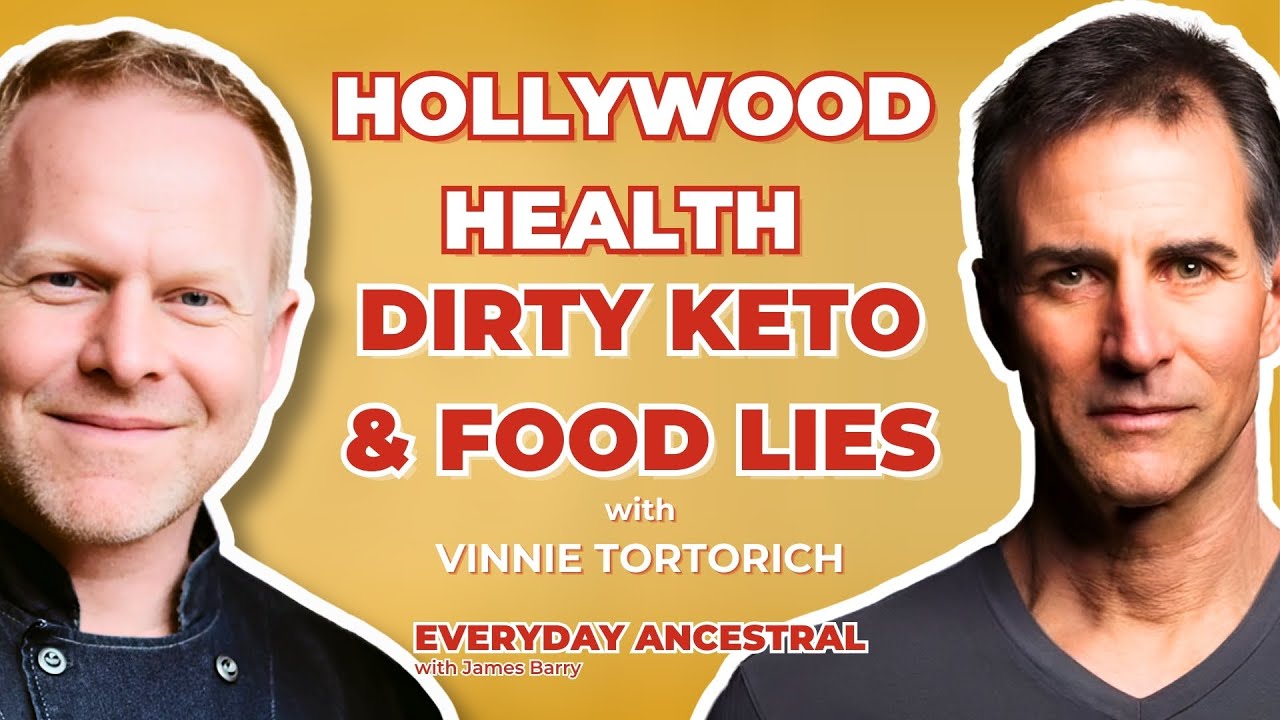
Vinnie Tortorich, a Hollywood trainer turned documentarian, built his career calling out fitness misinformation. He kept his energy up during a 2007 leukemia diagnosis with keto and low-carb eating, and now argues diet, not exercise, controls weight. His documentaries challenged food and pharma industries.
Chapters
Welcome back to the Everyday Ancestral Podcast. So excited and honored for our next guest, Vinny Tortorich. He's a documentarian. He's also an OG celebrity fitness trainer. He has a very popular, longstanding podcast named Fitness Confidential. Let us know what you think. Here's Vinny.
You know, sometimes people will say to me, you know, hey, I've never done any podcast. You're my first one. Are you sure? It's like, yeah, yeah, I started with number one, you know?
Yeah.
Yeah. Everybody starts somewhere.
And how long ago did you start? I think we're on year number 12 for podcasting, but you got into fitness world, what, 30 years ago?
Oh, 40. Well, well, if you go way back, I walked into a gym when I was like, 8 or 9 years old when gyms didn't exist. It was a private gym that this old Italian guy had in my hometown. And by the time I was 15 or 16, he and I, you know, I pretty— a kid convinced an older man. It's like, hey, let's move your equipment somewhere else and you can charge membership. I mean, I didn't understand business or anything, but he was like, yeah, that's not a bad idea. Because other parents started going to, his name was Joe. It's like, Joe, can you do with my kid what, you know, what you're doing with Vinnie? So we, he found a place and rented it and I was his only employee and he paid me exactly zero. That's not true. He paid me with a key to the building, which means I could go in even after hours. Right. So I worked for free and I was probably 15 at the time. teaching people twice and 3 times my age how to lift weights. That was the beginning of my career.
What got you into the gym? Was it like bodybuilding, Arnold Schwarzenegger? What inspired you?
I was getting beat up a lot when I was a kid and I wanted to become a superhero, really. You know, it's like, but I knew superheroes weren't real. Like I knew, you know, like, you know, Spider-Man and Superman wasn't real, right? And one day I was watching, I wrote about this in Fitness Confidential in my book. One day I was watching Wide World of Sports on a Saturday and at the end of the show it went right into the Jack LaLanne Hour. Jack LaLanne had a television show and he was sitting on a chair backwards and explained to you, you know, like, you know, He would go, okay, ladies. He was basically talking to women. We're going to do hip thrusts and we're going to do jumping jacks and push-ups and all this stuff. And I sat there and watched Jack and I was like, wait a minute. I know Superman isn't real, but this is a real human being. And all I could concentrate on, James, was that vein in his bicep.
Hmm.
And I was like, Wow, he is a superhero, right? And I wanted to become him. So I saw him lifting a weight, doing a shoulder press above his head. So I thought to myself, if you push weight over your head, you will get a vein in your bicep. Oh, like that.
Yeah.
That was the whole impetus to what I was trying to do. I was trying to look like this man. I didn't understand, oh, you would have to do, you know, a bicep curl. Didn't occur to me. It's like he's pressing the weight above his head, therefore I will.
Now, when did you take it to a more serious level? Because you clearly trained as a fitness instructor. You got some anatomy, you learned how to work out. So when did that happen?
Well, you know, well, every, I always say everything I learned about, you know, proper technique and powerlifting technician and all that literally happened with Joe because the guy was a genius. But then when I got to school, I went to school on a football scholarship to Tulane University. And you had to declare a major. And, you know, most of the athletes were taking like BS kinds of majors and, you know, communications or whatever. And I was like, well, wait a minute, I'm here. I might as well learn something. So I started taking a lot of biology and kinesiology courses and it was just a hodgepodge of courses. And a The football team had all these counselors that, and a counselor noticed that I was making the Dean's List. I made the Dean's List in my second semester in college, and they don't see this very often with football players, right? And he came to me and he goes, hey, you made the Dean's List. And I was like, thanks. I don't even know what that means. And he goes, oh, it's a very good thing. And he said, but we, meaning someone looked at this and they had a committee over it, we've noticed that you just took a hodgepodge of classes and they weren't easy classes and some of them weren't even freshman-level classes. Who told you to take those? And I went, you guys weren't doing your job, so I just went off and took any class I wanted. And they said, well, do you want to be in pre-med? And I said, no, I don't want to be a doctor. You know, that sounded too heady for me. And he goes, well, you took all pre-med courses and you made the Dean's List. What do you want to do?
Wow.
And I said, I don't know. I like teaching fitness. And they said, well, you can become a school teacher and be a PE teacher. But they warned me and said, you're way smarter than that, which I thought I looked at it as, screw you. You know, both of my parents are teachers and my mom's brother's a teacher. I come from a family of teachers. You're telling me by becoming a teacher, I'm going to belittle myself, much less a PE teacher, which is something I thought to be an admirable thing to do. I'm going off into the weeds here, James, but—
No, I love it. I'm really curious. So, I mean, really, you're one of the early fitness trainer adopters. I mean, you potentially helped to build the industry.
Yeah. Well, when I became a personal trainer, the career didn't exist.
Yeah.
I was doing it in New Orleans. Jake was out in Hollywood. There was a guy named Mackie Shilstone who had a few personal clients and some professional athletes. I knew Mackey very well, who also came out of Tulane. Of course, the late, great— he just died. I can't think of— Deal a Meal. Why can't I think of his name?
Deal a Meal.
Deal a Meal. You know, Sweatin' to the Oldies.
Oh, oh, yes, of course. Richard Simmons.
Richard Simmons, who was from New Orleans. We all, believe it or not, all the fitness guys seem to have come out of New Orleans, right? And, you know, we all kind of, you know, vaguely we knew each other and we were all doing this stuff. And magazines started writing, like Shape Magazine did a thing on me, like an exposé back in the early mid-'80s, right? They were like this new thing of personal trainers. The job didn't exist. People like Fred Hahn came along a little later, I think, and started doing, you know, super slow and all that kind of stuff. And he's still out there, you know, and then, and then everybody's mom decided, hey, I'm dropping my kids off at school, put on a pair of tights and I'll call myself a fitness trainer. So the business grew out of just whole cloth, if you want to look at it that way. How?
I understand that, you know, you're all kind of learning, you're defining an industry at that time, but I know that you started to get kind of looked at as like how the angry fitness trainer. And so there was an aspect of the industry that you were really upset about. Can you talk about that?
Yeah, that was a moniker that my wife put on me. So that came much later. You know, I, From New Orleans, I made it out to Hollywood and became one of the early celebrity fitness trainers. Again, now everyone, they just call themselves celebrity fitness trainers. It's like, well, who have you trained? Do we know any of these people? You know, but I was out there working with actors and actresses and the whole thing. And my wife is an actress. I never worked with her. We just met. You know, we met at a Starbucks, but I was out there working in Hollywood and doing my job and just watching all of the stuff that was being sold to people that didn't work, right? Infomercials were a big thing. You know, just everything was, hey, drink some, I don't know, drink some green tea and you'll lose weight. Have some raspberry extract and you'll lose weight. You know, cabbage soup diet, you know, all these different things were coming around and I would sit there and go, no, no, no, no, no. You know, just drink apple cider vinegar and lose weight. You know, everything is this quick weight loss thing. And I would just get angry at, you know, people being lied to.
Yeah.
And that was the beginning of my thing, was that I, I, I hate when a disservice is being done. I don't care if it's in fitness or anywhere else. I'm always the guy standing up going, wait a minute. You know, I'm not an angry guy by nature, but, you know, we, we, when we started the podcast, they said, well, you have to call it something. And my wife goes, well, you're trying to right the wrongs done people through fitness. Why don't you call yourself the angriest trainer? Call it the Angriest Trainer Podcast. And it wasn't like I got on there and started yelling at people. I'm not Jillian Michaels. I don't yell at people for being fat.
Right.
But that moniker kind of stuck. And then when the show got big, I started going on some national television shows and they started going, you call yourself the Angriest Trainer. You don't seem so angry. And I'm like, okay, we've wasted half of my interview explaining that I'm not angry. So, right, we dropped it and just started calling it The Fitness Confidential podcast.
Now what I love, 'cause I, I, you know, I've been in the food industry now for 20 years. You've done this for 40 potentially plus years.
Yeah.
What's, what's the biggest, how do I put this? Like from where you began to where you are now, what's the biggest change Because obviously trends come and go, but what's the biggest consistency in terms of what you've seen that works?
Diet over exercise. You know, for a long time, the infomercial world was really big. I don't think people realize how big that was. We didn't have an internet to go to, so Guthrie Ranker and all these companies would sell products on television. So they were lying to you saying, hey, if you use our Ab Rocket or our Butt Buster or whatever the product was called, you know, the Thigh Master by Suzanne Somers and all that.
Suzanne Somers. I remember that.
They would tell you, oh, just do this one thing, this one exercise, and you can look like this famous actress, right? None of it worked. So that They used to try to explain it to us that exercise was how you lost weight. And I was out there yelling as loudly as I can. I had a radio show at the time going, exercise is a poor way to lose weight. You can't outrun a diet. You can't outlift a fork. You can't. It just does not work. So if it's not exercise, they will go, well, Vinnie, what is it? It's like, it's diet, right? And they would go, okay, eat less. And it was like, well, that's part of it, but not really. Because if you're eating less of the wrong thing, you're going to still get fat. If you're just eating grains, I mean, my great-grandmother who barely spoke English, you know, she came here when she was 13 and lived to be 100 from Italy. She knew that if you ate pasta and bread, you got fat. And she would say as much to us in Italian, you know, you get, you're getting a panza, you know, they have words for it. That's not very kind. In Italian, right? They would basically call you a lard-ass for eating, you know, brains. How did they know this? How did every peasant in this country have this information, yet the American Heart Association doesn't? It makes zero sense. So I started smelling a rat early, right? Even back when I was learning, you know, getting my degree in exercise physiology and my backup degree in nutrition from a medical school, no less, right? I knew the truth, but no one else was talking about it.
So how has it changed? Like, in terms of specifically your diet, has it changed?
Not really. The only thing that's changed for me was And, and I hate myself for doing this, but I kept everything a secret because that was my, you know, when, when you're training celebrities and you're the guy that the studios go to, I'm not gonna let my secrets out. You know, they, they called me the quick weight loss guy in Hollywood. Now we're talking about, you know, let's say, let's say you, you were an actress, right? And You did a movie. The way actresses have babies is they'll go, okay, I just finished a movie with James Cameron. It won't be out for at least a year. I'm going to now go have a baby. They plan their pregnancies in between big movies, right? Part of their contract is when the movie comes out, they have to be on the red carpet. Now they have baby weight, right?
Right.
That was a big— people think all of my business was putting muscle on people like Hugh Jackman to go, No, my biggest thing was the quick weight loss guy. Get 30, 40 pounds off of an actress that just had a baby that now had to go promote a movie and look like she did in the movie. Right? So I wasn't going to give those secrets away when I was doing that. The thing that changed, I guess, is the question here is the internet came along and I said, you know what, let me just start giving this information out for free and see what happens. That, that was, I don't know if that's what you're looking for, but that's the answer.
Well, could, can you share then? So what, what is the diet that you have found has been consistent and consistently works and that you still recommend to this day? Because you have a few different, you know, you had your first documentary Fat, you had your follow-up Fat: A Documentary 2, Beyond Impossible, you know, touching base on the corruption of fake meat. And then your newest one is Dirty Keto, right? So the answer, there's clearly a consistent diet within all of these years.
So the, what you want to do is keep Insulin at bay. If you can control insulin, you can control weight gain. And by keeping insulin at bay, you, all you have to do is cut out carbohydrates. So we have 3 macronutrients, fat, protein, and carbohydrates. And we only need enough sugar in our body to maintain homeostasis. And you can actually get that without ever eating a carbohydrate, period. Now, do I promote eating zero carbs? No. I believe in eating vegetables, getting some phytonutrients from cruciferous vegetables and what have you. So any carbohydrate you take in should have a nutritional value to it, some vitamins in it, if you will, some minerals. But everything else should be Protein and fat, mainly animal protein and animal fat. Yes. Saturated fats. And with that, staying away from processed foods. So I know I didn't just name a diet. That's not the Mediterranean diet. That's not what Weight Watchers would tell you to do. It's not the Cambridge diet. It's how we were meant to eat. Right? We were meant to eat red meat, fish, poultry, pork. These are all animal proteins. We were meant to eat eggs. We were meant to eat dairy, right? Byproduct of animal, animal protein. These are all animal proteins. From that, you're going to get all the fat you need. You're going to get all of the protein you need. And by By taking in enough protein, you will also have something that happens, fancy word, sorry, but it, it's called gluconeogenesis when the proteins in your body are broken down into a sugar and your body can maintain homeostasis. So we don't need all 3 macronutrients really to live. You only need 2. You only need fat and protein. Protein is a building block of every cell in your body. Fat is the energy source. That gets broken down into a butyrate, which becomes known as a ketone, which is where you hear the word keto. So that, that's it. Did I, did I make that sound too technical? Because I can do it in a way—
No, I think that was great. It does bring up the question though, because clearly there's, in your 40 years, you've seen trends, you've seen diets change, sometimes be the same diet, but they change names. But now we're seeing things like carnivore and don't eat any vegetables. How do you navigate these kind of modern trends? Do you just kind of scoff at them and say, no, no, I already know what works? Or does it bring up a curiosity? Like, how do you navigate?
I don't. But here's what I tell people, like, all right, so all of the, you know, when you're talking about low-carb diets, the first one that came around, my friend Loren Cordain, brought forth the, you know, the ancestral style diet, right? You know, eat like a caveman.
Paleo.
Paleo. So paleo came around, right? And paleo was great, but then they bastardized it, right? People, you see, whenever you tell people, whenever you give people a diet, now it's time to bastardize. So is paleo good? Absolutely. So what's the problem with paleo? Well, People will look around and go, hmm, so I can eat anything that was around during the Paleolithic era? Yes, you can. Okay. They probably had honeybees. Therefore, I can eat honey. Bring on the honey. So you see where the problem— I'm giving a stupid example of what happens, but it's not really that stupid. It's what people do. You know, whenever you give humans an inch, we take 10 miles, right? So is the paleo diet good? Yes. But if you stray off and start eating honey, good luck, right? So that's the bastardization of a diet. So, you know, people like myself and my buddy Gary Taubes and Nina came around right after me, and we're all close friends, right? And we all started saying, hey, eat low carb. My thing is, I call it NSNG, you know, no sugars, no grains, right? And people will go, well, what's the NSNG diet? And I go, bop, bop, bop, bop. No diet. It's a lifestyle. I don't, I don't tell you a diet. It's a lifestyle. You cut out sugars, you cut out grains, eat everything else. Don't eat anything from a package. Stay away from seed oils. You'll be fine. Right? So that's what I tell people to do. And they'll say, well, how does that compare to A carnivore diet. And how do you feel about a carnivore diet? I feel great about a carnivore diet. The problem with carnivore is they've now bastardized that, or even worse, carnivore is the opposite of veganism, right? Veganism is the absence of any kind of animal protein. Carnivore is only animal protein. So you'll go, wait a minute, Vinnie, you, you, how can you be in between those 2? You gotta pick one or the other. No, I don't. Just as, as much, you know, I think veganism would be great if you added some meat into it. If you ate a pure vegan diet, the carnivores are now saying, if you eat broccoli, broccoli is conspiring to kill you. Right? You've become a zealot at that point. Now, you know, they go, well, Vinnie, do you believe in the carnivore diet? Yeah, on page. Shawn Baker and I are good friends. He's one of the forefathers. He brought that forth and went— I met Shawn within that first 6 months of him doing carnivore before anyone knew his name. Does it work? Yes. Ken Berry. I like Ken Berry too. They're doing a great job out there saying— Eat meat, you know, eat the way we were meant to eat. It'll work. But then everyone else takes it to a new level, right? And they start making up stuff, right? And you see all these doctors coming like Gundry and all these guys coming out saying, oh, lectins are going to kill you by noon tomorrow. Or if you, you know, there, there, there are chemicals in broccoli. Really? You want me to go push that? Is that what you want me to do? I can't. I can't lie to people that way. Broccoli is not conspiring to kill you. I'm sorry. Right? So, you know, people go, you know, maybe you talk a little too much. No, I'm, I'm going to always be on the side of the person who's trying to do the right thing. We say it in every one of— James, you've been on my show.
Yeah.
I say it right at the beginning. Your good intentions have been stolen. I'm going to help you get them back. And that is, you're listening to my whole game plan right there, right? Yeah.
You're very transparent and giving. I am really curious though, because you talked about really human nature, right? So human nature, we tend to take one thing. If we can get our sugar in, but it's alcohol sugars or something, we'll go to 100 with that, right?
Right.
So how do you support not only your clients, but yourself when your humanity comes up? Because you must have moments where you eat off of your normal diet.
Absolutely. I do. You know, it's people who go, well, when and where, right? And I call it putting life into living. So I'm a self-professed sugar addict. Right? My whole family, I grew up on a farm in Louisiana. My parents were school teachers, but everyone else in my family were farmers. That's what they did in Sicily. And they grew sugarcane. I grew up in a sugarcane field. Every rabbit I ever hunted, I hunted in sugarcane Fields. Wow. I still feel the cuts from the sugarcane blades. I would go out, I still keep pocket knives. I could probably grab one from where I'm sitting. I keep pocket knives all over my desk. This one's about probably 50 years old. I had since a kid, because if you got this in your pocket, you could go break off a piece of sugarcane and shuck it and eat it right there. Yeah. I grew up doing that. The fact that I have teeth in my mouth My original teeth is a miracle, right? Luckily, I had a good brushing and flossing routine, but I keep pocket knives all over my room here. I have pocket knives everywhere to go, like I'm going to still go suck sugarcane. I haven't had sugar. I cannot eat sugar because I'm like a heroin addict. You give me one piece, I will get it. If someone brings something over to the house and I eat it, If I can't drink an espresso right behind it, I will get into my car and go to the store and buy something. That's why I stay away from sugar, right? The same with any kind of— we keep pasta and everything out of the house. So when do you do it then? I have to go to the UK for a family wedding. My wife is British. I'm sure that when I'm in the UK, There's going to be some wedding cake or something I have to eat. That's when I do it. I have no shame about doing it, right? There's no shame whatsoever. It's like, I'm at the wedding. This is what we're doing right now. I'm not going to tell the bride and the groom of this young couple, oh, I'm sorry, I can't have any of your cake. It's going to be served to me. I'm going to enjoy it like everyone else. I'm not going to feel guilty.
What would you say though, keeps you in alignment when you're not abroad, you know, not at that event, sugar's not in front of you? People talk a lot about their why. Is it, is that your driver to stay so disciplined, or what is your driver?
The driver changed. The first driver was when I got out of college football, I immediately went from 225 I was still, I was very muscled up, right? I was a linebacker. I weighed 215 to 220, 225, depending on what time of season. I ballooned up to around 270 in no time, right? Because I wasn't eating on the training table anymore. When you, when you're on training table, you have eggs, you have bacon, you have red meat, you have, as soon as you off of training table, the only thing I could afford was rice and tuna fish. And pasta and ramen noodles. I was still in college. I was still trying to get a degree, but I wasn't on training table anymore. I was eating nothing but carbs and I ballooned up fast. So, um, my first driver, if you will, when I realized that I was getting obese back in like 1982, '83, was, you know, to lose the weight. Right? Stay away from carby stuff. Go back to what I knew. Right? So that was the original driver, and that remained my driver for a lot of years. Hell, you can't work in Hollywood as a fitness trainer and be fat. Right? So my job dictated that I look a certain way. And in Hollywood, look, I get it. Some trainers, I see trainers in gyms now with guts and everything else, More power to you. But when the studios are hiring you, if you showed up with a gut, you're not getting hired, right?
Right.
Wait, you can't keep yourself in shape and you want to train 4 of the actors that's going to be in a movie, 300? No, we don't think so, right? You need to look like you want those actors to look. I had to always be ripped, right? So that was my driver for a lot of years. But then a different driver came along, a way more important driver. I got a mean case of leukemia back in '07, right? And that's when I was talking to my doctor long before they were talking about this on the internet. The internet barely existed in '07. And my doctor said, you know, We're learning that cancer feeds on sugar. And I went, oh, okay. Okay. I hear, you know, I'm picking up what you're putting down. They told me my cancer, James, would be back within 5 years. Right? My cancer just came back this year. I went 17 years cancer-free before I had to go back on chemo. Can you imagine? If I just kept eating sugars or anything else, I would have been, probably been on chemo 3 times by now. Chemo really messes you up every time. So you want to talk about a driver? Staying away from a chemical that's trying to kill cancer, and it's also killing every cell in your body. It doesn't just kill cancer, by the way. The reason you're throwing up and you feel like shit when you're on chemo is because it's killing you too.
So you're currently in chemo, right? Or did you just finish?
I'm out. I'm out of chemo.
Okay. Congratulations.
Thanks, man.
Good to hear that. So what are you doing for recovery? What did you do while you were in keto to counteract the, the chemicals?
I kept eating the way I'm eating now, you know, plenty of red meat, plenty of eggs. I doubled down on it. My chemo this time versus 17 years ago, it was the same exact drug in the same amount. I was barely sick at all, right? I upped the amount of coconut oil I was eating to right before I was shitting my pants. Sorry, audience. But I upped my medium-chain triglycerides as much as I could. I was in high levels of ketosis the entire time I went through chemo to the point where my doctor and my cancer nurse, I would show up every day for my, because I had to go in every day to get an infusion for 3 hours. And they would say to me, how did you feel yesterday after? And I was like, yeah, I went home and I got on my rowing machine for an hour. And they were like, yeah, yeah. Okay. That's funny. I went, No, I did. And they were like, what are you talking about? I was like, I got on my rowing machine. And it was like, you were able to go home and exercise? And I was like, yeah, not at the same level, but I was able to do it. Some days I would walk in and they would say, were you on that rowing machine? And I was like, no, I got on my spinner today, or I pumped some iron. They were shocked that during chemo, Now, James, I was nowhere near the level I was at before I started chemo because it really wipes your blood out, right? It really messes with you. But I was able to exercise every day because I was keeping myself at a high level of eating right, higher than I even keep. And there was no life into living. There was no sugar whatsoever. There was no nothing. It was just Straight on protein and fat.
Does religion or mindset play into healing for you?
No, unfortunately not for me. I am weirdly spiritual, but I don't follow any religion. My wife says I'm the most spiritual atheist she's ever met. I was very religious growing up and I went to private Catholic school and literally the nuns beat it out of me. I had a terrible experience in school, so I can't follow any religion. I can't—
Well, mindset though clearly plays into it. How does that show up?
Yeah. I have this oddly Positive attitude about everything. That's my religion. Um, also, man, this is going to sound like I'm making this part up and it's going to sound like bullshit, but I kept taking phone calls from people. You know, I have this thing where people can sign up for phone calls and talk to me about their health. I kept that going the whole time because I felt like if I can help someone else, I couldn't possibly die. There's no, there's no higher being that's going to kill a guy who's trying to help other people. And I know that's, that sounds like BS, but that's what I was doing.
No, it doesn't sound like BS. I, I mean, you've heard stories like that in, in Hollywood, you know, with, I think it was Spencer Tracy, uh, died right after doing a movie and he was sick the whole time. But it was him working and being of service that kept him kind of focused and alive.
You know, I didn't know that story about him, but, you know, that's an excellent— I love hearing that because that's kind of what I did, you know, just kind of intuitively. It was like, I have to go to work. I have to pretend this is not happening. And, you know, right before I went through my My cancer again, my younger brother who had Crohn's disease his entire life, he had stage 3 colon cancer. So he went through a tougher chemo than me. You know, they had to do radiation and chemical chemo just to kill it off. And then after that, they had to go in and remove his colon. So he's on a bag for the rest of his life, a colonoscopy, you know, one of those colon bags. Yeah. And so he went through a much rougher time than I did, and he kept showing up for work, right? And they, the, his employee, and he has a pretty important job. They kept going, shouldn't you be home? And he was like, no, I can't stay home. I have to do this. I have to be at work. And he told me that every day at around 3 o'clock, because he was going in for chemo and zapping almost every day. He said he would scamper off to the bathroom to throw up and then go right back to work. And at 3 o'clock, he was so worn out, he would close his door in his office, turn the light out, and put his head down on his desk and sleep like that for about half an hour. But then he woke up and went right back to work. Right? So I went, wow, man, that apple, that apple also didn't fall far from the tree, you know, because he had to go to work every day.
Yeah.
And in order to keep a sanity.
What do you think though? Because you're, you're someone who, you, you talk a lot for your living. You know, you're on podcasts, you're documentaries, you're writing books, you're doing one-on-one sessions. I mean, you're, you're constantly being of service auditorily, right? And you're sharing a lot of your life while you do it. But yet when it came to cancer, You got a little quiet. You said, you know what, gang, I need to pull back. I need to go inward. I, in almost in a sense, it sounded like I don't want to give the cancer too much energy.
Yeah. Actually what I did was when I found out I had to go, you know, I knew when I took the bone marrow biopsy this time around, I knew what they were going to find. I already knew I was getting sick last year on a I was getting sick at 13,000 feet on a mountain. And I'm able to run up to 16,000 feet. I've done glaciers higher than that. And I was getting sick at 12 and 13. I knew something was wrong. So I went in, I knew I was sick and I didn't really, I guess I lied to my audience, but I always said that when I go back on chemo again, I would let everyone know how long I went Went, which is what I did. But I kept doing the podcast and acting as normal for about 6 weeks while I went through all of the chemo. The only people that knew was, um, Anna Vocino, who does my podcast with me. And I think Gina Grad knew also. These 2 women do the podcast with me, so they knew. I had to tell 'em. Um, I didn't tell my parents who are still alive. I didn't tell my brothers, but I went through the chemo again. And at the end of chemo, I said, okay guys, I'm going through cancer again. The reason being is I didn't want, I knew a lot of people were going to start calling and doing the well-wishing. And I really understand that, but I didn't have the energy to do my job and take The well-wishing phone calls. And if that makes me an asshole, it does, but I couldn't take that, right? To the point where, um, this friend of mine, this girl who I used to ride bikes with, who's a great triathlete and the whole deal, she found out really late. She found out like 3 weeks or a month ago. That I had gone through chemo again in leukemia. And she called me and she said, how are you doing? And I said, I'm doing fine. She goes, by the way, I have leukemia too. And she goes, they found out I couldn't, she goes, for the first time I DNF'd in a, um, in an Ironman event. She goes, I got to the run and I couldn't finish. They took me to the hospital and I, within 3 days in the hospital, I was in a coma. She had leukemia, different kinds of leukemia. She told me she was out of the hospital awaiting a bone marrow transplant, not biopsy, a transplant. And I found out 2 days ago that my friend died, right?
Oh, geez.
You know, I'm just sitting there going, she didn't know I had cancer. I didn't know she had cancer. And she's like me. She's this, She was an Italian, the stoic Italian, you know, grew up in Jersey. And, um, I loved her. I loved her like a sister. I loved her. You know, she, I loved this woman to death and she never let on that she was going to die. And that's been messing with me for the last couple of days. Right. And I wonder if I did the right thing by not telling my parents. Apparently I did because I'm still alive. Right. So maybe that's not the answer you were looking for, but yeah, I kept it a secret while I was going through the chemo.
Yeah. And I guess I think we all process things how we're going to process them, but I guess I was wondering if there was a little bit more strategy around it that could, because some people will talk about how, well, I don't want to give the negative thing or the thing that I don't want energy. I want to only focus on the things I do want.
Yeah, I think that's part of it. You know, something that bothers me, I don't know why it's a pet peeve. I notice that people, and this is their thing, and I'm not saying it's a bad thing, I haven't seen Facebook now in probably 4 or 5 years, right? And, but I see it on Instagram because I post on Instagram. I'll see friends of mine, they'll be in the hospital, in the hospital bed with the thumbs up, you know, and this kind of thing. And it's like, why, why are you, you know, everybody's putting, what am I supposed to give you a, you know, a pity bump, you know? A sympathy bump? What are you asking for? I'm not sure what you're doing by having the hospital gown on in the bed with the thumbs up. I don't know what that is. I don't want people to see me in that light. It's the same way where Italians, when you have a funeral, right? They lay the body out and everyone goes, oh, he looked so good. Really? He's fucking dead. He's not looking that good. He's dead. Yeah. Right. I don't believe, I don't want my body when I'm done, just burn me and spread my ashes. I don't want people to see that. I don't want them to see me dead. I don't want people to see me hurting in pain. Right. Yeah.
You know, you bring something up that comes up a lot for me. You know, I'm 50. I know you're Older than I am, but neither of us grew up with social media, with putting everything in our lives, you know, in front of other people, looking for sympathy from people online versus in our direct circles. How do you navigate— how have you navigated that? Like, obviously you do it for work, but what's your relationship to it?
There's certain things, you know, I just keep out of social media. I don't think, you know, my wife is a celebrity. I don't think they need to know everything about us. You know, we have a wonderful relationship, right? And, you know, we did announce we finally got married after 17 years of being together. You know, we, we put that out there online that we were getting married, which I think is a joyous thing. You know, it, it meant a lot to her and, you know, she wanted her friends to know. But I don't believe everything we do has, you know, should be online. Right. And I, I even see it with celebrities. Um, this girl that Serena used to work with when they were models, uh, I saw Paulina Pariskova. You know, she had some kind of surgery, hip surgery, and she's putting the scars and everything online. It's like, why? What are you doing, Paulina? What, you know, you're considered one of the, probably the world's first supermodel, right? One of the most beautiful women on the planet. Why do we need to see that? Right? What are you doing? What are you showing us? Why? You know, I go shooting skeet. You know, I'm a competitive skeet shooter. And when we're practicing, I practice with the same guys all the time, right? And sometimes when you miss a couple of shots and you come off the pad, they'll put their thumb out to do the bump. And I'll always go, no, no, no, no. I don't want the pity. No pity bump. I don't do pity bumps. You guys pity bump. That's not what I— and these are 75-year-old men, some of them, right? It's like, if I hit the shots and you want to bump it out, I'll bump it out, but I don't want the pity bump in life.
Right.
Right? And I'll look at that with the internet. You know, everybody wants to know what I'm doing. They want to know what my wife is doing. My sister-in-law is very famous. I get asked about her and my answer is always, I don't know. I haven't spoken to Kristen in a while. That's not true. You know, we talk, you know, my wife talks to her weekly, but they don't need to know what's going on in our lives. We need, something's got to be private, right? I mean, at some point.
That's what I think. But the younger kids, I don't know if they believe that.
I think everyone's trying to put as much as they can out there and they run out of stuff to put. So they start going, all right, I'm going to put everything. I don't know what the—
show you when I put on my makeup. You know, that's what my daughter watches all the time.
But you see, that's what they all do. You know, you and I met somewhere. We met at an event.
Yep.
And I immediately took a liking to you. It's like, oh, I like this guy. Right? Sure. You know, and it was like, oh, this is a cool guy. Right? But we're a different generation. You're at the tail end of that generation. Right. I'm at the other end. You know, they call, you know, I'm, I'm considered a boomer even though I missed a boomer. I'm so on the tail end of boomer. Right. And you, you're not in boomer at all. You're way out of boomer.
Right. Right. No, that's true. Now, I don't know if you know this, but we have a lot of crossovers. So you met Oprah Winfrey.
Yeah.
I met Oprah Winfrey.
Really?
Yeah, I was cooking for Tom Cruise and she came and interviewed him in Colorado. So we, I met her, I got photos with her. You just mentioned you cooked for the 300 guys and I used to cook for Gerard Butler.
I didn't cook for 300 guys. I trained a couple of the ones that were in it.
Okay. But for that movie though?
Yeah. Yeah. For that movie. Yeah. Yeah.
And he was the star of that movie.
Yeah. Yeah.
So a little bit of crossover.
Yeah.
Yeah.
Yeah. That's, you know, and that's the thing about Hollywood. I mean, there's always a lot of crossover. I just found out the other day, I forged a friendship. I'm going to name drop here, but I've started forging a friendship with Chuck Klausmeyer and Mike Rowe, you know, the Dirty Jobs guy. And a friend of mine that I've known since 1991 in Hollywood, One of my closest friends. She goes, oh yeah, I used to be Mike's, uh, voiceover agent way back when, when you and I used to hang out because Mike and I are exactly the same age. And there's a lot of crossover between myself and Mike and, and, uh, and Chuck, right? So whenever we start talking, it's almost like we know each other. And it turns out our friend Nancy Wolfson was someone You know, the fact that I didn't meet him back then, maybe I did meet him and we just didn't know who each other were, right? There's all these crossovers that happen with close friends.
Yeah.
Right.
Well, I'm really grateful that our lives crossed. I felt also a kinship to you when we met, and I appreciate you coming on this show. Will you share, I know I mentioned your docs, but please share where can people find you? How do you recommend they, where do, where should they start?
Good place to start is vini-todarich.com. Vini spelled with an I-E, vini-todarich.com. We have a, we have an NSNG ebook there and you can check that out. We gave it away free for like 300-some-odd thousand copies. And at some point we did, as a social experiment, we put a $10 charge on it to see if people would take it more seriously. Turns out they do. We see the number of people that come in every day over the years on just picking up that ebook. And for $10, it just changes their life. 100 pounds, 200 pounds, some people up to 350 pounds or more. And they never have to pay another dime to me or anyone else. It's just, um, it's, it's all right there. If you want to do more, we have a VIP group. Everything you want to learn about me is on vinnietortorice.com. Um, you don't, you know, you don't have to do anything else. We have documentaries out there. You had mentioned FATA documentary, which is probably the The number, and I'm, it sounds like I'm bragging now, and I guess I am. It's the number one fitness document or health documentary that's ever come out. You know, we beat, you know, the movie Free Solo got the Oscar that year for, you know, but we toppled Free Solo and stayed on top of Free Solo for months.
Yeah.
Um, someone sent me a screenshot That it went back into the top 75. I'm lying, the top 76 on iTunes again. And that thing is 5 years old, right? To keep something in the top 100 for like a week, it's like crazy. And FATA documentary just keeps going into the top 100.
Well, I look at it like it's a legacy media, you know? Yeah. It's something that will never really lose a trend because it's baseline. Like, it's like, yeah, you're covering basics. You're covering very important things that really aren't going to change in my judgment.
Yeah. And it's shocking to me because I don't consider myself a documentarian. I'm just, I'm a guy that puts out information and the documentaries seem to sell themselves. We joke about this, but it's true. Fat: A Documentary was so famous, so popular that there's a Fat: A Documentary 2. You know, how many documentaries have a sequel? This may be the only one in history that has a sequel. And then we have Beyond Impossible where I shed light on the, you know, and I think this is around when we met, James.
Yep.
You know, the fake meat industry and how you're being lied to, right? And that's when I really started to ruffle feathers. And now on my latest documentary that just came out called Dirty Keto, I ruffled so many feathers on that one that it was supposed to come out on May 30th. Amazon did not put it out until 68 days later. And before they put it out, they made me agree to a PG-13 rating on it. Now, I don't know, did you see the movie? Did you, did you watch that movie?
I have not yet. No.
Okay. You could get it on Amazon. Mike Rowe was incensed about this. He watched the whole movie beginning to end. He goes, there's not one F word. There's no S word. There's no nothing. There's not one word in there. to make it a PG-13. Not one word. There's no scenes or anything. There's no one smoking. There's no sexuality. It's a documentary about keto, about the keto diet.
So why do you think they did it?
They won't give me a reason. They said, if we can't put a PG-13 rating on this, we're not going to put it out. And they refused to put it out under health documentaries. They put it under special interest. That's when you know you're ruffling feathers with the big boys.
Huh.
Yeah.
Who now? Who, what industry do you think you're ruffling the feathers of though?
Food.
Just big ag. Big ag.
And we talk about Ozempic, so big pharma. Okay. There you go.
Yeah.
So, yeah, Dr. Ben Bikman is in there, you know, just spreading some knowledge, you know, He goes, look, I was there at the beginning of GLP-1s. And here's what they're actually doing to your body. We obviously, as I like to say, I pissed in someone's cornflakes on that movie in a big way. That's when you know that you're making a difference when they start coming after you like that. Yeah. Look, I was taken off of Wikipedia. Can you imagine?
When were you, when did that happen?
Oh, 4 years, 5, 6 years ago. One day I was—
So do you think that was connected to the Beyond Impossible?
Oh no, that was way before that. Um, okay. It was around the time the first documentary came out. All of a sudden I was wiped off of Wikipedia. Um, Dr., um, um, what's his name? Kendrick. Um, I can't think of his name over in Europe. McKendree, McKendree. I can't remember his name right now. It's just slipping my mind. Um, he got taken off on the same day. So if you start messing with people, like, you know, when you're making a difference, they come hard, they go hard in the paint and, uh, they don't stop. Yeah.
Yeah. It's, it's both scary, but even more of a reason why We need people like you out there, you know, slicing through all the fat.
Yeah. Yeah.
And, you know, preaching the truth.
Yeah.
We need it. So thank you.
Well, I appreciate it, man, and I appreciate people like you. How long have you been podcasting, James?
This is my 3rd episode.
Well, I got to tell you, you're doing great.
Thank you.
Finally, someone who can interview someone. Jesus Christ, what does it take to— I'm not kidding, James. Sometimes I'll do an interview and I'll say something really salacious to see what they'll say back. And it'll just go right over their heads. And they'll just keep asking their questions. It's like, you realize I just said that I slept with a nun, right? Did you not hear that? No follow-up on the nun thing. You know, I'm being facetious, but you get what I'm saying.
No, I get what you're saying. It's like many podcasts are not actually having a conversation. They're just going from question to question. And I get it.
They're nervous and they're going, yeah, you know, this guy's coming on and, you know, he's on the Adam Carolla Show and all this stuff. I get where I get that they're nervous, right? But it's for no reason because I think I'm a nice guy.
Definitely. That's my experience of you. But I do think that you are very specific. You know what works for you and you know what doesn't. And I think that's intimidating to people.
Yeah. Yeah.
Not to me, but to some, I imagine if someone's intimidated by you, it's probably that.
But I think it, you know, it's also, we know each other a little bit. We've met in person. You've been on my show, you know, we've talked, you know, your seasoning, by the way, is great. The Pluck seasoning. Thank you. Great stuff. Everything you're doing is top-notch, right? So—
That means a lot actually coming from you because, you know, something we also share is, you know, I kind of said this earlier about the duration in this industry is that I don't Agree with lots of these trends either. Like, I very much follow a similar philosophy that you do. I might have different reasons for it because obviously we've lived different lives, but I don't buy any of this shit either.
Yeah.
So that means a lot coming from you.
No, I appreciate it. It's, look, I mean, I call them doctors without shirts, but you'll see a lot of these guys online. You know, they were talking carnivore a year ago. Now they're talking Manuka honey and watermelon. I, I, you know, okay, which is it? Because I'm confused by your message, right? So, you know, I don't, I don't know where, where it all lies.
You know, here's, here's a good last question I wanted to ask you. So what's the relationship to science for you? Because As you know, every few years someone pulls out some science thing that this is why we should be doing this. So you clearly have a lot of life experience. You have experience with clients, you have all this time in the industry. So how does this science come into play for you?
Science, because, you know, like I come from a science background, right? And I always say you have to look at, you know, science is ever-changing. And there is, you know, when people start with certitude, that's when you have to run. You know, when we start becoming certain of things, it's game over, right? So It's always a moving target. So when you say how does science, you know, we hear these new studies, the first thing I do, and I'm not the only one that does this, Nina does it, and my friend Zoe Harcombe does it to a degree that you can't even imagine. She's one of the smartest people I know. When the science, they'll say, you know, new science comes out. The first thing I'll look at is go, where did it come from? Yeah.
Who funded it?
Who funded it? How did it get funded? Who did the study? If it came from Walter Willett over at Harvard, I'm already rolling my eyes, but I generally don't stop there. I'll read the abstract and see what they did and how they did it. And if it's like something that came out of epidemiology over a 20-year study, okay, you could just ball that up and throw it away. Because you can look at all epidemiological studies and squint and make it say whatever you want it to say. All of it, right? So, all right, if I don't see double blind, so if I start seeing, okay, this was a double blind and ba ba ba ba ba, and this happened, okay, now I'm looking, right? And now you want to look and see in the abstract, what were they going for and what did they have to make happen? And a lot of times the exact opposite of what the headlines will say is the truth. But it's usually not very hard, especially when you could go to a Zoe Harcombe or one of these people who can, they'll dig in. She'll dig in really fast. Right. And go, okay.
Nina does too, really well.
Yeah. And by the way, it's funny, Nina, we were, I said we were talking, but we talk on on keyboards a lot. She was like, yeah, I was over at Zoe, you know, we visited Zoe when I was over. And I was like, oh, why wasn't I invited? You know, because I can go to Wales for that. But I do have an open invitation to Zoe to go hang out with her and her husband. But I want Nina to be there too, because Nina's been here to my house and we'll have a drink, literally a drink and sit down and complain about all the things that are wrong with science, right? And how the headlines don't tell the truth. So I don't have a problem with science, but bring me some science I can, that, that will change my mind. And as of right now, that hasn't happened.
That's well said, Vinnie. Thank you. I'm going to cap the recording with that because that's Very powerful to me. Thank you again for being on the show. This has been Everyday Ancestral. Thank you all for listening and watching. Please go check out Vinnie's work, the show notes, the links, they'll all be there. Thank you again, Vinnie.
Thank you.
Thank you so much for joining me on Everyday Ancestral. If you enjoyed this episode, hit subscribe, So you don't miss the next one. You can find the show notes, links, and resources mentioned at eatpluck.com. That's E-A-T-P-L-U-C-K dot com. And hey, if you know someone who'd get something out of this, share it with them too. Stay curious, live well, and keep it ancestral.










