What Modern Food Forgot | Behind the Brand
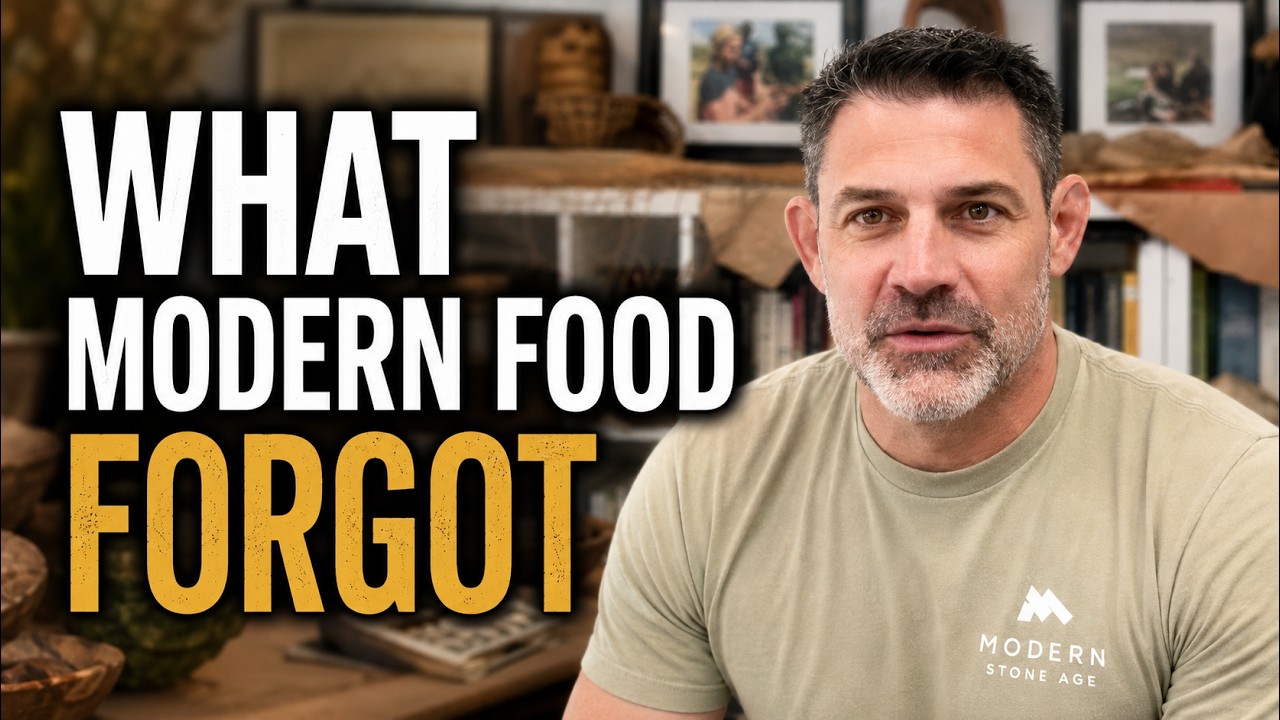
Dr. Bill Schindler runs Modern Stone Age in Maryland, a restaurant that uses ancestral techniques like fermentation and nose-to-tail cooking while avoiding seed oils and refined sugar. A peanut-butter cookie takes multiple days to make. For beginners eating organ meat, start with heart or pâté, using a 15-20% organ-to-meat ratio.
Chapters
Here we go. Bill, what a pleasure. You're always one of my favorite guests, but this time we get to really focus not on ancestral eating, you know, and, and going into the diving of, you know, your specialty, uh, when you're a speaker, but I wanna really dive into what is your mission and what are you guys doing with your current, you know, with your brand and with the Stone Age Kitchen and Shop? Like, that's what I want everyone to really get ahold of because you guys are doing really special stuff.
Well, first off, it is always a pleasure to talk to you, and thank you for the opportunity to talk about this. Our mission, truly, and it's been years for us to even figure out what our mission is. We've been, Christine and I and our entire family and our team here, have been driven for years to do something. And we all knew we were working towards a common goal, but defining that goal has been very difficult for us. Until a few years ago, we truly, we just, we sat back and realized that We're just trying to make familiar food as nourishing as it can be, and that's really what our mission is.
We like that.
We've always said, and and you this might be the same for you if because I know you're a chef, and if you only cooked exactly what you eat on a daily basis, you go out of business, right? Especially here. Like if if if all I did was just cook, you know, liver and beef and eat bone marrow and all this, there'd be a few people around here that you know. awesome. They'd be here all the time, but we, we couldn't stay in business. And what we started to find as we were using these ancestral traditional approaches to, um, to create this nourishing food, we started applying them to just everyday sorts of things, the food that people eat every day. And we realized that people responded like they just, they just wanted to find a place that they could take their entire family and let their kids order off the entire menu. Like with that, and we realized, oh, we're building the restaurant that we wanted to be able to take our family to. And it isn't about making just cricket balls over here, just having bone marrow thing, even though we do those things. Certainly, it's, can I come in and get a liverwurst sandwich? Can I get a pizza? And it's the healthiest, most nourishing, most delicious pizza on the planet. And that's what we're trying to create. And it's, it's really, really powerful because even if we could entice people to come in to eat the bone marrow thing here once a month or whatever, even if we could stay in business, We're doing absolutely nothing for their own health. Like, they eat it once a month, okay, fine. But if we can actually impact the things they're eating every single day, that builds up obviously over time and becomes really powerful.
Oh, 100%. You gotta meet people where they are. And, and, uh, and I imagine people are leaving the restaurant hopefully recognizing, oh, this food is digesting differently. Like, I feel differently in my body when I eat it. So can you talk about what are some of the things you serve there and how, how are you doing them differently than, let's say, The local diner. All right.
So first off, everything we made, Christina and I both made the— a pact with each other at the very beginning. And we physically— and I tell everybody this all the time whenever I have a chance— we never took a business class, but— and never owned a restaurant before. But the thing that we did best first and did it at the very beginning is we sat down across the table from one another with a piece of paper and we wrote down, literally, we brainstormed, these are all the things we're always going to do with food. And these are all the things we're never going to do with food. And by writing it down and doing it together and speaking it out loud, we made ourselves accountable and each other accountable to it. Like, it wasn't like this idea we had and then over time we just sort of degrade that. It was literally— it's been our foundation. It's been our guiding principles for this entire restaurant. So things like any grain, nut, seed, or legume is always either soaked, sprouted, fermented, and/or nistomalized before it's made into anything. And these are very traditional practices we see all over the world. to detoxify and help release the nutrients. Any— anything with flour, whether it has gluten or not, is always 100% wild sourdough fermented. We use a complete nose-to-tail approach to animals. We don't use any refined sugar or fake sugar. We don't use any nut or seed oils. We only use animal fats and fruit oils— extra virgin olive oil, coconut oil, avocado oil— and we don't use it, but may in the future use palm fruit oil, which is a different thing than palm seed oil. All of those are fruit oils, and we really don't cook in those. We use those for cold things. And there's, there's other things as well. We ferment almost all of our dairy. We do that sort of thing. We wrote all these things down, and then we realized if we're going to do that, like, if we're going to actually do these things, and that means we have to start from square one every time we make something. So, we— one thing I like to say is there's only 2 things in here where ingredients are put together outside of our walls. Every other— everything else, all the ingredients, there's no 2 ingredients put together outside of our walls except for Old Bay seasoning. And we're located in Maryland, we need to— we're working on it, but we need to nail that before we, before we use something else. And chocolate. And we were making our chocolate completely from scratch, but it was just taking forever. So we're actually bringing in incredibly high-quality chocolate. But other than that, everything is made entirely in-house, which means not only when you come in Have we made— have we used some sort of ancestral or traditional process to make the food as safe, nourishing, bioavailable, nutrient-dense, and hopefully delicious as possible? But when you pay for that food, you're not paying for somebody else to do the value-add in another part of the country, another part of the world. You're actually paying for these community members here that are part of our team that are actually making that food. And we're buying the raw ingredients, almost all of them, from somewhere local. So your money is literally going directly back into this community. Our labor costs are off the charts, but our food costs are a little bit lower because all the value-add is happening here. So a great example is— and I know, I mean, you and I are both in sort of this ancestral world, so this is a silly example, but a good one, I think— our peanut butter cookie. A peanut butter cookie, which is a top-selling item for us. Many people eat cookies, so might as well give them a nourishing one. We start with raw peanuts and we soak the raw peanuts overnight to detoxify them. Then we dehydrate them, then we roast them, and then we grind them into peanut butter, and then we start the process of actually making the cookies. So there, before we even start making the cookie, there is 2 days of hands-on involvement to even make the peanut butter before we even make the cookie. And then it's obviously a sourdough cookie and there's no refined sugar. So even something as simple as a cookie— nobody's suggesting we should eat cookies every day. But if you do eat a cookie, this is a much better choice than, than something else.
Yeah, it really, it brings up that concept though, because, you know, I think everyone's kind of feeling the pinch at the grocery store these days. I mean, every— everything's just so much more expensive. But I heard someone say to me once, well, technically, if you think about ancestrally what you would have paid for in either time or finances for your food, it was usually a good chunk of your, your finances and/or your time. And you're clearly proving that, like, what you guys are doing is not a 30-minute process. This is a multiple-day process. So do you believe, like, in a sense that we need to reframe how we think about food, in that instead of seeing it as like this low-cost kind of conservative, like, you should, you should be done as fast as possible, that we need to think of it like, no, because we use these foods to survive, that we wanna make this the majority of what we're either spending our time either enjoying, spending our money on, or spending time making. Like, should we shift the ratio that I think modern society has put on eating and the foods we choose?
Oh, absolutely. And you make a great point because I forget the exact numbers. It's been a couple years now since I've looked at them, the average amount of money a household in America spends on food is one of the lowest in the world. Now, in one context, we've come to celebrate that. Oh my gosh, our food is so cheap, we can spend our money on other things. But the reality is we're spending money on cheap food that has no nutrition, has no value, has no culture, has no character, has none of those things. And what I'm— you're right, this is by spending the right, the proper amount of money on really good, incredible food. It's a win-win-win all the way around. And here's another great example. So number one, when you come to our register and pay for the food, yet I guarantee you it is probably— it's not outrageous, but it's probably the most expensive chocolate or peanut butter cookie in the entire town, right? And worth it. And we don't jack up prices, but, you know, we have to obviously cover the cost.
True cost.
Yeah. That money, the true value of the money that you've put down on the counter, is that it is going directly into the people that are making the food here, which are, you know, obviously members of the community. And now we're bringing in the peanuts. But another context is something like— well, let's just talk about the pizzas, for example. We only do dinner once a week here. We do breakfast and lunch every day. Brunch is on Sunday, but— Dinner is on Friday, and we do a wood-fired pizza night. And we do about 100, 120 pizzas in 3 hours on Fridays. They're wonderful. But it takes us all week to make everything for that pizza. The difference is, in most contexts, pizza is a junk food. Like, it literally is a junk food. It's a comfort food, and you eat it, you probably don't feel good after it. And mentally, you're a little bit embarrassed, right, when you admit to yourself that you had it. But we all eat pizza. This is a completely different food. So the sourdough— so first off, all of our flour is 100% organic, and the sourdough crust, the dough that we make, is fully fermented using a bacterial and wild bacteria and wild yeast fermentation. We ensure that the pH gets below 4.6, which is the threshold for maximum safety and nutrition in the flour. And that's the dough. We have made all the pepperoni from local pigs from a farm 7 miles away, make all the sausage from the same pigs as well. We make all the cheese using traditional, because mozzarella and pizza cheeses are one of the most bastardized cheeses in this country. We use milk from a farm, a family farm, one county over. We make all of our cheese from that. So like, when you come in, like several things are happening when you buy that pizza. First off, you're getting the healthiest pizza that you could possibly have. You're celebrating and actually experiencing true local terroir. Like that idea, sense of place, we talk about it in wine, you know, that terroir, the— The wine characters from Argentina are going to be different than they are in like Sonoma. Well, it should be the same with all food. So slow food made using wild, you know, not only local ingredients, but wild bacteria and wild yeast and all these wild microbes, you get that sense of terroir. You could make that same pizza somewhere else and it'll be slightly different. So you're fully experiencing the localness of our region. The money that you spent goes into all the people that have actually made the cheese, made the pepperoni, made the dough, all of that. And the meat that went into that, that— or the money's going directly to the farm 7 miles away. What's beautiful about that process being all done in-house is that since we're bringing in half pigs and doing all the butchering here, there's zero waste. Well, out of a half a pig, we get rid of— what doesn't go into food is about a half a cup worth of stuff.
Wow.
So, in the process of making that pepperoni and making that sausage, we're also rendering lard, making bone broth, making pork rinds, making bacon, making our ham, making our scrapple. And, you know, it just, it just, you know, that whole thing just resonates out and is a part of a beautiful connected food system that accomplishes everything from connection to health to meeting our expectations of an ethical food system and also a more sustainable food system.
Yeah. And to your point, this is something severely lacking, is that terroir and also just that connection to the food you're eating. Across the board in the U.S., I mean. So I want to I want to just make sure everyone knows where you're located, and I also want to hear a little bit more about because you're hiring as you said locally. Like what is what happens? Because I imagine when people come to work for you, they've only experienced the kind of standard American fare, right? So what do you see start to change in the people that come and they stick around for a while? Because I know when I cooked for people, when they started eating the food I cooked for them from scratch, you know, making literally everything 100% controlled ingredients, their taste buds changed, their health changed, their, their kind of how they looked at life changed. Like, do you start to see that with the people that come, not only come in who are regulars, but the people that actually support the system?
Oh, 100%, and including our team, right? When people— so We have 36 people now on our team, which is, again, off the charts amount from a labor perspective.
And say where it is too. It's in—
Okay. So, we're located in Chestertown, Maryland. It's on the Eastern Shore of Maryland. We're a little over an hour from DC, about an hour and a half from Philly, and about 2.5, 3 hours from New York City. So, it's a beautiful, cute, historic, rural town, Chestertown. I mean, it's worth— please come see us. but also experience the town. It's an amazing town. But, and it's nice and it's isolated a little bit, but just enough because you can get to it very easily from a number of decent-sized cities and locations. We have seen, you know, we've only been in business now for a little less than 5 years, and we have seen a huge change, certainly a very positive change in our main customer base here, local customer base. not only in their own health, but— and we've actually started to— now we've been in business long enough that we're seeing their kids growing and all of this, and they're bringing them in all the time. It's fabulous. It's so incredibly rewarding. But also, it's changing their expectations of when they go somewhere else. Like, it's the status quo for them is changing. And the other cool thing you were mentioning, you know, hiring and bringing people in, and we do have a lot of people that are coming to visit as well. It's becoming a destination. Like, we had, we had a group of 5 women come in for 3 days to take a sourdough class, but they came early enough they could have pizza on Friday night and then came and had breakfast on Saturday and then took the class on Sunday. Um, so we're having some people coming in too, which is really cool as well. But as far as our hiring goes, one of the things that we found is that for 36 people on our team The only people that have worked in a restaurant before, there's only maybe 3 or 4 that have worked in a restaurant before. And we, the most of our unsuccessful hires, and we haven't had many, but most of our unsuccessful hires are somebody that has come from a kitchen where the expectation is throwing pots and dropping F-bombs and, you know, degrading other people and that sort of thing. And we don't have any tolerance for that.
Yeah, it's a dark culture. It's—
It is. So we have found it easier for us and incredibly rewarding for us to just make sure that we're hiring the right person, right? And I'm sure this is in so many different places too. Oh, excuse me. Hiring the right person that has the right attitude, the right approach, the right outlook, is kind, is honest, is hardworking, and train them because none of this is rocket science. In fact, most of what we're doing, our ancestors were doing in caves over open fires with a clay pot. I mean, it's not like, you know, we don't have tweezers out and we're putting the like—
Right, right.
So we've— most of the people working here have, you know, maybe they're— they've cooked at home or just really want to learn how to cook at home, but it's not— they're not coming from, you know, a culinary school and have worked in 3 Michelin-star restaurants and then are coming to us. In fact, I think they probably— I don't know what happens in that situation. It's— and we've had chefs come, you know, their first day and they have their chef coat on and they unroll their knives and we're all looking like, wait, what are you doing? Because that's not how we operate here. But we— It's, it's, it's great, and we have an absolutely incredible team. It's a fully open kitchen. One of the things that we were looking to do is create a space where not only can you come in and get nourished by the food that you eat, but the entire context. Because we know as humans, we, you know, food permeates every part of what we are and who we are. And to be fully nourished, we have to meet all those expectations at the same time, not just how much protein and fat and carbohydrates we get or don't get, but also You know, does it match up with our political beliefs and our religious beliefs and our emotional needs and our cultural needs and all of those things? And are we sitting down and sitting with people that we enjoy in the right kind of atmosphere? And we're trying to hit all that at the same time. And it's really rewarding for not only our customers, but also our team who actually are engaging with people that are eating the food. They're not stuck in a kitchen in the back and they never see what happens after the plate leaves the window.
Yeah, that's one thing that I'm really taken by, by you and Christina and just the, Culture and what you're bringing, uh, you're co-creating over there at Stone— Modern Stone Age. Um, it's something that Mary Ruddock talked about, which is that there, you know, the trauma that we're experiencing as, as a society in modern society is this lack of connection. And I feel like you guys really model that, not only in, in that fact that people can come and nourish and learn. At the facility, but just in general, how you talk about it, it's such an inclusive kitchen. It's all about the quality of the person, not necessarily the experience. Are you finding that, you know, in your 5 years of being around and you have that book, Eat Like a Human, and you, of course, have been on, you know, hundreds of stages, like, are you finding that Do you feel like we are starting to— that people are starting to recognize that they need to, you know, maybe put the phone down and kind of reconnect and think about who is the person sitting across from me while I'm eating? What is the how of the food that's on my plate? Do you feel like we're starting to make a dent there?
I think so, because the conversations— and I hope you feel the same way too— the conversations that I overhear are a part of are changing. Like, some of the stuff that was hurdles, you know, it wasn't even that long ago that the idea of an animal-based diet was like a taboo sort of thing. And like, like, the conversation was, oh my gosh, there's, there's these people that are carnivores. Like, is that really a thing? And it can't be healthy. And now, thanks to a lot of people, a lot of, you know, Shawn Baker, you know, a whole bunch of people, it has now become a more mainstream concept To have, and I'm not suggesting everybody needs to be on a carnivore diet. That's not the point. But the point is, we've gotten over that hump of this idea of something. Now it's become a little bit more mainstream to accept it, and now we can go on to that next conversation. Okay, if we're going to have an animal-based diet, where what what is the role of organs in that diet? You know, and and you know that organ meats are awful, that sort of thing, which I think is a very powerful positive place to be. It's and I I think it is the same thing. Okay, we've gotten over this hump of you know is a ketogenic diet is there such a thing as this? And Can it be very healthy? Yes, people are thriving on it. Okay, let's talk about now the little bit of what may have been considered minutiae before, but is so important. Who are you eating with? Where is your food getting sourced? Is it, you know, that sort of thing? And I do see it. It's kind of like in Ireland, there's no such thing as grass-fed beef. It's nobody talks about it. It's all grass-fed. Like all the beef in Ireland is grass-fed. The conversation is about Something that we're not even talking about here because right now it's like, is it grass-fed? Is it grass-finished? Does it even touch grass? Has it even looked at grass? Over there, it's all grass-fed. The conversation in Ireland is, is it self-fed or not? Like, in other words, is it out on a pasture eating the grass or is it on a concrete pad and the grass is getting brought to them? And that's a very important consideration that when we're still getting over the hump of trying to get more mainstream grass-fed meat, we're not even talking about those things. So Now that we've kind of gotten over the hump of some of this ancestral approaches to food where, yes, this can be an incredibly healthy approach to food, what are the other— what are the other parts that become important? And we can have those conversations like who are we eating with and that sort of thing.
Yeah, absolutely. Well, I want to start wrapping up, but prior to doing that, I feel like you're someone that has— I have to ask this question too, because, you know, here we are, we're at January 2026. We're challenging people to eat organ meats in some capacity once a week for 4 weeks. What, what recommendations, what advice do you have for people as they delve into this? Now, Pluck is definitely an option, but we're, we're trying to get them to actually eat and cook the organs. So, so what advice will you give everyone as they're on this Organuary journey?
Start with Pluck. No, no, I mean this, and it's, it's literally just like what we were just talking about 30 seconds ago. Once we've gotten over that hump of, can I put organs in my mouth and am I going to be okay? Because it's so foreign to so many people because many of us didn't grow up with it. One of the beautiful things about Pluck is it helps you get over that hump in an incredibly delicious and tasty way. Like, oh yeah, I've had organs and, you know, it didn't, it didn't hurt me. In fact, I probably feel a little bit better because of it. And then you can maybe take that, that next step and incorporate actually, you know, a piece of an organ or something. And I do think it's very important for us to recognize that. our likes, as far as food are concerned, are dictated by so many different things. Much of it is our experiences, right? And we can't separate taste and smell and prior experiences with food and tradition and culture and all those things, because it's all wrapped up into one thing. And it's— and flavor and likes and tastes and things are a learned behavior for us, and all that stuff is wrapped up in it. So if you never grew up with organs in your diet, you are going to think they taste strange and they smell strange and they have a strange texture to them, which they do because you haven't had them in your diet before. That doesn't mean it's good or bad. People that grew up on organs— so many indigenous groups that I've spent time with grew up on organs and they relish them. Even something for me who eats a lot of organs, like, that's a lot. But they relish it because of that. So recognize that you didn't grow up with that for the 30 40, however many years old you are. So one of the things you can do is— I don't like to mask flavors or textures or aromas because I like to be fully connected to my food, but I do recognize that some of these textures and flavors and aromas might be a little bit foreign. So doing— instead of like trying to force down a quarter pound of beef liver, make a pâté. You know, a chicken liver pâté is a very approachable thing in texture and flavor and aroma because of the way that it's made. The other thing, and this is a huge, huge thing that I learned here, we incorporate a lot of organ meats into almost everything, single thing we do with meat. And one of the things that I decided to do was incorporate— I calculated the amount of average amount of liver, heart, kidney meat and fat that's in an average beef cow. And that's the percentage we put into things. So instead of like going overboard, oh, I haven't eaten liver for 50 years, and now all of a sudden you think you should need to eat a half pound of liver a day, which is silly. I said, you know what, if we're replicating a sort of nose-to-tail approach that so many of our ancestors and so many traditional people today still do, let's not overdo it. Let's just put the same percentage in that was actually in that animal. And you know what, it turns out that that same percentage gives a really good flavor. But what's crazy, and I know a lot of people do this, like blend, you know, they grind their meat and their heart and their kidneys and all this, the color and the texture, even when it's ground, Still come through a lot of times. So what we did was what we do now is we grind the meat and the fat like you normally would, but we take the organs and throw them in the blender and we spin it up and then mix it all together. And the the color and the texture of those organs don't aren't so you know present when you're when you're eating whatever it is, whether it's the meatloaf or a meatball or a sausage or whatever it is. It's it's I don't want to say it's masked, but it is a little bit. And I think those steps don't be don't be upset that you're not eating a half a pound of beef liver raw on the plate that. A small step like that is a huge step because those steps ensure that this is going to be more sustainable and longer-term in your life than if you tried to blow it out of the water and then finally you're like, I'm done, I can't put another piece of liver in my mouth.
Yeah, that's great advice. What ratio if you're combining a few organs? So, I'm not specifically diving into the ratio of the cow, but what ratio have you found works best with your grinds?
I don't remember them off top of my head. I know they're in my book and I can pull it up off of our recipes, but the—
It's probably not more than 20%, right?
Oh, no. Total, total, it would be right around there, I think.
Yeah.
It would be total, all the organs together would be right in that ballpark.
Yeah, because I found much higher and it really does affect texture and taste. But somewhere around that 15-20% max. Yeah, I mean, a lot of the ancestral blends you see in the stores, those are only like 7 or 10. I mean, they're not actually as much as people think, but it— I mean, you know, a little goes a long way, of course. But, uh, but that's the thing.
If you want— if you're really trying to wrap— if for somebody who this is so foreign to them, you've realized the benefit from not only a nutritional perspective but from an ethical and sustainability perspective to eat the entire animal, But like the, the squishy, like liver and kidney and pancreas and all that is a little bit far for you right now. Start with the heart. The heart is a muscle, but it is a muscle that's loaded with more nutrition than the rest of the muscles. But from a texture perspective, it's going to seem very, very familiar to you, to anybody that's eaten meat. So a heart is a great place to start too.
Yeah, that's great. Well, Bill, as usual, always great talking to you. Thank you for your knowledge. Thank you for doing what you're doing. Uh, quickly, uh, so people wanna— I wanna hear, where do they go if they wanna come to the Modern Stone Age? And then also, where can they follow you on socials?
Okay, so online it's modernstoneage.com. So everything we do, from our restaurant to our nonprofit to our bed and breakfast, all of it can be found at modernstoneage.com. Uh, on social media, uh, The Modern Stone Age. So we're on Instagram and Facebook, and then I'm at @DrBillSchindler, @DrBillSchindler.
And really, I cannot recommend, uh, Bill's book enough, Eat Like a Human. Um, please check that out as well. Thank you guys for joining Organuary. This has been a really great episode and just, just in general, really great tips. I hope this, uh, helps everyone watching, uh, helps you start incorporating these organ meats, because as Bill mentioned, it's, it's not about going from 0 to 100. It's about baby steps. And just by starting to incorporate these nutrient, uh, bioavailable, uh, meat— this— these parts of the animal into your diet, you will start to feel better. It's just— it's just incredible. So thank you again, Bill, and, uh, thank you all.
Thank you. So great to see you, James.










