Why Sprouted Nuts Are Different | Behind the Brand
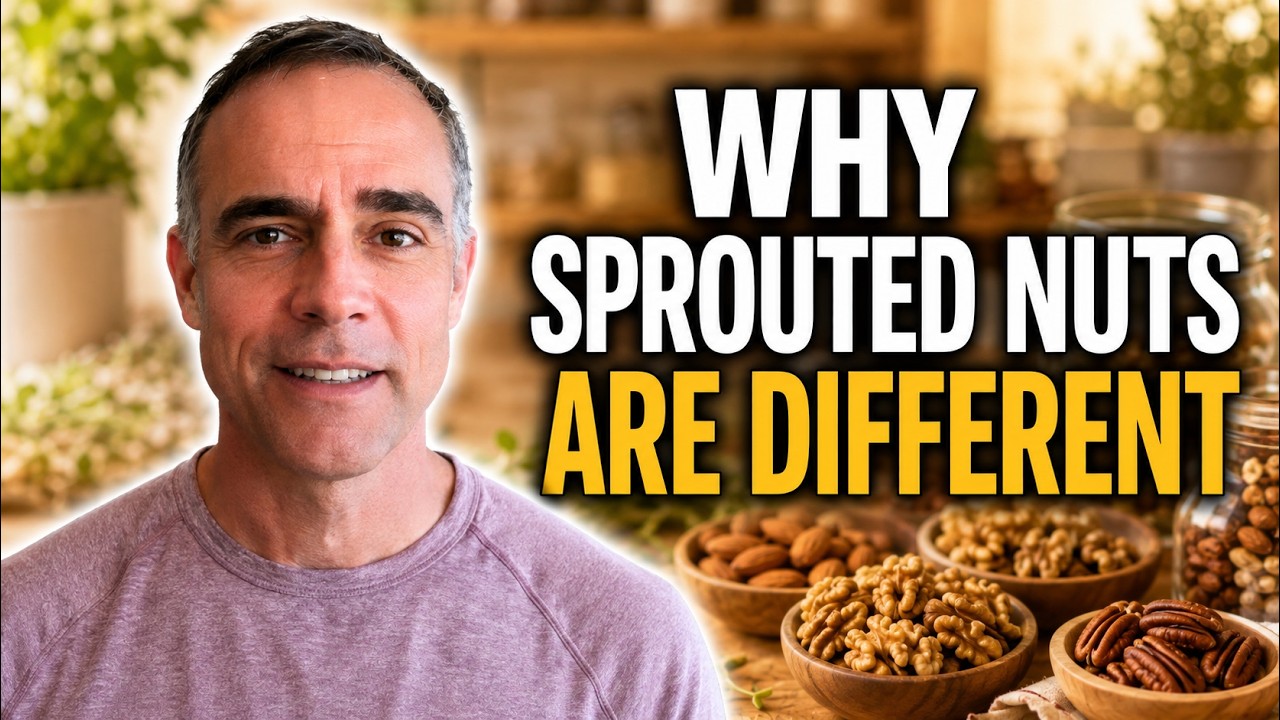
Rich, founder of Rich Nuts, spent 20 years as an L.A. County firefighter before turning to sprouted nuts. Sprouting reduces phytic acid and lectins, making nuts easier to digest. A brief dehydration step keeps them crunchy while preserving the nutritional benefits.
Chapters
Rich, such a pleasure. I've really enjoyed getting to know you the last few years. We originally met at Weston A. Price conference, and just every time I see you, it's such a joy. You and Samantha, of course. And but I'm super excited because this is the first year we're really having you involved in our January. I'm just ecstatic, really, to share your brand with people because I. I've known about sprouting nuts for— since I became a chef, um, but I would love you to share with people why is sprouting nuts important.
Yeah, so, um, sprouting nuts is important because it increases the digestibility and also the nutrient availability. So I, I can explain a little bit about how I got into it if you're interested in that, because—
Oh yeah, definitely. We're, we're gonna definitely get there, but But do you— but so you're basically saying, so the sprouting nuts not only makes it more nutrient viable, it also supports digestibility as well, right?
Right, yeah. So basically, if you think about it, nuts, seeds, grains, legumes, they're all like the offspring of the plant. And so the survival— intelligent survival strategy of the plants is to concentrate a chemical shield around the nuts, grains, seeds, or legumes so that they can survive an animal's digestive tract. Drop out the backside, and then when it rains, they grow into a new plant. So the way they do that is they concentrate phytic acid and lectins, and those things by design block, inhibit, and disrupt digestion, causing symptoms like gas, bloating, brain fog, weight gain, immune system depression, a whole bunch of stuff like that.
Well, and, and you didn't start out in the food industry or like, you know, picking nuts from trees. You weren't— you were like a firefighter?
Yes, I was a firefighter and paramedic for Los Angeles County for 20 years. I spent the last 12 years in Malibu, and that's actually where I figured out about sprouting because I'd be out on these giant brushfires like we just saw last year or earlier this year. And I would be out there, you know, and there's no healthy food available for us. We're working really hard. It could be 6, 8, 10 hours. You're on the side of a hill dragging hose, cutting line, doing all this really hard work in intense conditions. And the only food that's available, MREs, which are military rations, which is highly processed chemical stuff. I was already eating like organic, healthy paleo. So, MREs, fast food, and sometimes prison sack lunches with moldy bologna and stuff like that. So, it didn't really work for me. Really?
Yeah.
So, we'd always bring our own snacks because again, you're on the side of a hill and you don't really have time to sit down and have lunch and you know what I mean? After a big fire gets set up, they set up like foodstuff down below in the base area and you eat there. But, when it first starts, you're out there on the side of the hill. So, You bring your own snacks. And, you know, snack bars are cool, but like how many, you know, Clif Bars or whatever can you eat? So we would always bring our own snacks. I looked, I turned to nuts because I'm like, okay, I'll get these organic cashews. I like the way they taste. They have lots of fats, they have lots of protein. That's what I need to fuel me for a long shift. I didn't want anything sugary or anything. And instead of getting the energy I wanted, I noticed I would get gassy, bloated, brain fog. And I'm like, okay, now I feel like crap. I'm on the side of the hill trying not to die. What's going on? The only thing I ate today was a pound of cashews. So, it must have to do with the cashews. So, I started doing a bunch of research online. I read Dr. Gundry's book, The Plant Paradox, and I was like, ah, that's it, the lectins, the phytic acid. And, and through that process, I learned how to sprout nuts and start playing around with seasonings. And I would bring them into work and to parties, and I'd be like, hey guys, I made these amazing nuts, you want to try them? And they'd be like, you made nuts? What are you talking about? You know, I was like, what are you talking about, you made them? And then I would explain the process and let them try them, and I And I could see when they try them, they'd be like, whoa, wow, this is really good. And I'm like, yeah, these are delicious. And they're like, yeah. And so that's basically how the brand started.
But you probably— I have to assume you probably noticed a change in your digestion once you started sprouting, right?
Yeah. I mean, part of my process I can go into a little bit, drill down a little more. So when I would first— first I would soak them. I would soak the cashews overnight and then I would eat them the next day. I would drain the water and I'd be like, oh wow, no more gas. This is cool. But now they're like moist, right? Because you soak them.
So, which is not— the crunch is kind of, you know, the crunch is gone. Texture is what we want. We want the texture.
Yeah. Yeah. So that was when— so first, okay, so the next morning I would eat them and no gas. Okay, that was step one. That was great. That was the first aha moment. The second aha moment was, okay, I don't, I don't really like the texture of these mushy nuts now. And if I don't put them in the refrigerator, they get moldy very fast. So now they're like cold and mushy, and I'm like, I don't really want to eat this. And it doesn't help me on the fire line because I can't put in my pocket and take it out on the brushfire. So then I'm like, what about that old dehydrator at my dad's house? He's not using it. Maybe I can borrow it. So I borrowed this super old janky Ronco dehydrator from the '80s. It was like falling apart and stuff after a few months, but I would, I would dehydrate the nuts in there. And then that brought back the crunch and it preserved them naturally. And I was like, okay, that's my second aha moment. And the third one was basically, okay, these now have great texture. They're not messing up my digestion. They're preserved naturally, but how can I make them taste a little better? You know, so I started experimenting with different seasonings, and I happened to have sage and rosemary growing in the yard. I lived in Topanga in California here, and I had sage and rosemary, and I threw in a little bit of Bragg's Liquid Aminos at the time to add a little salty flavor. And they were like a super hit. Everyone was like, give me more, where can I get these? And literally, like, within 6 months, anytime I walk in the room, hey, you got more nuts, you got more nuts. And I had a big jar, and I would just pass them all around and I was like, wow, I think I did about $1,000. I spent $1,000 on cashews one month. And I was like, all right, I love you guys, but you have to start paying me. It's getting too expensive. And people were like, okay, how much do you want? And that's, that's really how Rich Nuts started.
But did the name come from kind of the firefighting community? Like, cause it, cause obviously it kind of has 2 meanings, you know, or multiple meanings, which is kind of a funny one and coming, you know, when you're hanging out with your buddies, hey, you're enjoying Rich's nuts. Right. You know, that kind of thing. So is that, is that where it kind of came from or where did the name come from?
Not necessarily. Basically, like, when I first started, I was like, ah, I don't want this to be about me. And everyone's like, are you kidding me? It has to be about you. Uh, I'm like, let's call it something else. And we were working all these different names and stuff. And then one of my friends was like, you just need to call it Rich Nuts because they're rich in flavor, they're rich in nutrition, and they just happen to be made by a guy named Rich. It's a triple entendre. It's a, it's a win.
Yeah, that's true. It's Rich Nuts, not Rich's. Yeah, that's an important distinction.
Often mistaken for Rich's Nuts, and I get that all the time. We get so many jokes, it's crazy.
I bet, I bet.
Yeah.
So can you— that's awesome, that's awesome. And it's, it's a real testimony too, I think, when, you know, you're doing— you're eating nuts the way they're, they're traditionally sold, which it really is hard to find sprouted nuts. Um, And you're noticing, hey, my body is reacting to this. And then you, you really did, you really proved like, hey, this sprouting thing really does work. Is there a difference between just soaking them and then sprouting? And what is that difference?
Yes, I believe there is. And I didn't really realize this until I started getting deeper into the process and creating the business and then really obsessing about like the product and what it is and how it, how it's created. And so, not only did I work on the flavors, which was like a whole its own process, but the process in like, okay, if you put in this at this time, what does that do? And so, I had like a secret recipe book that I worked in for years, and it was just very extensive notes, and I would make very minor changes each time. So basically, the difference between just soaking them and sprouting them is actually like you soak them, that activates them, and that's better right there. That is already better. And most people can do that at home, like soak your nuts. overnight, eat them the next day, great. But then what I wanted to do was actually let them germinate. So I mean, it's just nature doing its thing. So we just give them a period of time to germinate, and when they go into that growth phase, that's when they become more digestible. So although soaking is good and it is helpful, and honestly that's what most of the other brands are doing that are—
Yeah.
Sprouting, that are saying sprouted, they soak them, then they immediately season them, and then they dry them. you know, they don't give them that germination time. We give them a little bit more period of time and people are like, well, where's the little tail? Well, we're not really necessarily looking for what's called the radical, uh, the emergent radical, which is the part that turns into the tree eventually. Um, what we're actually looking for is just a, a chemical change that makes it more digestible. So in cashews, you can see it pretty rapidly, like the emergent radical comes out in our process, which is only 24 hours. Um, and then with the other ones, it doesn't actually emerge It takes longer. It might be 2, 3 days with some of the other nuts. How do you—
how do you— is it— is there a visual to that process? Because I feel like when I've soaked my nuts, there is a turning point, like, and it's, it's almost like where the nuts— the color of the nut changes, um, the water becomes more cloudy, things like that. Like, is that what you're looking for, or are you actually measuring the pH of the water or something like that?
Um, no, actually. So with cashews particularly, if you leave them in water too long— and I don't exactly know when it happens, somewhere between 6 and 9 hours.
Yeah.
They'll, they'll put out like this goop. It's almost like a glue. It's really sticky.
Yeah.
And, and then if you remove that and wash it and wash the nuts and then do the rest of the processes and all that, they— I don't know, they lose some sort of flavor in that part. So that's why we soak them for less time than that.
Yeah.
But the soaking part is really about activating, and there's all kinds of different theories on Whether you should soak them in salt or not, or how many hours you soak them. So if you do a Google search, you'll find a million different answers to this question.
Well, and some people soak them in like whey as well, right?
Yeah, people soak them in different things. Usually it's salt. I have heard of whey. Um, but I think that for me, the process— I'm really happy with the result. And, and I feel like, you know, I'm always open to learning something new about it because it's like, it's an ongoing process and there hasn't been like a deep scientific study on this that tells everyone exactly the correct process to get the maximum nutrient value. So it's just been a lot of trial and error, and we have done some testing to see the nutrient values. Um, and actually I'm working on, um, some other ways of drying them at this point. I can't really talk about it, it's a secret.
Top secret.
Yeah, super top secret. Once— I don't want to give anyone else any more, uh, competitive advantages, right?
Right. Yeah. Well, and the other thing too is, you know, I know that that's— that comes up a lot. People are always seeing, um, cashews and, and sometimes other nuts being recalled. And so I— isn't there like a requirement to a degree, even when it says raw, that it still has to be heated to a certain temperature or something like that?
Um, different— with different nuts there are different regulations, especially like with, um, almonds, which are mostly grown in California. We don't actually work with any almonds But all the almonds that come out of California are either pasteurized or irradiated, which, you know, renders them unsproutable essentially. Now, there is some debate whether there is benefit to the actual soaking of those nuts, and I think there is some, but it might not be as much as we would like or expect. So it is a little trickier to find raw unpasteurized nuts and truly raw and Technically, I don't think any of them would be considered raw because most of them, to remove the shell, they have to apply enough heat to get that thing to dry out so that it'll crack off. Um, now I think the big thing is that like to be technically considered raw, I mean, you're a chef, you know this, right? It has to be under 108 degrees at all times. Right.
And I'm pretty sure none of them are at that. I think it's always higher than that.
Yeah. Even to just to remove the shell alone and they all have like Membranes and layers to get to, to actually get to the nut kernel that we're looking to eat.
Yeah. Interesting.
Yeah.
I have noticed that about the nuts is that cashews, they, they soak so much faster than all the other nuts. Uh, I haven't worked as much with soaking like macadamias or something like that, but I've worked with seeds, most seeds I've worked with, a lot of the nuts and it's the cashew one is like you said, it's so fast. You don't need to soak them as long as the other ones.
I would say less than six hours is good.
Like yeah, I found that. I found that to be consistent. Now I will say this happened to me, and this I I think is a real testimony of what you're doing. So I was working with this these four people, helping them to develop their restaurant menu, and one of them was a I guess not allergic but but sensitive to pecans. Like He said he just stopped eating them because if he put them in his mouth, he had reactions. And I said, have you ever tried a soaked pecan first? Like actually trying that? And he said, I hadn't. And so I brought some where I had pre-soaked them 24 hours or yeah, 24 hours. And then I had and roasted them and he went to eat it and he had no sensitivity.
Yeah.
So I thought that was really cool.
He could have been reacting to the lectins or to the phytic acid.
But what's interesting is he was specifically reacting to pecans, which—
So it's probably whatever lectin is in, in pecans in particular, because phytic acid is obviously in a lot of things.
Yeah, and I guess that's the thing is it's not just a generic like phytic acid, it's like it's specific to that nut maybe. That's fascinating. But now you were— you're saying like when you were When you were a firefighter, you were eating Paleo, like you were already starting to think about your health. Um, I know a guy who is a firefighter, a good friend of mine, and he was always telling me how hard it is to eat well, not only for the reasons you just shared, which, you know, you guys are getting supplied with kind of very processed foods, but he talked about how people would like donate food all the time to, to the fire station, and it was just always like desserts and cookies. And so even if you were on this like healthy Diet, you would just constantly have junk food in front of you all the time. And so he found it personally challenging. What, like, what did you find that challenging as well? Like, how did you get on the path of kind of going paleo and just kind of like discovering that way of eating?
Yeah, um, so I started to— my— actually, I started with my dad. He, he got cancer, and then he went— he didn't want to do like the traditional treatments, so he went to this place called the Optimum Health Institute. It's like a cleansing spot, and they do a lot of wheatgrass implants. plants and, uh, colonics and this stuff. And so that opened my eyes to looking at food as medicine. And once I started doing that, I was like, okay, well, what's the best food I can get? And I started watching these different films— GMO OMG, Genetic Roulette— all these different films about GMOs, because that's when they were like first coming out and a lot of awareness was coming out around them. And I started getting into that whole movement, and I'm like, okay, well, what if I just don't eat any processed foods? And then someone's like, oh, so you're on the paleo diet? And I was like, is that what it's called? They're like, yeah. And I'm like, okay, well, I guess I'm doing the paleo diet. And I noticed that I started to feel great. My energy was like awesome. My skin started looking better. I started losing— like, I wasn't ever really been obese or fat or anything, but I started getting leaner easier, and I wasn't having to work as hard at it. And I was like, okay, there's something to this. And so I started eating that way. And it was really challenging at the fire station because we also do like a group Mess, meaning, you know, there were 5 guys on my station and we would rotate the cooking shift. So I would cook one day and I would cook organic and paleo, and then the next guy would cook a bunch of pasta and all this GMO stuff, and I'll be like, look, I'm out. And, and it made a lot of tension because that's a camaraderie thing about eating together. And so there was a lot of tension around that in the beginning. And then I finally— and I was like, well, GMOs and the chemicals and they're highly processed and we don't know what's in it and all this And I was like banging my head against the wall for months. And then finally I showed them the movies that I had seen and they were like, oh my— they like did a 180. They're like, oh my God, we've been feeding our kids this crap. This is crazy. They didn't tell us, you know, and they, they, they started eating organic and healthier. Now those, those— I worked in Malibu and we would get a lot of love from the community. There's obviously tons of wealthy people there who really appreciate our efforts to keep them safe. And so every time, like this time of year, Christmas holidays, they bring in See's candy and gift boxes and over and over and baked goods and all this stuff. So that part is really about discipline. And I'm not saying I never ate any of that stuff, 'cause I did, 'cause I definitely have a sweet tooth. But I think in moderation, those things are not so bad. You know, like as long as you're, um, not doing that every day, eating a bunch of sugar and highly processed stuff, I, I think you're okay.
Yeah.
I like to do the 80/20 rule, you know, like, okay, it's the holidays. I'll have some See's candy, you know, whatever.
Yeah, yeah. Well, and you're a bit of a nomad these days, and you, uh, and you also are a hunter. And I know you have some tales of hunting and, uh, some photos to share, so please share those.
Oh yeah, so it's interesting, like with the organuary thing. So for me, the first time— well, I mean, I had liver and stuff as a kid, and I never actually really enjoyed it because I don't know, I wasn't prepared right or whatever. But, um, when I first started, uh, I hunted as a teenager with my uncles, and then I kind of gave it for a long time. And one of my buddies at the fire department was always like, hey, you should go elk hunting with me and my dad and stuff. And, uh, finally in 2011, I took him up on that and we went out elk hunting and I got my first elk. And he's like, well, if you want to be a good hunter, you have to— I think he was just messing with me in the end. He was like, you have to eat the heart. And I was like, the whole heart? He's like, no, but you got to take a good bite of it, you know, to like embrace the animal and bring it through you.
Yeah, the life force of the animal. Yeah.
Yeah. And so, so I did, right? We, we, you know, when you, when you get an animal down, first thing you do is you remove the organs, and that helps with cooling so it doesn't spoil the meat. So you take out the organs, we put the heart in the snow, we did all the rest of the field dressing, and then he's like, let's, let's eat it. You want to see the pictures?
Yeah.
I can share those with you. So this was 2011, and It was in Colorado.
What?
You see that? Okay, so that's the, that's the elk heart. You see how big it is?
Oh yeah.
Um, and look at that.
It does look really healthy though. Like, look at the color. Like, you know, a lot of people tend to go like, oh, there's so much— like, there's lots of fat around the liver or the heart and stuff. It's like, but that looks really clean.
Yeah.
Yeah, and it's a little fibrous, right, to, to take a bite at because it's got that membrane around it. So was it a bit of a bit hard to get a bite, or was it really tender?
I think I had that— that fibrous part around it is the pericardium, and I think I had removed that part already.
Okay, okay. So it was more tender then?
Yeah, so it kind of had, um, like a tuna sashimi texture and taste, actually. That's the closest thing I can remind. Now there are— so I do eat the heart every time, Not raw like this usually. And there are lots of like fibrous membranes in there that are parts of the heart. And yeah, there's the big piece of—
yeah, right there. And was it— and it wasn't hard to chew it down? Like, or were you able to— like, you were kind of like in it and it just tasted good and your body said yes? Or was it— or was it challenging?
I, I didn't really mind it so much. It was— I don't remember it being unpleasurable at all. The, the part that— the fibrous part inside too. There's like— now that we've— now that I usually cook it, my wife will cook it, we learned to remove all the like, um, the arteries and stuff that go in there and the valves. All that stuff is really like tendony and—
Yeah, yeah, very chewy. It's hard to get through. Yeah, I mean, in many ways you could use it like gum, right? Like some people use it just to, you know, work their jaw. But yeah, it's not something you're gonna necessarily choose to Yeah. The membrane, the tendony kind of arteries and stuff.
Yeah.
That's awesome, man. So, do you have any tips for people as they're on Organuary? Like, just tips of how you're currently eating organ meats or what organ meats you think they should try first? Yeah.
I mean, I really love— what's his name? What's his name? There's a book called, uh, Own the Day. It's by Marcus, um, Aubrey. Is that it? Yeah.
Marcus Aubrey. Yeah. Okay. Yeah. Yeah.
And he talks about like food as medicine, which is like the, the mindset of eating organ meat is like, you don't need to really take supplements. If you eat organ meat, you get like all these minerals and vitamins that are not in most people's diets. And so, and he talks about eating strange things, right? Like if you're somewhere and there's oysters or some abnormal thing that you don't, um, roe or all these different things because they have different vitamins, different nutrients that you're— you're— they're not the 7 things that you normally eat. They're these odd things. So what I like to do with organ meat is if I see it— like last night I went to dinner and there was pâté on the menu, and I'm like, oh, let's get the pâté because it's gonna have some cool flavorful stuff, um, that we're not usually eating because it seems pretty rare, at least in the States, to find pâté on the menu. So, you know, every time I find some sort of something made with organ meat, and especially if it's at a restaurant, they're going to make it more palatable. Because I think that's the biggest struggle with what people do, or, or why people don't eat as much organ meat, because of the taste, which can be intense.
Taste and texture, right? I mean, a lot of people, uh, it's overcooked. And, you know, a lot of people don't realize that when you overcook an organ meat, it just— the texture gets worse, it gets chalkier, the flavor gets stronger. Like, so yeah, most people don't know What, how to cook it, and they don't know the true taste of it. So yeah.
Um, the elk— so the elk liver, unfortunately I didn't get an elk this year. It was a little bit— it was too warm, and, um, so I wasn't able to, to get one. But, um, the way my wife does it normally is she'll soak it overnight in cranberry juice, and that helps. And she used to do it in milk, which was also helpful. That helps with the flavor. So, you soak it overnight and then she'll make a pâté with it or cook it like you said on the rare side, which all game really should be cooked on the rare side because these animals are out living their life and they're not sitting around being fed corn all day. So, they're not as fatty. So, it's really easy to overcook game meats especially. But, we would always keep as many of the organs as we could and utilize them. Nose to tail, right? That's, that's the goal.
Well, it's so encouraging, and I, and I love getting to learn more about your health journey. Uh, can you, in our time remaining, can you just share, okay, what are the different offerings from Rich Nuts, uh, the different flavors you currently have, and then where people can go to purchase, and also where they can follow or find you guys on socials?
Okay. Yeah. So obviously too, Pluck is a great source of organ meats and it's an easy way to do it. Just throw that on your, on your—
Easy peasy. Yeah. Thank you for that.
I love those. So this is the original flavor. This is the sage and rosemary. It's, it's called Savory Sage now. It's cashew with sage, rosemary, and we've changed from Bragg's liquid aminos, which were soy-based, to Oh, the sunlight there. I'm gonna— it's like a coconut amino now. So we use coconut amino and, and sea salt.
Nice.
This was my second flavor. This one came from a trip to India where I found the spice market and I bought all kinds of different amazing spices. So this is a curry cashew. So it has like cayenne and I like to like add some type of ingredients that are good for you. So this one has cayenne, turmeric, Curry, obviously salt. It has also that coconut amino base.
Yeah, the coconut aminos adds like that sweetness too, but it also adds, it allows, gets the seasoning to kind of stick to the nut even more, right?
Exactly. Exactly. And it, it just adds a, a very rich flavor too. It's not, it's a coconut amino is a little bit sweeter than the soy one we used to use. Mm-hmm. But Um, I wanted to get the soy out of the product just because there's a lot of issues with soy.
Agreed, agreed.
Yeah, so, um, this one is Maple Pecan. So this one is simply maple syrup, vanilla on a pecan, and it is our top seller because sugar is easy to sell, let's be honest. But I love— actually still love this one because here's the thing, it's not like a candied nut. Most people are like, oh, I don't like a lot of sweet. Well, the sweetness is very mild. 'Cause my whole flavor philosophy is that nuts already taste good and they just need a little bit of subtle help to like make them taste amazing. So this one goes well on yogurt in the morning with some berries. That's my like go-to. Or sometimes if I have some chocolate ice cream, coconut ice cream, whatever, I throw that on top and it just adds that little pop, which is delicious. This one is like replaces your trail mix. So it's called Go Nuts and Berries and it has the curry cashew, the maple pecan. Those are the 2 nuts along with goji berries, blueberries, and raisins. So again, you're adding in all those antioxidants. Everything of course is organic and sprouted. Now the, the nuts, I mean, the nuts are all sprouted. The berries are not sprouted, but—
Right. What are you gonna do there? Uh, excellent.
And you have—
yeah, you have 2 more, right? I was gonna say.
This is the cinnamon walnut. So this one is our 2nd bestseller. This is like, um, Cinnamon Toast Crunch cereal, but a healthy version. So it's got maca, Sea salt and cinnamon along with maple syrup. It's like amazing. This is also good on yogurt, but I like it instead of with berries. I'll do it with maybe mango, passion fruit, or banana.
Nice.
Just a flavor pairing for people. And then this is final one. This is our problem child. This is our least popular, but people who love it are super passionate about it. It's garlic and balsamic. It goes really well on salads. It's good on a charcuterie board, but it also has that like tangy flavor. So it's not It's not sweet like the other ones.
It's unique though. It's— and it's— I liked it. It's a very unique flavor. Um, yeah. And, and so people can go to your website, right, to purchase?
Yeah, you can go to richnuts.com. Um, that's super simple way to do it. Um, we also— I just pulled these out of the gift box. So we have this really fancy box that they all come in, so it's perfect for the holidays. I don't know if this will be out in time for the holidays, It's a good holiday gift. Um, you can follow us on Instagram @rich.nuts or TikTok @rich.nuts. Um, yeah, that's, that's the best way to get us.
Awesome. Well, thank you again for your time, and thanks for joining us on this, uh, challenge. Uh, yeah, sometimes people are like, well, this is a nose-to-tail challenge, and what are you doing with nuts? It's like, no, no, no, it's not about the what, it's about the how. And sprouting nuts does make them more digestible. Makes the nutrients more accessible, and I clearly you found that to be true, and I have as well. So this is real-world experience here, and and clearly all your customers have also found it to be true too. So thank you for all that you're doing, and look forward to having you join again in the future years. I and I will say in the ending ending of this because people always ask us when are you going to come out with pluck nuts? Well. Well, behind the scenes, Rich actually did— we did a test and he used Pluck and it was freaking amazing. Like, the nuts were so delicious. And there was some complications, not with the nuts or with the seasoning, but with the factory. And we're just trying to figure that out. But once we do, we're going to get those Pluck nuts to you guys because they were amazing. You did such a good job with those. I, I I, I really want to make that happen. It's kind of my 2026, uh, you know, wish.
Yeah, I'm on board with that. And I definitely loved the way they came out. They were delicious too, you know. And one thing we didn't mention, and I always forget to mention this, but it's one of the most important things, is the texture change. So like something with the sprouting and dehydration process, that's what makes the texture, texture change so that they're like lighter and crunchier and they melt in your mouth like butter chips.
They are. They're lighter and crunchier. It's so true. That's a good point. Uh, so good. Awesome. Well, thank you, Rich, and, um, thank you for joining. Thank you for sharing your, your story, your mission, and, uh, keep bringing that health to people. Appreciate it.
All right, good to see you, buddy.










