
How Better Buyers Are Buying In 2025 & Beyond
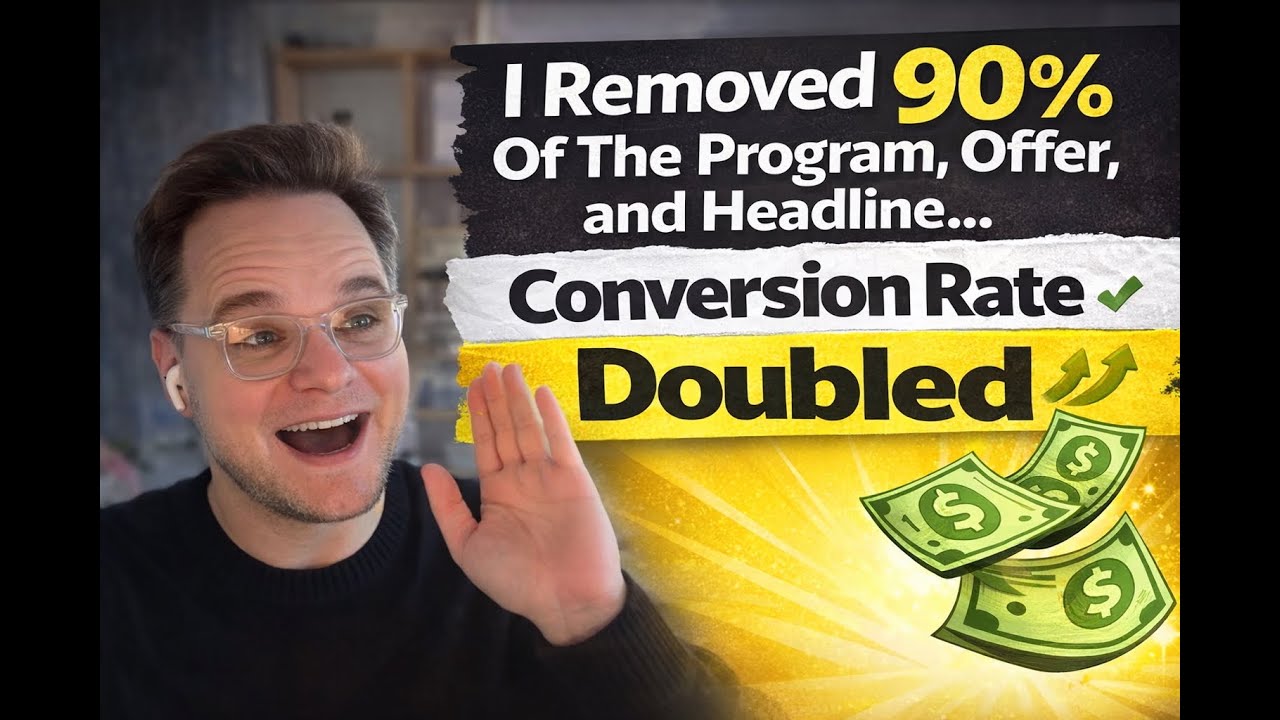
In this live, informal session Jeff Miller walks through the mismatch between the marketer’s fantasy of instant ad‑to‑sale conversions and the reality of how high‑quality buyers actually purchase. He divides buyers into two buckets: “bad” buyers with poor cash flow who respond to cheap, irresistible offers, and “good” buyers with stable businesses who care primarily about who the seller is, not the offer itself. Miller argues that the traditional focus on irresistible offers, aggressive ad spend, and quick conversions only attracts the low‑tier buyers and leads to fulfillment headaches. Instead, he proposes a new buying paradigm for 2025+: build a strong personal brand and social proof—especially a well‑curated Instagram profile—as the modern online business card, produce long‑form content (YouTube videos, podcasts) that lets prospects spend hours learning who you are, and develop robust infrastructure (social‑engine optimization, retargeting, proof assets) to nurture the longer decision cycles of good buyers. He illustrates these points with anecdotes, audience Q&A, and examples of ad copy, while repeatedly emphasizing that the “who market” dominates and that marketers must shift from short‑term offer‑centric tactics to long‑term relationship‑centric systems.
Chapters
What's popping, ladies and gents? Let me get this kickstarted and we'll be off to the races. I gotta share a bunch of stuff. Here we go. All right, cool. Facebook is working. Let me check IG. Is IG working? Facebook— oh, Mother Flowers. Oh, I'm gonna fix this. Wait, edit. Mess that up. Hold on. Aye, aye, aye. All right, wait, remove. There we go. Yeah, there we go. Better buyers buy. I know I forgot something. Copy key. All right, they should be working now. Connect streaming software, go live. Hopes and prayers, fellas. Oh, we're in business now. Okay, cool. Yeah, we're good. All right, ladies and gents, uh, today we're gonna talk about something interesting. We're gonna talk about the marketer's fantasy and how we wish it all works out and turns out. From there, we're going to talk about, uh, what happens when the fantasy doesn't come true, um, and what people tend to do either by purpose or by accident And by doing so, you really put yourself in a very difficult bucket to operate in, one that relies on a lot of poor infrastructure, one that effs up your fulfillment, and one that really doesn't move you into the greatest of buyer buckets. And by that, I mean you've got bad buyers, ones that have poor cash flows, ones that need customers today, ones that are just trying to get by, right? And then you have great buyers, ones who have great infrastructure, great business, consistent cash flows, those types of customers. And these buckets of customers, if you represent them on totem pole, they just tend to respond to marketing differently, right? And I am of the belief that we've been taught to be attractive to the bottom bucket of buyers. Ones that come in quickly, ones that leave quickly, ones that have low cash flows and difficult cash flows and inconsistent cash flows, ones that are, uh, hyper, uh, suspicious, ones that bounce between the same members of a group chat, ones that are always yelling at you instead of yelling at their own sales or their own team, ones that have just built businesses poorly, right? And I am of the belief that we can choose words and sentences that put us in this poor market And we can choose words and sentences and, uh, communications and sales messages that put us in a great market, a great buyer's bucket, right? Um, so we're gonna go over that, and then we're going to go over how the setup actually works. So a little bit more detailed, less simplified, more of like a meaningful understanding of how it looks. And then I'm going to show you how the vast majority of good buyers actually buy. Because the vast majority of good buyers are not buying immediately the same way your advertising and your marketing forces them to or wants them to. Instead, the vast majority of buyers are buying in a way that requires time, patience, effort, energy, things. So with that said, I think we're gonna get this party started. If anybody has any questions, comments, concerns, thoughts, or ideas Uh, ask now or forever hold your peace. That's not true, you can interrupt at any fucking time. It's alive, like, what am I gonna do, right? Um, and, uh, yeah, ask whatever questions that you'd like. Um, says, you're a cutie, party in my face. Appreciate the love, Andrew. I'm still waiting for those recordings, um, from when I actually, actually, uh, blew the socks off of everybody in 5 minutes or less, which is like pretty darn cool, right? So send the recordings my way, please. But yes, thank you for joining. It's always good to see you, and I'm happy things are working out. Uh, let's see what's going on on IG right quick. We've got Ramesh, we got Robert, Angie, Enzo, uh, Samadhi, Gabriel, a bunch of other stuff. Somebody did tell me that the audio is a bit funky, but I don't think I'm in a position to do much about that right now. I think I'm just kind of stuck in a, a chamber. Hold on 2 seconds. That might help with the audio or help the echoes. Oh, Richard says the audio's good. Okay, cool. All right, ladies and gents. Oh, before we get started, uh, some wins on my part, right? Um, I did a consulting call with someone. We increased their front-end conversion rate on their info products from 3% to 7%. which is like double, which is pretty darn cool, by removing about 90% of their headline, which is like super fun, right? Um, we've also closed a $5K now, $5K later. We closed a— our client got 20 responses to the AI-assisted DBR. Um, so shit's working and moving the right direction, which is super fun. Um, and we've got 2 more inquiries into our services, uh, schedules for later this week. So Exciting times, right? But let me go ahead and bring up, uh, what we're gonna talk about today, and, uh, we'll get rocking and rolling. Let's do this. Share screen. And then let's do it like this. So I wish I could like But it ain't gonna fucking happen, you know what I mean? Um, and there isn't a way to like— hold on, Shift+5. Oh, you can do it like that. Okay, there really isn't a way to like flop these the other way, right? Apparently you can do Shift+5, whatever. Um, this is called StreamYard, right? It's like $20, $30. I'm pushing to Facebook YouTube and Instagram all at the same time, and then I can switch back and forth. Do you see what I mean? Right, so I'll just pull that out so I can see the comments on Facebook right here, but I can't see the Instagram comments, so I have to have like 2 windows up and running at the same time. Uh, we've got a fella named Subhan says, hello Jeff, I'm preparing all the creatives for my awareness funnel you guided Can you guide on the timeline we should be running them on for? Uh, no, I cannot. Uh, that's a very complicated, difficult question, um, one that will only have an answer through the doing, and it's a bit of a challenge for me to answer that on live. Um, so no, I cannot answer that the way you're expecting on this type of thing. So my best suggestion is to go forth and conquer, um, and expect things to go sideways and be comfortable with the Ups and downs that come with traveling, right? So let's talk about this, right? So this is the advertising dream, right? Or the advertiser's dream. The dream of everybody is to do the following: advertise on the internet and then get a customer. So I spend money on Facebook or YouTube or TikTok or Snapchat or whatever, and then immediately I get an ROI, get a buyer, get somebody saying, ah, fuck it, I'm in, that kind of thing. Right? And this applies specifically in like information and the coaching space, maybe less in e-com, but I would argue still applies in e-com because buyers are buyers. They're just human people acting, acting on the internet, right? But this is the scenario of the advertiser's dream. You put an ad on the internet and then something happens. You're not 100% sure what's happening, but somewhere on the other end, a purchase shows up. Right, so again, the advertiser's dream is you put an ad on the internet and some way somehow a purchase shows up. And whether it's like a magazine where you literally just place, uh, an advertisement in a magazine, newspaper, or podcast, something like that, there's this heightened expectation that in some way somehow some magic happens between an ad and a purchase, right? And what'll happen is we'll put an ad like this on the internet, and I didn't particularly call these people out. I just went to the ads library and said, oh, this looks pretty close, right, to what I was like hinting at, right? But for example, you can see like, are you looking successful but you feel empty, right? 60-minute reset for Christian professionals, uh, $14 for $14 or 14 days, get paid to coach people, hey parents in their surrounding areas, uh, advertisers like me or advertisers like you or clients and customers We'll put an ad on the internet expecting a purchase, even though only one of these has an, you know, implication that you should be purchasing. On the bottom left, you can see 14 days for $14. All the rest don't really have this like direct connection to a purchase. There is this implication, right? Um, so you can see, looks successful. You can see that was made with ChatGPT, and so there's like a typo in there for whatever reason, but you got Christian professionals, you got people that work out, you get paid to coach people, parents in the surrounding areas, 12-week program. Again, effectively what we are expecting is an ad and then something, something, something, purchase. Whether we say it or not, this is actually what we are expecting from our advertising dollars and advertising budget. What's interesting Is this rarely works out the way we think? Rarely. If it does, it's an exception, not the rule, which is kind of okay because in marketing we all understand that you launch 10 ads, a very small percentage will stick. You launch another 10 ads, a very small percentage will stick. It's no different than working out or going on dates, which is out of 10 dates, how many are you going to marry? Same idea, right? But again, it's like a baseline. We will put an ad on the internet. Something, something, something, and then a purchase will happen. So what happens when this doesn't work? What happens when the space between an ad and a purchase is not generating or lining up to a purchase? We have this heart attack 'cause we're just looking at this unknown arena of like, oh my God, what is happening? I'm not sure, I'm freaking out. This space is where we have this heart attack. Because we start to say, okay, is it the ad? Is it my sales call? Is it my pitch? Is it my client? Is it my customer? Is it video views? Is it retargeting? Is it something I'm saying, something I'm not saying? We have this freakout because we don't know what's happening. And then what do we do? We say, oh, I need an irresistible offer. That's the missing piece. The missing piece between my ad and my purchase, the thing that's gonna make me money is an irresistible offer. We've been trained to believe this as such. I'm sure some people are right, some people are wrong, but you're not watching this for me to reinforce the beliefs you already have. You're here for me to break your brain just ever so slightly. And it's my goal today not to make you stop or have a massive change, but instead have an ever so slight inflection point, just 1% to the left or 1% to the right. So in 3, 6, 9, 12 months, you end up going That was it right there. So again, the advertiser's dream, put an ad on the internet and a purchase comes in. And in this middle space, we have this heart attack, which is totally fine, name of the game. Most times we believe it's our offer. So what do we do? We create an irresistible offer. And depending upon when you came in the game, that could be Dan Kennedy, that could be Grant Cardone, that could be Russell Brunson, that could be Alex Hormozi. There's another guy on the come up, whatever you wanna call it. An irresistible offer or a value stack. And I couldn't like figure out the first person to do or talk about an irresistible offer because the first time I heard of it was Russell Brunson talking about Dan Kennedy, and he was talking about another guy, and I didn't know the other guy was. So this is the oldest picture I had of an irresistible offer, and I don't know if this is true or not, but if something says audio package, it might as well be fucking old. Right? So this really just represents the oldest thing that I know of as far as the nearest visible offer. So again, right? We start over here. We start with an ad, and then we hope a purchase happens. So here's some examples of ads again. Nothing specific to these people, but you can see as examples, right? Like we've got Mindvalley. We've got a floor covering international ETS performance. Dr. Robert Duggar Attention Deficit Treatment Center. Again, I just picked these ads on the internet. It's just from the ads library. These are not my clients or any implication like that. I just picked them on the internet to represent an ad, and then they run the ad and somewhere they said, shit sucks, I need an offer, so I need an irresistible offer. Cool. And again, depending upon when you came into the game, your irresistible offer could look like this or it could look like this. These are effectively kind of the same things because if I've got the 6 Weeks Funnel Hacks Masterclass, all of a sudden there's less chance it could be wrong, right? If I've gotten SOAP and Seinfeld Secrets, there's a better chance that I could achieve. If I've got a 1-year enterprise account, all of a sudden I could have a dream, right? Or like there's less time because I have Instant Traffic Hacks, whatever the fuck you wanna call it, right? This is just a formulaic, Mechanization and representation of again the irresistible offer, which is this or again this. So again, we run an ad on the internet, shit breaks. We don't know what the fuck is going on. We think it's our offer. We think there's something happening and it's our fault. So we play around targeting. We play around with the ad. We play around with the offer. In some way, somehow, somebody says you need an irresistible offer, so we say fine, okay, cool, and then a purchase happens. We go, oh, thank God, thank Lord baby Jesus, irresistible offer is the reason why everything worked out. So here's my question for everybody, and now is the time to pay attention. When you do an irresistible offer, Do you think that appeals to amazing clients, or do you think that appeals to unamazing clients? Again, when you do an irresistible offer, do you think that applies to amazing clients or unamazing clients? Which one do you think an irresistible offer tends to appeal more to? Amazing or unamazing? And put in the comments and we'll see what happens. Again, do you think an irresistible offer is appealing to amazing or unamazing clients? And I'm just realizing I'm not actually watching YouTube comments. Hold on. Let me fix this. Oh, I should be paying attention. Okay, cool. Richard says it applies to the ones who are looking to take a leap of faith. Okay, fair, right? That's a very fair answer. In my experience, when I'm talking to people who purchased using an irresistible offer, they don't tend to be super high-end amazing clients. Like if I was advertising HVAC and I was an HVAC agency service doing ads on the internet and I did an HVAC irresistible offer, right, it doesn't really feel like it would be appealing to the HVAC business that has everything set up correctly, is generating ROI, and wants to sell the company to a PE firm. Stereotypically, it appeals to the unamazing clients who are sitting there going, oh my God, I'm having a freakout because I have no time and I need this to work immediately. I am not in position to apply any more effort or any more sacrifice. All I have is a dream and I need a venue, a channel, a medium To give me the highest chance of achieving that dream. Those are stereotypically words used by not amazing clients. Instead, stereotypically used by unamazing clients. And Jared Austin really nails it with saying it's for someone that's looking for you to save their business. Again, I speak in stereotypes. I speak in grandiose sentences. I'm talking middle 80%. I know somebody somewhere is gonna say, it's different for me. I go, you're right. Everything is always different for you. But again, stereotypically as a whole, if I present this to a client that saw an ad, is on a sales call, Chris Smith also communicates correctly saying this really communicates a hall pass. Hall pass, a Hail Mary pass, not a hall pass, a Hail Mary. Like my last chance, my last shot, right? If you've ever been on the sales call and you've done fulfillment with clients like this, you know exactly what I'm talking about. So my next question for all of you is when you're working with a client who came in with this irresistible offer sales process, when you're working with a client that came in through this, Do you think they are great and easy to work with, or do you think they are difficult and challenging to work with? Again, when you've talked to and communicated and had a sales process using this framework, do you think they're easy to work with, or do you think they are difficult to work with? Which one do you think? Says— I knew John before he changed his last name. John says they're looking for Jesus agency to rise their business from the dead. Exactly right. That's his real name. Says it's showing money to a gold digger. Quality women don't get turned on by that. I agree completely. So again, when you work with a client that came through this process, one that says I need it immediately, I don't have any effort to give, I need the highest probability of my dream outcome, Do you think they are easy to work with or difficult to work with? Jared says they're difficult and have unrealistic expectations. Chris says they are PIAs, micromanaging goofballs. Correct. Again, this is my experience. Yours may be different. It's highly unlikely that it is, but maybe the internet, right? I found stereotypically that when clients come through this framework with the ad and the sales process, I will make a lot of money if I don't have to do any fucking fulfillment, but the second I do, oh my God, oof, that is rough. That is absolutely rough, which is why you see this framework used by businesses that don't actually have fulfillment, which is interesting. The businesses that use this don't have fulfillment. Think about that again. The businesses that use this don't actually have fulfillment. They get to pretend this shit doesn't exist. You get a year access to software, you get an education, you get instant, you get secrets. Cool. That business has no fulfillment. And the businesses that use this successfully, again, also have no fulfillment, which is why they're pushing everything through their Education platform, because now they don't have fulfillment. Now fulfillment is on the client again. Isn't that exciting? Those tend to be the worst clients, and I know this because I did it. My school community hit $100,000—no, $115,000 a month. I could have won that fucking award if I bothered to apply. No buenos. Working with those people is fucking rough. Because they need it fast. They don't have any effort left. They cannot sacrifice. They need the dream outcome with the highest chance of likelihood of success. This is unlikely to be an amazing client. An amazing client has none of these qualities and characteristics. None. When I talk to businesses that are doing $4 to $5 million a year minimum, The fuck is this, bro? Of course I have more than 3 weeks to think about this. Of course the proposal takes some back and forth. Of course I have sacrificed and put in all my effort and put 12, 18 hours a day into my business. Of course I'm living my dream. Of course I'm going to achieve it. This doesn't appeal to people who are amazing clients. It only appeals to unamazing clients. So again, this is what happens, right? So the dream is, you know, we put an ad on the internet Get a purchase. We sit in this middle space going, I don't know what the fuck happened. Oh my God. And for some reason we end up saying, I need an offer. Maybe, right? But then we fall into the irresistible offer bucket and it's rough. And Pavel says it perfectly: with my last $1,500, I entrust you with my business and financial future. Correct, right? So again, tier number 1, the advertiser's dream. Tier 2, the backup. Right? But here's what's interesting, and here's the question for everybody here: of 100 buyers, how many can you get today? That's my question for you. Let me know in the comments what you think. If you already know the answer to this question, you can throw it in there, right? But let's just say I'm advertising to the internet. Out of 100 buyers that are going to buy today, tomorrow, in the future, yesterday, sometime, how many of those do you think I actually get today at any one moment, like immediately? So again, the dream scenario: I advertise to get a buyer, and if it's 100 people in a room, how many actually end up saying, fuck it, I'm in? Whether it's an ad or an irresistible offer, how many of those actually turn into real-life buyers? Whether it's an ad or irresistible offer, whatever it happens to be, how many do you think you can actually get to come in as a buyer? Give me a number: one, ten, fifty. Jeremiah says it depends on the offer. You're right, but just kind of ballpark me by whatever metric and measurement you genuinely believe is correct. Out of 100 buyers, how many end up buying from you today? Is that 1? Is it 5? Is it 10? If you ever run ads on the internet, you know the secret. It's called a conversion or a take rate, a percentage, that kind of thing. Out of 100 buyers, how many do you think you can actually get today? David says 2. Fair, right? He also says, uh, I got 2 chargebacks from, again, unamazing clients, right? So David says 2, Renzo says 3, right? Um, if I did the math and I did my best, right? Somewhere between 5, under 5. I would agree with these numbers, but let's just pretend that I'm top of my game. I'm the best in the business. I am literally the most amazing marketer and offer owner in the world. At the most, I'm shooting on 3%. Maybe, maybe my irresistible offer gets me to 7%. So at the most, we're talking like 8, 9, 10%. 9 and 10%. Again, best advertiser in the game, best irresistible offer in the game, best sales process in the game. We're still shooting 10% at the high end, and I'm not the best at my fucking game. I know people that do a million dollars a week. They're at the best of their fucking game, not me. So here's what's interesting. If I were to roll a dice that only had 3 sides, and then I ran a dice that had 90 sides, which one do you think would have a higher chance of fucking turning out better? The dice with 3 sides, the dice with 7 sides, or the dice with 90 sides? 90. What I'm trying to communicate is at the best, these two channels really only target these buyers, maybe these, but they completely miss this. And some people may be asking, well, you know, how does like the top amazing advertisers work? Like, how do we maximize the 3% or maximize the 7% added together 10%? Well, you got to build something like this, right? Your ad needs hooks, persons, products, proof, testimonials, right? You need retargeting of landing pages, percentage objection handling. You need storytelling, soap opera sequences, cash machine emails. You need AI setters, callbacks, openers, dial for dollars, rebuttals. You got to feel like you're a boiler room on Wall Street. DBRs, one sentence follow-up, calls curiosity, and then maybe this engine of an engine will lead to a purchase. And that is, of course, whether it is an e-com, info, or high-ticket sale. Best in the business, best in the game. They've got all this stuff. They've got an upsell, they got a downsell, they do team-to-team, they do hypercare, they're seeding long-term, they have a higher-tier program and next steps. Waterfall sales document, break even on cost, catch-up opportunities. So they'll sell somebody knowing it's break even because they might buy something in 3 months. And, you know, they're aiming for a 30% close rate at scale. But even then, these 3 ways of working at their best are only aiming for this Right fucking here. And then they say, fuck it, let's do a lookalike. But again, this right here. Do you think a wildly successful person who's running a $4 to $5 million a year company looking to grow to $15 in the next 3 years is going to say, fuck it, I'm gonna buy it today, or fuck it, I'm gonna buy it because of your irresistible offer, or fuck it, I'm buying because of the real setup? Or do you think that better buyers buy differently? Which one do you think? Do you think the best in the business The top-tier companies, the ones doing hundreds of millions of dollars, are saying, fuck it, I was gonna buy this shit today. I was gonna buy because of your ears of this platform, buy because of all this. Or do you think that they are buying differently? What do you think? We all know that they're buying differently. Whether you've done a great job with your setup, a medium job, or an okay job, or a great job right here, at the most— oh, that's a horrible arrow— at the most, we're targeting 3% or 7% of the buyers. Because the better buyers don't buy this way. They don't. They buy differently. The people at the top, most amazing buyers with great steady cash flows that are good at their job, do not buy the way you are currently selling to them. You simply don't. And Jeremiah says it correctly. They have a buyer's attitude that is different. Their pace is different. Their patterns are different. Correct. This is how better buyers buy in 2025 and beyond. And it's not this. It's not this. It's not this. They buy differently. They don't care what you do. They don't even care how you do it. The only thing they care about is who you are. And when they see an ad, 93% of your future buyers are not buying immediately. They're not saying, oh my God, I've always wanted this right now, I'm gonna fucking purchase it. They immediately say, who is this person? Or who is this company? Or who is the person running this? They ask a who question, not what, aka what are you selling, not how are you getting it to me, not why are you in business, and not when is this happening. They care about who— people to people— who they are associated with. Who do they serve, aka who are their customers? And do they understand who I am? This kind of stuff. And if you've ever been outside of a club that you can't get into, do you think it's better to show off what you're wearing, or is it better to show off who you know? This is what we're talking about, right? Because the way people are buying nowadays is not about the ad to a purchase. It's not ad to irresistible offer. It's probably not even all of this. Add to who the hell do you think you are? Now here's my question for everybody, and I'm asking this to pull the blood from the back of your brain to the front of your brain. What is the modern-day online Business card. I'll say it again. What is the modern-day online business card? If I want to know who you are, what am I looking up? Where would I go to find out more information about you? What is the online business card? Tell me. Keep going, keep going. George is close. Dina is almost there. Oh, Dina got it right. Renzo got it right. It's Instagram. This is where people go to answer the question of who are you. Not necessarily Facebook, not necessarily LinkedIn or Facebook. And not your overall social media presence, and really not even LinkedIn. It's Instagram. Instagram is the online business card showing proof and legitimacy. If you ever look somebody up and their Instagram bio is like nothing, you go, it was fucking weird. I don't like this stuff. That's not the same with YouTube, not the same with LinkedIn. Instagram has cemented itself. as the online business card accepted all over the world. That is just what it does, and that's how it acts. And when you advertise, 93% of your buyers are asking, who is this person? You need to answer that in a way that's clear, concise, and makes sense. Because we are currently in a who market, not what, not when, where, why, how. Who? What's interesting, by the way, is wildly successful, amazing clients don't care about what, how, why, when. They care about who. Oh my God, you hired that guy? Do you know who's on his team? Have you heard of this guy before? They don't sit there going, what briefs are you writing? They don't sit there and going, how are you going to run this play? They go, damn, I've heard of this dude. He's a big fucking deal. Do you know where he goes to vacation? I saw him with blank. Oh my God. We're in the who market. Who are you? Who do you associate with? Who do you serve? And do you understand who I am? These types of questions. And the way people answer that is by Instagram, maybe Facebook, but about 80-90% Instagram. Like this. This is how people look on the internet to determine legitimacy. They look at your Instagram. Duh. Obviously. How could we think any different? You need to have an Instagram that communicates who you are, who you associate with, who you serve, and have some proof and legitimacy that you're not a kind of like fly-by-night organization. Your Instagram needs to have your face big freaking clear, not having you in the corner with a big old logo, not having you in the corner with a big old Eiffel Tower. You. You need to talk about you because who matters more than what. You can see it all right there. This is the kind of stuff that makes the other 93% of the market okay with spending money with you, aka The amazing clients, because if I've got a business that is doing ten million a year, I am going to do my effing research on you. So the first thing I do is I look you up. If it's gone, it's dead in the water. And there's certain elements to your biography that make sense. For example, who have you served? Have your testimonials right there. Who else have you worked for? If I wanted to talk to you and spend 45 minutes on a sales call, I would have fucking done it. But who wants to do that? I'd much rather listen to figure out who you are and the kind of culture, AKA your podcast or your long-form videos like this. You can see right here who I work with and who I'm associated with. If somebody wants to understand how I talk in my personal culture, I've got podcast clips right here. If they want to understand who I am by reading about me, I've got my Two-Step, I've got my long-form IG Reels, I've got my commentary on marketing. And the type of clients I wanna associate with. This is the kind of stuff that matters. This is why podcasts are the single highest ROI marketing event you can do that lasts forever. You talking for 60, 90 minutes straight, and when somebody listens to you for 60, 90 minutes straight, they will buy, and more importantly, they will be an amazing buyer. 'Cause here's what's interesting. The amazing buyers have gone through this fucking scenario before where they bought a bunch of bullshit, didn't fucking work, and now their guard is up. Their requirement to do business is much higher. They will have to know you for much longer than 15 seconds. And this is the online version of that. What's even more interesting, by the way, is that cute colloquial downplaying, self-deprecating, like I'm no big deal kind of attitude works in person because you have proximity. And if somebody is in that room with these big swinging D's and says, oh, it's no big deal, everybody's going like, whoa, what do you mean? Oh my God, that's crazy. That doesn't work on the internet. You don't have that proximity. You don't have the in the room. You have to create something that communicates simply and effectively. For those who say Facebook, you're not 100% wrong. I use it consistently. You can see right here to let people know that I'm real, legitimate, and awake, right, on the internet. I treat Facebook more like Twitter now. Seems to be pretty happy. Used to do these long-form 50-page essays. Yeah, 2 sentences is enough. This is 80 to 90% of it, just like this. Here's my next question for everybody. Again, blood from the back of the brain to the front. Get the fingers ready. If I wanted to learn more about what you do and how you do it And if we should do business together, do you think I'm gonna get on the phone with you and spend 45 minutes to 2 hours talking to you? Or do you think I'm gonna go to your YouTube and listen and understand who you serve in a long-form format? Again, if I want to do business with you, do you think I'm gonna spend 1 or 2 hours on the phone with you? Or watch one or two hours of your videos? Which one do you think? Talk with you for two hours or watch your videos for two hours? Which one do you think it is? In person or online? And Sai Daibi, sorry dude, I'm doing my best. Sadibi. I got nothing. I can't do it, right? You can see right here, no time for the phone. Who's got time for that? Somebody calls me and says, hey man, uh, can I spend 2 hours with you to understand we should do business? I'm going, why? What are you doing? Get the hell out of here, bro. Go watch my videos on YouTube. You can make a decision. Even Jared is saying obviously we should do videos. Of course, makes complete total sense. How many people here are creating long-form videos respecting that buying process? Again, I'm gonna ask this question. How many of you all are creating long-form YouTube videos respecting that buying process, or are you of the bucket of like, I should be doing it but I don't? What's interesting is that amazing companies in the world do business by spending time first. If you don't have the time, you are segmenting yourself away from amazing businesses into bad businesses. Again, these models are attractive to unsteady, cash flow poor, difficult businesses. And this is how buyers buy in 2025. So again, they see an ad, they go, who is this person? They start to research you. They go on your Instagram, they go on your Facebook, and they go on your YouTube channel. This is the modern-day buying process, ladies and gents. This is how good buyers buy. If you don't have this, you are automatically falling into the bad buyers bucket. If you don't have fair to authentic videos, you're talking to people who can't do that. If you don't have long-form videos on your YouTube channel, you're talking to people who make poor buying decisions and poor business decisions and poor cash flow decisions, and people that don't have 45 minutes to invest in understanding if they should be buying from a particular provider. You need to have an answer to this question because this is how buyers are buying. What's interesting is you can see this video I made last week. So here's my question for you today. Do you think this video just sat and did nothing? Or do you think somebody called me yesterday and said, "Hey Jeff, I saw your ad. I went on your Instagram. I watched your YouTube video. I'm in for ten grand." Which do you think happened? Do you think I shot this video and nothing fucking happened? Or do you think somebody called me yesterday? We got on the phone, spent 25 minutes together. Ten K deal because that's how good buyers buy. This person already spent eight hours researching me without my interaction at all whatsoever. They saw the ad. They said, "Who is this person?" Went on my Instagram, read my Facebook, watched my YouTube. Total of eight hours they put into it without me doing anything. No following up, no irresistible offer, no risk reversal, no guarantee, no increase in the chance of likelihood of success. Nope. They were a buyer. They were an amazing buyer with a great business and said, hey, let's see if this makes sense. This is how people buy, and this is more importantly how better buyers are buying in 2025 and beyond. Lindsay asked a question that says, is this for any level of offer or just high ticket? I would argue that if you are a bad buyer, you are buying— whether you're a bad buyer, whether you're buying low ticket or high ticket. If you're a good buyer, you're a good buyer whether or not you're buying low ticket or high ticket. And this type of infrastructure is almost required nowadays. If you don't have all this infrastructure, social engine optimization that is respectful of the way better buyers are buying in 2025 beyond You are relegating your success to 3% of the market, arguably 10%. But if you do build it, now you've got the whole damn pyramid. And this is why buyers aren't buying, because the good ones are going, ah, I'm not gonna do that shit again. And the bad ones are like, well, you said you would promise the world to me, and this is what happens. You don't have your social engine optimization. You don't have your social engine infrastructure. So all the effort goes into the ad side. All the effort goes in the marketing side to make up for it. You have a fucking irresistible offer instead of just having trust in the marketplace. So I believe this applies to everything. And Jared, yeah, $10K deal yesterday, 25 minutes. Very easy. Meta says this works even when you think it's not working because you can get zero likes and a big deal because the social proof is there. Yeah, this is the type of stuff that you need to be working on. Question, uh, do most of your sales processes start with $7 offer thinking at the end of mind? This infrastructure Applies without regard to what you're selling, whether it's a $7 thing or $100,000 thing. This is just normal everyday infrastructure. It's the pipes to your building, it's the fuel to your fire, it's the ovens to your kitchen. It doesn't matter what's in the kitchen, it doesn't matter what you're cooking, you need a good oven. That's it. And if you've got a good oven, you'll be attracting great chefs. But if you got a shitty oven and no plumbing and no lighting. It doesn't matter what your ad says. You're only going to get people that are just that kind of stuff. Here's what's even more fun. What do you think happens when we get a reel and a podcast clip getting 143,000 views? What do you think happens when a podcast clip gets 143,000 views? What are the other added benefits? What are the other fun things that happen? What do you think happens when we do that? I'll tell you what happens. Lots of top of funnel. Yep. Lots of proof, lots of legitimacy. And when this kicks off, so do all the other ones. And when this kicks off, all of a sudden my ads start to work better. All of a sudden I've answered this question one time en masse. Meta, perfect, right? And then very quickly, 143,000 people are somewhere on this buying journey. All the way to here. This is why I'll get a message saying, hey man, I've been following for 2 years, what's it cost? Cool, it came in with something like this 2 years ago. It's not challenging, it's not difficult, just nobody told you. This is the kind of stuff. And we got a question that says, so double down retargeting, is that the game plan? Not necessarily. Retargeting is simply more ads right here. That's retargeting, one of the components. If you've ever driven a car, you know if you just have good tires and a shitty engine, or a car with no doors, ain't really car. This is infrastructure. This is required. What's even more fun, by the way, is when you do this. You attract clients who also have that, which means it's a lot easier to get them results. We haven't even gone into breaking false beliefs, brain-breaking moments with a typo. We didn't go into proof, testimonials, walkthroughs, opinions, ideas, perspective, insights, thought process. We didn't even go into like the details of what's supposed to go here. We just talked about how to appeal to the actual real market, not the tiny sliver of 3% or 7%, but instead the entire buyer's pyramid, including the 90% that you've been leaving alone. If you as a service run advertising for a person who has no Instagram presence No YouTube presence, no Facebook presence. It's gonna be fucking rough. But guess what? You don't got any either, and that's why you're stuck in a poor man's market with unamazing clients who have no social media infrastructure. and then rely on you to create the most amazing thing in the world. That's why you keep dealing with clients that require an irresistible offer. That's why you keep dealing with clients who can't find a team. That's why you keep dealing with clients that fire you after 3 months. That's why you keep dealing with clients who can't convert, because you don't know how to attract the right ones. And somebody somewhere said you need an irresistible offer, and that was a fucking lie. What other questions, comments, concerns, thoughts, or ideas do you have? Act now or forever hold your peace. Let me check the other things and we will see what's going on. Meta says, do you think more of your value posts, or do you think it's more of your testimonials? Which one gets you quote unquote more clients? I'll tell you what, I do both, and I definitely feel like that's— that relationship is the same as which one will get you ripped faster. Working out or eating right? And I go, why do you got to pick? See what I mean? Like it's not a this or that. It's really a this and that. And I'll show you an example. This is how most people will communicate. Decision-making. They will say, I need to make a decision, and they believe making a decision means it's left or right. And what ends up happening is that space across that V is really an anxiety-driven decision of like, the more I make this decision, the more pain I feel about making a decision. Super frustrating. It's the reason why our brains just freeze because I have to make a decision. We think it's like all the way this way or all the way that way. It's incorrect. The way decision-making is done is in the series of steps. So when you say value posts or testimonial style content and I say both, your brain's like, holy fuck, oh my God. The reality of such is do a value post, do a testimonial, get another value, get another testimonial, blah blah blah blah blah. And then when a third thing comes in, you add it to the mix. So it's an and or a series of steps. It is not a this or that. What's more interesting, by the way, is this or that is one of the most amazing advertising styles you can run. This choice or that choice. It's called audience splitting, where you can tell people you need to make a decision today, this or that. That's how you get like a bunch of people to follow you, like when you're building a cult. It's not true at all. It's not a this or that, it's a this then that. If Facebook says there's a purchase on the ad that doesn't show up in the funnel, what's causing that issue? It's probably a CAPI problem. You're probably using custom conversions. Very rarely is a scenario of like you had 0 purchases and Facebook says you got 1. Usually it's a scenario of like you got 10 and Facebook says it's 8 or 12, right? If that is the case where it's 0, 1, it's probably a CAPI or custom conversion issue, or Stripe processed but then refunded, so it didn't really count, that kind of thing. Sean says, I saw the post. It was a great reminder to maintain decisions even when it seems that progress is stagnant. About momentum, just do the thing. There you go. And somebody says, what's your views on informative content? If you want to inform people, you can. The challenge, of course, is that people who are informed are not people who buy. People who are looking up how-tos just want their information, say see you later, goodbye, right? And effectively feels like you're being stolen from, but that's your fault, not theirs. So if I wanted to find out why my toilet was running, I would go on Facebook— or sorry, YouTube. How do I know if my toilet is running? How do I fix my toilet? What tools do I need to fix the toilet? Go through the whole thing, and the creator would say, oh, I got a million views but no money. And I go, well, that's because you're not actually attracting buyers. Buyers want a transformation or access. Not necessarily information. And this is one of the reasons why, uh, the AI systems have decimated the course, the information, and consulting communities, because they used to just charge for information. They said that, by the way, 5 years ago with YouTube, and 5 years before that with blog posts, and 5 years before that, because they sat on the information gates. That's not true. They sat on the access and the transformation gates. So if you want to do informative content, you can. It's good every now and then. There's nothing wrong with it, but you're not going to generate buyers. Buyers want transformation, not information. Let's see what's going on on Instagram. I don't think there's any comments. Let's see. Arafat. That's funny. Uh, Peter, Andrew, Maury, Yusuf, Wade, Chris. Aaron Makes Photos. That's fun. Nacho almost said Vegeta. So I'll stand by for another 5 minutes or so and then we'll see what comments are coming in. I think I got something. Hold on, got a bunch of DMs. All right, let me check. You know, I never actually checked YouTube, so let me go ahead and open up the YouTubes and see what's going on. 2 seconds. Let's see whatever questions are on there, and then if nothing, we'll bring it to a close. Okay, there's nothing on YouTube. Cool. All right, I'll stand by for like 15 more seconds, and then whatever questions Ask them now or forever hold your peace. Exactly, David. There you go. That's it, ladies and gents. Peace out. Bye.








