The Real Cost of Ignoring Nurse Burnout | Jennifer Johnson

In this episode of Inside Home Health, host Arvind Sareen interviews veteran emergency nurse, educator, and author Jennifer Johnson about the critical yet under‑taught skill of clinical intuition and its relationship to nurse burnout, retention, and patient safety. Johnson recounts her career path—from a solitary rural Ontario ER to a high‑volume stroke centre—illustrating how repeated exposure to patient patterns forged her gut‑sense for deteriorating conditions. She shares a vivid case where an intoxicated teen’s off‑hand comment revealed six months of unresolved trauma, prompting immediate physician involvement and a change in care. The conversation expands to systemic issues: nursing curricula focus on protocols and checklists while neglecting pattern‑recognition training, leading to high early‑career attrition (30‑60% of new grads) and costly turnover (up to $6 million per hospital). Johnson advocates for longer, mentorship‑rich orientations, experiential learning, and self‑care to nurture intuition and reduce guilt‑driven burnout. The dialogue also explores technology’s role—AI tools like the Rothman Index and Cedars‑Sinai predictive models—that can flag patient decline, but still require nurses to input observations. Sareen describes his company’s AI‑driven documentation platform that slashes OASIS charting time, freeing nurses for bedside care. Johnson is conducting a global study of 40 new‑graduate nurses across six countries, providing them with her journal to assess support needs. The interview concludes with a call to nursing leaders to protect and extend onboarding, prioritize mentorship, and recognize intuition as a teachable, life‑saving competency.
Chapters
We run around so often, we don't let ourselves feel hungry because we're too busy to eat. So we need to start changing the narrative a little bit around nursing. We need more— they need more time, and we need more time with them to be able to hopefully support them a bit better. The nurses that are coming in now, they're asking the questions about, how do I prevent burnout? How do I deal with grief? How do I manage work-life balance? And in speaking to them, I'm like, I don't think I've ever asked myself those questions, let alone, you know, you guys are asking these semester 1 of nursing school. And, and so there's so much more.
Welcome to Inside Home Health. I'm Arvind Sareen, CEO of Copper Digital. There's a moment that every experienced nurse has lived. They walk into a patient's room, the vital signs look fine, the chart looks normal, the numbers say everything is okay. But something is off. And a lot of times they can't explain it. They can't put it into a chart note or a visit note, but they know something is wrong with this patient and they act on it and they save a life. That moment, the one that doesn't show up in the documentation, the one that nursing schools don't really teach you, is what my guest today has built her career around understanding training, and protecting. Jennifer Johnson is known as the intuitive nurse. She spent 16 years in emergency rooms across Ontario, from rural ERs where she was sometimes the only nurse on the floor, to even large stroke centers in Southern Ontario where she found her people. She's an educator at NurseCon, a university lecturer, and the author of Nursing Intuition: How to Trust Your Gut, Save Your Sanity, and Survive Your Career, published in 2024. She's a top critical thinking voice on LinkedIn, and her thesis is sharp and important. Intuition is not a soft skill. It's not magic. It's pattern recognition built from thousands of patient encounters. And nursing school teaches almost nothing about how to develop it, trust it, or Or use it, which is part of why so many new nurses leave the profession in their first few years. Which is why so many of the new nurses leave the profession in their first few years. They never are taught that one skill that would have actually kept them alive in the chaos. Today we're going to talk about intuition, retention, and what every healthcare system is missing about why the next generation of nurses are walking away. So, Jennifer, welcome to the show.
Oh my goodness, thank you so much for that introduction.
No, wonderful. I think your work is really amazing, and my team briefed me on it, and I watched some of your material as well. It's just really fascinating, and I've got some great ideas that I want to discuss with you. But I want to begin with all the way at the beginning and sort of trying to get to know you a little bit more. So you started in a small rural ER in Ontario. And then you transitioned to a large stroke center. How did you get from being a nurse who used to, you know, use her gut, like, to understand really the patients who decided to then write a book about it? Give us your sort of the career trajectory and the turns you took.
Yeah, so starting out in, you know, rural northwestern Ontario was kind of an interesting start to itself. Sometimes I was the only nurse either on the floor or in the emerg because it was so small, you'd swap out. And it was my first introduction to, you know, patients and getting used to it. And that was one of my first experiences when a patient all of a sudden doubled over in pain, and I kind of thought, oh, this is something different, like this isn't his normal. And bringing it to the doctor's attention, kind of getting put off of it. And watching the patient's vital signs deteriorate over the next couple of hours and, you know, pushing with the doc and really getting nowhere to the point, by the time the doctor finally came in, we were already, the patient's heart had stopped. We were already starting CPR and doing all the things. And within a few hours, we'd lost him. And that was the first time where I felt like something was off and the vitals in the beginning didn't really show anything, but— I just kind of thought, there's gotta be more to this. You know, something, something in me is saying that, hey, like, you gotta push for this, and was getting nowhere. So it was kind of a very interesting spot to be in, to be like, I thought something was wrong, but again, I'm brand new. Maybe this isn't how this works. I wasn't really familiar with the physicians, you know, just maybe it's me. And fast forwarding to, you know, several years later working in the stroke center, And starting to play a game at triage of just kind of guessing who was coming in with what. And it was in that kind of game mode that I kind of figured out, oh, I would pick out patients who I thought something was really, really wrong. Maybe I was kind of guessing as to what was happening with their condition and following them through their ER trajectory and then realizing at the end of it, oh, I may have been wrong on what was going on, but I knew that something wasn't going right. And I was right on that aspect. So, you know, looking back and going, no, I was right in pushing, that patient passing wasn't on me, but here's where we are. And so using the game to kind of figure things out and practice and practice and practice, you kind of got really comfortable with Saying, no, no, no, I think somebody's like, this isn't what's supposed to be happening. I just feel like something's off. Can't tell you what it is. The vitals do seem to be fine, but no, I don't, I just don't know. And getting to that point of being very comfortable with my physicians to say like, hey, I don't know what's happening, but you need to take another peek at this. Or, you know, pulling, deciding who gets pulled back into the rooms faster than the others. That's a merge and triage in its barest forms. So, getting comfortable with that was absolutely essential to figuring it out. And it wasn't until, you know, getting into COVID and kind of really hitting a wall where I started to write my stories out. And, you know, that first patient, that story was in there, other patients that I had kind of wondered what had happened. along the way. And in writing them all out, I kind of went, oh, like there's something more to this. And I was listening to a podcast and somebody was talking about intuition at work, but in the sense of business and realtors. And I thought, intuition at work? I use my intuition all the time at work. And it was like, okay, that's it. That's how we get here. You know, sure enough, all the stories had some instant, some theme of, you know, Did I trust my gut? Did I not? Did I say anything? Did I not? And what had happened. And the more I trusted it, the more often I was right and thought, okay, we should be talking more about this because we talked to each other at about 3:00 AM, but we need to teach. We need to teach this. And maybe this is a key skill that we're not talking about openly. And That's how this kind of all came together.
That's beautiful and so inspiring as well. And yes, you're right. Like a lot of times as RNs, we're told, you know, to not even read the lab results, like at least in home health. That's what I attended an RN training just to really experience how new nurses are trained when they're getting into home health, just to Understand, and so we could create the best experience for them. And then what I noticed was that there were certain rules that okay, you could just hand them the lab work, but you can't really tell them what's wrong because for that it needs to be the doctor or many other things like that. But what I'm hearing is like really trusting your gut and then you know going forward and you know taking sort of. A little bit of that stand that okay, no, something is wrong. And of course, you know, sometimes you might not be correct, but that's okay because still the times that you are correct, I mean, that percentage if you look at it and the reward for that saving someone's life, I mean, that is really precious. I'm okay if I'm wrong even seven times out of ten, you know, but the three times that the life is saved, that is just so precious, you know, for the caregiver, for the loved ones. you know, for that person themselves.
Yeah.
That's really beautiful. So, yes. So, you mentioned, you know, then the book came around the COVID time. That's when you were writing a lot of those stories. I think that's a great use of time. Not a lot of people can say, you know, so much of the productive work that was happening during COVID So, let's define intuition for our audience because most people hear that word and they think, magic and mysticism and instinct, but you frame it very differently. What is clinical intuition actually, like scientifically? How does it get built?
Yeah, it's a tool that is, you know, it's a skill like any other where it takes time to recognize what sick, not sick, really sick looks like. You know, your average person doesn't know what somebody who's starting to teeter on the edge looks like. They think that, oh, maybe they're their color's just a little bit off, or they're not acting like themselves, they're not putting 2 and 2 together that something might be brewing in the background. So, to take a new nurse and to let them know that, you know, you are the one who is seeing this person for roughly 12 hours at a time. The physician, you know, they're in and out, they've got so many people to see, they've got a lot of things on their plate, and your role is to be that kind of canary in the coal mine to say that, hey, you gotta come back, something's off, we need to recognize that, you know, you know, this patient may be starting to deteriorate. There's so many clinical intuition scales where it will measure all the vital signs. There's one that's the Rothman Index, which actually takes into account the nurse's feelings about the patients and the patient's condition. So, that will then—
Wow.
Move that forward. And so, that's been validated. And moving forward, there's stuff out of, Cedars-Sinai that there's an AI tool that will go through and measure data through the chart and be able to predict a patient deteriorating hours before it happens. But it's up to the nurse to put in that input so that the AI can do its thing.
Is it like a prognosis? Like in home health, we have a question that we have to answer, like, what's the prognosis? And, you know, it's like, Poor, fair, good. Is it something like that also?
Like, I think it just kind of tees you up to say, you know, hey, things are changing. It flags you, right? Like, it'll flag you to say, hey, things are changing. We need to kind of take another look at this. You need to be able to do vitals more often. You need to maybe, you know, flag the physician to come in. So those clinical tools are great. If the nurse is inputting the vitals at the correct time to be able to follow it through. But if you are working home health where you're only seeing your patient for, you know, 30 minutes to an hour at a time, but you've got this longstanding relationship with them, you know when that patient is not theirself because you've known them for the last 3 months. So all of a sudden things are kind of changing, they're not acting themselves, they're, Maybe their vitals are actually off, their mentation is off, you know, their skin discoloration. They're starting to look a little pale. They're starting to look a little green. You know, maybe they're a little yellow-tinged. We don't put enough stock into how the patient looks and how we're interpreting that look. You know, I tell people all the time, yes, intuition sounds very woo-woo and kind of off the wall. Do I go to my physicians and say, oh, my intuition is saying that you need to go see this patient? Absolutely not. And they know how kind of kooky I am and that this is my background now. But I'll say, hey, I think the lady in 13 is really not doing so great. I just want you to have another look. If it makes it easier and more palatable for the physician when you're talking to them, I'm just advocating for my patient. I'm just advocating for their wellness. I just think that they need a second look. Studies show that even, so if you say that they need a second look, physician comes in, the physician changes nothing, no new orders, no changes to care, but they have that touchpoint and then they leave. Even if there's nothing changed in the patient's care plan, the patient will still improve. Just because they've had another physician touchpoint. So even if you are wrong and you think that something's going on, you're still kind of learning to figure it out. Even if you're wrong and the physician comes, your patient's outcome is still going to improve. So really, what's the harm in testing it out and trying? It's only for the patient's benefit. And when you throw in, you know, I'm just looking out for the patient, I'm just advocating for my patient, It catches the physicians and it lets them know that, no, no, I'm truly serious about this. And I would really appreciate you having a touchpoint with that patient.
Understood. Tell me a story or a specific moment in the ER where your intuition told you something that data didn't, and you acted on it and it mattered actually. Because I think in the audience, I mean, people need to hear what this looks like in real life and not in theory. So I think that would really be helpful.
Yeah. One of the more recent ones, I kind of end of my shift at 6:00 AM. I've had a young teenage patient come in who's drunk, who's intoxicated, and so intoxicated to the point that they're not alert anymore. So I'm kind of waiting for this patient to kind of rouse a bit and kind of sleep it off. And so the patient starts rousing, the family finally comes in, the older brother, And they're kind of going back and forth and the brother's kind of giving him the gears about getting so drunk and is kind of being really hard on him. So I'm like, okay, perfect. Family's on board. And, you know, the patient's starting to get going and he's starting to get dressed and he wants to go. And I'm like, perfect. You know, you're now alert enough to go. And he says something that stops me in my tracks. He goes, you know, this isn't even such a big deal. I've been drunker than this before. And I thought, drunker than this before? Like, I wasn't able to rouse you. So I kind of, before I even thought about it, out of my mouth was the question, well, how long's that been going on for? And he said, about 6 months. And I go, 6 months? Like, that's a long time. And I said, okay, so what happened 6 months ago? And before I realize it, he's telling me about how he witnessed the death of his own father in the family home. 6 months ago. And so I'm going, okay, so what does that mean for you? He goes, well, I get this drunk 3 or 4 times a week because I can't sleep unless I get this drunk. I thought, oh my gosh, this poor kid is having PTSD flashbacks, can't sleep, has told no one that this is why all this is happening. People are thinking maybe he's just acting out because of the death of his dad. And I thought, holy cow, we need to just stop right now because what we've just learned changes everything. So I said, okay, just hold on, you know, let me just talk to my doc. So I go back and talk to my doc. I said, hey, this has just come out. Like, I need you to talk with the family as well as the patient. They need referrals, they need support services, they need everything that we can give them at this point. And my doc goes, I did not see that coming. I said, Yep, neither did I, but here we are. And it was just one of those moments where a question popped up into my head that I didn't, you know, really even think about, but that led to a complete shift in how we were treating the patient. And so, it was one of those moments where, you know, your brain is working so much faster than your, you know, your thought process, and it's already 10 steps ahead. So, if you can kind of let it go and trust it just a little bit, you go, okay, well, that's— that was the reason why that question happened, and then that follow-up question, and now we're on a completely different trajectory. So it, it allows you that if you give yourself just that little bit of freedom to kind of go down a weird path, sometimes it will pay out tenfold.
Wow, that is such a beautiful story, and Thank you for sharing that. And I want to tell you something personal because I think that's why this conversation matters to me. My younger brother, Akash, he was my co-founder. He was everything to me and we lost him to addiction in 2024. And one of the things that haunts me is that the people around him, including the medical system, kept treating his symptoms with like protocols and missing what was actually happening underneath. And the pattern was there. And with this story, this kind of comes alive and I've got goosebumps. And I mean, the intuition was there in people who knew him, but the system didn't have a place for that intuition to land. And we lost him. I, you know, and when we did, I went back to Vipassana and came out of it knowing that this work has to matter, not, you know, for what we're doing, like documentation for nurses, but I mean, it If in the felt experience of the people it touches, so what you're describing that intuition is the skill. You know the system doesn't train. So like a new nurse coming in, like you don't get to learn all this at at you know your your nursing school. So how do you like how do you really teach this to the new nurses? Like most nursing curriculums is. Protocols and checklists and evidence-based interventions. And like you mentioned about the skin, I mean, we learned here that, okay, you could use the Braden scale to see if they're at risk of developing ulcers. And there's the MoC-10 that you could do for assessing the fall risk. But that intuition is that thing that catches the patient that's about to crash. Tell me why this is not And what's the cost of that gap?
Yeah, I mean, it is hard to teach, right? Because a lot of it does revolve around experience and time spent with patients and time spent with people who you have no idea who they are. And being in that role, the easiest thing I can equate it to is, you know, fortunately, unfortunately, nursing is still very female dominated. So, Myself as a female, this sense of intuition, I've known that since like 12. You know, you're walking down a street, you feel like maybe somebody's watching you or somebody's behind you. You, you don't even— you have that gut heaviness and sensation that something's wrong. You don't even think to not trust it. You just cross the street. You know, you, you go into a bar and you look across the way and there's just somebody there that immediately you're like, I don't know what is up with them, but I'm Not, no, that's a hard no. You don't second guess that because we've gotten so used to, A, it being there, and B, having it probably save our life, you know, countless times because we're so aware of our kind of sphere that we're in. So, to take that and put it into nursing, you know, think about it as if I'm able to, Take that gut feeling and just relate it to my patients so that potentially they don't have a crash. You know, don't somebody— I recognize when somebody's about to hit me so that I don't get hit. You know, trying to avoid any physical or emotional harm is a great way to kind of figure out, you know, that's where I want to be. You know, if I recognize that this patient's deteriorating and I don't say anything and the patient dies, I'm going to carry that guilt. I'm going to carry that patient no matter what anybody else says. I'm going to carry that patient. But if we notice that something's happening, we say something and something changes, and we're now— that patient lives or is able to turn a corner, suddenly we're not living with that guilt. So, if you can frame it as preventing yourself from being exposed to a lot of guilt and sorrow, you know, yeah, that's pretty enticing, you know, especially with somebody with, you know, 18 years in and I've already got, gosh, probably 10 patients that I kind of carry around with me. I don't need to carry anymore. 10 is more than enough. So, to kind of frame it that way and just being aware of your body, you know, we run around so often, we don't let ourselves feel hungry because we're too busy to eat. We don't let ourselves feel like we have to go pee, or we ignore it because we got other things to do. We're so used to putting our body and its own sensations on the back burner that once you start to let that be felt, all of a sudden all this other stuff comes in. And it comes in very hard originally because it needs to have that much sensation, it feels like, to get your attention. But once you start paying attention to it, you'll start to feel it You know, a lot simpler. Maybe it'll just be a little bit of a pang. Maybe it'll just be a thought that pops into your head or just an uneasiness about somebody that you've just met. Trust it. And then, you know, the trust, you win, and then you, you know, something happens again. And it's not just sensing, you know, what's around you, it's pattern recognition also, right? So it's just a lot of experience. And it takes getting past 4 or 5 years to really get comfortable with people and anticipating potentially what things are going to happen. And really with right now, 30 to 60% of new graduate nurses walking away from nursing entirely, you know, average size hospital system is losing easily $6 million a year on simply just reorientating and onboarding new nurses who potentially are going to walk away in a year to 2. So. You know, the cost of not investing in sometimes the, a little bit kookier of the skills, you know, it, it'll pay off in the long run if we start listening to each other and, and kind of pushing for ourselves.
I think it makes total sense because I know that, you know, like I was watching this really cool video about trauma responses and how That shapes you and different types of trauma responses. And it doesn't have to be, you know, an accident or a big trauma. It could be those small instances, the way you grow up and what kind of thoughts just really overwhelmed you. And then your response to that. And all the time, a lot of us are having those trauma responses and we're fighting those. So we don't really get to experience our own inner self. And, you know, like I mentioned earlier about the need for doing that in, you know, meditation and going for Vipassana for 10 days of silence retreat, that was just so important to get in touch with my body. I mean, I won't say that I've fully healed from that trauma of losing, you know, the best person in the world that I had. But it just really told me like what was important and what really mattered. And I think that's similar stuff, like having nurses go through a lot of these types of trainings where they try to understand their own intuitions and their body sensations, like you're describing, is gonna definitely help as a first step. And then the second step is like courage, you know, courage to speak up when you see something. So it totally makes sense. And I feel like that's something that's related to what we're doing as well. And as a CEO, I kind of want to share quickly about— so we're building AI for home health nurses. And our pitch is that we cut OASIS documentation from an hour, 90 minutes to 15 minutes. And of course, there's guardrails where we don't Auto-submit, there's human in the loop. And we have had a 30-year nurse on our clinical advisory team to make sure that we're not just a bunch of engineers building something and not understanding. But from your intuition framework, like when you look at that, I think there's a lot of time that we save the nurses from having to put on that cognitive load that how should I code this chart, but instead just be free and know that you have a scribe tool that's going to take all the notes and then AI is going to figure out and do the baseline assessment for you and fill in your narrative and all of that stuff. Or there are many different ways where you can give it the clinical summary and then just like you would tell a friend or a supervisor, and then it takes that information and codes it. So I feel like somehow, even though we didn't directly think of it, that we want nurses with better intuition, we thought that, okay, we're building this tool because we want to free up nurses from that pajama time and having to come back home and still code a lot of those charts for the patients that they saw earlier, or be yelled at next day from the DON or the owner of the agency about, hey, and And it matters because of course they can't bill and they know you're working hard, but those charts need to go in. So I think that is in some small way our sort of contribution towards helping nurses reclaim their cognitive load. What are your thoughts on that? And what, because I genuinely want to know, what do you feel like, could something like that help the nurses?
Well, for sure. I mean, if you are being able to free them up to look at the patient, to interact with the patient, you know, how could that not hurt? I mean, you know, AI is not going away. It's going to become a daily part of every single part of our lives. So to be able to utilize it as a tool to its fullest, Why wouldn't you? I mean, there's already, I believe there's a stethoscope cover that, you know, is a scribe. And so, as the physician's having their interaction with the patient, you know, and they're verbalizing their whole assessment, it's already going into the chart. And yes, the physician still has to double-check, but it frees them up to then focus on the patient. And take away that, You know, another task. Medicine has become exceedingly task-oriented because, you know, it's just the way it has to be because people are living longer, are more complex. You know, there's more and more mental energy going into treating every single patient. So for this to kind of lighten the load a little bit and give us back just a little bit of time, you know, even if it's just give us back a little bit of time to be able to pee and to have a break, you know, that then allows us to be our best selves for our patients.
And I think part of this is the reason why the nurses are leaving as well, because they're overwhelmed. And I think, how do we though put it back in some sort of a curriculum, right? Like where a new grad walks into the ER floor or into a home health visit and beyond just the textbook knowledge, they have the Pattern recognition as well, and you know, like kind of same as somebody who would develop it when they've seen like a thousand patients. Again, I mean, I wonder how AI and technology can help with that. Maybe you know, have you sort of practice some of those scenarios? I'm not sure. Like, I mean, so they're not just like I said operating on protocols alone in an environment where protocols don't always cover what's happening. And yeah, I mean, to just really like day after day, like understanding what actually it feels like and, you know, like how to develop that confidence. And, you know, because we want to prevent sort of 1 in 5 new nurses that are leaving within the first year. I mean, that's just such a big challenge that I feel like I mean, I don't have enough understanding on what that could look like.
Yeah, I'm actually currently in the midst of doing a global study involving new graduate nurses and to see how they're coping. What are they doing? Do they feel supported? Do they feel overwhelmed? And getting that up and off the ground. So hoping that maybe we can figure out if there's a multitude of just basic things that would be very easy to kind of work towards that we can kind of prep people a little bit better as they come out of nursing schools. But, you know, a lot of it is just experience. But yeah.
No, that's pretty interesting. Tell me more about that. What does that look like?
Yeah, so right now I've got about 40 participants from all around the world, Canada, the US, the Philippines, UAE, Nigeria. Just looking to get into touch with those new graduate nurses, send them a free journal of mine to utilize as they're working through their first year or 2, and to see, you know, is it helping, or are there things that we're missing to try and support you better as you come in? Because the nurses that are coming in now, they're asking the questions about, how do I prevent burnout? How do I deal with grief? How do I manage work-life balance? And in speaking to them, I'm like, I don't think I've ever asked myself those questions, let alone, you know, you guys are asking these semester one of nursing school. And so there's so much more understanding of what the job entails, kind of in a broad sense, but it's the physicality of, you know, actually getting in and dealing with people and the expectations of people, medicine. And, you know, that's a whole other language to learn. So, Trying to figure out how we can best support them. Because I think if we get them to year 2, you know, the muscle memory's starting to kick in, you're starting to understand better, you know, the pathways and how things work, and getting to find your voice a little bit, and being able to advocate for your patients a little bit better. So, just getting them to that second-year spot, I'm hoping if we can get them to the second year, that maybe they'll stay till the third, and the fourth, and the fifth, and the tenth. Not to say that nursing isn't hard because it's exceedingly hard, but maybe if we start getting you to put yourself first, first and foremost before your patients. It's the same as when you're on an airplane and you're with your child and they say if the airplane starts to descend and the airbags come down, you put yours on first before your child. As much as you want to put it on your child first, If you are unconscious, you're of no use to them. So, we need to start changing the narrative a little bit around nursing to, you are your first and foremost patient to take care of, and then when you're well and able to take care of others. But we really do need to start putting yourself first.
Absolutely. If your own cup is empty, how are you going to fill others? And I use that example of the, you know, put your mask first a lot of times as I'm, you know, Speaking about some of this. Well, no, that makes total sense. So last question. So if you could get a message out to every nursing school dean, every hospital CNO, every home health agency owner who's hiring new nurses right now about what they need to do differently to actually keep these nurses in the profession, what would you tell them?
Please support them. They are not only learning a brand new language, they're learning a new job. They're getting used to being in people's personal spaces, which takes a lot of time to get comfortable with. You know, sometimes we want to fast-track them. Oh, you're doing great. You're not really asking questions. We're just gonna, we're gonna cut your orientation short. We're gonna, you know, you don't need your mentor, do you? We're gonna just Push you forward. You need to understand that they don't want to say no. They want to be there. They want to move forward. But you need to be very mindful of protecting them kind of from themselves at the first bit because they want to go 0 to 60, but they don't have the clinical knowledge, the experience, the confidence to be able to do that just yet. So, please, you know, as much clinical as possible, started as soon as possible. The opportunities to go speak with the elderly in long-term care, just to get comfortable with talking to a stranger about nothing, with no expectation on either end. You know, the more they can be in the presence of people who aren't being paid by the hospital system or by the school, you know, sim labs are fantastic. They do such a great job at so many things, especially the situations that don't come up as often. But unfortunately, there's still something to be said about talking with somebody who you have no idea what's gonna come outta their mouth next, and you don't know how they're gonna behave. You don't know anything about them. We need to be putting that experience at the forefront of education so that when they have— when it happens in practice, They won't have a second thought as to how to relate to people in an instant, how to kind of be aware of situational things and violence risks, you know, kind of getting to there. But, you know, as much as we want them to get on the floor and work on their own and, oh, they're ready to go, right? They're not ready. You know, a 6-week orientation—
Absolutely.
Is not nearly enough, especially for acute care, and even more for specialty, like emergency or ICU or OB. Or obstetrics or pediatrics. The specialties need more. The beginnings need more. In Ontario, we used to have a new graduate guarantee that lasted 6 months. So for 6 months, you had this orientation where you technically were an extra person on the floor, and you were paired with one preceptor, and you had all the time in the world to see the things, do the things, practice the things. And The statistics were so great with that program that they cut it down to 3 months. And unfortunately, we're starting to see again that that's not quite enough for a brand new person who might be 18 to 20 coming into not only their own adulthood, but being plunked in the middle of somebody else's medical crisis. So we need more, they need more time. And we need more time with them to be able to hopefully support them a bit better.
No, I think that totally makes sense. And I know some home health agency owners may think that, well, there's already a shortage and we need to go see patients. So when we're bringing in somebody who has some experience, maybe from a different field, but now they're coming in home health. But that's why I want to give a shout out to my current customer that I'm visiting right now, actually in Houston. They are so amazing. And I attended the whole orientation with the nurses. And, you know, they have, even though there are so many pressures here in the US, Medicare cuts are rampant. And there is this pattern of Medicare Advantage plans, you know, that require a lot of the authorizations. And they lure, you know, a lot of the elderly patients by giving them, you know, you can buy this for $100 or, you know, you can get this membership. And then they switch from Medicare to Medicare Advantage. And that's when it's harder to get those authorizations. So they're feeling a lot of pressure, but still, my customer, I mean, they have for newer nurses, not only the orientation, not only a lot of the coaching that happens, but also they have these nurses sort of shadow the assistant director of nursing or the specialty wound person who goes out. For the first 3 months, which, you know, I know it's possible for more larger companies, but for them to do that and have that paid time, because a lot of times in home health, you just get paid for the visit and you have contractors, but they're building a great culture. And talking to you, I realize that even more.
Yeah.
Jennifer, this is a conversation I think every nurse leader needs to listen to because what you've named today is something most of us, including those who are building technology for nurses, keep missing. And we keep building tools and curriculums and protocols around what we can measure. And the most important thing a nurse does, the one that catches the patients before the monitor does, is the one we never built infrastructure for. And I think there's a lot of empathy and understanding that we all need to cultivate for nurses. And for everyone listening, read Nursing Intuition by Jennifer Johnson. Find her on LinkedIn. She's a top critical thinking voice there, and that's for a reason. And if you're a new nurse who feels like you're drowning and questioning whether you belong in this profession, you should find her work. You're going to love it. She's sort of been there, and the answer she gives you is that you do belong, and you just haven't been given the training the system should have given you. So, you know, go ahead and definitely contact her. At Copper Digital, as you guys know, we build AI to take documentation off the nurse's plate. And after this conversation, I'm thinking about, you know, that work, the way that Jennifer described intuition. We're not just saving time; we're trying to protect the cognitive space where the most important nursing happens—a space where the nurse, you know, looks at a patient and knows something that chart doesn't say yet. And I think truly that's the work. And you know, we're going to keep doing it because someone has to. I'm Arvind Savin. Thank you for listening.
More from Jennifer
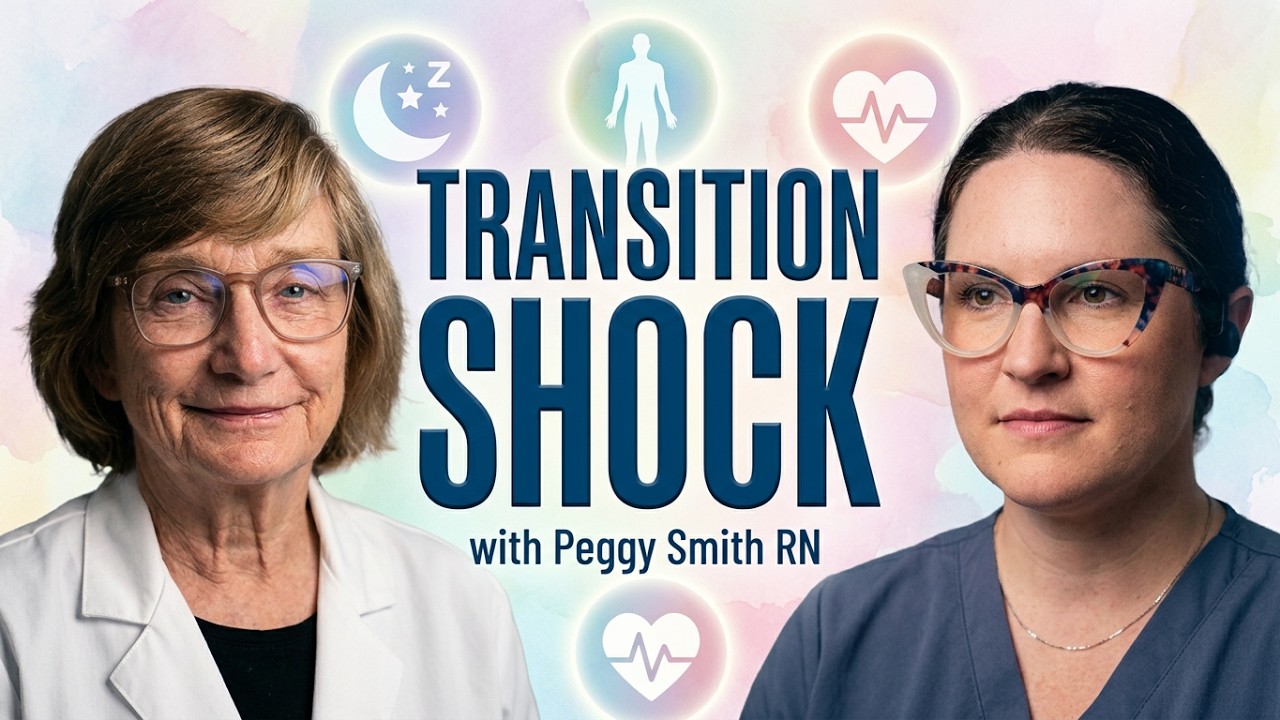
The Holistic Nurse - Transition Shock and the New Graduate Nurse (with Nurse Jennifer Johnson)

Ep.53 The Hidden Truth About Nursing Burnout | Nurse Jenn on COVID, Intuition & Saving the System
Facing Mortality_ The Stories I Must Share On Nursing Intuition w. Jennifer Johnson