Unlocking Consciousness: Navigating AI's Impact on Humanity with Beth Rudden
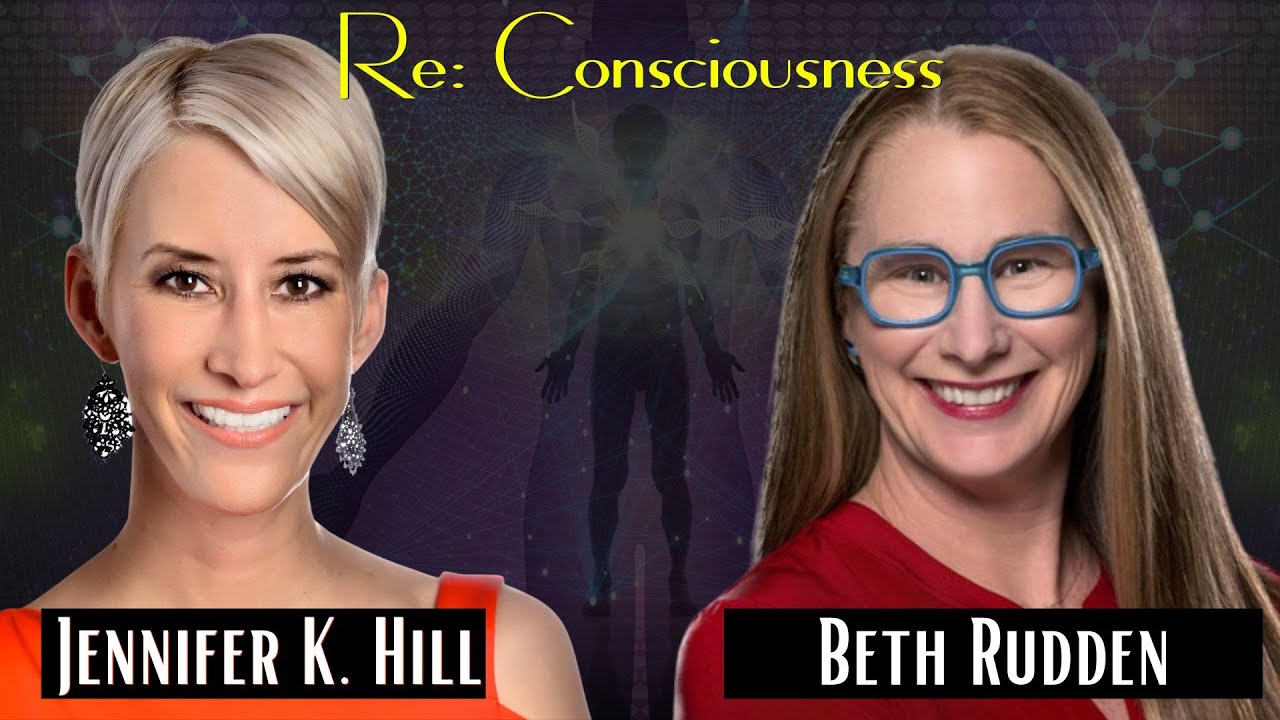
In this interview, host Jennifer K. Hill (the "Consciousness Architect") talks with AI executive Beth Rudin, CEO of VAST.ai, about the nature of AI consciousness, the role of data, bias, trust, and how humanity can partner with AI rather than fear it. Rudin argues that AI should be demystified and that everyone should become an AI expert, emphasizing data sovereignty and the need for diverse curators of the data that fuels models. She defines data as a human artifact, likening it to tree rings or archaeological records, and stresses reciprocity in data collection. The conversation explores cognitive bias (using the Titanic dataset example), the impossibility of fully removing bias, and the importance of interdisciplinary teams. Rudin proposes reframing "artificial" intelligence as "ancestral" intelligence to reduce fear, and she highlights the value of explainable, full‑stack AI that shows its reasoning. Trust and psychological safety are presented as essential for a partnership with AI, illustrated through a dance‑partner metaphor and a partnership exercise. The dialogue also touches on practical applications for frontline workers (nurses, medics), the need for feedback loops in AI systems, and the vision of VAST.ai to provide transparent, user‑centric AI. The interview concludes with Rudin promoting her book "AI for the Rest of Us" and inviting listeners to connect via LinkedIn.
Chapters
Creating your own reality. Is it possible for me? I am Jennifer K. Hill, the Consciousness Architect, and I am here to tell you that it's not only possible, it's closer than you might think. Welcome to the show. Welcome back to another episode of Regarding Consciousness. Today is a very topical topic. We are going to be talking about the consciousness of AI. Now, some of you may remember we did an episode with Deepak Chopra and Don Hoffman last year where we slightly touched and skimmed the surface of this topic. So today we're going to do a deep dive with one of the foremost AI experts in the world, Beth Rudin. Beth is extraordinary. She is a dynamic global executive and market creator with over 2 decades of expertise in IT leadership and cognitive science. Her tenure as Chief Data Officer and Chief Data Scientist, as well as Global Talent Transformation Leader, saw her deftly steer digital transformations through the strategic deployment of trusted, high-integrity AI systems. Beth's vision transformed analytics and AI advances into a profitable $2 billion enterprise and placed her among the foremost 100 leaders in AI ethics in the world. Today, she has created Bast AI in 2022, which revolutionizes how organizations leverage full-stack explainable AI to improve business impact and end-user adoption of AI technologies across and end-user technology adoption of AI technologies across industries and sectors. Beth, it's such a pleasure. I'm so happy that we get to geek out and talk AI for a little bit here. Tell our viewers, our listeners, how did you become one of the foremost experts of AI in the world?
I think that I don't— I think that one of the things that I see as artificial intelligence. And my vision is that everybody needs to be an expert in AI. And I think that we need to start to distribute this knowledge. And I want far more people understanding how to build their own. And I think I start with the understanding of statistically, if you want a representative sample of humanity, 8 billion people, we need 1.6 billion people to be AI experts. And so I would say that I really want people to think of AI and artificial intelligence as something that they can partner with. And I come from, in cognitive science, my definition of cognitive science binds philosophy, psychology, and computer science together. And when I'm really doing the work of building artificial intelligence and putting it in front of users. It's the user interaction and how do we get that user interaction to really understand what we can do with this particular tool. And everything we do is fully explainable and it shows all of its work. And this is where, from a mathematical standpoint, I think everybody knows the old adage, there's no hand waving in math. So why not use our— my tools, my team, everything we're trying to do is make it accessible to everyone else. And it is this accessibility that I believe very strongly, and I've seen it, where people who trust the artificial intelligence and trust it because it's showing its work and it's showing evidence Or why it got this answer based on the words that you used to ask the question and understanding that it is something that they can use to partner with. And I feel very strongly that's the only way that it's going to reach the promise of AI, which is hyper-personalization. And I'd love to ask you a question.
Yeah, please.
And one of the questions that I have and I ask a lot of people Is the substance that we all say we understand and we know fuels AI is data. So what is data?
That's a great question. All right, I'm going to give this a shot. What is data? Data is, to some effect, information. It's information that's been gathered en masse that then— I don't know why we call it data, but that's my experience, how we're going to define it.
It
is that culmination of massive amounts of information that then we call data.
I love it. And the thing that I started thinking about, and I ran around the world asking data scientists, data engineers, data analysts, all of the data people, what is data? And just like you, everybody has a different definition. And that's super interesting because data is the fuel for models and AI. And so a couple, probably 5, 6, 7 years ago, I came up with this conceptual model where data is an artifact of a human or a living experience. And so if you think of tree rings, that data that the trees give to show when there were drought years, Or the data that somebody writes into a, a notebook. And when we are producing data, and data comes from the word datum, which is something that is given.
Hmm.
And so I ask people a lot, I'm like, what are you receiving in return?
Hmm.
And if we look at the rules of reciprocity and we know that's something that is intrinsic in nature, intrinsic in our world, I've built systems that allow people to use their own data because only you know what you were doing and what you were thinking when you were writing things down or classifying things or putting things into a spreadsheet or aggregating all of that data. And the reason that I want everybody to be AI experts It is because we don't have enough people curating the data that is going into the models. And when people are saying they took all of the data on the internet without consent, that is erroneous to me. That is not really understanding that materials matter. And you know who John Maeda is?
I don't think so, no.
A designer, and he has this idea, or he has this analogy, an anecdote about materials. And he says that the temples in Japan that were built to last over 1,000 years, what the master craftsmen did is they would go to the mountain and they would get the trees from the south side of the mountain to build the south side of the temple, or the north side of the mountain. to build the north side of the temple. Isn't that brilliant? And it, and it's, I, I want people to think about the data that is being used. And my background is archaeology and anthropology. And I recently did a keynote where I just looked up in Google. I'm like, who are the most famous archaeologists that have curated our written history, right? 51 people. That's not enough. And I, that's so small. And that's what's happening at, when you are building transformer models and you're building these models that human beings are interacting with, it's very few people who are actually actively setting the weights and the measures and exposing the hyperparameters. Very few people, and they're pretty homogeneous. And growing up in IBM and becoming an engineer and working with this technology, it is so difficult for people to understand, but there are very few people who are making these choices on behalf of a lot of humans. And that is what drives me. want everybody to become an AI expert and why VAST.ai and the way that we built our AI engine and our AI system is to give people a better understanding of what you put in is what you get out and give people an understanding of how can we use this to explore other cultures, to have a Rosetta Stone to say, this person was saying this And then here's what I heard and here's what it meant. It is allowing us to have a different form of communication. And I feel very strongly that we have to get more people thinking about and trusting that if they put their data into a system, that they can have that data for themselves. Trust that it's not going to be sold or it's not going to be used in a way that is not It, it, that doesn't feel icky. And I believe very strongly in data sovereignty. And I think that is how we get to hyper-personalization and how we get to AI that really starts to understand and teach us and mirror our biases that we can't see in order for us to have that choice. And my favorite quote is, How do we put space between stimulus and response so that we can have a choice and the freedom of having that choice instead of reacting?
I think that what you're touching on is so powerful related to proactive versus reactive living. I think that we've been allowing ourselves to be consumed by media, by data, by other people's data. And to your point, I remember the first conversation you and I had a couple months ago when our dear mutual friend Nat Foreign had introduced us. Was this idea of biases and that, yes, AI has so many wonderful gifts to offer humanity, and there are built-in biases from the people who built the AI. But to your point, if we don't have enough voices of women, of different races, of different people with different perspectives, that's going to be very dangerous for how AI evolves and develops. Until we take the reins back into our own hands of how this is going to go. So I can hear a lot of people asking as they're listening to you speak right now, Beth, how do I educate myself? How do I inform my own consciousness so I take the data back into my own hands and stop living at the effect of these big corporations or big, bigger organizations than me that are dictating how I'm going to live and what AI is or is not going to do for me in the future?
First of all, invest in me, invest in Bath so I can get you your own personal system that you can interact with. I think it's— let's take bias for a second. There's a cognitive bias codex and it's a beautiful image and it shows that there's probably over 188 cognitive biases and counting. And so a lot of people are like, Beth, how do I remove the bias? You can't. It's part of who we are. It's part of our system. It's part of our social system. And a short anecdote about this. I had a team of people in IBM when we were running the Academy of Technology, and we did a study, and I wanted data scientists to work with designers as well as organizational psychologists and other people from various different walks of life. And that is, that is exactly how you get good, good science is you have a diversity of neocortexes. And what I did is I said, let's use the Titanic dataset and let's predict who will get on a lifeboat or who won't. And so we had the designers drawing and really showcasing what the humans would think when they would walk onto the Titanic and they would get the ticket and think, Sorry, you are in steerage, and even though you're a woman with children, you would never get on a lifeboat because the guy in first class would. And it was a social bias that was just understood at the time. And what I find super interesting is that AI and our, our current AI mirrors those biases for us so we can see them. Somebody living during the Titanic would just accept that's the way that things were. They wouldn't— and another day, I think that we accept so many things that we don't, we're not able to see. But using artificial intelligence, we can go back to what I was really first trained as an anthropologist when I was gonna do an ethnography or take somebody's history and understand what their story was, it was my job to document how I felt before I did that and to be explicit about my biases and my subjectivity. And that is such an important step. And I think that everybody can do that right now, is just to think about how am I reacting? Is that something that I truly believe? Is it really true? Is, is what I'm thinking. Um, my, my son who is 19 now, I, I remember him like walking in and he goes, mom, did you ever consider that your brain named itself and declared it to be the master of you? And I was like, yes, you are not the thoughts in your head, right? You are a human being that has Consciousness and artificial intelligence does not have consciousness. Artificial intelligence, and this word artificial bugs me. And my friend Adam Starcaster, who is just a brilliant human being, he and I are playing around with this idea instead of calling it artificial, which denotes that something comes from nothing, which is not the provenance. of how things work. It's, he and I are thinking about, what do you think of ancestral intelligence and something that is a way to showcase that it is part of our ancestry and it's part of something that we're building in order to be able to really empower human intelligence?
That's beautiful. I think it's a shift. It's a shift in the context because the context is decisive. And I think this idea of artificial does have everybody thinking of Terminator, end of the world, end of time.
That's right.
Machines are going to take over. And I think that the more we perpetuate fear, both with our labels of things and our interaction or lack thereof in understanding and cultivating wisdom around it, the more the fear will consume us and eventually perpetuate these lies that we're telling ourselves. So I love that idea of this ancestral intelligence Because where did all of this intelligence from AI come from? It was programmed. It was programmed from your parents, your grandparents, my parents, my grandparents, and we just happen to call it artificial. And to go back to this idea of AI and consciousness, it's an interesting topic. I remember when Don and Deepak and I spoke about it, Don's argument, he's a neuroscientist out of UC Irvine, was that everything is consciousness, therefore AI is naturally consciousness as well. That's one potential argument. So what is your thought on people who might be afraid of the potential emergence of consciousness as it relates to artificial or ancestral intelligence? What would you share with people that might help people feel a little bit safer about it and about them even developing their own, which I know is your end goal?
I think it's, everybody is afraid of Things that they don't understand. And so I would really tell people to start asking the questions like, where did you get your data from? Why are you calling yourself a you? Why are you calling yourself an I? Why are you using that contraction? And the— it's so difficult for me because I've been using this technology for a very long time. And some of the very first technology that I really loved about building it myself was natural language understanding. And that comes from the form of linguistics where we would take the stem or the root of a word. And if anybody has studied etymology, just ask for an etymological definition or an etymology of a word, and you'll start to this like path trail of how a word has changed through time. And when we are interacting with artificial intelligence that is, is in this generative AI, it's part of that NLP or part of that natural language processing part of artificial intelligence. And I think it's irresponsible for people to not those, how they are actually programming, you use that correct word, and trying to change the weights and measures in order to make that AI do something that humans do naturally, which is personify objects. And that's part of our social biology in order to create a shared reality and connect with other people. people, we are applying the idea of, we're personifying or anthropomorphizing the artificial intelligence. And it's not helpful, but it's, everybody should know, and we can see it now because we have lots of open source models that we can detect this. It's being programmed to be more personable. To call itself an I, to use contractions, to use words to connect to human beings and fake as being more personable. And it's really interesting because that, that right there is what I want everybody to think about for a second. There are few people doing that work and it's, it's, it, I don't think that it is intentional, but I think it's irresponsible to not give evidence of what you're doing and why did you make that choice. And if you look at the people who are like Elon Musk in, in when he says he's afraid of AI and who knows, because there's so much media versus the actual human being and what he actually thinks, which I do not know him, so I don't know. But when he says he's really afraid of AI, he has a lot to lose. I would look for people who are doing things like we're doing at BAASS, where we're showing our work and we're explaining how the AI works. And we're trying to get people to think about how do we use this as a way to enhance ourselves, to augment ourselves. And that's what I want people to think about. And it is right to be afraid. of things that you don't understand. The best way to become unafraid is to be curious and start to understand. That's the best thing that we can do right now.
You just hit the nail right on the head with that, Beth. I think that curiosity and inquiry is the greatest gift that will allow us to dance with this new age of AI. If we can look at it not as a threat, though, as a partner. And it's funny I use the word dance here. Many years ago, there was a wonderful woman also Colorado named Alison Armstrong, who I had the privilege and honor of studying with for about 7 years. And I remember doing a class with her on partnership and it changed my life. It changed how I partner in business. It changed my romantic relationships, my friendships, because there was a part in the class where we were dancing with a partner. And in one of the cases, you put down your partner. So one person's the lead, didn't matter if it was male or female, they/them, it didn't matter.
Right.
You had person A, person B. Person A would practice leading and person B would practice following. And so the follower would tell the leader all the things they hated in the first exercise. Like, you sucked, you spun me too fast, that was not fun, I didn't like it. And person, the leader is, oof, this really sucks. I didn't like that at all. And then you go through the exercise again and then the opposite person would be the leader and the follower until finally you get to the point where you're partnering with the person. You said, you know what? I loved it when you went a little bit slower at the end there where you slowed it down. You did a nice slow dip that made me feel really safe. I don't know why, but in my mind, as we're talking about AI right now, I see the same opportunity as I had in that class a decade ago on partnership. In partnering with AI, can we dance with it? Can we instruct it to allow it to share with us, hey, this feels safe, this doesn't work, and then to actually ask ourselves, What do I need to feel safe? And then to build our own forms of AI like you're helping people do, to build in that psychological safety. Another friend of mine who's an AI expert, we were at her house in the Bay Area last month and we were talking about the emergence of AI, what it means for the future of work, what it means for the future of civilization. And she brought up a very good point. She said, one of the greatest factors of the future Is trust. And it, that's gonna be the thing is how, just like in that partnership exercise, how do we cultivate trust rather than fear with our partner, who in this case happens to
be— It was really interesting. And when you were telling that story, it, it was the positive reinforcement at the end where it's telling somebody first, having the trust with somebody to be vulnerable, to give them the feedback of what you don't like. That allows you to go through and build that relationship. And according— I'm blanking on his name, Feldman, but he wrote a thin book on trust and I love his definition. And he says it's making something you value vulnerable to somebody else's actions. And the reason I believe people don't trust AI is because you don't know whose actions you're making yourself vulnerable. And what if that changes, right? And, and that's where I, I talk about my daughter a lot and just watching another human being grow up and watching her go through this world and the way that she uses Snapchat and the way that I allowed her to be vulnerable by using these and interacting with these things. Mm-hmm. Was I made her do a Google Slide presentation for us to say, when was the built, who profits, where does the data go, why was it built? And then she is informed. And I think that critical thinking and information, and I knew with my children that I was never going to be able to restrict them. So I chose to cultivate their curiosity about how these things work and why they are participating in them. And I think my view, and this is, I'm going to give 2 concepts here. One, my hope and my, all, and hope is not a plan. Hope is a cognitive function that says that you have a plan and that you have the agency to be able to actually do that plan. And my hope is that people start to see and understand, especially in the work that we're doing and where we're applying AI, and that's to the people who are closest to the problem. So our frontline workers, our nurses, our medics, our people who truly need artificial intelligence because we have a lot of challenges coming. And when I'm applying that to them, what they're realizing is something any of us who have worked with data comprehend, but to see it in action, it is just, it's amazing. And here's the concept. Data is a flow, not an event. Hmm. And the data that we are using today in order to build all these models is truly akin to somebody reaching into the ground, pulling out an artifact and saying, why did a person put that artifact in the ground at that time? What were people thinking? What were people doing? What were they wearing? What kind of art did they have? Did they have dance? And we're manufacturing all of that instead of being able to have an artificial intelligence system that uses the flow of data so that you can see that it's changing. And that's what we're doing at BASC is we're showing that the AI can come back and say, Jen, you know what? 2 weeks ago you were asking me this question, or you were asking the AI this question, and then you stopped asking. Here's a better answer. What do you think?
Mm-hmm.
And currently AI systems are not doing that feedback loop. So that's one concept that gives me huge hope, knowledge that things will be so different once people start to be the interaction with artificial intelligence or ancestral intelligence. And the second thing that I really want people to think about is this notion of communication and the ways that we are communicating today. And the— and I was pushed on this and I'm often pushed on this. I don't have the right word, but the layers of communication We all understand that there's various layers or various perspectives or various— I think about ROYGBIV, like the various colors and wavelengths and things in our physiological universe. And when you're studying quantum physics and you're thinking about the quarks in the world or the very small pieces of everything that persists in our world, what we know Is that when quirks are observed, they change their behavior.
Yes. Observer principle. I love it. It's one of my favorite topics ever.
And so apply that to the flow of data. And that is what I want people to think about is like, it is, it's something that is organic and it, it, it revolves around the rules of nature, fitting form to function and sunlight. And tapping the power of limits. And my favorite is, think about it, before Newton named gravity, we didn't have a word for why objects fell to the ground. Artificial intelligence is going to expand our ability to not just put names on things and declare that we understand them, but allow us to see and interact with that flow and look at the difference between my observation of the flow versus your observation of the flow. It's, I think that, I think we're on the brink and this is why I have so much hope and so much curiosity about what could come next.
That was really spectacular, Beth. I'm so grateful that you're here today, able to share your wisdom, what VAST.ai is up to today, and how you are truly at the forefront and revolutionizing the world right now with what is to come. So Beth, where can people find out more about VAST AI? Where can they connect with you and this amazing emerging technology and research that is being spearheaded by your and your team's curiosity?
My coworker and I wrote a book called AI for the Rest of Us. I would love for people to give me any and all feedback of that or find me on LinkedIn. I'd love to connect to you. I'd love to hear what you're thinking. Thank you so much for having me today.
What a joy, Beth. Thank you so much for being here. We've had Beth Rudin, CEO of VAST.ai, here today talking about what does AI really mean? Is it artificial intelligence? Is it ancestral intelligence? How can we choose how we observe the future for AI in whatever shapes it takes? And how can we dance with the possibilities that are emerging? with hope, with anticipation, and with ease. I am Jennifer Cahill, and I'm so grateful you're here today. Please continue to be in the inquiry of whatever inspires you to see the world differently. Thank you.
Thank you.
More from Jennifer





Episode 33 - Stillness, Power, and the Art of Transformation with Marcia Martin


Episode 32: Three Seconds of Courage & Turning Reactivity into Creation with Josselyne Herman-Saccio

Episode 31: Your Spiritual Heartbeat & Aligning Your Inner Truth with Outer Success with Liv Fisch


