BIGGER QUADS: 5 Mistakes Keeping Your Legs Skinny
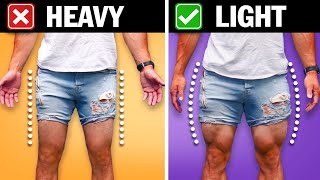
Five reasons your quads aren't growing: relying too much on barbell squats, poor form limiting the stretch, lifting too heavy, skipping leg extensions, and not training hard enough. A 2021 study found leg extensions built the rectus femoris better than squats.
If you're like me and appreciate a well rounded physique, then you care about your leg development and understand its importance in balancing out the upper body. But developing an impressive set of legs isn't just about working hard. There's five mistakes people make that severely limit their leg growth. Today. I'll explain what those are, go through how to fix them, and then show you how to implement this into your routine so you can start seeing leg growth fast. So before we dive into the mistakes, let's take a quick look at the muscles we'll be focusing on. The quadriceps. The quadriceps, or quads for short, are a group of four muscles located in the front of your legs. They're the most voluminous muscle in the body and when well developed, are the key to creating the impressive set of legs that you're after. But the fact that there's four different quad muscles means that you need to choose your exercises carefully. And while some people can simply squat and see great quad development, others aren't so lucky. To find out why that is, lets dive into the first training mistake. Barbell squats are often recommended as the best exercise to grow bigger legs. One issue with barbell squats, however, is they demand a lot from your core and lower back muscles to help stabilize the weight. In fact, if we take a look at research analyzing muscle activation of the back squat, the lower back muscles are highly activated, almost as much as some of the quad muscles are. Now this isn't a bad thing, but if your main goal is to grow your legs, then it can be an issue. Because what some of you may experience when squatting is that your lower back muscles will actually end up fatiguing first before your quads have reached anywhere near their limit. This is exactly what I personally experience whenever I squat, and this is where machines can come in handy. Exercises like the hack squat with the use of the back support help minimize the stability demands of the exercise, and as a result, you'll be able to truly push your quads close to their limits without having to worry about other muscles fatiguing first. Unfortunately, most gyms don't have a good hack squat machine. In this case, another option is to use a Smith Machine squat. Yes, you heard me right. As shown In a 2014 EMG analysis, the added stability significantly reduces the demands placed on the lower back muscles and as a result can help you push your quads closer to their limits. And no, for those wondering, as shown In a recent 2022 review, Machines don't seem to be any less effective at building muscle than free weights. And and in the case of the quads, the right machine can potentially be even more effective. So don't be afraid to use them. At the end of the video, I'm going to show you how to apply machine work into your routine. But first I want to show you a way to make regular barbell squats even more effective at targeting your quads. We're going to cover that right now in mistake number two. The next mistake has to do with your exercise execution. So by tweaking your form during your leg exercises, you can actually shift more of the focus to your quads rather than other muscles like your glutes and the lower back. The way we do this mainly has to with the angle of your shin. It's been shown that the more forward your shin angle is, the greater the knee movement and the more the quads will be involved compared to the glutes and lower back muscles. To illustrate this, if you were to compare these two squats, the one on the right with the more forward shin angle would be providing far greater tension on the quads. Now, some people, they naturally squat in this quad dominant style and probably aren't watching this video because they've got big quads. But most of you watching likely have limited ankle mobility, which makes achieving this quad dominant squat very difficult. To help with this, one option is to invest in a pair of lifting shoes for a slight heel lift and I'll leave a link in the description box down below to a budget friendly one that I recommend. Another option however, is to simply use a couple weight plates to elevate your heels onto as you squat. As we'll talk about in the next mistake though, you will have to use considerably lighter weight. But this tip, it doesn't just apply to squats. For example, a 2008 paper analyzed the muscle activation during the leg press. Researchers found that a low foot placement generated significantly greater quads involvement than either a standard or high foot placement. Why? Well, if you've been paying close attention, you probably realize that a low foot placement allows a greater forward chain angle and as a result will emphasize the quads more. However, again, ankle mobility will still be a limiter for how low you can place your feet. But play around with how low you can go. And again, consider using lifting shoes to help out with this. And lastly, you can also apply this concept to lunges and Bulgarian split squats as well. Rather than keeping your knee directly over your foot, let your knee and shin travel forward and try using the heel Elevation on your front foot to create an even greater forward chain angle to emphasize the quads even more. There is, however, one thing you need to be mindful of after applying this tip. And this is where the next mistake comes in. So by applying the previous tips to your exercises, you'll have successfully reduced the tension placed on other muscles like the glutes and the lower back and and move that tension to the quads. But as a result of this, you're not going to be able to lift nearly as heavy as you used to. For example, you may have been able to easily squat two fortified plates on each side with your normal form, but with your heel elevated quad focused form, this may initially go down all the way to just one plate on each side. This is expected because you're now forcing your weaker quads to do the work. And don't be alarmed. Your muscles can't tell how heavy the weight is you're lifting. It only cares about the amount of tension that's placed on it. So it's absolutely crucial, not just for a heel elevated squat before all your leg exercises that you don't let your ego get the best of you and let your body cheat to get other muscles to help out. Control the weight. And spend about two to three seconds on the way down of every single rep and you'll experience far more growth in your quads despite using lighter weight. The next mistake has to do with your workout programming. Remember how your quads are made up of four muscles? Well, one of them is special. It's called the rectus femoris. It attaches at the pelvis and travels down the middle of your thigh. Because of its unique anatomy, during classic leg exercises like squats and leg presses, the rectus femoris doesn't get very well activated when compared to the other three quad muscles. This muscle is instead best activated in exercises like the leg extension or the sissy squat, where only your knees extend and your hips remain locked in place. Up until now, we've mostly had muscle activation studies to support this and some research showing the rectus femoris doesn't grow very much from squatting. But a recent 2021 study really put this theory to the test. They had a group of subjects perform either the squat or the leg extension for five weeks and measured the growth at three different sites in the rectus femoris muscle. The result? The leg extension group experienced statistically significant growth in the rectus femoris at all three measurement sites, while the squat group didn't see significant growth at any of the sites. And after we go through the last mistake, I'm going to show you how to tweak your routine to make sure your rectus primoris doesn't get left behind. But for now, let's talk about mistake number five. The last mistake has to do with effort. We know that to maximize growth, you need to push yourself hard enough during your sets to reach at least within three reps of failure, which is the point where you couldn't do one more rep with good form if your life depended on it. The problem is, even when training the upper body, research has shown that most people don't push themselves hard enough to reach this point. So when it comes to your leg days, be honest with yourself. Are you truly pushing yourself hard enough or do you stop your sets when you just start to feel the burn and in reality could have done 5 or even 10 more reps? Given the sheer size of the quad muscles and the blood flow it receives, this is not going to feel comfortable, but the willingness to push through this discomfort is often what separates those who have an impressive set of legs from those who don't. Now to help with this, consider using a pre workout supplement. I personally take pre workouts specifically on my leg days as they've been shown to provide a greater benefit for lower body strength than upper body strength, likely because of just how much harder you have to push yourself mentally on those days. But regardless, give it your all and remember that on the other side of that discomfort is the growth that you've been seeking. Alright, we learned a lot today, so let's quickly cover how to apply it to your routine. First, if you're doing regular barbell squats and not feeling that much in your quads, try temporarily switching that for a heel elevated squat or a machine like a Hack squat or Smith machine squat. And for your leg presses and split squats, consider using the Quad Focus form as showed to further emphasize the quads. Second, after you do your big leg exercises, don't forget about throwing in a leg extension and or a sissy squat at the end of your workouts to emphasize rectus femoris, that special quad muscle that we talked about earlier. And lastly, as you do this, lighten the weight so your quads are forced to do the work, but push yourself hard to reach close enough to failure for your quads to actually grow. Implement this and you'll very quickly start to feel and see the difference in your quads development. But it's important that you take the same step by step science based approach to all the muscles you train. If you want to maximize your efforts for a plan that puts this all together for you and has helped thousands of others just like you transform their bodies, just head on over to builtwithscience.com and take our analysis quiz to discover the best plan for you and your body. Also, we focused a lot on the quads in this video, but it's important that you don't neglect your other lower body muscles like the glutes. You can click here to give this glute focus video a watch next, or you can click here if you'd like to instead focus on the upper body muscles like the shoulders. Thanks so much for watching. Don't forget to subscribe and I'll see you next time.










