Build The Perfect Meal Plan To Get Ripped (4 Easy Steps)
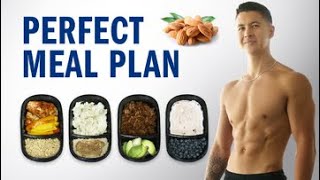
A four-step system to build a fat-loss meal plan: calculate your calorie target, set protein to 0.8–1.0 g per pound of bodyweight, choose meal frequency, then fill meals from protein, carb, fat, and vegetable lists. A 2021 study found people lost 7 lb on the plan but regained it after stopping.
Questions this video answers
0.8 to 1.0 grams per pound of body weight
180 grams of protein per day (1 g per lb)
Roughly 3 to 6 high-protein meals per day
10 weeks; about 7 pounds of fat lost
builtwithscience.com/mealplanner
I'm going to give you a four step plan to set up your next fat loss diet. Step by step, we're going to be filling in a planner for your meal. We'll first determine your calorie and protein goals and how many meals you should have. Then we'll fill in these meals with specific foods. By the end of this video, you'll have a system that you can use to build countless different meal plans that you can actually stick to. In theory, meal plans sound great, but I remember back in the day stumbling across one from an online fitness forum. It involved eating the same four bland, boring, lifeless meals every single day for weeks on end to lose fat. Now don't get me wrong, I had a lot of willpower and I could put up with the lack of variety in the meals. But what I could not put up with was the fact that after all this hard work and suffering, I didn't even get any results. And it wasn't until a lot of trial and error afterwards that I learned why this was and it came down to two reasons. The first reason has to do with this healthy breakfast of eggs, avocado, toast, banana and peanut butter. It's a meal that most would is great for losing fat, but would you guess that this meal alone racks up to over a thousand calories? These foods are by no means bad, but they can easily take you out of a calorie deficit. It's a reason why the meal plan that I used back in the day never ended up working and is why you need to be aware of roughly how many calories you're consuming with any meal plan as it can add up very quickly. Showcasing the Dangers of Reason 2 is a group of resistance trained males and females from a recent 2021 study who, like me, followed a strict meal plan for 10 weeks. Their meal plan consisted of four meals and they were instructed to only eat foods that were included on their specific meal plan and to not make any food substitutions throughout the 10 weeks. They were actually able to successfully lose about 7 pounds of fat, but they then regained much of that as soon as they went off their meal plan after the study was over. The meal plan that we're going to go through today, we're going to will be both personalized to your body and set up in a flexible way for both short term and long term success. Also, as we go through the video, you'll want to download a free copy of the custom meal plan builder that we've created for you. With it, you're going to be able to easily create endless custom meal plans based on your body. You can download it@builtwithscience.com meal planner and I'll also leave a link to this in the description box down below. The first step is the most important step if we want the meal plan to actually work. There's no point adding any foods into our plan if we don't yet know how many calories you can eat to lose fat. Now, most calorie calculators out there are honestly a shot in the dark. They don't consider how much muscle you have, how much you move every day, whether you lift weights or not, your age, your gender and your height, which all affect how many calories that you burn every day. The method we're going to use involves just a few simple steps that's going to enable us to take all these factors into account and will be the easiest way for you to accurately determine the calorie target for your meal plan. But to save you from the boring math, we've actually automated these calculations for you into the custom meal plan builder that I mentioned earlier. Within just a few minutes of using it, you're going to have your goal calories calculated for you. Alright, so after calories, the next most important component of your meal plan is how much protein it contains. We want to include enough protein to be able to maintain your muscle as you lose fat. Too little and you're going to risk losing muscle, and this means ending up just skinny rather than lean and muscular after your diet. As for how much protein you should aim for, a 2018 research study that looked at almost 50 protein studies found the sweet spot to be right around 0.8 to 1 gram per pound of body weight. Whether you shoot for the lower end or the higher end of this range, however, is going to depend on your body fat. Those with more body fat are going to require less protein in the meal plan builder that you can download. We've actually automated this calculation for you as well. Most of you will end up with a goal of 1 gram per pound of your body weight. So for example, a goal of 180 grams of protein if you weighed 180 pounds. Once you have that number, all that we have to do before we fill in your meal plan with actual foods is determine how many meals you should be eating. So the number of meals that you eat per day will determine how many calories and protein will actually go into each of these meals. Although eating more frequently is commonly thought to boost your metabolism, this has been disproven. That being Said protein frequency does seem to be important if you want to minimize the risk of losing muscle as you lose fat. And because of this, there is an ideal range that you want to stick with it. This range seems to be between roughly three and six high protein meals per day, each separated by a few hours. And this is where personal preference is key. Are you somebody who prefers eating more food and less frequent meals, or do you prefer eating less food and more frequently? Whatever you pick should best suit your schedule and keep you full and energized throughout the day. Once you've picked the number of meals that you'd like to eat, divide your protein intake up evenly across the number of meals. So for example, if your daily goal is to consume 180 grams of protein and you prefer to eat five meals per day, then you'd simply aim to have roughly 35 grams of protein in each meal. Now it's time for the fun part. Filling in your meal plan at this point, some of you may be wondering, what about carbs and fats? How much of those should I eat? While that is a good question, numerous studies have compared the effects of high carb diets with more rice, potatoes and bread but less fats like oils, butters and cheese versus low carb diets with more fats instead. But as long as calories and protein were the same between the diets, there were no significant differences on fat loss. Because of that, I prefer not complicating things by having you worry about eating specific amounts of carbs and fats instead. In the custom Meal Plan Builder, we're going to provide you with three lists of protein, carbs and fats to use to fill your meal plan with. The foods in these lists are the lowest calorie density options available and will be highly effective at keeping you full for protein. Here are the options and visual demonstrations of what 100 calories of these foods look like. You'll use these to reach your daily protein target in the downloadable Meal Plan Builder. We've also added vegetarian and vegan protein options to the list. Here's the same for common carb sources. Here's the same for various fruits and veggies. You can see how much more volume you get with fruits and vegetables and why they're so such a great way to keep you full when dieting. Here's fats these you want to be a little bit more mindful of because of how quickly their calories can add up. And finally, here are a handful of low calorie condiments and seasoning and salt that you can add to your meals as you wish. You can also feel free to add your own items to these lists as well. Alright, so now it is time to use these food lists to create your meal plan. All you're going to do is at each meal, select the foods from each category that you want to eat and so that by the end of the day you get close to your calorie and protein goal by at least within about 10%. So using our previous example, let's say that your calorie goal is 1900 calories, your protein goal is 180 grams, and you prefer to have five high protein meals a day. Jot down roughly the times you'd plan to have these meals. Then let's start with protein. So in this case you want to try to split up the 180 grams of protein fairly evenly over each of your five meals. Pick from the list of protein sources and plug them into each meal accordingly. The carbs and fats that you add in next will also contain some protein, so don't worry if you're about 1020 grams short of your protein goal after this step. After you've selected a protein source for each meal, it's time to pick a carb source. Now if you're going to be working out, then generally you want to make sure that you include a carb source in the meal before your workout. Other than that, if there is a meal that you want to exclude carbs from, then that is perfect, perfectly fine. In our example it might look like this. So after this you're going to pick your fat sources. So most people do best when they exclude this category from their pre workout meal to avoid feeling too full during the workout. But it is totally up to you. Make this your meal plan. Next, based on your preference, pick a vegetable and a fruit to add. So these are going to be the most filling foods relative to the calories, so I'd recommend including at least one into each meal. Last but not least, add your favorite low calorie condiments and preferred seasonings. Throw in a little bit of your inner chef into each meal and you'll have a meal plan that is both designed specifically for your body and filled with meals that you actually enjoy. You'll also be left with the knowledge and resources to change up your meals, however, and whenever you wish. And again to download the free custom meal plan builder we made for you to help you easily create your meal plans to just head on over to builtwithscience.com mealplanner but guys realize that nutrition is, hands down, the most important part of getting lean. That's exactly why, within our Built With Science programs, we remove the guesswork from your plan and show you exactly how to train and how to eat in order to burn off unwanted fat. To get started today, you can head over to builtwithscience.com, take our free quiz and discover which of our programs would be best for you and your goals. Anyways, I hope you enjoyed this one. To view some other diet videos, you can click somewhere here. Thank you so much for watching and I'll see you next time.










