How I Built Muscle FAST (5 Science-Based Tips)
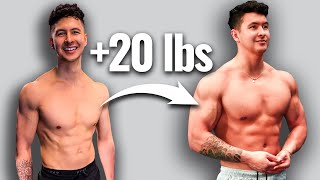
The speaker gained 20 pounds of muscle in 16 months using five science-backed methods: prioritize exercises that stretch muscles under load, train within 3 reps of failure, reduce frequency and aim for 8-10 sets per muscle weekly, and eat a lean bulk around 10-15% above maintenance. A fast bulk of +600 calories added mostly fat, not muscle.
Questions this video answers
About 20 pounds in 16 months.
Started ~2900 kcal and ended a little over 3000 kcal; lean-bulk target ≈10–15% above maintenance.
Within about three reps of failure.
Research suggests at least 8–10 sets per muscle per week.
About 600 calories more on average (fast vs slow bulk).
Is it possible to build muscle fast? It took me years to gain some size and eventually my gains stopped altogether. Instead of hopping on this, I recently implemented a handful of new research backed techniques and managed to gain a lean £20 in 16 months. And there's five things I did. Number one has to do with my training. There's a really exciting new area of research called stretch mediated hypertrophy. This is something I've covered in depth in a past video, but but basically some muscles seem to grow faster from exercises that challenge them the most when they're in a stretch position. This has now been shown with the biceps, triceps, quads and hamstrings. And to be honest, it seems like it will be true for most or even all of our muscles. To take advantage of this, there's two things I did first, exercise selection. Let's take the biceps for example. A recent 2022 study compared two exercises, preacher curls and incline curls. Preacher curls are most difficult right around here when the biceps are almost fully stretched, whereas incline curls based on the incline angle used in the study, are most difficult a little bit higher up when the biceps are almost fully contracted. After nine weeks of testing the two, the preacher curl led to around 150% more growth. Other recent studies on the biceps have found similar results, but there seems to be a similar effect with the triceps too. One study had subjects do overhead extensions with one arm and do normal triceps push down with the other arm. Likely because of the greater stretch on the triceps, the overhead exercise led to significantly more growth. So to apply this in my weekly routine, I made sure I was doing at least one exercise that really challenged each muscle in a stretch position. And aside from the ones I just shared with you, I also did behind the body curls for biceps, behind the body cable, lateral raises for shoulders, and seated leg curls for hamstrings, and Bulgarian split squats for glutes. But there's one more thing I did to focus on the stretch position even more and honestly, I think this is what really made the difference. So I've always been obsessed with progressive overload and just lifting more weight and doing more reps every workout. While important, it's easy to get carried away. You start lifting heavier, but it comes at the expense of form. You don't go quite as deep or you start using just a bit more momentum. These little compensations decrease the challenge you put on your muscles in that stretch position. So although I was lifting heavier over time, I wasn't actually seeing very good Results. So I decided to first lighten the weight on almost all my movements by about 10 to 20%. I then tried to go as deep as I could with good form. And for some exercises like presses and squats, I even added a half second pause at the bottom. Although I wasn't lifting as heavy, my muscles were challenged so much more, especially during that deep stretch, and they responded extremely well to this. Your goal isn't to lift as much weight as possible. It's to use that weight to challenge your muscles as much as possible. Knowing that will completely change the way you train and save you from a lot of injury down the road. Now, even if you do all the best exercises and use the right form, if you're not applying this next step, you're not going to grow. It wasn't until I fixed this that I realized how much it was holding me back. So in order to maximize growth, you need to get close enough to failure during each of your sets. Research suggests that at least within three reps of failure is the threshold. The more experience you get, the more important this becomes. Now, even though I was aware of this, I'll be honest, after I built up a decent amount of muscle, I just got comfortable. I wasn't training as hard as I could have been and was just going through the motions. It wasn't until I started really pushing myself close enough to true failure that I started really seeing my growth take off. And let me tell you, it's very easy to think you're pushing hard enough when in reality you still have more to give. A recent meta analysis released just last year found that in weightlifting studies, subjects would on average stop their sets almost 10 reps before they reached failure. And even well trained lifters have been shown to underestimate their max effort by around one to two reps on average. Believe me, the difference between stopping a set three plus reps short of failure compared to pushing through to just one to two reps short of failure, and is a whole other level of pain. This won't be comfortable and it never gets easier. But there are a few things I did that helped. First, I changed my mindset towards the pain. I simply view it as a sensation and I now link that feeling of pain with growth. So now it's almost like my brain is looking forward to and seeking that pain because I know it's going to result in future growth. And second, I always take at least a few seconds to just close my eyes and mentally prepare myself in the next set. It's so easy to let Your mind get distracted when you're working out and start scrolling through social media. But to push to the levels required to truly force your muscles to grow, you need to get locked in. And that happens before you've even started your set. And lastly, there's no way you're going to be able to do a crazy amount of volume every workout once you start training with this level of effort. That's why it's essential that you implement point number three, recovery. So your workouts are what provide the stimulus for your muscles to grow, but the actual growth happens when they're resting and recovering. Thing is, most people think that recovery only has to do with your rest days. But the most important part of managing your recovery actually has to do with your workout programming. You see, for years, I would always train at least six and sometimes even seven days a week. When I was younger, I could do this no problem. But over time, especially after applying the last tip, it just became too much. I stopped looking forward to my workouts. I had low energy and my muscles just didn't recover very well. So I cut down my workouts to just five per week. I recently cut it down even more to just four slightly longer workouts per week, with the occasional accessory day almost instantly after making the switch. I felt much better day to day and a lot more energized going into my workouts. And I definitely noticed my muscles recovered and grew a lot better as a result. Don't get me wrong, you still need to train hard and you still need to do enough weekly volume to grow. Research suggests at least 8 to 10 sets per muscle per week. But more isn't always better and what someone else can recover from might end up being too much for you. Keep in mind that your workouts aren't the only stress your body has to recover from. Your work, your life and your relationships can all be added stressors. And your body and mind just may not have the recovery capacity to commit to five plus days a week in the gym. So don't force it and listen to the signs your body is giving you. Alright, so far we've talked a lot about training, but all that training wouldn't have done much if I didn't modify my diet. You see, to maximize growth, research suggests you probably need to be eating in a calorie surplus, also commonly referred to as a bulk. But just like with workout volume, more calories isn't always better. One study compared the effects of a fast bulk versus a slow bulk. Both groups were in a calorie surplus, but the fast group ate on average about 600 calories more than the slow group. After 10 weeks, the fast group gained more than twice as much weight, about five times as much fat, and only a tiny bit more muscle than the slow group, which actually didn't reach statistical significance. So what I did was a lean bulk. This is when you purposefully overfeed your body with just a bit more calories than it needs, typically around 10 to 15% above your maintenance calories. For me, this started at about 2900 calories and ended up at a little bit over 3000 calories by the end of the bulk. And if you need some help figuring out the right amount of lean bulk calories for you, you can check out my calculator over@builtwithscience.com calculator. However, even with a lean bulk, you probably will gain some fat. The 20 pounds I gained definitely was not all muscle. And this can be tough to accept. It's hard seeing your abs and muscle definition slowly fade away, especially during summertime. And in my case it was really hard mentally, especially with all the pressure, but to constantly be shredded for YouTube and social media. In the past, I'd always go back to dieting whenever I saw just a bit of fat gain. And so I never really progressed. This time I decided to stick through it and I'm telling you it paid off tremendously. So shift your mindset and think of it as a long term investment. You have plenty of summers to get shredded in the future and your body is only going to look even better with more muscle on your frame. So tip number five was probably the hardest thing to implement. And you see, fat loss is a relatively fast process. You can easily lose 1 to 2 pounds of pure fat per week. But in comparison, once you're past the beginner stage of training, it can take several months to gain even just one pound of muscle. I mean, I gained 20 pounds, but not all of that was muscle and it took me almost a year and a half to do. But don't let this discourage you. The small gains you make week to week will over time amount to big noticeable changes. Our Built With Science members here are a perfect example of this and show what's possible if you trust the process. I mean, you can see the incredible difference that adding even just 10 to 15 pounds of muscle to your body can make. So be patient, don't try to rush it. And if you want a step by step training and nutrition plan that takes care of all the guesswork for you, just head to built with science.com and take our quiz to find the best science backed plan for you and your body. Give this video a watch next to learn more about the muscle stretch research I covered earlier and how to use it to speed up speed up your gains even more. Thanks for watching and I'll see you next time.










