How To Bulk Up Fast WITHOUT Getting Fat (4 Bulking Mistakes SLOWING Your Gains)
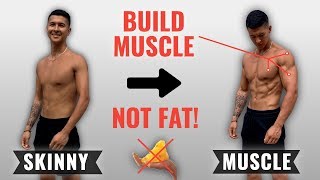
Jeremy Ethier breaks down four bulking mistakes that slow muscle gains: starting too fat, eating too much, gaining weight too fast, and not being patient enough. Start lean, eat just 10-20% above maintenance, and aim for slow monthly gains based on your training experience.
What's going on guys? Jeremy here. And today I want to cover why you're not building muscle. And more specifically I want to go through four bulky mistakes that are in turn slowing down the gains you could be making. First off though, lets cover what exactly a bulk is and why it's ideal for building muscle. So bulk is simply a period in which you eat at a calorie surplus in order to gain weight and add more size. Now although a bulk is by no means required for muscle growth, if building muscle is your main goal right now, then it is in most cases the best approach for you since we know that a positive energy balance has been shown to elicit a significantly greater anabolic effect and protein synthesis response than being at maintenance or an energy deficit. Especially when you then pair it with resistance training. And although this is in theory just as simple as eating more, most people in the process make a handful of mistakes with it that negatively affects the muscle building effectiveness of a ball. And trust me guys, I have made every single mistake in the book. But in this video ill share with you the most common ones that you're probably making and show you exactly what to do instead. So the first mistake is simply not being lean enough to fully reap the benefits of a bulk. And this is problematic for two reasons, with the first being that its just not optimal for muscle growth because research has shown that as your level of body fat increases, you actually become less and less efficient at building muscle. As a result, you grow less muscle and more fat per unit of weight gain due to various physiological changes. And secondly, not being lean enough when you start your bulk means that further down the road, you're likely going to have to commit to a long diet to essentially reveal your gains by getting rid of all the excess fat that you had initially, as well as any additional fat that you put on during your bulk. And although this is completely doable, and it's something that I've done in the past, dieting in general is just not enjoyable. And the shorter your dieting period is, the less likely you're going to be to call it a quits halfway through the diet and never really get rid of that excess fat that's essentially masking your gains. Or in other words, you're going to be stuck in the perma bulk. Therefore, to avoid these two problems and to maximize our chances of building muscle and not fat, then you want to start out fairly lean, ideally under roughly 15% body fat. And then in the event that you're higher than this, a much better option for you is to first diet down to get rid of the excess fat before you then commit to a calorie surplus. This is just a much better approach, not only to make your future bulk more effective, but also because we know that the more body fat you have, the greater your ability is to actually still build muscle while losing fat in the process. So it really is just a win win. The next mistake is gaining too much fat compared to muscle during your bulk. And although my previous point will help minimize this, what a lot of people believe when it comes to bulking is that the more food you just stuff yourself with, the more gains you're going to make in the process. Now, this is technically true, but only up to a certain point. And beyond this point, the extra food that you take in will now start to significantly contribute more to fat accumulation instead of muscle growth, which is then going to take a lot of time of dieting to get rid of. And illustrating this point perfectly is a very recent 2019 paper that split lifters up into two bulking conditions. One with a very high calorie surplus to gain weight quickly, and another with a lower energy surplus to gain weight at a slower rate. And what they found is that although the high surplus group did end up gaining more muscle than the lower surplus group, when you crunch the numbers, we can see that the high surplus group was actually gaining muscle versus fat mass at a 4 to 3 ratio, compared to a much more effective 4 to 1 ratio in the small surplus group. So, for example, even though the high surplus group could gain 4 pounds of weight much faster, or only a pound of this would be muscle with the rest being fat. Whereas although the small surplus group would take much longer to gain this amount of weight, 3 pounds of it would be muscle and only 1 pound of it would be fat. And other papers like this 2013 one have found similar results as well. Just meaning that although you can just technically eat more and gain more, a slower approach is going to be a lot more effective in the long run due to the more favorable muscle to fat accumulation ratio. Something that I've unfortunately just learned through experience. Now, in terms of specifics, I'd use the recommendations of a recent 2019 nutrition review, which is to implement a small to moderate surplus of around 10 to 20% above your maintenance calories, with beginners being at the higher end of this and more advanced lifters being at the lower end of this. But in addition to implementing this, you need to then avoid the mistake of not setting yourself a target rate of weight gain and tracking that over time, because although we just talked about how the body has an ideal rate at which it can put on new muscle, or we also know that this rate actually slows down the longer we train. Meaning that you should be setting a goal rate of weight gain throughout your bulk that's in accordance with your training experience and then making sure that you're actually hitting that goal. And researcher Eric Helms has done a great job of explaining how to effectively do so by using this chart that'll pop up on the screen. So, for example, if you're a beginner, which is defined here by someone who is able to lift more weight in the gym pretty quickly, so week after week, then you should aim to gain around 1 to 1.5 of your body weight per month. Whereas if you were more intermediate or advanced, you'd want to then slow this down accordingly, since your body just won't be able to put on new muscles rapidly as you could when you were a beginner. And then after you set this goal rate of monthly weight gain, simply monitor your weekly average weight to determine if you're actually hitting this goal every month. If you find out that you're undershooting your goal, for example, then you simply increase your calories slightly. Whereas if you're overshooting your goal, for example, then simply decrease your calories slightly. But doing this is just going to ensure that you're on the right track and you're not either eating too much and gaining too much fat or eating too little and slowing down your muscle growth as a result. Now, the last but probably most relatable mistake when it comes to bulking is simply just not being patient enough. Because what you have to realize is that unlike fat loss, building muscle is a very slow process. And to make matters worse, during your bulk, it's inevitable that in addition to the muscle that you gain, you're also going to gain at least a bit of fat throughout the process, which in turn can basically just hide the added muscle that you gained and make it visually seem as if you're not really making any progress. This often then leads people to go back to dieting too soon and not really make any progress as a result. Instead, you just need to understand that it takes several months and even years when you're more advanced to put on any noticeable size. Which is why its absolutely vital that you actually commit to a bulk for an extended period of time. So at least a couple months, for example, throughout which you're both hitting your target, get monthly weight increases and increasing your strength in the gym. And then whenever your body fat approaches the upper limit that I mentioned earlier, or you're just satisfied with the size that you've added, you can then diet down to essentially reveal the new gains that you've made. But at the end of the day guys, when it comes to bulking and building muscle, you just need to be patient. You need to trust the process and you need to track as much day as you can along the way so you know when you veer off track and you can adjust accordingly. That's exactly why within my built With Science programs we we created various nutrition and workout software that basically automates this whole process for you, enabling you to essentially shortcut your muscle building process, just like Abdullah over here was able to do. And to discover which program is best for you and your specific situation, just simply head on over to builtwithscience.com and take the Starting point quiz to find out. Anyways, thank you so much for watching guys. I hope you enjoyed this one. Please show your support by giving the video a like and leaving a comment down below as to what you'd like to see me cover next. Subscribing and turning on notifications for my channel as well as this all really does help me out. Thank you so much for all the support guys and I'll see you next time.










