How To Diet To Lose Fat FOR GOOD (4 Phases)
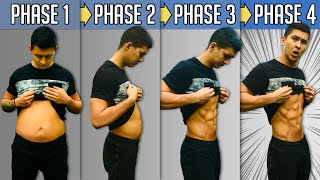
A four-phase fat loss system: start with 2-4 months of eating at maintenance to restore hormones, then diet at a 15-25% deficit with high protein and diet breaks every 6-8 weeks, move to reverse dieting by adding 100-200 calories weekly, and optionally build muscle. The goal is keeping the weight off without metabolic damage.
Questions this video answers
Multiply body weight in pounds by 14–15.
About 0.7% of body weight per week.
Approximately a 15–25% calorie deficit.
Every 6–8 weeks of dieting (diet break of ~1–2 weeks).
Typically 2–4 months to reach full recovery (minimum 1–2 months).
If you're watching this video, the chances are you've attempted to diet of your own in the past and you likely saw some success with it. Maybe you lost a few pounds or maybe lost a ton of weight, but eventually you reached a point where you just got stuck despite working out and dieting as hard as ever. Then you got frustrated and ended up regaining even more weight than you initially lost. Then you likely attempted to diet again afterwards to get rid of that regained weight. But this time, even when you put in the same effort, you just can't seem to get as lean and everything just seems so much harder. I've seen this happen time and time again, and I've personally been through this series of yoyo dieting myself as well. Because the truth is, in the short term, just about everything works as long as you're in a calorie deficit with your diet. The long term, however, is where most people fail. In fact, there exist eight 12 week studies showing successful weight loss with pretty much every dieting approach out there. But when you look at long term research, only about 10 to 20% of those individuals are able to keep that weight off in the long run. Which is due to the fact that most people have been taught to use approaches that set themselves up for failure in the long run by negatively affecting their bodies, both physiologically and psychologically, with diets that leave them in a position where it's now much harder to strip off that excess fat. And to help explain the science behind how exactly this happens, here is Dr. Eric Trexler, pro bodybuilder and PhD researcher who has done a ton of work within this field.
So yo yo dieting, it's something a lot of people experience, you know, repeated cycles of dieting and regaining the weight that they lost. And one of the reasons it's problematic is because, you know, with metabolic adaptation, we start losing fat. Our body adapts to that in certain ways. None of them are terrible, but they're things that we have to plan for, you know, and so people will lose weight and they'll start running into a little bit of friction. They might notice that their energy expenditure is lower than it used to be. They're much hungrier than they used to be. You know, there might be some hormonal changes depending on how much weight they've lost and how lean they've gotten. And for a lot of people, they run into enough friction that they decide they no longer wish to be dieting, you know, so they'll lose some fat and say, I don't think I really want to continue with the fat loss, or they're simply unable to continue because it's become so, so unpleasant. And so, you know, sometimes people say this, I just can't keep up with this because I don't like how low my calories are, I don't like how hungry I am, I don't like how lethargic I'm feeling. And they might go off the diet, start overeating. And because they have so much hunger and, you know, relatively low energy expenditure, the weight gain they experience can be fairly rapid. And so what's unfortunate about that is we have a lot of hunger toward the end of a diet. Some of that is a result of just having low caloric intake. Some of that's related to having less fat storage than we used to, but some of it is related to the loss of lean mass, which occurs during a diet. And what happens is, if we regain all of our fat from a diet during this yo yo dieting process, in many cases, we regain the fat more quickly than we could possibly regain the lean mass. And if we find ourselves in a position where we're back at our normal starting body weight, but we have less lean mass than when we started, we haven't restored all the lean mass that we lost, we'll find that some of that hunger from the diet persists even though we've regained all the weight. And so that's where you can start to see, not only do people go back to the starting line after a relatively unsuccessful dieting attempt, but they can actually shift that starting line back a little bit.
Now, as Eric alluded to, this is exactly how restrictive diets leave you in a worse place every time you attempt to die down. And literally just sets you up for failure in the long run by making it harder and harder for you to strip off that fat for good. So if this sounds like you, and you're at a point where you've been chronically undereating, doing a ton of cardio binging every now and then, and basically just in a cycle of yo yo dieting, then you need to realize that weight loss should not be your priority right now. Your body isn't ready physiologically nor psychologically. Remember, we're talking about lifetime results here, not just some 12 week weight loss program. So we need to first get your body recovered back to a point where we're now ready to start cutting calories and stimulating fat loss the right way. And to do so, we want to first use something called the recovery phase. So with this phase, we have three major goals. One, we want to restore the lean muscle mass that you lost, as this will not only help slightly boost your metabolic rate, but muscle loss also seems to be directly correlated to your hunger levels, where the more muscle and overall lean mass you lose, the hungrier your body tends to be. We don't actually know physiologically why this is, but nonetheless it's why we need to prioritize lean mass restoration before beginning to diet again. Two to restore any hormonal imbalances related to hunger, fatigue, and just overall feeling like crap as a result of your previous diet and three to just get you in a better mindset with regards to your relationship to food and your weight, we need to get you in a state where you're actually excited and truly ready to start a diet again before we do so. Now, to accomplish this, all you're going to do is simply bump up your calories to whatever your maintenance calories currently are or or even slightly above this, while also cutting back on your cardio if you're currently doing quite a bit of it. And to get a rough estimate of what maintenance may be for you, you can simply multiply your body weight in pounds by 14 to 15. Stick to that. Then monitor your calorie intake and body weight over the next few weeks and adjust accordingly to the point where you're now maintaining your current weight with a certain calorie intake. But do be comfortable with your body weight slowly creeping up just a little bit throughout the process. Although this may sound counterintuitive, what a lot of you may notice by doing this is that these extra calories are just what your body needed and you're now so much more energized, you're moving more, you're performing better in the gym, you're regaining your lost muscle and strength, you're not completely wrecked after your workouts, you're sleeping better, and you just feel better throughout the day. Now, as for how long you should stay in this recovery for here's what Eric recommends once we do get into the recovery phase, how long typically would it take someone to at least physiologically recover back to a point where they're now ready to go back on the diet?
It's a good question. Now, assuming that you're no longer in a caloric deficit, assuming that you're at a reasonably comfortable body fat level that is sustainable, you know, we're usually looking at it at least a month or two, usually more in the two to four month range to reach full recovery.
So take your time with this phase guys and think about the long term. I really just can't stress this enough. When you're ready though. Phase two is where we can give dieting another shot, but this time we need to do it right. Which means that we need to set up our fat loss phase in a way that minimizes muscle loss and minimizes the metabolic adaptation that we typically experience throughout our diet. And as outlined in Eric's research papers, there are a few ways that we can do this. First, you need to avoid using a very aggressive calorie deficit. As research has shown that just a moderate deficit that enables you to lose weight at a rate of about 0.7% of your body weight per week is ideal to maximize fat loss while minimizing metabolic adaptations and muscle loss. For most people, this equates to roughly only a 15 to 25% calorie deficit for but just keep an eye on how your body weight progresses throughout the weeks and adjust accordingly. Next, we want to use an approach that's called intermittent dieting. I have covered this in a past video, but essentially after every six to eight weeks or so of dieting, you want to break this up with what's called a diet break where you eat at maintenance calories for about a week or two. Now, although research regarding this is still very preliminary, it does suggest that diet breaks may help reverse some of the metabolic adaptations you experience from your weeks of dieting, potentially minimize the metabolic adaptations going forward, and it just prepares you for your next phase of dieting. Not to mention that it can also help with better adherence over the course of your diet. In fact, I would even recommend that after you lose a considerable amount of weight, take a break from dieting altogether for a little while and just focus on maintaining that current weight. Remember, it's about lifelong results here, so don't be afraid to take it slow. And lastly, you need to ensure that you're eating a high protein diet along with high volume, low calorie filling foods. This efficient protein will not only help you burn more calories by just metabolizing it, but will also help keep you full and maintain or even build muscle mass as you diet down. And opting for satiating foods that provide the most bang for your buck in terms of calories will just again help you stay full and satisfied even when your calories do drop quite low in your diet, which in turn will minimize the risk of overeating and binging when things do get tough. I do have a past video on what foods I'd recommend for this reason, and I'LL link that in the description box down below. So, basically, you apply these three steps until you successfully lean down to the level of body fat that you're satisfied with. Then, once you do so, it's time to transition to phase three. Now, this phase is where most people screw everything up, because just like as I explained earlier, as you diet down, your body adapts and gradually slows down its metabolism. To try to fight that, we've minimized this in our dieting plan, but nonetheless, there will still be some metabolic adaptation present. Which just means that now your maintenance calories will be lower than they were in the beginning. Not to mention that by the end of your diet, you're also usually in a state where you're hungry and fatigued. So after phase two, if you simply go back to what you were eating at in the beginning of your diet, while also cutting down your activity and maybe even having a cheat day or two to celebrate the end of your diet, you're going to be overeating considerably and can gain a ton of weight in a short amount of time, especially since your body at this point is primed to favor fat gain, which can then lead us to the same problem that we were at in the very beginning of all this. So instead, what we want to do here is simply find a way that you can maintain your weight loss in a sustainable way without feeling like you're starving yourself or doing an excessive amount of cardio. And one option to do so is with something called a reverse diet, where immediately after your diet, you bump up your calories back up to your new lower maintenance levels to just get out of the dieting phase. Then from here, you basically experiment with very slowly adding calories back into your diet while keeping a close eye on your weight. Although the effect this has does seem to vary individually, oftentimes what happens is, even though you're adding more and more calories back into your diet, your body counteracts this by essentially getting out of that dieting mindset and tends to start burning more calories through subconscious increases in daily activity or need to slowly bump up your metabolism. So by the end of this process, you'll still have successfully kept off most or all of the fat that you lost. You'll feel more energized and stronger in the gym, and you'll be eating considerably more calories than you were after you finish your diet, which should eventually be similar or close to the maintenance calories that you started out your diet at. However, keep in mind that again, this does vary individually, as People respond to increases in calorie intake. Take differently. For instance, in one overfeeding study, researchers brought 16 normal weight subjects into a lab for eight weeks and served them in excess of 1,000 calories each day. Based on the math, everyone should have gained 16 pounds in eight weeks. However, in reality, the subjects gained anywhere from under a pound to up to about nine pounds. And the discrepancy in variation here between subjects was mainly due to a difference in meat. Meaning that some subjects responded much better to the excess calories by in turn burning more calories subconsciously through fidgeting, postural adjustments, and other subtle movements throughout the day, whereas others just didn't respond as well. Here's what Eric recommends. So, with regards to the reverse dieting phase, after a successful dieting phase to, let's say somewhere around 10% body fat. So not, you know, physique competitor completely shredded, but, you know, six pack visible overall, what do you typically see as the general response to reverse dieting? And then also on that note, how much do you think that most individuals in this position can increase their calories by while still more or less maintaining their current level of leanness?
Good question. So, typical response is really hard to give a singular kind of description of because what you find in the literature is the magnitude of metabolic adaptation during weight loss is quite variable and the magnitude of responses to overfeeding is quite variable. So with reverse dieting, what we're trying to do is just kind of slowly increase calories to see if we can increase our energy expenditure kind of on a similar timeline. So if we're kind of fueling a little bit of recovery and getting our energy expenditure back toward a normal level, the idea is to nudge that process along with slow increases in caloric intake so that we're not going to have a huge caloric surplus at any given time that's going to cause any rapid weight gain for most people. Reverse dieting, we might be able to increase caloric intake by 100 calories. A couple hundred calories for some people, you know, higher than a couple hundred, maybe a few hundred or so. You do see these rare instances where people push it really, really high, but they are pretty infrequent.
So basically what the reverse diet process does is let's say your old maintenance was here, your new maintenance after your diet is here, and your dieting calories are here. Right? So immediately after you finish your diet, you bump up to your new maintenance, which is lower than your old. And then with reverse dieting, you might be able to increase this just a little bit, so you're working with more calories and are able to sustain your current level of leanness in a much more sustainable way. Correct?
Correct. And you might not be able to push it all the way up to where your old maintenance was because you still have less body mass than you used to, but you can start reducing that adaptive gap in energy expenditure, start nudging that back up toward normal, and you can build a little bit of extra space into the diet that makes it a little bit more sustainable in terms of caloric intake.
Simply meaning that the response to this reverse dieting phase will vary for everyone. So experiment with it and keep in mind that the main goal is to get you to a point where you feel great, your body weight hasn't increased by much or at all, and you're maintaining your new physique with a sustainable and satisfying amount of calories, as well as a manageable amount of cardio. And then from here, it really is up to you where you want to go next. You could either maintain your new physique with relative ease with your new higher calorie intake, or. Or you could simply choose to now focus more so on muscle growth if you're seeking to add some more size to your frame, in which case you'd simply start eating at a calorie surplus to slowly gain muscle over time, and then transition back to phase two of this plan whenever you're ready to start leaning down some more. Now, although this whole process may seem very complex and you may be feeling as if there's no hope for you, just realize that that simply is not true. I'm not going to lie, it will take time. But by following these four phases, remaining patient, and combining this with a solid training and nutrition plan, then you can and you will be able to strip off that fat for good. On that note, though, guys, for those who do need that extra bit of help, my step by step programs have been designed to guide you through each of these phases in detail. It comes fully equipped with software that enables you to actually know exactly what your metabolism is at and how it's changing week after week as you strip off fat and lose weight so that you can easily break through any plateau that you encounter along the way and lean down in the most efficient way possible. Just like several of our Built With Science members have done with their programs. So, to get started today, just head on over to builtwithscience.com and take the analysis quiz to discover what program will be best for you and the state that your specific body is currently in. Also, a big thank you to Eric Trexler here for his help with the video. You can give him a follow at Trexler Fitness and I'll also leave some links in the description box as well for you to check out some of his work. Thank you again, Eric. It was a pleasure having you on here. And guys, as always, don't forget to show your support by giving the video a like leaving a comment down below as to what you'd like to see me cover Next, subscribe to the channel and turning on notifications for the channel as well. This all really does help me out and I really appreciate it. Thank you so much everyone. I'll see you next time.










