How To Pick The Best Protein Powder (CHOOSE WISELY!)
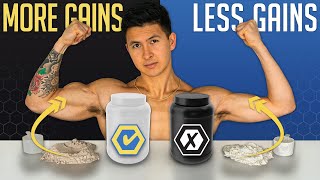
Whey protein is generally best because it has more leucine and absorbs faster than casein or plant proteins. Watch for protein spiking, proprietary blends, and contamination. Check the protein per serving, look for third-party certifications like NSF or GMP, and verify the company tests their products.
If you've seen any of my supplement videos then you know I'm a big fan of protein powder because of its practicality and the various advantages and potential muscle building benefits it can provide. But once you do decide that you're ready to invest in a protein powder, it's important that you first get well informed of the various differences between the various types of protein powders out there, as well as the things to look for and things to avoid when you compare different brands. By the end of this video you'll know exactly what type of protein is right for you and how to separate the good from the not so good options out there. First lets cover what type of protein powder may be best for you. Despite the overwhelming amount of different protein powders on the market, research has made it clear that whey protein comes out on top. This is because whey protein is both higher in leucine, one of the most important amino acids for muscle growth, and more effectively absorbed and used by the body when compared to various other protein powders and other protein sources. In general, casein protein does come in at a close second with a slightly less leucine and overall protein content, but it is a much slower digesting protein than whey. In theory, this would mean that casein would be the more effective option to take as a pre sleep meal so that we can stimulate protein synthesis overnight. However, recent research seems to suggest that any high quality protein such as whey would do the job just as effectively, so whey seems to be the best option. But whey protein can be further broken down into three different types whey concentrate, whey isolate and whey hydrolysate. The main difference here is that whey concentrate can range anywhere from 35 to 80% protein and typically contains the highest amount of lactose, carbs and fats. Whereas whey isolates, although typically a bit more costly, have to go through an additional filtration process and are required to be at least 90% protein by weight and therefore have consistently considerably less fats and carbs. Hydrolysates, on the other hand, are whey concentrates or isolates that have just been pre digested to help with its absorption but have not been shown to be any more effective at increasing size or strength as the other two options yet is typically the most expensive option. So essentially it's just like buying chicken. Whey concentrates can be thought of chicken thighs, they deliver a good amount of protein but come with additional fat and calories, whereas whey isolate can be thought of as chicken breast, a bit more costly than thighs, but pack a much higher protein content with less additional fat and calories. Whereas whey hydrolysate could be thought of as extra lean ground chicken breast, it goes through a bit more processing is typically the most expensive option, yet it delivers the same amount of protein relative to calories, fats and carbs as chicken breast does, meaning that for the best bang for your buck. For most people, a good quality whey isolate protein is your best bet as it delivers the highest amount of protein and is slightly better for those who are lactose intolerant or just tend to have digestive issues in general. Now as for plant based options, this can be a good option if you do have intolerances or sensitivities to whey. The problem with plant based proteins though, is that they tend to be deficient in certain essential amino acids and are less effective at promoting protein synthesis than whey is. But research has shown that you can partially compensate for this by combining different plant based protein sources. For example, pea protein is low in the essential amino acid methionine, whereas rice protein contains considerably more methionine, but is lower in the essential amino acid lysine. Meaning that when you look for a plant based protein powder, one with a good blend of rice and pea protein would likely be the best option. Soy protein, although subject to much controversy, is another good plant based option since it has a good amount of all the essential amino acids and is therefore something worth considering. Now, after you've chosen the protein powder that best suits your needs, the next step is learning how to separate the good brands from the not so good brands, because unfortunately, there's a lot of tricks that supplement companies can use to deceive you. And to help us out with this is examine.com researcher Bill Willis, who has done a considerable amount of research and work within this exact topic. So, Bill, the first thing that you'd recommend that we look out for is the use of something that's called proprietary blends. Would you mind just explaining a little bit more about what exactly that is and then what that means for us as a consumer?
Sure, yeah. That's something you have to watch out for with any protein product. The issue is that most whey proteins in particular are made of isolates and concentrates generally, sometimes some protein hydrolysates, and what you'll find is, you know, a proprietary blend on the listing label. And in this blend, the company doesn't really have to disclose the amount of anything that's in that blend. So for instance, if you look at the back of a label of whey protein powder and it's a blend of whey concentrate and isolate. You know, that's great. Concentrate can be good, an effective source of protein as can isolate. But the issue is, is that the concentrate could be a really cheap, low quality one. There could be just a tiny little trace amount of isolate. So in that example, let's say you, an unscrupulous manufacturer, put a proprietary blend in there because they got a delivery of some really cheap whey concentrate that they got for a good price that was low quality. In this case, that whey concentrate could be, you know, as low as 25 or 30% total protein. Now the claims on the label in terms of the total protein content may be met with that blend. You know, everything might be on the up and up there, but what you can look out for is the, is the serving size. In particular is how much protein is present per serving relative to the serving size. So you take a look at the label and let's say you're, you know, you're dealing with whey protein and product A is in a 35 gram total serving. Let's say there's 20 grams of total protein. That's going to be relatively low, indicating a lower quality protein. On the other hand, let's say for that same 35 gram serving size, another type of whey has maybe 25 or even up to 28 grams in that total 35 gram serving size. That one would be higher quality. And that's what you want to look out for. You want to get the protein with the most total protein per serving. Those proteins are higher purity, otherwise you'll be paying for less of what you really need in a protein and more of just the junk and the fillers.
As far as I know, even if we do look at the protein content on the back of the label, there's still another loophole that companies can actually use to deceive us. And this was something that's called protein spiking. Yeah. What exactly is protein spiking? And again, how can us as consumers avoid falling into this trap?
Yeah, that's, that's a dirty trick. And how dirty it is, I guess, depends on what exactly they do. So protein spiking is adding non protein nitrogen containing substances to the protein powder that will be measured as protein. And the thing is that the FDA tests just total nitrogen levels and it's a quick and dirty way to assess protein content. Now the manufacturer could add extra nitrogen containing agents in there that aren't protein Creatine is commonly used or maybe a cheap freeform amino acid such as glutamine. And again you'll see this in like a proprietary blend. You might see whey isolate, whey concentrate and then glutamine. Well, you know, you don't know exactly how much of which is in there and that's when they do it legally, when they do it in illegally, they're just going to throw any extra nitrogen containing substance in there and it's not going to be stated on the label. The latter is, as I mentioned, just a little sneakier. It's a little harder to detect.
I guess. Again what you could also do is just look at the ingredients label and avoid protein blends. Avoid like you mentioned, amino acids, glutamine or amino acid matrices or amino acid blends as those are potential indications that the protein has actually been spiked.
Yeah, you actually, you have to watch for that because a lot of times the these proprietary blends or especially like the amino acid matrix will show up in their marketing. Like you'll be thumbing through a fitness magazine and you know, you'll see this big bright shiny bottle of protein and you know, these superhero looking like people that are, you know, supposedly got their physique that way and you know, proprietary amino acid matrix, they sort of use that, it's hidden in plain sight in a way the consumer links, you know, this, this fancy term to the physique of the, you know, whoever they're getting to endorse the product and really that's where they're hiding, you know, the lack of protein quality on the label. So you really have to watch out for that. Look for brands that fully disclose the amount of amino acid or the amino acid profile rather of their protein. This helps indicate that they're fully transparent about the specific amino acid content of their product and are less likely to have spiked it.
The last and final thing to look out for is contamination. Third party testing results from a 2018 analysis by the Clean Label Project found that among 134 tested protein powders, the vast majority of them had detectable levels of heavy metals and plastic derivatives as a result of their ingredient sourcing and manufacturing practices. Now, detectable does not mean dangerous. But many of these protein powders did indeed have levels that surpass the acceptable levels, which is something you'd obviously want to avoid. And this is a common occurrence because supplement companies aren't required to test their products for contaminants and are instead left voluntarily to run those tests if they wish to pay the additional cost, which as you'd expect, many companies just don't do. So to minimize your risk as a consumer, simply do a little bit of digging around to see what their testing protocols are and specifically what they test for and looking for. Certifications such as NSF and GMP on their website are also good signs and indications that they take their quality control practices seriously. So to sum the video up, here are the main points to keep in mind and look out for when you purchase your protein. If you're going to be investing in protein powder, it's worth putting in that additional effort to ensure that what you're getting is a high quality product aligned with your specific goals. For a step by step program that applies the same level of science and detail to your workouts, your nutrition and your supplementation so that you can truly transform your body in the most efficient way possible. Then simply head on over to builtwithscience.com and take our analysis quiz to discover which program is is best for you and your specific body. And big thank you to Bill Willis from examine.com for his help today. For those who are unfamiliar with examine.com, it's just a free database of unbiased nutrition and supplement information that's led by a team of scientists and researchers. If you want to learn more about any specific supplement and the current state of the research for that supplement, then I highly recommend that you check out their site. Anyways, that is it for today guys. Thank you so much for watching. Hope you enjoyed this one. And please don't forget to show your support by giving the video a like leaving a comment down below. So what you'd like to see me cover next? Subscribing to the channel and turning on notifications for the channel as well? This all really does help me out and it's much appreciated. See you guys next time.










