I Trained One Side HEAVY vs LIGHT For 60 Days (Bad Idea)
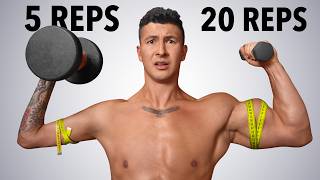
Jeremy Ethier trained one side of his body heavy and the other light for 60 days, measuring changes with MRI and DEXA scans. Strength adapted to the rep range, but muscle growth was nearly identical on both sides. One muscle grew asymmetrically and later caused back pain.
Lightweight for high reps or heavy weight for low reps, which is actually best for growth. Some argue the first builds a leaner toned physique, while others swear you need the heavy stuff for any real size. So I decided to put it to the test. For the next 60 days, I'll be training half my body with light weights and the other half with heavy weights. I'll be taking daily photos and everyone is worried I'm going to look like this by the end of it, but too late. Today is day one to decide which side of my body I'll be training heavy and which I'll be training light. I'll be using the most scientific way possible and it only costs a dollar. Heads is going to be right side heavy, tails is going to be left side heavy. Let's see tails. Okay. The science gods must be looking out for me because my left side is actually my weaker, non dominant arm and leg. So the heavy weights might actually balance them out. But I've never TR like this before. Even on the first set with a heavy weight, it's a lot tougher than I expected to stay balanced. Okay, so that was £90 for five reps. Definitely felt super weird. It's hard to balance. I've never trained like this before. That already feels like kind of lopsided on this side. I am scared for the light side though. Let's see how this goes. Easy money. Let's go. Oh, God. The burn on that side is way more intense. Like the first 10, it was easy once I got to like 12, 15. Oh, I'm just not used to that pump. Feels a lot bigger. Definitely. But you might be wondering why I've decided to risk lopsided my physique for the sake of this experiment. Well, like most people, I, I grew up thinking you've got to lift big to get big. Even when my joints used to bug me, I wouldn't lift light because deep down I felt like there's no way these light weights can build the same muscle. But what if curling these 20 pound dumbbells is in fact the same as curling these 60s? Recent studies suggest it's possible, but they rarely test very low rep ranges. Most are done on complete beginners. And we still don't know if certain muscles like the chest, might respond differently to heavy versus light weights since they've never really been tested. So here is my day plan. Every major muscle will be trained unilaterally, meaning only one arm or leg at a time. Each side will receive the exact same number of total sets. And every set will be taken as close to failure as possible. But the heavy side must reach failure within 3 to 6 reps, whereas the light side must reach failure within 15 to 30 reps. Plus, to make sure there's actual changes in muscle growth and strength, I'll also be eating in a small calorie surplus. But first, we need a baseline. I got an hour long full body MRI scan that not only measures my muscle growth precisely, but also reveals individual muscles that ultrasounds cannot distinguish. Studies hardly ever use MRI because it's expensive, but thanks to the coin flip, I do have some change to spare. Plus, Prenuvo hooked me up with the discount link below for anybody who wants their own full body MRI scan and health report. You guys now see everything in me, and lots of things are a lot smaller than I thought, like my brain. But I'm also using Dexa ultrasound and body circumferences as backups and to get a clear picture of the whole story. Not to my surprise, as a right hand frequent user, my right side is slightly bigger. After 60 days, I'll come back for another scan to see how much each muscle grew and if there's a difference in either side. Now, we all know size matters, but strength is just as important. I'll be tracking everything using the built with science plus app throughout the experiment. At the end of the 60 days, I'll be switching sides to see if they can keep up with each other. But I have several years of training experience, and I'm curious if a beginner's muscles would respond differently. Hey, you. Yeah? Do you lift weights?
This?
So I found this dentist guy on the street, the perfect beginner guinea pig. All right, now.
I can't do it. I can't do it. Oh, look at this.
Let's go. Your right bicep is not only bigger, but it's a bit stronger than your left side. Your chest and back, pretty much even. What side are we gonna do? Heavy versus light. What is it? Oh, yeah. S light on your right side and heavy. Same as me. Oh, really? Okay, let's go. Somehow his report shows that he's also a right hand frequent user with a starting body fat of 18.4% with 113.6 pounds of lean mass. Here is his full body report. Okay, so all the tests are wrapped up and it's time to work out. And lucky for you, today is leg day. Oh, gosh. All the way down. Come on.
Oh, come on.
All the way. All the way. All the way. This is not light.
Oh, my God.
Lifting. Keep going, keep going. No, no, you're not done.
You said 15. Keep going.
Failure means that you literally.
I think that's surpassed failure.
Control, control. As you can see, Dennis makes lifting just his body weight seem like he's lifting £300. Not to mention all the machines look completely foreign to Denis. He even had trouble inserting himself into some of them. But that's okay. Some things you just can't wing on your first try. But given that the average beginner can gain around 8 to 10 pounds of muscle in their of training, I'm confident Dennis can gain at least a couple pounds of muscle if we dial in his training.
I see my grandmother.
But it didn't take long for Dennis to start complaining about the burning sensation on this high rep, low weight side. Stay on the way down. Let's go 17. Let's get to 2018. Slow the way down. Slow. Last one. Go slow on the way down.
The burn is just getting, like, more and more.
See what I mean? The burn is crazy.
It goes like gradually. Yeah, like this. It go like that.
Now, this burn sensation, it comes from metabolic stress during exercise, and it's common when you climb stairs quickly, bike uphill, or even carry heavy groceries from your car to your door.
I feel the burn like around 16 to 18.
Yeah.
But before that it was comfortable.
That's the thing with the light side. At first it's like, oh, this is easy. And then it gets very hard. Whereas the heavy side is like, it's hard from the beginning, but you never really get the burn. You know what I mean?
Yeah. You feel this like a fire slowly burning up. And this one just like fire. And put down fire and off.
When you lift with higher reps, your muscles accumulate more and more hydrogen ions and other metabolites. The nerves in your muscles detect this, and for reasons we're not yet aware of, signals are then sent to your brain to create a painful burning sensation in response. Now, some believe this is actually beneficial for growth, but it comes with the cost of pain and often more soreness.
Today is the second day of the experiment. I feel my right side is a little bit more sore and my biceps, I don't feel anything. Chest a little bit. I think they look pretty much the same like yesterday.
On the other hand, no pun intended, with heavier weights, the set ends in half the time. You don't need nearly as many reps to reach failure, so you avoid the burn completely. So far what I'm noticing, especially on the leg days, is that the heavier side, fewer reps I could probably do one or two more sets, no problem. Definitely noticing the lighter weights for higher reps, performance tanks, especially if I do, you know, three, maybe four sets. Whereas the heavier weights, somewhat consistent. So why do our light sides feel like they're getting absolutely wrecked every workout, but our heavy sides feel like they're barely getting worked at all? Well, this is not just because of the burn. When I look closely at my app to see the total volume we lifted from our first few workouts, I found something surprising. By multiplying the total sets, reps, and weight I lifted across my week one workouts, my light side came up to a total of over £100,000. Whereas on the heavy side, because I'm doing far less reps, it actually came up to just half that. Now, some people believe that total volume lifted and time under tension is the key to growth. If that's the case, then we should see the light side completely dominate. So this begs the question, can my heavy side actually keep up in growth despite lifting less total volume, Taking half the time to finish each set feeling no burn and less soreness the next day? We'll see what actually happens after the next seven weeks. But to make sure Dennis gets enough muscle growth, we have to focus on his nutrition. So I made Dennis use our app to start tracking his diet, giving him a daily calorie and protein target to slowly gain weight. But Dennis was still suffering from belly fat trauma, and he seems to be really attached to the idea of getting abs. So eating more scared him.
Like, this is a mental thing. I just sometimes I purposely eat half of the burger. I'll throw the half out because it's really hard to cut out my belly fat. And I just don't want to go back to what I was before.
And I don't blame him. For people who work so hard to lose weight like he has, eating more calories can be intimidating. But deep down, I really want to show Denis how adding more muscle can also really improve his look. And for someone who doesn't have much fat on his body, current research suggests that even just a small calorie surplus can help promote more growth. Luckily, just two weeks in, and it seems like the diet is already working, at least on one side. Last one. Go all the way down. All the way down there. Up. Dude, you're getting so strong. Let's go.
£50 dominated, but this side is still the same weight.
Now, there's actually an explanation to this. When lifting heavy, let's say you go from 100 pounds to 105 pounds, that's only a 5% increase in weight. But when you lift light, let's say going from 50 pounds to 55 pounds, that's a 10% increase in weight, making it much tougher to add weight when you're doing lightweight for high reps. So for our light sides, the smarter way to keep forcing growth is to focus on beating our last week's reps rather than trying to bump up the weight too quickly. However, even though we see the heavy side is lifting more and more weight, both of us noticed that our light side gets a way bigger pump. Damn, it looks big, man. Now the pump is one of the best feelings in the gym. Arnold famously described it as.
It feels fantastic.
It's as satisfying to me as coming is. Now, the pump happens when blood rushes into your muscles faster than it can leave. During a set, your muscles contract so hard they squeeze the veins shut, trapping blood inside, while the arteries keep pushing more in. The more reps you do, the more fluid builds up, swelling the muscle and making it bigger. What? So this one increased by 1cm. This one increased 0.3cm. I can feel it too though. This is like super full. This one didn't even work out before, was 31.5, and then it went to 32.5. This one plus 0.4 centimeters. But does the pump do anything beneficial for growth or is it just a short term ego boost? Well, research is mixed. A lot of tricks designed to maximize the pump, like super short rest periods or painfully slow reps, often don't lead to much long term growth at all. That said, some scientists believe the swelling effect from high reps provides an additional growth signal to your muscles, giving it a growth advantage over lower reps. We'll see what actually happens after the 60 days are up. But with the midway point of our experiment approaching, I reviewed Dennis's food log and I noticed that he's been having a hard time eating enough calories because he hasn't been coming to work with enough food prep. So I introduced him to the quick and easy solution I used to use. The muscle Monster. This is something I made back in university when I was struggling to eat enough. I mixed protein powder with peanut butter to make a spread and added sliced banana for creaminess. The whole thing packs 800 calories and 50 grams of protein.
Pretty good. The key is the banana.
Banana, right. But the bananas aren't the only thing getting Dennis excited. His heavyweight side keeps progressing with the weight, while his weights on the light side have barely moved. I'M experiencing the same. My Bulgarian split squat has gone from 205 pounds to 215 pounds on the heavy side, whereas my light side is slightly still at the same weight. So I was starting to wonder if this experiment was going to leave me with a giant strength gap by the end of it. To make matters worse, I'm assuming because I'm doing so many sets with light weights for high reps that the extra fatigue is really taking a toll on my recovery and mentally burning me out. So by this point, I was convinced if the muscle growth is the same, heavy weight for low reps is the way to go. Until this happened, it did not feel good. I don't know, I felt like a little bit of sharp pain right at the top of the knee. Heavy weights puts more stress on your joints, which isn't bad. It actually makes your tendons stronger and more resilient over time. But if you only ever use heavy weights, especially with exercises that may not be the best fit for it, it can quickly become too much for your joints to handle. I usually use this paddle during my normal workouts and it's totally fine. But I think the heavy weight, it was just too much stress. I'm just going to call it a quits for leg extension on both sides. Hopefully it's, it's back to normal next time. I wasn't alone. Dennis also noticed that his joints on his heavy side started hurting as well. Now, because I didn't want to aggravate my knee more by lifting heavy, I tested something on my final set. I trained my heavy leg with lighter weight for higher reps. And here's what shocked me. My heavy side burned out way faster. By 10 reps, the burn hit hard. By 13, I had to completely stop. While my light side could have easily kept going. Now what's happening here is called endurance adaptation. By consistently training with higher reps, your muscles not only adapt quickly by creating more mitochondria to reduce the burn buildup, but your brain also increases its tolerance to the pain. So it seems each side of my body is getting stronger in a different way. By the end of this experiment, we'll actually test both sides head to head. And the results were not what I was expecting. So by week six, Dennis has become a monster. He's lifting heavier every week, and his body weight has also been slowly increasing.
This is a week six, the heaviest weight I ever done in my life. That's all.
From all his moaning echoing throughout the office, I could tell he was working hard. He's now Lifting more than double what he started with on the heavy side. But I noticed a problem with his light side.
14. 15.
Okay, Dennis, this is actually a big problem. Your muscles are made up of a bunch of small muscle fibers, but also bigger, more powerful ones, which are actually what grow your muscles the most. But the thing is, these bigger fibers are only called into action if they are needed. So with heavy weights, they're activated right from the very first rep. But with light weights, they sit on the sidelines until the smaller ones fatigue. And the problem is, by the time you're 15 + reps deep, most people can't push through the pain and just stop their sets, failing to ever recruit and grow their bigger muscle fibers. I even decided to pull out my EMG machine, which measures muscle activation to prove to Dennis the importance of pushing through the pain. The higher it goes, the closer to failure you are. So I could tell if you're cheating, if you're stopping short. No matter what your face says, this tells me the truth. Keep going. What are you mean? You're not even close. Curl. Use your bicep. Up, up.
I can't anymore.
Three more. One.
Good.
There you go. Good job. So, on the heavier side, the muscle activation spiked right away. Every single rep was super high. Okay. Whereas this one, it started really slow, and then as you push harder and harder, it got up and up. If Dennis wants his lightsaber to keep up with this heavy side every workout, he's gonna have to continue mentally pushing through that discomfort. There you go. Keep going, keep going, keep going. I notice another problem. I think Dennis's ego is actually growing more than his muscles. Dennis, all the way down.
I'm doing this one the whole time?
Yes, apparently. Remember, only increase if you can with good form. When people chase numbers and forget about form, this is what happens. Even though it looks like you're lifting more weight, your exercise might actually be way less effective at targeting the right muscle. All you get is an illusion of progress. Luckily, I have been watching over Dennis every week and catching him whenever I see it. But if you don't have someone like me, that is exactly why I created the Built with Science plus app. It'll not only program every single workout for you based on your body and your goals, but it'll also show you exactly how to do every single exercise in your routine to maximize your growth and minimize your injury. And if you want, you can try two weeks completely free over at built with science.com or scan this QR code here. As for me, the joint issues Continue to get worse for overhead tricep extensions. I think I got like four and a half reps, but my main concern is just my elbow. It's not bothering me too much right now. I feel like a little bit something. Maybe it's just like I'm not used to going that heavy, especially for isolation, but definitely has me concerned. We'll see how it goes the next few weeks, but I'm thinking that I'm going to have to switch it up to something little bit more elbow friendly, which is going to suck because this is literally my favorite triceps exercise. Got to do what I can to keep the joints healthy and try to make it through the full 60 days. So as much as I've been team heavy throughout this experiment, I'm starting to notice its downsides. If lightweights do actually provide similar or even more growth, they can actually be a great option to work around pain and injury. And I know for me, there's certain exercises like overhead extensions, where as soon as I go too heavy, it doesn't feel very good on my joints. Plus, in some situations, like when I'm traveling, all I have access to are lighter weights, which I used to view as a problem, but it might turn out they work just as well as long as I continue pushing hard. But with 60 days officially over, it's time to test our strength. Let's see if the weak dentist from day one is no more. All the way down.
Ah.
Fail. What happened? And as I expected, his heavy side is a lot stronger. Lifting all the way to 35. Now moving to the chest press machine, we see that Dennis was able to push 55 pounds on his left side, but couldn't push 50 on his right side? No. So that begs the question, what would happen if we took his day 60 weights from each side and switched them? Starting with the 52.5 pounds on the flat dumbbell press that he could easily, easily do on his heavy side. Oh, my God. Oh, my God. I can't. You okay? You okay? Yeah, I'm fine. Dennis's right arm wasn't even able to stabilize the weight to begin the dumbbell press. Even with my help, he couldn't get it up. It's happened a few times.
I need help. Up, up, up.
Huh?
I can't go up.
There's no way.
Good. Take it, take it.
I can't take it. I can't do that one.
What the hell?
Are you serious? Yeah.
I'm not joking. That's actually good.
This is all for show. I know this guy's. The real mvp. Damn. That's crazy. I honestly wasn't expecting that. Wow. Then, after doing 15 reps of 32.5 pounds on his light side, he went to test his heavy side with the same weight all the way down. Control. Oh, my God. Lower, lower, lower. Lower. You're cheating. Lower, Dennis, lower. What? That was half. That was half rep. I have to apologize in advance. Why? Because I don't know how long it's gonna take to correct this imbalance.
Really?
Oh, my God. Despite the imbalances I created, Dennis was actually really excited about the gains he made. Enough to convince him to continue focus on building muscle rather than just chasing abs. Now, I'm going to keep you guys updated with this journey, but make sure to like this video and subscribe to the channel to show your support. But now let's have a look at how I did. By the end of the 60 days, I managed to do 6 reps of 92.5 pounds with my heavy side and 65 pounds for 16 reps on my light side. But when I switched arms, my stronger side couldn't keep up. I failed about 3 to 4 reps earlier. Then I tried to see how my light side would respond with a heavy weight. No. I could only do 4 reps instead of the 6 I got on my heavy side. The same imbalance also happened on my preacher curls. This guy got more endurance. This guy got more strength. Each side got stronger in their own way, which makes sense. But what about growth? Let's see what people in the office think.
Personally, I gotta go with Team Heavy on the. The light side. There's kind of more of like a mental aspect to it. You know, you might start to feel tired and then not get to the point where you're actually getting to failure.
So you're calling me a.
Exactly.
Right. So I think it'll be light. The heavy side will be bigger and stronger. Now, to make sure the pump and swelling on our light sides didn't skew the results, we both stopped training for three days before the scans. The MRI confirmed my brain did not grow, but thankfully, my muscles did. Overall, I gained about 2 lbs. A bit of that was fat, some was water, but just over half a pound of it was actual muscle. But here's the real question. Did one side glue grow more than the other? Surprisingly, my lighter weight side grew just very slightly more in almost every single muscle. My chest actually had the biggest difference, with the light side experiencing double the growth. Now, this might be because I've just never trained my chest with such high reps before, but honestly, the absolute difference for every muscle was tiny, sometimes as little as 15 grams. That's nowhere near statistically significant. And honestly, you wouldn't even notice that difference if you trained this way for a full year. Both the ultrasound and circumference measurements told the same story. That said, there was one muscle that MRI picked up that actually grew more on the heavy side. You can't see this muscle, but it did create a pretty big imbalance. One that I think led to some serious problems after the experiment ended. It's the iliopsoas. This muscle helps stabilize your hips and back. And it grew on my left side, but actually shrunk on my right side. My hypothesis is, because of the heavy one sided leg exercises I did, this muscle worked harder on my left side to stabilize a heavy weight. And unfortunately, after the experiment, I went against my own advice and went straight back into my normal heavy deadlifts and ended up tweaking the right side of my back for the first time in my life. I may have to spend some time correcting these imbalances. But now let's see how Dennis's results compare. Do you think you built muscle?
I definitely feel I built muscle for sure. I can tell.
Okay, what about fat?
Maybe a little bit. I do feel I see a little bit more here. I need to see a number.
Well, you gained three pounds. Of that three pounds, pretty much all of it was muscle. No way.
Shut up.
You're fat. If anything, it dropped a little bit. Because of that, your day one body fat was 18.4% and now it's 17.8% because you added more muscle. Now your body fat actually dropped, which is really good. That's sick, dude.
That's sick.
I can't believe it.
So my body fat dropped without doing cardio?
Yeah. And you ate like training wise.
I did not miss one day.
No training. You were good diet, probably. But now the question is, of those three pounds, where are they going? So your arm circumference measurements, your left arm, it grew by 0.8 cm, which is really good. And your right arm grew by 1 point something 0.9 centimeters. Tiny bit more. Left leg grew by 0.3 centimeters and your right leg grew by 0.4 centimeters. Now every muscle in dentist trended toward the lighter side, growing just slightly, slightly more. But again, the difference was tiny, well within measurement error and nowhere near statistical significance. So while there was the smallest trend toward the lighter side, probably just because the light side did more volume. But as A scientist, I'd have to call it even. So going forward, how would you prefer to train?
Do I want to feel happier during the training and my ego? You know, on the left side, I can go high, more weight, more weight, more weight every week. But on the right side, just barely doing. I might do the heavy side.
And remember, there is a middle middle that we didn't touch. You know what I mean? We did like three to six reps, and then we did 15 to 25, the range right in between what we tested. So six to 15 reps with a moderate weight, that is what I believe is a sweet spot. It's light enough that your joints don't get beat up, but heavy enough that every set doesn't feel. Feel like a mental battle. That's the rep range I'm going to use for most of my training, but I'll still sprinkle in a few really heavy sets and a few really light sets for higher reps, since this variation may provide an added benefit. But the big lesson from this whole experiment is simple. How much weight you use. It matters far less than how much effort you put in and the form that you're using. It's exactly how so many of our app members have transformed their bodies with a completely done for them system. And you can try out the app free for two weeks over at built with science.com or just scan this QR code right here. Comment below if there's another experiment that you guys want to see. But for now, give this video a watch next, which covers everything you need to know about building muscle effectively.










