If I Wanted to Get Shredded For Summer, I'd Do This...
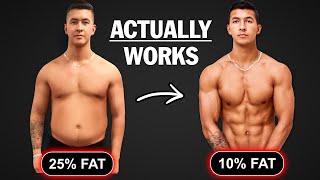
Jeremy Ethier breaks down fat loss into five concrete steps: eat in a calorie deficit with 0.8g protein per pound of bodyweight, lift weights 3-5 times a week, hit 7,000 daily steps, and aim for 1-2 pounds lost per week. Consistency matters more than perfection—hit your targets 60% of the time, take diet breaks every 8-12 weeks, and expect belly fat to disappear last.
Questions this video answers
About 0.8 grams per pound of bodyweight per day.
About 7,000 steps per day.
About 1 to 2 pounds of fat per week.
Increase calories by around 500 kcal for a diet break (1–2 weeks).
Typically after every 8–12 weeks of consistent dieting.
If you want to actually get lean this year, the odds are stacked against you. More than 80% of people who try end up failing. But there's three simple science back steps that have helped me and several others beat the odds and get leaner than ever before. I show you the first step. Your diet. Let's quickly create a realistic timeline for you. Take a look at the following photos. Pick the one that best matches your current body. Now to get to around 12% body fat with good AB definition, this is roughly how long it would take. Whereas to get a little less lean, around 50% 15% this is how long it would take. Now this might be longer than you expected, but most people highly underestimate just how much fat they have to lose and how long it takes to do so. For example, these two photos. I lost roughly 20 pounds in about 14 weeks. But I also followed the plan I'm about to share with you almost perfectly, which just isn't realistic for most people. So expect it to take longer than you think. But as long as you keep trying and trusting the process I'm about to share with you, you will succeed. Your diet is without a doubt what's going drive most of your results and it does this by forcing your body to use fat for energy. But this can only be done by creating a calorie deficit where you're eating fewer calories than your body needs every day. Now, to find the right calorie deficit for your body, you can use the calculator we've made over@builtwithscience.com calculator which I'll also link below. But to actually hit this target, you need to first fix your food environment. For example, I personally just would not be able to walk past cookies at home every day and not end up eventually eating them. So set yourself up for success. Success by throwing away your trigger foods and taking advantage of your laziness by placing your high calorie snacks and treats in hard to reach places. This also applies to healthy snacks like nuts and granola. Anything you can easily overeat should be out of sight or hard to access. Also, pay attention to what you're doing when you eat. Some research has shown that one of the strongest predictors of being overweight was eating meals in front of the T vein. So when you do eat, try to shut everything down and just be present. But after fixing your food environment, what foods should you actually include in your diet? Well, let's start with what seems to be the most powerful food for fat loss. Protein. By providing your body. With enough protein, you're protecting your muscles from being burned off for energy during a diet. This forces your body to burn off more of your fat instead. As per How Much Protein to Eat research typically shows the greatest benefit when protein is increased to about 0.8 grams per pound of your body weight per day. So if you weigh 180 pounds, you'd aim to eat around 140 grams of protein per day. Now, here's what 30 grams of protein actually looks like from high quality sources. Pick one of these to have with each of your meals and you should be able to hit your daily target. Now, in addition to protein, there's a handful of other foods that can have a powerful effect on your fat loss. Back in 1995, a team of researchers ranked 38 different foods based on how well they kept people full after a meal. Potatoes, oats, whole grains, lean proteins, apples and oranges all ranked extremely well, whereas higher processed foods like white rice, cereal, chips, candies and pastries all ranked poorly. So what I'd suggest is 80% of the time, try to eat more of these highly filling, nutritious foods. Eat plenty of vegetables as well, since they'll fill you up for less calories. And then 20% of the time, allow yourself to eat treats and more processed foods that, although won't fill you up as much, will help you avoid an overly restrictive mindset. And if you're wondering what this looks like as a full day of eating, it could be something like protein pancakes for breakfast, salmon and potatoes for lunch, chicken and veggies for dinner, and Greek yogurt with fruit for dessert. All of this comes up to just 2100 calories. And at the end of the video, I'll leave a link to this exact meal plan. So incorporating what we've talked about so far should increase the odds that you're eating in a calorie deficit. But many people still end up eating too many calories despite following a healthy diet. So as a final note, for your diet, I'd highly recommend actually tracking your calories and seeing if you're on target. Even if it's just for a week, it'll help you at least be aware of whether you need to adjust anything. So we've got your diet covered, but what are the best exercises to help you get leaner? Well, luckily for us, a recent meta analysis ranked several different fat loss protocols from most to least effective. A calorie deficit plus lifting weights was the most effective method. Now, the reason lifting weights is great for fat loss is similar to why Eating more protein helps with fat loss. Lifting weights tells your body to keep your muscle and burn fat for energy instead. So use your diet to do the hard work of creating most of your calorie deficit. But lift weights three to five times per week to make sure you're losing fat, not muscle. But this doesn't mean you hit the gym and then sloth around the rest of the day. One of the reasons why people fail to get lean during a diet is because they subconsciously get lazier and reduce the number of steps they take as they get leaner and leaner. To avoid this, start tracking your daily steps. Try to build up to at least 7,000 steps per day and keep that consistent throughout your diet. Apply everything we went through so far and you should be able to lose about 1 to 2 pounds of fat per week. Repeat that for several weeks, and eventually you'll be at your goal body fat percentage. But we all know that's much easier said than done. Eating healthy, tracking your calories, doing your workouts, and getting enough steps every single day can get overwhelming. But there's three consistency hacks that I found make people far more likely to stick it through and succeed. The first is what I like to call the power of 60%. One study compared those who tracked their calories at least 60% of the time, those who tracked less than 30% of the time, and those who tracked inconsistently. So maybe 100% in some weeks, but less than 30% on other weeks. Can you guess which group lost the most fat? Yep, the 60% group. So instead of aiming for perfection, just aim to hit your goals at least 60% of the time. And if you look at this on a weekly basis, that's just four or five days out of the week. Only once that becomes easy should you then aim for more. Now, as for the second consistency hack, let's say you were going on a road trip across the country. What would happen if you tried to do the drive all in one go? While you might start off strong, eventually you'd burn out and run out of gas. The same is true with dieting. As much as we want to get to the end destination as quickly as possible, we need to take breaks every now and then to recharge. In the fitness world, this is what's known as diet breaks. It's a week or two where you increase your calorie intake to around 500 calories more than when you were dieting. While it's not a free pass to eat whatever you want, it will give you more flexibility with your food choices and can help you recharge both mentally and physically before your next dieting phase. As for how often to do them, typically after every eight to 12 weeks, a consistent dieting is when I highly recommend considering one now. The last consistency tip I have has to do with your belly fat. Most people if after six weeks of dieting they see no change in their belly, they assume it's not working and they quit. But your body saves the best for last. Usually your body will start by losing fat around your chest, shoulders, arms, back and even your face. Only once it's lost enough fat from those areas will it start to make its way down to your upper stomach area and then finally your lower belly fat. Unfortunately, there's no way to specifically target these areas. The real secret is just sticking it out for longer. Here's an example from one of our Built With Science members, Jesse, who stuck to his plan for a year. Notice how there's not much difference in his belly in the first three months. Month eight, however, is when you can really start to see some big changes in his belly. Now this wasn't from him changing anything, it was from him simply trusting the process and sticking to the plan. Here's another example from Archie who ran our program for 10 months. His face, chest and shoulders were all the first areas to improve. But just imagine if he quit after month four because he wasn't seeing much progress in his belly fat. Here's another one from Tamara after just eight months of simply sticking to the plan, remember, you have a lot more fat to lose than you think. So until you get lean enough to notice your belly fat coming off, be proud of the fat loss progress you've made in your face, arms, chest and shoulders. Just don't quit right before the going gets good. And if you want a size based seat step by step plan that guides you every single week. Just like we did with Jesse, Archie, Tamara and Dylan. Just head over to built with science.com and take our quiz to find the best plan for you and your body. I hope you enjoy this one. You can give this video a watch next for your daily walking routine to help with your fat loss. Or give this one a watch for a full fat loss meal plan. Thank you so much for watching and I'll see you next time.










