If I Wanted to Lose Belly Fat By Summer, I'd Do This
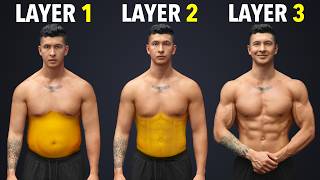
In this YouTube video Jeremy Ethier walks viewers through a data‑driven, three‑layer model for losing stubborn belly fat, using a detailed case study of a 35‑year‑old client, Nimesh. The video begins with DEXA‑scan analysis of nearly 18,000 Americans, revealing that men store most fat in the belly once overall body fat exceeds 25 %, while women store relatively more in hips and legs. Ethier defines three sequential “layers” of belly fat: Layer 1 (outer, soft fat) which drops off with modest effort; Layer 2 (deeper, slower‑burning fat) requiring tighter calorie control, increased activity, and awareness of metabolic type (spend‑thrift vs. thrifty); and Layer 3 (the final stubborn layer) that demands precise satiety‑focused nutrition, diet breaks, and hormonal management. For each layer he outlines concrete habits – step counts, workout splits, protein‑centric meals, calorie targets (≈10‑12 × body weight), progress‑photo tracking, and use of the Built With Science+ app for personalized coaching. The narrative follows Nimesh’s progress: starting at 29.5 % total body fat (34.4 % belly), he loses 12.8 % total and 21.4 % belly fat over 275 days, gaining ~7 lb of lean mass and achieving visible abdominal definition. The video also discusses psychological hurdles, metabolic adaptations, and the strategic use of diet breaks to reset cortisol and hunger. Finally, Ethier promotes the Built With Science+ platform as a turnkey solution for replicating the protocol.
Chapters
This is Nimesh, who at the age of 35 had the most belly fat ever in his life. But less than a year later, he now looks like this. His belly fat is now lower than 98% of men. This is because nobody approaches losing belly fat in 3 layers, with each layer requiring a slightly different strategy, which works for both men and women. But most people are stuck in the outermost layer, Layer 1, which is right where Nimesh's journey began. With a day 1 body fat of 29.5%. Now one of the cool things about DEXA scans is they don't just give you an overall body fat percentage. They let you split the body into regions so you can see your body fat percentage in your arms, your legs, your hips, and even your belly, where Nimesh clocked in at 34.4%, higher than anywhere else on his body. You said that belly fat's like one of the areas where you struggle and you feel like genetically you're kind of like cursed. Yeah, yeah. And the uncomfortable truth is, he wasn't wrong. Almost every single guy I've run through a day 1 DEXA scan has shown that their belly carries more fat than anywhere else. Which can become a serious health risk. As large population studies have shown, every few centimeters you gain around your waist increases your risk of metabolic disease and death. Even if your weight stays the same. But to see how consistent this belly pattern is, and whether this holds true for women, my team and I analyzed 8 years of DEXA scans from nearly 18,000 American men and women. And what we found actually paints a pretty clear picture of why belly fat seems so hard to get rid of. For men under 25% body fat, their belly fat levels are actually about the same as the rest of their body. But once you go above 25%, your belly now becomes the preferred place for fat storage. And this doesn't just mean belly fat becomes easier to gain, it also means it becomes harder to lose. So we plotted the data to show the rate of fat loss from different body parts as you get leaner, with the belly here in red. Now the flatter the line, the slower the rate of fat loss. So at higher body fat levels, notice how fat quickly drops off from the arms, the legs, and the hips, while fat in the belly remains much higher. But right around 30% body fat, belly fat actually starts to nosedive and the other areas flatline. And by the time you get to 25%, the belly is no longer fatter than other areas and continues progressing faster afterwards. So it seems like once your body has burned off enough fat from easier-to-access areas, it'll eventually start pulling more and more from your stomach. Now for women, the picture actually does look quite a bit different. They tend to store less fat in the belly to begin with and more in their hips, their legs, and their arms. For example, this is my friend Nicole, who was starting her fat loss journey at 33%. When I looked at her belly fat though, it was almost identical, 33.7%, whereas her legs and hips clocked in much higher. And if the data from our DEXA scans proves reliable, we should see that when Nicole and Nimesh see a similar drop in total body fat, Nicole will probably see more of that fat loss coming from her belly compared to Nimesh. At least as they're both working to burn through what I like to think of as the first layer of belly fat. So this is a soft outer layer of belly fat that prevents you from seeing any ab definition. When men burn through this, you should see some upper abs poking through and usually some shape in the rest of their abs. Now for women, the waist tightens up and rolls smooth out, but you're not gonna see any clear ab definition yet. And typically the end of layer 1 gets you at 20% body fat for men and 28% body fat for women. Now the good news about this layer is it actually requires the least amount of effort to burn off. For Nimesh, all he needed was 4 core habits, plus a bonus one to help him push through the biggest challenge this layer posed. First, I set Nimesh up with a workout plan consisting of just 3 workouts per week, just to make sure any weight he does lose comes directly from fat, and we may even see some muscle gains at the same time. Second, I gave him a few simple diet rules. At every meal, include a portion of lean protein about the size of your palm. Prepare most of your meals at home where portions and ingredients are easier to control. And build each meal around these core foods. With these changes, he shouldn't even need to count calories to start seeing change. Third, I set him a baseline goal of 8,000 steps per day to bump up his daily calorie burn. And lastly, I got him a scale to track his morning weight with a weight loss goal of just 1 pound per week. Now, I also set up Nimesh with our Bitly Science+ app to help him track his weight loss coach him in his workouts every week, and just get healthy meal recipes to try out. Now, even though Layer 1 requires the least effort physically, it's actually the hardest mentally. And Nimesh found this out when he checked back in on Day 30. Despite being 7 pounds down on the scale, he didn't feel like his belly had changed at all. He actually texted me afterwards, doubting the plan was even working. But if you look closely at his chin, his chest, and his arms, you can clearly see that these areas have leaned down. And when I measured his waist, he was already down 3 centimeters. Which meant he was definitely losing belly fat, just not at the speed he was expecting. And if you remember from earlier, that's exactly what our dexa data predicted. In the early stages, fat comes off from the easy areas first, while the belly lags behind. So by day 60, even though he had lost another 3 centimeters around his waist, visually his belly hadn't progressed as much as his chest and his arms, where he even had some new veins showing. And then when you compare Nimesh's progress to Nicole's, who who had lost a similar amount of total body fat, she was down 8 centimeters around her waist and already had some ab definition starting to poke through. And while we were finally starting to see where Nimesh's abs would eventually come through, the abs are relatively small, flat muscles compared to your big arm and shoulder muscles. You simply have so much more fat to lose before your abs can start poking through. Remember, the goal of Layer 1 is not to get six-pack abs. And if I wanted to prevent Nimesh from quitting right before the going gets good, I desperately needed a way for him to see all the progress he was clearly making everywhere else. Which leads me to his bonus habit, where I asked Nimesh if he'd be willing to take a progress photo after his morning weigh-in. When reviewing these photos, I wanted him to not just hyperfixate on his belly fat, but to be able to see the progress he was making through his chest, his shoulders, and his arms that he was clearly overlooking. And with the ability to look back at his pictures every week, Nimesh genuinely started to notice the progress he was now making. Plus, now that he was below 25% body fat, progress around his belly finally started to really pick up. All the way to day 90, where after losing 12 pounds of fat, layer 1 was successfully burned off, revealing some clear upper ab definition. Now although it may not seem like it compared to most of the influencers you see on Instagram, At this point, Nimesh is already leaner than about 84% of men. But to push this even further, he's gonna have to get through Layer 2, which for most men gets you to around 15% body fat and 23% for women. But I'd say Layer 2 is where most people give up. In Layer 1, it seems like nothing's changing, whereas Layer 2, fat loss actually slows down or even stops because your body starts to fight back. And the strategies that work for Layer 1 no longer do now.
So 2 weeks, the weight hasn't changed. Uh, the progress photos I'm taking daily, they look identical. And the weird thing is, like, I'm recording most of the meals and been, um, pretty consistent, I feel. So yeah, don't know what's happening. Just got to figure this one out and, um, see what's going on.
For starters, depending on how much fat you lost in Layer 1, you're going to now be carrying less weight than you did before. And this is like taking off a 24/7 weighted backpack, which decreases your calorie burn. Plus, your body has now sensed the fat loss and tries to counteract it by conserving your energy. It's subtle at first, but you might sit down more and just walk around less without you even noticing. Now, when this would happen to me when I was younger, I would try to counter this by ramping up my cardio, adding 20 to 30 minutes of intense running or cycling after each workout. And while it worked, Eventually, I would just stall again, and then I just didn't have the energy to add any more. Which is why for Nimesh, we simply decided to move his daily steps from 8,000 to 10,000 steps a day. This works as an insurance policy to help keep his daily calorie burn consistent without spiking his hunger or burning him out. The one exercise I did ask Nimesh to bump up though was his strength training. Most research suggests that just 2 to 3 full body workouts a week Around 4 to 6 hard sets per muscle is enough to prevent muscle loss while you're in a deficit. But I'm curious if by going above this minimum, Nimesh can actually build muscle even as his fat loss gets more and more intense. So we took his 3-day workout split and changed it to this 4-day split, focusing more volume on muscles that Nimesh had been struggling to grow, like his shoulders and his arms. And we'll be doing a final scan and measurements at the end of his journey to see if he was actually able to put on muscle. But the extra steps in workout isn't actually gonna bump up his daily calorie burn all that much. The more impactful side of the fat loss equation is his calorie intake. Up until this point, he hasn't been tracking calories, but to get rid of layer 2, it's almost a non-negotiable to make sure he's consistently in the deficit. And to find out how many calories he needs, I entered Nimesh's current weight and activity into our Built With Science Plus app, which landed at a daily calorie target between 2,100 and 2,300 calories per day. Now, if you're not on our app, then you can take your body weight in pounds and multiply it by between 10 to 12. It's not perfect, but for most people, that's roughly around the calories you want to aim for during this stage. But with his favorite order at Chipotle already coming in at just over 900 calories, I needed to show Nimesh a better way to use his calories, which meant setting him up with a 2,100 calorie meal plan. Okay, don't take this the wrong way, but I got some butter chicken.
No offense, Sumo, that's fine.
Consisting of apple cinnamon overnight oats for breakfast, butter chicken for lunch, some quick snacks before his workout, and a homemade freezable burrito for dinner. And what I think is the most important part is saving enough room in your diet for one treat at the end of the day to look forward to. For me, my go-to is always a Ninja Creamy ice cream that I make with our Bitly Science Protein. And for Namash, it was a combination of either sugar-free Jell-O Greek yogurt, caffeine-free Coke Zero, and smart sweets. And if you guys do want Nimesh's full meal plan, I'll give you a PDF of it completely free, and I'll put a link in the description box down below. But what's perhaps the trickiest thing about this phase is not everyone's metabolism will respond the same. Researchers in 2019 discovered that most people's metabolisms fall into one of two categories. The first is what researchers call a spend-thrift metabolism, People in this group, when their calories are restricted, their metabolism stays high and they continue dropping weight. However, the second group is what researchers label a thrifting metabolism. And when this group was placed in the same deficit, their bodies adapted to reduce their calorie burn and slow their weight loss to a crawl. Now, there may be an advantage to having a thrifty metabolism as you typically have an easier time gaining muscle, but when it comes to fat loss, you may have to restrict your calories further or increase your daily activity in order to keep up with individuals in the spend thrift group. The question we needed to figure out though was which group would Nimesh fall under. If his metabolism was spend thrift, 2,100 calories should be enough to keep seeing progress. But if he has a thrifty metabolism, then our app will notice if he's not progressing and likely recommend dropping his calories a little bit more. Luckily, Nimesh's body was clearly responding to his calorie intake. As fat loss around his belly was really starting to pick up, with visible definition in his upper abs and his obliques finally coming in. Now, for most guys, burning through all of Layer 2 will usually take about 10 to 16 weeks depending on how aggressive you are with your diet. But by this point, you should see a visible 4 or even 6-pack depending on how your fat is distributed. Whereas for a woman, your stomach will look visibly tighter, and depending on the lighting, you might even see some definition in the upper abs and down the middle. But even after burning through Layer 2, there's usually still some softness left around your abs, especially in the lower belly and around the love handles. And for those areas, you'll need to burn through the most stubborn third layer of belly fat, where less than 1% of people ever succeed. But while this final layer is the hardest to lose, it's actually when your belly visually progresses the fastest. Because there's now much less fat covering your abs, even a small loss makes a noticeable difference. So instead of waiting months or several weeks to see changes, now you might see sharper ab definition every few days. But it comes with a catch that every pound of fat you lose now is gonna feel like a battle. Part of the reason for this is not all body fat is created equal. Certain fat on your body is packed with beta receptors, which you can think of like a gas pedal, making it easy for your body to burn for energy. Most of the fat you burned off up to this point or from those areas. Whereas the stubborn fat left on your body is full of alpha-2 receptors, which instead work like a brake pedal, slowing down fat release so your body always has some fat reserves to rely on. And typically the areas that have most of these receptors are going to be lower abs, love handles, hips, and especially the glutes. It's why shredded glutes in professional bodybuilders is seen as the holy grail of elite conditioning.
So just struggling to fall asleep today a wee bit. Um, I'm usually pretty good at falling asleep. But, uh, the hunger is just setting in a bit more than usual.
And at this stage, your body ramps up hunger, lowers your energy, and basically does everything it can to prevent more fat loss. So I had to introduce Nimesh to two simple strategies to break through. The first was his food selection. Nimesh's diet had a ton of wiggle room when he was on Layer 1, and when we moved on to Layer 2, things had to get a bit tighter. But for Layer 3, our margins are thin. We needed every calorie he's eating to go as far as possible to keep him full and energized. That meant no more cream in his morning coffee and fewer nights out for drinks. We also strategically swapped the rice in his meal plan for yellow potatoes, which in a well-known satiety index study scored as the most filling food you can eat. In fact, I'm currently working on another project where we tested a simple no-calorie-counting diet mainly based around potatoes. And let's just say the results were pretty mind-blowing. So make sure to subscribe so you don't miss that. But no matter what you eat, your body's resistance to fat loss is only going to continue to get stronger the longer your diet lasts and the leaner that you get. And one side effect of this is stress hormones like cortisol start to rise. This is where many people get blindsided. Higher cortisol levels make your body hold on to more water. So at this stage, you can literally wake up one morning and your belly will look worse than it did the day before. Softer and more bloated. And when you're this lean, even a small amount of water retention around your midsection becomes very noticeable. Now, when this used to happen to me, my first reaction was to assume that my plan just wasn't working and my belly fat was not coming off. So I'd panic, adding more cardio to my workouts and dropping my calories even lower. But this only made things worse, putting more stress on my body and even eventually causing me to lose muscle. But once you understand what's really happening here, rather than trying to fight harder to lose fat, your best move might be to stop fighting at all. Which brings me to our second strategy: diet breaks. So as soon as I could tell Nivesh's body was starting to hold on to more water and just wasn't responding well to his plan, instead of lowering his food, we increased it. Roughly 500 calories higher than he was dieting at, and mainly by adding more carbs to his day. Rice, bread, and some of his favorite snacks. Usually you'll want to do this for anywhere between 5 to 14 days, as that's often enough time for cortisol to come down, sleep to improve, and those relentless hunger signals to finally ease off. But for Nimesh, 5 days was all it took. And even though he was eating more, his abs actually came back looking sharper. His energy also improved, and he just felt ready to push forward again. The only question I needed him to answer now was how far he wanted to go. Based on where he was currently at, if we wanted to push all the way to 10% body fat, which is where the vast majority of your stubborn fat has actually gone, it would probably take another 8 weeks of dieting. But for some people, chasing that level of leanness, it's just not always the smartest move. Take my brother-in-law Dayton. He dropped from 33% body fat down to about 18% in just 5 months. The leanest he's ever been in his life. And by that point, his body was definitely starting to resist. So if I had tried to push him to get even leaner in one go, it would have almost guaranteed a crash and uncontrollable weight regain afterwards. So instead, we hit pause on his fat loss and shifted to maintaining his new weight, followed by a lean bulk to gain some more muscle. And now that his body has actually settled into his lower level of body fat, he'd be ready to tackle another diet if he wanted to get leaner. But the second reason Layer 3 just isn't for everyone is that most guys overestimate how much muscle they have and underestimate just how much fat they have to lose. In fact, every person that I've dieted this lean has been surprised by just how low the scale has to go to get there. So if you don't have much muscle to begin with, you may end up feeling and looking a little bit skinnier than you'd hope for. Fortunately, it seems like Dinesh has been able to build some muscle as he's lost fat. But today is actually the day he's gonna get his final DEXA scan, which will tell us how much fat he lost and how deep he made it to losing his third layer of belly fat. But first, I should also mention that from the start of his journey until now, it has taken Nimesh 275 days using this exact plan for each layer of belly fat. Now I'm sure some of you would be expecting those results in half the time, but for context, Nimesh also took a 5-week trip in the middle of his plan where his goal was just to maintain his weight while keeping up with his training. And he also just personally found the slow and steady approach worked best for him. So while taking almost a full year may sound like a long time, think about how many years it took for you to gain your belly fat in the first place. And think about what you were doing this same time but last year. That time is gonna pass regardless. So Nimesh just focused on making small improvements week after week until he was here. Alright, let's see what we got. Damn, dude! Look right, dude! There's no way! Holy shit, look at this! 1, 2, 3, 4, 5, 6. I feel you got an 8-pack coming in too.
Coming slowly, dude.
And like, the size is there. Yeah, you know what I mean? Yeah. Give her a little double bicep flex for the camera. Holy crap, bro. You look amazing, dude. Holy shit. Nimesh's total body fat dropped from 29.5% on day 1 all the way down to just 16.7%. But when we zoom in on his belly fat, the change was even more dramatic. From 34.4% down to just 13%. That's a drop of 20 percentage points. And the best part is he actually gained almost 7 pounds of lean mass throughout the entire process, with a good chunk of that being actual muscle. I'm getting there.
I'm happy, man.
What do you mean you're getting there? You're there, bro. Holy crap.
Cheers, man. I appreciate it.
That's incredible. Look at this. I'm just going to peel it. If you guys are watching and you want a plan that takes care of all the guesswork for you, I can't physically be there, but it's the next best thing. He can vouch for it. Um, just head to builtwithscience.com or scan this QR code. You get 2 weeks free to try out the app. It's going to take care of all the workouts, all the nutrition for you. It's actually going to personalize the plan based on your body, just like it did for Nimesh.
Yeah, 100%. Um, and just to Jeremy's point, I mean, without the app would have been really hard. I was tracking everything every day, and the app does the foods, does the weights and everything. So just having everything in a one-stop shop, again, not pushing it, but it genuinely helped a lot. So Thanks to the app as well.
Yeah, well, it didn't do the hard work, which is, you know, showing up at the gym and prepping the meals. That was all you.
So without your guidance, it wouldn't be possible.
But yeah, man, dude, I'm freaking stoked for you. Holy crap.
Thanks so much.
I wish it wasn't so cold though. I want to just like go to the beach right now.










