Intermittent Fasting: How to Best Use it for Fat Loss (5 Things You Need to Know)
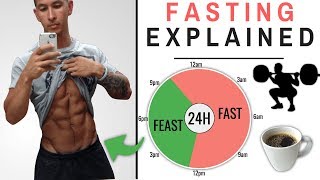
Intermittent fasting works for fat loss only if you're in a calorie deficit, but it can help you stick to it by suppressing appetite. Try 16:8 (fast 16 hours, eat in 8), expect 2-3 weeks to adapt, and aim for 13 times your bodyweight in calories to lose about 1 pound per week.
Questions this video answers
16:8 (fast 16 hours, eat within an 8-hour window).
14:10 (fast 14 hours, eat within a 10-hour window) with gradual progression to 16:8 as tolerated.
About 2–3 weeks.
Multiply bodyweight in pounds by 13 (calories/day).
Approximately 0.73 to 1.0 grams of protein per pound of bodyweight per day.
At first glance, intermittent fasting seems pretty counterintuitive when it comes to improving body composition. The idea of skipping breakfast, consuming zero calories for several hours on end, and then feasting within a designated time period goes against much of what's typically believed to be optimal for fat loss and muscle retention. However, the truth is, when done properly, intermittent fasting can be a great tool to help you lose fat faster and for good, all without sacrificing tons of muscle mass in the process. And in this video, I'll show you exactly how to do so by taking a look at the following points. But before we get into that, it's important that you first understand that intermittent fasting is by no means anything magical when it comes to fat loss. In fact, the largest Systematic Review, covering 40 studies on the topic found that when calories are equated Although intermittent fasting may provide various physiological and psychological health benefits, it does not provide any direct benefit for increased fat loss or muscle gain when compared to traditional dieting, simply meaning that at the end of the day, the calorie deficit is what ultimately produces fat loss when fasting rather than the act of fasting itself. However, the great thing about fasting, and why I personally implement it for fat loss and recommend that you at least try it, is that it makes sticking to your calorie deficit much easier to do. Not only does research show that it suppresses your appetite better than traditional dieting, but by ingesting all of your calories within a shorter time period, you're able to incorporate larger, more satisfying meals that help you stay full despite being in a calorie deficit, therefore likely leading to better adherence and more fat loss for you in the long run. So with that being said, let's start with how long you should fast for. Although there's several different types of fasting, if your main goal is to drop body fat while minimizing muscle loss, I'd recommend sticking to the 168 protocol popularized by Martin Burkhan. This simply involves fasting for 16 hours and then eating within an eight hour feeding window, for example, only eating between 12 to 8pm and fasting outside of these hours. It's as simple as skipping breakfast, but if you struggle with this, you can gradually build up to 16 hours of fasting over time and or gradually increase the number of days you fast for per week. The time of day of your fasting and feeding windows are of little significance. The key, though, is to be consistent with when they take place, because it's emphasized in this 2009 paper on circadian rhythms. This will best enable your body to adapt by suppressing your hunger hormone during the time of your fast. It does often take around two to three weeks for your body to adapt, but trust me, it will become much easier over time. Also worth noting is that at least in rats, research shows that females may have slightly more adverse reactions to fasting fasting than men, meaning that it's a good idea for females to start with a 14:10 protocol, for example, and then build up to the 16:8 over time when you feel you're ready. Now, as for what exactly to consume during your fasting and feeding windows, it's actually quite simple. During the fasting period you don't ingest any calories or anything that spikes your insulin. I would however suggest drinking a lot of water as well as black coffee, green tea and or sparkling water while staying busy in order to help suppress your appetite during this time. As for calorie free natural and artificial sweeteners, a 2010 literature review found that most calorie free sweeteners don't have an appreciable effect on insulin and are therefore fine to have during your fasting period if you enjoy it in your coffee or tea, for example. As for your feeding window, the actual foods you should be eating are no different than the foods you should be eating with any fat loss diet. A good rule of thumb is to stick to 80% of your foods coming from whole, unprocessed excess sources, with the remaining 20% being foods considered not as healthy, so to speak. A good example of this with various meal ideas is my science based Diet for Fat Loss video which I'll link in the description box down below. Now for exactly how much to eat during your feeding window. As I mentioned before, there's no strong evidence that intermittent fasting will help you lose fat without also being in a calorie deficit. Therefore, I'd suggest taking the advice from this 2014 paper by Eric Helms and colleagues and simply multiplying your body weight in pounds by 13. This will provide you with roughly the amount of calories you need to ingest daily in order to be in a calorie deficit, such that you're able to lose around a pound a week. And in addition to this, your protein intake will also be vital to maintain your muscle mass as you lean down. So aiming to intake roughly 0.73 to 1 gram of protein per pound of body weight would be ideal and in agreement with the literature. So, for example, a 170 pound individual utilizing intermittent fasting should place a priority on hitting hitting these two main goals during their feeding window. As for the optimal number of meals to eat during your feeding window, I think the best and most convenient option is to stick with three protein rich meals. This not only enables you to have larger, more satisfying meals as you're dieting, but as shown in this 2010 paper by lady et al. That compared ingesting three large meals versus six smaller meals throughout the day, three meals seems to be the better option for hunger control, although this will likely vary individually. In addition, contrary to popular belief, as shown in this paper from the Journal of Nutrition, when compared to eating more frequently, a lower meal frequency doesn't cause a reduction in your metabolism, as it's your total calorie content and composition of your meals that governs this rather than the actual frequency at which you eat. Do note, however, that research indicates that there may be a slight advantage to spacing out protein over four meals rather than three in terms of maximizing protein synthesis, meaning that if your main goal is instead to build muscle, fasting may actually be suboptimal for this reason, but this is likely of little significance if you're still consuming adequate protein with your three meals, which is the more crucial factor. Regardless though, experiment with it and stick to a meal frequency that best suits your lifestyle. Now. As for when to train, although there are various potential benefits to facet training and various benefits to training in a fed state, the best option for you will ultimately depend on your schedule and also what enables you to perform the best in your workout. But in either case, there are a few things to keep in mind in the event that you have to weight train fasted in the morning, as shown in this 2014 paper from Helms and colleagues, this is where the timing of your post workout meal becomes of greater importance in order to minimize any potential muscle breakdown. Meaning that you want to time your first meal such that you're able to ingest it shortly after your workout and it should ideally be rich in protein and carbs. But if you're unable to do this based on your schedule and feeding window, a good alternative is to simply ingest essential amino acids during your workout and or a whey protein shake afterwards. Although this will technically spike your insulin and break your fast, you still get the benefit of pushing your calories later on in the day, which is ultimately what makes fasting such a powerful tool for fat loss. Whereas in the event that you train within your feeding window, for example after work, you'd want to time it such that you're able to get in a meal or two with adequate protein and carbs before your workout and have a meal sometime post workout as well. Although the timing now is not as important as it was with fasted training. But again, experiment with it and see what works best for you and what you'll be most consistent with.
So to conclude the video, here are the main points. Just again, keep in mind that fasting is nothing magical in terms of fat loss, but for many it does make sticking to a calorie deficit that much easier to do, which is why it can be such a powerful tool for fat loss, especially when you pair it with the right training plan. And if you're looking for a complete evidence based program that shows you exactly how to optimize both your nutrition and your training in order to transform your body as efficiently as possible, then simply head on over to builtwithscience.com courses or where you can view the four programs I have up and choose the one that best suits you. And for those of you who haven't yet done so, I really appreciate a follow on Instagram where I post a lot of my daily meals and more informative content. And as always, please do me a big favor by giving the video a like leaving a comment down below and subscribing to my channel and turning on notifications from my channel as well as this all really does help me out. Thank you so much everyone. I really appreciate all the support and I'll see you next time.
It.










