The #1 Workout That BLEW UP My Back (3 Exercises)
Jeremy Ethier breaks down three back exercises that transformed his physique, focusing on biomechanics and form to target different back muscles for growth. He shares personal experience and specific techniques to maximize results.
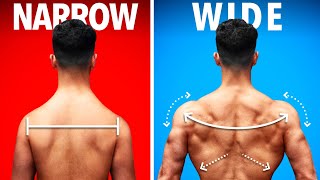
A broad, chiseled back is key to achieving that Greek God look. But with over 15 different muscles, training your back isn't as simple as your other muscles. Take me, for example. My Filipino genetics didn't bless me with a natural V taper, and for years, my back barely grew even with all the best exercises. But recently, my back has blown up. It's broader and thicker than it's ever been. And the crazy part is, all it took was three key exercises that I guarantee will do the same for your back, but only. Only if you nail down the proper form. But before we dive into the exercises, here's the problem with your back. So when you train a single muscle group, like your chest, it's pretty straightforward. You just need to get that muscle to activate. But with the back, it's a different story. With so many muscles, it's easy for your stronger ones to take over, leaving your weaker ones underdeveloped. So, using our understanding of biomechanics, I'll show you how to modify each exercise to ensure you're actually hitting the right parts of your back. Lets start with your lats, the muscle that gives your back that coveted V taper. When this muscle is well developed, you'll be able to do a lat spread, flexing them as if you had wings, a clear sign you've made some good gains. Fortunately, the lats are usually one of the most underdeveloped muscles for us gym bros. Take me, for example. After years of back training, my biceps, forearms, and some parts of my back definitely grew, but my lats barely noticeable. To fix this, you can't just train the lats as if they're one big muscle. Instead, they should be split up into two main areas, the upper and lower lats. We'll start with the area most people struggle with, the lower lats. So most people's go to for lats is the standard lat pulldown. But despite its name, it's not actually the best exercise. To really target the lats, we need to make some adjustments. You see, typically during pulldowns, your elbows are forced to flare out like chicken wings, which is great for the muscles around the shoulder blades, but not as good for hitting the lats. To work the lats more, you want your elbows tight against your body as you pull. But if you're holding the bar too wide, that's just not possible. Instead, your hands should be about shoulder width apart and ideally in a neutral position, because when you twist your palms inwards, that naturally brings your elbows in. So your best option is a bar like this. But if your gym doesn't have that, you can use a view bar. And if you don't have that, you can still make it work with a normal lat pull down bar, but using an underhand grip. While this will get the biceps more involved, it's still more effective for the lats than the normal overhand grip. Plus, there's a way to reduce how much we use our biceps and target our lats instead. In fact, you want to do this trick no matter which grip you use. It's simple. Rather than pulling the weight straight down with your hands, focus on pulling from your elbows. Visualize them moving in a slight arc in front of your body and then back and down towards your hips. At the same time, pull your shoulders down away from your ears. Keep pulling until your elbows are in line with your torso. Then control the way up. But here's a really important part. At the top, fully extend your arms and let your shoulders rise up for a deep stretch in the lats. Why? Well, plenty of new research suggests that if you do reps without fully stretching your muscles, you're missing out on a ton of gains. But aside from just making sure your shoulder come up for that deep stretch, there's another way we can use the study to grow our lats even more. See the lat pulldown. Like most back exercises, it's hardest at the bottom. And because you're a responsible gym goer, once you can't get the bar all the way down, you stop rather than use bad form. Right? But here's the thing that might actually be a mistake. As we mentioned, most of the gains seem to come from the top of the lat pulldown when the muscle is stretched. So once you can't do any more full reps, don't stop. Keep going by doing as many half reps as you can in that top stretch position. Okay, onto the upper lats, the most important area for creating that V taper. Believe me, once I finally started hitting this area properly, I noticed a huge difference in just how wide my upper body looked even wearing a T shirt. First, I'll show you how to target them using a cable rope. And then I'll show you another really good option. But with dumbbells now, just like the pulldown, the way most people row hardly uses their lats at all. Often their biceps or their traps end up doing a lot of the work. I'll show you how to fix this mistake, but first there's a few other important changes to make. Let's Start with your grip again. For the lats, you ideally want a grip where your hands are shoulder width apart with the palms facing in. The V bar can work if that's all you have, but the dumbbell alternative I'll show you in just a minute is also an excellent choice. The next tweak you want to make has to do with your torso. Instead of rowing upright, brace your core and lean forward slightly. This not only lines up the tension more with your upper lats, but will also allow for a deeper stretch at the end of each rep. Next, to best engage the lats, think about pulling the elbows back and down towards your hips, similar to the arc motion from the previous exercise. But to prevent your biceps from taking over, pay attention to your forearms. The more they bend upwards, the less lats and the more biceps you'll end up using. Instead, try to keep your forearms parallel to the floor by focusing simply on pulling the elbows back and down. Once your elbow reaches your torso, control the weight back fully, extending your arms and letting your shoulders rise up to get as deep of a stretch in your lats as possible. Now, as promised, I do have an excellent alternative that you're probably familiar with, dumbbell rows, but with two key adjustments. Instead of a flat bench, incline it slightly. Lean one arm on the bench and then put your opposite back leg far out to the side. This setup makes the exercise far more stable and just less awkward. Next, brace your core and think about driving your elbow down towards your hips in that same arcing motion as before. Think about it as if you're sweeping the floor with the weight. Keep the elbow tight to your sides, and this time to prevent the biceps from taking over the try to keep your forearm vertical as you pull. Now, as you get closer to the top, your body is going to want to rotate your torso to make it easier. Fight the temptation. Keep your back flat, pull until the elbow reaches your torso, then control the weight back down. Lastly, whether you use cables or dumbbells once you can't do any more full reps, just remember to keep going by doing as many half reps as you can in that stretch position. Okay, onto our final exercise, which will now focus on building your back thickness. To do so, we're again going to use a cable row, but this time modified to hit the mid and upper back muscles, your traps, rhomboids and rear delts. And don't worry. Again, I'll show you an excellent dumbbell alternative and then also show you guys a special drop set technique that's personally helped me Blow up my traps, let's dive in. So unlike the lats, the mid and upper back muscles are better worked when the elbows are angled out from the body and you'll actually see people in the gym try to do this, but using a narrow grip. So their elbows are kind of flared out but not enough really work the mid and upper back. So to fix this, we actually need a wide grip a bit wider than shoulder width. So in this case, an overhand grip on the lat pull down bar works perfectly. But to better target the mid and upper back rather than the lats this time, rather than leaning forwards, lean back slightly brace your core and pull the bar back and up towards your chest, letting your elbows flare out in an arrow shape. Squeeze your shoulder blades together at the end and control the weight back down. But remember, the stretch is super important for growth, so open up your shoulder blades as wide as possible at the end of the rep to fully stretch out your traps. Now you can easily do this with dumbbells instead by using an incline bench as a chest support and doing the same row in motion. A T bar row also is an excellent choice, but regardless of what variation you use, there's a special technique I've been doing at the end of my sets that I honestly feel like is what made all the difference for my traps. I and it's simple. After you can't do any more full reps, continue the set with half reps, just like I explained earlier. But don't stop there. Once you can't do any more half reps. Rather than pulling with your arms, keep them straight with your shoulder blades opened up. Then squeeze them together hard, almost as if you were doing a shrug. Open up your shoulder blades again and repeat this for as many reps as you can until the weight just won't budge. It's intense, but trust me, you're going to feel the pump of your life and I guarantee your traps will blow up really quickly from this. So here's a breakdown of the full workout. Now you may want to adjust the volume or even add additional exercises depending on your body and goals. But rather than trying to figure all of that out on your own, I'd highly recommend just following a simple science backed program that takes care of all the guesswork for you. These programs are incredibly effective and cover not just your workouts, but your nutrition as well. To join today, just head over to builtwithscience.com and take our quiz to find the best plan for you and your body. But if you're looking for more free advice. Watch this video next for the workout that blew up my shoulders in a good way. Thanks for watching and I'll see you next time.










