The 3-Step Science-Based “Skinny Fat Solution”
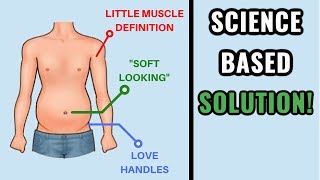
Jeremy Ethier breaks down skinny fat: low muscle mass despite low body fat, usually from skipping heavy lifting or overdoing cardio. Fix it with progressive compound lifts, cut the steady-state cardio, and eat at maintenance or a slight surplus if you've trained consistently. Aim for 0.6 to 0.8 grams of protein per pound of bodyweight.
It seems simple. If you're overweight, focus on fat loss. If you're skinny and underweight, focus on gaining muscle. But what about when you're stuck between the two, also known as skinny fat? Well, to figure this out, let's first take a look at what exactly skinny fat is and what causes it. Skinny fat can be characterized as a physique that doesn't necessarily look overweight, but severely lacks muscle definition. Therefore, despite often having relatively low levels of body fat, they still still look soft and out of shape. And we see this in both males and females. And the journey to skinny fat usually begins with focusing too much on weight loss instead of improving body composition. How much muscle compared to fat you're carrying around matters a lot more in terms of aesthetics than merely how much you weigh. And when you have too little muscle compared to fat, this is when you wind up looking skinny fat. You see, when you have a decent amount of muscle, you can still look good at higher levels of body fat than those with less muscle. Now that we understand what skinny fat is, let's take a look at the three most common mistakes people make that are causing this problem and what we can do to solve them. I think it's clear based on the definition of skinny fat, that a lack of sufficient muscle mass is a major problem contributing to this body type. Thus, neglecting resistance training is the major mistake those with skinny fat body types are making. In addition, although you may actually currently be lifting weights, you may be also doing one of the following mistakes. Not focusing on getting stronger, especially with compound lifts, or performing mainly lighter weight high rep training. Both of these mistakes will inhibit you from building the adequate muscle mass needed to get rid of that skinny fat. Look, I think you all know by now that in order to lose body fat, you need to feed your body a bit less energy than it burns by eating at a caloric deficit. However, when you take this to the extreme and incorporate diets that cause severe caloric restriction, for example, over 1,000 calories below your maintenance, your you're eating a lot less energy than your body burns. And as shown in this study by Falconi et al. Since protein intake is highly correlated with energy intake, you're likely not going to be eating adequate protein since you're not ingesting a lot of food to begin with. This causes two problems. One, as shown in this study by Gero and colleagues, a large caloric deficit with inadequate protein causes large amounts of muscle loss. This causes us to run into problem two, which is shown in this study by Redmond and colleagues results in a dramatic drop in your metabolism, which prevents further fat loss. As a result, we end up at virtually the same body fat we started out at, but with less muscle. Hence the skinny fat body type. Usually what's accompanied with severe caloric restriction is excessive cardio, specifically steady state cardio. Unfortunately, research like this study by Hanson et al. Tends to show that too much endurance training interferes with strength and muscle growth. Now, this doesn't mean that you shouldn't do any cardio and totally ignore training your cardiovascular system. It just means that overdoing it can definitely lead to that skinny fat physique. Now that we know the main problems contributing to a skinny fat body type, let's take a look at a three step solution. The first step is to start lifting heavy weights with a focus on getting stronger. With compound lifts, use something like an upper lower split and incorporate lifts like the bench press, squat and deadlift. As these are great exercises that you need to focus on progressively getting stronger with each week, I suggest sticking to the same program for months at a time for this reason as opposed to switching up your workouts every week. But you need to ensure that you're really pushing yourself to get stronger. Simply going to the gym to get a little pump isn't going to cut it in this case. Step two is to cut down your cardio to a reasonable amount. If you're currently doing hours of cardio daily, I'm not going to provide exact numbers here as it will vary for everyone, but essentially you should be focusing and spending more time on resistance training than you do on cardio. This step is definitely the most important one, but is also where it gets a little more complicated as it will depend on a lot of factors. But I've summed it all up into an easy to follow flowchart for you guys. If your caloric intake has been severely restricted, meaning more than 1,000 calories below your maintenance, you want to reverse diet by adding in 150 calories into your diet per week until you reach your maintenance calories. From here, focus on getting stronger while eating at maintenance, which will help promote body recomposition, meaning that you'll be able to build muscle and lose fat at the same time. If your caloric intake hasn't been restricted, then if you currently have a high body fat percentage, for example more than 20% for women and more than 15% for men, then cut with a 20% caloric deficit until you get your body fat below those numbers and then you can reverse diet to a lean bulk. If on the other hand, you have average levels of body fat, then if you've been training for less than two years or have taken a break from the gym for over two months, you want to eat at maintenance calories and focus on gaining strength since, as shown in several studies, you'll be more likely to benefit from a body recomposition. If you've been training for more than two years, you want to eat at a slight surplus and lean bulk while focusing on getting stronger. Keep in mind that regardless of where you fall in the chart, you need to ensure your protein intake is adequate, although the exact amount will vary for everyone, and this study from McMaster University found that a minimum of 0.6 to 0.8 grams of protein per pound of body weight will maximize muscle protein synthesis for those who are resistance training. So you want to at least hit that range and consider even going higher, which is shown in these two studies, seems to promote body recomposition and is beneficial if you're eating at a caloric deficit. So to sum up the video, what you want to do is the following. One Stick to a weightlifting program and focus on getting Stronger every week 2. Cut down your cardio if it's currently excessive and focus more on resistance training and 3 adjust your caloric intake based on the flowchart I provided while ensuring your protein intake is still adequate. Thanks for watching guys. I hope you enjoyed the video and found it useful. But before I finish, I just want to say that one caution that I'd like to mention is that if you are a teenager then I would strongly advise against any sort of caloric restriction in your diet because this can interfere with your growth since your body isn't fully matured yet. Having a little bit of baby fat at your age is completely normal and will start to thin out once you reach puberty and your testosterone spikes. So unless you are extremely overweight, then I would highly suggest that you just focus on eating healthy and whole foods and focus on getting stronger with good form in the gym. I also wanted to give you guys a huge thank you for helping me reach 100,000 subscribers. I remember the day when I reached 100 subscribers and I honestly couldn't believe it. So for you guys to help me reach 100,000, it really means a lot to me and I appreciate it. Anyways, that's it for this video guys. I wish you all a happy New Year and I'll see you next time.










