The Best Science-Based Diet for Fat Loss (ALL MEALS SHOWN!)
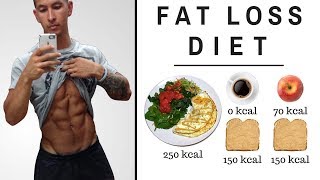
Jeremy Ethier breaks down fat loss: any diet works if you stick to it, but aim for a 0.7% weekly deficit. Start with calories around your bodyweight times 13, prioritize protein at 0.73g per pound to keep muscle, and fill the rest with carbs and fats. The video shows a full day of meals and how to measure calorie-dense foods.
Questions this video answers
Around 0.7% of body weight per week (≈1 pound/week for most people).
Multiply body weight by 13 (calories/day).
At least 0.73 grams of protein per pound of body weight.
Approximately 0.25 to 0.5 grams of fat per pound of body weight.
Roughly 2300 calories and around 165 grams of protein per day.
When it comes to fat loss, there's no doubt that your diet is the most important factor that you have to get right. Even if your training is on point and consistent, you're simply not going to see the results you want without a proper nutrition strategy. But this is where most people fail, and I honestly don't blame them. We're constantly overwhelmed with new diets that are supposedly the new best way to lose fat, so it becomes extremely difficult to know which approach to take. But the real truth is, every single diet or dieting method out there works the exact same way. They all achieve fat loss by causing you to eat at a caloric deficit, meaning that you're eating less calories than you're burning every day. Research has proven time and time again that whether it's keto, intermittent fasting, and so on, although these diets may each have certain psychological and physiological benefits, none of these diets or methods have any special fat loss effect. They instead work by making it easier for you to eat less calories, simply meaning that the best diet for fat loss is really the one that you personally enjoy the most and will be most consistent with. However, with that being said, regardless of what approach you choose, there are a few factors that you need to get right in order to optimize your diet for fat loss and are mainly how many total calories, protein, carbs and fats you're consuming on a daily basis. So as for your calorie intake, if you want to maximize fat loss while minimizing muscle loss, then you have to pay close attention to how many calories you're intaking. Research indicates that this is best done with a moderate caloric deficit that enables you to lose around 0.7% of your body weight per week, which is around 1 pound of weight loss per week for most people. In fact, a more aggressive calorie deficit was actually shown to hinder fat loss as opposed to accelerate it. And if you're unaware of what your calorie intake should be, a good starting point, and something recommended from a 2014 paper from Eric Helms and colleagues, is to simply multiply your body weight by 13. Although this won't be spot on for everyone, you can start with that and then increase or decrease your calories based on how your weight loss progresses throughout the next little while. As for protein, it's the most important macronutrient you want to keep track of, since research has repeatedly shown that it plays a major role in maintaining muscle while you're in a caloric deficit. And although how much protein you should intake will always be a highly debated topic. A recent 2018 meta analysis from the Journal of Sports Medicine found that intaking at least 0.73 grams of protein per pound of body weight is enough to maximize muscle growth and maintenance. However, I personally find that intaking a little more than this is beneficial when restricting calories since we know that protein is the most satiating macronutrient. So it can better help keep you full throughout the day and it just acts as a buffer to help minimize any potential muscle loss. Now as for carbs and fats, despite the ongoing debate between low fat versus low carb diets, a recent 2018 year long randomized clinical trial with over 600 subjects found that when protein is the same, both low fat and low carb diets are equally as effective for fat loss. So in reality these two factors can be adjusted based on what kinds of foods you enjoy, but generally the literature recommends a fat intake of around 0.25 to 0.5 grams per pound of body weight from healthy fats and then the rest of your calories minus your protein. Of course, coming from carbs, research does also suggest that females might do better sticking to the higher end of that fat range. So that's something keep in mind as well. Now that you've learned the basics regarding setting up and optimizing your diet for fat loss, let's take a look at what a typical day of eating for fat loss looks like for me. So before we get started with the first meal, here are the main goals I try to achieve with my diet. Goal one is what I previously discussed and currently my main focus is to intake roughly 2300 calories and around 165 grams of protein a day. Goal two is to help keep me full since fruits and veggies are often low in calories and they help me minimize micronutrient or fiber deficiencies. Goal three is a good idea for optimizing daily protein intake since as shown In Brad Schoenfeld's 2018 study, in order to maximize muscle anabolism, your daily protein intake should ideally be spread across a minimum of four meals throughout the day. And goal four is just vital for my overall well being and adherence to the diet. So with that being said, let's start with meal one. So my breakfast usually consists of a smoothie with the following ingredients Fruits and flaxseed from my micronutrients, fiber and omega 3 intake cashew milk since it's much lower in calories than dairy milk, yet still provides calcium and vitamin D whey isolate protein to contribute to my daily protein intake and a few grams of cinnamon which helps add taste and has quite a bit of research supporting its ability to improve insulin sensitivity. And with my smoothie I usually have rice cakes and the other half of the banana. I prefer this as my pre workout meal since it consists of a fast digestion protein and high glycemic index carbs which as explained in my pre workout meal video seems to be ideal for performance based on the literature. Now as for your post workout meal, contrary to popular belief and as shown in this 2013 literature review on the topic, consuming a meal immediately post workout doesn't seem to be very important if you've had a pre workout meal with sufficient protein. But since you do ideally want to space out your protein intake, having another meal at least within a few hours after your workout would be recommended. I personally prefer keeping it simple with baked sweet potato, baked chicken breast and a large salad on the side with low calorie dressing. Again, simply sticking to unprocessed foods that help contribute to my overall micronutrient intake for the day. Throughout the day I usually have a few more servings of various fruits and vegetables and a combination of black coffee and green tea. These are all quite low in calories, yet help keep me full until the next meal. And the caffeine found in green tea and coffee is a natural appetite suppressant and has actually been shown to increase your caloric expenditure. Research from the Journal of Clinical Nutrition suggests that a couple cups of coffee can lead to an additional 80 or so more calories burned throughout the day. And the fact that research also shows that caffeine may increase fat usage by the body makes it something I'd recommend incorporating in your diet if you enjoy it. Sushi is by far my favorite food, so I tend to have it quite often. The great thing about knowing how much you should be eating is that you're able to fit in foods that you enjoy without it affecting your progress. Now, aside from being a relatively low calorie high protein choice, the salmon helps provide the important omega 3 fatty acids DHA and EPA, which have recently been shown in a 2018 literature review to possibly help with anabolic signaling and muscle repair and growth. So intaking a few servings of fish per week and supplementing with Omega 3s is something I'd highly recommend. This is something I'll typically have shortly before bed since I personally enjoy going to bed feeling full and it doesn't impact my sleep. It's usually a combination of eggs, egg whites, toast, peanut butter topped with stevia sweetener, and a salad with zero calorie dressing. And for those against eating this late, the literature has shown time and time again that eating carbs or even food in general late at night will not contribute to fat gain. Given that you're still staying at a caloric deficit. Something I do want to mention though is that for very calorie dense foods like peanut butter, I would highly recommend that you take the time and effort to at least measure or even better weigh out how much you're using. Several studies have shown that under reporting calories is a very common reason why overweight individuals struggle to lose fat despite dieting, which is probably because it's so easy to do. For example, here's 300 calories worth of peanut butter compared to 100 calories. The difference is almost unnoticeable. Yet this can easily be the factor that's inhibiting your fat loss. So if you have any measuring tools, I'd suggest you use those. Otherwise, I'll leave a link in the description box down below to a very affordable scale that I personally use myself, but that's pretty much what a day of eating for fat loss looks like for me. Hopefully this provides you with some insight as to how to approach and optimize your diet for fat loss. The key is really to incorporate foods you personally enjoy eating in order to create the diet that you can adhere to the best. Now as for any supplements you should be taking, I've got a little giveaway planned for you guys.
Thanks for watching guys. So I have a huge surprise for you as a way of giving back since I did just recently surpass 400,000 subscribers on YouTube, which is honestly just crazy to me. So the three supplements I'd recommend you take during any fat loss phase are pretty protein, creatine and pre workout. These three supplements have by far the most research back in them compared to anything else. And luckily for you, the team over at Atomic Strength Nutrition has agreed to partner with me to do a huge giveaway on these three exact supplements. We're giving away 55. Zero of these stacks which are each over $140 in value. It's very simple. All you have to do to win is one Follow me on Instagram, which I'll link here and in the description box down below, two like my most recent photo where I'm holding the supplements and three Leave a comment by tagging a friend and telling me what country you're from. In exactly one week I'll be choosing 50 winners who will receive this stack completely free of charge. I'm not getting paid at all for this guys. I just wanted to do something to show my appreciation for all your support and all of Atomic Strength Nutrition's products are high quality and heavily backed by science, so you can trust the supplements that you're getting. And I'll be doing more giveaways like this in the future, so make sure you stay updated by following me on Instagram. I also post a lot of informative content on there as well. Anyways, that's it for this video guys. If you enjoyed it, please don't forget to give it a like Leave a comment down below and subscribe to my channel and turn on notifications for my channel as well as this all really.
Does help me out.
And as always, for those interested, I'll leave a link in the description box.
Down below to the written summary of.
This video on my website builtwithscience.com thanks so much everyone. I'll see you next time.










