The Best Science-Based Forearm Workout for Size and Strength
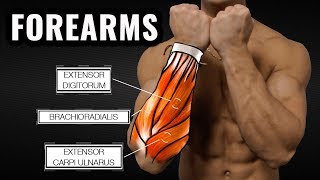
Jeremy Ethier breaks down forearm anatomy and walks through five exercises: isometric bar holds, behind-the-back finger flexion, wrist extensions, reverse curls, and bar rotations. Train forearms 2-3 times a week with lighter weights and higher reps for wrist movements, placing reverse curls on arm or pull days.
What's going on guys? I'm back with another highly requested science based video to add to the series. I just want to thank you guys for all the support you've shown me. I really do appreciate it. I just finished all my final exams and I now have my kinesiology degree so I'll have a lot more time to put out content on a more regular basis. And I also just wanted to quickly thank skillshare for sponsoring this video. For those who don't know, they are an online learning community for creators and the first 500 people to click the link in the description box down below will receive a free two month trial to their platform. But I'll talk more about this at the end of this video. So for now, enjoy the video. Guys Forearms are like the calves of the arms. You can have well developed upper arms, but if your forearms are lacking then it can take away from a balanced physique. In addition, this study from the Journal of Physical Therapy found that hand grip strength is highly correlated with forearms forearm size, which is expected, but just goes to show you that lagging forearms may create more problems than just aesthetics and may be the limiting factor in your lifts that require sufficient grip strength. But in order to address how to properly train them, we need to first understand their anatomy. The forearm muscles are complex, consisting of both superficial and deep muscles. To simplify it, the muscles on the anterior side of the forearm consist of the flexors of the forest forearm. These muscles are mainly responsible for flexion of the fingers and wrists, but also act to pronate the hand. On the posterior side of the forearm are the extensors. These muscles have the opposite function and are mainly responsible for extension of the fingers and wrists, but also act to supinate the hand. And both the flexors and extensors contribute to wrist adduction and abduction. So in this video I'm going to show you guys a forearm workout optimized based on current scientific literature and our anatomical understanding of the forearm muscles. This exercise is essential for hitting all the muscles of the forearm and improving your grip strength. You simply hold the center of a bar with one hand and prevent it from tipping over on one side. This requires involvement of the forearm abductors and adductors to stabilize the bar, which is beneficial since these muscles usually aren't worked much otherwise. To progress this exercise, simply load it with more weight or try to increase the length of time for the holds. You can also perform it while walking, similar to the farmer's walk exercise or for the added stabilization requirement. However this is for the most part an isometric exercise and research has clearly shown dynamic exercises to be the better option for muscle growth. So although this exercise will help with grip strength, we need to also add in some dynamic movements for forearm hypertrophy. This exercise is likely your best bet in terms of working and strengthening the flexors on the anterior side of the forearm and as shown here, simply hold a bar behind your back, let the bar drop down to your fingertips by extending them and then bring the weight back up by curling your fingers and wrists upward. This simultaneous finger and wrist flexion will enable a better contraction since both are important actions of the flexors of the forearm and to progress it, simply use a heavier bar as you get stronger. I prefer this over wrist curls on the bench as it requires less wrist flexibility and less stress on the wrist joint, which can be concern for those prone to wrist injuries. I suggest supersetting the previous exercise with this exercise here, Standing Wrist Extensions, which is a very similar exercise but will mainly work the extensors of the forearm. To help balance them out with the flexors, simply hold the bar with an overhand grip and extend your wrists upward and then back down to the neutral position. Feel free to use dumbbells instead, but again I prefer this exercise standing as opposed to on the bench for the reasons previously mentioned. This exercise is going to help target the brachioradialis, which is a very prominent muscle of the forearm that contributes a lot to overall forearm size. Although its prominence in your forearm will partly depend on how low it inserts, which is determined genetically, this muscle can nonetheless still be targeted and grown by performing reverse curls. This exercise targets the brachioradialis because of the pronated grip used, which as shown in this study by NATO et al. Increases the involvement of the brachioradialis and reduces that of the biceps since the biceps are now at a mechanical disadvantage with this grip. In addition, unlike other forearm muscles, the brachioradialis doesn't cross over the wrist joint. Therefore it can't be trained with wrist flexion or extension alone, so adding in a reverse curl movement that involves elbow flexion is essential in terms of forearm development. This last exercise can be used as a finisher exercise and is added in here to induce more metabolic stress in the forearm arms, which as we know based on several studies is one of the primary mechanisms for muscle growth. Simply grab a bar and rotate it forwards as fast as possible for 30 to 60 seconds and then rotate it backwards as fast as possible for 30 to 60 seconds. This allows you to work both the flexors and extensors of the forearm in one set and you can use a heavier bar to progress the exercise as you get stronger. And although you hear a lot of people say that forearm isolation training isn't needed, given that you do a lot of barbell and dumbbell lifts, this may be true for some, but for much. However, research does seem to support the addition of forearm specific training, with one study showing that subjects performing additional forearm training with a lifting routine led to more forearm strength gains than resistance training alone. Although the study did show that resistance training still indirectly provides forearm strength gains, the researchers concluded that added in some forearm specific training as well provides even more benefit. Now as for how to integrate forearm training into your current workout routine and I'd suggest the following Add reverse curls into your current arm training so if you have an arm day or pull day, place it in that day for the rest of the exercises, perform a couple of them two to three times per week as research shows that this frequency tends to be the most optimal for forearm growth. Use lighter weights and higher reps for the wrist movements to avoid any initial wrist pain and you want to perform these exercises after your upper body workouts to avoid fatiguing your grip strength before you start your workout. An example weekly workout may look something like this, but keep in mind that in order to maximize forearm development, try to stick to exercises that involve the use of a bar or dumbbells in your weightlifting routine as opposed to mainly sticking with machines as this will provide you with a lot of indirect forearm growth in the long run. Thanks so much for watching guys. I hope you enjoyed the video again. Just wanted to quickly thank skillshare for sponsoring this video. As I mentioned earlier, they are an online learning community for creators with over 17 different classes in pretty much anything ranging from videography, illustrations, photography and so much more. Premium membership begins at around $10 a month, but as I said, the first 500 people to click the link in the description box down below will receive a two month free trial. But these spots will go quickly so make sure you're one of the first few to get it. And for those who do get it and are interested in video editing or YouTube and are curious as to how I make some of the effects in my videos. I highly suggest that you check out this course in Final Cut and also this course in After Effects as this will teach you a lot of the fundamentals that you need to know regarding these two programs. Anyways, that's it for this video guys. Don't forget to give the video a like if you enjoyed it, and also leave a comment down below as to what topics you'd like to see me cover in the future. And I wish you all a Merry Christmas. I'll see you guys next time.










