The Best Science-Based Lower Body Workout for Growth (Quads/Hams/Glutes)
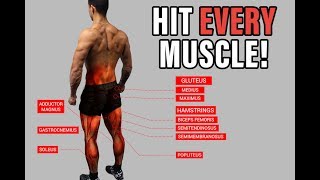
Jeremy Ethier breaks down a lower-body split that hits quads, hamstrings, glutes, and calves with squats, Romanian deadlifts, split squats, and glute-ham raises. The video includes a free PDF with the full routine and progression scheme.
Foreign for those of you who are unaware, this video is a continuation of the upper body workout I recently released, where I discuss how to best set up your upper days in an upper lower split. In this video, however, I'll show you how to set up your lower body workouts based on current scientific literature and and our anatomical understanding of the lower body muscles. First off, the main goal of your lower body days should be to adequately train the quadriceps, hamstrings, glutes and calves. This not only enables your lower body musculature to grow in a proportionate manner over time, but more importantly, it helps prevent injuries that might occur from muscle imbalances. But in order to strengthen and grow these muscles, it's important that you choose the right exercises. So, without further ado, let's take a look at what the optimal lower body workout might look like. When it comes to quadriceps development, squats are going to be your best bet. Although squats will heavily involve the glutes as well and will definitely contribute to their growth, they have been repeatedly shown in numerous studies to elicit very high quadriceps activation when compared to other lower body exercises. And given that squats are an exercise that can be easily and effectively overloaded with weight, I'd highly suggest including them in your lower body workout. Now, as for whether to perform back squats or front squats, I'd suggest using back squats on one of your lower body days and then perform front squats on your other lower body day or rotate between them over time. This is because although research shows that overall quadriceps activation is actually quite similar between the front and back squats, research also shows that front squats may better activate certain quadriceps muscles that aren't as well activated during the back squat. For example, this table from a study from the Journal of Stress, Strength and Conditioning research shows that certain quadriceps muscles like the vastus lateralis and the rectus femoris are less activated during the back squat and more so in the front squat. So for more balance and full quadriceps development, it's probably a good idea to incorporate both the back and front squat in your weekly routine. This next exercise is a variation of the traditional deadlift, although the muscles work will be quite similar between the two variations. Romanian deadlifts will put more emphasis on the hamstrings and glutes, since the knees are kept relatively straighter throughout the movement. One 2014 study from the Journal of Strength and Conditioning Research compared hamstring activity in four different hamstring exercises. Of the four exercises, Romanian deadlifts and glute ham raises came out on top. Since Romanian deadlifts allow greater weight to be lifted and are easier to progressively overload over time, I'd highly recommend including them in your lower body workout to strengthen the posterior chain and in terms of form, you want to perform them similar to how you would a traditional deadlift, but instead keep your legs relatively straight throughout each rep. This is done by pushing the hips back and keeping your lower back straight as you lower the weight. How low you go will depend on your mobility, but generally aim for below your knees and then contract your hamstrings and glutes to push the hips forward as you bring the weight back up. As some of you may already know, this exercise is something I think everyone should incorporate somewhere in their routine. They do a great job of hitting all the major leg muscles, but with more emphasis placed on the posterior chain. One 2010 study from the Journal of Sport Rehab found that the split squat more heavily involves the hamstrings and glutes than the squat. In addition, one 2016 study by Speers and colleagues suggests that the split squat may be just as effective at increasing back squat strength as the back squat itself, while placing less strain on the lower back. Therefore, it's clear that the split squat is a great complementary exercise to use with squats for both muscle and strength development. And the fact that it's a unilateral exercise, meaning just one leg is worked at a time, helps prevent muscle imbalances from developing, which is likely to happen if you only stick to bilateral exercises like the squat and deadlift, for example. Another important thing I want to mention regarding this exercise is foot placement. One 2014 study from the Journal of Applied Biomechanics showed that a longer step length such that the shin is vertical makes the split squat more hip dominant, meaning that more emphasis is placed on the hamstrings and glutes, whereas a shorter step length makes the split squat more knee dominant, meaning that more emphasis is placed on the quadriceps. So you can apply this information when performing this exercise by either taking a longer step if you want to target more of your hamstrings and glutes, or take a shorter step if you want to instead put more emphasis on your quads. This last exercise is something I'm personally a big fan of. It will put the most emphasis on the hamstrings, but will also involve other posterior muscles like the glutes and the lower back. Now, we already know that glute ham raises are great at activating the hamstrings when compared to other hamstring exercises, based on the results of the 2014 EMG study I mentioned earlier. But what this study also illustrates is that glute ham raises complement Romanian deadlifts very well in terms of hand hamstring development. They found that although activity of one of the hamstring muscles, the long head of the biceps femoris, was maximized in both exercises, activation of the other two hamstring muscles was highest concentrically during the glute ham raise but highest eccentrically during the Romanian deadlift, simply meaning that it would be a good idea to include both in your routine. This idea is further supported by a 2015 study from the Journal of Strength and Conditioning Research. The researchers found that activation of the upper hamstrings can be maximized with hip dominant exercises, whereas activation of the lower hamstrings seems to be maximized with more knee dominant exercises. Therefore, including both a hip dominant hamstring exercise like the Romanian deadlift and a more knee dominant exercise like the glute ham raise is recommended for not only balanced development of the hamstrings, but also for injury prevention, especially in athletes. And I would definitely opt for the glute ham raise over something like machine leg curls as your primary knee dominance hamstring exercise, not only because they better activate the hamstrings, but also because they better transfer to sports and injury prevention. And if you want to learn more about how to properly perform the glute ham raise, I posted a tutorial on my Instagram page so I'd highly suggest checking it out there and I'd appreciate if you gave me a follow as well. But with that being said, for those who don't have access to a glute ham raise machine, one knee dominant alternative I'd recommend are leg curls on a stability ball where you raise your hips up and pull the ball towards you by contracting your hamstrings. So to sum up the video, here's what your lower body Day one routine could look like. I'd also advise adding in one or two calf exercises, which is a muscle group I'll be covering in more detail in a future video. And beginners should probably stick to the lower end of the volume recommendations, whereas more intermediate lifters should probably stick to the higher end of the volume recommendations. And as I've done with my upper workout video, I've compiled all of this information into an easy to follow free PDF so that you guys can have it when you're at the gym, it shows you the full workout, how to set up your other lower body day exercise tips with visuals, a progression scheme to use, and more. To get a copy of this, simply follow the link I've put in the description box down below and I've also pinned a comment down below that provides a link as well. And if you've already previously signed up for my upper body PDF if you want to, then you should shortly automatically receive the PDF for the lower body workout. But just let me know if you're having any trouble receiving it.
Thanks so much for watching guys. I hope you enjoyed the video and found it useful. Don't forget to grab your copy of the free PDF that I mentioned by following this link. I think you guys will really find it useful in the gym, but make sure to check your promotions folder or maybe even your spam folder to see if the PDF ends up there. And I'd also really appreciate it if you gave me a follow on Instagram as well where I post a lot more informative content and I show a lot of the studies that don't make it into my videos. And as always, if you enjoyed this video, please don't forget to give it a like leave a comment down below and subscribe and turn on notifications from my channel as well as this all really helps me out and I really appreciate it. Anyways, thank you guys so much for all your support. I'll see you next time.










