The Best Science-Based Shoulder Workout for Size and Symmetry
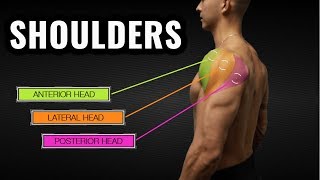
Jeremy Ethier breaks down shoulder training for balanced growth across all three deltoid heads. Most people overtrain the front delt with pressing, so he emphasizes lateral and rear delt exercises like incline lateral raises and face pulls. The workout includes rep ranges and form cues to build size while protecting your rotator cuff.
Foreign well developed shoulders are the key to completing a balanced physique and getting that broad shouldered look everyone is striving for. However, the biggest mistake people make when it comes to shoulder training is neglecting to focus on all three heads of the deltoid muscle. This is detrimental in the long run since proper development of all three portions is what gives them that three dimensional look. To better understand this, let's take a look at their anatomy. The deltoid muscle is divided into three main parts, the anterior, lateral and posterior heads. Also commonly referred to as the front, middle and rear delt. And although all three heads will be activated to an extent during all shoulder exercises, as made evident in the literature, each head can be emphasized through the use of specific exercises and the way you perform them. So in this video, I'm going to show you guys a shoulder workout optimized based on current scientific literature and our anatomical understanding of the delts. Now, although it's important to consider all three portions of the shoulder, keep in mind that the front delt already gets sufficient indirect work through several pressing movements. And as shown in these two studies by Trebs and levair, its involvement in pressing movements increases significantly as the level of incline increases. What this means is that since you're likely performing a lot of flat and incline pressing movements involving the anterior deltoid, it's better to focus more on the development of the lateral and posterior heads, which are often more neglected in a routine. This not only helps balance your shoulder shoulder aesthetically, but as shown in this study by the Journal of Clinical Biomechanics, strengthening the posterior head of the deltoid is desirous for ensuring shoulder joint integrity and reducing injury potential. Therefore, in this routine we're going to put more emphasis on the lateral and posterior heads of the shoulder. Also, keep in mind that the four rotator cuffs are important muscles that shouldn't be neglected as they help stabilize the shoulder, but I'll make a separate video for them. The shoulder press is an essential compound movement when it comes to shoulder training due to the ability to easily overload it with weight. In addition, the standing overhead press will also put more emphasis on the core musculature and serratus anterior muscle. Although there are several variations of this exercise which I will discuss, they all mainly target the anterior deltoid with some involvement of the lateral and posterior heads. And since this exercise has been shown in studies like this one by Baron and Buskies to be the best exercise for the anterior deltoid and and was even shown to outperform dumbbell front raises by 41%. I'd argue it's the only exercise you need to include in your regimen that emphasizes the front delt. Now, as for which variation is most effective, you basically have four standing overhead press with a barbell, standing overhead press with dumbbells, seated shoulder press with a barbell, and seated shoulder press with dumbbells. This study from the Journal of Strength and Conditioning Research compared the four variations. The they found that the standing dumbbell press elicited higher anterior, lateral and posterior deltoid activation than any of the other conditions. But although research might suggest this variation to be best, I think realistically it's a very difficult exercise to overload, especially once you get to very heavy weight. So for this reason, I'd opt for the barbell overhead press instead, since it wasn't very far behind the standing dumbbell press in terms of overall shoulder activation and it outperformed the seated variations. But keep in mind that the other variations are still very effective exercises cycled through your program as needed. For example, if you stall on the standing overhead press or get bored of the movement after a couple months, feel free to swap it for the seated dumbbell press or seated barbell press. This next exercise is commonly performed in the gym and is one I highly recommend for lateral shoulder development. It's going to mainly target the lateral deltoid with moderate involvement of the other two heads and the upper traps. This exercise was shown in this study by Barron and Buskes to elicit the highest activation of the mid delt when compared to other common shoulder exercises. However, given that this exercise is so popular, I want to go into more depth regarding proper form and how to maximize shoulder activation while minimizing stress at the shoulder joint when you lift the weight to your side. The activation of each head of the delt depends on the extent to which it's in a direct line of force opposing gravity. So. So without any shoulder rotation, you can see that the lateral deltoid as well as the anterior deltoid are in a direct line of force opposing gravity, meaning they will both be sufficiently activated. Now, when we internally rotate our shoulder, think about as if you were pouring water from a pitcher. This takes the anterior deltoid out of the equation and makes the lateral deltoid in the most direct line of force, which is the one we want to target. And this is why you'll see bodybuilders and just people in general, internally rotate their shoulder as they perform this movement. However, this is a dangerous position for the glenohumeral joint to be in and will lead to wear and tear and shoulder impingement in the long run, which can take months or even several years to happen. To fix this, what you want to do is externally rotate your shoulder when performing this exercise, but you may notice the muscle in the direct line of force now is the front delt. So to address this and put more emphasis on the mid delt, you can do one of two options. One slightly lean forward so that your mid delt is now more in the line of force or two perform the exercise on an incline bench which is the same idea, but in both cases you want to ensure that you're slightly externally rotating the shoulder. Now we are going to put more emphasis on the rear delts which as I mentioned earlier, is essential for balanced development of the shoulder and long term shoulder health. This exercise is going to mainly emphasize the posterior deltoid but will involve various other secondary muscles as well. Studies like this one by Pinto and colleagues have shown that the reverse pec deck elicits higher rear delt activation than the seated row and lat pulldown, meaning that including them in your routine is essential for optimal rear delt development. As for which handle to use on this machine, this study from the Journal of Strength and Conditioning Research showed that the neutral grip where the palms face each other elicited higher posterior delt and infraspinatus activation than the other grip where the shoulders are internally rotated and the palms face down. This indicates that the neutral grip might be the better option. However, it's important to note that there was a lot of variation in this study with some subjects finding the other grip more effective. So try out both and see which feels better for you. This exercise is my personal favorite when it comes to really isolating the rear delts and is something I highly recommend you try out. Although this variation will target similar muscles as the traditional standing face pulls will, it will lessen the evolvement of the traps, more specifically the upper traps. This is because, as shown in this study from the Journal of Sports Medicine, the upper traps are more active during standing exercises since they work as a postural muscle. Therefore, laying on the ground eliminates the effect of gravity and can decrease excessive activation of the upper traps. This is beneficial because most people tend to have overactive upper traps which will tend to overpower the rear delts in many movements. So by performing this exercise lying down and it enables the rear delts to be more involved by lessening the involvement of the upper traps. However, keep in mind that the traditional Face pulls still have their benefits when it comes to strengthening the rotator cuffs and postural muscles, so I'd strongly advise that you still incorporate them somewhere in your routine or do a few sets of each variation. And one cue I'd like to mention is to think about pulling with your elbows as opposed to pulling with your hands, which might sound weird at first, but it's personally helped me use more of my rear delt in the movement as a of part opposed to having my biceps or other muscles take over. Now as for fiber type, the shoulders have been shown in numerous studies to be pretty much an even 5050 split between type 1 and type 2 muscle fibers. Generally, it's thought that high reps with low weight maximize type 1 fiber growth and low reps with high weight maximize type 2 fiber growth. Some studies agree with this, however others show that both fiber types will grow regardless of the rep range used. But I think that research is still leaning towards including a mix of both low rep and high rep work for shoulders given their fiber typ distribution. So I think that would likely be the best option in terms of hypertrophy. So to wrap this all up, here's a sample workout you can do using the exercises previously discussed. Feel free to swap or add exercises or split the workout in half if you're training shoulders more than once a week. And keep in mind that this is just a recommendation and the optimal number of sets and reps will vary individually. I just wanted to give you guys some sense of direction to take and I'll also leave a link in the description box down below where you can download a full a full 7 page PDF of the workout that will also include exercise pictures and tips. A progression scheme to use how to fit this workout in with various splits and alternatives you can use for each exercise. And this will all be 100% free. So I highly suggest you check that out in the description box as it will show you how to properly and optimally perform each movement as well as how to apply them in your routine. Let me know if you found it useful and feel free to let me know if you have any questions regarding anything I've written. Thanks for watching guys. I know it took me a while to get my shoulders video done, but I hope you guys enjoyed it and thank you all for being so patient. And as I previously mentioned, My new website buildwithscience.com is now up and on that site I'll be posting summaries and articles of all my science based videos and I'll go more in depth regarding the studies, and I'll also have some free PDF workouts there for you guys to use. And I'm also working on getting my PA programs up there as soon as possible as well, so stay tuned for that. Anyways, as always, if you guys found the video useful, please don't forget to give it a like leave a comment down below and also subscribe to my channel and turn notifications off for my channel as well as this all really helps me out. You can also follow me on Instagram and Facebook as well, where I'll be posting informative content on a more regular basis. Anyways, thank you guys for all your support. I really do appreciate it. I'll see you next time.










