The BEST Way to Use Cardio to Lose Fat (Based on Science)
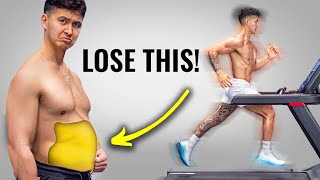
Jeremy Ethier reviews the science and expert practice on using cardio for fat loss. He explains the constrained energy model (compensation reduces net calories burned), summarizes meta-analyses showing modest fat-loss from typical cardio doses (e.g., ~0.5 lb over 8 weeks), and contrasts this with very high-volume studies (≈700 kcal/day → meaningful fat loss). Ethier and interviewed naturals (Alberto Núñez, Lee) emphasize prioritizing diet and resistance training, using steps as a baseline (7,000–10,000/day) and adding cardio progressively (examples: ~30 min, 4–5×/week for very lean stages). Practical recommendations include starting with ~7,000 steps/day plus weight training, then adding 2–3 × 20-min cardio sessions/week as a starter; increase cardio, steps, or reduce calories if stalled. For long-term maintenance, 150+ min/week of activity and ~7–9k steps/day help prevent weight regain.
Questions this video answers
Herman Potzer (2016) proposed the constrained energy model: increased exercise can trigger compensatory reductions in non-exercise activity and intake, reducing net calorie deficit.
Most research shows people lose about 20–50% of the weight they'd expect from calories burned via cardio alone.
About 0.5 pounds over eight weeks.
Approximately 700 calories of cardio per day (≈1–1.5 hours jogging) produced notable fat loss without diet changes.
Around 7,000 steps per day as a baseline; many clients target ~10,000 steps/day during prep.
How much cardio should you do to lose fat? Some say you don't need any, whereas others say you gotta do it every single day. But after speaking to some of the top natural bodybuilders in the industry, interviewing the smartest experts in the world and reviewing the latest science, here's what I found. But first, we need to figure out how helpful cardio actually is for fat loss. And the answer might surprise you. While cardio is great for heart health, longevity, and provides plenty of other benefits, it's not nearly as effective as most people think when it comes to losing fat, at least in the way most people do it. You see, typically, you'd expect if you did 300 calories worth of cardio, you'd burn 300 more calories that day. But back in 2016, researcher Herman Potzer published what's known as the constrained energy model, proposing that the more calories you burn through cardio, the more your body will try to save energy and burn less calories the rest of the day to protect its fat stores. And it does this subconsciously by taking fewer steps the rest of the day, or little things like not moving your hands around when you're talking, for example, not to mention diet compensation as well. Some people tend to subconsciously eat more in response to doing more cardio, to the point where the 300 calories of cardio you did can theoretically cancel out completely. Unfortunately, shortly after this research came out, major news outlets took interest and shared it, using clickbait headlines that made it seem as if exercise was pushing pointless for fat loss. Now, although this is an exaggeration, the compensation effect is definitely real and well documented. Most research has shown that people who start doing cardio without any changes to their diet tend to lose only 20 to 50% of what they'd expect from the calories they've burned. But now you're probably wondering, what about different types of cardio? Surely sprints and hit type workouts we see all the shredded influencers doing will be great for fat loss, right? Well, Daniel Plotkin, one of our built with Science researchers, recently published a study comparing all different types of cardio and fat loss. Here's what he found.
So what we did is we took all the studies that we could find that compared high intensity training, so training that was either sprint intervals or biking intervals, and compared that to low and moderate intensity aerobic exercise. So that could be incline walking, that could be moderate intensity cycling. So we wanted to see which of these modalities created more fat loss. And what we found was that there was no difference between these two modalities at all, which wasn't super surprising. But what was surprising is that whether it was high intensity interval training or moderate intensity training, there was essentially no fat loss effect even compared to nothing. I think the magnitude of effect was 0.5 pounds over eight weeks of aerobic training. What we can conclude from this is that at least at the doses given for the high intensity training, the average weekly minutes was 30 minutes, and for the moderate intensity, it was an average weekly minutes of about 120. Cardio alone isn't very effective for fat loss.
Okay, but what about even higher amounts of cardio? Does that lead to more fat loss? Well, in studies like this one by Ross and colleagues, very high doses of cardio, in this case doing 700 calories worth of cardio every single day, the equivalent to about one to one and a half hours of jogging, does actually lead to quite a bit of fat loss. So without changing your diet, you've probably got to do a whole lot of cardio for it to have a meaningful effect on fat loss, which isn't a very efficient or realistic approach for most people. But I didn't make this video just to tell you that cardio doesn't work because it does, but only when you use it properly. And to find out exactly how to do that, let's take a look at this recent meta analysis which ranks several different fat loss protocols from most to least effective. As expected, cardio alone with no changes to diet was the least effective method. But take a look at the most effective methods. Notice how they are all combinations of some form of exercise. With a proper diet, think about how much easier it is to eat 500 calories less than it is to try to burn off 500 calories every day. I illustrated this in my last video where I ate a bunch of McDonald's and figured out the hard way just how difficult it was to burn off. So think of cardio not as the sole method you'll use to lose fat, but rather as a supplemental tool that you can stack on top of your diet to speed things up. But now that I've hopefully convinced you to start tracking and following a diet, how much cardio should you then add to this? Well, let's start by asking the only people in the world who have truly mastered the art of controlling their diet while using cardio to get them into incredible shape. Professional bodybuilders. First, I spoke to Alberto Nunez, an extremely knowledgeable coach and lifetime drug free pro bodybuilder who's known for getting into insane levels of leanness.
I didn't use cardio at all, really. I just, I'd rather diet a little bit longer and rather eat less and have to go perform some other sort of exercise, especially exercise that I don't necessarily enjoy. But this last prep was, it was nice. It was nice to actually do some cardio. And so I'm like, oh, I get to eat a little bit more because I am, I'm doing this, this cardio. I also feel that it helped with just some of the recovery aspects because even though I know better, like I'm just after training just being garbage and just like laying around.
I also spoke with Lee, a natural bodybuilder just a few weeks out from the show.
I honestly think that we could probably get through this entire prep without cardio. The other alternative was again to not do cardio but then decrease calories further. But you know, like the lower the calorie deficit, the less good essentially you're going to feel.
So it turns out that by using either a longer or more aggressive diet, these guys didn't really need cardio to get into crazy shape. But including it had its benefits. Now what also surprised me was the importance they placed on their daily step count and how they use it as part of their overall cardio plan.
Our bodies are fantastic at surviving and they will figure out ways to slow down the rate of loss. I first started not this was like with my check ins with my athletes, as they were getting leaner, their rooms just started to get messier. Like you could see like legit the fact that they weren't doing much other than like going to work, going to the gym and then just like couching it up. A lot of our actual modifications are going to come through diet cardio and the steps were just kind of there in place to make sure that you don't slop around.
I'm the type of person who would either be at home playing games or be at the gym. I was doing about like hardly any steps at all. So like 2,000 steps per day. We were just like, I need to move around more. And that way we can keep your food as high as possible. So we initially started with 10,000 steps per day. We lost about, roughly about 30 pounds until we started introducing cardio.
But now I wanted to find out on top of their daily steps how much actual cardio is required to get to very low levels of body fat.
The smaller the athlete, the more cardio we will have to do. And it helps so they can so.
They can eat a little bit more.
Which is obviously going to help with the mental component to some extent. And then also with women, since they're smaller systems, they tend to clear up a lot of the fatigue that cardio might add to the situation. I'm just like, wow, we're doing like an hour each day, six days a week and you're still progressing with your training. Like that blows my mind.
Alberto also emphasized how it depends on your lifestyle.
I've had people do nothing, nothing. And usually this has to do with the occupation. I mean, they don't move, they just get fired. Servers, personal trainers, labor intensive jobs, things like that.
But for most of his clients, here's what he recommends.
Seven thousand steps on average. Like just sit there, like is there baseline, you have that set. I'd say most people on top of that to get to their goal. Like we're talking about like, you know, like pretty frequently. So roughly around, like closing on like 10, 11, 12% body fat for men could have like 10% to that. Or for women, those are going to require like four to five days of cardio a week, ranging anywhere between 30 to 45 minutes. There's almost no exception, I feel even.
With the steps, this seemed to line up with Lee's protocol as well. On top of 10,000 steps a day and lifting weights four times a week, he's also doing 30 minutes of cardio five times a week. But remember, this isn't just to get six pack abs lean, we're talking shredded. And they also don't go from zero cardio to five times a week right away. They build up to it over time and only when they need it. Whenever fat loss is stalled and they're not making progress, that's typically when they decide whether or not they should add more cardio.
Probably not a bad idea to ask them, okay, what would be the least invasive thing to you, like psychologically to the rest of your life? So I might consider cardio or I might just consider cutting calories. But yeah, like also like appetite maybe my appetite's been like in check. So I'm like, all right, you know what, just slash those calories because that's going to be the most passive one.
At around six weeks out at this point I was pretty hungry. So rather than decreasing calories further to increase weight loss, we would decided to, well, let's increase cardio so we burn more calories essentially.
Now as for the type of cardio they use, I found a common theme between both of them.
If you are going to use cardio things with minimal impact, things that are just a, like a perpetual concentric, like an elliptical or a bike.
So we started doing cardio on the elliptical machine. And that's just to kind of reduce as much fatigue as we can, especially since we're still trying to maintain strength or even try to progress inside of training.
Now, the reason they place such an importance on their weight training isn't just because they want to look as jacked as possible. As you diet, your body will need to burn off something for energy. It can choose from either muscle fat or a combination of both. So although lifting weights doesn't burn as many calories as cardio does, it does give your body a strong reason to hang on to the muscle you've got and to burn off your fat for energy instead. This is probably why in the meta analysis I showed earlier, you may have noticed that combining diet with resistance training was one of the most effective fat loss methods, performing even better than combining diet with just cardio. So think of the holy trinity of fat loss as a combination of diet lifting weights with cardio on top of that to speed things up. Now, as for how much cardio per week you should aim for, what I'd recommend is just start with Alberto's Recommendation of walking 7000 steps a day as a baseline. In combination with your diet and weight training, this alone should already be enough for you to start losing fat. Once you're consistent with that, you can add in some cardio sessions to get your heart going. And just to speed up the process, 2 to 320 minute cardio sessions per week should be a good start. And although Leon Alberto recommended cycling or the elliptical, you have plenty of other options. I personally love variety. So some days I'll do inclined walking, some days I'll do cycling, and sometimes I'll go swimming. The key is to choose things you actually enjoy and could recover well from. Now, from here, once your body adapts and you reach a stall in your progress, you can choose to either eat a little bit less or add a little bit more cardio, or increase your steps to continue losing fat. And you basically repeat this process for as long as it takes you to reach your desired level of body fat. Now, we did see on average how much cardio Alberto's clients do towards the tail end of their diet. But remember, they're getting very lean, so please don't just follow that blindly. The amount of cardio you'll end up needing will heavily depend on your goal, your body and your lifestyle. So you have your cardio plan, but I do have a word of caution. The last thing you want to do is start doing a bunch of cardio during your diet and then stop cold turkey as soon as it's over. That's the biggest mistake people make and it's actually when cardio becomes most important. Here to explain this is well known fitness scientist and natural bodybuilder, Dr. Eric Helms.
So after a weight loss phase, most people on full unfortunately are going to regain at least a proportion of the weight that they lost. However, what most people do, which is a mistake, is they stop doing the exercise they were doing as part of the cutting phase. You don't have to maintain all of the cardio you're doing while cutting, but keeping a certain amount of activity going can prevent some of that weight regain.
From happening, Eric explained. It seems to help regulate your hunger and will also slightly increase the number of daily calories you burn.
So there's a great systematic review that was recently published in 2019 and they found that doing just 150 minutes or more per week of activity generally, which of course could be cardio, but if you're lifting weights, that counts as well, is sufficient to prevent weight regain. If you're already getting weightlifting in that amount, then we need to look at okay, well what's the maximum benefit I can get here? And some of the meta analyses that look specifically at cardio, they seem to show that there are some benefits that are probably maximized around getting seven to 9,000 steps per day.
This is why for long term success it's so important to choose activities you can actually stick to. Whether it's watching a movie on the treadmill, playing a sport, or just going for walks. To start out, find something you can do regularly to get you moving. Remember, cardio isn't just something you should do during a diet and you shouldn't do it just for the fat loss benefits, do it for your overall health and well being. And for a science based program that shows you week by week exactly what to eat and what workouts to do to get you into the best shape of your life. Just head over to builtwithscience.com and take our quiz to find what program is best for you and your body. Highly recommend giving this video Watch next for a super easy to make budget friendly meal plan for fat loss or give this video Watch next for a step by step walk in plan for fat loss that you can start doing today. Thanks so much for watching and I'll see you next time.










