The Fastest Way to Blow Up Your Bench (Using Science)
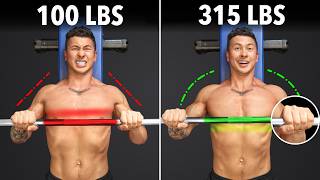
Jeremy Ethier and Ryan, a record-holding natural bodybuilder, break down how to add pounds to your bench press fast. A 1-2 inch grip change and a larger arch cut your range of motion immediately. Ryan's system stacks heavy strength work, accessory lifts targeted at your sticking point, then hypertrophy work, all once per week at high intensity.
Benching £225 is a sign you've made it in the gym. But only 2% of new lifters can do it. And even among regulars, barely one in five ever get there. It took me three years to get there, but it took Ryan, a record breaking lifter and Pro bodybuilder, just one. Now he benches over 400 pounds easily, bro. A feat so rare you have better odds of becoming a billionaire. All using a system I'd never even heard of. And he says he's natural. After breaking it down with the latest research, I turned it into a plan that could help you and me. Push, push, push. Oh, I'm crappy. Add up to 30 pounds to your bench press in just six weeks.
After I made that switch, it was a year's worth of progress in three months.
The switch, his grip.
I tried a max grip and I was like, why does this feel lighter?
Research shows that widening your grip just an inch or two can boost your bench instantly, often by about 5 to 10% just by shortening the range of motion. But it's not one size fits all.
The rule of thumb is the wider you go, the more pec engagement you'll experience. And the more narrow you go, the more tricep engagement you'll experience. And you kind of want to do play to your strengths to a certain extent. If you do have very strong triceps, it might be to your benefit to going narrow. But it really does come down to experimentation and trying a lot of different bench grips and using how they feel to kind of guide you.
But grip is actually not where Ryan starts. His setup begins before his hands even touch the bar.
Gotta get the matching plates.
I feel like power lifters are super, very superstitious.
Or it's just my ocd.
Exactly.
So the first thing we want to do when we're setting up on the bench press is we want to find our foot position. My own personal preference is a little more narrow with my feet pointed forward. And what I'm thinking of during the entire press is that I'm applying tension backwards into the bench like this. The only thing that's stopping me from sliding is I'm driving all the way into my traps, and my traps are planted into the bench. So the cue we want to think of is like we're on a computer chair and we're kind of like sliding backwards. And we want to maintain that exact tension throughout the entire bench press. So this is something that's commonly referred to as leg drive. Once our hands are in position, Again, we want to start by sliding our feet back. And once we're in position, make sure our shoulder blades are down and retracted. And what we want to do from here is unrack by extending our elbows and pulling the bar down. And once the bar is over our chest, that's where we put our hips down. And we want to maintain our leg drive the entire time.
So are you thinking of, like, actively bending the bar, getting lots going? Like, how are you getting them going?
So as soon as I'm here and I'm sliding back, this is where I'm engaging my lats. So there's two cues that people like to use. Like you mentioned, there's bending the bar. I personally like pulling apart. And the goal is to just maintain that tension as soon as you unrack. And as long as I can feel that tension in my lats as I bring the bar down, they're going to be active on the press. But if I find I'm absent minded on the descent, I'm not going to get quite as much lat engagement. And the more you do it, the more, like, unconscious I guess it becomes. But you still want to do a very good job at almost going through, like a checklist at the start of every bench set. And that is leg drive, shoulder position, lat engagement, unwrap.
Now, you may have noticed that Ryan uses a big and scary arch that looks like he's about to break his back. Well, similar to how a wider grip can instantly boost your strength, using a bigger arch can do the same thing. Powerlifters do this because it shortens the distance between the top and the bottom of the press. Now, some argue this leads to less range of motion for the chest and potentially less growth. But later, we'll show you how Ryan balances this out with exercises focused on growth rather than just strength.
So it's like you're using your shoulder blades as a pivot to unrack the bar. Just trying to not use much of your pressing muscles, if at all, on that. Unrack.
And now unrack.
Yeah.
Nice.
And explode.
Push, push, push, push, push, push, push, push, push.
Nice.
Oh, it's crap. Trying Ryan's setup, the grip, the arch, the leg drive, it felt completely foreign.
As you began to lower it. You're also, like, very hesitant there as well.
I cramped in muscles I didn't even know were involved. And just like that, I couldn't even hit 235. Even though I did this years back when bench press was still part of my training. Guys, I Think those muscles just for looked?
I'm gonna answer.
Whoa. Before you do that. The truth is, bench has always been my weakest lift. I stopped benching a long time ago, switching to dumbbells and machines instead. Now my chest still grew, my physique improved, and I, I told myself that it didn't matter. Why should I chase a number I'd probably never hit, Especially if I already looked the way that I wanted to. But honestly, guys, seeing Ryan's incredible feats of strength for the first time in years, I honestly felt an urge to chase strength. Not for size, not for aesthetics, just to prove I could do it and overcome my mental limitations. Now we'll see if, using Ryan's advice, I can break my old PR by the end of the video. But first, I needed Ryan to answer the question everyone's been thinking. Everybody's going to be wondering, are you natural?
I am natural. I am. I have been competing in drug tested federations for eight years now.
I have heard that like, usually they have a bit more ocd, especially when it comes to like picking weights like plates. Number one, that's the only red flag. But that obsessive attention to detail is exactly what separates elite lifters from the rest of us. And Ryan brings that into every part of his training, even his warmups where he spends up to 30 minutes just working his way up to 400 pounds.
Ideally, you have a top set in mind around like a range you'd like to hit with your like, heaviest weight and for a set of reps. And the closer you get to that with your warmups, the less reps you should be doing. So when we're starting off with a bar, whatever, doing 15, 10 reps, that's fine. And as we slowly work our way up, we slowly want to decrease the amount of reps, but we still want to apply the same focus and intensity because our warm up sets are also where we practice technique.
But even with the right form, if you just keep focusing on benching harder, eventually you'll get stuck. What Ryan showed me next, it's the key to breaking through plateaus. So Ryan structures his workouts into three parts. And it all starts with strength. A few focused sets of heavy bench, lower reps and high effort. But after these heavy sets, Ryan looks.
For data squeeze as well. Nice and press.
Push, push, push, push, push. Oh, I'm crappy, so this is good.
So I noticed throughout your benching, the weak point, your sticking point is off the chest, like a chest, like almost mid range sticking point. So that gives US good data that that's where we'd want to focus on from a programming perspective.
If you actually watch where you fail, you'll see exactly what's limiting you. And once you know that, you can target the weak links with accessories that actually fix them instead of wasting time training muscles that aren't really the problem. Now, there's three common sticking points, and for me, it was clear I was failing right off my chest where your pecs need to fire the hardest.
So I would really focus on dips to really just focus on like pec strength overall and a speed bench of some sort where you're just applying a lot explosiveness to the bar.
But let's say you get stuck at the second sticking point in the middle of the bench instead of the bottom. What should you focus on? Then?
You're going to be assisted by exercises kind of like the shoulder press, the overhead press. I think everything really plays a part. So the shoulders are definitely something you want to address kind of in that mid range sticking point. And a good accessory which will allow you to address that sticking point is a pause bench where you stop off your chest, you stop on the way up, and then you fully lock out. And that will help you just kind of build strength through that initial sticking point.
And if you're failing at the very.
Top, and then the final sticking point is the lockout, that's the one I personally struggle with. And in that case, we want to isolate our elbows or our triceps with a close grip pressure that helps us build a lot more strength with a longer range of motion. Or there's a variation called, like the Spado press, where you kind of go down halfway and you just kind of isolate, like a half pro rep bench press exercise.
At the end of this video, I'll give you a full bench program that adapts to your sticking point. But after working on your weak points, Ryan moves on to what he thinks played a massive role in building his superhuman strength, bodybuilding exercises that prioritize size rather than pure strength. Now you might be thinking, isn't training for strength and size pretty similar? Not quite. Strength is all about efficiency and moving as much weight as possible. And that's why Ryan uses a wide grip and a big arch to shorten the range of motion. It's also a skill that you get better at with practice, like riding your bike, which explains how you can get stronger on an exercise without your muscles necessarily getting bigger. And it also explains why, even though my chest has grown in the past few years, my I Couldn't just show up and beat my old bench pr. Heavy weight and practice is what drives strength gains. But for size, you actually don't even need heavy weight. If your max bench is 150 pounds, multiple studies show you can build just as much muscle pressing 50 pounds as long as you do higher reps and train close enough to failure. Trust me, even I was skeptical. That's why I've been training one side of my body with light weights and the other side with heavy weights to put this research to the test. I'll release that video soon. But here's where things get really interesting. Research shows that muscle size is still one of the biggest predictors of strength. And that relationship becomes even more important as you gain more experience and master the skill of bench press. Now, Ryan takes full advantage of this. Clearly, it has worked. I feel like that kid who's, like, constantly looking at the girl's cleavage.
I get that a lot.
Yeah, I was up here, Jeremy. He uses bodybuilding style work to incline dumbbell presses, cable flies, and dips to grow parts of his chest that the bench press doesn't hit directly. Then he practices the bench press itself as a skill with heavy weights and low reps. So his nervous system learns how to use that Adam muscle for strength. And that size is what he actually believes helped him stay ahead of lifters with shorter limbs and arguably better leverages. And just to show you how well this works in practice, bro, as impressive as that lift is, Ryan's goal is to hit a 500 pound bench that's over five plates each side. How long will that take him? Well, at this level of strength, he's happy if he adds just one pound to his bench press every month. Now, that kind of slow progress would frustrate most lifters. So how does he stay motivated? Well, he gamifies everything. Even if he doesn't hit a PR on bench that day, he still looks for PRs on something dips, presses, or flies just to keep him progressing. And that's why I'm such a big advocate of tracking your training. It reveals if you're actually improving every week. And it gives you targets to beat every week. Even if you miss one lift, you've got a dozen other chances to level up. And, and having an app that handles all of that for you, tracking progress, targets, it makes it way easier to stay consistent. I'll talk more about that later on. But first, we need to break down one of the most surprising parts of Ryan's routine.
Broga Oftentimes the limiting Factor is those is those injuries. My shoulder just felt like jammed in certain positions. And I was doing all the typical exercises. You see the internal rotation, external rotation, but nothing was happening. And it wasn't until I was just messing around on the flat bench that I came across these. I call these flat shoulder presses, and they're a community favorite. Take a lighter weight, and especially if you're doing these for the first time, start with £5 and you want to lay on your back in a shoulder press position. And what we want to do from here is we're extending above our head in a shoulder press motion, allowing the dumbbell to pull our pecs and rotator cuff open. So the goal on each rep is to allow the dumbbells to pull, pull your elbows down. And the more you sit into these, the more you'll notice yourself opening up, which acts as not only a stretch for your pecs, but it also ends up strengthening your rotator cuff.
Oh, it feels so weird. Yeah, it feels like, wrong, but, like, good.
All right. For our next exercise, we are actually doing a variation of a tricep extension. But these actually end up training your rotator cuff. Because what we're doing is we're doing the typical tricep extension, but behind our back. So by placing our hands behind our back, we're forced into internal rotation and we're extending while also internally rotating at the same time. And what you'll feel the first time you do these is that there's a lot of tight muscles back there. And our goal with this exercise is to open up all those tight muscles.
But here's where things get weird. You'd think that with a 440 pound bench, Ryan would be practicing it constantly. But when I asked him how often he actually benches, his answer completely flipped everything I thought I knew about getting stronger. So you're only benching one time per week?
My main day is once.
Yeah, main day is once per week. And the crazy part, that's what actually allowed him to start progressing faster. Now, this might sound strange at first. In fact, as a beginner, research clearly shows that going from benching just once per week to two or three times per week can literally double your strength gains. But as you get stronger and stronger, things change. Think about it. Recovering from bench pressing 185 pounds every 48 hours is one thing. But when you're throwing around 225, 315, or even over 400 pounds like Ryan, that's a completely different level of stress in your body.
It was around maybe like 375, 400 pounds where I bench that, I'm not benching it next week. Like, it's going to take me two weeks to fully recover.
It's why, although research shows for beginner lifters, higher frequency training leads to faster strength gains, when you look at advanced lifters, it doesn't tell quite the same story.
Yeah, I was benching way too frequently. It was bearing down on my joints. I stopped enjoying training. I was like, how do I find ways to avoid this? I don't want to, like, hate training for the next 10 years. Your body does need time for recovery, and finding that sweet spot of recovery is really what's going to drive progress.
But even though Ryan's low frequency approach works for him, some people will still see better results benching more often. The only way to find out, I.
Mean, the best way is to have like two. Two separate split tests, right? Do six weeks with a higher frequency, six weeks with a lower frequency.
That's why, with Ryan's advice and using the latest science, I've created a low frequency bench program and a higher frequency bench program. Try one of them, track your strength gains, and then try the other and see which one you seem to recover and progress faster with. Now, before I tell you where to access these programs, let's see if I can apply what Ryan taught me and beat my embarrassing tooth or conf. Okay, so we got 235. This is what I tried to do at Ryan's and failed. Give it a go. Pretty good, pretty good. 245.
All right.
That actually was, like, way easier than I expected. After breaking my PR, I wonder if I could go even heavier with 250. So I'm still not quite there yet. But looking back at my 245 bench, I noticed something I actually slowed down the most at sticking point two, signifying shoulder weakness. Now, since I've been training purely for size, I actually only do lateral raises for wider shoulders. And I ditched overhead presses a couple years back, which Ryan suggested are key to breaking through the sticking point. So I honestly think I have a lot of untapped potential. In a few weeks, after I wrap up the light versus heavy experiment I mentioned earlier, is when I'll shift my focus towards bench press strength and hopefully break through what I've always thought was impossible for me, a 3:15 bench. So here's the two programs. But if you want these personalized to your body as well as weekly coaching to tell you exactly how much weight to lift, then you can try our Built with Science plus app free for two weeks by scanning this QR code or click the link in the description. And if you're already a member, you get free access to both these programs. Just scan these codes and it'll load instantly in your app. But while benching is great for chest strength, I've actually found the best growth with two exercises that together can fully round out your chest. Give this video watch next to discover what they are. Thank you so much for watching and see you next time.










