The ONLY 2 Exercises You Need For A Wide Back
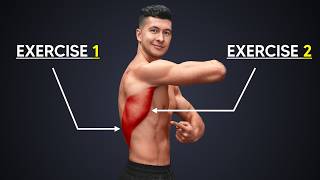
Jeremy Ethier breaks down two lat exercises for a wider back: narrow lat pulldowns with shoulder depression for lower lats, and high-to-low rowing for upper lats. Technique matters more than weight. He recommends 3-4 sets of 10-15 reps with specific cues like leaning back 10-15 degrees and keeping elbows close.
Questions this video answers
Lean your body back about 10 to 15 degrees.
Three to four sets of 10 to 15 reps, with half reps after every set.
About three to five half reps.
Cassim Hansen.
Alberto Nunez and Dorian Yates.
This right here is called the V taper. And although it's the best way to look jacked and create the illusion of a smaller waist with and without a shirt, most guys never get it because they don't work their lats. The lats are one of the toughest muscles to target. I learned this the hard way for years. I did heavy rows and wide grip pull ups and pull downs and my strength went up. My upper back and arms got bigger, but my lats non existent, which kept my back looking narrow. But they finally started growing once I started using just two specific exercises. Exercises that even a world leading biomechanist and a top natural bodybuilding coach swear by for building a wide back.
Because there's so many muscles that can extend the shoulder, you might be leaving the lats with 4, 5, 6, 10, 12 reps in the tank because that exercise isn't really specific to them.
That's biomechanics expert Cassim Hansen. He is obsessed with finding the perfect exercise for each muscle. And the first exercise he showed me is for the lower lats. Kassim explained how the fibers in this area run downwards. So your best bet is some kind of overhead pull down, but not the one that you're probably thinking.
We're generally for lats going to want to do something where we're pulling the arms towards the body. Like basically tight doesn't mean you have to be squeezing in, it's just the path that you're driving. Your elbows should be relatively close to your body.
The thing is, when you go wide, your elbows flare outward, shifting the tension onto your upper back. Yes, the lats are still working, but they never actually get close to failure. And that explains why after years of wide grip pull downs, your upper back might look great, but your lats could still be underdeveloped, which is exactly what happened to me. Even bodybuilding legend and six time Mr. Olympia winner, Dorian Yates, with arguably the greatest lats in history, famously said he never did. Wide grip, pull, dance. To grow them you gotta pull narrow. He insisted. And if that's not convincing enough, just take a look at the lats on pro natural bodybuilder Alberto Nunez standing right next to me. You wouldn't believe it, but Alberto says his lats, especially the lower lats, used to be the weakest part of his physique. That was of course, until he started using the exercise I'm about to show you. I'm going to start by showing you some different grip options depending on what you have available. And then I'll save my personal favorite option for last. And also don't worry if you don't have access to cables, because I'll show you how to apply this to your pull ups as well. So. So the easiest way to instantly hit your lower lats is by still using a lat pull down bar, but with a narrow grip about shoulder width apart. This allows your elbows to stay narrow as you pull, although you'll need to watch out for wrist discomfort, especially at the bottom, which is why I actually prefer an underhand grip instead. Now, you might expect your biceps to dominate when using this grip, which definitely happens if you do what everybody always does. I'll show you a simple tweak here in a second that'll make sure your lats do all the heavy lifting. But if your gym has one, an even better option is to switch to a neutral shoulder width grip. Your elbows stay close to your sides and your wrists won't be screaming at you along the way. And you could also use a V bar handle, but I find that it leads to some serious wrist discomfort, especially at the bottom of the rep. Or you could go with my current favorite, the single arm pulldown. You just find a single handle cable machine and then perform the pull down one arm at a time, keeping your elbow tight to your side. But regardless of what grip you use, here's the real game changer. It's not just about pulling, it's about how you move your shoulders. I used to be an arm puller.
Go ahead and go down. The armpit should go down. If just the elbow goes down and the armpit kind of stays in the same spot, that means we're kind of arm pulling it.
The lower lats, they don't just pull the arm downwards. One of their main functions is what's known as depression of the scapula. This is because the lats don't just attach to the back, they run over the bottom point of your scapula and helping to anchor it to your torso. From there, your lower lats help to bring your scapula down, dropping your shoulders. And you can see this here when I flex my back.
And now instead of thinking about driving your elbows down, thinking about just pushing your shoulder down. So you do it there, right?
So to apply it, you got to make sure you're properly set up. For the deepest lat stretch, you want to lean your body back about 10 to 15 degrees. Then, with your arms straight, let your shoulder completely relax, allowing it to rise up towards your ears. And you can actually try practicing the motion Right now. So just bring your arm up, let your shoulder come up and then shove it down so you can see what I mean. Even just doing that, if you do it properly, you should be able to feel your lower lats putting in the work. So as you pull, think about shoving your shoulder down rather than just moving your arms. But to make sure you're not just using your biceps, don't pull the grip towards your chest. Keep your elbow in front of you and pull your elbow down towards your hips. And if you do this right, don't be surprised if you can't lift as much as you normally could. That is completely normal. And in fact I had to cut the weight in half when I first started doing this. Unfortunately, without cables, there's no good way to work the lower lats with dumbbells. But you can still do this on a pull up bar and see great results. All you do is rather than using a wide overhand grip, either use a narrow overhand grip, an underhand grip, or the best option, a neutral grip. But lean back just slightly, keep the elbows in front and pull them down towards your hips while shoving your shoulders down away from your ears. But here's the thing, the lats are huge. So if you want the kind of back that'll make Greg Doucette want to run a Natty or not video on you, he's not natural here for sure. Then you'll need this next exercise to light up your upper lats as well. Now, to target these areas, you'll still want an exercise where your elbows can pull narrow. But unlike the lower lats, where the muscle fibers all run downwards, the upper lats run more horizontal, with some fibers traveling just slightly downwards. And all that means is that we need a rowing exercise where the arm can pull at a slight angle downwards. Now, I'm going to first show you a dumbbell version that works really well. And then I'll show you a cable version, which is honestly my personal favorite. So for the dumbbell version, either use an incline bench or elevate the back of a flat bench so it angles downwards. Then set up just how you would with a a single arm dumbbell row. But the downward angle will now set your arm up so it's pulling at a high to low angle. Then simply pull your elbow down and back towards your hips, keeping it tight to your sides. If you don't find that quite as comfortable, doing this on a flat bench can still work. But Casson mentioned to watch out for a crucial mistake.
If you let yourself rotate that Is this. This is the opposite of stretching the lat. What we need to do is focus on keeping the rib cage still and letting the shoulder go forward.
Right.
If we turn like this now, two things happen. One is we're not stretching the lat as much. And two, we're going to initiate the movement with trunk rotation, which is not going to be a lat. This is going to be some ql and obliques and stuff, right? So when you get that stretch, you have to resist being rotated.
So keep your chest level with the ground and then simply focus on pulling your elbow down and back towards your hips, keeping it tight to your size. But for the best results, I prefer cables. Now, Kassm's gym actually has an adjustable slider. And that means that you can set it up high so the arms pull at the perfect angle downwards. But if you don't have that available, like me, you'll have to create that movement at the torso. So take a look at this. I'm sitting upright on a normal cable row and my arms are horizontal, which won't work the upper lats as much as we'd like. So instead of sitting fully upright, lean slightly forward while keeping your core and back stack. Notice how, even though the cable height stays the same, my arm angle is now pulling from high to low, which mimics the same effect as if the cable were positioned higher up. Cassim also mentioned that putting your feet a little bit lower on the plates can make this more comfortable. And when it comes to grip, a shoulder with neutral grip is once again ideal. But a V bar can also work. But guys, just like with the pull down exercise, all of this setup will mean nothing if you don't pull the right way. And the advice I'm going to share, it's not just for beginners because I was struggling with it too for years. It's again the arm pulling mistake. And this happens when you pull the handle towards your chest instead. I want you to think about pulling your elbows down and back towards your hips. And a bonus tip is that while I was with Kassim, he actually just out of nowhere, started touching my back of my arms as I was rowing. And I was like, what are you doing, Cassim? And he's like, trust me, Jeremy. And then boom. Like, my upper lats, they were unlocked. It was the craziest thing ever. So every time you do this exercise, I want you to imagine I place my beautiful hands right behind your triceps. So instead of pulling with your arms, your job is to push back into my hands as you row. It's actually a premium feature we're working on with my Built With Science plus Fitness app. Instead of just having detailed tutorials for you to watch in the gym, tap a button and I'll virtually appear, touching you in all kinds of places to maximize muscle activation. You can check it out later at built with science.com but I've got one last bonus technique to share with you that you can apply not just to your lats, but your other muscle groups as well. So in most exercises, like a dumbbell trespass, for example, when you hit your limit, you'll fail at the bottom. You physically can't lift the weight, but back exercises are hardest at the end of the rep, so once your back muscles get tired, they won't be able to pull the weight all the way to get a full rep. The problem is, most people end their sets there instead. Keep it going and take your lats to true failure by trying to get about three to five half reps until the weight just won't budge. And on pull downs, you can take this even further after your half reps by switching to keeping your arms straight, but raising and lowering your shoulder to take your lats even past failure. Now doing these two exercises for three to four sets of 10 to 15 reps, with the half reps after every set. That is more than enough to grow your lats. But let's be honest, figuring out all this on your own? It can be a hassle. And that is exactly why I spent years building my new Built with Science plus app. It selects the exact exercises you need based on your body, and it's even got a meal scanner to make keeping track of your diet so much easier. And if you want to see the difference for yourself, just head to builtwithscience.com and get your first two weeks free. Free now. I'll soon be releasing another video with Cassim about the two best exercises for the upper back, so make sure to subscribe and keep an eye out for that. But for now, if you want to learn the two best exercises for building wider shoulders to complement your V taper, give this video a watch. Next. Thank you so much and I'll see you next time.










