The ONLY Workout You Need For 2026 (Do This 3x/Week)
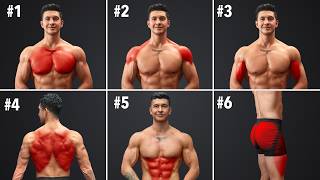
Jeremy Ethier breaks down a three-day-a-week full-body routine with six core lifts: low-incline dumbbell press, squat, pull-up, Romanian deadlift, lat-pulldown, and lateral raises. Each movement includes technique cues and progression strategies tailored to your body structure, experience level, and gender.
Chapters
After 10+ years of coaching and lifting, this is a workout I always come back to. It's a quick, full-body workout that hits every single muscle, giving you the best results in the least amount of time. But the key is choosing the right exercises and modifying them based on your body structure, your experience level, and your goals. Now, there's 6 main exercises in total, plus a bonus exercise we're going to use to target your specific weak points. But let's start with a pretty unique exercise. One that's been shown to grow your whole chest just as much as flat presses, but it comes with the added bonus of more upper chest growth and even strengthens your shoulders and your triceps. It's the low incline dumbbell press. But the key with this exercise is adjusting the incline based on your body structure. And to find the perfect incline for you and your body, all you need is a wall and your phone. You're gonna place your phone between your chest like this. If it points straight up, you have a flat sternum like me. In this case, super easy for your shoulders to end up dominating the movement. So in this case, you want to use a lower incline, one notch up from the bottom. But if you do this test and your phone angles back like this, that means you have a steep sternum. In this case, you want to use a higher incline, two notches up from the bottom. Once you set your incline, you need to avoid the most common mistake almost everyone makes. It's pressing in a T-shape. This limits how deep you can go and is also riskier for shoulder injury. Instead, I want you to tuck your shoulders into more of an arrow shape. This gives you deeper stretch on the chest and is much safer for your shoulders. Now, if you're a beginner, do expect this to feel a bit wobbly at first. That's perfectly fine. That's why I recommend using higher reps, 10 to 15 per set, just to practice the skill of the movement. And if you're a woman, you actually have a unique advantage over men. You can tolerate higher reps better than we can, which is why I'd also recommend sticking to higher reps, 10 to 15 per set. Now, as you get more advanced, I do recommend treating this as a strength builder, going heavier and dropping the reps down to 6 to 8 per set. Okay. With the first upper body exercise done, it's time to move on to a lower body cheat code. An exercise that's been shown to grow your glutes just as much as this does, strengthens your lower back just like this does, grows your quads just like this does, and even builds your inner thighs just like this does. But it does it all in one. It's the barbell squat. But before you start loading up the bar with weight, I actually think a massively underrated exercise everyone should do is the goblet squat. So by holding the weight at your chest, it forces you to brace your core, enabling you to go deeper and much safer. And you can go surprisingly heavy with this. In fact, I'd recommend stick with this until you can do 50% of your body weight for 10 reps. If you're 160 pounds, that means an 80-pound dumbbell. Then using a barbell is just much more convenient to start adding weight. But as you get more advanced, you can start to personalize it based on what muscles you want to target the most. One way is by elevating your heels. This allows your torso to remain upright and you can drive your knees forward, growing more of your quads than your glutes or your lower back. But if you're somebody who wants to grow your glutes more than your quads, really simple way to do that is by grabbing a bench or a box. And placing that behind you as you squat. You're gonna push your hips back, touch your butt onto the bench, keeping your shins vertical. This form is gonna hit your glutes more than your quads. But the most important part of the squat is adjusting your foot stance based on your hip structure. I find that about half the people I train, they prefer a stance that's slightly wider than shoulder width and toes a bit outward. Whereas a quarter of the people, they prefer hip width and toes straight forward, and the rest do best by going wider with the toes way out. So try all three and stick with whichever feels most natural. But now it's time to move on to an exercise that if you get really strong at, completely transforms your back. And honestly, it just looks really cool. It's the pull-up. Now let's quickly set some targets. So if you can do 0 to 1, that's beginner. 2 to 5, average. 6 to 12, fit. 13 to 20, advanced. And if you can do 20 plus, you are elite. And here's the equivalent for women. I can currently do 24 in a row, and I want you guys to comment below how many you can do. But if you can't even do 1 yet, that's perfectly fine. Do this exercise instead. It's the inverted row. This is gonna help build your back strength as well as your core strength. Work up to sets of 15 reps. Once you can do that, you're ready for pull-ups, but not overhand grip. Start out with a neutral grip. Most people are stronger using this grip. You can use a band or assisted machine at first if you need to, but the goal is to work up to sets of 10 unassisted. Then you're ready for overhand grip. Do expect your reps to drop initially by about half. That's perfectly fine. Aim for sets of 5 to 8 strict reps. But once you can do more than 8, you want to start loading this with weight. And again, work your way back up to 8 reps. And every time you can do more than 8 reps, add a bit more weight and repeat the process. Now it's time to move on to a lower body exercise that strengthens your lower back —grows your hamstrings—and even prevents them from injury. It's the Romanian deadlift. Unlike the squat, almost everyone performs best with their feet about hip width and toes forward. And a quick way to test this is by jumping up and sticking the landing. Where your feet naturally land is usually the sweet spot for you. But from here, the key is learning to hinge at your hips rather than bending through your back. And the easiest way to learn this is to start with a single dumbbell held by its ends. Brace your core and slowly push your hips back. Keep going until your hips can't go back anymore and then come back up. Practice this. Once that feels natural, switch to two dumbbells. Keep the weights close to your legs as you slide them down your thighs and shins. And there's actually two ways of doing this. One way is going to target the glutes and you just simply bend your knees a little bit more. And if you want to hit more hamstrings, keep your knees a little straighter. But once you get stronger with this movement, it does become more convenient to use a barbell to add more weight. In this case, you want to avoid the most common mistake. You're using a range of motion that your body is just not built for. Some people, they can go all the way down to the floor. Others like me have to stop right below the knee. Both are correct form as long as your back stays flat and you feel the tension in your hamstrings. I also prefer using relatively low reps here, 6 to 10 per set, as I find going too high reps combined with a high load is just really fatiguing on the body. Okay, but now it's time to finish off the back. We already trained some of the back muscles with pull-ups earlier, but to build real thickness through your mid and upper back, you need to target the muscles between your shoulder blades. Most people neglect these muscles, which makes their back look flat and can't support good posture. To fix this, I want you to grab a lat pulldown bar with a wide overhand grip. Set your feet high, brace your core, and think of your hands like hooks. Pull your elbows back in an arrow shape behind you, squeezing your mid-back muscles. And as you pull, I want you to aim for the level of your lower chest. I also prefer using relatively lightweight here for higher reps 10 to 15% just because I find it's easy for other muscles to take over. But if you're still struggling to feel your back muscles working, start by keeping your arms straight and practice letting your shoulder blades slide forward to open up and then squeezing them back together. Once you can feel that mid-back engagement, keep that same motion and add the full row. And as you get more advanced, there's a way to do that drill to your advantage. You want to do normal set with full reps till you can't do any more full reps. After that, do 3 to 5 of those shoulder squeezes just to make sure that your back muscles actually reach failure. Okay, so the last main exercise is going to hit the shoulders. And when most people think of the shoulders, they think there's only 3 heads. But research has shown the shoulders can be divided into up to 7 different heads. Which just means you want to target them from all different angles. And my favorite way to do that is with a lateral raise superset. So you're going to grab a pair of dumbbells, set up an incline bench, and first you're going to lay your back on the bench and raise your shoulders out in a Y shape slightly in front of you. This is going to target a little bit of the side and some of the front fibers of the shoulder to help build your shoulder width. Keep doing this until you reach failure, and then immediately flip over, chest on bench, and this time raise the weight out to your sides and slightly behind you. That's going to target a little bit more of the rear of your shoulders to help build roundness in that 3D look. But if you're a woman, this can be uncomfortable on your chest against the bench, which is why I recommend putting a hoodie or a pad between it just to create some space between that and the bench. But perhaps the most important part of this exercise is the weight that you use. Don't let your ego take over. I can only use 25 pounds here, and that is more than enough. Okay, so those are the 6 main exercises. Now we're going to customize your workout based on what your body needs the most. So I want you to pick 1 or 2 of the following accessory exercises. If you're a beginner, highly recommend adding a core exercise like the dead bug. You flatten your lower back into the floor and slowly extend your opposite arm and leg. Building core strength here is going to instantly help all the exercises we covered earlier. But if you want to focus more on glutes, then you'll want to use some kind of hip abduction. This is going to build the muscle that creates the upper glute shelf that most people want but rarely train directly. Now this next option, if you pick this, I give you mad respect. It's calves. And in this case, the thing you want to keep in mind is that a lot of research has shown exercises where your legs are straight rather than seated will grow them more. So stick to standing or leg press variations instead of seated. Next, if you want a little bit more arm growth, I'd recommend an arm superset. My favorite thing here is doing incline dumbbell curls. Go to failure and then immediately put your arms overhead, and this is going to help grow some of the tricep muscles that we have yet to hit from our other exercises. Another option, if you're somebody who lacks upper back growth, is doing Kelso shrugs on an incline bench. You lean forward, arms straight, and shrug your shoulder blades up up and in. And the last option, this is going to grow a muscle that I honestly think almost every advanced lifter is weakened. It's this little strip of the upper chest right here. And to do this, you can use a cable fly or a pec deck, but instead of your back straight, I want you to lean forward. This is going to shift the tension towards those upper chest fibers. Okay, so here's what the full body workout looks like for beginner, advanced, or somebody who wants more glute emphasis. If you do this workout 2, 3 times per week, you're gonna see some pretty impressive results. But if you want the best results possible and a transformation like this, then you need to pair these workouts with the right diet plan. And if you want all that guesswork taken care of for you so that all you have to do is follow your personalized plan every single day, Highly, highly recommend. Try out our Built With Science+ app over at builtwithscience.com or by scanning this QR code for 2 weeks free. Thank you so much for watching. Give this video a watch next, and I'll see you next time.










