The TRUTH About Why You’re Not Losing Fat (ONE SCIENCE-BASED FIX!)
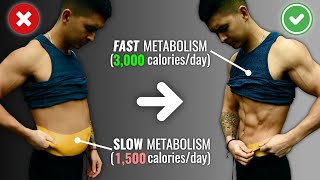
You might not be losing fat because your body burns fewer calories through daily movement when you diet. NEAT, the energy you burn standing and fidgeting, can vary by 100 to 800 calories a day between people and drops during calorie restriction. The fix: more walking, standing, and resistance training, not just more cardio or stricter dieting.
Here's Tim and here's Tom. Two identical twins who weigh the same amount of weight and both want to shed some of their holiday weight gain. Off to do this they both decide to hop on the exact same workout program and the exact same diet plan that requires them to eat at a 500 calorie deficit of 2000 calories which theoretically should enable them to both lose a pound a week. After eight weeks of doing this, Tim is right on target, down 8 pounds and considerably leaner. Tom on the other hand, hasn't lost any weight and has failed to see any progress despite following the exact same protocols as Tim. So what gives? Well, for all the Toms out there, no its not a slow metabolism and no its not a genetic curse. Instead its something a lot simpler and easier to fix. You see, although Tim and Tom ate the same amount of calories and performed the exact same workout program week after week, its what they then did outside of the gym that created this discrepancy. Let me explain. Tim arrives to work and always makes it a point to take the two flights of stairs every time he goes up to and down from his office. Tom on the other hand, is a little tired from the workout and prefers the elevator. During the workday, Tim works at his standing desk and paces around during his calls, whereas Tom prefers sitting at his desk. During break, Tim walks over to the nearest coffee shop to get coffee for Tom who stays desk bound. After their long day at work, Tim decides to do some housework and then walks over to pick up his takeout for dinner. Tom on the other hand, calls it a day and orders in his dinner while binging on Netflix. And this is exactly where the problem lies. All of the subtle additional movements that Tim made after his workout enabled him to stay at his calorie deficit to lose his goal of 1 pound per week. Whereas Tom burned significantly less calories throughout the day which which completely offset the calorie deficit he thought he created, hence why he didn't experience any fat loss. And this is the exact problem that most of those claiming to have a slow metabolism really have. It all boils down to something called non exercise activity thermogenesis or neat, which is just a fancy term to describe all the additional calories burned from movements that you do during the day that isn't exercise. So walking, cooking and even fidgeting for example. And as we saw earlier with Tim and Tom, this can easily equate to drastic differences in the calories you burn throughout the day and can as a result easily boost or hinder your fat loss efforts. In fact, as shown in a paper from the Journal of Clinical Investigation, even when subjects were fed the same diet and locked in the small respiratory chamber pictured here for 24 hours, there was still a difference in additional calories burned through NEAT that day, ranging from 100 to even up to 800 calories between subjects and the procedure. Problem for a lot of people is that research has shown that upon starting a diet, calories burned through NEAT tends to significantly decrease and continues to decrease further the longer you diet. For eventually this can reach a point where you're burning such few calories outside of the gym that you're no longer in a deficit despite eating less and training regularly, leaving you stuck at a plateau. Which is why, similar to Tim and Tom's scenario, there's been papers that have shown that even when a pair of identical twins were put on the exact same diet and exercise program for 90 days, one ended up losing over 25 pounds, whereas the other lost just 7 pounds due to their differences in need. So what can you do to prevent this from happening to you? Well first lets go through what not to do. Because the first thing that people do when they run into a plateau is they'll either increase their cardio in the gym a little more or they'll eat a little less. And although this is a viable solution, it only works up to a point and eventually can actually counteract your efforts. This is because recent studies have found that adding in additional cardio only increases your total daily energy expenditure up to a point after which it plateaus despite you doing more and more cardio. Which is simply because some peoples bodies will actually compensate by moving a lot less after their workout. And in fact, multiple papers have shown that sometimes people will even compensate with a reduction in activity after their workout to the point where they would actually burn more calories for movement if they didn't work out. Meaning that adding in additional cardio failed to help them burn more calories by the end of the day and actually provided the opposite effect. So while additional cardio may be helpful up to a point, it can very quickly start to counteract your fat loss efforts and you'd instead be much better off focusing on the hours that you spend outside of the gym instead. As for just eating less, again, although this is helpful up to a point in general for better adherence and maintenance of muscle mass, your goal should be to keep keep your calories as high as possible throughout your diet while still hitting your fat loss targets. Otherwise you'll quickly reach a point where your calories are just too low and not feasible to maintain. With that being said, though, there are some other viable options that have been shown to be effective solutions at increasing your needs, with the first and most effective solution simply being to make conscious efforts to move more outside side of your workout. In fact, research like this paper from the Journal of Obesity has shown that even in mostly sedentary individuals, those who are leaner still tend to stand and move more in general outside of the gym than those who are overweight, which enables them to burn more daily calories and maintain their lower levels of body fat. And although this may sound very difficult and time consuming to do, that really isn't the case at all, even if you don't live a very active lifestyle in general. And to showcase this, let's look at the results of a paper from the Journal of Clinical Nutrition which compared the caloric burn of eight different conditions. As you can see in the following graph, compared to sitting down motionless, which burns roughly 80 calories an hour, you can easily burn an additional 40 calories an hour by sitting and fidgeting, which just refers to incorporating subtle movements like toe tapping, stretching your legs and arms, or floating flipping through papers, for example. And you can increase this even further by an additional 30 calories an hour by instead standing and fidgeting, which again involves similar movements but can evolve pacing around the room, for example. And to put this data into perspective, let's go through a calculation of how many additional calories you could potentially burn by applying some of these tips over the course of your day. So you can accumulate two hours of standing while fidgeting instead of sitting sitting motionless at work or at home by using a standing desk and making an effort to periodically stretch and pace around the room during calls, for example, which alone will burn an additional 134 calories. Then you can accumulate two hours of extra walking instead of sitting throughout the day, by taking the stairs instead of the elevator, parking further away in a parking lot, taking a walk during your work breaks, taking your dog out for a walk and just walking more whenever you can fit it in during the day, as this can help you burn an additional 3, 310 calories per day, and this then amounts to a total of roughly 450 additional calories burned per day. And if we run a quick calculation on that, that amounts to almost an extra pound of fat loss per week, which over the course of the year would amount to almost 50 pounds of fat burned just by focusing on moving a little more outside of the gym. And on that note, I would also highly recommend that you track your steps and actually set a daily step goal for yourself to hit, as this will give you a much better indication of what your overall NEAT level are and a way to track it throughout your diet. But in addition to what I previously went through, some other things that you should be implementing and prioritizing throughout your diet are 1 diet breaks and 2 regular resistance training. First off, controlled and monitored diet breaks, something I've talked about in my past videos which Ill link down below, have been shown to help counteract the decrease in need that you typically experience with your diet and are something I'd highly recommend that you start implementing to help boost your fat loss in the long run. And secondly, as for resistance training, research has shown that a weight training workout appears to actually increase your NEAT levels for the rest of the day, which is in contrast to the reduction in NEAT that we typically see after cardio sessions, simply meaning that regularly performing weightlifting workouts throughout your diet is essential and should take priority over trying to perform a ton of extra cardio. But all in all you need to realize that although you may spend 30 minutes to an hour exercising, there's still 15 other waking hours during the day and its what you do during those hours that will make the most impact on your fat loss. Progress for a step by step program that puts all of the science together for you by showing you exactly how to both optimally train and structure your diet week after week to burn off fat and lean down as quickly as possible, just like several other members have successfully done with their built with science programs. Then simply head on over to builtwithscience.com and take the analysis quiz to discover which approach is best for you and your body. Anyways guys, I hope you enjoyed this one. Please don't forget to show your support by giving the video a like leaving a comment down below as to what you'd like to see me cover next, subscribing to the channel and turning on notifications for the channel as well as this all really does help me out. Thank you so much everyone for the continued support and I'll see you next time.










