What Happens To Your Body After Taking Creatine For 30 Days?
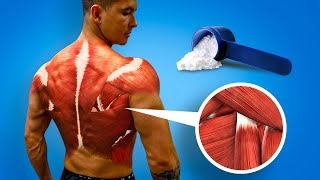
Creatine supplementation increases muscle creatine by about 30% over 30 days, with a loading phase reaching saturation in 7 days or gradual dosing in 2-3 weeks. Expect 1-3 lb weight gain from water retention, occasional stomach upset, and strength gains around 8% in trained lifters. Brain creatine rises roughly 10%, improving short-term memory especially in vegetarians.
Creatine has been consistently proven to make you look bigger, build muscle faster, improve your performance and even make you smarter. In fact, over 50% of professional power athletes, such as powerlifters, boxers and track and field athletes are reportedly using creatine for these reasons. Not to mention its rising popularity amongst high school lifters and athletes as well. But what exactly does creatine do to your body and where does it go? What should you expect to feel and how soon is it safe? And are there any side effects you should know about? How do you know if it's working or not? Today we'll cover all that by doing a deep dive into what to expect throughout your first 30 days of taking creatine. Now, before you even start taking creatine, it's important to understand what it does to the body and why it doesn't necessarily work for everyone. So creatine is a substance that we naturally produce and use up as an indirect energy source to power our muscles through high intensity activities such such as sprints or tough set of bench press. For this reason, we store most of our creatine in our muscles. But about 5% of creatine is actually stored in the brain and as we'll discuss later on, is why it's been heavily linked to both improvements and impairments in brain function. Now, although we have a baseline level of creatine in our muscles, supplementing with it can actually increase our baseline levels by about 30%. As a result, our muscles have more creatine to power them with, leading to more strength and muscle mass over time. But not everyone will experience the same increase in creatine levels. Approximately 20 to 30% of individuals naturally walk around with just about fully saturated muscle creatine levels. As a result, they experience little to no benefit from creatine supplementation. Other individuals, especially vegetarians, since creatine is found in small amounts in meat, have naturally lower levels of creatine and will experience a greater benefit from supplementation. So odds are you will experience some benefit from taking it. But even if you don't, that's not a bad thing. It just means that the gods have blessed you with top tier genetics. Now, as for what to expect in terms of what to feel side effects and how to tell if it's actually working. Let's dive into our 30 day timeline. So when you first start taking creatine, it takes time for your muscles to become fully saturated with that additional creatine, which although you will experience a few side effects throughout this period, you wont experience the performance benefits until full saturation, which we'll talk about later. As for how long this saturation process takes, it depends on how much creatine you take every day. As I've discussed in a past creatine video which ill link at the end of this one, there's two ways you can start taking creatine. You can do what's known as a loading phase where you take quite a bit of creatine every day to increase your stores as fast as possible and then decrease the dose to maintain the elevated levels. Using this method, it'll take about seven days to fully saturate your muscles and is when you can start experiencing some of its benefits. The other method is to just take a baseline dose of creatine every day to slowly increase your creatine levels over time, often taking about 23 weeks to reach full saturation. Both methods get you to the same end destination, but will differ in some of the side effects you may experience. For example, one of the side effects most people experience during the saturation phase is water retention and a small spike in their body weight. This is because when creatine is taken into a muscle cell, it also draws water into that cell. Although this may sound like a bad thing, it can actually make your muscles look and feel a lot fuller. As for how much initial weight gain to expect, research suggests anywhere from 1 to 3 pounds. But if you choose the loading phase, you'll see this initial weight spike during the first seven days of using creatine, whereas if you use the non loading phase, your weight will instead gradually increase over a period of two to three weeks until your muscles are fully saturated. Another often reported side effect throughout the saturation phase is stomach discomfort. If you experience this or you want to avoid experiencing it in the first place, there's a few things you can do. First off, research has shown that stomach discomfort is more likely to occur when larger amounts of creatine are taken all at once, such as with a loading phase. So if you're using the loading protocol split splitting up your creatine into multiple smaller doses throughout the day may help. If it doesn't, you may just want to stick with the non loaded protocol. In addition to this, you want to avoid taking creatine on an empty stomach or with caffeine, as both of those scenarios seem to increase the likelihood of an upset stomach. Lastly, sometimes discomfort is due to creatine being poorly dissolved by the body. To mitigate this, when you take your creatine you can try mixing it with hot water to get it fully dissolved and see if that helps. By the way guys, before we dive into the last side effect, I'm curious for those of you who have taken creatine, what side effects have you experienced? This next one it personally really took me by surprise but leave a comment below as im curious if there's anything I missed. Alright, so the last side effect you and your doctor should know about has to do with your creatinine levels. No, not creatine. Creatinine. Creatinine is a breakdown product of creatine. Since you're taking more creatine, your creatinine levels will also slightly increase. And since high creatinine levels can indicate impaired kidney function, this can be alarming to see on a blood test if you're not aware of it. However, creatine has been consistently proven to be a safe supplement for healthy individuals and your health professional should be aware of its effect on creatinine. But as with any blood test results, please consult with your health professional and follow their guidance. Alright, so our muscles are now locked and loaded with creatine. What happens now? Are you going to turn into the hulk overnight? Let's see what the science has to say. First off, your strength should start increasing across most of your movements. A Meta analysis reviewing 22 creatine studies found that on average, trained lifters can expect roughly an 8% boost in strength and 14% boost in number of reps performed. Less experienced lifters, however, seem to reap even larger benefits which with one study showing an average performance increase of 30% in untrained individuals. This could mean going from benching 100 pounds to 130 pounds as a result of creatine. That said, even just a slight increase in your strength or reps performed is a very solid return as far as supplements go and can lead to significantly greater muscle mass over time in addition to just improving performance. However, a study that surveyed 5052 NCAA athletes found that 81% of them reported faster recovery from their training as one of the benefits they noticed after taking creatine. So after you reach saturation, pay attention to how fast you recover between your workouts as you may notice an improvement. And lastly, a relatively new yet exciting area of creatine research has to do with its benefits on brain function. Believe it or not, your brain is one of the most metabolically active tissues in the body. It it is in constant need of energy and seems to rely heavily on creatine for that energy. In fact, when children are born with creatine deficiency in the brain, severe effects on cognitive function and development are often observed, but in healthy individuals, creatine supplementation can actually further increase brain creatine levels by up to 10%, which seems to have positive effects on how well the brain functions. Illustrating this is a recent systematic review that found creatine supplementation to consistently, consistently improve performance on short term memory and tests of intelligence, with the benefits becoming even more apparent under stress states such as sleep deprivation. And as we could have predicted based on what we talked about earlier, the subjects of these studies that experienced the most benefit were vegans and vegetarians. So just be aware of this potential benefit and see if you notice any difference after you reach peak saturation. So that should give you a very good idea as to what to expect once you start taking creatine. If you'd like to learn more about the finer details of how exactly does it take it to maximize its benefits, what type of creatine you should be using and how much of it, ill leave a link to a recent video I did that covers all of that in the description box down below and also at the end of the video that said guys, creatine or any supplement for that matter, its just icing on the cake. If you want to truly transform your body and see incredible results then you need to prioritize your training and your nutrition. And if you need help in these areas and are looking for a simple yet highly effective science based program you can trust that shows you exactly how to train and how to eat to transform your body as efficiently as possible and simply head on over to builtwithscience.com and take our analysis quiz to find the best program for you and your body. Anyways, that is it for today. You can check out this video to learn exactly how to take creatine to maximize its benefits or give this video a watch to see what other supplements are potentially worth investing in. Thanks so much and I'll see you next time.










