June 17th, 2024 Ultra Wealth = trader Psychology
Group coaching session led by Jerremy Newsome (Ultra Wealth, June 17, 2024) focused on trader psychology and building personalized trading rules. Participants (Julia, Jeremy, Eric Lee, Joe, Catherine, Steve, Jason and others) share their top five worst and best trading habits (e.g., rushing trades, FOMO, overanalysis, patience from swing trading, backtesting). Jerremy advises creating concrete, calendar-backed rules (e.g., "Willpower Wednesday", mandatory walk-aways, scheduled backtesting), picking a narrow focus/strategy for a period, practicing down-market scenarios via backtesting before managing large retirement accounts, and keeping routines that support calm intuition. Practical examples and brief trade mentions (Tesla, Tempus AI, TTO Biosystems) appear; participants ask about when to quit jobs and consolidate managed accounts.
Chapters
Today's gonna be a lot of fun. Today will be nice because it's going to be about focusing on all of us that are here and just going through really, this week, maybe, maybe a little bit of next week as well. I can assure all of you that as we get closer to the end, it's going to feel like there'll be a point where you're like, wow, I. I haven't learned anything. This is so. No, right. Just because I. I always feel that way every time anything ends. It's like, I just want to keep doing it because this has really, really been a beautiful experience. But one of the things I definitely want to touch on this week and, and our WhatsApp group and our voice memos and our thoughts and just our awareness definitely and certainly is trader psychology. Just so that we all have the elements and the components of where we know we need to progress on and what we need to. What we need to focus on. A lot of times, just writing them out and seeing them in front of us really is useful. And then, of course, having. And knowing how to combat those. And that's something that we're going to be talking about today. So what we're going to do is pretty easy. Just kind of hop into some of the screenshots that you all sent for your five worst and five best trading habits. But I will pause here for a moment for those who are here live. How did it feel thinking through your good trading habits? Did it feel kind of nice? You're like, I'm not awful.
Felt good, but it felt harder to come up with those versus the bad habits?
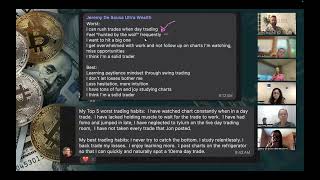
Sure, yeah. Yeah, totally. So it felt good, but it was harder to think of them. Yep. And. And it's also nice to see that some of you, some of you have the exact same ones and some of you have totally different ones. So that, that's, that's the other thing, right? With the personalities, it's. You can start seeing some similarities, but you can start seeing some massive, stark differences. And really, I think ultimately something that I want all of you to be aware of is as we kind of go through these this week and a little bit of next week, the ultimate goal is for you and for us and for all of us as traders to start understanding where you're at on the scope of the trading journey and start building some rules and some plans and some guidelines around your personality. Right. Start outlining how you can battle or overcome or tweak or adjust the bad trading habits. Start coming up with either affirmations or beliefs or written testaments or anything of that nature for your bad. And also, you know, work on celebrating your good and figure out how to blend. So we're gonna work on a little bit of that together as well. All right, so Jeremy's up first. Worst I, I rush trades when day trading feel hunted by the wolf. Not totally sure what that meant, but I think maybe, maybe he was talking about market makers or stop loss makers. I'm not entirely sure. I have a general idea, but I'll see if he comes on today. We'll get clarification. But this one, this one's obviously always one of mine, right? Want to hit that big one where you just take that one trade and then you're like, all right, sweet. I'm good now. I've made my $43 million and now I'm, I, I'm, I'm set to coast. That's always one of mine for sure. I get overwhelmed with work and not follow up on charts that I'm watching. So I miss opportunities. And I think I'm a solid trader, which I guess he's putting that in his worst, his worst category because that means that he, his brain thinks he's good, so he doesn't do some of the work that requires you to stay good. Maybe. Now these, so some of these rules, if we're looking through them or, sorry, some of these attributes, like if we're going to create rules around these attributes. Again, just thinking through for each and for each of us, anytime we have, here's what we did wrong, here's what we do good in our trading plan. Because really that's what I want all of us to finish by the end of June is if you don't have one. Just this written out plan with your rules that are very specific to you. So here's, here's Jeremy right now. He just logged on. So we get to ask him. There he is, the bearded Jerem. All right, so Jeremy, what does hunt? Hunted by the wolf. Tell me what that means.
It's can be a state of scarcity, but all. But maybe it's like a partly a man thing, like I need to make sure I have enough, like provide for my family. And it's, it's sort of like a drive to do more, but at the same time, it's, it's like you're never at rest.
Okay, yeah, that's fair. That's fair. All right. So again, going through these, like, ultimately I do want all of us to just have, have some rules, have some plans. Have some things really baked in. And one of those. The most important rules, I think, are generally a blend to some degree of what you're really good at and what you. What you feel potentially are your negative attributes. And for a great example, so this one for Jeremy, right, that I'm always going, I'm always on. I'm always thinking. I'm always in the mindset of go, go, go, go, go, go, go. He creates a rule where, all right, there's going to be two days every month where I sit in the. I sit in front of the computer and I. I take no trades, not a single trade. And I pre. Plan what days those are. So that when they're. When the market's coming, the market's there. I'm. I'm from the screen. I did that for three years. It was called. Trying to think of what was the name of it? Will Power Wednesday. So on Wednesday, I'd pick a Wednesday of the month and just sit there in front of the screen and not take a trade. I'll take a swing trade. I'll take a day trade. But I had to be in front of the computer. So again, just something to think about. If you, if you feel like you take too many trades or you're constantly, like you're just addicted to the market, it's probably a good one to just show yourself that you can regain control. And then to counteract that, I had Wild Man Wednesdays where I lowered my risk unit to like 35 bucks and I just took as many trades as I wanted. So both were. Both were fun. But I learned more from Willpower Wednesday than Wild Man Wednesday, for sure. Another one could be where you take days off, right? For entrepreneurs, I know that's always hard, Jeremy, but it's like you schedule days off, you schedule a phone fast, or you schedule a time in a park. One of the. And you've heard me say this a few times, like, one of the most revolutionary moments of my life ever was on a Tuesday. I went to the park from 6am to 6pm no phone, just a notebook and a pen. That was it. And I sat in a park for 12 hours on a weekday. And what that does, family is it shows you what time freedom feels like. Because when you have financial freedom, the ultimate goal for all of us is to do what have time freedom, right? Be able to choose what you do when you want to do it. But the truth is, very, very few people ever actually, actually, actually experience time freedom. So that can be an aspect of all of us, whereas like we start baking things into our. Into our plan, and it teaches you and it reminds you that, yes, you're going to miss out on opportunities. Right? There's nothing you can do about it. Recognize them, be thankful, and see if you can shift your mentality from a fear to a happiness for others. Right? A happiness that someone else made that money, a happiness that they. They took those trades. I think that's really, really powerful. So just be aware of that. These are. The goal, again, of all this is for you to start outlining actual, very, very specific rules in your trading plan or aspects of your life that you can adjust and tweak, things that you can add in and implement into your living routine, into your daily routine or your monthly routine, or your just your life, your family's life, where you guys can make adjustments so you can become one of the best traders on Earth. That's really what I want. All right. Best learning patience through swing trading. Love that. Don't let losses bother me. That's amazing. Awesome. Less hesitation, more intuition. Big, big fan of that. I have tons of fun enjoying studying charts. I think I'm a solid trader. Yeah. So it's a good one and a bad one. I agree. Yeah, no, those are. Those are beautiful, man. And I. I want all of us to know if there's. If there's negatives, there needs to be positives. And you definitely want to lean in to. You're like, okay, cool. I have the ability to lean into my intuition. I have said a few times, it's like, I need to practice that more. But that could also be something that you can practice more Meaning. If you see a course online about intuition, how to be better at intuitive abilities. Right. Or how to be better at just feeling things, those can be really, really cool things for you to explore personally. Because ultimately, man, the a blend of wanting to hit the big one and more intuition, it's probably going to be a blend of those two. And if it's okay to want to hit a really, really big trade, and you definitely can, you definitely will. But again, putting those practices into your world. Right? Understanding. All right. If you are really good at intuition, now, can you become better? And how. And this one and this one are going to go really closely together because intuition is also a feeling of calmness, of rest, and of peace. Right? You don't get intuition during stress. You get intuition when you're just really at one or in flow with your body and with yourself. And so putting yourself in that state more frequently or as often as you Feel like you can probably is going to be really, really helpful for you. That's another reason why I say women are better traders, because women generally have intuition better than men. Right? That motherly intuition, it's just kind of natural. But women intuition just is because they know what emotions are and they listen to themselves. Right? Us dudes, we don't really know what an emotion is generally. So we got, we got to learn those things over and over. All right. Awesome. I love those. That list. My man. All right, Eric. Okay, now this is. This has come up on a couple of them. But watching cart, watching charts constantly when in a day trade, I've lacked holding muscle to wait for the trade to work. I've had FOMO and jumped in late. I have neglected to turn on the live day trading room and I have not taken every trade that John posted. Now, what's cool about this one, Eric, is these are the exact same that so many other people are going to face. Right? So you're not alone. Many, many other people have these very, very similar feelings that go through their. The course through their body. When trading. This one specifically right here, I have watched charts constantly went in a day trade. Do you think it would be pretty easy to create a rule around that that wouldn't be hard to follow. That wouldn't be a detriment to your trading, but would also allow you to slowly get better at that? Oh, yeah, yeah.
Like walking away, mandatory walk away.
Yeah, but just for a little bit. Right? Same thing with the Joe. So Joe's. She has one of hers in here like this, but it's like, exactly. Just make a mandatory, like, okay, cool, 10 minutes, 15 minutes, 5 minutes. Something where you can. You're like, all right, I have a stopwatch. I'm going to be in a day trade. And again, to allow yourself peace of mind to build that muscle a little bit is for me and what I. What I've done, I guess kind of is you go, all right, I'm g. Walk away for five minutes after I've moved my stop. Maybe that calms your anxiety a little bit like that, but that's fine. It's okay. And then five minutes will turn to 10 eventually because you've done it so much. And then 10 will turn into 30. And then eventually you can just get into a day trade without even being in front of your computer and just set the day trade up and then just come back and check it out, you know, H. And just look at it. And what it does, team, is it's going to and again, for a lot of us, for a lot of my newer traders, it'll be easier as you've been trading longer and for Joe, who is one of the more seasoned traders in the group, but for. For a lot of us, as we do this as a profession, your brain's going to constantly think, I need money, I need money, I need money. I need to make money now. Like, I can't wait until tomorrow. And so it's really, really good to develop that, that, that muscle of just simply, essentially not caring and just taking trades and being okay with outcomes and not stressing about it. Because when you're trading for a living and that's one of your bigger sources of income, and yes, you have other money, but you're like, this is my main thing. Your brain's going to trick you to think that you have to take a trade every day, when in reality, not only do you not have to take a trade every day, you probably shouldn't, because there's not gonna be a really good trade every day. So you just want to wait and wait and wait and that the girl, a really good trade might be two weeks of waiting, but you take that one good trade, make $20,000, it's like, is it worth it to just wait those two weeks? Probably, I think so. I generally think so. So, yeah, creating some rules, man, around, around that again, just very, very adaptable rules that can be tweaked and adjusted, but that, you know, that you have the ability of actually hitting that, you know, you're not going to breaking those rules. Same thing with, like, having FOMO and jumping in late. I would love for you to define your lateness. Like, what is lateness to you? You know, because feeling like a lot of trainers when they say, oh, I have fomo, it's hard for them to define fomo and it's hard for them to have a quantitative. Like, did you feel it? Yes or no? Because a lot of people will lie to themselves. Like, I don't, I don't. I'm not feeling. I'm not feeling fomo. And, you know, but it's very. So anyway, trying to quantitatively determine what is late is. Can help a lot of us as traders. Like, if you feel like what if you see something, if you see how it's moved, What I, what I do is I write the. The plan. And the rule that helped me on this one family is I wrote down extended, because I think I can look at a chart and say, is this extended? And that's what helped me Is because that. That became something I could qualify and quantify. Like if. If I asked Eric, pull up a trade. Show me this chart. Was it extended? Can say yes or no, but the jumping in late or having fomo, those generally often times can sometimes be left up to chance. And you don't really know if you actually follow a rule or not based on those.
Yeah.
I never try to catch the bottom. That's a great, great trading habit. You do study relentlessly. You're a monster. So I love that. The good news is, Eric, and I will say this is just at one point in your trading career. Probably. Probably a year in, year and a half in, you won't have to study as much. So you're gonna get even more of your time back. Right? You can study for sure, but you have to study as much because now it's like, all right, you're. You're there. You got your training in now. It's like now, like, you can. You can build a base. So it's kind of like an ironman training. I know it sounds weird. I always relate everything to an ironman. But it's like the first one is the hardest. You got to train the most. But once you've done a race, you complete it. You know what the training routine is? Yes, you can still train, but you're not going to have to. The training will be even easier or it'll be simpler, or you won't have to go as hard or as challenging because you kind of know what it is. And you've already built up a base. Right. You don't have to kill yourself essentially for your training. Yeah, but you do. You do study like an absolute monster. And I love it back. Trading losses. Probably one of my favorite things to do in trading. Yeah. I post charts on the refrigerator so I can quickly and naturally spot a 10 EMA trade. Yes, dude. Come on. That's what I'm talking about. So you're telling me that you're at the refrigerator as much as I am?
Oh, yeah.
Yeah.
I hope that's where I get the water.
Yeah, dude, I open that thing too much, man. Always look in the refrigerator. Yeah, that's a beautiful one. Love that. So what. What this set, what this. These skill set say to me is that you love studying, you love analyzing, you love reading. If you need to walk away from a chart, go analyze this. Go analyze a trade while the computer's closed. You know, go, all right, I'm go spend 10 minutes or maybe even have two computers. Right? And go, all right. I'm going to leave my trading computer and then I'm going go to the other computer. I'm going to go back, trade the trade that I'm in right now to see if I would take it the same way. There's. There's so many aspects that you can do here. But again, each of us, at some stage, ladies and gentlemen, we do need to know our weaknesses in trading and we need to build some type of guard rail around those. Right? So that's going to be the big component of this great stuff, man. Thanks for sharing. All right, now, this one's really easy for Jason. These are some. These are some really easy rules. I mean, look. Look at these two. Mr. Chase, now, again, thanks for being brave and sharing with us, but every one of us has done this at some point. And I have disabled. Like, I don't. I can't even place trades for my phone because, man, I'm already addicted to my phone. So that's something I'm working on in general. But trading and driving and trading before bed before going to sleep, just because. Yes, dude. So those are. We could all agree, those are two that are probably pretty easy to create some rules around. Right? Family. Yeah. So we've all done it. And we all know that those trades really aren't going to be that great. And even if they are, even if they do make money, they're probably not ultimately that good for you, especially trading while driving. It's probably not that great. But we've all done it. We've all looked at our phones. You've looked at your phones on donor stoplight. Jeremy, don't lie to me. You get to that red light, pull up, train view. So now what's fun is like a lot of us, Jason, like, his worst quality was not having patience, and his best quality was having patience. What's. What's fun about that? When we've kind of like, all right, I really do have this, but I really don't have this. Is there's times when you do and there's times when you don't. And that needs to be, again, some element of. Can you create a rule? Can you think long and hard about how to have a trading rule designed and organized that can help sustain your, again, what you're good at and what you're not good at that. That connects to your life? So what that, what that means for me would be, can there be days where, you know you don't have any patience? Can there be days that you know for sure you're stressed and anxious and. Or there's been so much that's just piling up, so many decisions, choices, bills, problems, challenges that, you know, you just shouldn't trade. And I think even for my dudes out there, we could probably assume that we can try to pick some days and create some rules that say, if I'm having a fight with my lady, if a huge random bill just came into my life that I don't want, if my sleep schedule sucks, if whatever, maybe I shouldn't be taking trades today or this week. And the answer is, yeah, you definitely can come up with those. We can all come up with those because we want. Again, back to the, you know, trading the driving thing. I think that we all want to be professionals, like big, big, big time professionals. And in order to be really big time professionals, we got to treat it like it. And that's why the professionals that we admire on tv, they make so much money is because they are professionals. Where they need to be, right when they can't, when the lights are on and the camera's on and everyone's watching, they can be professionals. Meaning start creating your football field, your arena, your basketball court. Like, where do you go to be a professional? And know that when you're there, you're designing your day, your week, your routine, you're feeling to be on for that period of time. And just like a regular sports game, if that person is, you know, sick or injured, right, they're not going to be playing. They're going to get taken out, even if it's the smallest thing ever, because they're at such a high level of their, of their profession that, like an elbow strain or an ankle strain, right, for two weeks. So I go, I need to ice this thing or, or rehab it, because those tiny, tiny, tiny little adjustments make a lot of, make a lot of impact when you're playing the game at the level that we are. I like that you said this one's rare, but after loss, I sometimes will aggressively look for another trade to make my money back on. I usually walk away, do something else, but sometimes, dot, dot, dot. Yeah, I think we've been there. And then holding through big news events. Yeah, that one can be. That one can be devastating. That one can be really, really tough. But again, the great news is, Jason, with all of us, we can probably see that there's gonna be some really, really obvious rules that we can create for ourselves and for our trading to be a really, really big time professional. All right, so best backtrain. My two favorite forex pairs over and over and over again, allowing the time for my swing trades to work. I love that. It's awesome. Following my plan 99% of the time. Incredible. All it's all about, like, again, what we can see here. And you'll notice that he says later that he's a. He's a 29 winning trades in a row right now. So when you have. When you have 29 winning trades in a row, that generally means what, you're following your plan. Right. You're being really, really specific. You're being really pinpoint on your overall plan outside of the above. Worse, I've learned pretty much every lesson there is to learn, and I value those lessons. If there's a bad trading habit out there, I've done it. Never give up after blowing up multiple accounts. Yes. Never give up family. There is a better version of you on the other side of your losses, on the other side of fear. I would love for you not to blow up your accounts. So do your best not to. And obviously, it can depend on how much money you're talking about. Like, but $10,000, whatever, that's overcomerable. But you don't want to blow out a big boy account. All right. Eric says, I got one more bad habit he had. He had to throw another one in there. Going through all the tickers at the end of the day and seeing all the 10 that I missed. Oh, man, there's so many. So, again, what's cool is as you get to shape your trading routine again, instead of using the word missed, which it's a great word. I use it all the time because it's true. But just to help you slowly practice getting over your fomo, Eric, you can go look at all the other trades that someone else took. So not trades that you missed, but that someone else took and you like, oh, man, I bet Joe took this trade or Catherine took this trade or Jeremy took the trade. Just go through all these, and just every time you see a great tena, instead of, oh, man, I missed it, go through and look at it. Someone took that trade. And just be really happy for them.
Yeah.
And. And what I love to do is, you know, someone took it. Go try to find someone that doesn't know what it is and show them the trade opportunity. Go. Man, you could have taken this type of trade and get other people excited about the markets. Right? Sure. You got some buddies out there that need to learn how to do this. Yeah. So you find a really good 10 a trade, and like, wow, this is so easy. Look at this amazing setup and send it to a friend. Like, dude, you need to learn how to do this. Like, this trade was a. Was $18,000 or whatever it was, right? It's like you could have done this and this would have taken 18 minutes, dude. Yeah. Awesome. All right, Joe is on the next slide. John, number one, worst trading habit, deploying too many strategies. Took me way too long to figure that one out. Yeah, that was a big one. So when he says. When he says strategies. Right. Just. That's most I want all of us to remember. And again, a lot of us are doing well in our trading. But if you're not making good money yet, I want you to realize that making really good money is going to be about focusing so strictly that you know if you're doing something or not, meaning you can pull it up and go up. 2011, 2012, I traded one stock, Apple. That was it. And really, for the last two and a half to three years, 95 of my day trades are on Tesla. So I can trade other things, but my day trades is. It's almost all Tesla. So it's like I'm. I don't really have to look around for other things, so I'm really able. I'm very easily able to pull up a chart and go, did I do the one thing I'm supposed to do today? And so a strategy can be a time frame. It can be a ticker, it can be a setup, it can be an entry. It. You can be. You could be, all right, I sell puts until I get put to shares. And I get put the shares. I turn around, start selling covered calls. That's a strategy. You can have your strategies baked in where you're like, this is all I do. I'm not going to do 47 different things. I know there's a lot of strategies out there. Here's the ones that I like that I fully understand, that I totally get fully enough, completely. Like, I don't even have to worry about it. And I'm going to focus on this strategy, knowing there's 400,000 other strategies. I'm gonna focus on this one that I really, really, really, really get understand. And it just makes perfect sense to me. And I'm gonna master this until I make money. That's it. I'm gonna give myself two to three years or two to three months, or two to three weeks or two to three days. Right. I'm just gonna do this one thing. Well, that's it. All right. So the Julia is giving credit to me somehow when she's doing all the work. All right, so the five bests. And you know what? Thanks. So I. Thanks for putting your best first. That was fun. Most people put their worst first and then their best. So that was something I noticed, ironically enough, probably because that's the way I said it. I was like, you put your five worst and your five best. But anyway, I like the way you flipped it. That was cool. All right, so I try to get. I try to get into the zone before I trade. I'm telling you, family, that's such a underlooked one. Like, it's really easy just to have, like, a written plan that says, I need to do a meditation. I need to do some type of breath work. I need to do some type of awareness shift. I need to do something before I take a trade. That's a big one. That's one that I'm sure I can continue to get better at, too. It's just really being in the zone. I recognize when I'm not in the zone. Awesome. And I walk away from trading for that day or for that week. That's brilliant. I take the time to evaluate the trade before I take it, even if it means missing the trade. I don't trade blindly. Love that. I don't trade if I'm busy with other stuff or not focus, which kind of goes back to the zone thing. And I don't chase a trade or missing additional profits. That's. That's perfect. Those are really good trading habits to have. Totally agree.
Yeah. And really, I was. The reason I gave you credit was because you. In the. In the last class we took you. You taught us how to get in the zone and, you know, the meditation and all of that. And all of these have stemmed from. From that. So. Yes. Courtesy, my work and your guidance.
Oh, thank you. Thank you, thank you. Yeah. I mean, absolutely. Just. Just being. I tell you, I. I love it. Just be being in the zone. Yes.
And all these were my worst habits until I took that class. And they. And now I have no trouble with that.
Yeah. Sweets, I love that. I love that. I love that. Okay, this is. These are good right here. I don't write my trades for evaluation. I don't have a good system for improving. And what's amazing, too, is because you are. You are a system monster. Right? You. You are an organized maniac. So that's gonna be a fun thing for you to tweak and adjust and just kind of learn how to keep track of. And then this one. Yep. Same thing is like, I Think this could be something that. I guess my main question is you have one written. You just don't think it's good. And how would you define good or why you not feel it's good? Because you have something kind of written down.
Yeah. But it's. It doesn't have enough detail and I don't know what that detail needs to be. So I haven't actually written it because I don't know what to put in it. And then what happens is to think about what to put in it. I have to slow down, which means I've just stopped trading. And I enjoy that so much that I just keep. I'm stuck in my own loop and I know it and I'm still like, okay, I'll make time for it.
Sounds right. Yeah. I, I would say that a component of something like that probably would just be putting on the calendar nice and far out in advance. Maybe, maybe a weekend in July, you know, where you're like, okay, cool. This, this weekend, July, on a Saturday morning for six hours. I'm just going to get up and really finalize this thing so that I got it so that I can almost, you know, memorize it. Like, it's written down. It's on my desk. It was right in front of me. It's printed out. Yeah. Just come up with the time to do that. That's okay. It. But that's really what helps me, is just putting it nice and far out in advance so that I can continue to think about it as I'm approaching that day. Because it's really a big decision for us as traders. Right. To write something down. Because a lot of times when we write it down, it becomes a little bit more concrete. But that's the thing is I want everyone to know that that same level of fear that you might have of writing your plan, it's the same level of fear that other individuals might have about just writing out their goals or their dreams or their hopes or their wishes. It's the same subconscious fear of, once it's written, I have to start committing to it. And the answer is yes, we do have to start working on committing to it once it's written down. But in the same level of, you can always make alterations to anything, be obsessed with the process, and the outcome will happen regardless. So I think you could definitely find a way to crush that. I love that you do. I love that you enjoy trading so much. That makes. That makes your job as a trader really easy. And then back trading, hey, again, same thing. You just put on the calendar, start going out till July and then find an hour a week and just put repeat and go. Okay, cool. This is what I'm going to listen to. I'm going watch or I'm going to rewatch this recording or I'm going to watch this video. This is my, my nightly or my midday routine where I'm gonna spend some time back trading. I'm gonna host a class, I'm gonna have a, I'm gonna go through a recording or a class. Let's take the afternoon swing trading room for example. Right. The afternoon swing training room, generally an hour ish long. But if you are watching on YouTube when you click 1.5x right, it takes 30 minutes or if it's 40 minutes, it takes 20 minutes. So you can speed up the process a little bit of the afternoon room, still listen to it, still see it's on one monitor. But you carve out that hour for after the afternoon room is done. You go and back trade. And so it just can kind of be one of those things that anything that we end up doing, we just start adding on some components. And again the fun part is that would really help and will help all of us. It's just scheduling things out nice and far in the future. So it's really good to see. And again, I'm sure all of us can know and understand that there's a lot of these components here. A lot of these components are part of us as traders. Like all of us have dealt with something like this. Okay, my girl Katherine. I overthink and hesitate. I analyze too much and don't take enough action. I hold for too long. I suffer from negative selft talk. I don't have a clear exit strategy. So this is similar to Joe when she mentioned that she has her negative self talk. And what's, what's beautiful about that is so many people are going to suffer from that. And some people might not think it's one of their worst attributes of a trader. They might just know that it's there. But a lot of these, and the good news is a lot of these are pretty easy to overcome because when we start knowing what we need to focus on and we can start tweaking and adjusting, eventually you'll start shifting your bad habits and there'll be another, there'll be other ones that will spring up because you've nailed these so much. Because some of them, some of the ones that we can start practicing that would benefit you tremendously is just going to be this one in general, right? Suffering from negative selft talk. When trades go against me just throughout your day, start practicing not saying negative things. By the way, I, I try to do it every day. I still fail, just FYI. But I really do try, really try to just positive talk to myself. Hey man, great try. Rather than just beating yourself up. Because we would all agree that if we talked to anyone in our lives the way that we talk to ourselves, we wouldn't have a lot of friends, we wouldn't have a lot of people in our lives that loved us. So be, be a little bit more gentle to ourselves for sure. And that component, believe it or not, the just the awareness of how, how nice and kind we are to ourselves, that component will still eventually carry over into overthinking because then you have the confidence. Because overthinking and overanalyzing stems from lack of confidence, not lack of knowledge. This will hit some of you in a different way. But the, the, the most enjoyable and preferred way for a smart person to procrastinate is the study. And most of us, not, not all of us, I'm saying most of us will probably to some degree relatively quickly kind of know certain things. And yes, we can definitely learn more about trading and we can become better at certain strategies. But at some point you're going to get to the point where like okay, you know what a hammer is, you know what a 10 EMA is, you know what moving averages are, right? You're good. It's like you, you know what those are like. You don't have to do anything else. Like you can, you could just trade hammer tinny may candles for the next six months and probably do pretty well if the trade is there, if the setup is there. So yeah, there's definitely a level of confidence where yes, you do have to know certain things for sure to feel more confident. But over analysis and negative self talk, both of those will be cured if you go, all right, cool. I know that this problem exists. I'm going to work on it. I'm gonna start being just really, really, really, really, really nice to myself going forward and I'm gonna practice more positive self talk. That's all. It's just a really good one. She's gonna be a good part of your rule, just a good part of your day, good part of your life. I do love this about you. How how much you love to learn and study makes me really happy. But you're just a monster at it. Anyway, I'm able to follow a trading strategy perfectly when back trading. That's awesome, right? That's really cool. And that one's gonna. That one's gonna stem really well to having a clear exit strategy. Because really, I think this kind of goes back to. Holding too long, right? Where you're like, I just. I just hold for. I hold forever. I'm. I'm in for a bit. Obviously, both of these are the same. Right. And going back in time again, as you're back trading, continue to come up with, okay, here is an exit strategy that I like, that I understand, that I enjoy. That's also fast. You can have your long term. I'm holding forever. I'm going to be in this position forever. I'm never going to sell. You can definitely have those trades in those positions for sure. But ultimately, a lot of traders, we do want to make money. We will. We want to make cash flow. So there's gonna be some trades that we're gonna have to hold longer. Absolutely. But can we start practicing just shorter term, quicker trades where you're like, all right, here's my exit. Here's my plan. What direction is it? Is it bullish? Is it bearish? And just start coming up with something that you can easily, easily repeat extremely.
Often.
Where it's this, almost the exact same thing every single time. Because having a clear exit strategy, it is going to be important as a trader. And the beautiful truth is, at some point, you just got to pick one. Just gotta go, okay, cool, this is what I'm do. And then pick it. And then just stick to that for a while and know that it will adjust and it will tweak and that it will. It'll morph as time progresses. So know that now and realize that you're not going to get perfection early on in your trading. But just be aware that once you know it, you can go back, trade it, since that's one of your best attributes of a trader. Fantastic. Then you just go practice that a little bit more. And then. Yeah, right here, look at this one. I'm aware of what's been holding me back, and I'm working on it, so good. Awareness is key, Catherine. Awareness is key. All right, Joe. Not walking away, watching the trade, forgetting to look at other time frames, feeling FOMO negative self talk. Not enough back trading, and then top five. I wait for my best setups. I back trade winners to reinforce what worked. Back trade losers to learn what didn't. Setting alerts, which is awesome. And working hard to improve. Yeah. I mean, you've been in every single class all year. I mean, you are everyone Would agree you're the epitome of hard work. So the goal, the cool news again about these is it's going to be really easy to just come up with, okay, here's some things that I can do. Obviously, we're always going to have things that we work on. We know that every single person here. Same thing I said with Catherine, right? Just more positivity in that world to ourselves is always, is always a bonus. There's very rarely a time where it's a bad idea to talk to yourself positively. So that could be kind of a challenge to not do it more often. Again, same thing with walking away on a trade. Just come up with a nice little all right, sweet, I'm in this trade. I'm in a day trade. I'm not going to be here for five minutes. So you can start checking that box. You can feel like, all right, sweet, I did that. Good job. Walked away for five minutes. Awesome. Again, you could easily, you could. I mean, again, ladies, and my ladies generally just suffer from this more than men anyway. It's just the negative selft talk. Men do it also, for sure. But since women think, I think, was it 40 more thought, 40 times more thoughts in a day than men do. If, if women just think more thoughts, then by just the nature of more thoughts, you'll have more negative thoughts. Right? Because you just have more thoughts. Right. Men have like 14 thoughts a day. I'm hungry. So we go to the refrigerator like that, and now they would have a thought like an hour, and then we're like, I'm hungry again. Right. But really, that can be a thing that we write into our plan. We can have that part of our rules where it says, okay, I am going to be in a positive, happy, well framed state of mind. I'm going to be in a joyful place before I take a trade. And regardless of the outcome of the trade, I'm gonna be, I'm gonna speak positivity and light into myself. Like, that can be a rule that can easily be a step in your did I do this or not today? And just like those daily calendar reminder things that we put on our, on our desk, it can just be a part of our practice. Because if you can take anything away from becoming a better trader, if you just end up being a nicer person to yourself and make the exact same amount of money, you're just going to be happier.
And.
Who doesn't want to be happier? So love those. And I do love the fact that you wait for your setups. The Ones that you like, the ones that you enjoy. You're like, all right, cool. I see it. I see exactly where I'm going to take this trade. I know exactly what I'm going to do and why. I love that. And, yeah, not enough back trading. I mean, I think a lot of people probably feel that they don't do that enough because we always want to do it more. Because we're all addicted to the charts, right? Every single one of us. Like, we just. We just love this stuff so much. So, again, the only thing is you can just put that into a calendar reminder, ultimately, and eventually schedule it out, make it part of your day. Just like all the other things that we do. Most of the things that we do are routine based, right? Humans are routine animals. So if we go to work, we brush our. We brush our teeth with the same hand at the same time of the day. So if you want a really, really fun thing to do, just start finding ways to shift tiny routines in your life to. To tell your brain that it's possible to make new routines. I give you all a random one, and you can ask my wife it. She kind of drives her crazy. But I. I sleep on different sides of the bed in different directions intentionally. I sleep upside down sometimes, or I sleep on the total different side of the bed just whenever, just to tell my brain that I'm in control to do whatever I want to do. Right? We. We can create and build our own routines. Sometimes I brush my teeth with my left hand versus my right hand just. Just to show my. And some of you probably do that. Coffee cups. Try different coffee cups, different brands of coffee. Go to different store. Start finding ways to change some of your routines and shift some of your routines. Because what it'll do is it will remind your body and your brain that you can make whatever routine that you want. You can turn anything into a routine. Okay, so the back trading thing is just like you can come up with, hey, cool. I'm gonna pick a random day of the month where I'm doing six hours today. And, you know, just gonna schedule it every month. I'm gonna pick one day a month where I do six hours of back trading. Wake up at six, be done at noon. So that was pretty easy, Steve. This is a fun one, Steve. Number one, without a doubt, not doing enough work after hours back trading and looking at charts to plan the next trade. All right, I know you're not here, Steve, to defend yourself on this one, I would say I'm sure you do a lot already. Right. We, as natural humans, always feel like we're not doing enough. So that's quite normal. But I can also say when I read this, it, it reads as if you don't have a lot of time or you don't feel like you have a lot of time. And so figuring out ways to kind of put you and put your career and put this at a forefront in your life will be not only a fun challenge, but just something for you and me to work on. And I'm happy to work, work with you through that because ultimately it's not even a. It's not, it's not truly what time is. It just means that it comes down to scheduling and priorities because, like, we obviously all have the same amount of time. And I know you're a huge family guy, so you're spending tons and tons of time with your family. Well, we all want to do that. We all benefit and love to spend more time with our family. But then it just comes down to the components of, okay, how can I do everything? One of my favorite sayings, because it messes with my brain. You've all heard me say it, but I try to say this every day and anytime I say it, it just, it upsets the whole being of my body because I've heard the exact opposite all the time. And I have to be really, I really, I really, really work hard on what I say in front of my children. But this saying is, you can have everything that you want all of the time, always. You can have everything that you want all of the time, always. And so when Jason is throwing a two year old tantrum because he's not eating a cookie at 10pm at night, I get to go, all right, what can I say to him? Because I literally say, you can have everything that you want all the time. Right? So I have to kind of retrain my brain. Like, all right, what do I say to a 2 year old who's throwing a tantrum at 10pm because I'm like getting cookie. There are. And I'll, I try to sit down and think about it where I'm like, Jason, there are some times where it's appropriate not to have things. Sometimes that's the best I can come up with was like, oh, it's kind of true. I guess it's like there are probably are sometimes where it's not the absolute best time to have this exact thing right now. And I want to just be really, really cognizant of the things I say. Because what's, what's Very popular for a parent who's sleep deprived and save their kids. Like, you can't have everything that you want. I mean, well, I mean, so there. Right. There's like this disparity there. So saying all that to say for any of us who feel like we're busy and we have so much going on, we have the kids, we have the, the spouse, and we have the books and we have everything we need to study and all the back trading and all the money and all the bills, and you have friends and then there's the dog and then there's the recycling. Just comes down to scheduling it. And what is it you're really telling yourself? Because ultimately, ultimately we all have tons and tons and tons of time. And when you say that we don't have time, you're going to. Your body subconsciously will have a hard time seeing all the time that you do have. And, or you might. There's always a chance we might be wasting time. Who knows? Okay. Too many strategies, too many ideas, never settle on one. End up not trading. That's a great one, Steve. I love that. And again, that we. We've seen that before. And some of our other members here where, ladies and gentlemen, again, the best diagnosis for that is just to give yourself a period of time where you say, this is what I'm doing. This is it. Because I want you to make money. I don't want you to know things. Right? Write that down. I don't want you to know things. I want you to make money. Never sign up for the class. If I ever release a class that I never would. But here's everything that I know. Don't sign up for that class. That's a dumb class because that's a lot of trading. And again, I learned it because I thought I needed to know it. Most of the things I know, I can learn anything if I really care about it. If I like something, I'm gonna learn it. If I really enjoy whatever the component is, I'll learn it very quickly. Biochemistry? Probably not. But if I, if I truly love something, I will learn it. And I think we're all probably like that. So my first four years, and it was a lot easier because I was in my 20s and didn't have kids and family and everything. But even then, even if I did, I'd still be learning it. But I think to myself, man, I just, I studied everything because I'm like this. I need to know. I need to know Fibonacci circles. I. I need to know the Fibonacci spirals. If I don't know Fibonacci spirals, how am I going to make money trading? And so I just studied everything imaginable, and I end up coming back to, okay, well, if I just buy a stock and just sell covered calls, like, that was still. That was the first strategy that I learned. It was the thing that made the most sense to me. Buy a good company, buy a lot of shares of it, and sell it higher. That's it. That's the strategy, dude. Buy a lot of shares of a company. I mean, if you guys ever want to steal a strategy, that's it. Buy a lot of shares of a company, sell it higher. That's it. And I was like, okay. And then I just started focusing on companies that I knew and I understood, and I got. And I realized that if I could make anywhere over 15 a year, anywhere over 15 a year, the numbers start getting pretty staggering at some point. That's what I learned. At some point, the numbers get pretty wild. And I said, I'm just gonna start doing that, just really, really focusing and getting after it. So, yes, you're absolutely right, Steve. There's. There's so many things out there. My best and my best advice always is just pick a thing for a period of time, do that thing until you make money. You're like, oh, sweet. I'm making legit money. All right, cool. Do I want to add another strategy in? Maybe. Maybe you do, maybe you do, but you don't have to. Or if you do add another strategy in, find a way to add it where you're still doing the thing that makes you money, and you're just learning a new strategy. All right. Not being organized. Forget half the stuff I had set up. Yep. I have so many more. My number one quality is I never sweat the losses. It's just money. Make more. Someone told me it grows on trees. Yes, it does. And that is awesome. I would say a lot of you here, A lot of you here is because you don't. You don't. You don't sweat while losing as much. Right. Like, losing money. A lot of you have a very, very good mindset around money, so you don't get super, super stressed out about losing it. That. That is important. Totally agree. That one's a big one. We want to make sure that you are aware that it is easily, easily able to come back. We can. We can go make more. That part's going to be pretty simple. I love it, Steve. Oh, yeah. You can see from Steve's. I Think and Joe said earlier, right, it's really easy to come up with our hard ones. It's really easy to come up with our list of like, oh, here's how I suck. And it, it is generally it feels good, but it is harder often times to come up with things that you're really good at. So awesome work putting in that time, family again, biggest takeaway from this, what I would love everyone to do, and you're welcome to do it this week is just any plans that you don't have start working on this week because it is mid midway through June and you can send them in a DM if you're uncomfortable sharing them live. But if anyone here wants to tweak and adjust your plans based on some of the things we covered today, some of the rules that you feel like you should have and or should implement and or can implement, my suggestion to you is this is a great week to do it right. Just bite the bullet and go, all right, this is the week. This is the time I'm just going to put in some plans. I'll put in some rules knowing that they're going to be tweaked and altered at some point. But this is what I'm going to do. This is what I'm going to focus on. This is how I'm going to make money. And for the rest of the year, because we got six more months left in 2024, for the rest of the year, this is what I'm focusing on. This is what I'm going to do. This is how to make money. This is, this is going to be my specialty. And to start creating those rules around whatever time frame that you need to tweak, whatever rules you know, you need to optimize and do it from a place of I want to become even better. I want to become even more gifted. I would love to see and know and feel the best version of me as it relates to trading. And the more we have that, the better we will be. So any deep, powerful, loaded, intriguing, interesting questions, my friends.
I have got kind of a comment and kind of a epiphany. So the, the ultra wealth class has been like the entire market and we've learned and studied so much. And what you just said is like, pick one thing. So yeah, and I. And I think we pick something that resonates with us, something that we really enjoy doing, something that we can focus in on that is kind of more motivating or something that we like more than the other hundred things that we can do. In, right. I mean there's the futures thing, the crypto thing and there's all the swings and the days and all the different tickers. And so yeah, it's at this point it's just kind of like get, get in on one thing and get be a master of it, right? Is that what you're saying?
Correct. And, and again the one thing doesn't have to it, it doesn't necessarily have to be an asset class, although it can. It's up to individuals on how much restriction that you need. The reason when I said, you know, I chose Apple knowing that I could have picked so many different things is even though I was just trading Apple, I was implementing every strategy known to man on options. I was day trading, I was swing trading, I was long term investing because I had to do a lot because I was only just ticker. I, I had all the strategies, I was in all the different time frames. But a really, really good example of this would be of picking one thing, right? One thing would be, all right, I'm going to trade stocks and crypto. I'm going to do it swing trading. I'm going to do it with this style of strategy, whatever that is, let's say the 10 EMA, okay, or the buy low, sell high, buy off moving averages, sell off at other moving averages or I mean any, any other one. Like, like this is, these are what I'm going to focus on. And again, if it is crypto or if it is forex or I mean like Jason only trades forex, Jason Shay, like that, that's all he trades. So like you can pick anything. You go, all right, this is, this is just gonna be my area of focus. If you go crypto is going to be a long term style investment. I'm gonna take $20,000, I'll put it in the crypto, I'm gonna trade crypto twice a week or twice a month and that's it. Then I'm going to come over here in stocks, right? So you have your crypto plan, that's your focus, very, very specific, very strict, you got your rules and then you come over here to the stocks and go, all right, sweet. I'm going to do put sales covered, calls, collars. Here's the strategy that I'm going to focus on. Like that, that's the strategy, right? Here's the type of stocks that I'm going to do it on or here are the lists of stocks or here's what I'm going to scan for. I mean that's the thing, man, like there's, there's so many things to, to do and to implement, the more granular you want to get, you certainly can. But when I say focus on one thing, I don't necessarily mean you can only day trade on a two minute chart on Apple and that's all you can do. Although if that's what you wanted to do, you can. The one thing means you pick something, you go, this arena, like basketball, how many ways can you score in basketball? And there's tons. Yeah, there's a bunch of ways to score in basketball. And so you're like, okay, cool. But basketball as a sport, you go, all right, I'm only going to play basketball and I'll play golf as a hobby with my buddies. But basketball is gonna be my sport. So that would be kind of like a market, right? I'm gonna pick stocks, cryptos, golf. I'm gonna do that with my buddies every other Sunday. Basketball is the sport. Okay, cool. Now, inside of basketball, what component of basketball do you focus on? Are you the general manager of the team? Are you a player? You own the stadium? Are you a sports announcer? You, are you a broadcaster? Are you going to work on your free throws? Are you going to work on your three pointers? Are you going to work on your dribbling? Are you going to work on rebounding? So now once you know, all right, cool. This is the component of the markets that I want to focus on. This is the thing that I really want to specialize in. I'm going to decide how drill down do I want to get. And then once you start just kind of carving it out. So a great example for you, Eric, right now is I know you're, you're doing both day trading and swing trading. I do love both. But those are as you, as you know, those are different components. And so you're like, okay, cool, I'm gonna do if I day trade, here's the thing I'm gonna do in my day trading. Here's a very, very strict rule, plan, system setup. And this is all I'm going to do when I'm day trading. This is it. This is all I'm going to do for the next six months. And then when I'm swing trading, this is all I'm going to do. And you're, and that's, that's what I mean by picking one thing is like you're deciding, you're making the decision of. Here's the thing that I am going to focus on and to become really good at it to make sure that you're making money. Because again, that's the goal is to make money and make, and to make more of it. And if you are someone who is like me, plagued by the, in the inability to slow down, I had to force myself to do it. That was the reason I did it. It's because I knew, right, My, my worst trading attributes is I have no fear at all. It's the best and the worst. Zero fear, don't care. That's a bad thing and a good thing. And I needed to reign in and chill out on my impulsivity. So I created such a very, very strict regimen that I was unquestionably, is this, did I, did I do it? Yes or no? The thing that's helped me the most, Eric, is, is absolutely having a day trading plan, a swing trading plan and a long term investing plan. And for some of us, they're like, I don't want to day trade at all. Well, good, then you just have two plans, swing trading and long term investing. Or if you're like, I don't want to swing trade, dude, great. Leaves that long term investing. I know, I know another trader that only does long term investing and day trading. He doesn't swing trade. So he just buys and holds stock and then day trades. That's also, that's also possible. Give me anything. But at some stage, we have to just kind of know what, what you want to do based on your time frame, your schedule of life, what you like, what you enjoy. Does that make sense, E. Bones?
It does. Thank you.
Absolutely. And so again, family, all of us, you're able to share, you're able to post in the WhatsApp group any strategy that you're building, any system that you're building, any of your plans or rules. I would love, love, love for all of you to just make sure that you have something very clearly defined, very written down, very focused, very granular for a period of time. It doesn't have to be forever. Be for the end of the year, could be for the next three months, could be for the next quarter. But you're like, all right, I'm doing this, this is what I'm going to be doing. And then you're going to go back and you're going to be able to analyze what did you do? How did you operate within those confines and was it profitable for you? What else? Family got tons of time. Any other questions or thoughts?
I have a question, Jeremy. It's a little unrelated to what we've been talking about so far. So I have, I think, 1, 2, 3 different 401k accounts. Two are managed, and one is what I've been playing with myself. And I found that I went and looked at the managed ones, and based on what I've learned from you, I'm actually far outperforming the other two. And when I say far, I say it's significantly different. So my rate of return so far is about 10.8 for the first six months, which would be 21, 22% annualized. Each month is getting better, so I know my annualized will continue to get better over time. The other two are literally like less than four times. And if I take it over three years, I've actually lost money. And the question that comes up for me is, should I be just combining all of it and managing all of it myself? That's my eventual goal. But I don't know what I don't know. You know, it's easy to say, yeah, 22 or 30% returns, but I don't know if that is consistent or what I might not know. And then I might hurt myself if I take it all over myself. And I don't know where that point is. Like, I'm not afraid to take it, but I just don't know what I don't know. So I'm looking for some insight there. When or how do we know when to take back? I mean, I want to, but I don't know if it's the right time yet.
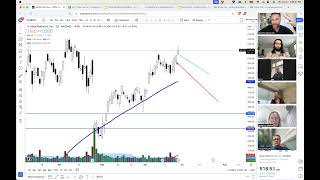
Yeah, it's a great question, great question. So we know that you're going to do it eventually, which is great. And like, that's. That's the goal until the big question is just like, when, when, when do I know when to do that? Because we know it's going to happen at some point anyway. And when we're talking about IRA money and nest eggs and like retirement accounts and things like that. My opinion, of course, my overall thoughts on it are the best. The time when managed money works best is in big, big, big down markets because they lose. They definitely lose, but they don't lose a lot because it's so diversified, right? And so whatever. If the market's down 30%, you know, your managed money is probably down like 6%, maybe 10, but it's not going down a bunch of. When you feel very comfortable trading down markets and you're like, all right, I'm really good on the strategy, I'm good on the timing. I'm good on knowing how to protect myself. I know the instruments to use, I know how to use them. I'm really, I feel very, very comfortable in big pullback environments. That's, in my opinion, can be the absolute best way for anyone here to really quantify when you should be taking over all of your money. Now, obviously it's going to be easier when the markets are live to trade in the down market, right? Like when, when the markets are actually ongoing. Right. When it's ongoing, it's really easy for us to, oh, experience it and to feel it. But the faster way, rather than waiting for the big market correction, because we got one in 2022. But the faster way to do it is back trade them and pretend that you got half a million dollars or whatever, you know, your managed money is, pretend that's how much money you have on the line and see the sock actually move, see the P L actually move. So here's a good example of that. Just really quick, I'll pull up spy. And again, just for giggles, right? If we come back over here, what I, what I've done and what I tell the traders to do is like take whatever your 401k or whatever your money is, right? Go back and back, trade it and put your amount of money into the markets here. All right, so 3,000 shares of SPY is 1.2 million, essentially. So the net, so that, that down day right here, how much are you down, right? $13,000. Like, whoa, this is fun. So you start to kind of see, right the, the red a little bit. It's like could. Does your heart flutter a little bit there, right? You're down 53 grand three days. So practice down markets, I guess is the answer. And when you go, okay, cool, I've practiced down markets. I know what I'm looking for. I know the warning signals, I know what is a little scary. And then I know, you know, right here I would have bought puts or I would have sold calls or I would have done something to minimize this number. And here's why I would have done it there. And then knowing right here that we closed below the 200 volumes increasing double top. Or you can start seeing all the pattern. Like I really, really, really think that this is going to continue lower. So I know I don't want to lose this amount of money, but I'm going to, I'm going to suck it up. Okay. And I'm going to eventually exit and take a smaller loss. You're like, okay, win. So I got it right here. Cool. I'm going to exit and take a smaller loss. So like all right, I'm get out. So you get out, you lose money. And then we start to see what, what could have happened. And the more you practice the back trading environments, and again, that was some of the things that we all wrote down. It's like we want all back trade more. But definitely the more you practice and you're like, you know what? I feel really, really, really comfortable. I feel more confident that I could back trade any market environment, that I can live in it. And then when you experience a nice 10% or more down market in your live accounts, that would be like a no brainer. All right, I need to move my money over because one of the best places for your big long term retirement accounts to be in, ladies and gentlemen, is cash. If you're like, I don't know what to do, like, it can be in all cash. It doesn't necessarily have to be growing, right. 15, 20% a year. Like if it's, if the markets are down and you lose nothing, awesome. I don't, I really don't try to make a bunch of money in down markets. I just don't lose a bunch. So my goal is when the markets are kind of like at a nice low, your boy has a bunch of cash. I'm like, all right, cool, shove it in. So that would be, that would be the best answer, honestly is, I know you're going to take it over. I would love for you to practice a bunch of down markets or, or individual stocks that went down a bunch, like Tesla, you know, and just practice buying at the top. When you get out. How do you protect yourself? When do you protect yourself? That type of thing. And then absolutely for sure, ultimately you experiencing that live when the markets are down, we've had a good little pullback and you navigated it well. And if you ended up profitable that month, we're like, wow, I day traded and I was in cash and I swing trade some things. On the downside, I made a little bit of money in crypto and like overall it was up 1% that month when the market was down 4%. And then the next month was down 4%, the next month was down 4%. I made 1% each of those months. Yeah, I'm gonna take over my account now. That would be the, that would be the target for you to hit, in my opinion.
Okay, thank you, that's very helpful.
Yeah, you're welcome. I know Joe probably, you know, that's kind of like Joe's big quitting the job thing too, because it's just like that's, there's all gonna be components of it. But yeah, the fear of what if. It's a. It's a very valid fear. But I can, I promise all of you being in cash for a period of time, even if the markets are just skyrocketing, eventually they'll have their pullbacks. And if you have enough cash, you can always make some more and be ready. Any other questions, ladies and gentlemen? And again, feel free to, if anyone needs help on your plans, reach out to me. That's, that's far. We're all in the group, happy to help you build your individual rules and plans. We can talk your schedule because I get it that a lot of it's life based, a lot of it's time based. Depending on where you are in your trading career, that could be a component of it too, for sure. Because I want to make sure that you're all ready and that you're feeling vibrant and you're feeling like you have all the skills that you need in order to pull up a chart. Say this is where I'm going to buy or sell. This is why I'm going to buy or sell here. And then you go buy and sell there. But keep that in mind that ultimately the most basic of all strategies, in my opinion, the one that should never be over complicated is buy a company that you love, sell it higher. Don't ever overestimate that strategy. It's a really good one because like Julia said, Right. 22% a year annualized, it's amazing. And you're going to crush anyone else's returns of them managing your money. And if you did 22% a year on three trades, is it worth it? Yeah, because again, the, the money compounds quickly and you're still beating what could have been. And you have the knowledge and you have the skills and you have the capacity. But 22% a year is really good on a million dollars, right, Catherine? It's 220000 a year. Like that's really good. That's good money like that, that's a good income. I can live off of 180 and then I can leave the rest in for growth. It's doable. And 22% can absolutely be three trades. Doesn't have to be 456, 000 trades a month or a year. It can be just three really well timed positions, really good stock. So again, never underestimate the buy something that you love, sell it higher. That's, that's always a good strategy. It works and then everything else is just fun components of. And, and just. It helps you to get even better with that strategy. It helps give you confidence. It really does. The, the Elliott waves and the volume and the moving averages and the candles, all that stuff just helps give you the confidence of, okay, I really do want to buy the stock and sell it higher. Like this particular one. Like, this is where I want to do it at. This is. This is why I want to do it. And that price. Any other questions? And if we go over, that's perfectly fine. If you guys want to. Any question for me, Anything you want to ask, I am here for you.
I get it kind of goes with MJ's sort of question. But something that I was kicking around is like watching Eric Lee and Joe when. I guess it's like for you, maybe this is a better way to put it for you.
When.
When did you like, know, like, okay, it's time for me to just go all in and leave. Shoot the insurance company whose name escapes me right now and just start trading. As for me, like, I'm wondering how much opportunity. Not that like I'm gonna do anything drastic, but it'll get to a point where I, I know that I'm gonna be leaving way more opportunity. And I, my. I could compress time in the future and move way faster if I just focused on whether it be trading and business. You know what I mean?
Yeah, yeah, yeah, yeah, totally, man. For me, I've always, I've always understood the power of compounding mathematically also. And from a standpoint of like leaving my job, it was really only when it made financial sense. There's. There's no real reason to do it otherwise. Specifically, right. Where it's like I started trading and when I. Because remember I was in Nationwide for six years and the first four is when I was a. Right. And I made a. Made and lost a bunch of money. But I was still at Nationwide because I had make all the money back and I had some like, leveling. So like, those last two years weren't awful. Yeah, they weren't. They really weren't that terrible. And then 2012 to 2014 is when I was aware that I could make all of my expenses trading. And I did it multiple times and then I made the jump. So I kept my expenses low. Granted, again, I didn't have wife and kids and all that stuff. But I mean, if you have girlfriends, it's the same as having like 46 kids. It's expensive to go on dates, especially when you're Good looking like you are, dude, I know you're married. You know what I mean? It's like, so I still had expenses, but I kept them low. And then, yeah, that was. That was truly the case, man. For three months, I was like, all right, I'm gonna trade. Like, I need to cover all my expenses, and can I actually make all the expenses I'm making at my job? The answer was, yes, I did it. I quit. Because, like, I can make these. And then I had. And then again, I didn't change anything. But what I ended up doing, Jeremy, is I still made money trading.
But.
Then I didn't have a job. So I was like, well, what else do I do with all this free time? And I just sat around thinking all day, and I was like, man, I need to start doing something. So I just started reaching out to people on Facebook and making videos for them. In 2013, 20, you know, like 2014, I just had all this free time, did some sales for some people. Just so much free time, you know? So I was still implementing other things along with trading. Yeah. And that's why I want everyone to do. It's like, there's no reason. You don't have to only trade. That just doesn't make any sense. Like, you make $800,000 a year trading. Awesome. You should still do something else even if it doesn't pay you. Like, just go do something else. Because it's. Why not? You know, you have so much free.
Time, one could trade them.
What's that?
That is just more fun to drink.
It is.
It is so much more fun. It is so much more fun. It is very, very fun. Totally agree. Yep. So good question, man. That. That'll be the big one for you, big guy, is if you can cover all of your expenses with your new family coming up and wife and kids and all the things, it's. Do it, and then you. But only if it. Only if it really makes sense. Yeah. Otherwise, just keep a job for a while. Do both, and get to a point like, all right, when I hit this number, and I can take this amount of money and put it in the bank or put it into a dividend or put it into a thing, and I can make money passively. That covers all my expenses.
Yep. That's kind of my plan anyways. Is that because I'm like, very easily. Because I've been increasing my r steadily and very easily. I could make my month's expenses in just a few trades.
And.
And so I'm like, well, once I start doing that and plus right now having a W2 income is making it really easy to get credit and stuff. So there's that side of it as well. But I'm also thinking 6 12, 18 months down the line or longer. But, but just so like you're saying like we're planning what we're our strategy and stuff. That's the way I'm just thinking right now. So I have. So I don't just get lost in the, the mix of things. Yeah, but so I actually have like a vision.
Yep, for sure, man. I mean that's. I think most people have a big goal. You know, if you can make $4 million cash and you can put that $4 million into a bank and get 5% interest, it's $200,000 a year essentially more or less guaranteed. I know a lot of people have that goal. For me, it was always creating active income. I didn't want it. I didn't want to put 5% because I know I can just do better. So I was like, well, I'd rather make 30 on a smaller number and just go do that now, then keep waiting until I have $4 million in cash magically one day. So yeah, man, it builds. And again once you're. Once you're free and you're out and you're able to be fully you all the time, every day make money trading and you have all this other free time, you get to figure out what you really want to do in life and then we some more money you're gonna make, you're happier.
Thank you.
Yeah, got it too. All right, family. Can you post it? The only other swing trade that you all know about, you probably don't know about that I have set up is this new IPO Tempus AI. That looks really big. It's not that big. Anyway, you guys know how to play that candle. It's a breakout. Just brand new IPO highway. This could be an example of your one thing. You just trade highway of candles for three months on anything. That could be a high. That could be an example of. All right, cool. I'm a short term trade. I'm just going to trade high wave candles. That's all I'm going to do. I got, I did some put spreads on Tesla. On Friday, right. Bull candle gapping up. What type of gap is that? It's a retest gap. We all know that. And we have retested down into the hundred just like we talked about on Thursday. Right, Eric? So that was a really, really nice Friday. I was like the very high probability trade on Friday down to the hundred and then into the hundred there's a bunch of people that got into all kinds like put sales and bullpen spreads and things down there, hoping or anticipating that what we're getting today we're getting right this little slight bounce and slight interaction off of that moving average. So we'll see if Tesla can eventually hold that 100 and end up breaking a little bit higher. I think that's all what we. Anyone who's in is what probably what you want to happen. So we'll keep an eye on that. But you, there's your high wave candle for the week. It's a really big one. So we're probably going to get an inside week if I had to guess, which means at some stage maybe, maybe next week things get really, really interesting on Tesla. But since it is still relatively sideways, it probably will be good to just make sure that you are comfortable with option sale strategies. If you don't, it's not part of your thing. That's fine. But I did sell some calls also at open around open on Thursday. So I got some call sales, I got some put sales and I'm just gonna expect it to kind of stay compressed for another week or two on Tesla. So just a small, little, small, little. FYI Joe, I still got, I got ttoo set back up. I know this is one that you mentioned that's a, a swing trade setup on T2 Biosystems.
I saw your post on that in Slack and the funny thing is I had, I had one set up prior but I set up the exact same way you did once I saw that big, that big upper wick.
Heck yeah.
Yeah.
That's what I'm talking about, dude. I love it. I love it. I love it. All right, well, hey friends, just keep me posted. Again, the big homework, either reach out to me directly but and or I would love you guys to just post some trade plans. Post them in there. This is a good time to revitalize or update or tweak or adjust. Let's get some rules in. You want some things that help you be the best version of you. You want some things in there that put in your guardrails, right? You want some strategies in there that you're focusing on. You want some rules for your sh. Yourself. You want some rules for your strategies. You want some time frames. But let's just start slowly chipping away at these plans and feel free to post them this week. Thursday, just like normal. We'll be reviewing our markets we'll be reviewing any trade setups. We'll be reviewing anything that you want to look at from a actual setup and analysis standpoint. But if you need anything for me at any time, just reach out. Let me know. Okay? Family.
Thank you.
Thanks so much.
Thank you.