Beyond Hustle: How Men Can Win in Business Without Losing Themselves #mensleadership #habits
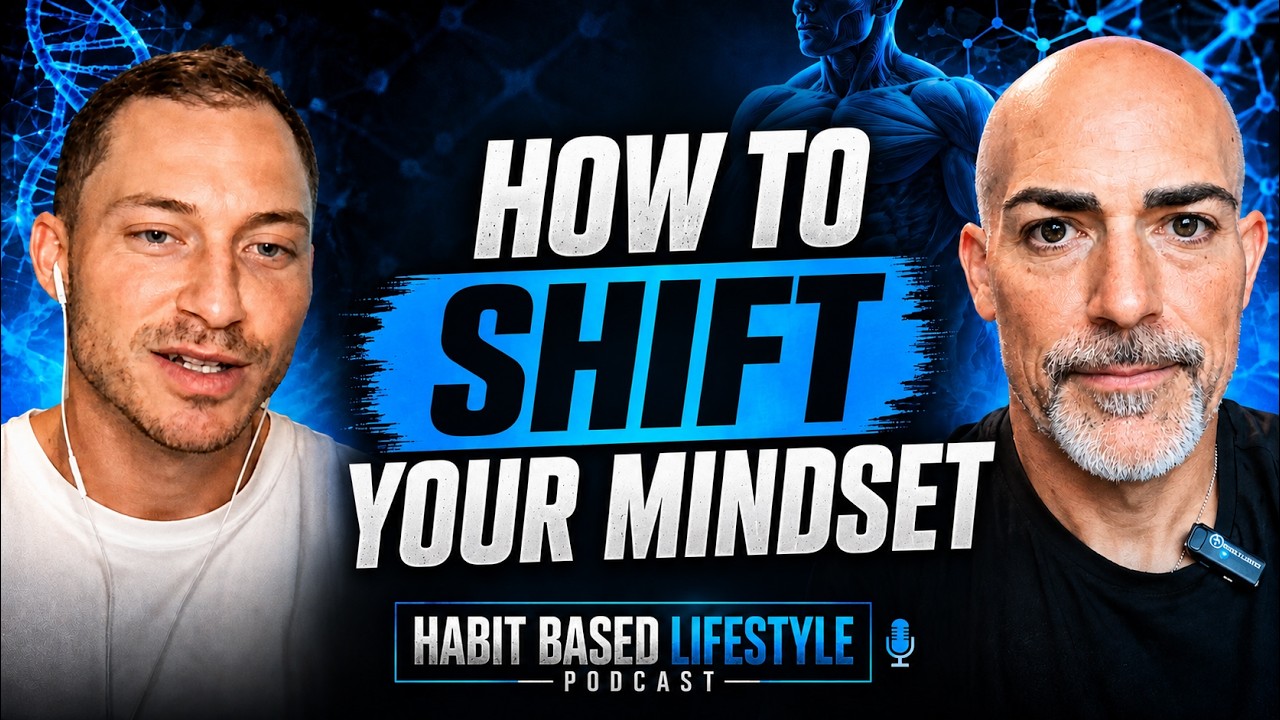
Pat Smith, a wellness coach for male business owners, left his corporate sales job in 2022 to help high performers align their physical, mental, emotional, and spiritual habits. He uses the 4R process—Reveal, Release, Rewire, Rebuild—and emphasizes daily practices like meditation, movement, and real food to help men succeed without burning out.
Chapters
The purpose of this show, the purpose of this show, is to guide you to realign, guide you to realign, with habits that get you to live the life, live the life.
Welcome back to the Habit-Based Lifestyle Podcast. I'm your host, Jesse Ewell. Today, we got a very special guest, Pat Smith, who is the creator of Pat Smith Wellness. He's from Charlotte, North Carolina. He coaches male business owners, high-performance business coach. And he helps them think more clearly and live lighter. Pat, I want to welcome you on the show today.
Hey, thanks a ton for having me on here. Appreciate it.
Yeah, man. I know we were chatting a little bit. Can you just give our audience just maybe a little bit about, you know, Pat Smith and, you know, what is Pat Smith Wellness?
Yeah. So, just briefly about me, originally from Northwest Indiana, small little city, Elkhart, Indiana, just outside of where The biggest location or landmark would be Notre Dame. Many people have heard of Notre Dame University. So that's where I'm from originally. I worked for a hand— almost a decade in the corporate side of things. And inside of that, I realized that the biggest differentiator between a lot of the guys that were not just successful in their profession, but also lived an amazing life outside of that had to do a lot with how they were operating physically, mentally, and emotionally, even spiritually to a degree. And when I started to lean into that, In my own time working there, I noticed that the results really started to translate into professional performance, which then gave me the curiosity of why aren't more people being taught this stuff, specifically guys in the workplace? And that was a big cue or idea, a light bulb moment for me to say, I've done this, I know what it's like. Let's go get some additional formal training, which my first real formal training was getting some through a program from Dr. Joe Dispenza, being trained essentially one-on-one with, or not one-on-one, but in a group setting with him, which then created the Pat Smith Wellness idea, which is how can we get more men in the workforce to not only, yes, be professionally successful, but also do so without losing themselves in the process? Okay.
Awesome, man. I, you know, can totally relate to that. What were you, so what were you doing in the workplace? At the time that you kind of realized this?
Yeah. Interestingly enough, Elkhart, Indiana. So for anybody listening, if they know anything about Elkhart, Indiana, it is the RV capital of the world. Fun fact, producing about, I would say, I don't know, 80% of 80 or 90% of all of the world's RVs in one county. So there's lots of manufacturing going on in this one little hub in a weird little area. And so right when I got out of college, which I went to Indiana University, right when I got out of college, I got my first corporate job at this publicly traded company, billion-dollar company called Lippert Components. And I had always been in sales in some realm, either in the RV manufacturing world. And then my last job was in the marine manufacturing world. So I worked for a boat manufacturer because there are a lot, especially pontoons, they use lots of the same parts as RV. So I was in outside sales. And when I left, or when I was at my last job, I was the territory manager for the Southeast United States. And so I noticed that especially in sales roles, especially with a lot of guys.
Yeah.
Rejection, cold calling, having to regulate and manage a million phone calls coming in. The skill isn't you needing to know about the product. The skill is you being regulated long enough to think clearly, to make the right decision to move on. And I started to use lots of different modalities, whether it be meditation, understanding emotional regulation, understanding how I use my words, even in sales. And how that influenced sales conversations. And I started just practice trial by error on my own, in my own practice and in the work that I was doing. And one thing I attributed was very early on, like when we started that territory, it was doing roughly around, I believe it was like $500,000 a year in annual sales, which across 8 states for a boat, you know, $40,000 to $50,000 minimum of a boat, some $100,000. That's not much money. And so what I realized though, when I started to backtrack the numbers was, wow, we went from $500,000 a year in annual sales across 8 states. And in those 8 states started to push $20 million. What was the diff— what was the differentiating factor? Yeah, it was drive. Yes. People wanted to get outside more around COVID. But the truth of the matter is to be able to have the capacity to do as much of that without Like going absolutely crazy, I attributed back to some of the skills that I had been honing in to like develop me personally, knowing that my professional growth will only ever reach what my personal growth is. And as I personally began to grow, my professional growth also began to happen. So yeah, it was a really weird niche industry. It was actually an amazing job. I felt, you know, I had the territory where Florida was involved. So marketing team always wanted to come down and take out boats and I had to go chaperone them around, which Okay, no big deal. That's what my Tuesday looks like. I'm good with it. But I realized that just my heart wasn't in it. And I had already at this point been coaching. I went back to school to get a holistic nutrition certification. So, I was coaching individuals on nutrition and I wanted to help in a way. But what I noticed with a lot of the nutrition side of things was that was just the surface.
Yeah.
The deeper was how can I help them transform on a more identity and behavior level? And that's what a lot of the work that I started to move into was once I got out of the corporate world.
Yeah, that's, that's really cool, man. I think, uh, I think sales is one of the, the most powerful things that we can learn, you know, whether it be, you know, car sales, you know, whatever. Right. It's like, you know, because a lot of it is rejection. Like, can you overcome, you know, that possibility? And even just, I worked in gyms. Like one of my first jobs was in a box gym. And literally if you did not close the person, That was in front of you, they were getting hit up by 3 or 4 other people that were gonna walk out the, as they were walking out the door. And it made you like have to learn how to sell better because if you didn't, somebody else was gonna do it. Right. And, uh, I remember a couple times where I watched like a couple sales guys like hit up somebody I just spent like an hour with and sell them.
Yeah.
And I was like, I, I was so like mad about it, but at the same time I was like, all right, what are these guys doing that I'm not doing? And how can I do this better? And, uh, it was, it was a huge learning lesson, but it made me, you know, level up my skills in sales and the way I communicated. And that kind of helped me like understand the business side of the gym industry.
Sure. Yeah. The interesting thing too about sales, or one of the best parts I feel, is you just get really used to talking to strangers.
Yeah.
And if you think about any business and what I start to see, and people get into coaching and ask, what, how do I get more leads? Have more conversations. Who'd you talk to at the gym today? I didn't. I had my headphones in the whole time. Okay. Well, let's start talking to some people. And my, my fiancée, she says, what's one of the things we were just, had her her parents in town and they're like, what's one of the skills that you really admire about Pat? It's like, he will talk to anyone. He doesn't care who it is or where it is. It could be a 4-year-old in the grocery line and he'll say, hey, nice shoes or something. And like, but it sparks a conversation. And I think within sales, you just get really accustomed to having conversations, which that's where a lot of the business ends up happening. You say, hey, how you doing? Oh, I have a really rough day. And you know, let's say if I'm a coach, It's just a, it's just a myriad of things. And then they say something that, you know, hey, well, that's what I do full-time. Any curious curiosity you'd want to have a chat about that? That's all it takes. But I think people get coaching specifically. People get so overwhelmed with the funnel and all of these things. I'm just like, go out, have more conversations and they go much further anyways, in my opinion.
Yeah. I mean, you know, what's funny is, is like that same place I got the job at that I told you I first started training was My, the guy that I interviewed with said, you seem kind of shy, kind of quiet. You know, you got to go out and talk to 5 people on the gym floor and bring back their goals. And I remember like, man, I can't believe this guy's making me do it. But him making me do that kind of forced me out of my comfort zone. I remember coming back and I'm like, here, here's their goals here. How long they've been coming to the gym. Handed it to him. He's like, okay, you're hired. I ended up being that guy's boss like a year later.
Wow.
And, uh, but it was, it was cool because it forced you to get out of your comfort zone. And before we had social media, you know, you'd walk around and meet people at a grocery store, hand them a business card, shake their hand and, and have a real conversation. And, and I think people forget that Like you can still have a real conversation with people today, whether it be on social media or whether it be in person. But yeah, I mean, you are your funnel, right? I created a thing in my program. It's called the human funnel. It's like actually having a conversation with people on a human level. And, uh, yeah, I mean, funnels are great, but like, if you're afraid to have the conversation or you're afraid to meet new people, like you're Probably not gonna have a great funnel.
True, true. Yeah. Yeah. And I would say even adding to that, I was chatting with one of, one of the friends of mine. I ironically end up talking with a lot of people in real estate and a lot of people in the financial services, which as you know, lots of sales involved.
Yeah.
And just talking like, you know, you have this whole gamut of people in your phone, just text them, reach out to them. Like you have their contact for a reason. And I think there's, But again, that's where, that's where a lot of what I would say my work goes like a little bit deeper in is, okay, you're worried about calling that person. What's the story underneath that? Whether it's fear of being seen, a fear of rejection, and where did that come about? Because until that meaning on whatever that time happened is not addressed, it's going to keep perpetuating and showing up in a bunch of different areas. And you're wondering why you can't get past it. So I like to see when that happens for other individuals. And then I like to ask them more, those more probing questions of like, what's the story in your head of what happens if that person, you know, if you're, you hear it all the time, too salesy.
Yeah.
You're too salesy or you're just not willing to share your offer because you don't believe in it 100%. I don't know what the difference is, but help me delineate. Cause that's where I feel the, like the mindset shifts start to actually happen. And when people can disassociate with whatever they, the preconceived notion or story that they've made it mean, that's when there's actually a possibility for them to make a sale or to do something different.
Yeah. I mean, I think today that shows up in social media, right? Like putting yourself out there. People are like, what are people gonna think?
You know?
And I'm like, well, hey, if you really believe in what you have to offer and it's really gonna help people, You're doing all those people a disservice by not talking about it. Right. And giving them an opportunity to like work on their health.
Yeah. So I've noticed that as well.
Yeah, man. So talk to me about like, you make this transition from maybe more of a corporate job into like coaching and helping people. What were some of the things that you kind of came up against? Because, you know, when you're an entrepreneur, It really changes the dynamics of, you know, hey, I'm working for someone else to now it's kind of all about me. Right. And what I produce. So like, what were some of your challenges early on?
Well, first and foremost, you can imagine when you go from making multi-six figures, even at early, late 20s, and you feel like you're on top of the world, and then you go into, all right, I'm just going to do all this on my own. It's a drastic Ego check to say, wow, you realize that you were just taking a lot of things for granted. So that can be challenging and it makes you drop the ego and it makes you get way more resourceful. That was one thing that definitely helped, but was also a challenge. I knew I was planning to leave. I left a little bit, a couple months earlier than I had anticipated, but in doing so, I had saved up around 6 to 8 months worth of savings to create a buffer for me. But even then, I mean, yeah, starting when I'm first starting, how do I create a reputation for myself? How do I get in front of people? Who do I get in front of? And I think it was just day in, day out, trial and error, talking to more people, having more conversations, putting myself out there. And then the challenges become, you know, the first 2 years it's, I'm just going to keep grinding. And then you keep doing the same things and they start to work and you're super excited and you go from making X amount the first year and you double it the second year. And then the second year to the third year, it's the same amount as they're the same. And you're like, oh shit, I'm doing something wrong. And having to work through my own beliefs on how do I define growth? Is growth always going to be this way? Or is growth have its ups and downs, but over time, the accumulation is what matters. And so there was just a lot of the beliefs of Is it possible for me? There's of course imposter syndrome when, you know, even for me, one of, I can give, share one crazy experience, not knowing anything about it, chatting with a friend. I met her through a friend and she referred someone to me. And I share this because it is really realizing that when you go into running a business and entrepreneurship, you just have to put yourself into situations that you never thought you'd be in and let yourself be uncomfortable with them. And still know that, as you shared, if I can truly believe in what I do, it doesn't matter what the circumstance is. And so this, this one of my friends, she had introduced me to a, to a guy who she's like, I think you could, you could support with. She was doing a lot of gut health with him, but she knew that he had some underlying things that he could work, you know, needed to work on specifically through mindset and, you know, some past situations and patterns. And so I get on a call with this guy, never met him. The name sounds familiar, but I didn't rec— I kind of recognize him. And, uh, I say, hey, how you doing? So on and so forth. What's, you know, okay, so what do you do full-time? And he's like, and he was a little surprised that I didn't know, but he's like, yeah, I'm the lead actor on blank show on NBC. And I'm like, and this was like my, maybe my second year of coaching. I'm—
Wow.
Meanwhile, I'm, I'm 32. I was 31 at the time. He's Quite a bit older than me. Obviously he's been in shows, been in movies. And I say all that to say is oftentimes just because someone is successful for you in other areas doesn't mean that you can't help them. And that was a tough thing for me to swallow because I would go into sessions nervous. But then the moment I started to realize, like, I'm still an expert in what I do despite what anybody else's circumstances is, then you can actually put yourself out there.
Yeah.
To your point, Despite who it's in front of. And as a result, that's helped me be able to work with individuals who I maybe never thought I would be able to work with if I let that limitation on my own expertise come in front of me. So, you know, for entrepreneurs that are starting out, I think that's one of the big areas that it's easy to think that, but then you have to give yourself an opportunity to prove yourself otherwise. And when you do, be sure to not hang your hat on it, but celebrate it and acknowledge it so that the next time it goes to happen, you can pull that card back out and say, oh yeah, I remember I've already done that. Stop over here worrying and overthinking it, underthink it. That's like a good motto I felt like I wish I would've known earlier on.
Yeah, no, that's good, man. I mean, I think being an entrepreneur When you become an entrepreneur, it exposes you kind of in every way possible. And I think that's probably the number one thing that most people don't realize when they start down the path of being an entrepreneur, right? Is like, they don't realize it's gonna expose every story you have, self-limiting belief. It's gonna expose your identity, like all those things. And I think it's something that's not really talked about as an entrepreneur.
Yeah. Yeah. It's, it's of course putting on the facade of what is actually going on versus what do you hear underneath the surface. And, you know, in that realm, by doing so and me being able to pull back layers of the onion for that, it's allowed for me then to better understand my clients in a way, because I've done some of that for quite a bit of that for myself.
Yeah.
And then getting them to help, then being that person in what I do is help them unravel those and then build them back up in a way of like, you know, your identity doesn't have to be tied specifically to how successful you are. You can still have drive and ambition, but the moment that your worth or success is tied or you're tied to that success, you are on an emotional roller coaster and it has you like You know, buy a chain and that's a dangerous place to be because then you're all over the place when you actually need to be fully present for everyone you want to be, whether it's family, clients, so on and so forth.
Yeah, no, that's good, man. So talk to me a little bit about, uh, you, you kind of had like your own major breakthrough, it sounds like in 2016. Can you talk a little bit about that?
Yeah. So 2016 was a point in my life where There was just a tragic moment happened. I lost someone really extremely close to me and it just really shook me to my core to, to just realize like life is super short. If you're going to be living it, don't necessarily waste it. And kind of, and I gave me like an actualization to look in the mirror and ask what areas of my life am I not only avoiding, but what areas of my life am I just letting life do whatever without actually doing something with my life. And that was like a pivotal moment for me to go down this self-development, personal development journey. And in doing so, that was like the big catalyst for me to get into trying out things beyond just working out, meditation and understanding journaling. And, you know, this was at points where it was really challenging because I was at that time, I was 23 or so. Yeah, 23. I turned 24 or I turned 34 in a few days and I was 23 at the time and none of my friends were doing any of that. And so that was a real challenge. They're wanting to still go out and do all the things that I was doing plenty of at the time. And I realized that that wasn't for me anymore and I had to draw the line in the sand. And in doing so, I'm so grateful that I did, because what I find is a lot of the guys that I work with now that are my age, are just now drawing that line in the sand, or they just have done that maybe 1 or 2 years ago. And they're doing it with kids and also with a wife. And that's a really challenging place to make that transition, I find. And so, yeah, it was, it was the toughest moment of my life, but it also created the greatest amount of growth in a way that I didn't think it would.
Yeah. I mean, The fact that you started learning that at 23 is, is pretty incredible, man. Like, I, I don't think I even got into personal development until I was about 35 and, you know, married, 2 kids. So, you know, that's like a whole nother, you know, dynamic involved in that too.
Sure. So the response— responsibility factor goes way up as well. You can't just risk things as easy. You have more people to pay attention to.
Yeah. What, I mean, you know, what, what do you see like with men today? You know, I don't know how, like how long you've been coaching, but like, what do you see with men today as they like show up with problems in, in marriage and stuff like that? Like what are some of the things that, yeah, you're good. Go ahead.
Yeah. There's a ton of things. Uh, yeah. I, so I left my job in October 2022, so 4 years full-time coaching. The one motto that I often see is that they will come to me with a problem or what it seems like to be like a problem on the surface. And it very much so becomes a problem from something more underneath the surface, meaning it's oftentimes this intellectualized feeling that they've had in the memory or emotion stored trapped in the body that is now being triggered when something comes up. And so what I found in a lot of this is it's way less about the habits and whatnot are helpful, but if I'm doing it from a rocky foundation, if you will, they're not going to be sustained. So what I find a lot of guys is they're either seeking after success for someone else's validation or to prove something to someone, Or to deem themselves worthy of whatever they may have been missing way long ago. And if they continue to run that race, doesn't matter how many times they move the goalposts or how high it goes, it's still not enough. And so until that gets addressed, the money, the success, the amazing house, they're great, but they only go so far. And so I find that many guys are in that pursuit. And aren't willing to check themselves on that, to really get honest around what that is and what they're doing it for and where that come from. And what ends up happening is over time, they're, they're going so fast to the point where it's like burning them out in a way. But then if they realize they were, they were always doing it for someone else, and that's, that's like a challenging place to be because now they feel like what they did wasn't worth it. And so it's backtracking them through a little bit of some of those layers of the onion in a way that can allow for them to self-actualize or self-realize that for themselves without me giving them the answer. That's one of the biggest challenges that I see in coaching is I don't want to be directive and tell you what to do. I want to facilitate the space for you to be self-directive and you getting yourself to making that decision so that the transformation will actually last. And I feel like a lot of the guys I work with, or even, I wouldn't say a lot of the guys I work with, but many of the guys I talk to tell me how to fix it.
Yeah.
I, I do not have the answer for you. I tell them very early on, I don't have all the answers. Why would I have all the answers? If I was, I'd be a trillionaire. I'd know everything. That's just not how it works. But I can ask the right questions to probe for you to find out and bring back those layers of the onion for you to come up with those answers. Because innately we all know what to do, but just something's holding us back. So it's a cool way to, I would say, bring that to the surface. And for a lot of the guys, that's, that's a very new process for them. But yeah, in a way it's also very transformative.
It, you know, and I think with the way that You know, social media is today, everybody's watching what to do or what they should be doing, but it's like they just keep piling on doing more things, but like internally nothing's changing. Right. So we, we end up carrying, well, I'm gonna do like, I'm doing these 10 habits, so I'm gonna go do like 5 more and that should fix everything. Right. And then, you know, you still lack the fulfillment on it.
Yeah. Yeah. Yeah. And the interesting part, some of the stuff that I've done really over the past couple of years is understanding how, you know, when you talk with a lot of these guys, you'll notice and see through the cracks, despite what the external success often looks like. Very easy is often the language that they end up using.
Yeah.
Should start. I really should start getting back to that. Right away, you already know that they're not someone who follows through. I should. Yeah, I should go do this and I should go do that. And they keep shoulding on themselves and it's wow. But the moment, and, and then the mind mindset, if you will, starts just really paying attention to a lot of that. I should keep doing that. And then if I say that and I don't do it, what is that reaffirming to me? Then I'm not the type of guy that follows through. And so think I carry that, I carry that weight around and it gets felt by the people around me. So I like to just do, you know, take action-oriented steps, which I think some of the language patterns are some easy ones to do. Hey man, notice when you keep saying that. You wouldn't go up to a girl to ask for a date and use what we consider soft talk and say, hey girl, I kind of want to potentially go get a drink with you sometime. Would you be open to that potentially? There's no conviction in that. And if you speak that way to, yeah, I'm going to kind of, kind of work on a few things today. There's no conviction in that. But I'm going to go get this done today. Guys want to build confidence. You hear guys, oh, I want to build up my confidence and I'll have more habits. But if they're talking that way, they're already diminishing themselves before they even get to confidence.
Yeah.
So I like to just pick out some of those even small things, which are like tactical tools, not the stories deep underneath, but some tactical tools that they can start to notice and that I get to start to pick up on even in just initial conversations. From there, there's a lot of strings to pull in that realm, but those little tricky ones of just the words that are used and how they blame other people and whether they take ownership or not, just you, you change those alone for 99% of guys and they drastically change.
Yeah, no, that's good, man. Do you have a, like a framework you use when you, when you do that? Or I know there, you know, there's a little bit about like a 3-step system you use.
Yeah.
Um, can you kind of explain like what that is?
Yeah, so there's a couple frameworks that I think through. So, um, I use what I consider like the 4R framework, which is more of like the process of, I use an analogy a lot of like our mind, like a garden. And so the process is reveal, release, rewire, and rebuild. So reveal first and foremost. Take an inventory on what the heck is in your garden first. Notice where all the dead weeds are and where all these beliefs and limiting patterns and stories are. Okay, great. We've acknowledged that. We've revealed them, brought them to the surface. Now we need to release them. So if our mind's a garden, we need to pull them out. We need to extract them. We need to discard them. Clearly, reveal, release. Now we've got some fertile soil. Great. Perfect place to be. How do we do that? Rewire. We want to plant the new seeds. So when we've extracted those old beliefs that are no longer serving us, what beliefs do we need to have in order for us to live in accordance with what we say we want? So rewiring the beliefs, planting the seeds in the garden. Finally, rebuild. Okay, that's the nurture process, just like in a garden. Water it. If you use fertilizer, great. Maybe it's natural fertilizer, hopefully, whatever, but water, fertilizer, plant food, whatever, and sun. But we need to rebuild that. And that rebuilding stage is, that's where the habits, that's where the people around us, that's where the support network, that's where the systems and routines can come in play. But if I only go to this, just rebuild on top of all of this crappy garden, nothing ends up happening. The weeds take back over and then you wonder why it wasn't sustainable.
Yeah.
When I think about that for men, it's reveal the unconscious, bring it to the surface, release that, emotionally release that. And we do that through the 3-step process, what you talked about, which is like the actual process when I'm on a call, which is write, read, and breathe, which allows for us to take someone's too much information in the head, getting it out of their head onto paper, and then somatically allowing for them to experience that level of release on an emotional level. So for instance, right, if someone has this big, deep story about, you know, they're doing all this so that they don't end up like their dad, and they have this story of their dad who never showed up for them, or maybe it was where they didn't show up for them 3 times in a row after saying, I'm coming to pick you up at 6:00 PM after school each day, and it keeps happening over and over. If they've just internalized that to mean something like they aren't good enough, that's what they carry around. So we have to really dig deep and give them a moment to experience that fully and not just emotionally bypass around it. Then once those are all gone, then we can start to celebrate the wins, which is the rewiring process. Dude, tell me about all of your greatest accomplishments and not just do what most guys do is like, yeah, I've done, done this, this, and this. Man, that's amazing. Yeah, but I'm still working on things. No, let's just take a moment and acknowledge the fact that you do have accomplishments, that you do follow through on the same things you say you do so that the guys can feel, feel that level of like self-belief in them, in themselves. And then finally, the rebuild stage, of course, which is later down the line of like, once we've worked through a lot of that deeper stuff, it's how can you build a lifestyle that is going to support those beliefs continuing to be embodied in a way. So that's how I like to think through it in those 4 Rs. So the reveal, release, rewire, rebuild, that's like the stage of kind of deconstruction to reconstruction through our mindset. But then the process when we're in a session is that write, read, and breathe process.
Okay, good, man. That's— do you— okay, so like, let's talk a little bit about Habits, daily practice. Like what are some of your own kind of personal, you know, routines that, that have to do with that on kind of a day-to-day tactical, you know, tactical way of working through that?
Just on me on a personal level, you mean?
Yeah. And then we can kind of talk about, hey, this is, you know, I know you talked a little bit about, you know, writing stuff down and things like that. Is that part of like what you do on a day-to-day basis?
Yeah. So, I would say I've, you know, I wouldn't say I do that on a daily basis, but one of the first things first, biggest mainstays for me, I would say over the course of the last decade now, crazy to say that. I hadn't thought about that yet, especially since 2026 creeped up on us quick and now it's going to be 2027, is meditation has been a huge one for me. More so just for me to give my body a moment of space to just decompress and regulate my nervous system. If anything else, just training the body to know how to slow down when my mind is going crazy and then giving it that practice. It's like, you know, like anything in the gym, you start to practice, that becomes a muscle. So then you can start to do it better in real life. So meditation has always been a mainstay. My dad started taking me to the YMCA when I was 10, and I started going into the weight room even though I could only lift the machines. And I had a little clipboard with a little chaperone card that allowed me in. So physical health, it's— I understand it's a challenge for a lot of people. It becomes hard for me to see that because it's been what I've done for the past now close to 25 years. Yeah. And so I definitely agree that, you know, the physical component of it is huge, always being out moving your body. And, you know, when I went back to get my nutrition degree, certification, I should say, in, uh, in around 2017, I realized like, just eat real food as often as possible. Like, that's, that's the main thing. So those are like my main things, mental, like the mind, the meditation, physical side, move my body as much as possible, get good rest and eat real food as much as possible. And then the other piece that I'm starting to I've become more aware of is don't forget that social health is also important. Don't be a hermit. Don't work all the time. Go out, have fun, live your life, because that level of experience is actually what brings you depth in a lot of what you do. And if you're keeping yourself back from that, then that's a challenge. So don't take yourself so seriously during the day, note to self as well.
Yeah.
And laugh a little, bring some joy into it. So those are like daily things that I'm just thinking, where can I sprinkle a little of that in all throughout? But then if you were to go a little further, yeah, the stories, the writing of things down, the noticing, you know, I, this is a great example and not ashamed to talk about it. Had my fiancée's parents in town for, so my future in-laws in town at our house last week for a full week. Plus my mom came in town, which was their first full-time being together for an extended period of time and just writing down the moments where I found myself the most triggered and most like, holy cow, this is a lot of dynamics to handle. If anything, for me to just understand it better by writing it out and getting out of my head. Yeah. Intellectualizing and trying to think my way through a problem. It's like, it's challenging, but when I can see it on paper, I give myself a little bit more space And a little bit more of clarity. And so it is helpful for me to write things down, specific memories and moments, not so much themes like general journaling, like today was a great day. And, you know, I'm grateful for all these things. Like I am in, I am a believer in gratitude. So don't get me, don't, don't, don't take it the wrong way in that way. However, I noticed that the more specific and granular I can get about moments, the more revealing they are for me. So Writing those out is super helpful. If I know I had a moment that came up, as soon as I can get to write that out, the better. And just describing it, first-person scenario. Yeah, this all happened. We had my mom here and my future in-laws, and I was noticing that I was trying to appease these people for the— and it just goes on, but it really can be revealing. Just like the entrepreneurship world, it can be revealing, but That stuff. And I watched this clip, I forget who it was who shared it on Instagram. It was like, your triggers are your clues to being a better person. And so if you can, your triggers are the universe way or whatever you believe in.
Yeah.
Way of saying, hey, these are your triggers. If you can start to work on these, your life will ultimately get better. But if there are triggers and then we keep letting them be our triggers, they're just going to continue to perpetuate. But if I can notice them, And then I start to learn them and understand them and do slightly something different. That's when the profound changes come. And I notice I get to do that for myself, writing those things down and then saying, next time that happens, I'm going to try this just slightly different and see what happens and then reflect. And it's all a trial and error game at that point.
Yeah, no, I think, I think I, the way I was kind of trained in it was like, you question your stories that come up. You know, about other people, like, hey, my wife did this to me, or this person did this. And then to be able to kind of reframe that into like, hey, I'm actually doing this to myself and like blaming my wife. Right. And it's like, it kind of gives you like that perspective of, we, we would call it like looking at like the 4, like the original story and then looking at like 3 different variations of it.
Yeah.
Um, and you kind of analyze like how, okay, well, how am I showing up? Because really the only one I can change is, is like how I show up, right? Regardless of, of what happened. And I think, you know, that's very similar to what you're talking about is like, hey, why is my mom triggering me? Or why is this situation triggering me? You know, but we often don't look at our triggers. And so then we're like kind of stuck.
Yeah.
Always being triggered about the same thing.
Yeah. Yeah. And then, yeah, that's great. And I think you shared something and it's something we talk about too. When I often talk about just the words that we use, it's the projections of she made me so frustrated.
Yeah.
Okay. So let's just be honest. I always ask them, hey man, are you in control of how you feel or is she in control of how you feel? Well, I am. But she made me feel that way. So now you're placing the ownership on her end, and anything that she does is going to move you around like a puppet. That's the analogy I always use. So what if you crossed out she and I and used I? I made me feel that way. I didn't make me. Hold on. You're the one that allowed for whatever she did to upset you, because you just said you're in control of how you think and feel. And, but when you can notice that and notice that I'm projecting or she made me feel that way, or this always happens to me or whatever the, whatever we want to, that they, she, them, whatever we want to use doesn't matter. When we can put I back in, like you shared, the perspective shifts. You take ownership and realize what part of this. It's always, there's always a common denominator in every part of our life. It's usually I, us, me. And when you can take ownership in that, then you have the opportunity to Make a shift. But the moment that I say she made me feel that way, then I can't change her. I'm never going to be able to change her. And if I can't change her, then that means that the rest of my life I'm I'm being triggered by her. But when I realize that I make me feel this way, then I get the ownership back and I have the agency. So it really comes down to you know the words that we use because over time, think if I do that for everyone, they make me feel it. Da da da. It's a victim mindset goes in and we wonder why that's there. And that's the stories we tell ourselves. That's what equates to our mindset. So yeah, it's those little language patterns, similar to the ones I talked about earlier, the soft talk, the projections, the negations, even can't seem to get it done. Doesn't work for me. That won't ever occur. Yeah. You keep saying it, it really won't, buddy. That's, I don't know. It's crazy that that's just the way the mind works. It soaks it up.
Yeah.
And it has no filter and it can be useful in that way because we can speak things into existence, but it can also be its own limiting factor, if you will.
Yeah, for sure, man. I, I, what's the saying? If you're the problem, you're the solution. And if somebody else is the problem, they're the solution. Right. And so you can't fix, can't fix it if somebody else is the problem.
Yeah. Yeah.
So cool, man. Yeah. So talk to me, we'll kind of do a little rapid fire. I know, you know, what's a personal development book or program? Like we'll do book first that you would highly recommend for somebody that might be struggling with some of the things we talked about today.
Hmm. Just sent it to one of my new clients who's a corporate pilot and private pilot out of Canada. If you haven't read it, Surrender Experiment, Michael Singer, great book. If you haven't read that one, amazing one, just teaching us, especially as men, we want to try to make everything— we need to know exactly how it's going to go. It's like, can we have a goal and detach from the route that it's going to get there? He talks a lot about that book and just surrendering to what's possible and trusting that you're still going to be able to get there, even if you don't know. Like, even if the water's murky, you can still get there.
Awesome. And then, uh, personal development, whether it's coaching or program you've been through that's had the biggest impact on you.
I would say, which is why I became an Enlifted Method coach, uh, the Enlifted Method, which is a style of coaching where we utilize and leverage getting into those deeper-rooted beliefs and stories, and also understanding our language patterns and how they develop our mindset. That to me has not only been an amazing, profound impact for me on the personal side to sift through my own, you know what, BS shit. Yeah. But also to also then be able to provide that same sort of breakthrough and transformation for clients that I've worked with. Okay.
Awesome. And then, uh, I know we talked a little bit about your own personal habits. Maybe just like, what is one habit somebody could do like daily to kind of take ownership of like just whatever they're going through in their life? Hmm.
What's one habit or thing they could do daily to start to take ownership in their life? Yeah. I would say start with the small stuff, things you do every single day and that you do them all the time and you do them in many different forms via email, Via text, via conversations with people around you and in your head. Don't forget those ones. And that is the small stuff, the words. Just pay attention to your words. You don't have to change them. Just pay attention to your words and ask yourself, what does me keep saying this mean about how I feel about myself? If it's the soft talk, I kind of want to get this done. I'll probably go do this. I guess, I don't know, maybe. And that's how I answer something. Some, some level of you is uncertain about making a decision. Could be the soft talk. So those are those. So I, I'm going to use a broader one. So you said one thing, but language is the broad term. The small exceptions are the soft talk, the kindas, the negations. Keep telling yourself, I don't, I can't, I won't. Watch how many times you say that. Yeah. The projections, the she, they, them, he. Instead of pointing the blame, notice how many times you point outward instead of pointing inward. And then the last one are more so what we would consider the absolutes or the, yeah, the absolutes. So be careful when you continue to say, things never work out for me. This always happens to me. Because your mind is watching with a microscope and it's soaking up every little bit of that. To create how you see the world. So if you could do anything to take more ownership, start there. We use what we think words don't matter, but how many words a day do we use via social media, text, email, conversation? I wish we could count how many we've had here today. It's got to be in the thousands, I'm guessing, if not more. I got the transcript. And then all the ones up here.
Yeah.
And if you start to just change 5% of those and that changes 5% of how you see the world and our mindsets involved in everything that we do, it's safe to say your life's going to change. Yeah.
That's good, man. Well, uh, somebody's listening to this. They're like, hey, I want to know more about Pat. I'm interested in working with him. What, what would be the best way for someone to get in touch with you?
Yeah. Well, 2 things. First and foremost, Instagram. That's where I'm most active on. It's on, it's It's all one word, PatSmithWellness, just as it sounds. And, not sure when this episode will air. However, for the listeners, if you've got this far, one thing that I do once per year is I do a birthday scholarship giveaway where I grant scholarships for one male to go through my entire coaching program fully covered, as well as a handful of guys to go through on a partial scholarship where it's half covered. If they're listening to this and it doesn't come out in time when this campaign is going on, which is from August 18th to August 24th, No rush on your end, Jesse. But if you're listening to this and you do contact me and it sounds of interest, I'm willing to hold that for any of your listeners if they're open to it beyond if it doesn't get posted by August 24th, no worries. Don't rush it on your end. But that's the best way to get in touch with me because I do have a specific link that allows for them to really understand my work better. But Instagram, of course, is where they can find me all the time.
So just shoot me over the link. I can plug that into the episode. And guys, if you're listening to this, I'll make sure I put it in the show notes. So if you're doing the audio version, you'll see this pop up in the show notes also. You heard Pat, so, you know, he'll hold you to it on giving you that, man. So, hey, I just want to thank you, man, for being on the show today. Really cool to hear kind of more about you, your story, and how you're helping men just transform, you know, number one, their mindset and how they show up and be a better person.
Yeah, man. Thanks a ton for having me. It was a great conversation and, um, looking forward to being able to hear it when it comes out.
Yeah, me too. Guys, if you're, if you're a, if you're a business owner and, you know, maybe you're struggling with some of the things we talked about today, uh, do not be afraid to reach out to Pat because I do know that, you know, just from a mindset perspective is, is like you said, a 5% shift. Over, you know, a year is a huge shift. And, you know, a lot of times we don't, I would say the tendency with guys is they tend to wait until there's a problem to fix something when you could just say, hey man, this is a growth opportunity for me to work through something that I don't let this limit in how I show up as a husband, father, leader, or businessman. And so make sure you do reach out if this is something that maybe hit with you today. If you want to know more about what we're doing inside the Habit-Based Lifestyle community, you can join our private Facebook group. That'll be in the link. And if you guys have any questions on future episodes or want to hear more from guys like Pat, go ahead and reach out to me, jesse@habitbasedlifestyle.com. Until next episode, have a great day.
You've always dreamed of. This, this is the Habit-Based Lifestyle Podcast. With Jesse Ewell!
More from Jesse
Trainers Can You Sell Yourself #fitnesstrainers #personalbranding #fitnessbusinesscoach

Taking The Leap Ashlee's Entrepreneurial Journey #entrepreneurmindset #entrepreneurjourney
Debunking Misinformation #factcheckteam #healthfacts #mythvsfacts #youtubeshorts
A Game Changer For Weight Loss #weightlosstips #healthyweightloss #healthandwellness #youtubeshorts

From ER Nurse To Entrepreneur #careertransformation #healthcareentrepreneur #youtubeshorts
First Steps To Better Health #healthylifestyle#healthjourney #wellnessmindset #youtubeshorts

Fault vs Responsibility #accountability #mindsetshift #personalgrowth #youtubeshorts
Blame VS. Responsibility The Key To Progress #personalgrowth #mindsetshift #youtubeshorts #shorts
Taking Responsibility In Business #leadership #accountability #entrepreneurship #successmindset

Love Hate Relationship #gymlife #workoutmotivation #fitnessmotivation #healthylifestyle

Micro Dosing For Weight Loss #weightlossjourney #weightlosstips #healthyweightloss #fatloss