My Office Got Robbed – Here’s the Brutal Truth I Learned #entrepreneurmindset #businessowner #habits
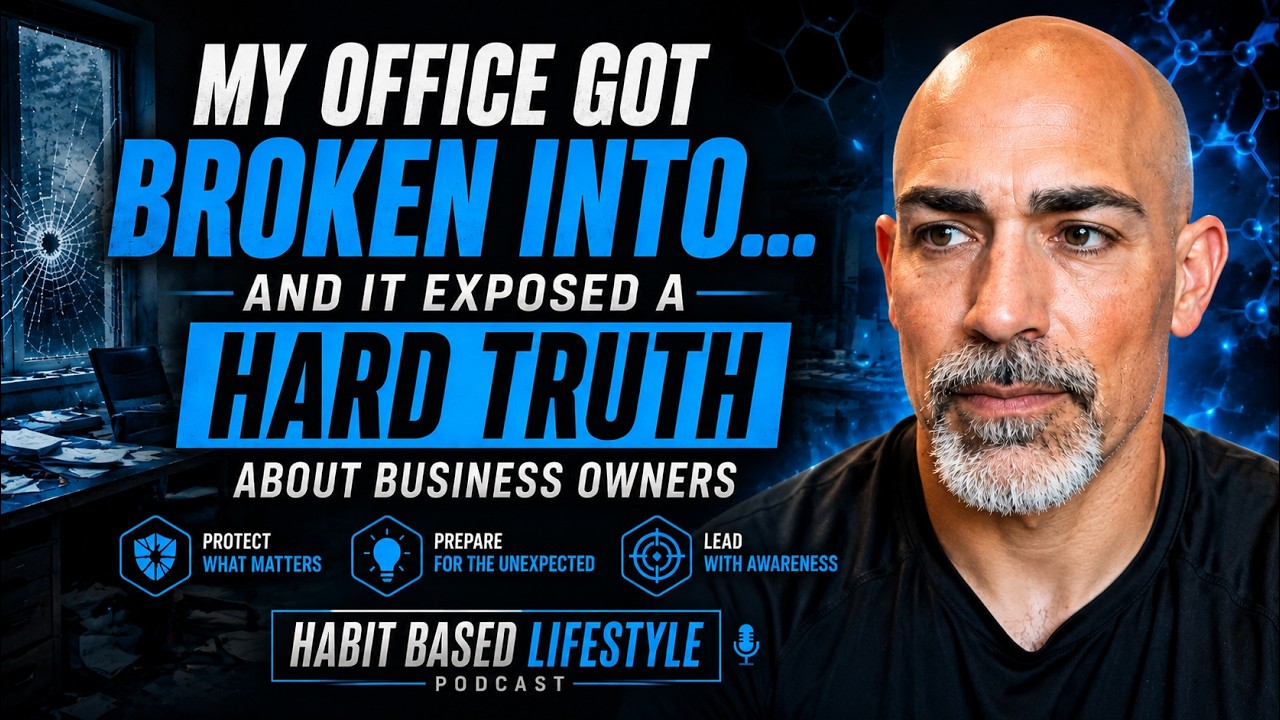
Jesse Ewell's office was robbed, and he uses it to explain why entrepreneurs blame external forces instead of taking responsibility. The difference: fault is about the past, responsibility is about fixing systems now. He found security gaps like missing cameras that could have been prevented.
The purpose of this show is to guide you to realign with habits that get you to live the life.
Welcome back to the Habit-Based Lifestyle Podcast. I'm your host, Jesse Ewell. Today, I got a special episode. I want to share something that happened to me this last week that really I have been thinking about this whole time. And not really because it was dramatic, but because What it revealed about the way I think. And, you know, honestly, this is the way I see a lot of business owners think when things go wrong. So first thing was my office was broken into last week. And, you know, my first instinct before I had time to process anything about what happened was I immediately started to look for someone to blame. And, you know, really today I want to talk about that instinct. Like, where does it come from? You know, why does it keep us stuck? And then what shifts to look for when you decide to take ownership instead? And because I think this is one of the most important conversations that you can have as a business owner. And it, you know, it's really something that almost nobody's willing to have an honest conversation. So let's get into, you know, today's episode. So, Here's what happened last Monday. I got to my office and immediately pulled up and saw the whole front window of, of our business shattered. And my first thought was, you know, like, who the hell did this? You know, my mind just kind of started to look for, okay, like, who would even do this? You know, how would it happen? And really, like, I started thinking about, okay, like, we have security, we have cameras, like, you start kind of processing. Processing everything through this, and you know that was kind of like my natural response. You know when something bad happens, the instinct or my instinct is to find you know the source of the problem outside of myself, and I think this is a protection mechanism. It's really how we process things and how. When things happen to us or things that we see, but here's where it kind of gets interesting. So after, you know, I kind of go through downstairs and, you know, I see, uh, the guy I share my office with, Sam. I see none of his stuff is gone. I'm kind of looking around trying to locate, you know, things that might be missing. I, I even walked up into my office and was like, hey, nothing's been taken. You know, so I wasn't like super upset. But then I started to kind of like replay, like, where, hey, where are things at? What are missing? I called, I called the police department, you know, they, they were on their way. And I kind of went back up into my office and I'm like, what's, what's missing? I noticed, you know, my computer was kind of tilted down. I looked up, I saw one of my cameras was gone, and then I immediately ran into my other office. And noticed my other camera being gone. And I was like, man, you know, I have 2 cameras gone. So I started looking everywhere. Um, but here's the thing is like the biggest, the biggest thing out of this was like, you know, thinking about the security system, thinking about cameras, like why didn't, you know, alarm go off? Why didn't all these things happen? And I started to kind of consciously Blame, you know, the camera company. I started to blame the security company, all these things. But here's kind of like, as I started working through it, I'm like, hey, it's, it's not my fault that someone broke into my office. That person made the choice. They're responsible for that. But there's gaps in my own system that I had to take ownership of. And, and one of those gaps is, is about fault and about responsibility. And that's everything, right? And it's understanding the distinction between the two. So here's really my first question I want you to sit with as you listen to this. Like, think about something in your business or your life that maybe isn't working the way you want it to. And when you think about it, why is it not working? Where, you know, where does your mind go first when it's not working? Is it to blame? Somebody else outward, or is it to go inward? Okay. And I'm not asking like, hey, don't beat yourself up. I'm asking you just to be honest because I think a lot of times the default response tells us, you know, everything and every place we're operating from. So think about, I see a glass broken. My first response is I want to blame somebody. And as I sat here and kind of think about this, I'm going to break down like what this means. It's fault versus responsibility. So breaking this down into like this distinction, because I think it's one of the most misunderstood concepts in both personal development and business. Fault is about the past. It's about assigning blame for what has already happened. And fault often is outside of our control. I didn't choose to get broke into. You did not choose for the market to shift. Maybe you did not choose for the algorithm to change. Those are things that happen to you. Responsibility is about the present and the future. It's about asking, given what has happened, what is mine to own going forward? What actions, what decisions, what habits were within my control? The thing is, is like blame keeps us stuck in the past. Responsibility moves us into the future. So here's the thing that most people miss. Like you can acknowledge something was not your fault and you can still take responsibility for your response at the same time. Those 2 things are not in conflict. In fact, the most effective business owners The most effective people I see are the ones who've mastered this. They don't waste their energy arguing about fault. They ask immediately, what's mine to own? So for me, I start thinking about, man, I left my lights on upstairs. You know, I have lights on the back of my wall. So at night, those things shine out. You can kind of see what's in my office. I have my other office that has lights on also. And What, what I started to recognize is like, hey, those are inviting lights that someone can actually see things that may be in my office. Obviously, if you have podcast lights, they're on, someone's probably going to be like, oh, that looks like it has nice stuff. And so yes, it's not my fault that somebody broke into my business, but it was my responsibility to leave those lights off or on. It was my responsibility that for, you know, 6 months they've been on. And so those are all things that I started to take responsibility for. Now here's the second question. In your business right now, where are you pointing fingers outwards at your clients, maybe at the market, the economy, the algorithm, when there's actually something inside of your own system that you haven't taken ownership of? You can be specific. You know, don't do this like a general answer, a specific conversation, maybe with somebody, a specific system that, you know, needs attention that you've been avoiding. So here's, here's kind of the way you want to think of it. The cost of avoiding responsibility has the greatest cost that you'll ever pay. So here's what I observed, you know, just working with business owners. These, probably the last 10, 11 years, the ones who struggle the most are not the ones who lack knowledge. They lack skills. They're the ones who have developed a habit of externalizing their problems. Okay. What, what that means is that they, they are the ones who are like, hey, it's the market. It's the algorithm. It's my clients. It's my employees. Yes, those are all real things, but those are not necessarily things that you can control. And when you begin to externalize as your default, your first response in every problem is to look to who to blame. You, you kind of lose, you almost like put on a lens of like, hey, who's at fault for this? And it takes away responsibility for you. And in that moment, You kind of start having the— you stop having the power to actually like fix the situation. Okay. And, you know, as I, as I think about this is like, it may not be our fault, but it is our responsibility. What that means is that the cost of avoiding responsibility isn't just stagnation. It's eroding our business. It's eroding our mindset. It's eroding our circumstances. And every time you blame someone else, something else outside of yourself, you're going to reinforce the belief that you don't have control over your business or over things that are happening. And I don't mean control over like who, who broke in, but I have control over preventing that. And if I would have put a little more time and energy into it versus taking it for granted, maybe that wouldn't have happened. Now, maybe it's so would've, but at the end of the day, I don't know because I only know one thing. And so here's, here's the biggest thing that I had to shift is I had to get out of blame and get into responsibility. What am I responsible for? How do I show up in my business the next time? How do I make sure and prevent that that doesn't happen? And that's kind of the same thing we have to do in business. The minute we go to blame somebody or something else for what happened, we kind of lose the power to choose. And whenever that thing goes wrong, you know, we immediately kind of like leak power or leak certainty in how we make decisions. And it just kind of becomes everybody else's fault. Nothing changes. We keep kind of repeating that same cycle. And I really had to kind of see, here. Trust me, I was, it took me about a day and a half to get over this, but I also want to talk about it because I thought about, man, how does this apply to maybe things in my business where something happens? It's like, oh, it's, it's their fault. It's, it's because of this reason. And so we give reasons, we give excuses, but we don't ever actually fix the problem. The only thing I know how to do at this point is I have a $6,000, $7,000 lesson. Plus broken glass to take responsibility because that's ultimately what this cost. And the cost could have just been me shutting off the lights and not having to worry about that. But in business and things that we're doing, it, things may not be our fault with our employees, but it is our responsibility because we own the business. And, and I wanna leave you with this. So you have more control over your results than you currently give yourself credit for. Not over everything, but like more than you think. So the question is, are you willing to look for responsibility? So I kind of, I kind of wanna wrap this up in terms of like I had, it took me a day and a half to get over this. So I'm talking about it now and it's, it's a lot easier than if I would've done this a week ago.
Yeah.
But it also helps me see a different perspective on things that I could have controlled leading up to it, things that I could have done differently that maybe would have prevented it. And that's what responsibility does. Responsibility starts looking for the gaps to where we have to take ownership in ourselves and say, hey, what could I have done different? Maybe it wouldn't have prevented it, but at least I knew I did everything in my power to take responsibility for that. So. If, if you're a business owner and you're like, hey, I need to really start taking responsibility for my employees and how they show up, because after all, I hired them. Maybe I need to take responsibility for my clients because how they treat me or how I let them treat me, that is my responsibility. Maybe I need to show up for everything and take responsibility that happens in my business so that I can Make the necessary changes and be empowered to move forward. That is the true power of things not being your fault, but it is your responsibility. So, hey, if this episode hit home, I want you to share it with other business owners. Maybe you can apply it to another area of life. And if you're ready to start building systems, upgrading your marketing that puts you back in the control, uh, reach out. And this is exactly what we can help you with. So I want to thank you guys so much for listening. Also, if you want to join a group of like-minded health professionals, you can go down into the show notes and you can click on our private Facebook group, Habit-Based Business. It's where we help health professionals grow their business, dial in their systems, and ultimately take responsibility. I'll see you on the next episode.
Always dreamed of. This This is the Habit-Based Lifestyle Podcast with Jesse Ewell. Jesse Ewell. Jesse Ewell.
Jesse Ewell.
More from Jesse
Trainers Can You Sell Yourself #fitnesstrainers #personalbranding #fitnessbusinesscoach

Taking The Leap Ashlee's Entrepreneurial Journey #entrepreneurmindset #entrepreneurjourney
Debunking Misinformation #factcheckteam #healthfacts #mythvsfacts #youtubeshorts
A Game Changer For Weight Loss #weightlosstips #healthyweightloss #healthandwellness #youtubeshorts

From ER Nurse To Entrepreneur #careertransformation #healthcareentrepreneur #youtubeshorts
Beyond Hustle: How Men Can Win in Business Without Losing Themselves #mensleadership #habits
First Steps To Better Health #healthylifestyle#healthjourney #wellnessmindset #youtubeshorts

Fault vs Responsibility #accountability #mindsetshift #personalgrowth #youtubeshorts
Blame VS. Responsibility The Key To Progress #personalgrowth #mindsetshift #youtubeshorts #shorts
Taking Responsibility In Business #leadership #accountability #entrepreneurship #successmindset

Love Hate Relationship #gymlife #workoutmotivation #fitnessmotivation #healthylifestyle