Charlie Vinch - Live With Bully Specialist Bullyology
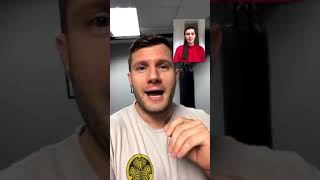
In this live interview, host Charlie Vinch (with co‑hosts) speaks with Jessica Hickman, founder of Bullyology, a global anti‑bullying consultancy. After technical hiccups, Jessica shares her personal story of enduring three‑plus years of workplace bullying while working as a culture and mental‑health coordinator at an Australian oil‑and‑gas plant, despite being a high‑achieving, award‑winning professional. She explains how the bullying—rooted in gender bias and power dynamics—led to severe anxiety, burnout, and a hospitalisation, prompting her to leave and create Bullyology. The conversation expands to the broader epidemic of bullying in schools, workplaces, and online, highlighting its mental‑health toll (including PTSD and suicide risk). Jessica describes the "Bullyproof" program that teaches children non‑physical empowerment, the importance of parental involvement, and the misconception that only "tough" kids need protection. She introduces the StarShell Student platform, a real‑time cyber‑bullying education and data‑collection tool for parents and schools, and mentions ongoing development such as gun‑recognition features. The dialogue also covers how confidence, family modeling, and learned behavior shape bullying dynamics, and how holistic practices (meditation, compassion) helped her heal. Jessica outlines Bullyology’s global reach (US, UK, Australia, Asia), upcoming school collaborations, a forthcoming book detailing her experience and solutions, and her touring schedule. Contact information (bullyology.com, Facebook page) is provided for listeners seeking help or partnership.
Chapters
All right guys, we're going to try this.
We're going to try this again. I'm going to see if I can get Jess on here because she has great information for everybody. Okay, tag friends. So I'm sorry if you guys had viewed before and it wasn't working, but we're going to get it going this time. All right, so let's see. All right, so Jen is here. I only see a wave, Jen. I'm waving back. But I can't add you onto the call for some reason. Hmm, comment again, maybe I can, maybe I can add you now. I can do one of those things to bring you on the camera. Jess, I think there's a button on here that you can request to be on the video with me. So Ariana just joined, and I see below here it says bring them on camera. For some reason, you may have one in your settings, Jess, um, something that is not allowing you to, to bridge that gap of, of joining. For some reason, you might have something like in your settings that is not allowing you to join Maybe—
wait, this could be it.
Jess, are you on an iPhone or are you on an Android, or are you on a laptop, or are you on a PC? That could also be why too. I think when I bring people on, when I do the live interviews, if they have a certain phone or something, then I can bring them on the camera. Does that make sense? Let's see.
Mm-hmm.
Mm-hmm. Mm-hmm. Dave, thanks for joining. Amar, thanks for joining. Rich, thanks for joining. Jess, let me see. Nope. Oh no. All right, guys.
Oh, got it. Approve. Got it. We got it. It's coming through. Hold your horses. Hello?
Hello?
All right, there it is. Perfect.
Okay, I'm really sorry, it was my laptop. I've had to do it off my mobile.
Okay, so it's working now. Thank you so much for joining us, Jess. Uh, Jess is a bully specialist, and she's going to talk to us today about, um, her company Bullyology. And parents, if you have children, you should be watching this. Even if you don't have children and you work somewhere where there is a bully, uh, you know, a bully, we have to always be thinking about this because kids who are bullies turn into people, adults, and they turn into bullies and so on and so forth. So Jess, why don't you introduce yourself and talk about your company and how you became a bully specialist and why?
Yeah. So hi everyone, I'm Jessica Hickman and I founded my company Bullyology from actually suffering workplace bullying myself. I'm from the UK and I live in Australia. Australia, and when I came here, I never thought as an adult I would suffer extensive workplace bullying at the hands of one of my managers. So while that experience was completely traumatising and lasted for over 3 years, I decided to use the experience as a positive and now found my company and work globally with schools, workplace, online to really help with the global epidemic of bullying and have these tough conversations that parents and schools and individuals are really struggling to have.
So, Jess, um, thank you for introducing yourself and, and showing what you do and having the courage to talk about that you were bullied in the workplace. How common is it that people don't talk about being bullied in the workplace for fear of being fired or fear of, we'll say, social pressure. And I always tell my students, you know, just because you're not being invited to the Catalina wine mixer doesn't mean you're not a good coworker. So tell me about that.
Yeah, look, when you're actually suffering bullying as an adult, it affects you in all aspects at work and home. And it is really an intimidating topic to talk about, and it is embarrassing. For a while, I didn't tell anyone. I was doing a job where I was working and developing major cultural mental health programs, winning a lot of awards, being in the media. So on the outside, I was this strong, confident female working in Australia on the other side of the world, and everything was amazing. Behind the scenes, I was suffering with mental health issues and anxiety because I was on a visa and I was stuck in a job where I was made to feel inferior. And doing a good job and being a high achiever automatically put me in the firing line for being bullied. People often think that you're bullied because you're not good at your job or you're a poor performer, and that definitely wasn't the case for me. I was a high achiever and I was standing out for the, the culture programs that I was volunteering to do, but that put me in a position where I did suffer extensive bullying because my manager didn't believe women should be in the workplace, let alone should have a voice. And I was championing for these certain topics, and it was men's mental health. Unfortunately, the suicide rate in Australia is really, really bad for men, especially men in the construction industry. So Welsh woman stepping into Australia and having these conversations, there were certain people that didn't believe that, you know, I should be having these conversations yet creating a culture change of a big organization and industry. So yeah, the high achievers can suffer bullying for doing a good cause. And at the time, that was really hard for me to digest because I was, I, you know, every night I'd put on my mask, I'd go to work, I'd do big talks to hundreds of people about mental health. I'd step off the stage and then back to my desk, and my manager would make my life a living hell. And I'd get home at night, and even though I was talking about mental health, referring hundreds of people to the mental health providers, myself was battling because I had really bad anxiety and I felt completely responsible for the workforce. And because of the breakdown in relationship with management, I was taking the weight of the world onto my shoulders and other people's mental health, and I really wasn't taking care of myself. So behind the scenes, I was masking toxic leadership and just battling for other people. And I made the decision early on stay, for one, to get my visa, and for two, I was frightened if I left, someone I care about would lose their life to suicide. So I put my own happiness aside and I stayed in this toxic environment for over 3 and a half years until last year. I, I ended up collapsing at work where I was taken to hospital, and it was a mixture of— I thought my appendix had ruptured, so it was a physical, but in the end it turns out that it was burnout and anxiety attack where I'd been putting my own health aside to serve the people. And yeah, that was a turning point for me where I thought I can no longer help other people without helping myself. And especially a company where I'd reported the bullying 32 times to upper management, and due to a long string of failed management, it was not dealt with, and we lost a lot of good people. And every time we lost a person or someone was bullied, it was traumatizing me even more as the culture coordinator and the mental health coordinator. And it was just a point for me where I just said, no more, I need to get out of this place before I lose myself and my mind.
And of all the places for you know, the bullying to be happening is happening at the mental health facility that you're working at to help people with suicidal tendencies. It's kind of like a contradiction, right?
Like, well, it was actually, um, it was actually an oil and gas plant in Australia, so a large construction facility, but the suicide rate in that industry was— it was and is massive. These men living away from home for months at a time, working in— men and women— but working in extreme conditions. That does challenge you physically and mentally. And unfortunately, the suicide rate in Australia for the construction and the fly-in fly-out industry was and is really, really— any life loss is too high. But, you know, there was— and I'm not going to go into figures because they're unreported because if they don't happen on the job site, they're not classed as linked to the, to the job or the project. But being amongst the workers day in, day out as a culture coordinator, which I repositioned myself with volunteer programs, I really was on the front line to hear the dampening effects of mental health, bullying, and really just not looking after yourself. So it was a tough decision when I actually walked out of my position last year to make, make a choice. I'd created this strong female in the media, winning Ministerial Awards in all these magazines, but behind the scenes, you know, I was suffering bullying, and not many people peer-wise knew apart from, you know, the upper management, friends. It was— it consumed my whole life. I couldn't in the end do my job to the highest standard because I was so anxious and nervous. And making the decision to speak out about bullying has been a real turning point for me because I moved to Sydney and I started to have these conversations with a couple of people I worked with. You know, I was ashamed. I was a bully victim in my last workplace. I didn't want my new colleagues to know. But, you know, over lunch one time I had this conversation and I couldn't believe how many people that that was sat around the lunch table had suffered bullying. And a lot of the time people suffer bullying when they're expats because we have a lot of overseas workers, me included, coming to Australia and friends that because they're on visas they get paid less, they get bullied, they get treated unfairly. And a lot of people from Australia as well. So I couldn't believe how widespread bullying is. It is. And it's just an unspoken kind of secret within the workplace and school.
And it's, listen, it's so big. And Jess, I'm sorry to cut you off because I'll forget this if I don't ask you.
Yeah.
That we have a Bullyproof program here with the kids. And we have a daughter ourselves, me and my wife. And one of the things that we don't make our daughter do is force her to share if she doesn't want to share. And the reason is that maybe you can help us out with this or something that you've noticed in the workplace is if you learn as a kid that being bullied is okay, then you will turn into an adult that takes quote unquote shit from other people and think that this is normal and not stick up for yourself. So our program teaches kids how to be empowered, through their choices and their words and physical if they have to. So talk about how a child can be bullied and that turns into kind of this situation later on in life.
Yeah, I think a lot of things that I've seen from working with organizations and schools is not to let children know if they are bullied, it is nothing to be ashamed of. We really do need to speak up. And it's often, like I said, the high achiever or the intelligent kids or the kids that are a little bit different or the new kids. And if it isn't actually dealt with, it causes a lot of mental health issues with kids. What we're seeing now is bullying can have PTSD, which of course is as traumatizing as returning back from the war. So people that I deal with, young people and adults that I speak to daily, are suffering PTSD where they are unable to go out in social environments because they've been target of bullying. So I think really addressing it with kids and advice for parents would be not just to tell the kids that it's okay, ignore it, it'll go away. You really need to face the bullying head-on and educate the kids and bystanders. This is a massive one for kids in the classroom and workplace. A lot of my colleagues knew that the bullying was going on and they wanted to just sit back and be bystanders because they 'If it's not happening to me, you know, this is my livelihood, this is my job.' And often kids in the classroom see this bullying and ignore it because they don't want to become targets of bullying. And I think programme and education should be for the whole holistic classroom and environment, to educate parents to have conversations with their kids. And it's not just, 'Have you been bullied?' No, it's, 'Okay, what would you do if you seen someone being bullied?' Yeah. 'How would you approach this?' And that's, yeah, and parents are saying, oh, my kids are not a bully, or my kids are not bullied. And it's not a conversation we need to have, but it's a conversation we need to have holistically across workplace and with kids and educate them that, you know, we need to talk about this because if someone is being bullied, you need to help that person.
Jess, 100%. Now, that brings me to my next point because you brought up a really, a really good point. That a parent will think, well, my kid's tough and they don't need to learn how to, you know, to be bullyproof because they don't get bullied. When in reality, they mentally might get bullied. They might be physically tough, but mentally they get bullied and they're so scared that they don't tell anybody because they haven't taken, like you said, the proper steps to know what to do. And Jess, I had one parent tell me one time, You know, she said, I think that this whole Bullyproof thing is a scare tactic for parents. So if you're a specialist in being a bullyproof in all walks of life, can you elaborate on that where, you know, a parent thinks that this is a scare tactic when in reality it's not because it's happening worldwide. You're on the other side of the world and kids are committing suicide now more now than ever because of this issue?
Yeah, look, the conversation with parents is a tough one because no parent wants to admit that their child is a bully. And these conversations are challenging conversations to have with parents about a scare tactic. And I'll share with you some work that we're doing at the moment. And it's with cyberbullying. Okay?
What is it with? What kind of bullying?
It's with cyberbullying.
Cyberbullying, okay. So there's another part of bullying that wasn't around maybe when me and you were really young, but now it's in your face.
Yeah, yeah. And this is a really tough conversation for parents because when parents were having this education at schools, technology wasn't around like it is today. And we met each other in America, in Vegas. And there I was, as you know, there I was there to promote our new platform, StarShell Student. Which is an anti-bullying platform that really educates the parents and youths in real-time education. So the conversations we've been having at the moment with parents is, my child doesn't bully at school, or my child isn't a bully online. So what this platform really does is protects and educates youth in real-time education on what is bullying, what's not bullying, and it collects data data for parents to see what kind of messages their young people are receiving and what kind of messages they're sending out. So it becomes a kind of safety net without the big brothers watching. Okay, like other products on the market are doing. So what we're doing at the moment in the US, UK, and here in Australia and Asia and multiple other countries where it's really taken off in 6 months because it helps the parents with education also. So the parents are saying, for example, that bullying isn't an issue with their young people. But I haven't got the stats in front of me, but the percentage of young people that don't actually report cyberbullying and abuse online because they're frightened their parents will take their device off them, right? But what we're finding, and unfortunately in Australia at the moment, there's a couple of young people that have lost their life. Due to cyberbullying. So we, yes, our real issue and kind of target market was youth 14+, because you have to be 14+ to go on the Instagram, Twitter, and have a social media account. But due to the recent studies and unfortunately the loss of lives, you know, the kids getting online younger and younger, 10, 11, You know, they just, you just put a different date of birth in. So what we're finding with parents now is not waiting till your kids are 14, 15 and they're sexting or sending these kind of images that can come back and lead to bullying, stalking, all the kind of issues that the rise of technology is bringing. We really need to get to kids, you know, 8, 9, 10 and educate them on social media, bullying, on how to be good digital citizens. Because it's only going to get worse. And that leads to the classroom as well. If images have been sent or bullying messages on a weekend, the principals I work with, the first part of their week they're spending trying to go through and decipher the kind of online content and bullying that then spills into the classroom.
So Jess, I totally, I totally agree with this. Like all the things that you're talking about, as a martial arts instructor, one of the things that we, we teach the kids You know, we teach the kids how to be bullyproof, not only through the physical part, because that's the last part that I want the kids to kind of have to learn. You have to learn all this stuff leading up to the physical part. Listen, if some kid is bullying you and you pick him up and you slam him on his head and you're like, "Yeah, I got you," and the kid wasn't indeed bullying you, well, now you've assaulted somebody and maybe you're in trouble. So you have to verbally know how to talk to a bully. You also have to know how to, like you said, tell somebody that the situation is actually happening because it could be hurting this kid mentally and not so much physically. Okay? So Jess, my question to you is, or my comment is, in martial arts, I always say, we're building your child's character through building confidence and showing them how to use life skills. And this will help this bully situation because, correct me if I'm wrong, Jess, kids who don't have self-confidence are easier targets to be bullied than kids who are self-confident.
Often bullied. I'll just say that while I know you're martial arts, I wouldn't agree. I wouldn't put in my programs about violence or physical violence as such. Obviously we have different approach there.
Of course.
But yeah, look, obviously with me it would be a non-physical approach first. Which is ours.
Our approach is non-physical first.
Yeah. Yeah. So what was the question there? Did you say sorry?
The question was, if a child is growing up and the child does not have confidence in him or herself in any way, shape, or form, the bully knows that and they can like smell it. It's almost like, you know, in nature, these bullies know like when a kid— and the reason that possibly the kid is unconfident is because the child hasn't had any character development things in his or her life that have given them confidence.
Yeah, but the good thing to tell, you know, there's different personalities in the classroom, the workplace, and throughout life. Quiet people can be a target of bullying. Bullies are often the loud, audacious, confident people. But what we're finding is the reason why bullies become bullies is their lack in self-confidence and self-esteem. They're often putting up this confident front when they've got stuff going on at home. And when we actually work with bullies in schools and workplace, it's often what's going on at home. Why do you need to pick up another kid, punch another kid, kick another kid, and have this violent front? It's because kids often haven't got the emotional intelligence to deal and talk about their issues, so it comes out in a physical form, which create bullies. So when we actually run our programs, we educate the whole classroom and the whole workplace to say, okay. And for me, it got to a point where my bully was wrecking my life day and night, and I had to come from a place of compassion and be like, okay, why is this man inflicting so much pain on me? What hurts and anger and pain has he got inside? And my bully was a small man. When you've seen him, you know, in the workplace, he was, he was not intimidating.
Napoleon complex.
How are you, a confident girl, intimidated by this little bloke? But I was— but he, you know, was in a power position. He was the HR manager. He was like, if you don't do what he says, you're out the door, your visa's gone, you're deported. So this man inflicted pain, but I had to learn to come from— and that's where I talk about my holistic healing, my meditation, a lot of different practices that I now openly talk about to deal and overcome with bullying and advise parents also. Now there's different routes through holistic peace, I guess. And I have to, like, really do a lot of self-work because I couldn't escape the environment. All I had to do was learn how to manage, and that's self-manage. So I became so confident in myself through finding peace and just, um, just learning to give so much compassion and kindness back to the bully because we don't know what battles he was going through. And, you know, he was a small guy. I guess he was really bullied all through school. I just looked at the young boy and was like, you're inflicting this much pain on me, but I'm giving you nothing back apart from love, kindness, and compassion.
Sure.
And that, that's the way I had to change myself.
So which, which is awesome.
And kids, you know, if we can teach our kids to be resilient— I haven't got kids, but you know, and martial arts teaches resilience to kids. Yeah, exactly. So we need to raise kids and, you know, talk to kids and our family and our peers. Like, my 10-year-old godson contacted me and told me He's received these certain images, messages that were saying, "Kill yourself," you know. There's a new acronym, KYS, the kids use, "Kill yourself." Wow. Holy cow. Yeah, so it's kind of like having these tough conversations with people as young as 10 and younger as technology picks up and being okay that these are not right, but look, I know this is hurting you right now, but maybe the bully has got stuff going on. Maybe we need to find another way to connect with the bully. You've come to me, you've reported it. That's the first step.
Yeah.
Kids are too scared to report it. So we just need to build resilience throughout our kids and really encourage them to, you know, have these conversations, I guess.
And Jess, we do that in our program.
We have a—
I can't give you all the complete steps. It will take for a while. But we do have that also where it's verbal. And then you have to go tell some adults about the situation because that's how their situation's probably gonna get resolved in the long run. But also, Jess, I love that you're speaking about the parents and the kids. And so I have a question for you.
Yeah.
If a child is bullying another child, what are the chances that the parent doesn't have any self-confidence and that the parent is showing the kid not exactly how to bully somebody else, but is doing it inside of the house, and the child is only doing what they're seeing the mom or dad do. So the child doesn't know any better because the child is only doing what mom or dad does. So if dad's like, hey, uh, you know, mom— meaning his wife— you're a, you're a complete moron, you can't do anything right, and he pushes her, what does little Johnny grow up thinking? Okay, you're a moron, I have to push you.
Yeah, look, I completely agree. Any behaviours kids display are learned behaviours. So what people see at home and become the norm, and, you know, from people that have come from domestically violent households, or when mum and dad speak to one another in a way that is not quite, you know, right, the kids use that and it becomes the norm. And a question I always ask when I'm working with bullies, and, you know, have you got physical bullies that want to go around and bash all the kids at the school is, how many brothers have you got? Because if they're the smallest in the family, they're often fighting their way to the table. So, you know, everything at home is learned. So if the kids are bashing one another at school, it's often learned behavior at school, or where they've seen someone else in the family, or their brother, or their guy, their brother, or, you know, sister even is the tough guy in the neighborhood, and that's what they do. The family have got a reputation or a name. We've people, and it's very different. But the good thing, I guess, is that we are working together as a global community. And, you know, I am working with America, UK, and Australia and whatever else, and I am going around spending time at schools. And I know that you guys as well have got a lot more issues with the guns at the moment, which we're working on, you know, putting gun recognition into our platform platform so we can actually detect when kids are sending pictures on, on Gens and the platform, which I think is a massive game changer. I'm working with a couple of schools in Chicago at the moment.
I remember you saying that.
Yeah, the social issues are kind of bullying and online, but obviously the way bullying actually shows up in different places is very different at the moment, especially with Gens being used. So it's pretty scary, but look, it's It's a big challenge, but something I'm willing to take on and work with people like yourself and partners worldwide to really come together and learn how we can actually get on top of this and have these difficult conversations.
100%. Jess, thanks so much for letting me interview you. And let's like ask— well, we're not going to ask questions because we'll have too many here. People will ask a million questions. I know you're short on time and you have stuff to do. So where can people find you and about what you do? And hopefully we'll get to meet when you come to America.
Yeah, for sure. I can come by. Yeah, you're very Union. Awesome. New Zealand. Yeah, yeah, yeah, that's fine. I'm doing— I'm going back on a US tour October, November before heading to the UK. Perfect. And then New Zealand. So look, I can come by and get my air miles up and have some fun.
I would love to have you.
Yeah, check out my website, which is bullyology.com. And if anyone is actually watching this, this on my newsfeed, I'll actually share the information. I've got a Facebook page, Bullyology, and there I share stories on bullying, some tips to overcome it. And my book is actually going to be released, fingers crossed, end of the year, and that will be sharing my personal story, talking about my workplace bullying, talking about finding holistic healing. Through the crazy world and also giving some tips and some stats on everything from workplace bullying to school bullying, talking about our global epidemic of cyberbullying. So I'm really excited for that, and anyone on my Facebook page, I'll share you a copy of it. And thank you for the continued support. It is tough conversations. No one wants to be open and honest and talk about mental health issues, but Look, opening up conversations around my mental health battle and talking about bullying has helped me connect to so many other people that on the outside were confident people but behind the scenes suffering anxiety. So yeah, my inbox is always open. People talk to me.
I applaud you for changing people's lives. As we do here, we transform. I say we transform your child's life to be a confident child turns into a confident adult. And you're doing the same thing, so I applaud you for that. Thank you so much for being on with us.
No worries. Thank you so much. I really appreciate it.
Of course. Bye.
More from Jessica





Breaking the Bystander Effect: Transforming Workplace Culture Through Awareness and Action 🤔

Refilling Your Cup: Insights on Self-Care to Prevent Burnout with Dr. Jo Braid 🌟



Combatting Cyberbullying: A Parent's Guide to Protecting & Supporting Youth Online

Recognising Burnout: My Personal Journey & Warning Signs | Dr. Jo Braid's Burnout Recovery Podcast

Leading the Change: Out with Toxicity, In with Upstander Cultures for the Modern Workplace